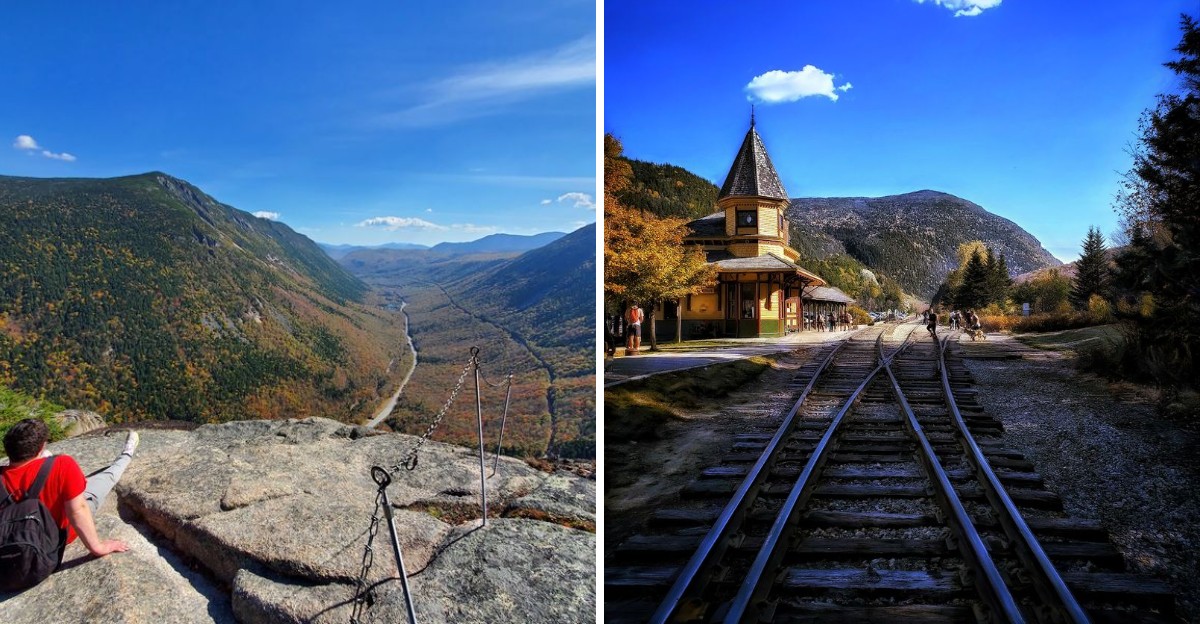
Some trails reward you gradually, with small views along the way that build toward something bigger. This New Hampshire trail does not work that way.
It saves everything for the end, and the payoff is a glacier carved mountain valley that opens up without warning. The climb itself is steady but manageable, winding through forest before breaking out onto open rock.
Once you reach the top, the view stretches in every direction, with steep walls and a valley floor that was shaped thousands of years ago by ice. It is the kind of scene that makes you forget how tired your legs are.
Photographers love it, hikers return to it, and first timers often stand there in silence for a few minutes. This New Hampshire trail is short enough for most people to manage, but the view makes it feel like a much bigger accomplishment.
The Glacier Carved Valley That Steals The Show
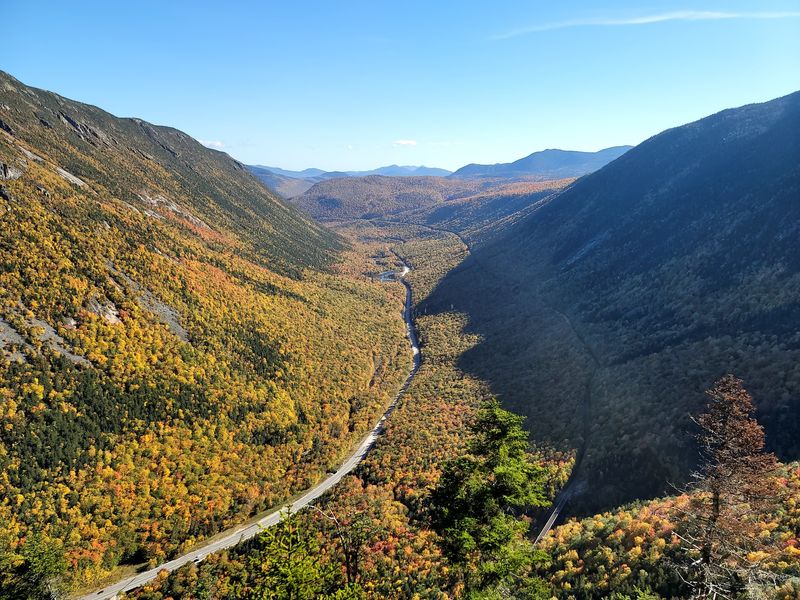
Picture a giant ice cream scoop dragged through granite. That is basically what happened here, when advancing glaciers ground through the landscape and left behind the broad U shaped trench known as Crawford Notch.
Most river valleys are sharp and V shaped. Glacial ones are wide, rounded, and dramatic, with steep walls that rise like stadium seating on either side.
Standing at the cliff top on the Mount Willard Trail, you get the textbook version spread out below you. Route 302 threads along the bottom like a ribbon, and the railway line traces the far wall.
Mount Webster looms to your left, Mount Willey to your right, and the valley floor sits hundreds of feet beneath your boots.
What makes it special is the angle. You are not looking across at mountains, you are looking straight down the throat of the notch, which is a rarer perspective than you might think.
Morning light fills the valley with a soft glow. Late afternoon throws long shadows across the slopes.
New Hampshire has taller summits, but few frame their scenery this perfectly.
Short Climb, Enormous Reward
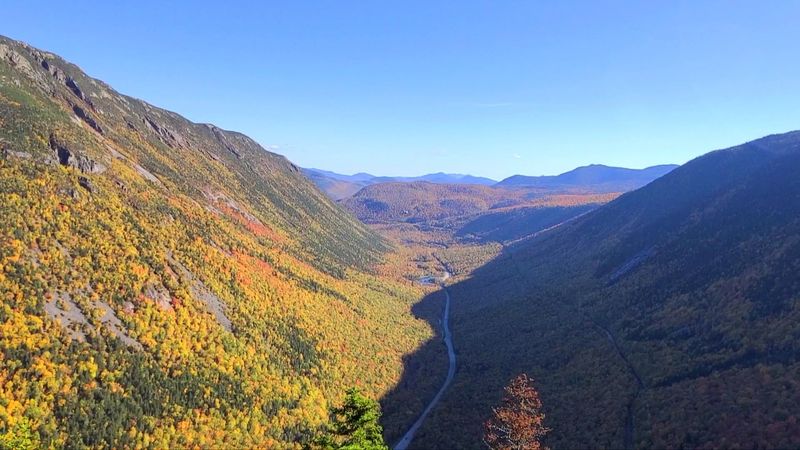
Roughly three miles round trip with somewhere around nine hundred feet of climbing. In hiking terms, that is a bargain.
Compare it to the all day slogs that dominate the White Mountains and you start to understand why this path gets so much love. Two hours is a realistic window for the whole outing if you keep a steady rhythm.
The first stretch from the trailhead is gentle, almost flat, easing you into things. Then the grade tips upward and stays there, a consistent uphill push rather than a series of brutal scrambles.
Nothing here requires hands on rock or technical moves. The challenge is endurance and footing, not bravery.
Families manage it regularly, and kids often do better than adults because they treat every boulder as a jungle gym.
Take breaks without guilt. Nobody is timing you, and the shade keeps the effort manageable even on warm afternoons.
The genius of the Mount Willard Trail is that the difficulty never quite outpaces the scenery you get at the end. Effort in, view out, and the math works beautifully in your favor.
Rocks, Roots And Why Your Boots Matter
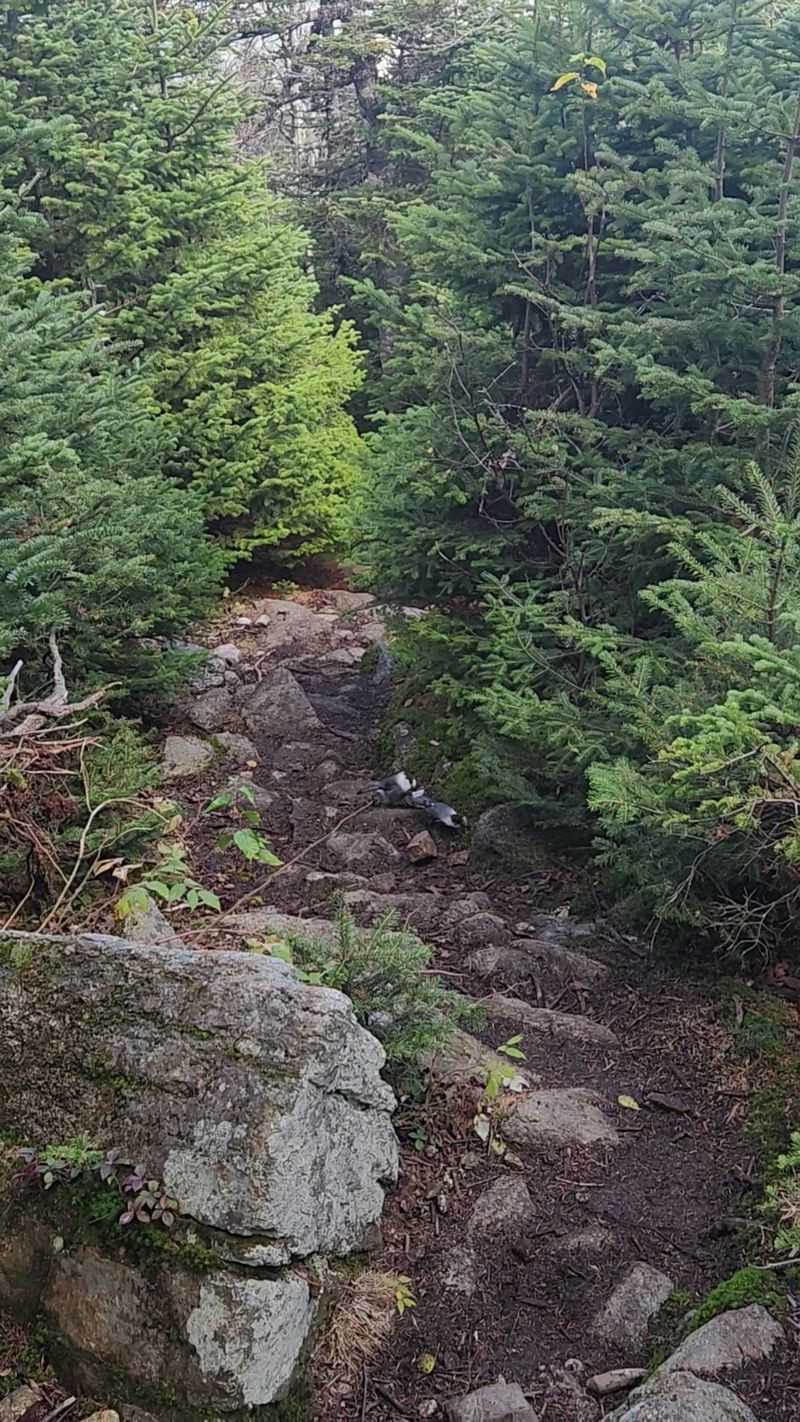
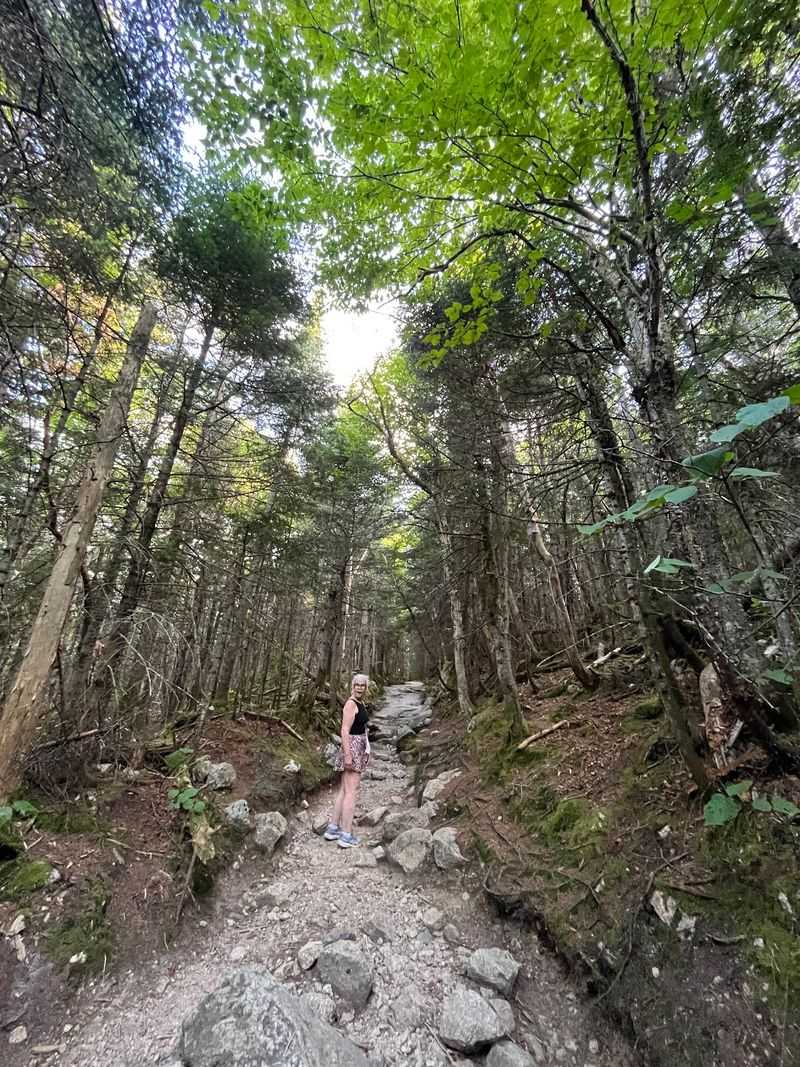
Sneakers will betray you here. The middle section of the climb is classic White Mountains terrain, meaning loose stones, exposed roots, slick mud, and water running right down the path.
Ankle support is genuinely useful. So is tread that grips wet granite, because after rain the trail doubles as a shallow creek in places.
Descending is where most stumbles happen. Gravity plus loose rock plus tired legs equals a recipe for a slip, so slow down on the way back rather than charging.
Trekking poles earn their keep on this one. They take pressure off knees and give you two extra contact points when the footing turns unreliable.
Dog owners should think about paws. The stony surface can be rough on smaller breeds, though plenty of larger dogs handle it happily.
Two stream crossings break up the climb, and both usually require a bit of rock hopping. After heavy rainfall they get splashier, so waterproof footwear pays off.
None of this should scare you off. Prepared feet turn a potentially frustrating scramble into a thoroughly enjoyable walk through the woods.
A Stream That Walks With You
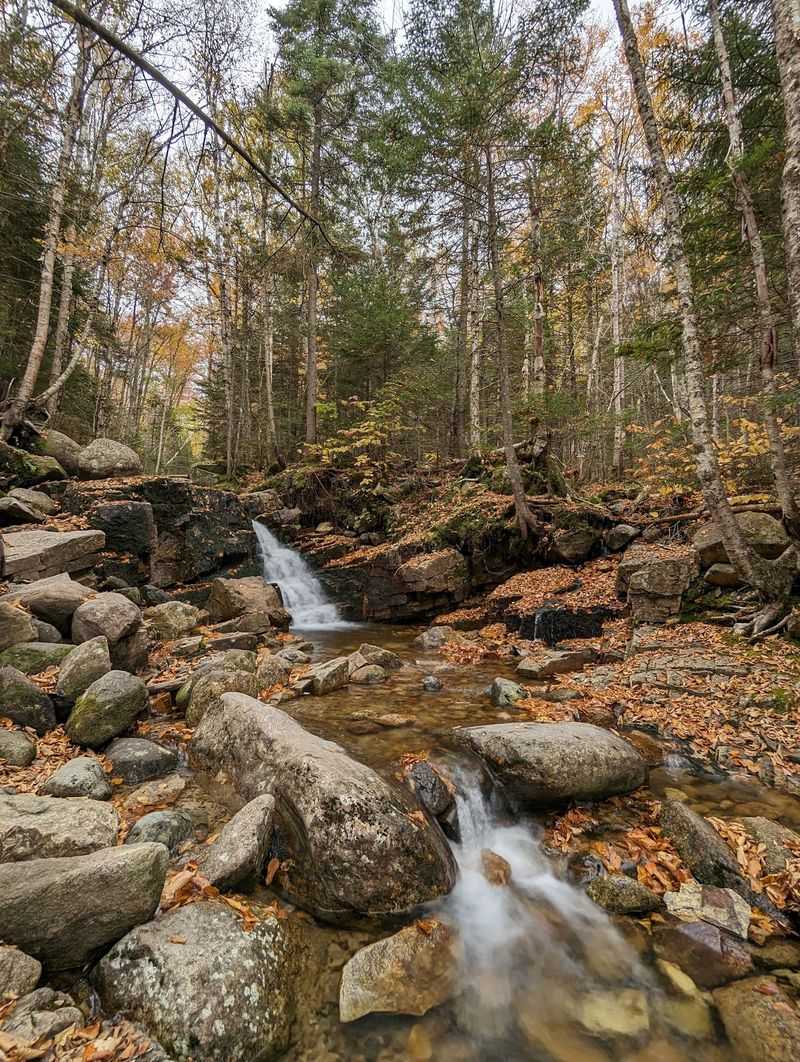
Water is the unofficial soundtrack of the lower trail. For a good chunk of the ascent a brook tumbles alongside the path, spilling over ledges in a series of miniature waterfalls.
It is the kind of background noise that makes a climb feel shorter than it is. Birdsong layers over it, and the canopy above keeps everything cool and green.
About a quarter of the way up there is a small pool tucked beside the trail. On hot summer days it becomes an irresistible spot to dunk your feet before continuing.
Photographers should linger here. Moss covered boulders, filtered light, and moving water make for far better pictures than you would expect on a quick hike.
Spring melt cranks the volume up considerably. The brook runs fast and full, and the crossings demand more careful footwork.
By late summer things calm down and the stream becomes a gentle trickle threading through the rocks.
Little touches like this are why the walk up feels enjoyable rather than a chore. Beauty arrives long before you reach the cliff top.
Autumn Turns The Notch Into A Furnace Of Color
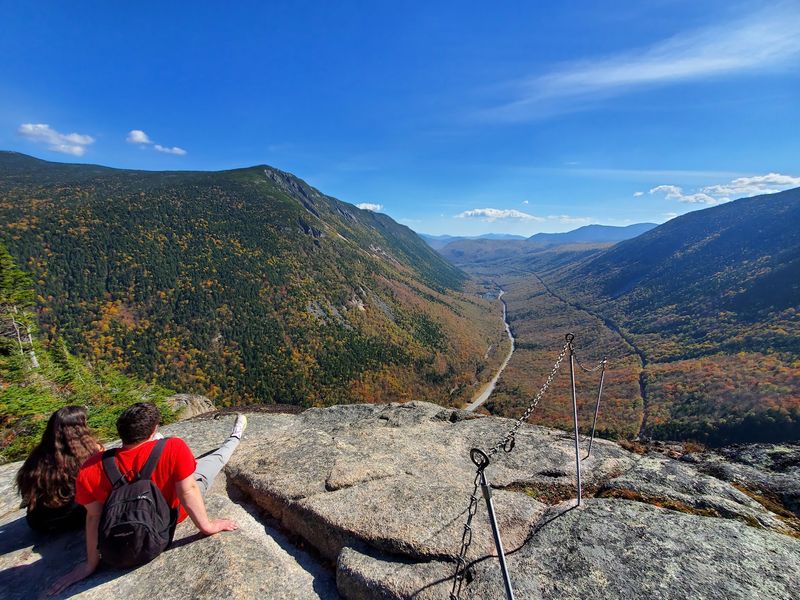
Leaf season here borders on ridiculous. Come late September into October, the valley walls erupt in scarlet, amber, and gold, and from the cliff top you see the entire display at once.
Maples handle the reds. Birches and beeches supply the yellows.
Evergreens stitch dark green threads through the whole quilt.
The catch is company. Autumn weekends pack the parking areas solid, sometimes before nine in the morning, and the path can turn into a single file procession.
Weekdays are your escape hatch. A Tuesday in mid October delivers the same colors with a fraction of the shoulder bumping.
Arriving at sunrise is the other smart play. Early light hits the eastern wall of the notch first, and you might have the ledge nearly to yourself.
Bring layers because autumn mornings up there bite, even when the valley below feels mild. Wind funnels through the notch and finds every gap in your jacket.
Few places in New Hampshire concentrate this much fall drama into such a manageable climb, which explains the popularity entirely.
Winter Hiking With Serious Crunch
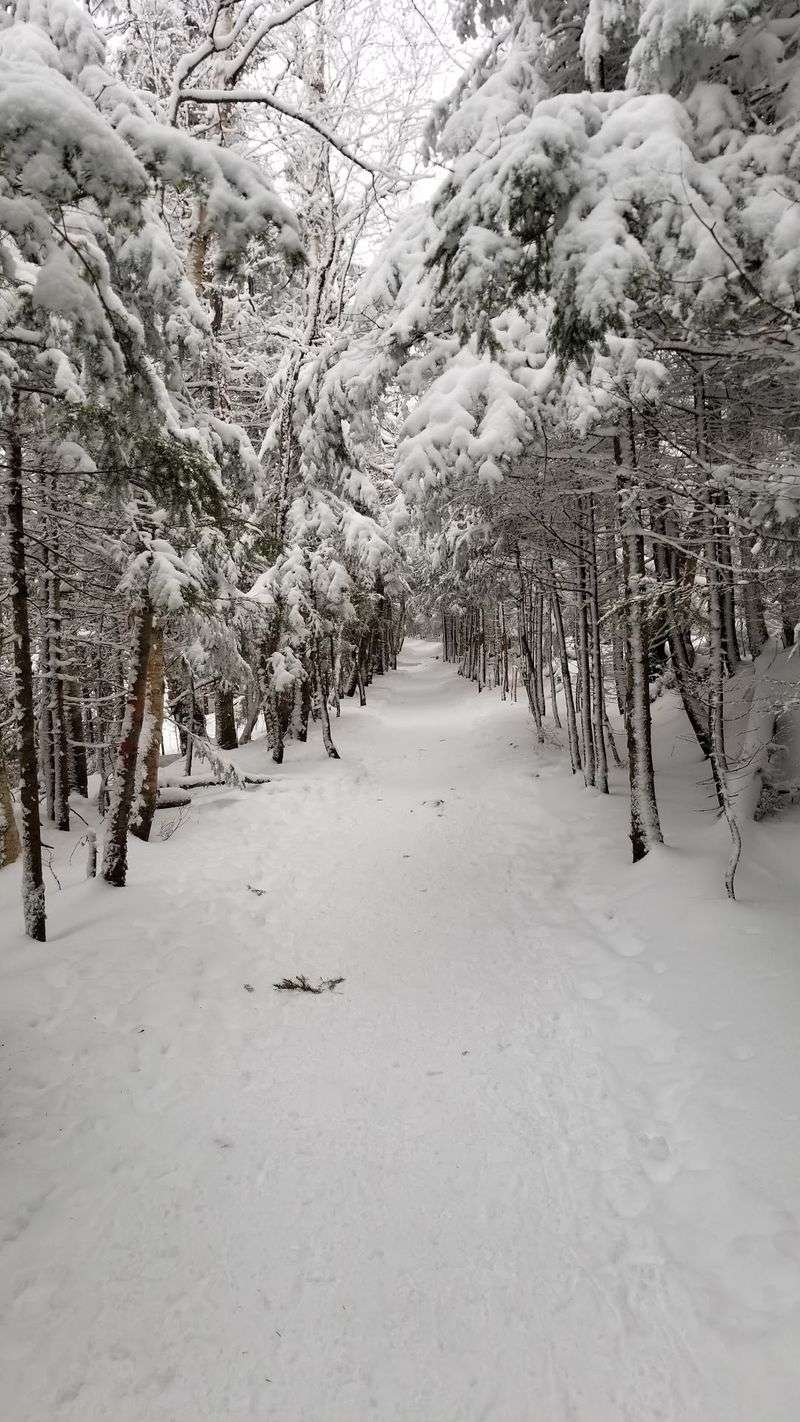
Snow changes everything about this route, mostly for the better. Packed powder smooths over the rocks and roots that trip people up in summer, turning the tread surface almost pleasant.
Ice is the complication. Repeated freezing and thawing hardens the path into a slick ribbon, and attempting it without traction is asking for trouble.
Microspikes are the standard answer. They clip over your boots, bite into the ice, and transform a nerve wracking descent into a controlled walk.
Poles add balance on the steeper pitches. Both tools are inexpensive and both make the difference between a fun day and a bruised one.
The reward is a hushed, cathedral like version of the valley. Snow blankets the slopes, frost coats the cliff edges, and the usual crowds thin dramatically.
Wind at the top can be fierce in winter, so a windproof outer layer and warm gloves are essential rather than optional.
Daylight is short too. Starting early gives you margin, because nobody wants to be picking their way down the Mount Willard Trail in fading light.
Parking, Restrooms And The Trailhead Routine
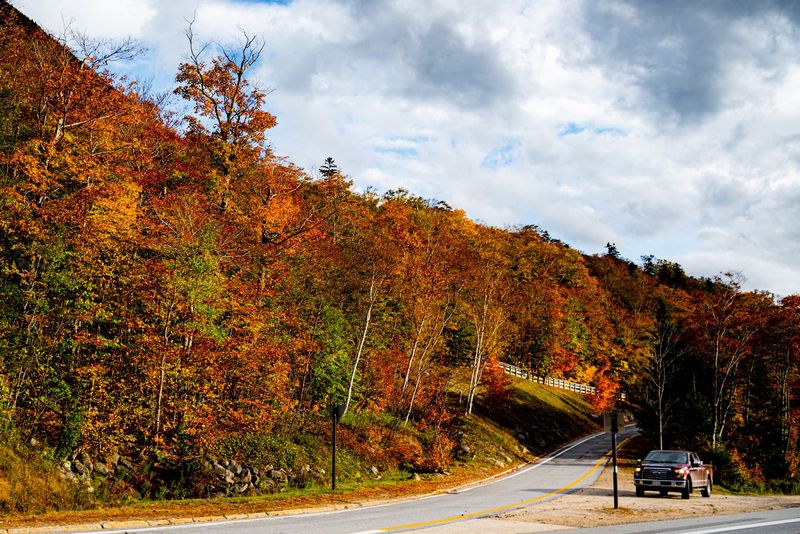
Logistics here are refreshingly simple. Parking sits near the old railway depot across from the trail start, with a generous number of spaces and restrooms on site.
Autumn weekends overwhelm that capacity fast. Overflow vehicles line the roadside for a considerable stretch, which is your cue to arrive earlier next time.
The visitor building stocks maps, snacks, and information, making it a sensible first stop before you head into the trees.
Restrooms close in the late afternoon, so plan accordingly if you are finishing a longer day in the mountains.
Crossing the road to reach the trailhead requires attention. Traffic moves quickly through the notch and sightlines are not always generous.
Cell service is patchy once you climb, so download your map or carry a paper copy rather than trusting your phone.
Water, snacks, and a spare layer belong in every pack, even for a short outing. Mountain weather in New Hampshire flips without warning.
Getting the practical details right up front means you can focus entirely on the scenery, which is precisely the point of coming.
Wildlife Sightings And Forest Company
Moose wander this corner of the state, and sightings near the ponds around the trailhead are not unheard of, particularly in the quiet hours after dawn.
Give them enormous space. A moose is calm until it is not, and their size makes any close encounter a genuinely bad idea.
Smaller residents are easier to spot. Chipmunks patrol the rocks, red squirrels scold from branches, and gray jays occasionally appear looking for handouts.
Feeding wildlife is off limits, tempting as those bold birds can be. Human snacks are terrible for them and encourage habits that end badly.
Birdsong fills the lower forest in spring and early summer. Warblers, thrushes, and woodpeckers all put in appearances if you pause and listen.
Black bears live throughout the White Mountains, though encounters on a busy path are uncommon. Keeping food sealed and packed out is simply good practice.
Early risers see the most. Dawn is when the woods feel genuinely wild rather than well trodden, and the animals agree with that assessment entirely.
Picnics On The Edge Of Nowhere
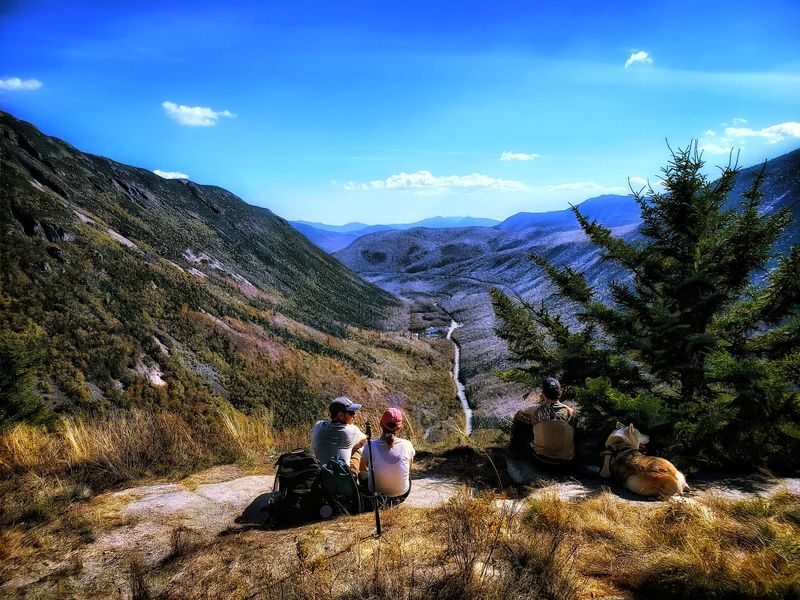
Flat ledges at the top practically invite you to sit down and stay awhile. Broad slabs of rock make natural benches, and the view does not get old.
Packing lunch is the move. Sandwiches taste inexplicably better several hundred feet above a glacial valley, and the effort of carrying them adds to the satisfaction.
Watch your footing near the drop. There are no railings, the edge is genuine, and a moment of distraction is not worth the photo.
Kids need close supervision here. Excitement plus exposed cliff equals a situation worth managing carefully.
Wind sweeps across the open rock, so anything loose in your bag will make a bid for freedom. Secure wrappers and lightweight gear before unpacking.
Pack out every crumb. The Mount Willard Trail stays beautiful because people treat the summit as a place to borrow rather than use up.
Sunrise picnics are a cult favorite for good reason. Watching light creep down the valley walls with coffee in hand ranks among the finest mornings New Hampshire offers.
Where To Find It And What Sits Nearby
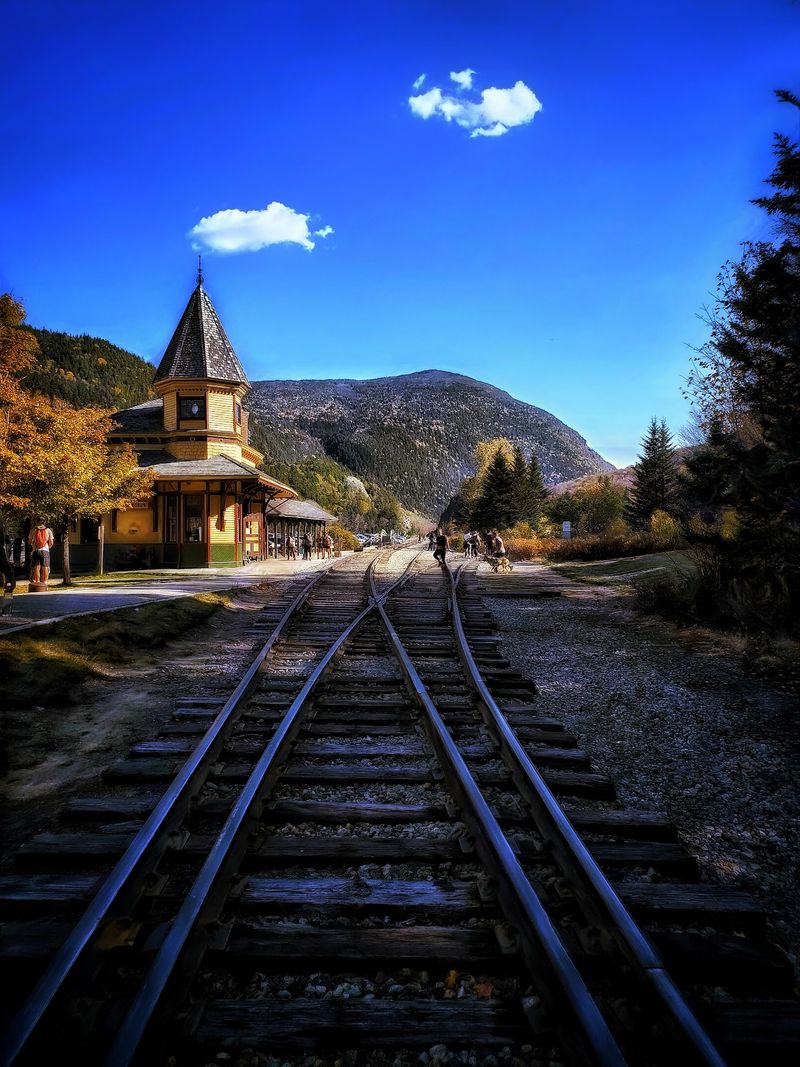
Finding the start is straightforward. The Mount Willard Trail Head sits at Bretton Woods, NH 03575, along Route 302 in the heart of Crawford Notch, with the historic depot building marking the spot.
Neighboring peaks share the same access point. Avalon, Field, Tom, and Willey all branch from this area, giving ambitious walkers plenty of longer options.
Those routes climb harder and deliver fewer open views, which is worth knowing before you commit a full day.
Crawford Notch State Park stretches south along the road, with waterfalls, the Willey House site, and roadside pullouts that reward a slow drive.
Bretton Woods lies just north, tucked beneath the Presidential Range and framed by some of the grandest mountain scenery in the region.
Combining a morning climb with an afternoon drive through the notch makes for a near perfect day in northern New Hampshire.
Go midweek, start early, and wear boots that mean business. The cliff top will be waiting, and once you have seen that valley open up beneath you, every other viewpoint has some catching up to do.
