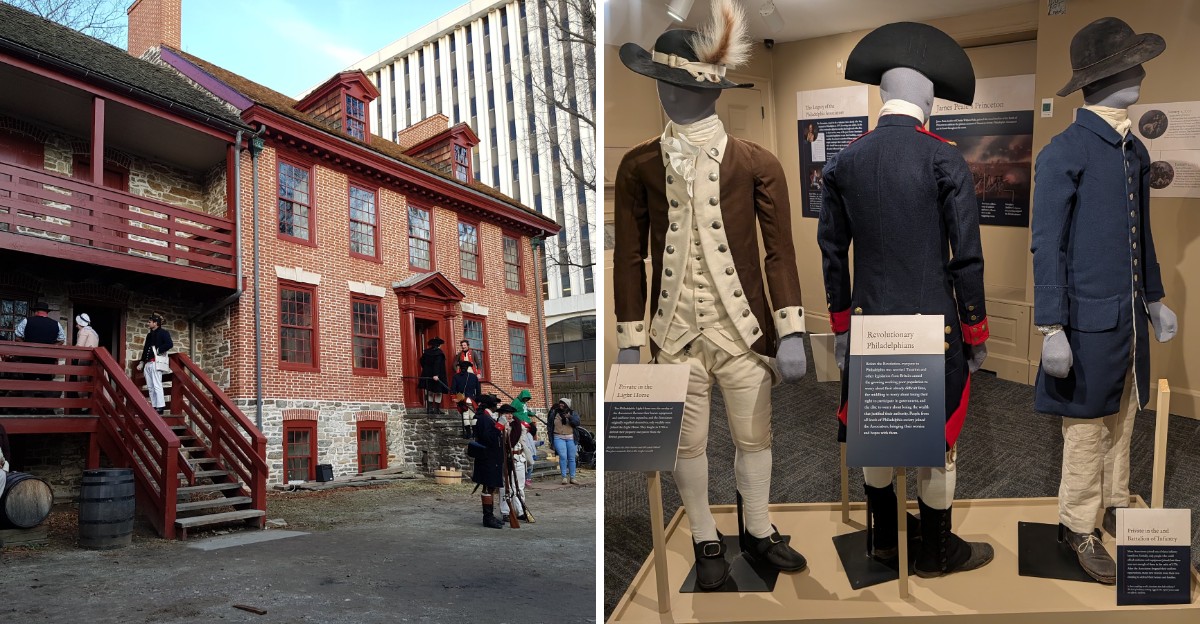
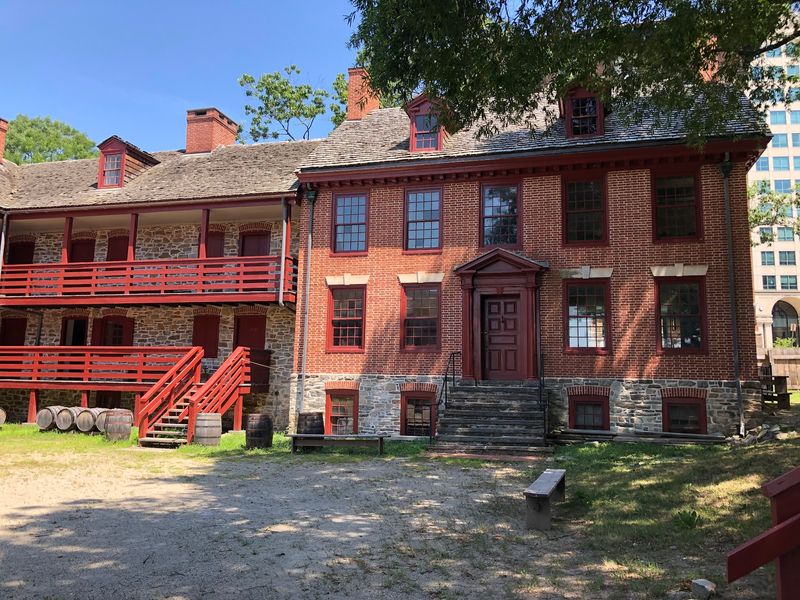
Hessian soldiers occupied this stone building shortly before George Washington crossed the icy Delaware in December 1776. The walls were already almost twenty years old by then.
It was built in 1758 to house British troops during the French and Indian War. Today it’s the only colonial barracks still standing in New Jersey.
That alone gives me goosebumps.
I like how this place refuses to feel like a dusty display case. Costumed guides walk the halls, muskets get fired, and shoemakers work at their benches like it’s still the 1770s.
I can’t imagine a better way to understand how close the Revolution came to failing.
A Stone Fortress That Beat The Revolution To The Punch
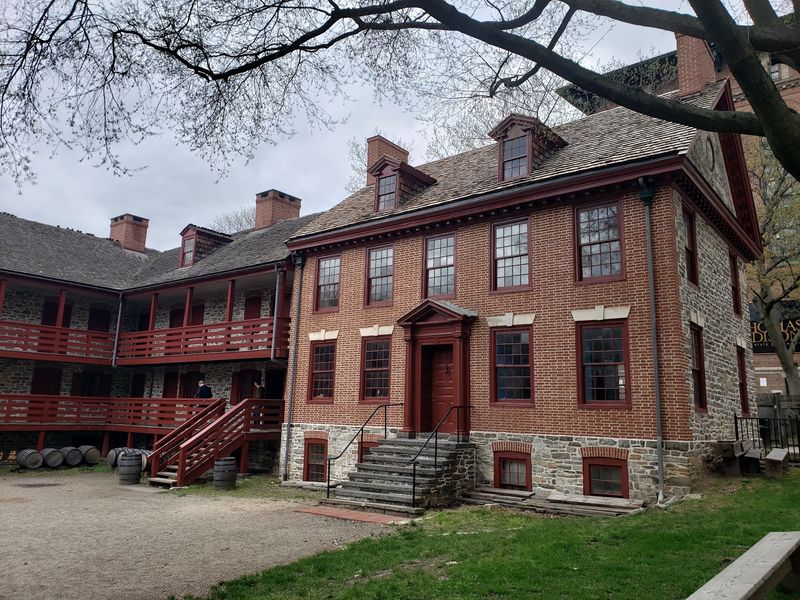
Long before anyone signed the Declaration of Independence, the Old Barracks Museum was already busy doing its job. The Colony of New Jersey built it in 1758, during the French and Indian War.
Back then, colonists were tired of soldiers being squeezed into private homes. Building a proper barracks solved that headache and kept the peace with local families.
The result was a sturdy stone building shaped like a U. Its dark red woodwork still makes it easy to spot in downtown Trenton today.
For a while, it was the largest structure in town. Around 300 British and Irish soldiers could live here at one time.
Here’s the part that really stands out. It’s the only colonial barracks still standing anywhere in New Jersey.
Several other barracks were built across the colony around the same time. The rest have vanished, which makes this survivor feel even more remarkable.
Standing in the courtyard, you’re looking at walls that predate the country itself. That’s a pretty wild thought for a building surrounded by modern government offices.
Bring a camera for the exterior. The stone and red trim look great in photos, especially against a bright blue sky.
Twelve Men, One Room, And A Fireplace That Did The Heavy Lifting
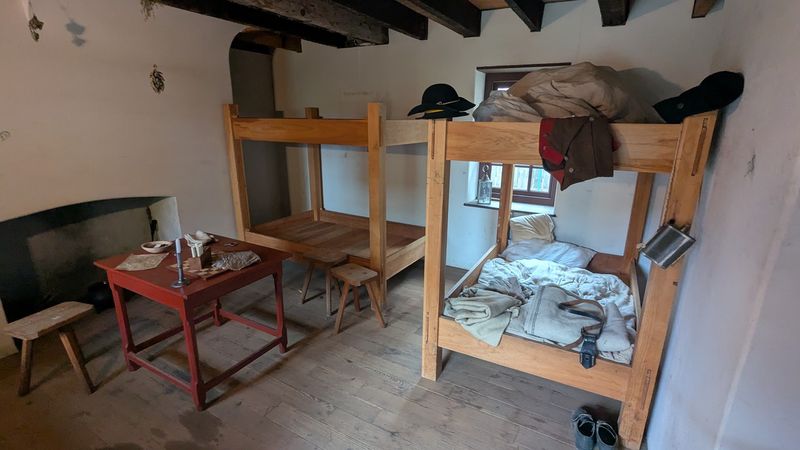
Personal space was not a thing for colonial soldiers. Each room in the barracks was designed to hold about a dozen men.
They slept in wooden bunks stacked close together. Every room had its own fireplace, which mattered a lot during cold New Jersey winters.
Today, the rooms are restored to look the way they did in the 1770s. That means you get a realistic peek at daily life, not a fancy version of it.
Look closely at the small details. Guides have placed items like a copy of Thomas Paine’s Common Sense on a bench.
Those little touches make the rooms feel lived in. It’s like the soldiers just stepped out for drills and might return any minute.
Kids usually love comparing these cramped quarters to their own bedrooms. Suddenly, sharing a room with one sibling doesn’t sound so bad.
Adults tend to notice the practical stuff. Where did twelve men keep their gear, dry their socks, or find a quiet moment?
Those questions make great conversation starters with the guides. They know the answers and clearly enjoy sharing them.
Take your time here. The rooms are small, but the stories packed inside them are surprisingly big.
The Hessians Were Sleeping Here When Washington Showed Up
December 1776 was rough for the American cause. Washington’s army was worn out, and many people thought the Revolution was nearly finished.
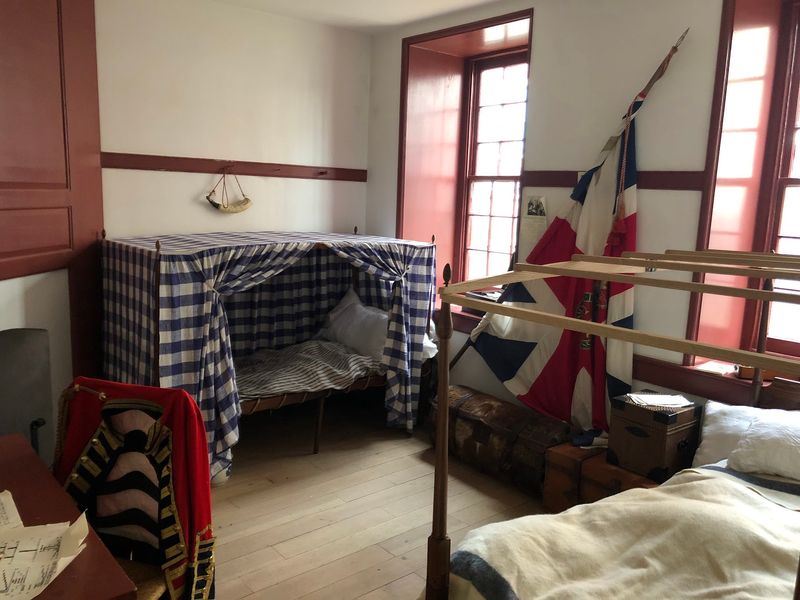
Meanwhile, Hessian troops were staying at the Old Barracks Museum building. These German soldiers were hired to fight for the British.
Then came Christmas night. Washington led his troops across the frozen Delaware River in terrible weather.
On the morning of December 26, they surprised the Hessians in Trenton. The Battle of Trenton gave the Americans a badly needed victory.
That victory became a defining moment of what historians call the Ten Crucial Days, a campaign that began with Washington’s Delaware River crossing on December 25, 1776. It boosted morale and encouraged soldiers to continue fighting.
Plenty of historic sites claim a link to Washington. Few can say the enemy he surprised was bunking inside their walls.
Knowing this changes how the courtyard feels. You’re standing right in the middle of one of the war’s biggest turning points.
Before your visit, it helps to read a quick summary of the battle. Even five minutes of background makes the guided tour much richer.
Then let the building fill in the rest. Few places in New Jersey connect you this directly to that famous winter morning.
Later On, Healing Replaced The Drills
Buildings with long lives often switch careers. This one became a military hospital later in the Revolution.
Continental Army soldiers came here to recover. Among them were men returning from the siege of Yorktown in 1781.
Medical care in the 1700s looked very different from today. There were no clean hospital wings, modern medicine, or bright lights.
Caregivers relied on simple supplies, fresh air, and lots of patience. A sturdy stone building with fireplaces was a real advantage.
This chapter adds a softer side to the barracks story. It wasn’t only about battles and marching orders.
It was also about people helping soldiers get back on their feet. That’s a part of history that often gets skipped in textbooks.
The museum also explores stories that are easy to overlook. One program examined the roles of African Americans at the barracks, both as a soldiers’ home and as a hospital.
Those programs broaden the picture in meaningful ways. They remind visitors that many different people shaped this place.
Ask your guide about the hospital years. It’s a great way to see how one building adapted again and again to serve its community.
Credit Goes To A Group Of Determined Women
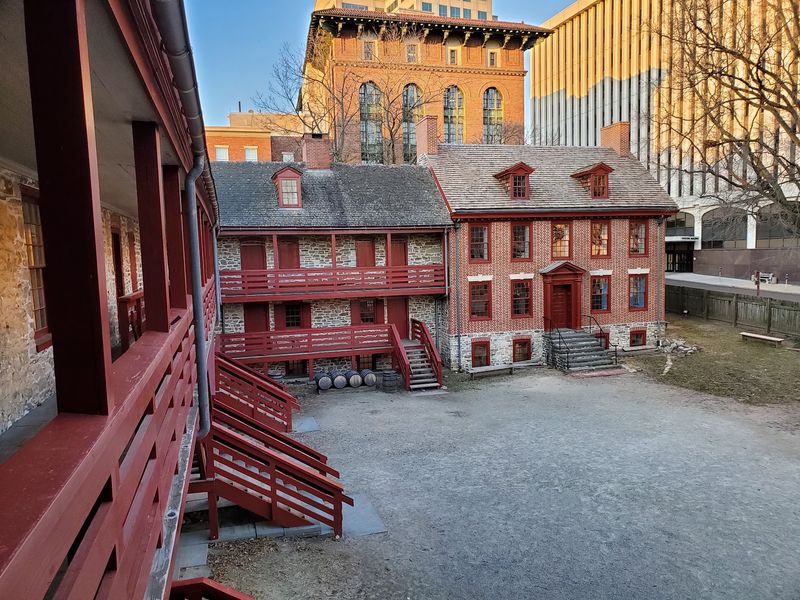
After the war ended, the barracks didn’t get a hero’s retirement. It was sold off and split into private homes.
From 1855 to 1899, part of it even served as a home for elderly women. The original building was slowly being changed piece by piece.
Enter Beulah A. Oliphant and a group of patriotic women in 1902.
They saw what the building meant and refused to let it disappear.
The group formed the Old Barracks Association. They bought the south section of the building to protect it.
By 1903, it opened as a museum. That makes it one of New Jersey’s earliest historic sites preserved by women.
The State of New Jersey stepped in too. It acquired the north section and took over ownership in 1914.
Today the Old Barracks Museum is a National Historic Landmark. It’s also listed on the National Register and as a state landmark.
I love this part of the story. Without those women, visitors might be looking at a parking lot instead.
It’s a good reminder that history doesn’t save itself. Somebody has to care enough to step up.
Your Tour Guide Might Be Dressed For 1776
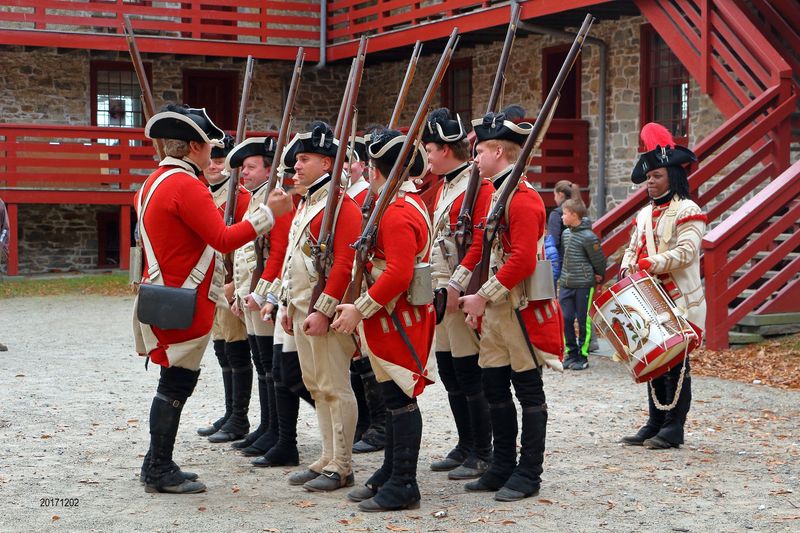
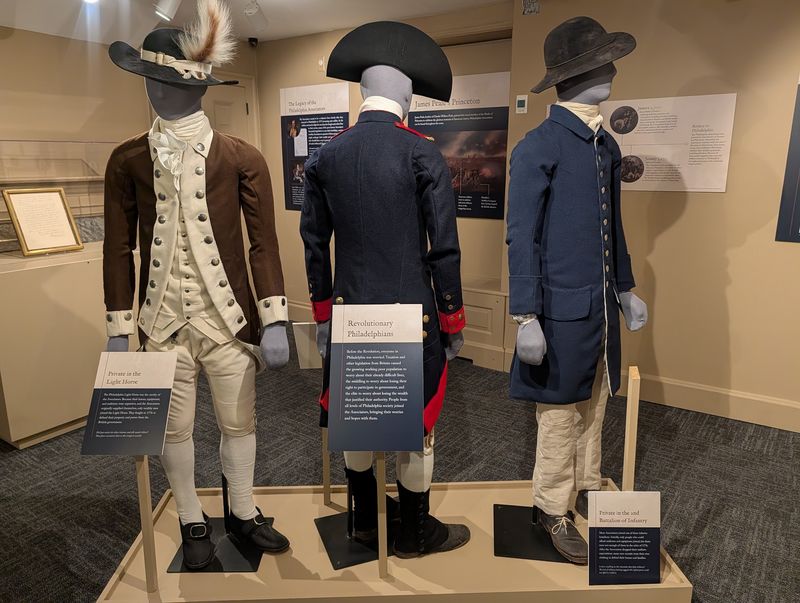
Musket smoke and wool uniforms are part of the welcome here. Many tours are led by interpreters dressed in period clothing.
Visits often begin with a short film. It covers the Battle of Trenton and the bigger picture of the Revolutionary War.
After that, guides lead you through the barracks and the Officers’ House. Their commentary turns quiet rooms into lively stories.
Musket demonstrations are a big draw. Hearing a flintlock fire up close is far more memorable than reading about it.
Guests have also watched costumed tradespeople at work, like shoemakers and carpenters. These demos show how soldiers’ gear was actually made and repaired.
This style of history works especially well for curious kids. School groups get pulled right into the action instead of standing around.
Adults get plenty out of it too. Good questions usually lead to even better answers.
Plan for a visit of about one to two hours. That leaves time for the film, the tour, and the exhibits.
One tip: hold your questions until the guide pauses. They tend to have a story ready for almost anything you ask.
Rifles, Bayonets, And A Canoe Older Than The Building
Hold on, there’s a canoe in here? Yes, and it’s around 400 years old.
This Native American canoe once traveled the Delaware River. That makes it even older than the barracks around it.
It’s a great reminder that this region’s story didn’t begin with colonists. People were paddling these waters long before any soldiers arrived.
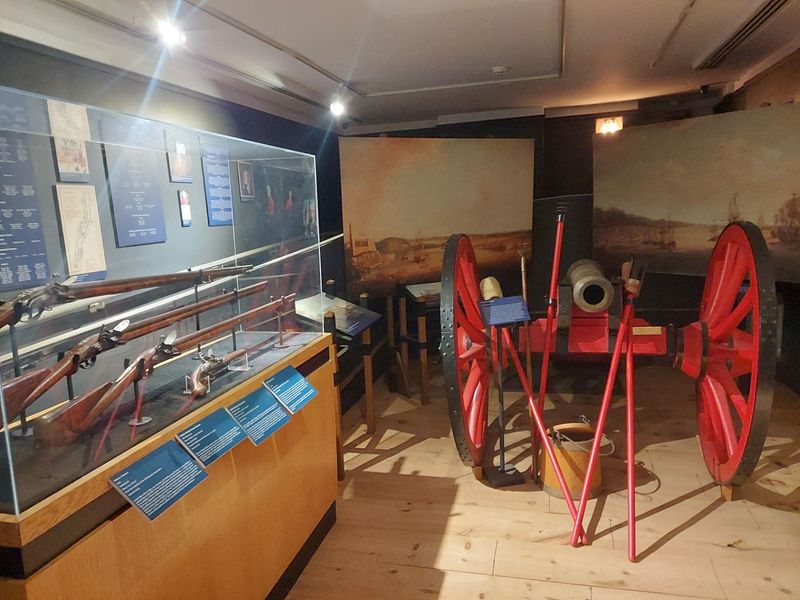
The collection also includes authentic 18th-century weapons. You’ll find rifles and bayonets from the colonial era.
Seeing them in person helps you understand how soldiers actually fought. These were heavy, slow, and tricky tools compared with anything modern.
The museum has also featured a French and Indian War exhibit. It connects nicely to the building’s original purpose back in 1758.
Another fun detail is a replica of George Washington’s wallet. It’s displayed as if left behind in a rush.
Exhibits can change over time, so check what’s on display before you go. Special exhibitions sometimes rotate through the space.
Leave a few extra minutes for the galleries. They’re easy to rush past, but the artifacts reward a slower look.
Save Your Late-December Calendar For Patriots Week
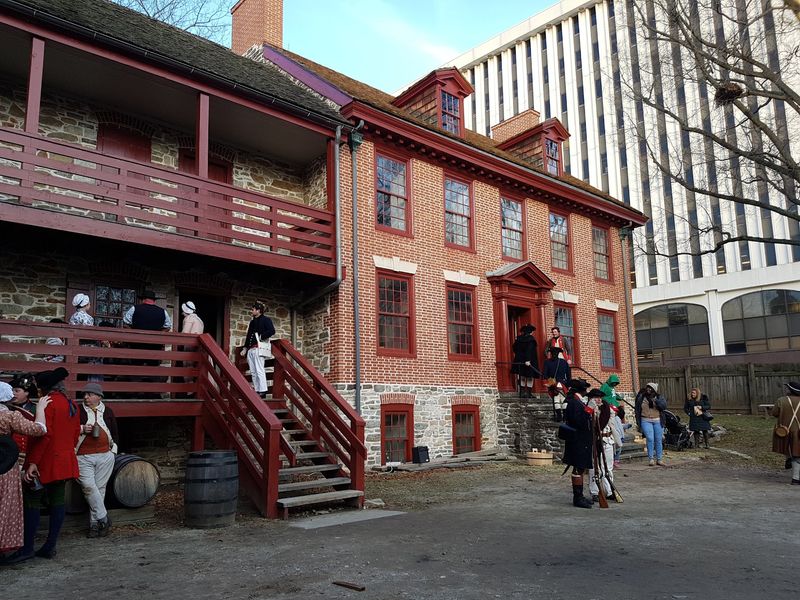
Late December gets loud around here, in the best way. Trenton’s Patriots Week fills the days between Christmas and New Year’s.
The highlight is the annual Battle of Trenton Reenactment. Reenactors in period gear bring the events of 1776 back to the streets.
Watching it happen in the actual town where the battle took place hits differently. It’s history with a real address.
The Old Barracks Museum hosts plenty of other programs during the year too. One example is the For King and Colony French and Indian War Weekend.
Past programs have explored dance in 18th-century society. There’s even been a puppet show called The Trouble With Trenton.
That mix keeps things fresh for repeat visitors. You can come back several times and still learn something new.
Winter events can mean cold weather, so dress in layers. Comfortable shoes are smart for standing outdoors during reenactments.
Check the event calendar before you plan your trip. Dates and programs change from year to year.
If you can only visit once, Patriots Week is hard to beat. The whole neighborhood feels like it stepped back in time.
A Capitol Neighborhood Packed With History
Few historic sites have neighbors this important. You’ll find the Old Barracks Museum at 101 Barrack St, Trenton, NJ 08608.
It sits close to the New Jersey State House and the New Jersey State Museum. That makes it easy to plan a full day of exploring.
The museum is open Wednesday through Saturday, from 10 a.m. to 5 p.m. It’s closed Sunday through Tuesday.
It also closes for major holidays. These include New Year’s Day, Thanksgiving, Christmas Eve, and Christmas Day.
Parking takes a little planning in a busy downtown. Limited parking is available in Lot 5A across from the Patriots Theater.
Limited free parking is available in the Capitol Complex Parking Garage on weekdays. Visitors should bring a photo ID and check garage access before arriving.
The site is wheelchair accessible, though halls and the elevator can feel snug. Plan a bit of extra time if you need it.
Pair your visit with a walk around the capitol area. You’ll be tracing ground that mattered during Washington’s Ten Crucial Days.
For a small building, it delivers a huge chunk of New Jersey’s story. Not bad for a barracks that’s been on duty since 1758.
