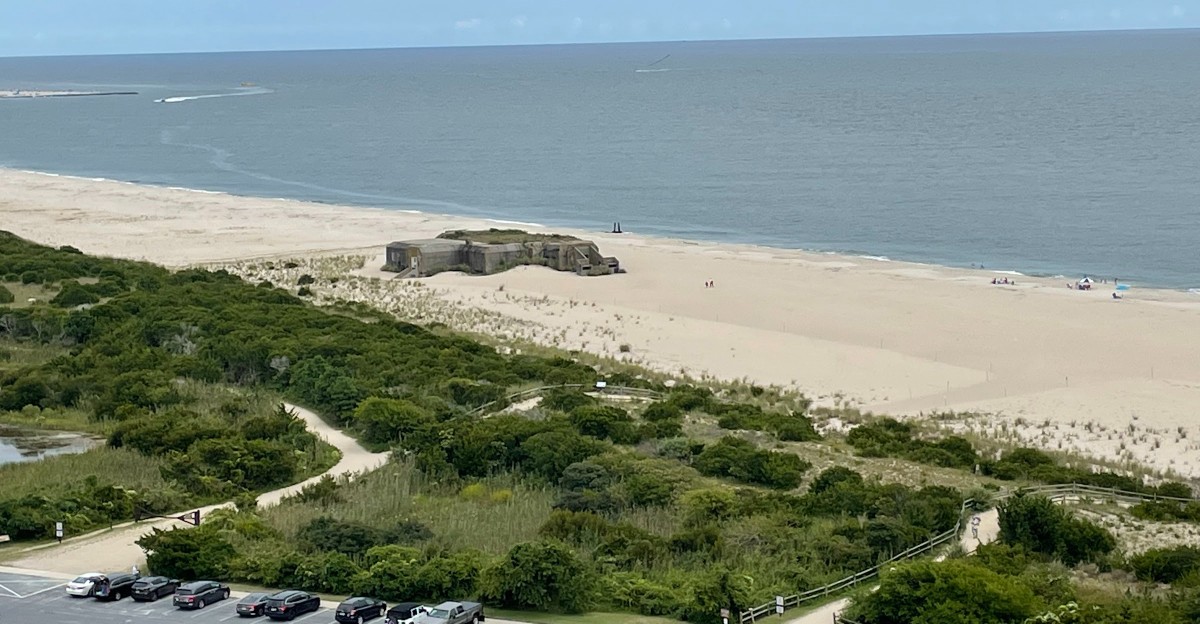
Well, that’s not your usual beach decoration.
You’re walking along the shore, expecting seashells, seabirds, and maybe a particularly determined wave. Instead, there’s a massive concrete military structure sitting right there in the sand.
Yes, really.
This New Jersey beach comes with a fascinating piece of World War II history that looks almost out of place against the ocean.
Built as part of the nation’s coastal defense system, the bunker once stood behind protective dunes. Years of shoreline changes have left it dramatically exposed, turning an ordinary beach walk into an unexpected history lesson.
There’s something remarkable about seeing such a solid structure surrounded by shifting sand and water. It makes you wonder how much else the coastline has witnessed.
And suddenly, that beach stroll has a whole new story.
A Concrete Giant Where You Least Expect It
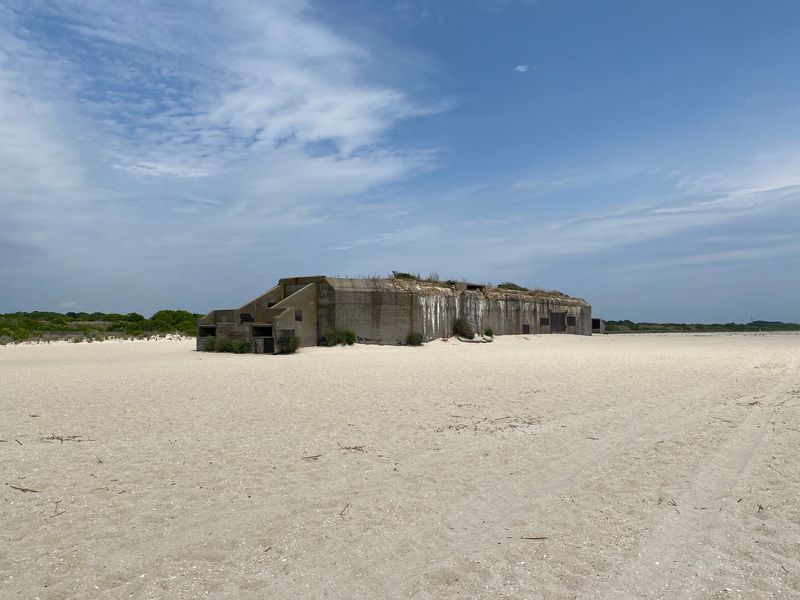
Picture a sunny shoreline with gulls, beach towels, and a rolling surf. Now drop a huge gray bunker right in the middle of it.
That odd sight is Fort Miles Battery 223, and it surprises almost everyone who sees it for the first time.
The structure looks heavy and stubborn, like it refuses to move for anyone. Its walls are chipped and stained from years of salt spray and wind.
Some visitors joke that it looks like it wandered over from a European war zone and decided to stay.
Honestly, that contrast is the fun part. Kids build sandcastles a short walk from a building made to survive enemy fire.
Couples take photos with a slab of wartime concrete behind them instead of palm trees.
It is free to see, and you can walk all the way around it. Bring good shoes, because the sand near the bunker can be uneven.
A little curiosity helps too, since there are not many signs, so knowing the backstory before you go makes the visit much richer.
Built to Guard the Delaware Bay
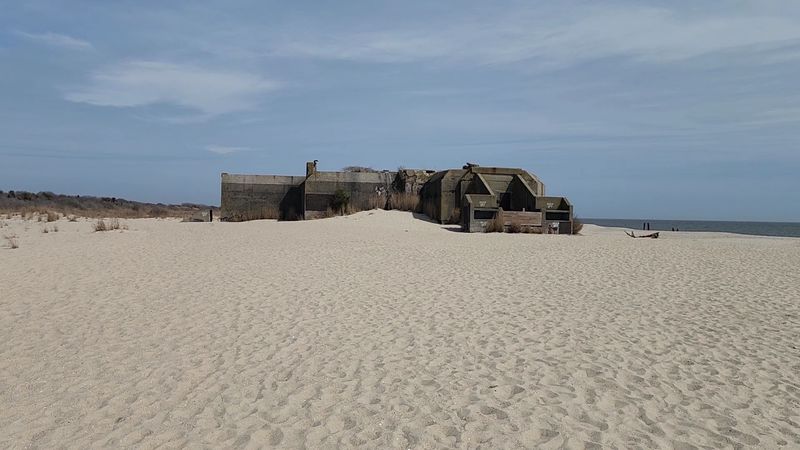
Back in the early 1940s, the waters off this coast were a real worry. German submarines prowled the Atlantic, and supply ships needed protection as they moved in and out of the Delaware Bay.
So the Army got to work. Battery 223 was built between 1942 and 1943 as part of Fort Miles, a larger network of coastal defenses stretching across the mouth of the bay.
Its job was simple to explain but serious in practice. Keep enemy vessels away from ships carrying war supplies.
Think of it as a watchdog made of concrete. It sat quietly near the shore, ready to respond if trouble showed up on the horizon.
That mission gives the bunker a different feel once you know it. The calm water you see today once held real danger, at least in the minds of the soldiers stationed here.
Looking out toward the bay, you can almost imagine their eyes scanning the waves for a periscope. It is a quiet reminder that the war reached closer to American beaches than many people realize.
Walls Thick Enough to Shrug Off a Battleship
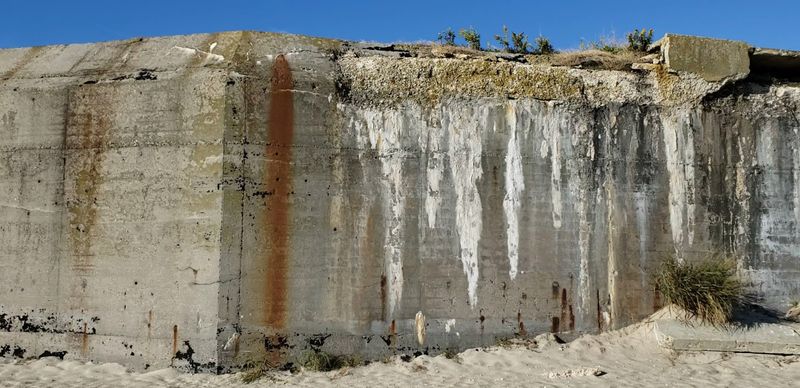
Six feet. That is roughly how thick the reinforced concrete walls of this bunker are, and some accounts even say seven.
Either way, it is a lot of concrete.
Engineers designed the battery to take a direct hit from battleship artillery or a dive-bombing plane. The roof was made blast-proof as well.
Running your hand along the rough surface, you get a sense of just how seriously they took that goal.
Here is the sneaky part. The whole building was originally buried under earth and sod, so from a distance it looked like a grassy hill.
Enemy eyes would have seen nothing but a natural bump on the landscape.
Time had other plans. Wind, waves, and weather stripped that cover away, leaving the raw concrete exposed.
In places you can spot rusty bits of metal poking out, like the bones of the building showing through.
For anyone who loves engineering, this is a treat. Bring a camera and get close to the textures.
The cracks, stains, and worn edges tell a story about strength meeting decades of stubborn sea air.
Twenty Rooms and Two Big Guns
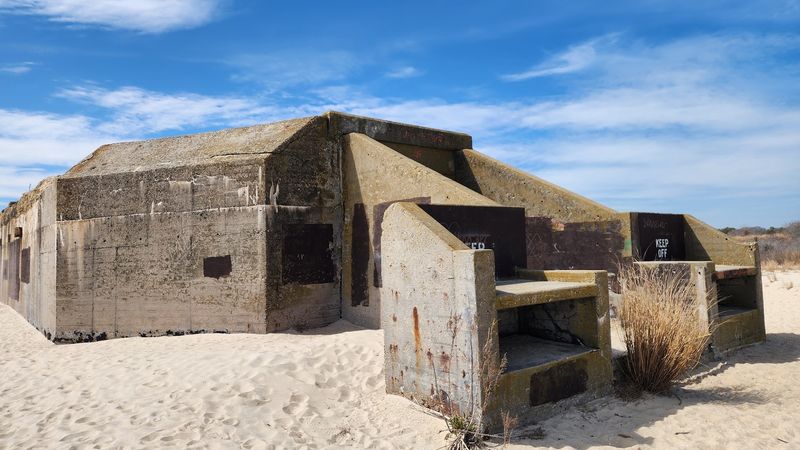
From the outside it looks like one solid block, but inside was a busy little world. The T-shaped bunker held about 20 rooms, each with its own purpose.
There were shell rooms for ammunition and powder rooms for explosives. A plotting room helped crews figure out where enemy ships were located.
A switchboard room handled communications, and yes, there was even a latrine, because soldiers are still human.
Up top, two six-inch rapid-fire guns stood ready. Their range stretched somewhere between nine and fifteen miles out over the water.
That is a long reach for the time.
Fun fact. Those guns never fired at an enemy ship.
They were used for drills and live-fire tests to keep the crews sharp and ready.
That detail makes the place feel a little lighter. All that preparation, and the big moment never came.
Still, imagining the boom of practice rounds rolling across the beach gives the quiet scene some serious energy. Today the guns are long gone, but the layout of the building hints at how carefully everything was planned.
The Ocean Came Knocking
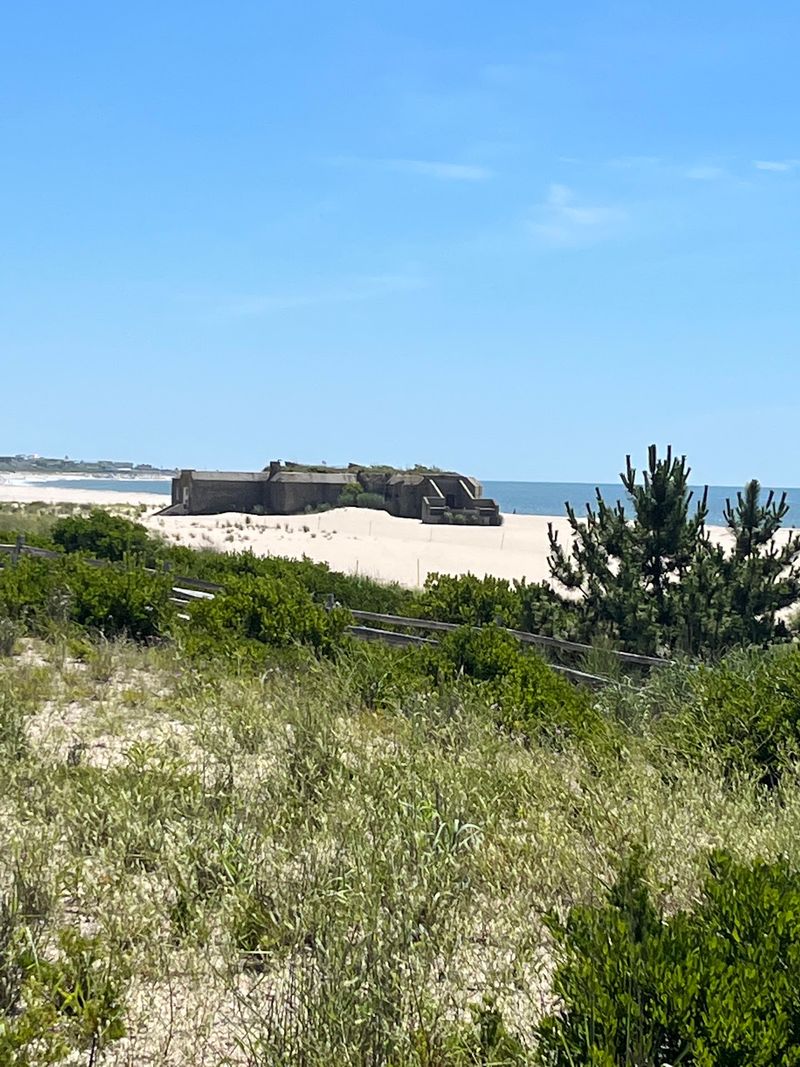
When it was built, this bunker sat roughly 900 feet inland. That is about three football fields away from the water.
Today it rests right on the beach.
No, nobody moved it. The shoreline moved instead.
Coastal erosion slowly ate away at the land over the decades, bringing the ocean closer and closer to the concrete.
Things got so close that a major beach replenishment project took place in 2004 and 2005. Without it, the bunker might have ended up surrounded by water.
Crews added sand to rebuild the beach and give the structure some breathing room.
Seeing it in person, you really feel how powerful the sea can be. A building made to stop warships could not stop the tide.
There is something humbling about that.
A good tip is to check the tide before you go. At low tide you have more room to wander and snap photos from different angles.
At high tide, the waves sit closer, which makes for dramatic pictures but less space to explore.
Life After the War
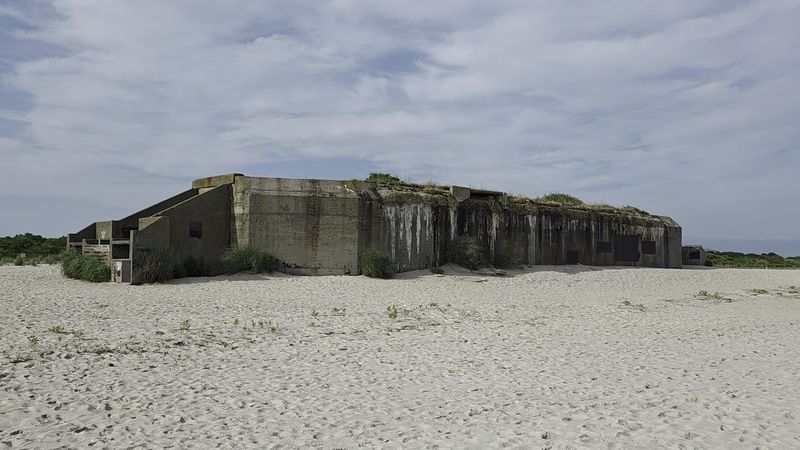
Plenty of old military buildings just get abandoned once the fighting ends. This one found a second job.
As the war turned in favor of the Allies, the need for fixed coastal guns faded. The battery was decommissioned in 1944, and across the country, Army seacoast defense guns were scrapped by 1948.
Many people would have expected the bunker to fade into the dunes after that.
Instead, the Navy stepped in during the Cold War. The building was used for radio communications, and some sources suggest it may have served as a hydrophone station, which listens for sounds underwater.
A concrete pad was added on the roof to hold a Quonset hut, a curved metal building common in that era.
The bunker was decommissioned again in 1963. By then it had served through two very different chapters of history.
Looking at the roof today, you can try to spot traces of those changes. It adds another layer to the visit.
One building, two eras, and a whole lot of quiet listening along the coast.
Look but Do Not Go Inside
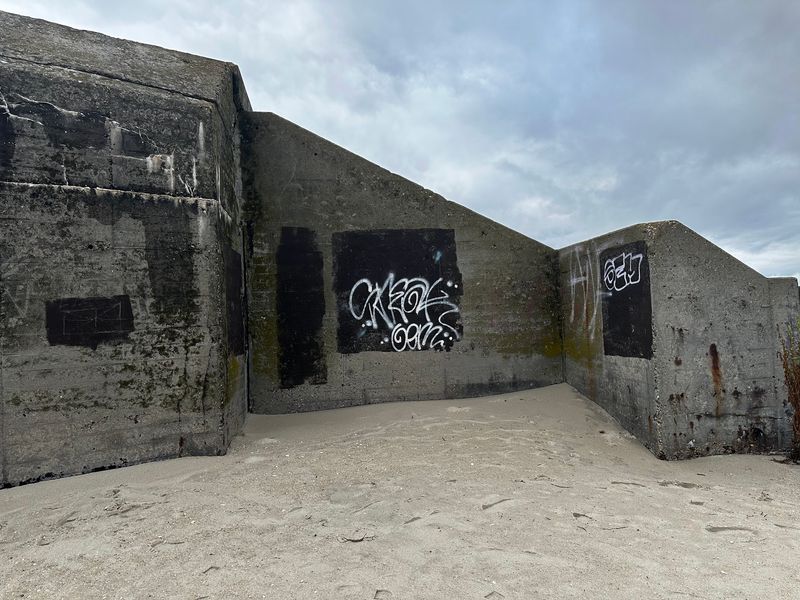
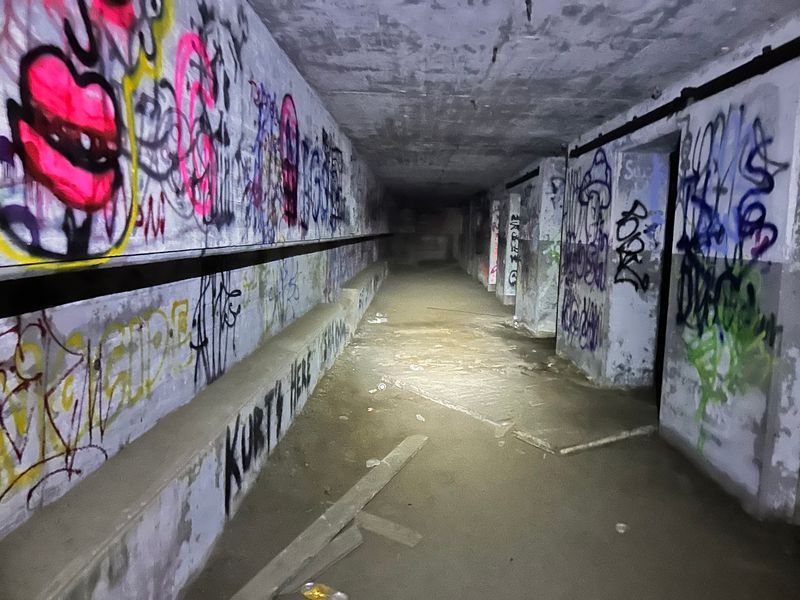
Curiosity is a powerful thing, especially when a dark doorway stares back at you. Still, the interior of the bunker is closed off to the public.
The inside is sealed and abandoned, partly because of past vandalism and safety concerns. Old concrete, darkness, and uneven floors are not a great combo.
Staying outside is the smart move.
The good news is that the outside offers plenty to enjoy. You can circle the whole structure and study it from every angle.
The worn walls and exposed sections give you a peek at how the building was put together.
Respect goes a long way here. This is a protected historic site, so avoid climbing in risky spots, adding marks, or leaving trash behind.
Treat it the way you would treat a museum piece, because that is basically what it is.
Families with kids should keep an eye on little explorers. Wandering around the base is fun and safe enough with care.
Just remind everyone that this old guardian deserves a gentle visit.
A Short Stroll From the Lighthouse
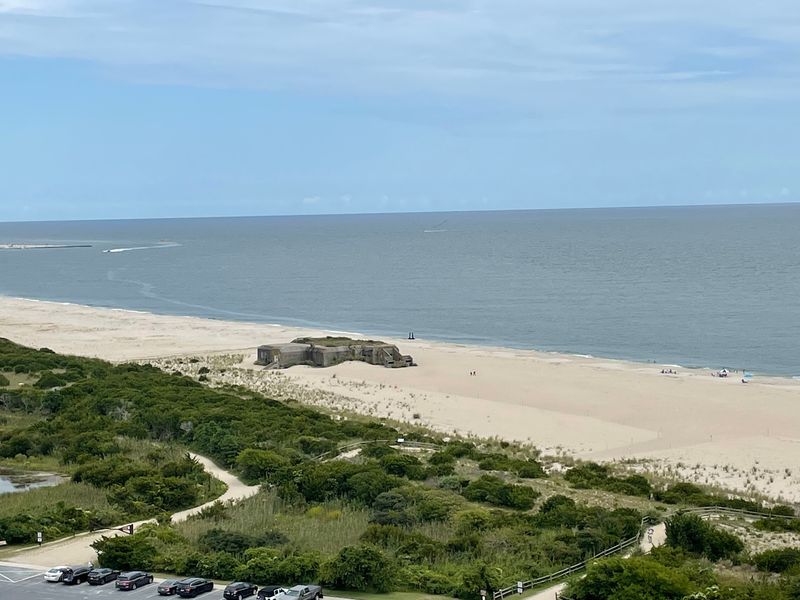
Getting here is easy, which is always a nice bonus. The bunker sits within Cape May Point State Park, and the famous Cape May Lighthouse is less than a mile away.
Most visitors park in the lighthouse lot, where parking is free. From there, a short, scenic walk leads toward the ocean and the bunker.
The paths are well kept, and there are picnic areas nearby if you want to bring a snack.
The lighthouse makes a great partner for this trip. You can climb it, check out its exhibits, and even spot the bunker from above.
Seeing it from up high gives you a whole new view of how it sits on the shore.
Plan for comfortable shoes, sunscreen, and water. The beach breeze can feel cool even on warm days, so a light jacket is handy outside of summer.
Keep your eyes on the water as well. Visitors sometimes catch sight of dolphins swimming offshore.
A bunker, a lighthouse, and maybe some fins in the waves make for a pretty great afternoon.
An Official Piece of History
In 2008, the bunker earned a big honor. It was listed on both the New Jersey and National Registers of Historic Places.
That recognition helps protect it for future visitors. It also confirms what many people feel when they see it.
This is not just an odd chunk of concrete but a real link to a tense time in American history.
The land became part of Cape May Point State Park in the early 1960s, giving the public a chance to enjoy the site. Since then, it has turned into one of the quirkiest landmarks along the Jersey Shore.
Sunset is a lovely time to end your visit. The sky turns soft shades of pink and orange, and the old battery stands calm against the glow.
It is peaceful in a way its builders probably never imagined.
If you are ready to see it yourself, head to Fort Miles Battery 223, located in Cape May Point State Park, Cape May, NJ 08204, where wartime history rests quietly on the sand.
