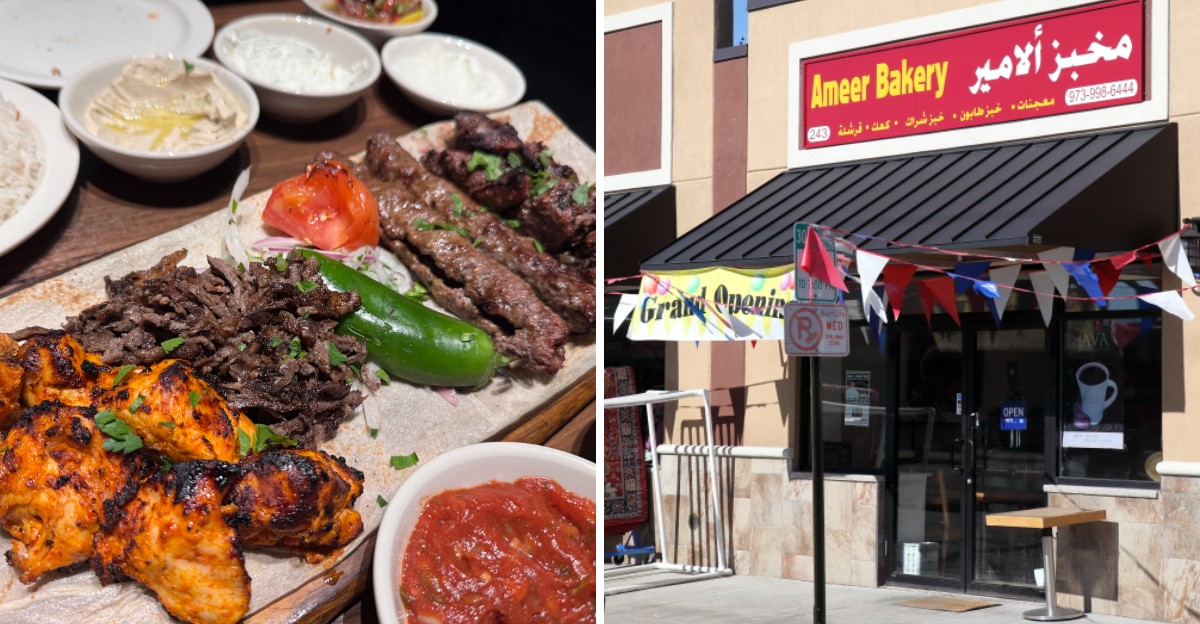
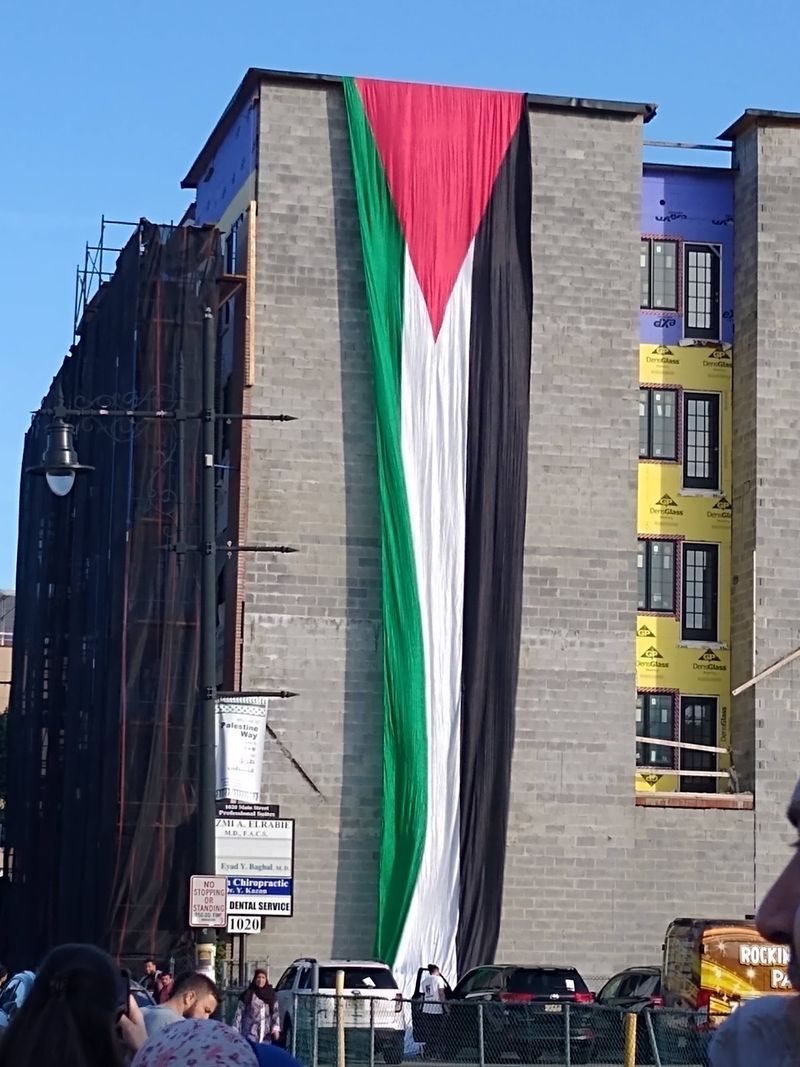
A stretch of Main Street here carries the official name Palestine Way. The mayor has even called this city the capital of Palestine in the United States.
That got my attention fast. Arabic signs line the storefronts, and some skip English translations entirely.
Halal food shows up on some public school menus, and schools close for Eid.
I like how none of this feels staged for visitors. Families have been building this community for well over a century, starting with workers in old silk mills.
Bakeries, sweet shops, grills, and cultural centers grew from those roots.
New Jersey has plenty of great food towns. Few of them let you taste knafeh, shop for spices, and learn about Arab American history in one afternoon.
So where should a curious, hungry person begin?
A Street Sign Here Tells You Exactly Where You Are
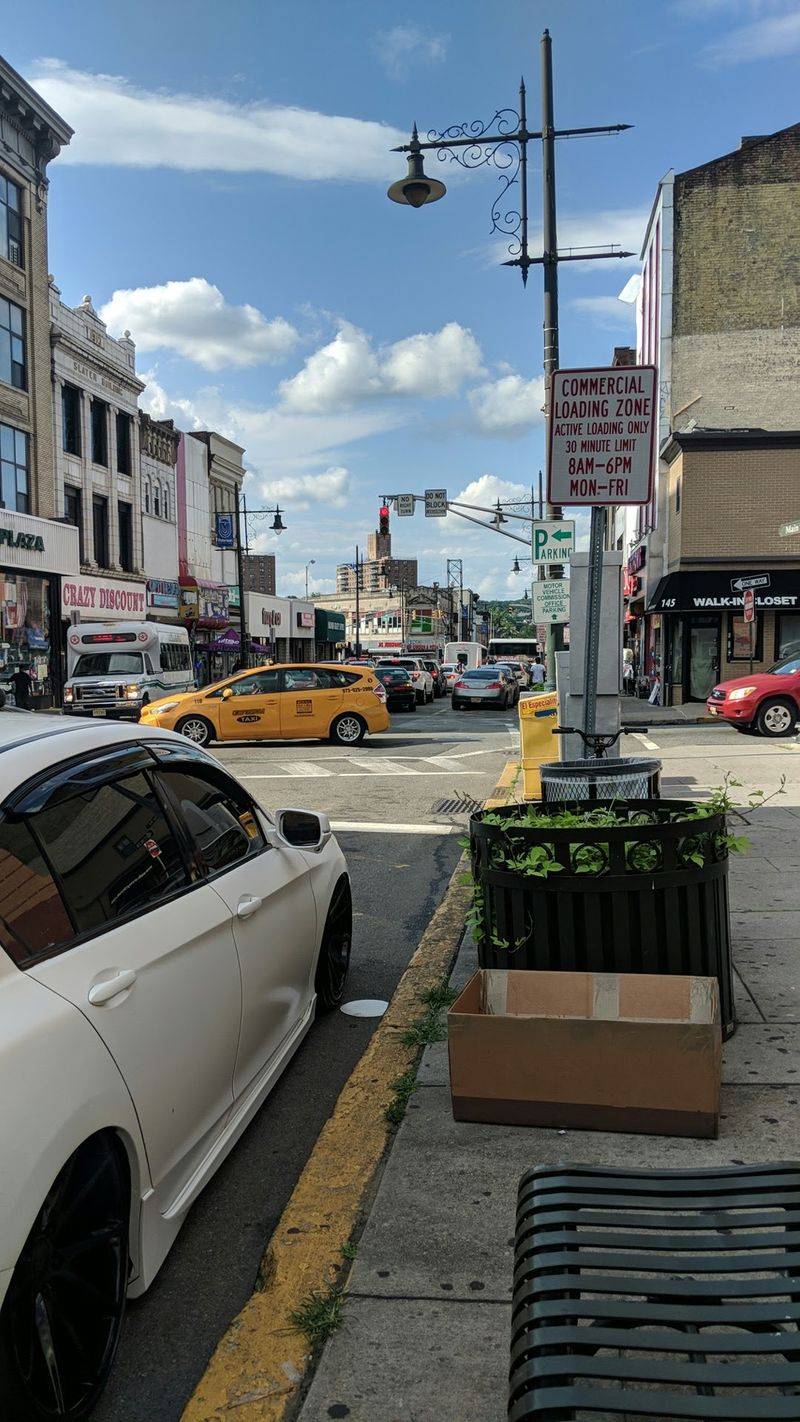
Paterson, NJ made headlines when a segment of Main Street was officially renamed Palestine Way. It’s a small green sign with a big message about who calls this city home.
South Paterson is the heart of it all. The neighborhood holds one of the largest Palestinian communities in the United States, so the nickname Little Ramallah fits well.
Arabic lettering covers shop windows along the corridor. Some signs don’t bother with English at all, which tells you how rooted these businesses are.
Palestinians aren’t the only story, though. Syrian, Lebanese, Jordanian, and Yemeni families also shape the neighborhood’s personality.
Each group brings its own recipes, accents, and traditions to the mix.
The local Arab community is estimated at around 15,000 residents. The city’s wider Muslim population runs from about 25,000 to 30,000 people.
That ranks Paterson second in the nation for Muslim population per capita.
So the street sign isn’t a gimmick. It reflects daily life on blocks where families shop, pray, and gather.
Spend a few minutes reading storefronts, and you’ll start sensing the rhythm of the place. A Middle Eastern souq comparison comes up often, and it’s easy to see why.
Silk Mills Started A Story That Is Still Being Written
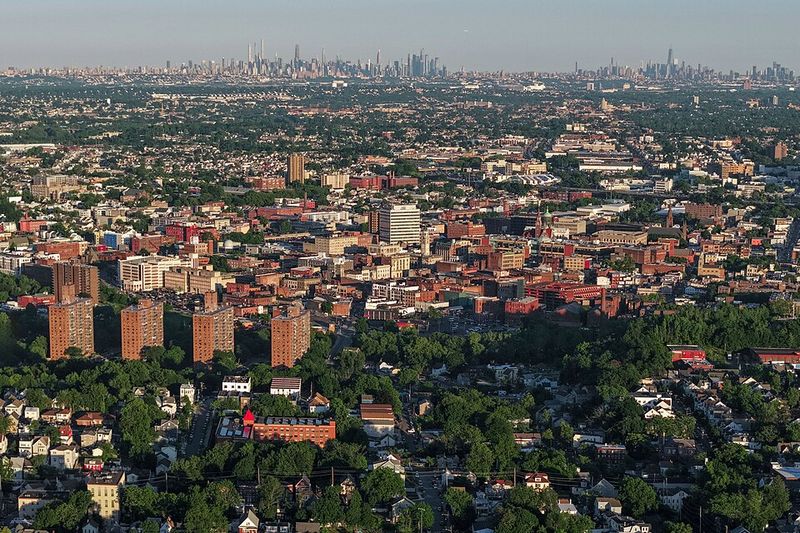
Long before shawarma joints lined Main Street, Paterson was famous for silk. The city’s mills hummed with workers, and many came from far away.
Some of those early arrivals came from Syria and Lebanon in the late 19th century. They took jobs in the silk industry and planted the first Arab roots in this part of New Jersey.
That’s a long family tree. Many American neighborhoods can’t claim a cultural thread stretching back that far.
A second wave arrived after the Immigration and Nationality Act of 1965. Jordanians and Palestinians came in larger numbers, and they helped shape South Paterson into what it is today.
Each generation added something new. Bakeries opened, grocery shelves filled with imported goods, and community groups formed to keep language and customs alive.
I believe that layered history explains why the neighborhood feels so settled and confident. It wasn’t built overnight.
It grew block by block over more than a century.
Knowing this backstory makes a visit richer. That pita you buy connects to families who once worked mill looms just a short drive away.
Your Bread Run Might End With Gold Jewelry
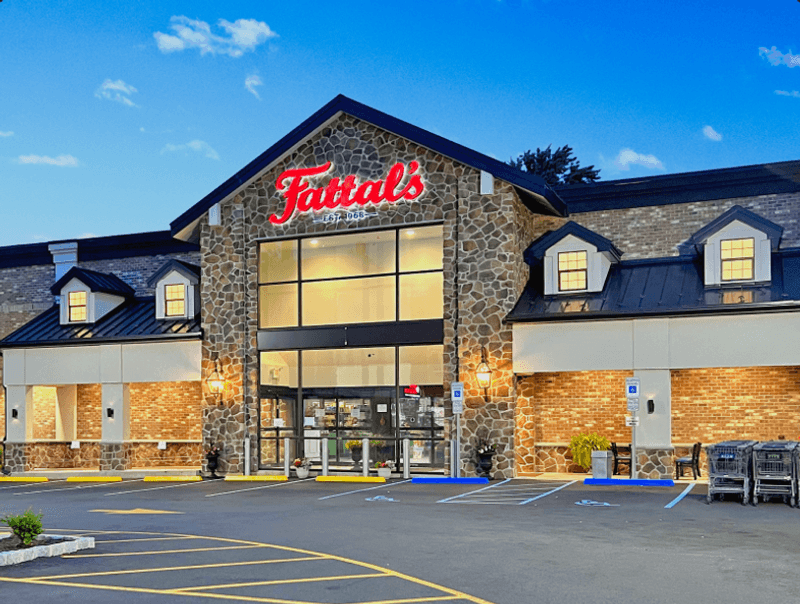
Few bakeries sell fresh pita and 24-carat gold jewelry under one roof. Fattal’s Bakery does exactly that, and it’s been part of Paterson since 1968.
The business started as a Syrian bakery. Over the decades, it grew into a community landmark and a full hypermarket packed with Middle Eastern products.
Bread is still the star for many shoppers. The fresh pita is a big draw, and zaatar breads give you that herby, tangy flavor so many families love.
Save room for sweets, too. Maamoul, the filled shortbread cookies often made for holidays, sit alongside trays of flaky baklava.
Then the aisles keep going. Shelves hold imported groceries, and the jewelry counter adds a touch of sparkle you won’t find at a typical supermarket.
Fattal’s Bakery works well as a first stop for newcomers. You can grab bread, pick up spices for cooking at home, and get a feel for the neighborhood’s tastes.
Just don’t be surprised if your quick bread run turns into a full shopping trip. That seems to be part of the charm here.
Charcoal Smoke And Mansaf Make Dinner Easy To Plan
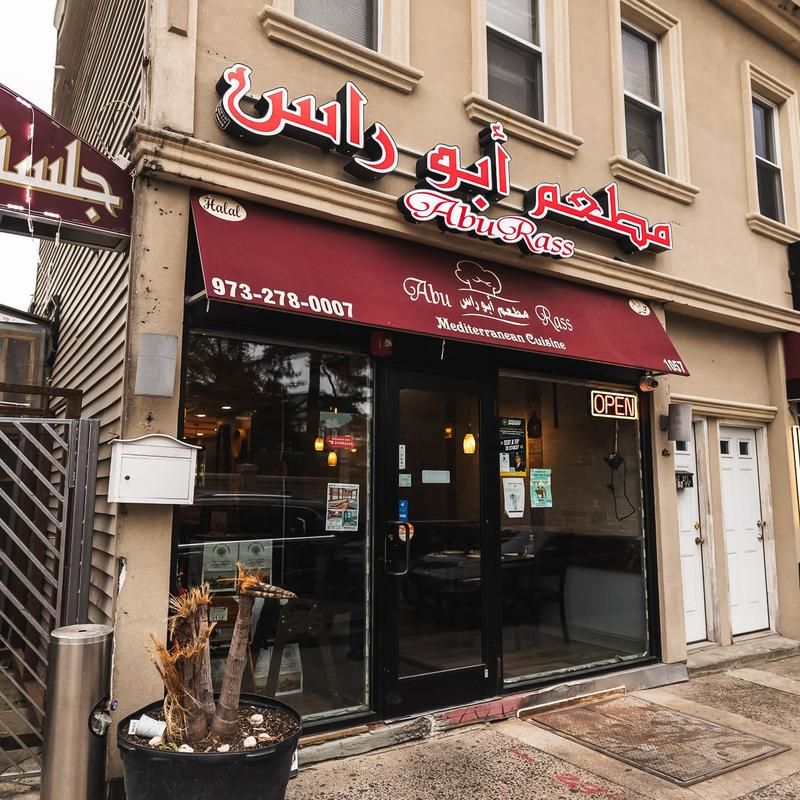
Hungry visitors have plenty of choices along the Main Street food strip. The trick is narrowing it down without needing three dinners.
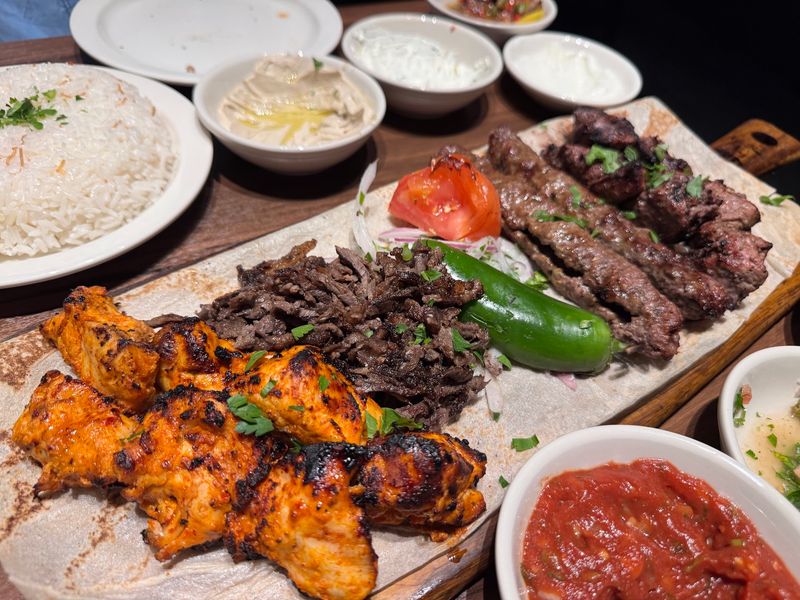
Abu Rass Restaurant has served Palestinian and Middle Eastern food since 2011. Its charcoal-grilled chicken and mixed grills get the most attention.
The menu also covers musakhan, mansaf, shawarma, hummus, and fresh-baked pita.
Musakhan deserves a quick explanation. It’s a Palestinian dish of roasted chicken with onions and sumac, served on bread.
For Jordanian flavors, Shmagh and Kufiya Restaurant leans into hospitality. Mansaf, Jordan’s famous lamb dish with a yogurt sauce, headlines a menu that also includes falafel and hummus.
Here’s a bonus for late risers. Shmagh and Kufiya offers an all-day breakfast menu, so foul and eggs at 3 p.m. is fair game.
Al-Basha Restaurant on Crooks Avenue rounds out a strong trio. It’s known for generous shawarma platters, mixed grills, falafel, and very creamy hummus.
My advice? Bring a friend and share.
That way you can sample grilled meats and a traditional stew without needing a nap afterward.
Orange Semolina And Pistachios Steal The Spotlight
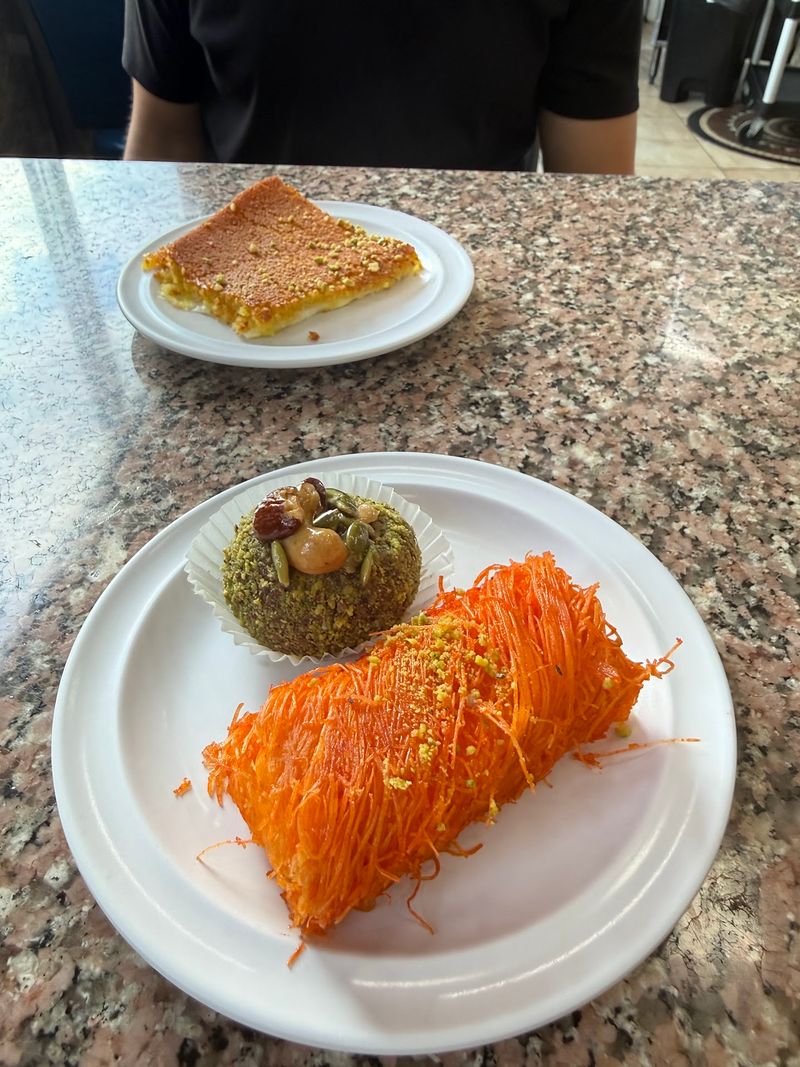
Sweet cheese hidden under bright orange semolina is a sight worth crossing town for. Nablus Sweets and Pastries has built its reputation on desserts like that.
That dessert is knafeh, a favorite across the Arab world. The shop is a veteran in Paterson and makes its sweets in-house.
Pistachio lovers, pay attention. The double pistachio baklava doubles down on the green nut, and pistachios pop up across many other treats too.
Knafeh is especially famous in Nablus, the Palestinian city that gives this shop its name. So the title isn’t random.
It’s a nod to a proud dessert tradition.
Sweets matter a lot in Arab culture. They show up at weddings, holidays, and family visits, often served with strong coffee.
Fun fact: knafeh is usually best eaten warm, when the cheese is soft and stretchy. Plan to enjoy at least one piece right away.
Grab a mixed box for the drive home if you can. Your family back home will be glad you did, assuming the box makes it there unopened.
Family Bakeries And Corner Grills Keep Things Personal
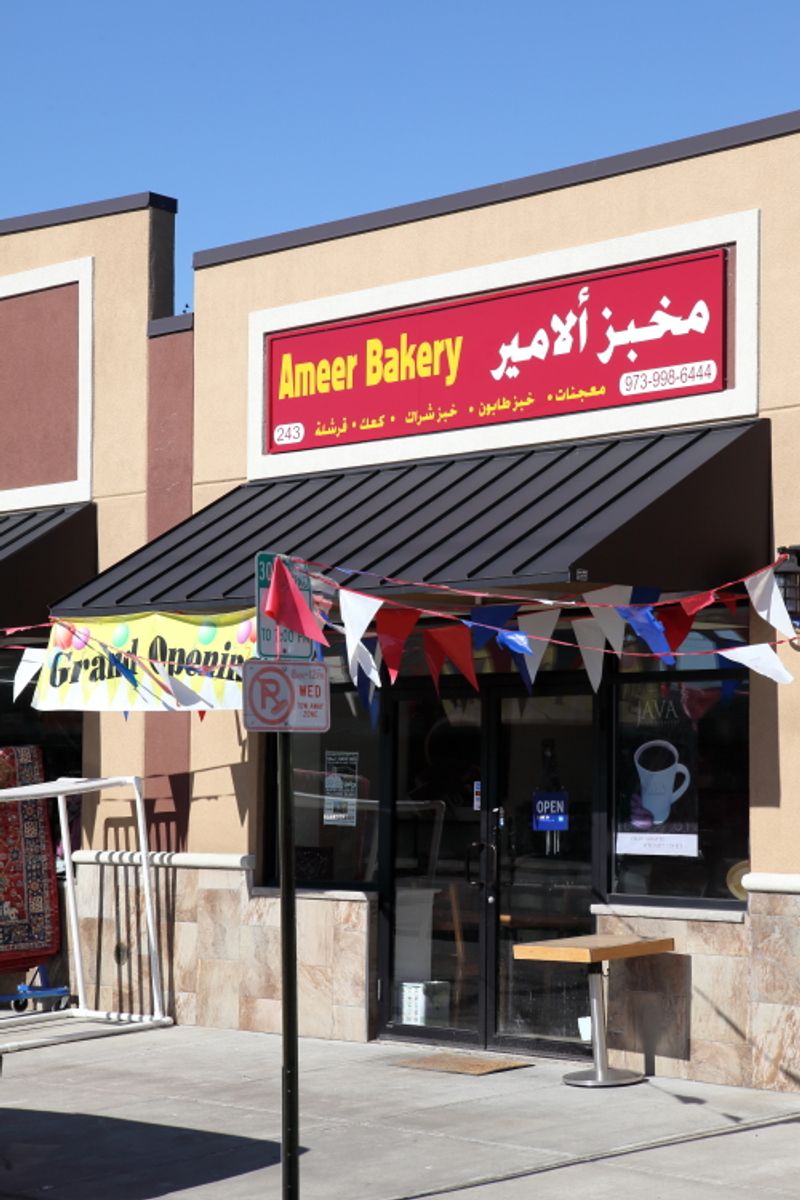
Scratch baking still rules at Ameer Bakery, a family-owned spot in South Paterson. The bakery sticks with traditional methods for its breads, sandwiches, and pastries.
You’ll find it at 243 Buffalo Ave, Paterson, NJ 07503. It’s a handy stop for anyone exploring the quieter side streets beyond Main Street.
Middle Eastern breads come in many shapes. Some are thin and soft, while others are topped with herbs, cheese, or meat.
Over on a prominent Main Street corner, Darna offers a different mood. The dining room is roomy, with spacious family seating that suits bigger groups.
Darna’s menu brings labneh, muhammara, and meat arayes to the table. Arayes are pita stuffed with seasoned meat and grilled until crisp.
Muhammara might be new to you. It’s a red pepper and walnut dip that pairs nicely with warm bread.
The mixed grill portions are large enough for several people. That makes Darna a smart choice for family gatherings or celebrations.
Between a small bakery and a big corner restaurant, you’ll see two sides of the same welcoming food culture.
Spice Aisles Could Change Your Home Cooking
Olive oil, Arabic coffee, cheeses, and spices fill shelves all over South Paterson. Halal grocery stores and spice markets are everywhere you turn.
Nouri Brothers Market is a good example. It pairs a grocery with a halal deli, offering spices, cheeses, and prepared hot foods.
That combo is great for busy days. You can shop for dinner ingredients and grab something warm to eat on the way out.
Paterson also plays a bigger role than most shoppers realize. Paterson is home to halal meat producers, specialty grocers, and food businesses that serve customers throughout the surrounding region.
Halal means food prepared according to Islamic dietary rules. In Paterson, it’s woven into everyday life, and some public schools even serve halal meals.
Here’s a practical tip. Buy a small bag of zaatar or sumac and try it at home on eggs, roasted vegetables, or toast.
A few new spices can wake up your whole kitchen routine. Plus, every jar becomes a little reminder of your trip through this lively part of New Jersey.
Kids Learn Arabic Here For Free, And That Matters
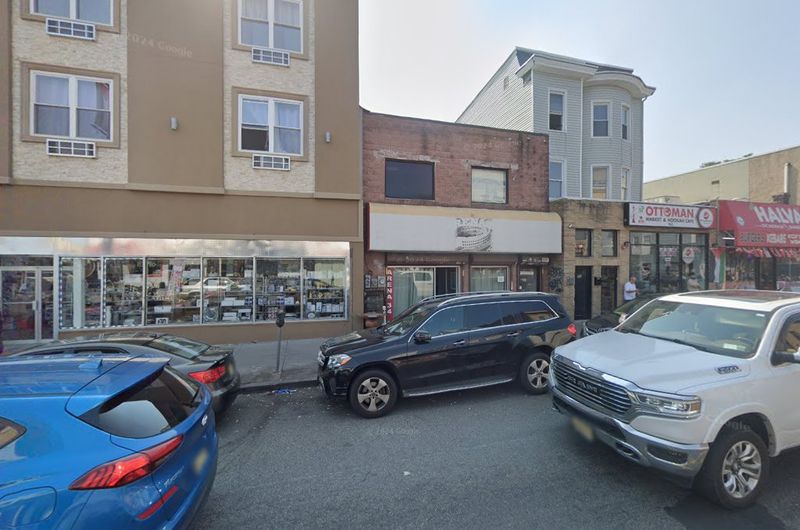
Language is the glue that holds this community together. Several local groups work hard to make sure younger generations keep it.
The Arab American Civic Organization has offered free Saturday Arabic language classes for children in Paterson. The program was previously hosted at a Paterson public school, giving local children an opportunity to study Arabic language and culture.
Its office sits at 964 Main St., on the second floor. It’s right in the middle of the busy South Paterson corridor.
Beit Anan Community Center is another nonprofit hub. It offers Arabic education, youth and family programs, community events, and hall rentals.
Its goal is simple and heartfelt. Beit Anan wants to connect generations with Arabic language, culture, and identity.
I can’t imagine a better way to protect traditions than teaching them to kids early. Grandparents and grandchildren get a shared language to talk, laugh, and tell stories.
Visitors may not take a class, of course. Still, knowing these centers exist helps explain why the culture here feels so alive, rather than like a museum display.
Civic Pride Shows Up On State Highways And At City Hall
In 2018, Paterson voters elected Andre Sayegh as mayor. He’s an Arab American, and he has proudly called the city the capital of Palestine in the United States.
Statewide recognition followed, too. New Jersey formally recognizes Arab American Heritage Month each April, celebrating the community’s contributions to the state.
Those moves send a clear signal. Arab Americans aren’t just part of Paterson’s past.
They help lead its present.
Faith institutions play a big role as well. The Islamic Center of Passaic County, founded in 1990, serves over 25,000 people with religious education, social services, and community programs.
School calendars reflect the community too. Paterson schools close for Eid, letting families celebrate together.
The Arab community has also helped with the city’s revitalization. Busy shops and full restaurants bring energy to streets that once relied on mills.
So when you visit, you’re seeing more than great food. You’re seeing a community that has earned a real voice in a big New Jersey city.
That’s a story worth tasting, one warm piece of pita at a time.
