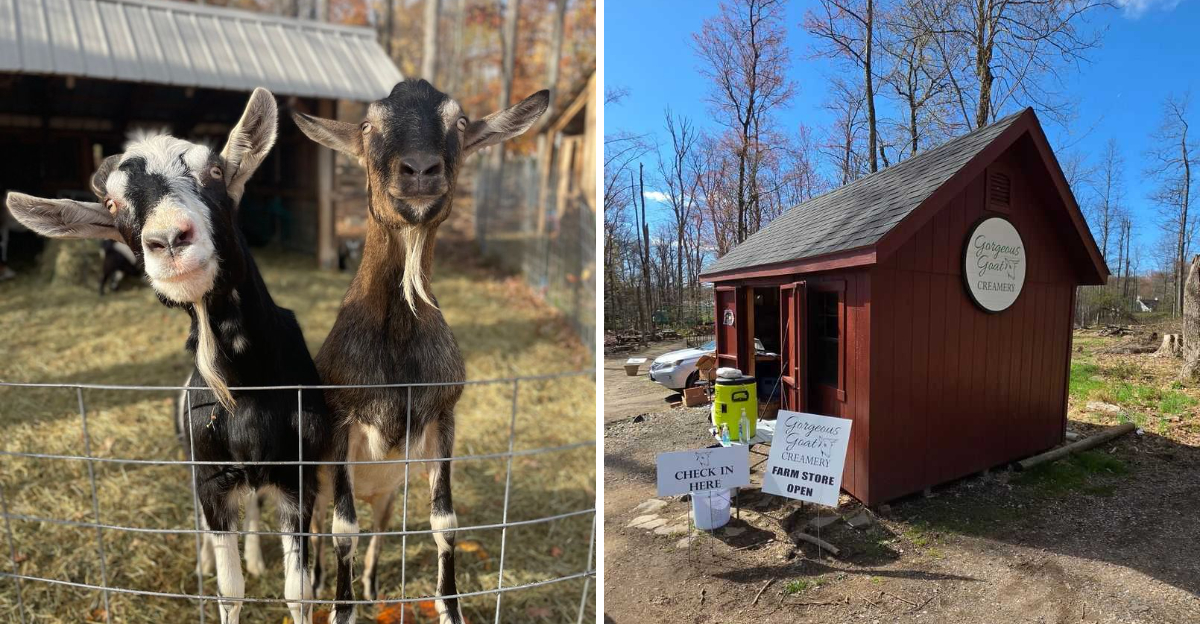
You will not find a creamery quite like this one. Udderly charming from the moment you arrive.
Nestled in the woods of New Jersey, this is a place where the real stars have four legs and a whole lot of personality.
Baby goats leap and play as you wander through the pasture. The air smells fresh and clean.
And the cheese?
It is made right on site from the milk of the very goats you just met. Creamy.
Tangy. Unforgettable.
Visitors can bottle-feed the kids, explore the forest, or just sit and watch the herd do their thing.
It is the kind of place that feels like a secret, even though word has long since gotten out.
You will leave with cheese in your bag and a smile on your face. Honestly?
You will be planning your next visit before you even pull out. No kidding.
A Working Farm That Moves At Goat Speed
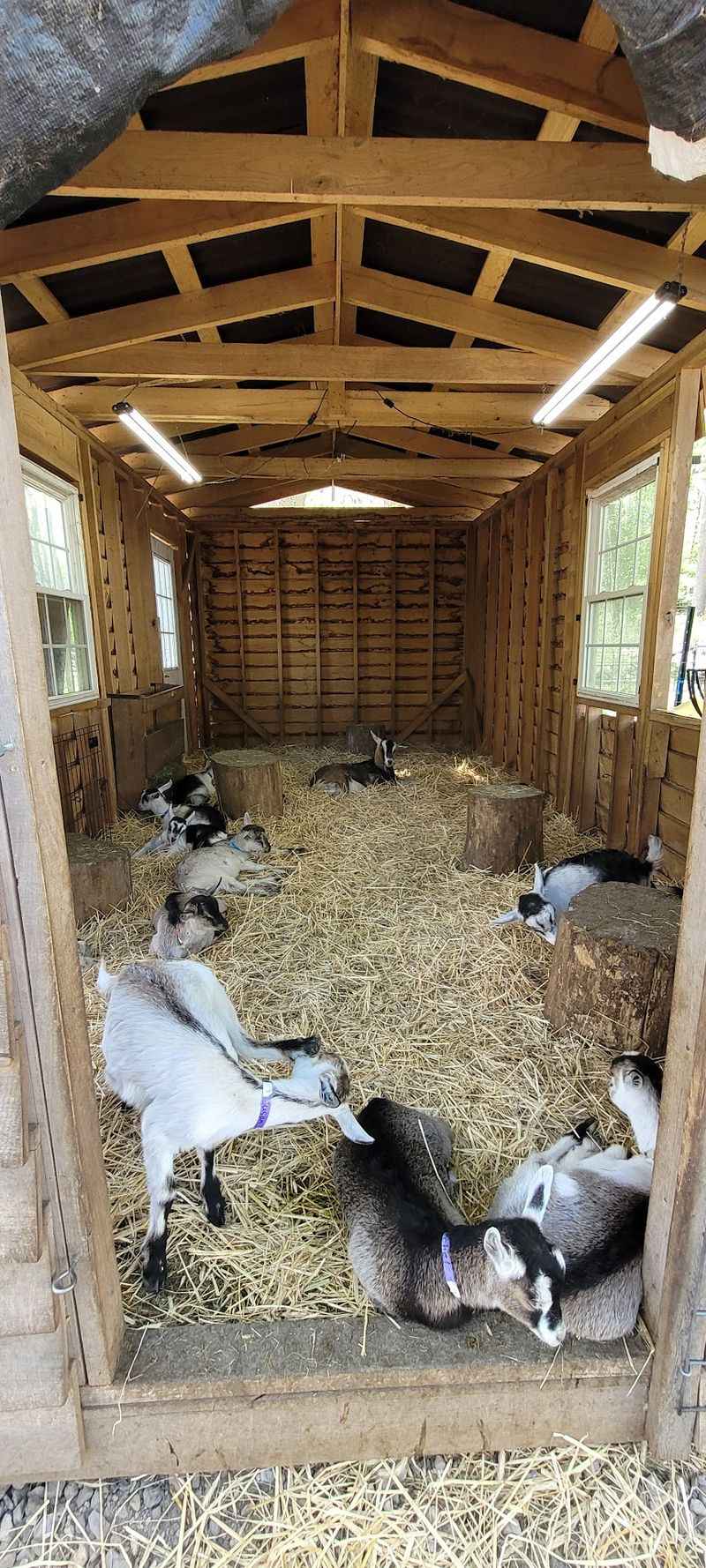
Gravel crunches, a gate latch clicks, and suddenly the pace of the whole day drops by half. Gorgeous Goat Creamery is a small-scale goat dairy set into the rolling farmland of Hunterdon County, and it never pretends to be anything bigger than that.
Alpine dairy goats graze in the pastures, and the milking is done by hand rather than by machine. That choice tells you almost everything about how the place operates.
There is no ticket booth theater, no gift-shop maze, no piped-in music. Just fencing, feed buckets, curious animals, and people doing farm chores in mud boots.
Visiting hours are limited, which suits a real working operation. The farm opens Friday afternoons and midday on weekends, so planning ahead genuinely matters.
What struck me most is how relaxed the goats are around visitors. Animals that are handled gently every day behave differently, and you notice it immediately in the way they lean into a scratch behind the ears.
Baby Goats That Will Absolutely Untie Your Shoes
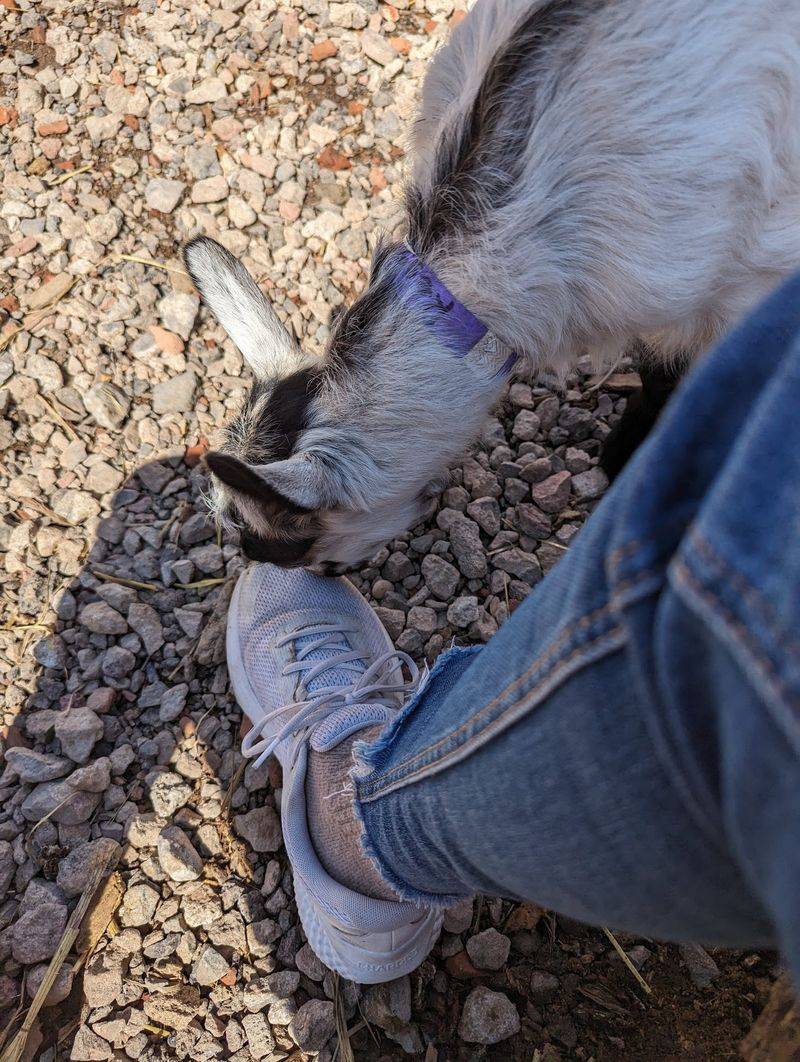
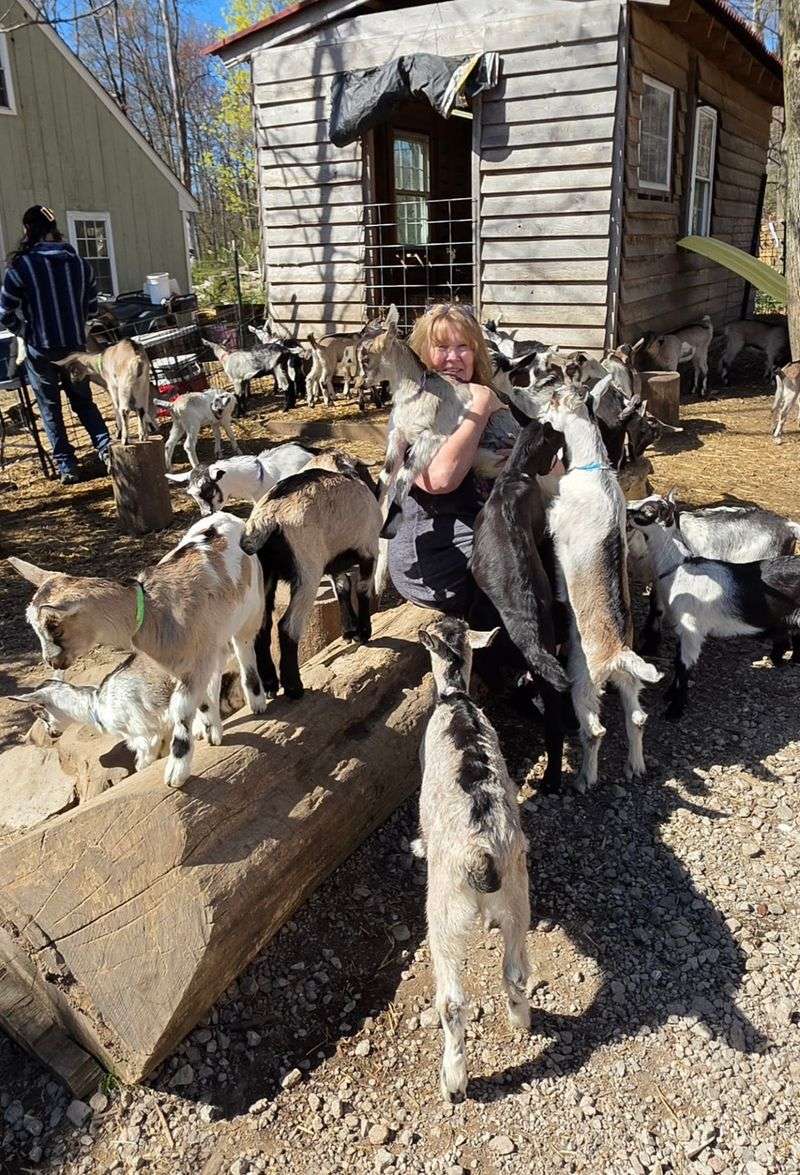
Spring turns this farm into pure chaos, the good kind. Baby goats arrive in waves, and the creamery runs snuggle sessions where you sit right down in the pen and let the herd come to you.
They climb. They nibble sleeves.
They fall asleep in laps and then spring up like popcorn.
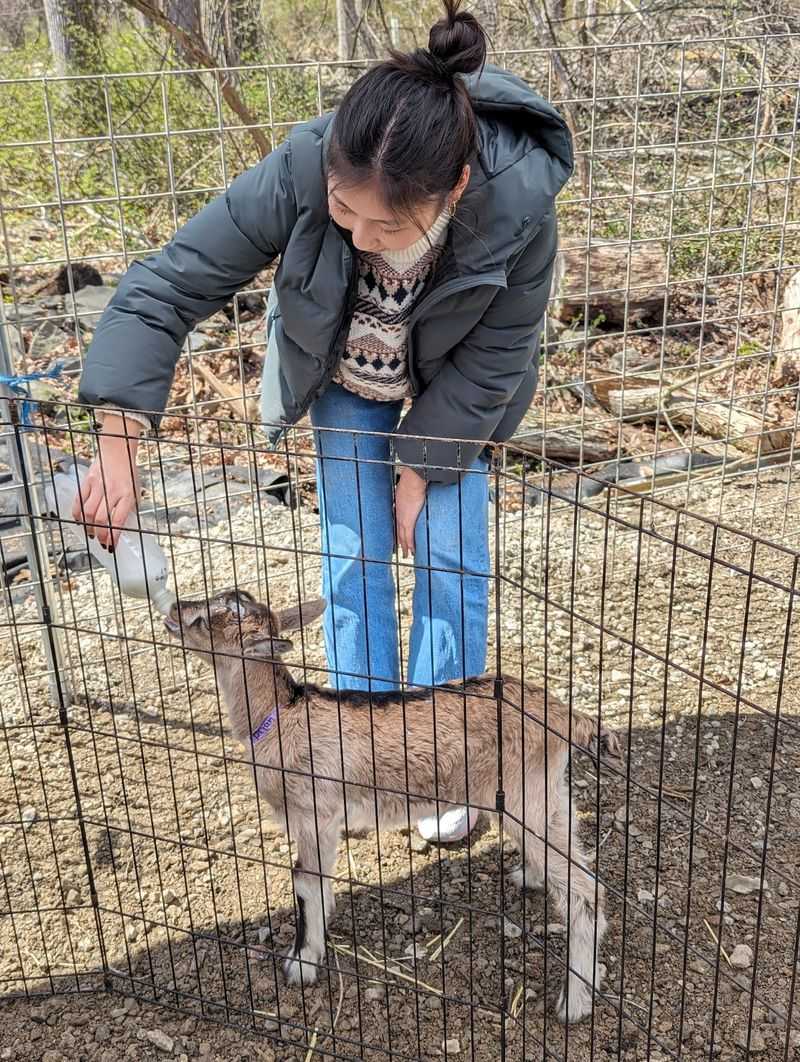
Bottle feeding is part of the fun during kidding season, and watching a wobbly kid brace all four legs to drink is oddly moving. Groups stay small on purpose, so nobody is fighting for a turn.
Practical advice from anyone who has done it: wear boots you do not love and clothes you would not mind getting muddy or chewed. A change of shirt in the car is smart.
Anyone sensitive to animal dander may want to plan accordingly, since hugging goats means fur, hay, and dust on everything.
Honestly, an hour with baby goats does more for a bad week than most things I can think of.
Chevre So Good People Eat It In The Parking Lot
Fresh chevre is the headliner, and it earns the billing. Made from the farm’s own goat milk, it comes plain or mixed with herbs, and the texture lands somewhere between whipped and silky.
Spread it on crusty bread. Or skip the bread entirely and go in with a spoon, which visitors admit to doing more often than you would expect.
Because the milk travels only a few yards from the milking parlor to the creamery, freshness is not a marketing claim here. It is simply how the operation works.
The herb version has a bright, garden-like lift that pairs beautifully with tomatoes or roasted vegetables. The plain one is the more flexible workhorse, good on toast at breakfast and stirred into pasta at dinner.
Farmstead cheese means the animals, the milk, and the cheesemaking all live on the same property. That short chain of custody shows up in the flavor.
Buy two containers. One rarely survives the drive home.
Feta, Gouda, And A Soft Cheese Called Cumulus
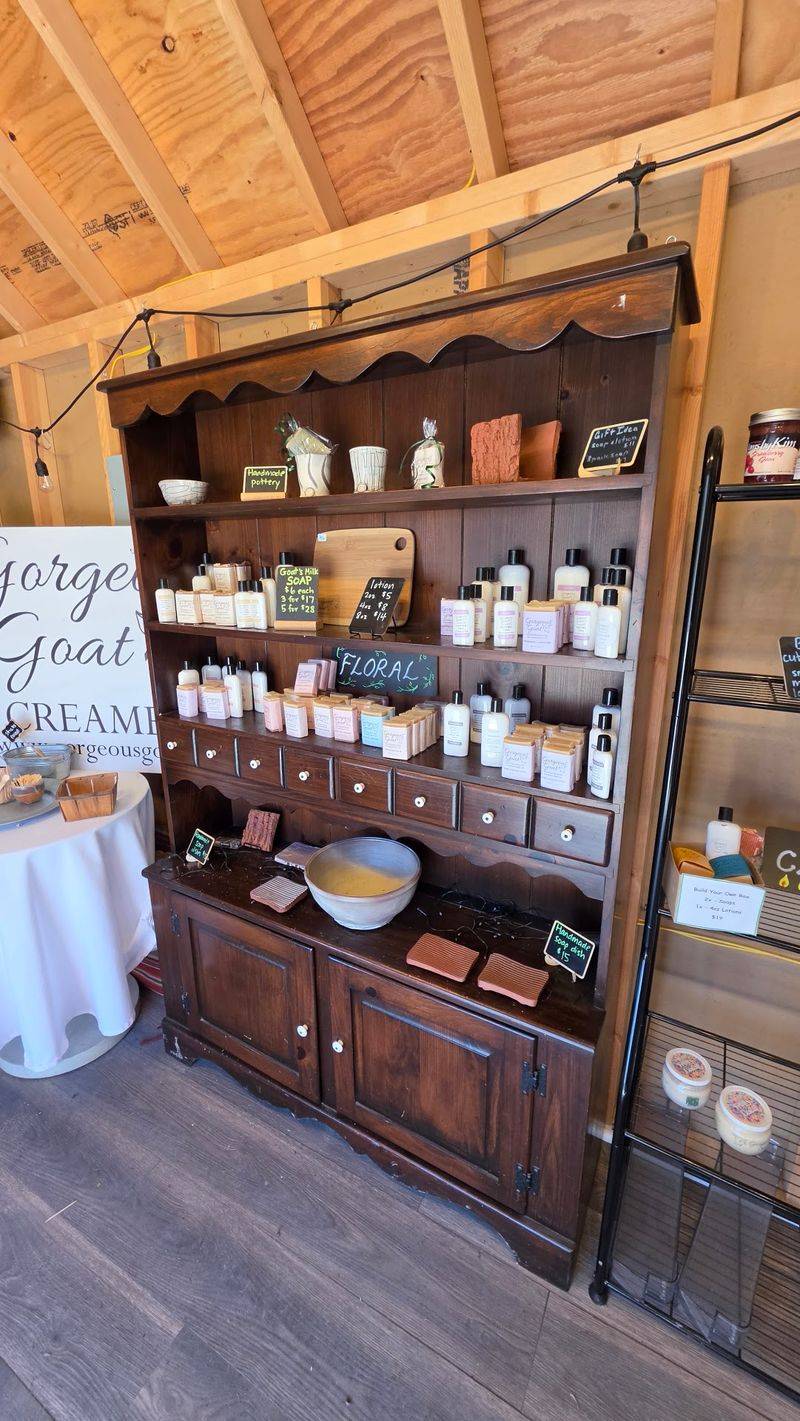
Beyond the chevre, the cheese lineup stretches in some genuinely interesting directions. The feta is made entirely from goat milk, which gives it a rich, buttery quality instead of the sharp saltiness many people expect.
Crumble it over greens and it changes the whole salad.
There is also a Gouda aged for several months, creamy in texture with a gentle goat character rather than an aggressive tang. It slices cleanly and melts nicely, making it the most versatile option for people new to goat cheese.
Then comes Cumulus, a soft-ripened cheese with a tangy edge that spreads across bread like something you would expect from a much larger European dairy.
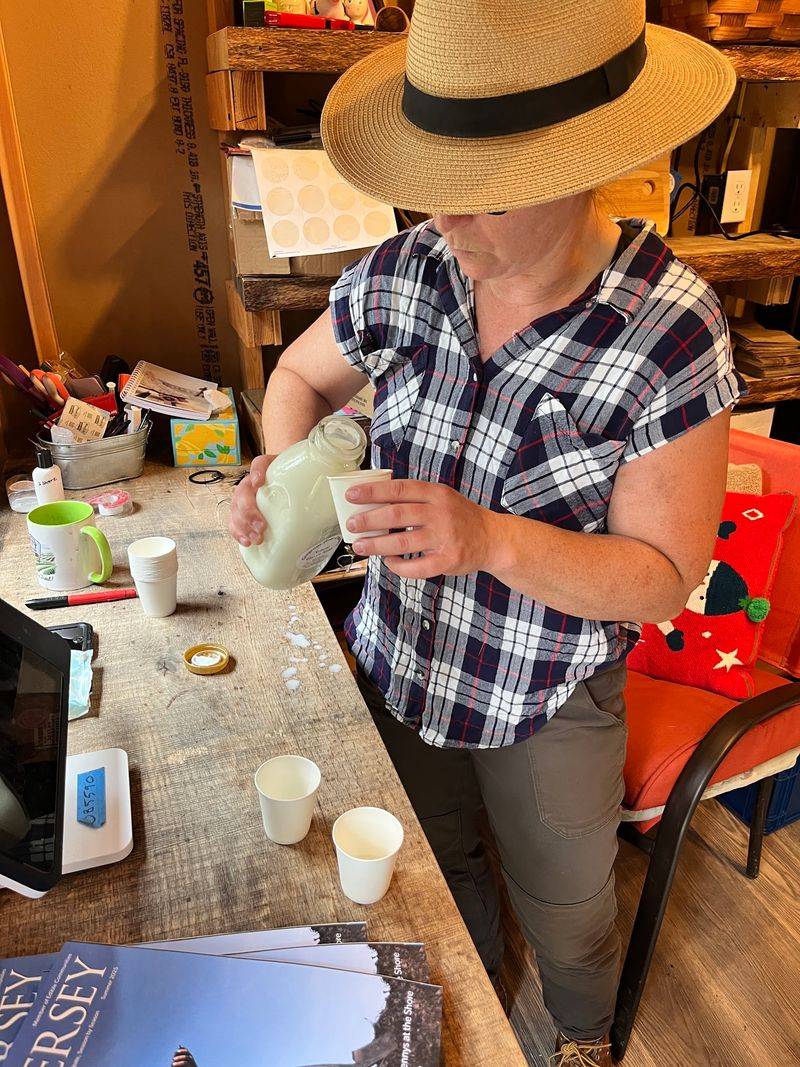
Samples are usually available in the farm store, so tasting before committing is easy. Staff are happy to explain the differences between batches and answer questions about aging.
My suggestion is to try one fresh cheese and one aged cheese side by side. The contrast from a single herd is genuinely surprising.
Bottled Goat Milk And Drinkable Yogurt
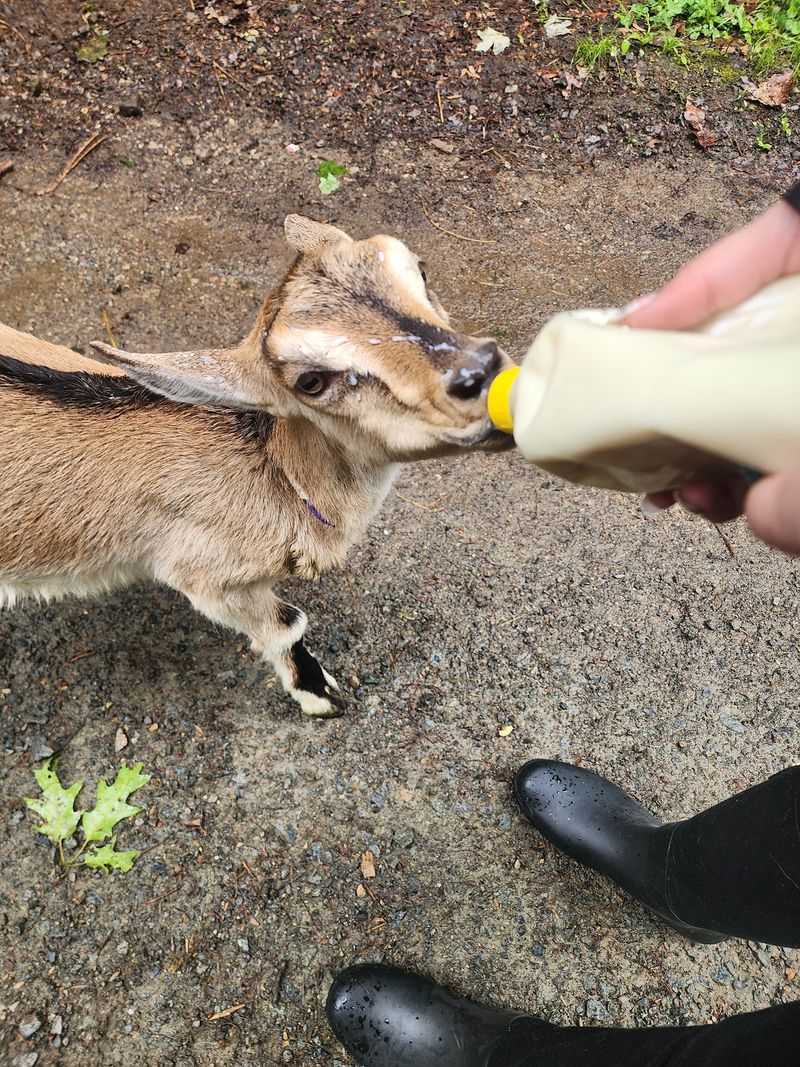
Glass bottles lined up on a shelf have a certain old-fashioned appeal, and here they hold pasteurized goat milk from the resident herd. The creamery is the state’s only goat milk bottler, which makes those bottles a small novelty in themselves.
The taste is clean and mild, not at all what skeptics assume.
Goat milk yogurt is the other standout. It comes out naturally thinner than cow milk yogurt, closer to a drinkable smoothie style, and it carries plenty of probiotics.
Pour it over granola, blend it with frozen fruit, or drink it straight from the jar on the drive back. All three work.
Some visitors find goat milk easier on the stomach than cow milk, though that varies from person to person. Either way, tasting it at the source beats reading about it.
Bring a cooler bag if you are heading anywhere else afterward. Fresh dairy and a warm car do not get along, and these products deserve better treatment.
Hiking The Woods With A Herd Of Goats

Picture a woodland trail where your hiking companions have hooves and absolutely no sense of trail etiquette. The goat hikes here run about three quarters of a mile on mostly flat ground, which means almost anyone can manage it.
The goats stop constantly to snack on leaves. So does everyone else, mostly to laugh at them.
Rather than a workout, the experience feels closer to a slow group stroll where the animals set the mood. They wander ahead, double back, and occasionally lean against a knee for attention.
Kids love it because the goats are at eye level and endlessly unpredictable. Adults tend to love it for reasons harder to explain until you try it.
Comfortable closed-toe shoes are essential, and a camera with a fast shutter helps since goats rarely hold still.
Of all the ways to spend an hour outdoors in this corner of New Jersey, walking a quiet trail behind a curious herd ranks near the top for sheer originality.
Farm Tours That Show The Whole Milk To Cheese Journey
Curiosity about where food actually comes from gets a satisfying answer on the farm tours. Visitors learn how the goats are milked by hand, how that milk becomes chevre, feta, and aged wheels, and who exactly is responsible for the raw material.
Spoiler: the goats take all the credit.
Tours include time in the pasture, where petting is encouraged and farm-provided treats make you instantly popular. Questions are welcome, and the answers come from people doing the work daily.
Seeing the microdairy setup changes how you think about the containers in the farm store. Small batches mean real variation, and that variation is a feature rather than a flaw.
Groups stay intentionally small, so this is not a shuffling crowd experience. There is room to linger and actually watch.
For families, the educational angle sneaks up on kids who think they are just there for the animals. That is the best kind of learning, the type nobody notices happening.
Seasonal Events And The Farmer For A Day Experience
The calendar here shifts with the seasons, which keeps repeat visits interesting. Spring belongs to the baby goats, summer and fall bring tours and hikes, and special gatherings pop up at various points during the year.
No two visits land the same way.
Among the more hands-on options is a Farmer For A Day style experience, where guests pull on mud boots and join the actual routine. That includes learning goat behavior, meeting the does, and taking part in milking.
It is real work, done gently, and families with older kids seem to get the most out of it.
Because sessions are kept intimate, booking in advance is the smart move rather than showing up and hoping. Availability shifts with the farm’s own rhythms and weather.
Anyone who has ever wondered whether they could handle farm life gets a small, honest preview here. Two hours of chores answers the question faster than any amount of daydreaming.
The Little Red Barn Store And Its Goat Milk Soaps
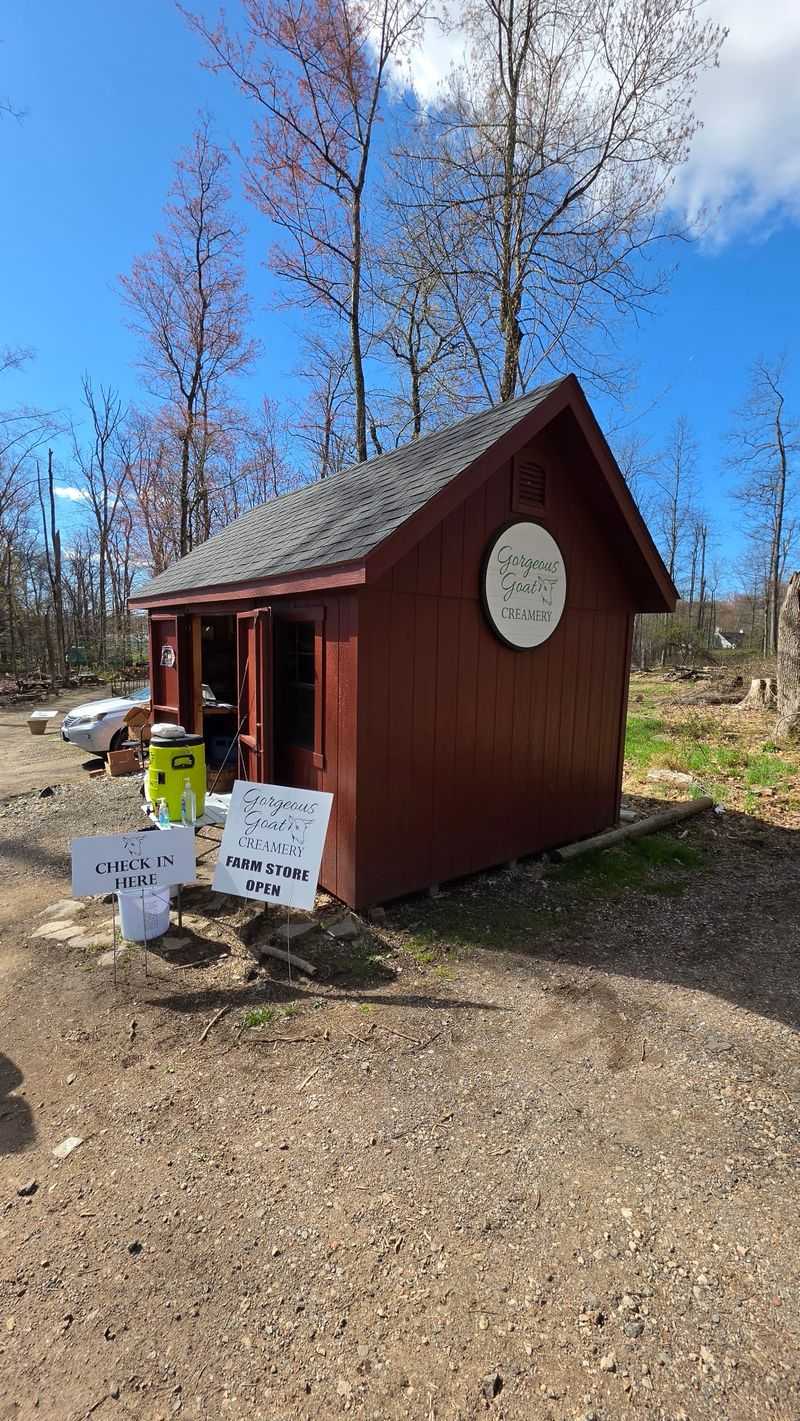
Last stop before leaving is a small red barn packed tighter than it looks from outside. Shelves hold the full range of farmstead cheeses, bottled milk, and yogurt, plus jams and candles from the surrounding area.
The real surprise is the soap section.
Handcrafted goat milk soaps and lotions are made in small batches right here, in scents that lean seasonal and garden-inspired. They make excellent gifts, and they also make excellent excuses to keep one for yourself.
Tasting cheese before buying is part of the routine, which takes the guesswork out of choosing between varieties. Someone is usually on hand to explain what makes each one different.
Shopping here supports a genuinely small operation, and that connection between the animals outside and the products inside is impossible to miss.
My honest advice is to budget more time for the barn than you think you need. Nobody walks out with just one item, and nobody regrets it either.
Finding It, And Why The Bumpy Road Is Worth It
Featherbed Lane earns its rustic reputation, and the final stretch of road is bumpy enough that first-timers wonder if they took a wrong turn. Keep going.
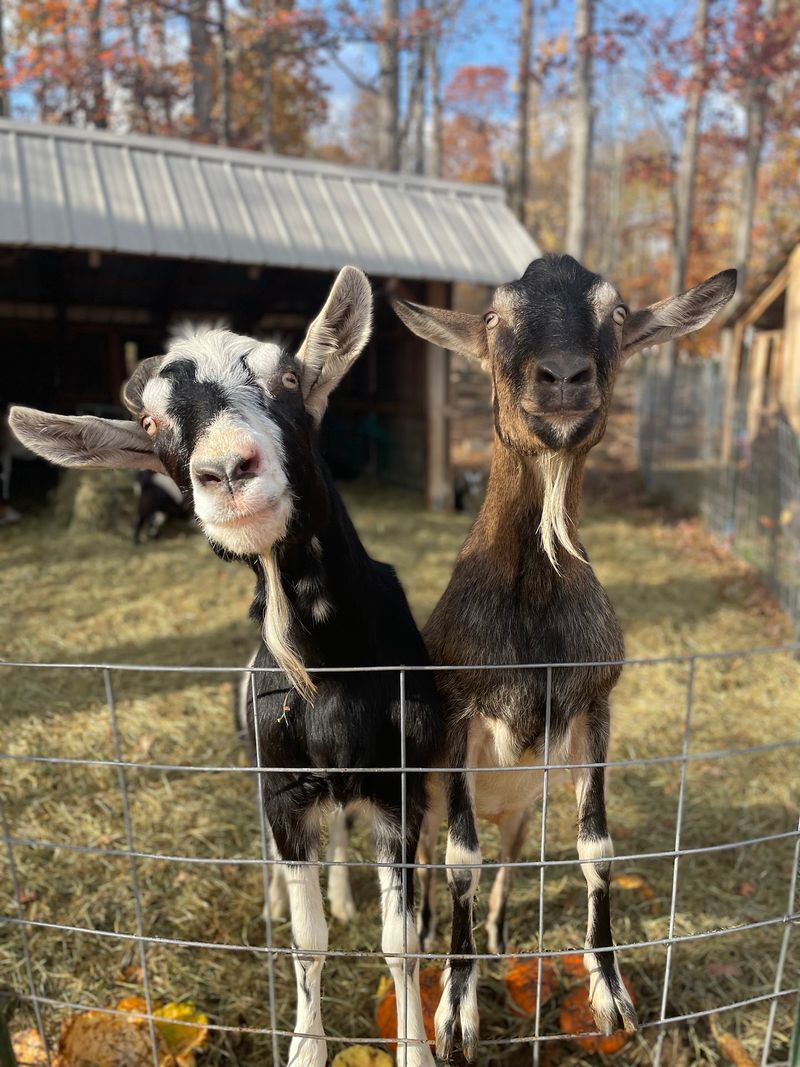
The pastures appear, the bleating starts, and the doubt disappears.
Hunterdon County farmland has a quiet beauty that rewards slow driving anyway.
What makes the location especially handy is how close it sits to the Delaware River towns. Stockton and Lambertville are a short drive away, so a farm visit slots easily into a broader day of wandering riverside streets and browsing shops.
Opening hours are limited to Friday afternoons and weekend middays, which means checking the schedule before setting out is essential. Sessions and tours generally require advance booking.
Boots, patience, and an appetite for cheese are the only real requirements.
Few places manage to be both a serious dairy and a genuinely joyful afternoon out. That balance is rare, and it is exactly why this small farm sticks in the memory.
Address: Gorgeous Goat Creamery, 71 Featherbed Ln, Stockton, NJ 08559
