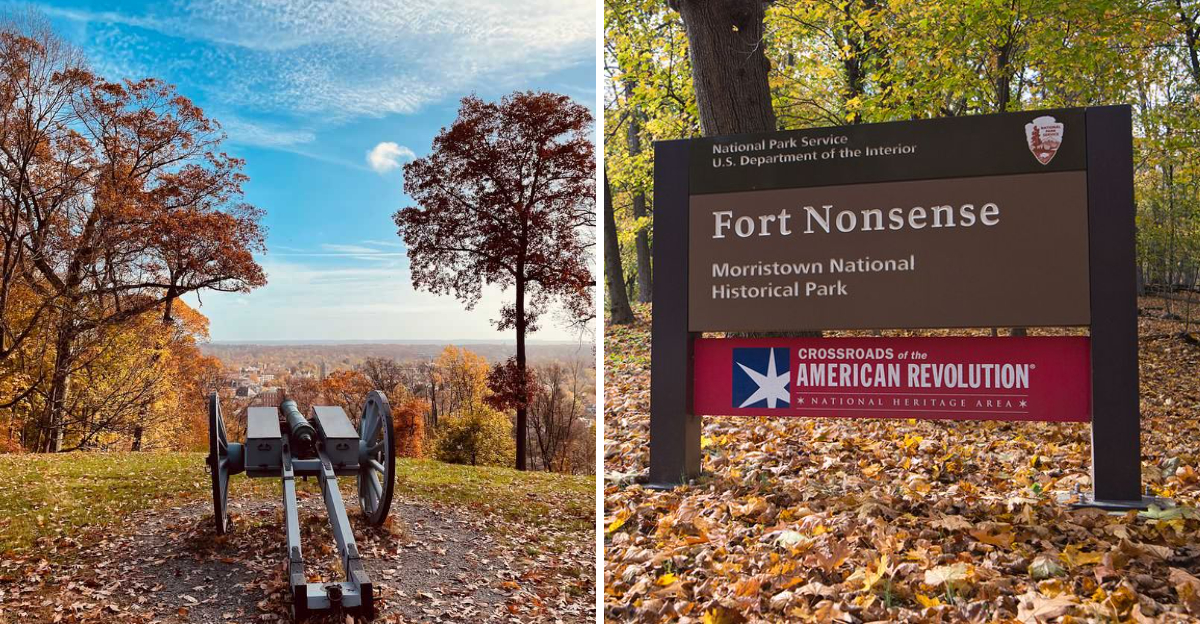
Some places have names that make you chuckle. This New Jersey hilltop has a name that has sparked curiosity for more than two centuries.
You have probably visited historic sites with straightforward names. Fort Defiance. Fort Independence.
This one is different.
The story goes that General Washington ordered its construction just to keep his soldiers busy during a long winter.
Busy work. A pointless project. Nonsense.
But the truth is more practical. The fort served as an observation post and a safe retreat for guards protecting supplies.
The British never attacked, so the fort never saw action. Without a battle to cement its purpose, the joke stuck.
Today, the hilltop offers sweeping views and a reminder that not every fort needs a battle to be remembered.
Washington’s 1777 Order That Started It All
Fresh off surprise victories at Trenton and Princeton, the Continental Army marched into Morristown on January 6, 1777, looking for a safe place to rest.
The Watchung Mountains and the Great Swamp acted like natural walls, making it hard for British troops to sneak up.
Before Washington packed up and left camp in late May, he gave an order: build a fortification on the tall hill overlooking town. Soldiers dug trenches, piled up earthen breastworks, and put together a guardhouse big enough for about thirty men.
Nobody called it Fort Nonsense back then. Locals simply said “the Hill” or “Kinney’s Hill,” after a nearby landowner.
The nickname came much later, once people forgot why the work mattered.
Standing on the spot today, the reasoning becomes obvious. From up there, a lookout could watch the entire town, spot movement on the roads, and shout a warning long before trouble arrived at the doorstep.
How a Nickname Like “Nonsense” Sticks for Two Centuries
Here is the funny part: the fort worked so well that nothing ever happened there. The British never marched on Morristown, no cannons roared from the hill, and no soldiers fell defending it.
Years later, people looked at the crumbling ditches and shrugged. If no battle happened, they figured, why bother building it?
Out of that shrug came the teasing name “Fort Nonsense,” and it stuck harder than any official title ever could.
Visitors still repeat the joke. One reviewer even wrote that it is an “actual nonsense fort,” which shows the nickname is alive and well after more than two hundred years.
Historians see it differently. A fort that scares an enemy away without a fight is doing exactly what it was designed to do.
Think of it like a smoke alarm that never goes off – annoying to install, wonderful to never need.
The Legend About Keeping Bored Soldiers Busy
Ask around Morristown and someone will tell you Washington built the fort just to keep restless troops out of trouble. It is a great story, the kind that spreads fast because it makes a famous general sound like a clever camp counselor.
Historians, though, mostly wave the tale away. Old soldiers who later applied for pensions described the hill as a real defensive post where they stood guard duty, not as a make-work project.
Washington’s own letters back that up. He wrote about the site’s value for protecting supplies and watching the roads, which is not how someone describes a pointless chore.
Still, the busywork legend refuses to die, and honestly it adds charm to the visit. Reading the wayside exhibits, you get to weigh the myth against the evidence yourself, which is a rare treat at a park this small and quiet.
A Lookout Post Guarding Washington’s Headquarters
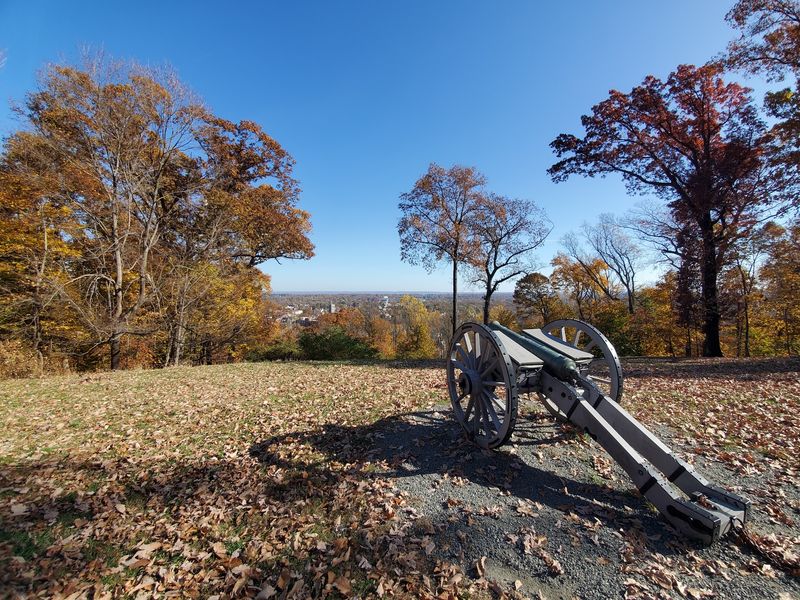
Morristown was more than a rest stop. It served as a major supply base, packed with food, weapons, and gunpowder that the Continental Army could not afford to lose.
From the hilltop, sentries kept eyes on those storehouses and on Washington’s headquarters in the town below. Anyone approaching along the main roads would be spotted quickly, giving guards precious minutes to react.
Planners also treated the fort as a fallback position. If British soldiers ever pushed into Morristown, troops stationed there had a defended high spot to pull back to, complete with trenches and earthen walls.
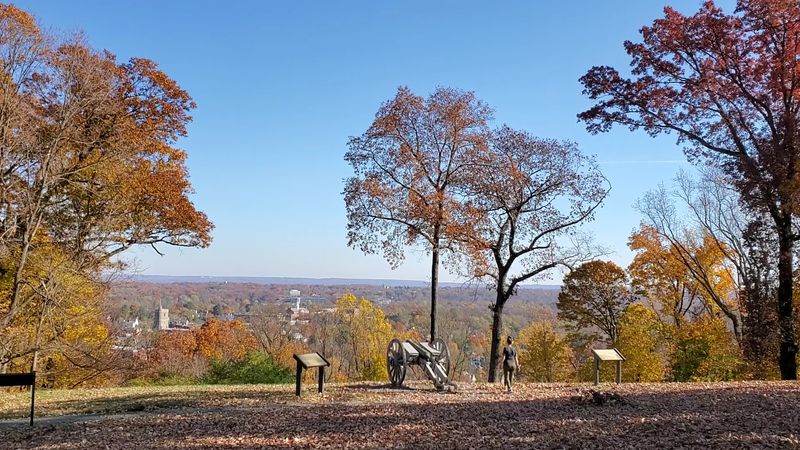
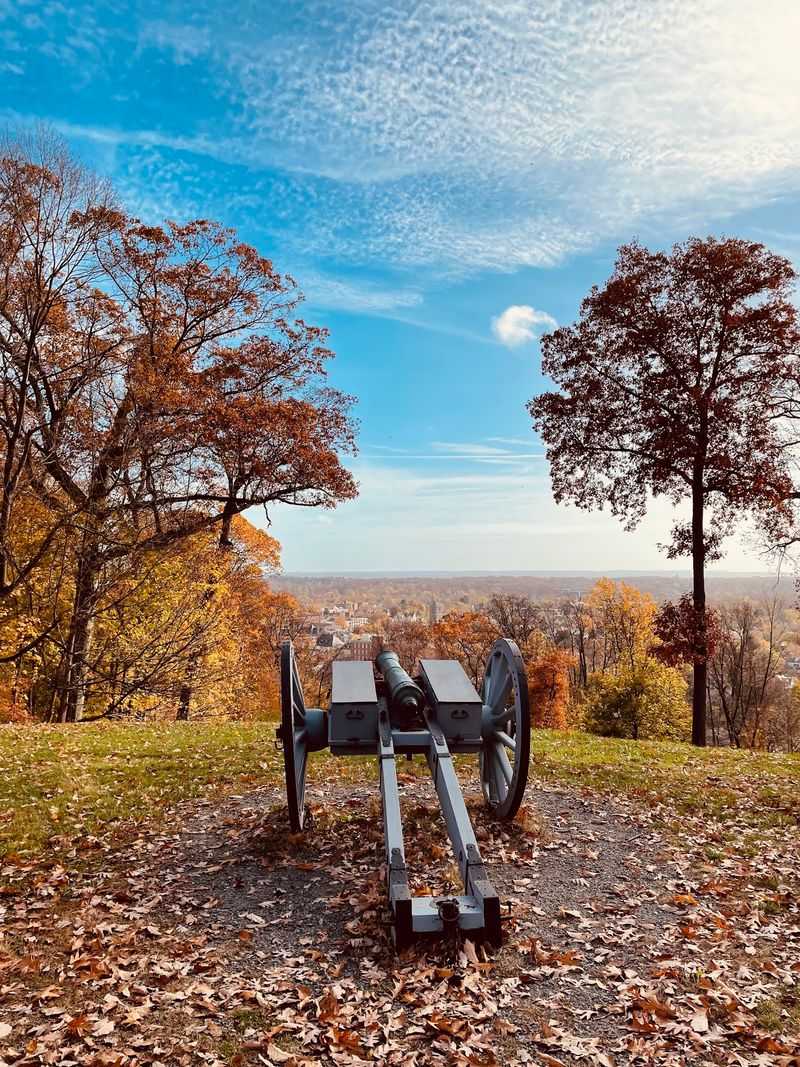
Modern visitors get a small taste of that advantage. Look out over Morris County from the overlook and you understand instantly why an eighteenth-century officer would choose this exact bump of land.
Elevation was the best technology available, and this hill delivered plenty of it.
Signal Fires and the Beacon Alarm Network
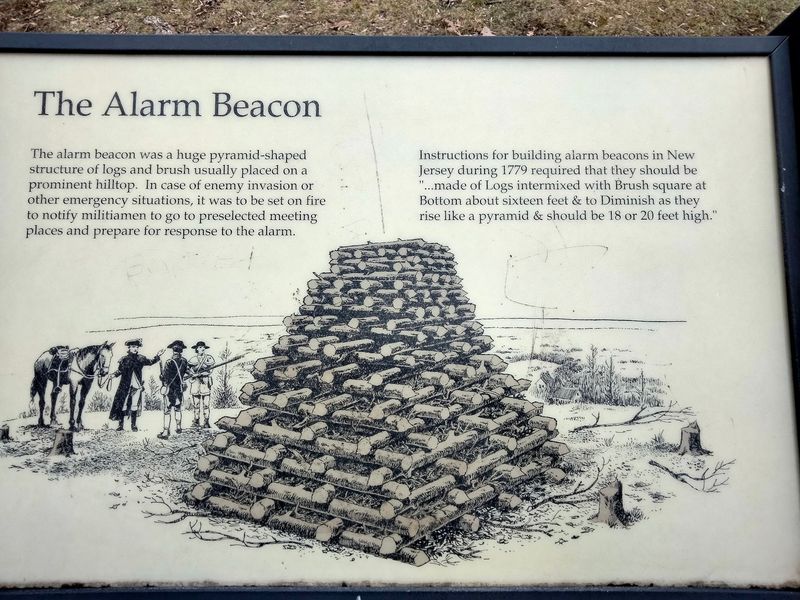
Long before radios or phones, New Jersey had a warning system made of fire. Tall beacons were built along ridgelines so that lighting one would send militias across the region scrambling for their muskets.
Fort Nonsense was part of that chain. Its hilltop position made it a natural link, passing alarms from one high point to the next faster than any rider on horseback could travel.
The system actually got used. On June 7 and again on June 23, 1780, British forces crossed into New Jersey, beacons blazed, and local militia rushed to fight at Springfield.
That detail changes how the place feels. Instead of an unused pile of dirt, the hill becomes one node in a smart, working network that helped ordinary farmers defend their own neighborhoods.
Not bad for a fort everybody loves to call useless.
Granite Blocks Tracing Walls That Vanished
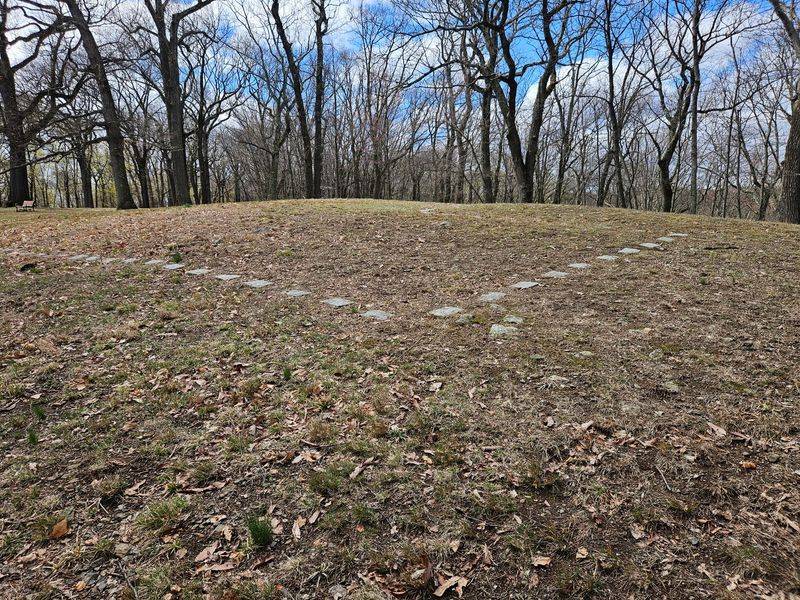
Do not expect log walls or a wooden gate. Rain, roots, and two centuries of weather flattened the original earthworks long ago, leaving almost nothing above ground.
Archaeologists eventually pinpointed where the walls once stood, and park staff marked those lines with granite blocks set into the grass. Walking the outline is a bit like tracing chalk lines on a playing field.
Most people are surprised by the size. The footprint feels compact, which matches the historical record of a small redoubt built for roughly thirty guards rather than an entire army.
Bring a little imagination and the stones do their job. Stand at one corner, picture a ditch in front of you and a mound of packed earth at your shoulder, and the flat lawn suddenly turns into a defensive position with a purpose.
When the Civilian Conservation Corps Rebuilt the Story
Protection arrived in 1933, when the National Park Service acquired the hill. Fort Nonsense joined Morristown National Historical Park, which holds the honor of being the very first National Historical Park in the country.
Four years later, crews from the Civilian Conservation Corps went to work. These were young men hired during the Great Depression to build trails, plant trees, and restore historic sites all over America.
Their 1937 project reconstructed portions of the fort so visitors could picture what once stood there. Later research refined the details, and the markings you see today reflect updated archaeological findings.
So the hill actually carries two layers of history. One belongs to Revolutionary soldiers with shovels in 1777, and the other belongs to Depression-era workers who made sure their story would not be paved over or forgotten.
Cannons, Seven Waysides, and Plenty to Read
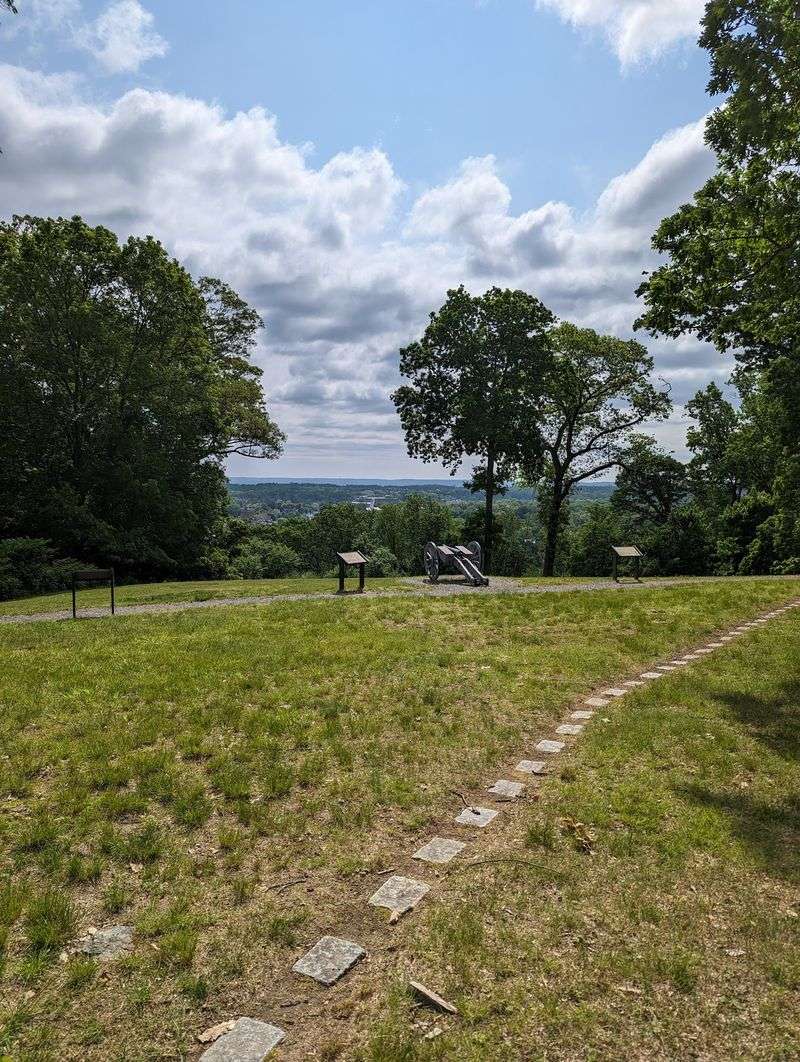
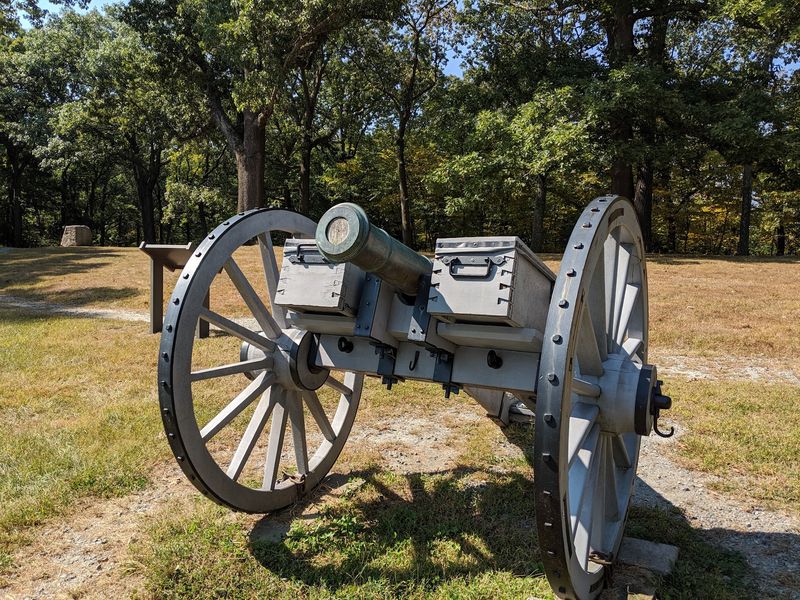
Two historic cannons anchor the site and instantly become the most photographed things on the hill. Kids gravitate toward them, and honestly, so do adults.
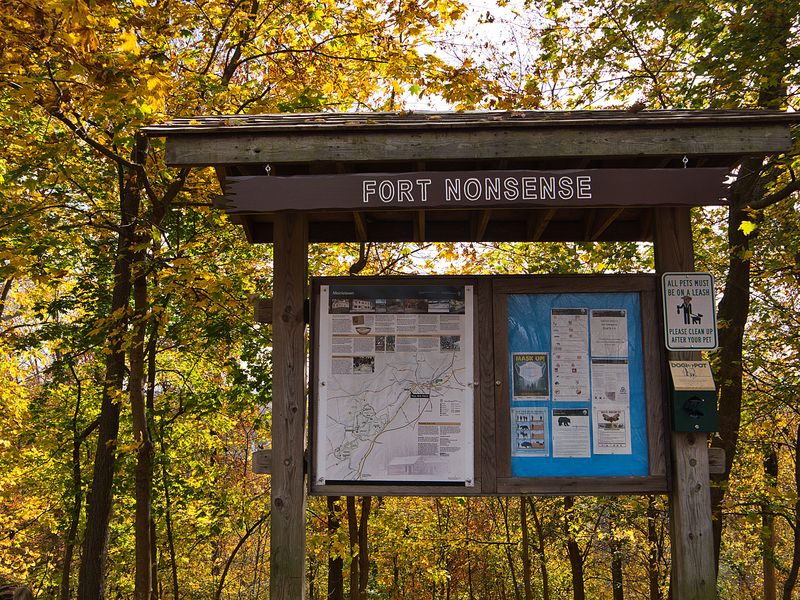
Seven wayside exhibits fill in the rest. The panels explain the encampment, the beacon system, the archaeology, and how the odd nickname came to be, all in short chunks you can read while catching your breath.
Reviewers frequently mention the signage as the highlight. One visitor put it simply: great overlook with historical markers, and the plaques explain everything clearly.
Reading them all takes maybe twenty minutes, which makes this an easy add-on rather than a full-day commitment. Pair it with the Ford Mansion tours and the park museum in town, and the pieces of the Morristown story finally click together into something that makes real sense.
Picnic Tables, Short Trails, and Sunset Views
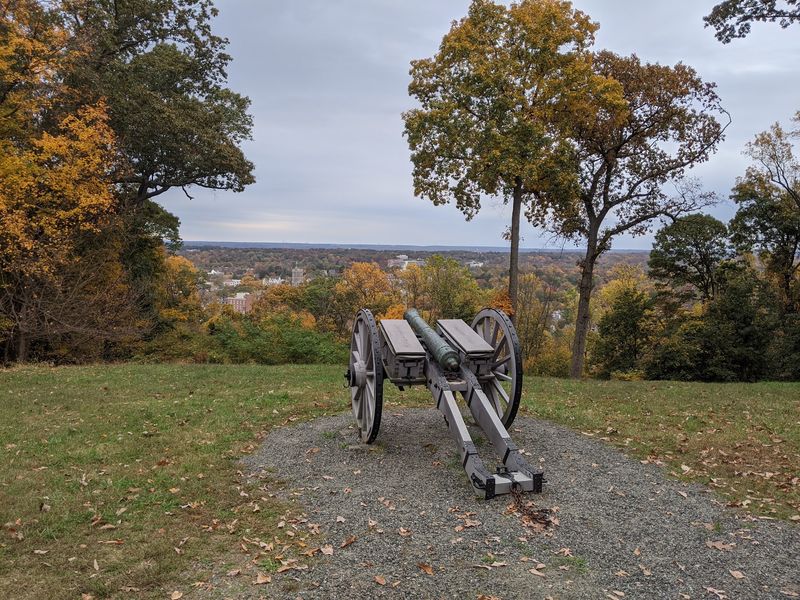
Grab a sandwich from a deli in town, then eat it at the picnic tables up top. Plenty of visitors do exactly that, and it turns a quick history stop into a genuinely relaxing afternoon.
A short hiking path drops down from the parking area through wooded, steeply sloped terrain. It is not a long trek, but the grade gives your legs a real workout on the way back up.
Evenings are the quiet secret here. Several regulars call it one of the best sunset spots in Morristown, and the atmosphere stays peaceful because crowds rarely show up.
Dog walkers, photographers, and anyone needing a break from traffic all find something to like. Just remember that the gates close at sunset, so plan your golden-hour visit a little earlier than you might expect.
Practical Tips Before You Drive Up the Access Road
Getting here is easy. Fort Nonsense Access Road climbs straight to a small lot with room for roughly ten vehicles, so arriving early on weekends pays off.
Hours run from 8:00 AM until sunset, and admission costs nothing.
Prefer to walk? A trail connects up the hill, but the climb is steep, so wear real shoes and carry water in warm weather.
Set your expectations correctly and you will love it. Some reviewers grumble that there is not much to see, while others rate it five stars for the skyline views that reach Manhattan on clear days.
Come for the panorama, the strange name, and a genuine piece of Revolutionary War ground, and you will leave satisfied.
Address: Fort Nonsense Access Rd, Morristown, NJ 07960, United States
