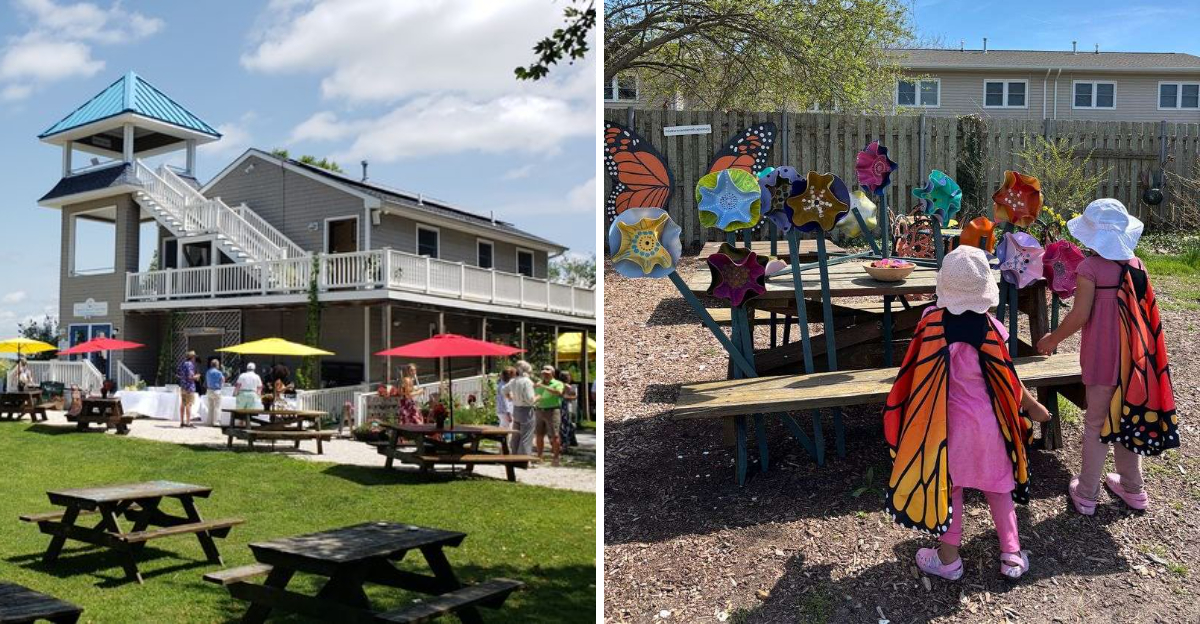
The first cool morning of early fall always makes me want to chase salt air, and one coastal New Jersey spot keeps pulling me back for a reason most people never guess.
It has gardens humming with bees, a lookout deck where borrowed binoculars sweep across a harbor, and a tower that turns marsh grass into a living map.
But once a year, the whole place shifts gears for something far smaller than a bird and far braver than it looks.
Thousands of orange and black wings pass through, resting and refueling before a flight most of us would find impossible to imagine.
There are tagging demonstrations, a parade of homemade wings, music drifting over the water, and a craft table where kids build butterflies of their own.
I left the last visit thinking about milkweed for weeks, which honestly says everything.
Harbor Setting That Sets The Mood
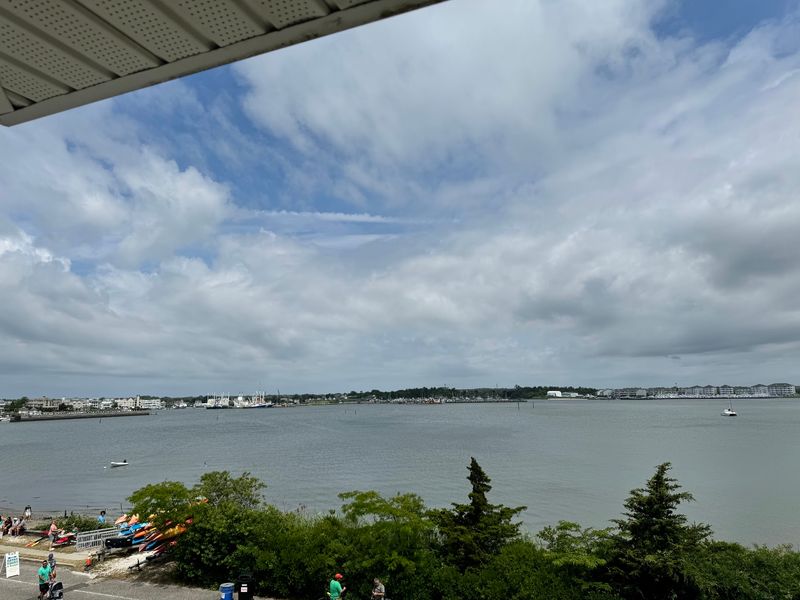
Salt air greets you before the parking lot does, and it hangs around all day. The campus sits right along Cape May Harbor, spread across roughly eighteen acres of beach edge, meadow, and marsh.
That mix of habitats matters more than it might seem. Meadows full of goldenrod and seaside asters give migrating monarchs a place to feed, and the open sky above the water makes their movement easy to spot.
Boats drift past while gardens rustle behind you, and it never quite feels like a museum. Paths wind between planting beds, benches sit in shady corners, and the buildings blend into the landscape instead of shouting over it.
This year, the Cape May Monarch Festival will be held on Sunday, September 27, 2026, from 10:00 AM to 4:00 PM at the Nature Center of Cape May.
Come early if you want quiet time before the crowd arrives, because the light off the harbor in the morning is honestly the best part.
Why Monarchs Funnel Into Cape May
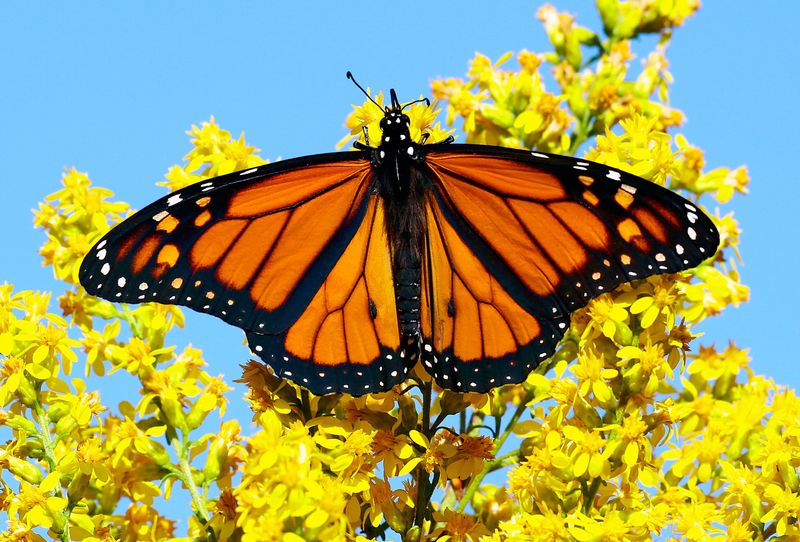
Geography does something sneaky here. Cape May is a peninsula, which means butterflies drifting south along the Atlantic coast get gently funneled toward the tip before open water stops them.
So they pause. Sometimes hundreds pause at once, settling onto goldenrod and asters in the dunes and meadows, sipping nectar and waiting for the right wind.
Their destination is the high-elevation forests of central Mexico, a trip that can stretch close to 3,000 miles from breeding grounds as far north as Canada. Cape May sits partway along that route as a refueling stop, not a finish line.
Understanding that changes how the festival feels. Instead of a cute themed party, it reads like a send-off for travelers who genuinely need the food and shelter this coastline provides.
Late September usually lines up with strong movement, which is why the event lands on a Sunday in that window. Watching a single butterfly lift off the flowers and head over the water sticks with you.
Tagging Demonstrations Up Close
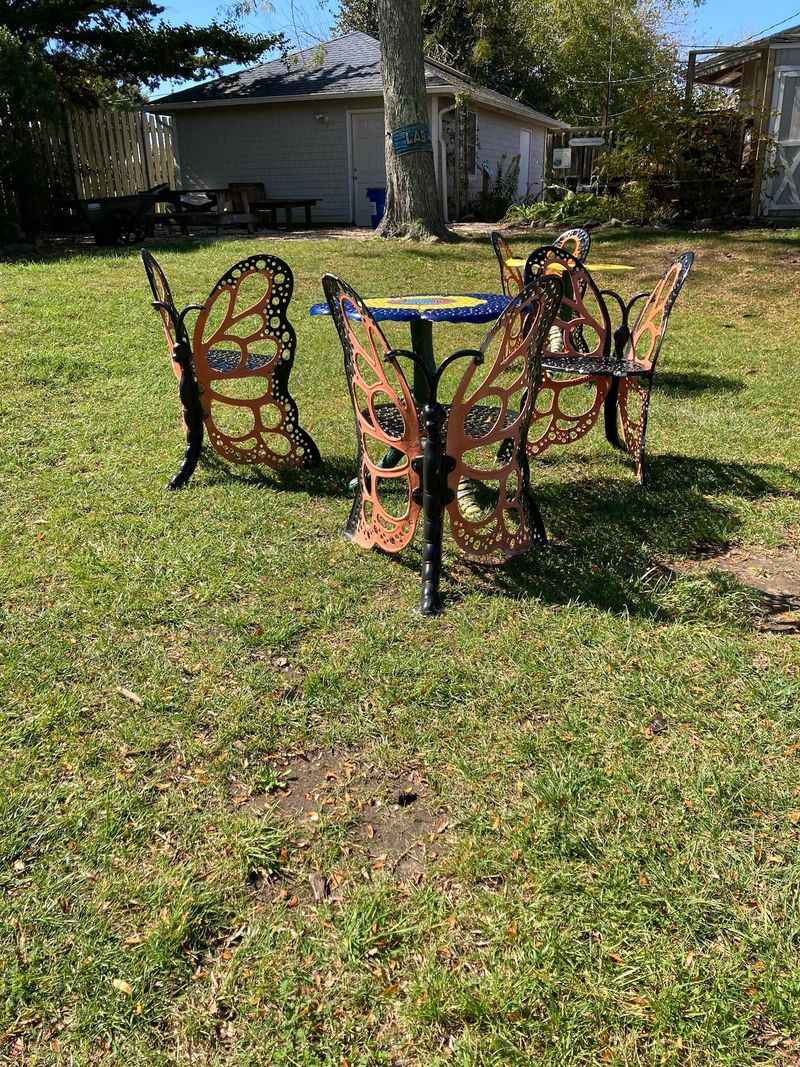
Few things quiet a crowd faster than a live monarch held between careful fingers. Experts from the Cape May Bird Observatory and the Monarch Monitoring Project run tagging demonstrations, and people press in close to watch.
Each butterfly gets a tiny adhesive tag placed on its wing. The tag weighs almost nothing, yet it turns one insect into a data point that researchers can trace across a continent.
The Monarch Monitoring Project has been tagging monarchs passing through Cape May since 1990, building decades of information about migration timing and population trends. That long record is the whole reason a small sticker matters.
Kids get the best view if you arrive a few minutes before a demonstration starts. Sometimes visitors help with the release, and the little burst of applause when the butterfly climbs away is genuinely fun.
Bring a phone or camera with a decent zoom. Wing patterns look completely different at this distance, veins and all, and photos never fully capture it.
The Butterfly Parade Everyone Joins
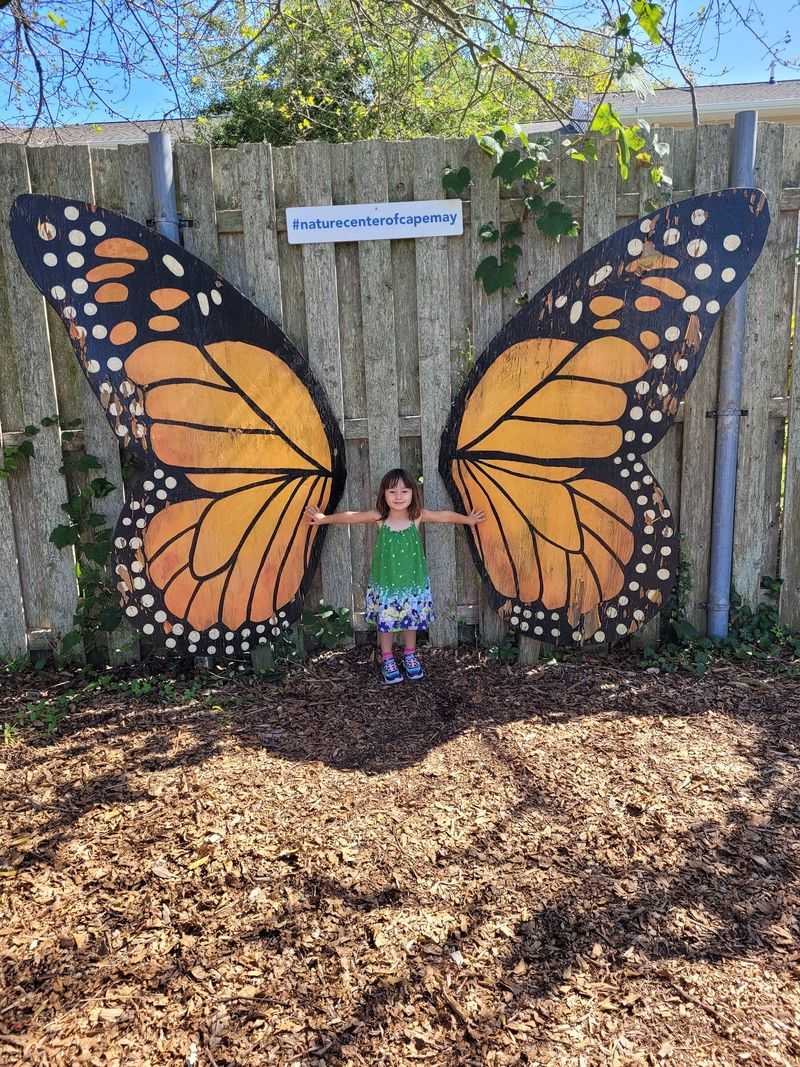
Wings appear out of nowhere. Paper ones, fabric ones, slightly crooked ones taped together an hour earlier, all bobbing along as families gather for the Butterfly Parade.
Kids wear antennae headbands and grin like they invented the idea. Plenty of adults join too, some carrying monarch-shaped kites that catch the harbor breeze and tug upward.
Along the route, participants scatter milkweed seeds, which drift down like natural confetti. It doubles as a small act of habitat support, since milkweed is the only plant monarch caterpillars will eat.
The whole thing feels less like a performance and more like a neighborhood walk that happens to be dressed up. Nobody watches from the sidelines for long.
If you want to take part, bring or make simple wings ahead of time, or check the craft table earlier in the day. Comfortable shoes help, and so does a free hand for a kite string, because those tend to get handed off mid-parade.
Butterfly Themed Yoga By The Water
A yoga session might not be the first thing you expect at a butterfly festival, yet it fits the setting perfectly. Mats go down on the grass, the harbor sits just beyond, and the pace slows way down.
Poses lean into the theme, with stretches that echo opening wings and steady balance work. It reads as playful rather than serious, which keeps it approachable for beginners.
The class is typically led by a local instructor group, and it makes a calm start before the busier afternoon activities pick up. Wind off the water keeps things cool.
Bring your own mat or a towel, plus a light layer, since late September mornings on the coast can feel brisker than the forecast suggests. Water is worth carrying too.
What surprised me most was how well the theme holds up as a metaphor. Balance, patience, transformation, all of it maps onto a creature that flies thousands of miles on paper-thin wings.
Not bad for half an hour on the lawn.
Crafts, Local Art, And The Nature Shop
Glue sticks, orange paper, and total concentration. The children’s craft area runs on that combination, turning out paper monarchs, decorated antennae headbands, and other small keepsakes throughout the day.
It is the kind of station where parents end up sitting down too, mostly because the chairs are right there and the project is oddly satisfying.
Nearby, local artists and authors set up tables with nature-based and sustainably made work. Drawings, paintings, and books share space, and browsing feels relaxed rather than rushed.
The center’s own nature shop is worth a look as well. Visitors regularly mention how charming it is, with monarch-themed gear, books, and garden items that help turn a backyard into a butterfly stop.
Buying a packet of native seeds is probably the most useful souvenir here, since it keeps working long after the festival ends.
Give yourself extra time indoors, because the shop sits near the aquaria and animal displays, and one glance usually turns into fifteen minutes.
Live Music And Food Trucks On The Grounds
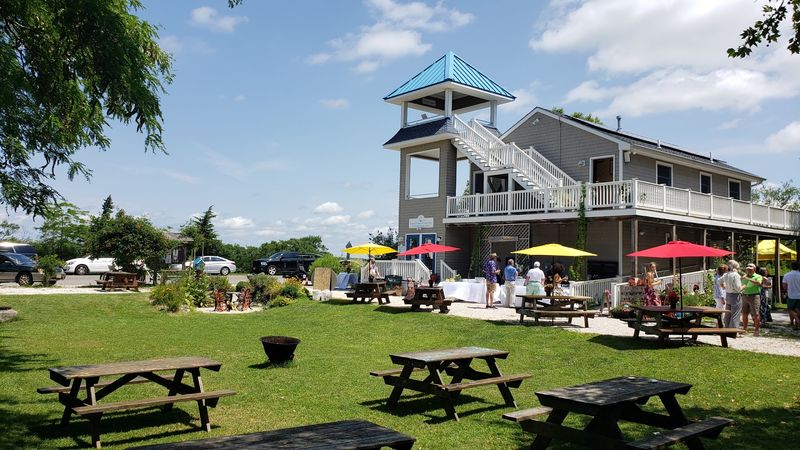
Music floats across the grounds all afternoon, loud enough to notice but never loud enough to drown out conversation. It gives the day a loose, easygoing rhythm.
Food trucks and vendors set up nearby, and the smells start competing for attention around midday. Visitors who have attended the festival often mention the combination of live music, food trucks, and vendor tables as what made a few hours fly by.
Grab something to eat, then find a patch of grass with a view of the harbor. That is honestly the best seat available.
Because the event runs from late morning into late afternoon, pacing helps. Eat between activities rather than trying to squeeze everything in at once.
Cash is handy for smaller vendors, and a reusable bottle saves trips. Sunscreen matters more than people expect, since open lawn near water reflects plenty of light even on a mild day.
It ends up feeling like a community picnic that happens to have science demonstrations attached.
Climb The Three Story Observation Tower
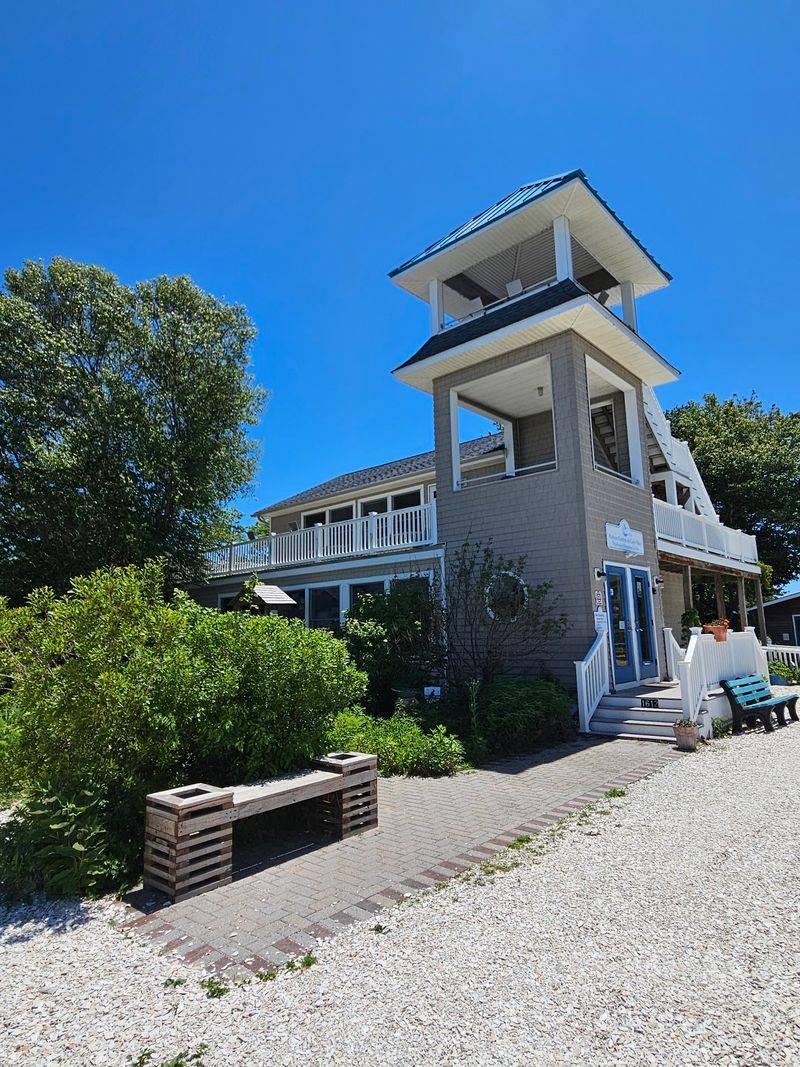
The stairs are short, the payoff is big. Three levels up, the harbor opens wide, marsh grass stretches out, and the whole layout of the property suddenly makes sense.
Binoculars are available to borrow, which regular visitors seem to appreciate as much as the view itself. Birds move constantly along the waterway across the street.
During migration season, the elevated angle helps with butterfly spotting too. Monarchs often drift above the meadows, and from up here you can follow one until it disappears.
There is also a wrap-around deck on the second floor and an indoor observation lounge, so you can stay comfortable if the wind picks up. Benches make it easy to linger.
Mornings tend to be calmer up top, while late afternoon light turns the water gold. Either works.
Kids usually race to the top first, then race back down for the animal displays, which is a fair strategy. Take your time and let them.
Indoor Exhibits, Aquaria, And Resident Animals
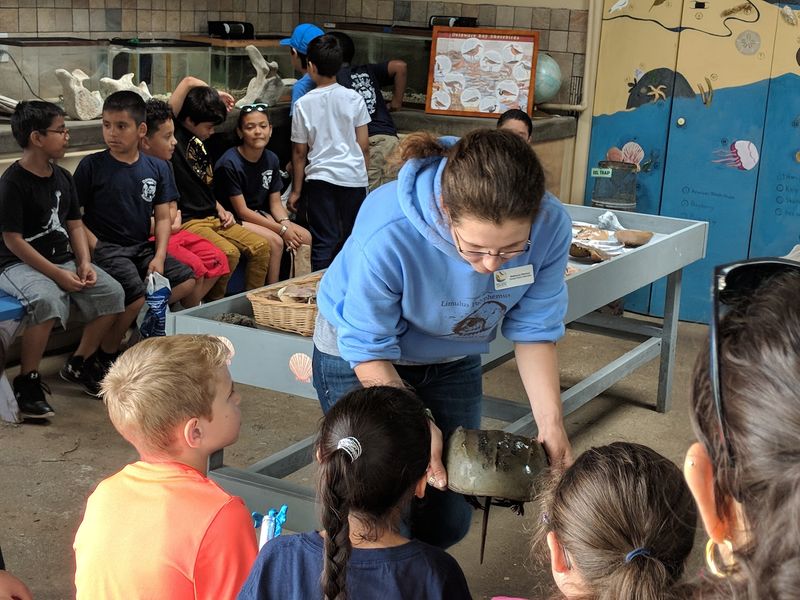
Rainy day? This is where everyone ends up, and nobody complains.
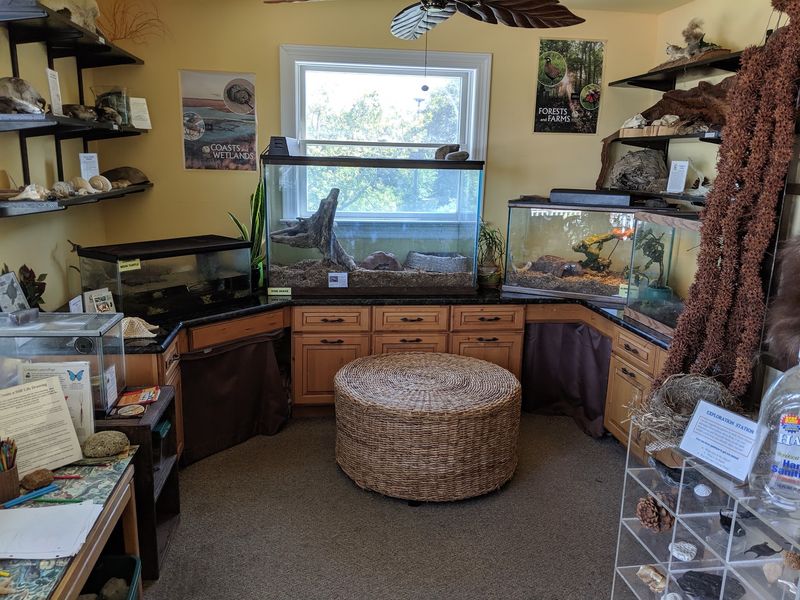
The main building holds exhibits on local ecology and natural history, with aquaria showing off creatures from the surrounding waters.
Visitors frequently mention turtles, snakes, horseshoe crabs, and a pair of chinchillas among the resident animals. Small step stools let shorter guests get eye level with the tanks.
There is an aquatic lab area with hands-on marine artifacts, plus puzzles and a play kitchen space for younger kids. It manages to be educational without feeling like a lesson.
An hour covers the basics comfortably. Anyone genuinely into marine life will stretch that to two without noticing.
Staff members are known for being friendly and knowledgeable, and they are usually happy to explain what you are looking at. Asking questions pays off here.
During the festival, indoor spaces double as a nice reset from the sun and noise outside. Cool air, quiet tanks, and a bench are sometimes exactly what a long day needs.
Conservation Lessons Worth Taking Home
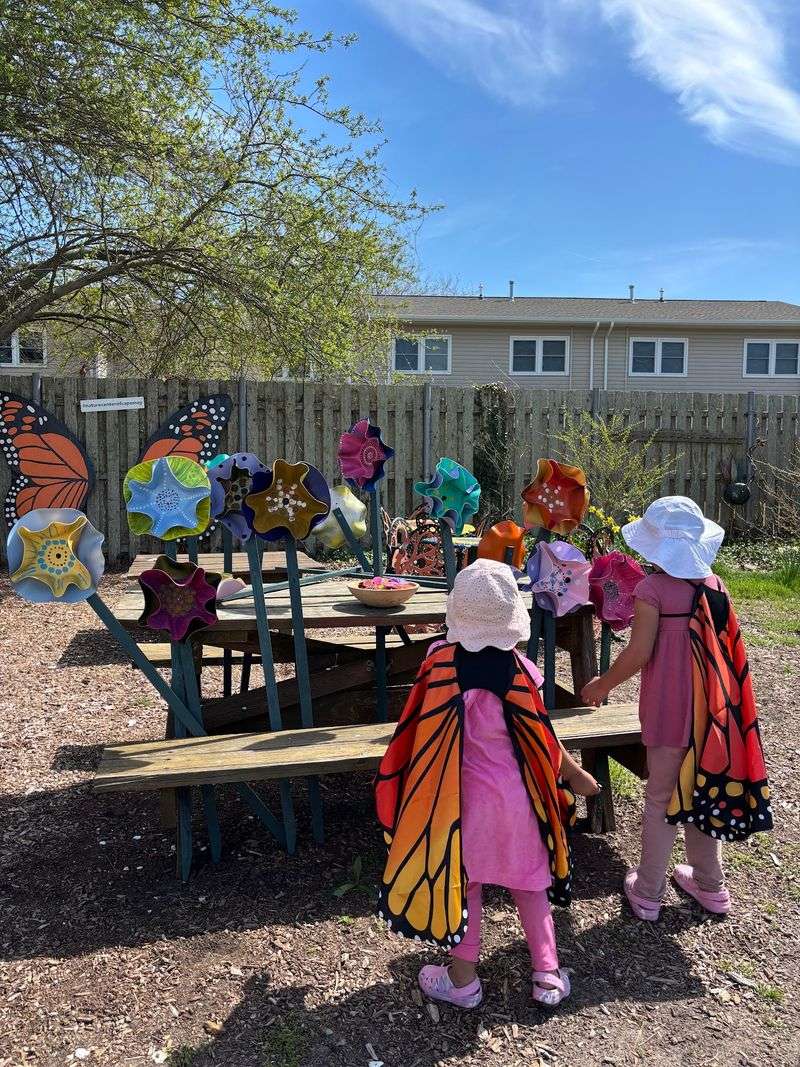
Underneath all the color, there is a serious message. Programs and volunteers throughout the day explain the monarch lifecycle, from a single egg on a milkweed leaf to a full-grown butterfly capable of crossing a continent.
Eastern monarch numbers have dropped significantly in recent decades. Habitat loss, pesticide use, and climate change all factor into that decline.
The practical takeaways are refreshingly simple. Plant native milkweed, since caterpillars eat nothing else, and add nectar-rich flowers that feed adults during migration.
Cutting back on pesticides in a home garden helps too, as does supporting open space protection in your own area. None of it requires special training.
Walking the garden path here makes the advice concrete, because you can see milkweed doing its job with butterflies right there. Signage helps identify what is growing.
I left with a mental shopping list and a better sense of why one small patch of flowers can matter. Small effort, real result.
Address: Nature Center of Cape May, 1600 Delaware Ave, Cape May, NJ 08204.
