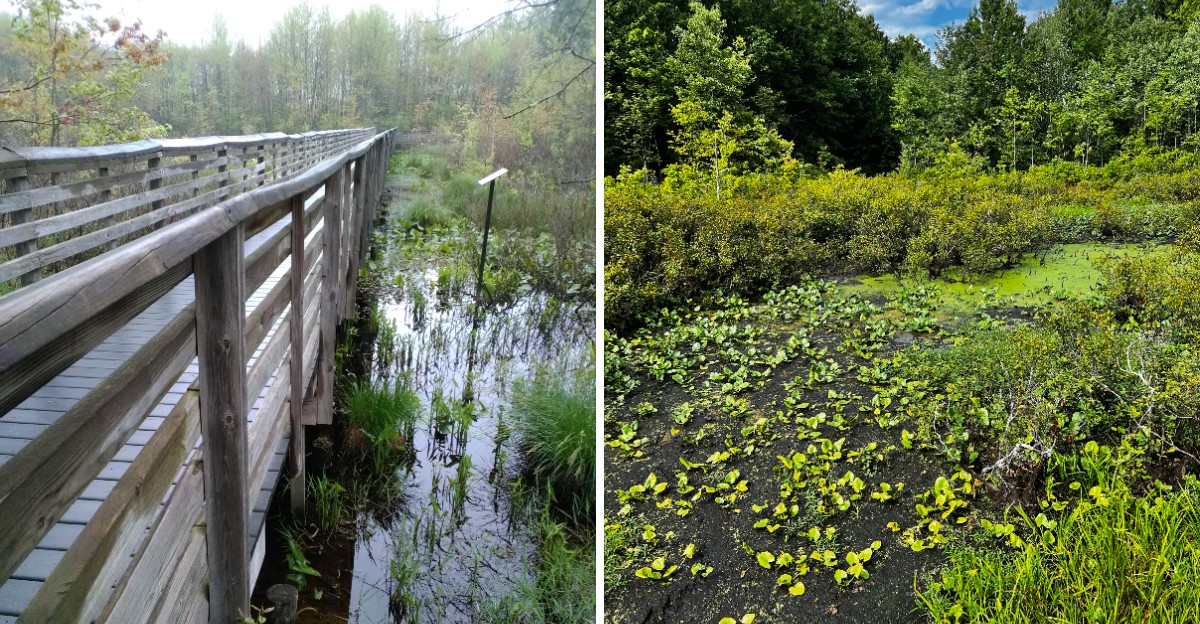
Think a swamp sounds boring? Oh, you might want to rethink that.
This New Jersey nature escape leads you straight into a surprisingly lively wetland, where boardwalks, trails, and pockets of open water create a perfect setting for spotting wildlife.
The deeper you wander, the more the landscape seems to change, and suddenly a quiet nature walk feels like a little adventure.
Birds call from the trees, turtles may pop up near the water, and every bend brings another reason to slow down and look around. Ah, there’s something satisfying about finding this much wildness so close to everyday life.
You can learn about the surrounding habitat, explore the trails, or simply enjoy the rare feeling of being somewhere that seems far removed from the usual rush.
It’s a swamp, sure, but boring?
Not even close.
The Winding Entrance That Sets the Mood
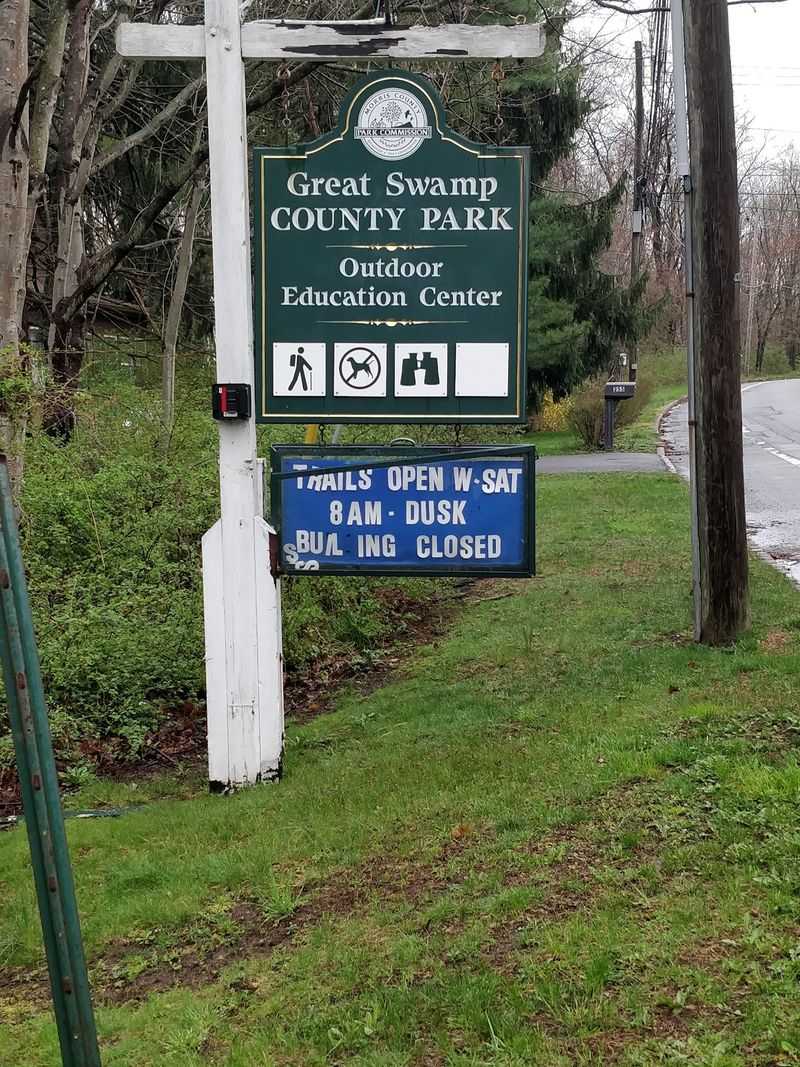
Nobody warns you about the road. It curves and dips through thick woods, marked with a low speed limit that actually makes sense once you cannot see more than twenty feet ahead.
Driving slowly turned out to be the best possible introduction, because it forces your brain to downshift before you even park. By the time I reached the paved lot at the Great Swamp Outdoor Education Center, the suburbs felt genuinely far away.
That paved parking area is a small luxury worth mentioning, since much of the surrounding refuge relies on gravel lots that get messy after rain.
Step out of the car and the soundtrack changes fast. Birds, insects, wind moving through leaves, and very little else.
My advice is simple. Take the entrance road at a crawl, roll the windows down, and let the air shift from warm asphalt to damp earth and green growth.
It is a tiny ritual, but it makes everything that follows feel more deliberate and a lot more enjoyable.
Boardwalks Floating Over Dark Water
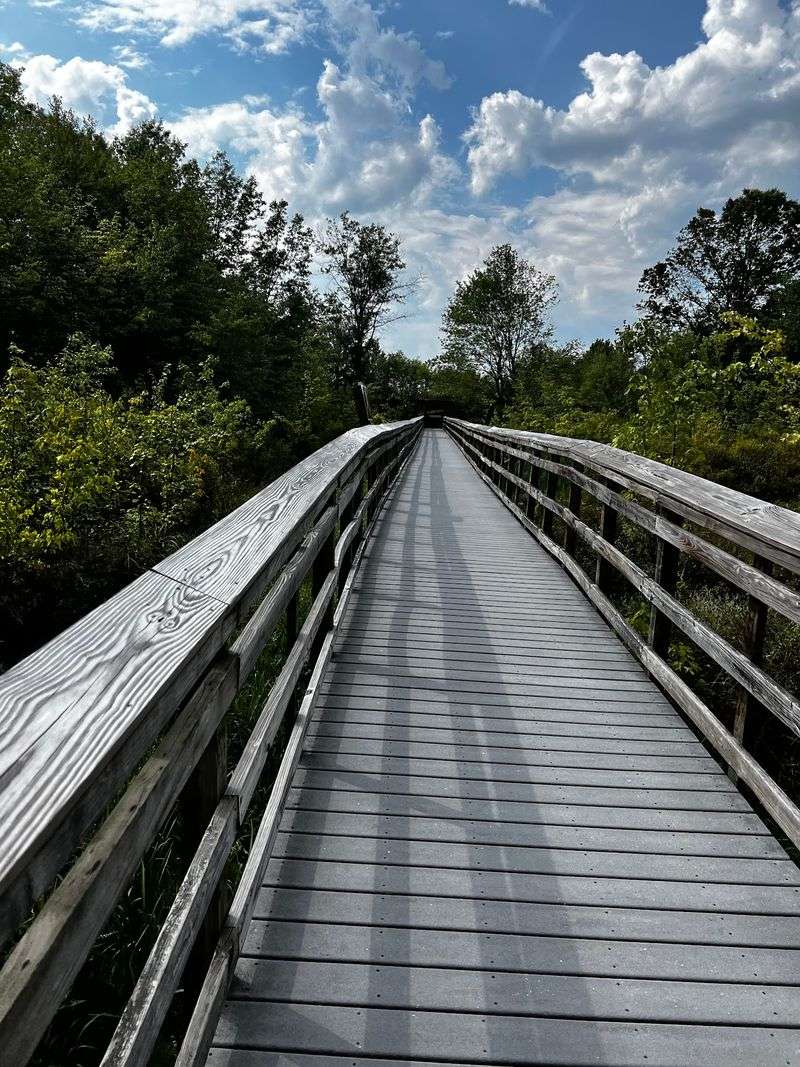
Roughly two miles of flat trail and boardwalk wander out from the center, and the boardwalk sections are the part people remember.
Raised planks carry you right over the wet ground, so you get a front row view of the swamp without sinking into it. No mud, no wobbling, no wet socks.
What surprised me most was how much you notice from up there. Water beetles skating across the surface, tiny ripples where something unseen moved, reflections of branches breaking apart and coming back together.
The flat design means kids, grandparents, and anyone not in the mood for hills can all make the walk comfortably.
Trails here are well marked, which takes the guesswork out of exploring and lets you focus on looking around instead of checking a map every few minutes.
Go slowly. The swamp rewards people who stop moving.
Standing still for even a minute or two, I kept hearing sounds I had completely missed while walking.
Meeting the Taxidermy Wall Indoors
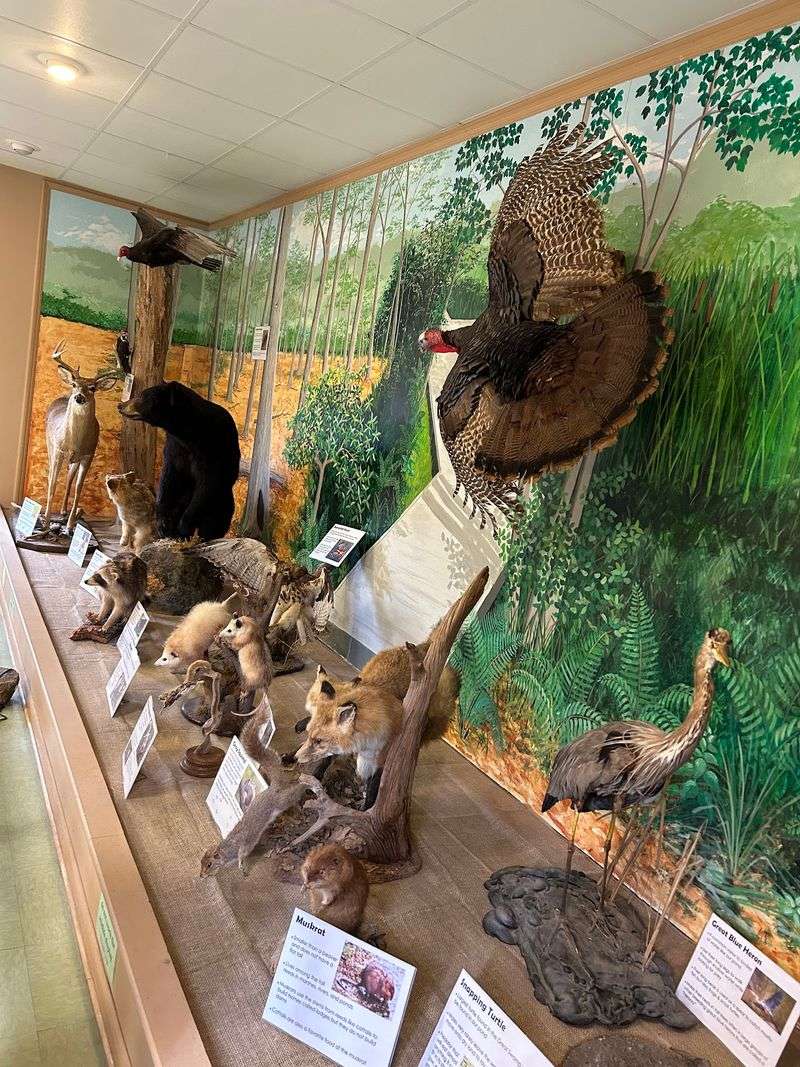
Inside the building, one wall does most of the talking. A collection of taxidermy animals stares back at you, and it is genuinely useful for spotting differences between creatures you might only glimpse for half a second outdoors.
Foxes, birds, small mammals. Suddenly you know what to look for once you are back on the trail.
Beyond the mounted animals, there are rocks, shells, artifacts, and hands-on stations where you guess which animal matches which clue. Kids tend to park themselves there for a while.
Live insects and reptiles add movement to the room, and there is a small indoor swamp observation area that gives you a peek at pond life without stepping outside.
Staff members are approachable and clearly enjoy answering questions, which makes the space feel welcoming rather than stiff and museum-like.
It is not a huge building. That is part of the charm, honestly.
Fifteen minutes inside will make the next hour outside far more interesting.
Hidden Blinds and the Art of Waiting
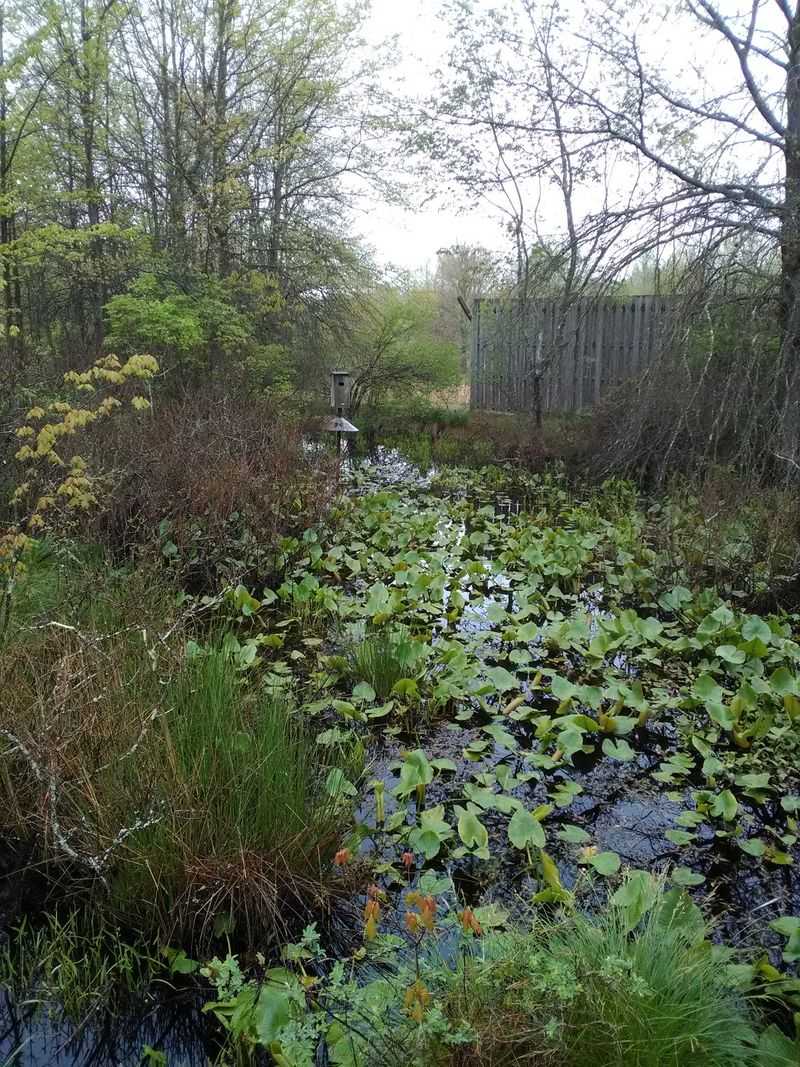
Patience pays off here, and the observation blinds are proof.
These small wooden structures sit along the trails with narrow viewing slots, letting you watch the water without announcing your presence to every bird within a hundred yards.
Tuck yourself inside, stay quiet, and the swamp forgets about you. That is when the good stuff happens.
Waterfowl drift into view, herons stalk the shallows, and turtles haul themselves onto logs to soak up sun. Raptors circle overhead, and bald eagles have been spotted in the broader Great Swamp area.
Photographers will appreciate the steady wooden ledges, which work nicely as makeshift tripods for longer lenses.
Bring binoculars if you have them. Even cheap ones transform the experience.
The trick is resisting the urge to move on after two minutes. Most wildlife needs a little time to relax and return to normal behavior, so settle in and let the pond do its thing.
A Wigwam Behind the Building
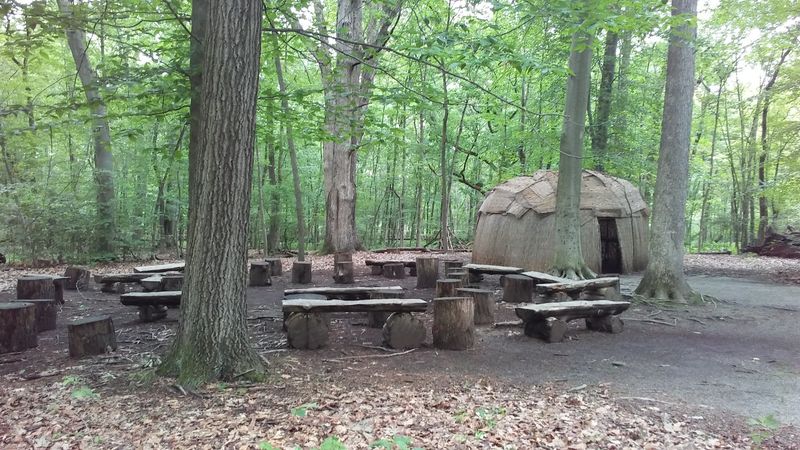
Just behind the center sits something easy to miss if you head straight for the trails. A rebuilt model wigwam stands in a clearing, quiet and unassuming.
It represents the shelters used by the Lenape, the Indigenous people who lived across this region long before roads and property lines existed.
Seeing the curved saplings and covering up close gives you a real sense of the skill involved. These were not crude structures.
They were engineered for the climate, built from materials the land provided.
Inside the visitor center, interpretive exhibits connect that human history to the natural one, showing how the swamp supported people as well as animals.
I found it grounding. Standing near the wigwam, the swamp stopped feeling like scenery and started feeling like a place with a long, layered past.
Give it a few minutes of your attention before you walk off.
It changes how the rest of the visit lands.
Glacial Roots of a Strange Landscape
Here is the backstory that makes this whole place click. The Great Swamp exists because of the Wisconsin Glacier, whose meltwater filled a natural basin between fifteen thousand and eighteen thousand years ago.
That water formed glacial Lake Passaic, an enormous body of water that eventually drained away and left behind rich soil and poorly draining ground.
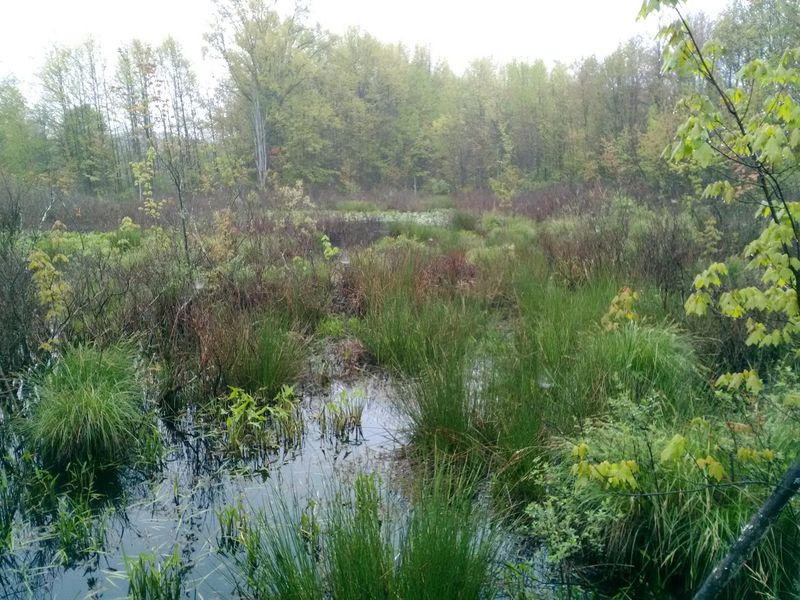
What remains is not one uniform wetland but a patchwork. Marshes, meadows, dry woodland ridges, and dense brushy swamp all sit side by side.
Walking through, you feel the change underfoot and overhead as tree types shift and light levels rise and fall.
That variety is why so many species live here. Different habitats mean different niches, and different niches mean more life packed into a small area.
It is humbling in a quiet way. Ice sheets carved this basin long before anyone thought to name it.
Knowing that, the boardwalk under your feet feels like a very recent addition.
Birds, Frogs, and Everything in Between
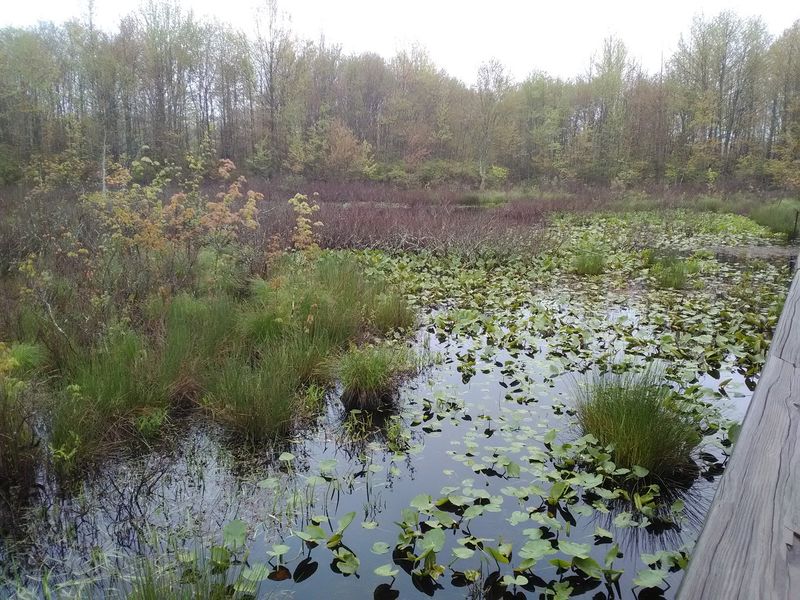
Frogs gave themselves away before anything else did. A whole chorus of them, invisible in the reeds, sounding like the swamp itself was humming.
More than two hundred forty species of birds use the greater Great Swamp area as a resting and feeding ground, which makes this a legitimate birding destination rather than a casual walk with a nice view.
Deer graze in the meadow edges. Muskrats work the waterways.
Foxes slip through underbrush when they think nobody is looking.
Turtles are probably the easiest win, especially on warm afternoons when they line up on logs like they are waiting for a bus.
The refuge also protects habitat for species listed as threatened or endangered, which adds weight to every sighting.
Check the wildlife sightings board inside before you head out.
It tells you what has turned up recently, and it sharpens your eyes in a way nothing else quite does.
The Jetport That Never Happened
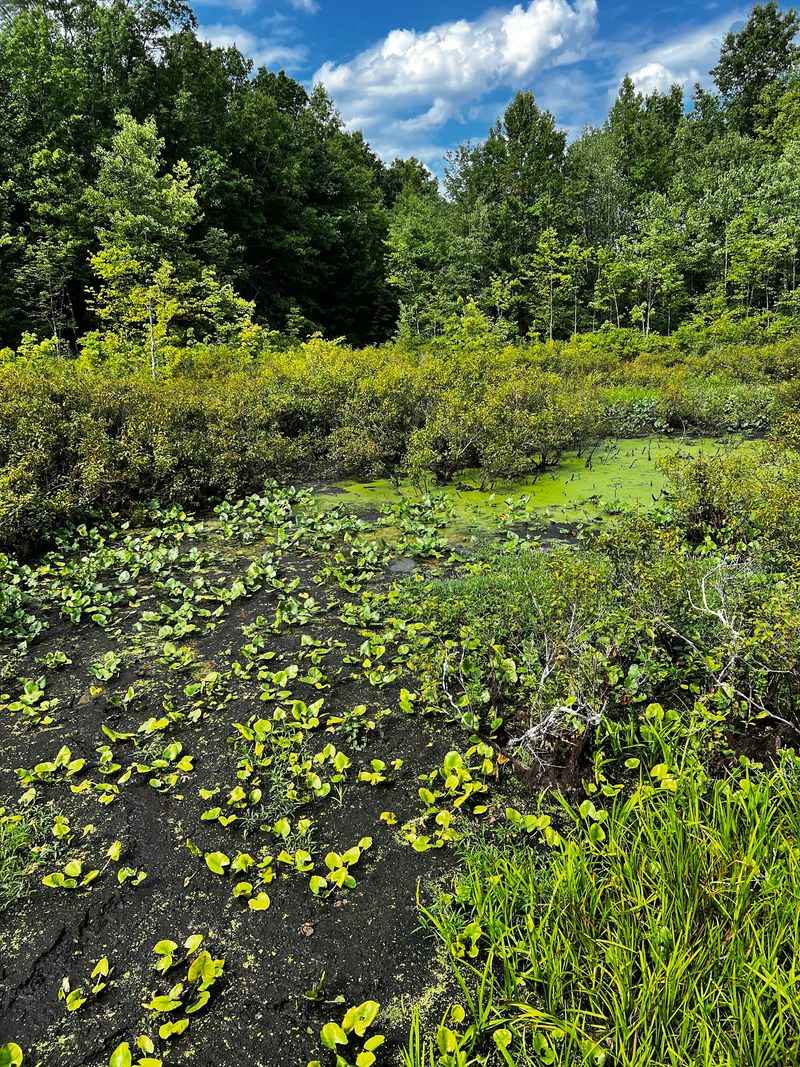
This swamp came very close to disappearing entirely.
In the late 1950s, the Port Authority of New York and New Jersey proposed turning thousands of acres of the basin into a massive international jetport. Hills would have been leveled, wetlands filled, and this entire landscape erased.
Local residents refused to accept it. They organized, raised money, and bought land parcel by parcel, eventually stopping the project cold.
Their work led to the creation of the Great Swamp National Wildlife Refuge in the early 1960s, and a large portion was later designated as the first wilderness area under the U.S. Fish and Wildlife Service.
Knowing that history changes how the quiet feels. Every heron and every frog call exists because ordinary people decided the place was worth fighting for.
Roughly twenty six miles west of Times Square, that is no small thing.
It is one of the more encouraging conservation stories you will come across.
Seasons Change the Whole Experience
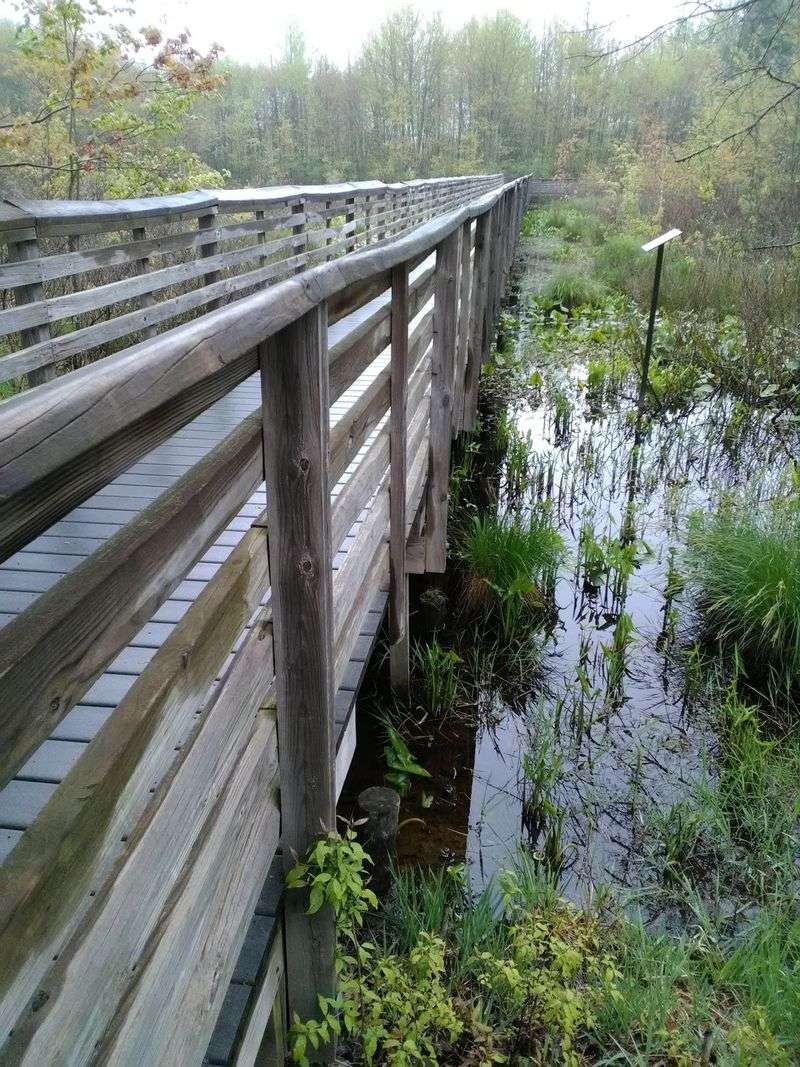
Come back three months later and you will swear it is a different place.
Spring brings the loudest frog chorus and migrating birds moving through in waves. Everything feels urgent and noisy.
Summer turns the swamp lush and dense, with thick green walls pressing in on the boardwalk. It is also peak insect season, so plan accordingly.
Autumn thins things out. Leaves drop, sightlines open up, and suddenly you can see deep into the woods where everything was hidden a month earlier.
Winter is my quiet favorite. Frozen surfaces, bare branches, no bugs whatsoever, and tracks in the snow telling you exactly who passed through overnight.
The Great Swamp Outdoor Education Center keeps its doors open year round, with seasonal programs that shift alongside the landscape.
If you only visit once, pick a cool morning. If you visit twice, make the second trip in a completely different season.
Smart Prep for a Comfortable Visit
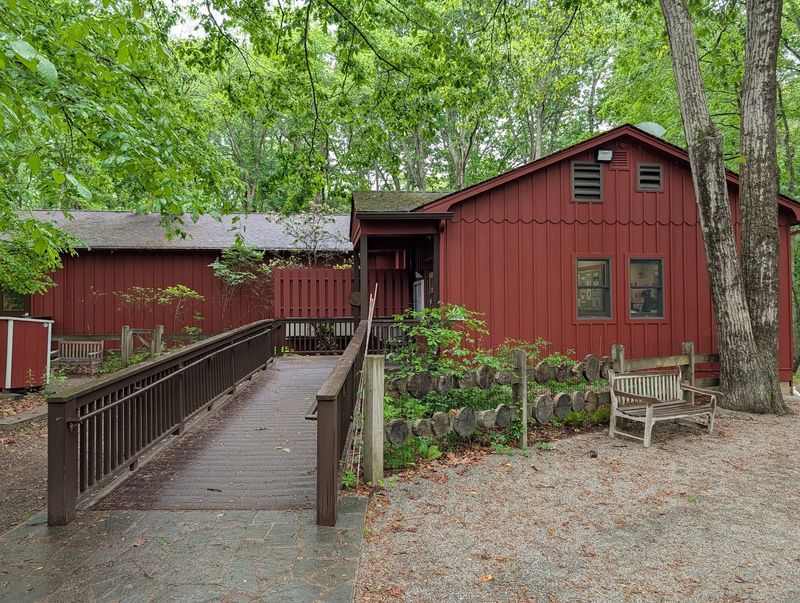
A little preparation goes a long way out here, and the biggest one is footwear.
Waterproof boots or old sneakers you do not mind soaking will handle damp patches far better than nice shoes. Some stretches stay wet long after rain.
Bugs deserve honest mention. From May through September, mosquitoes, ticks, and deer flies are active and enthusiastic, so repellent plus long sleeves makes a real difference.
Grab a self-guided trail booklet from the visitor center before setting off. It points out plants, animals, and details you would otherwise stroll right past.
Trails open sunrise to sunset while the visitor center runs from nine in the morning until four. Early mornings tend to be the most active for wildlife.
Pets are not allowed, and smoking, including e-cigarettes, is prohibited on the property.
Plan for a few unhurried hours at the Great Swamp Outdoor Education Center, 247 Southern Blvd, Chatham Township, NJ 07928.
