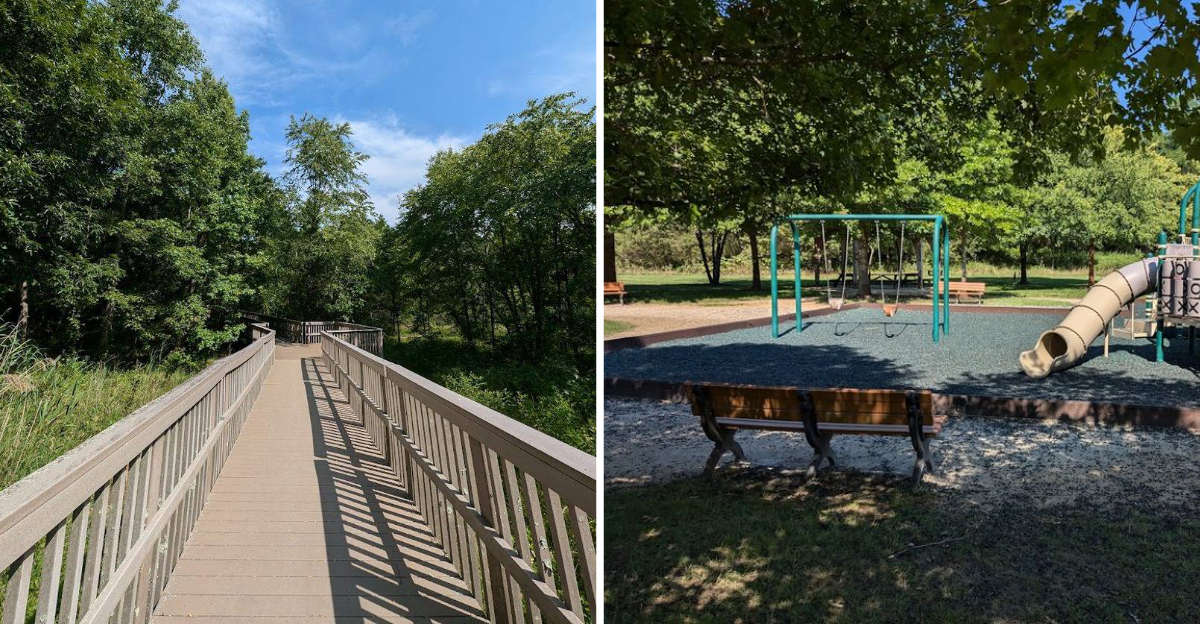
A park with a rebel past. That is what you will find at this New Jersey gem.
You have probably visited plenty of parks with playgrounds and picnic tables.
But how many come with a revolutionary war story?
This one does.
Patriots blew up a bridge here in the 1700s to slow down the British.
Today, that same spot is a sprawling green escape. Kids swing.
Dogs run. Families spread out blankets and soak up the sun.
Trails wind through peaceful woods. Sports fields buzz with weekend games.
History hides beneath the surface, but you can feel it in the air. It is the kind of place where the past and present shake hands.
And honestly? That makes every picnic taste a little sweeter.
Patriots Blew It Up, Now We Play Here
Few parks can claim a founding story that involves deliberate sabotage, gunfire, and revolutionary defiance. Long Bridge Park in Hainesport, New Jersey carries exactly that kind of legacy.
Back in 1778, local American patriots made the bold decision to destroy the Long Bridge, a wooden toll structure spanning the south branch of Rancocas Creek, specifically to slow down British General Sir Henry Clinton’s forces retreating from Philadelphia.
The move was gutsy. British soldiers who tried to repair the damaged bridge were met with fire from rebels hiding in a nearby building, resulting in five patriot deaths near this very site.
That kind of sacrifice is baked into the park’s identity.
Today, families spread blankets, kids race through playgrounds, and dogs trot happily along 2.5 miles of well-kept trails. The park covers 115 acres of forests, wetlands, and creek shoreline.
Standing here, it feels almost surreal that this calm, beautiful space once echoed with the sounds of Revolutionary-era conflict.
Address: 895 Deacon Rd, Hainesport, NJ
A Bridge That Changed Everything
The original Long Bridge was more than just a crossing. It was a strategic chokepoint on the old Philadelphia Road, connecting Moorestown to Mount Holly, and controlling it meant controlling troop movement through the region.
When patriots destroyed it in 1778, they were playing chess while everyone else was playing checkers.
General Clinton’s secretary, Andrew Bell, actually documented the skirmish that followed the bridge’s destruction. His account describes soldiers attempting repairs while under fire from concealed American rebels.
Five patriots died in that exchange, near what is now roughly two hundred yards upstream from the current railroad bridge in Hainesport.
The village that grew around this crossing was originally called Long Bridge before being renamed Hainesport around 1848 to 1850. Remnants of the original bridge pilings are reportedly still visible on the eastern bank of Rancocas Creek during low tide.
The park that carries the bridge’s name today spans that same waterway, making every trail walk a quiet nod to that decisive, dangerous moment in American history.
Trails, Fields, and Revolutionary Ghosts
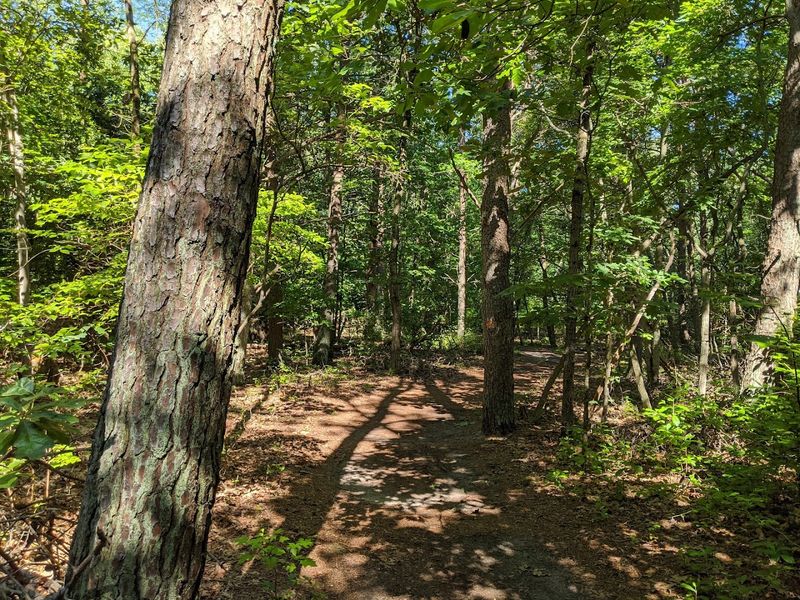
Walking the trails at Long Bridge Park feels layered in a way that most parks simply do not. The 2.5 miles of pathways wind through upland forests, lowland wetlands, tidal marshland, and open meadows along the creek shoreline.
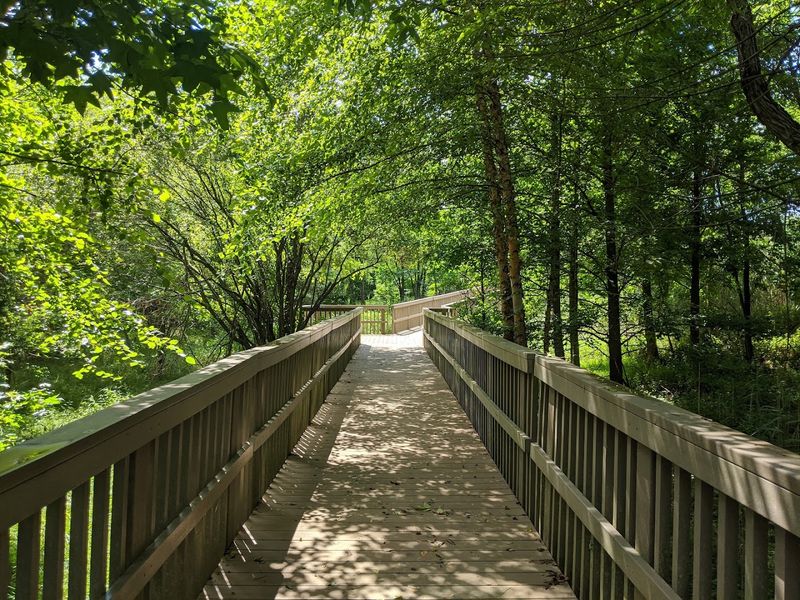
Surfaces shift between crushed gravel, packed dirt, sand, and boardwalk sections that float just above the marshy ground.
The Red Loop trail is a crowd favorite, starting and ending near the main parking area. It threads through shaded forest sections where the canopy overhead is thick enough to make a warm afternoon feel almost cool.
Deer appear frequently along the edges of the path, almost unbothered by passing hikers.
Birders show up with binoculars and quiet enthusiasm, because the park’s observation blinds offer genuine wildlife viewing opportunities. Turtles, frogs, snakes, and seasonal dragonflies round out the wildlife roster.
The trails are flat enough for strollers and beginners but interesting enough to keep seasoned hikers coming back. Every step covers ground that once mattered enormously to the outcome of a revolution.
History Meets Picnic Blankets Here
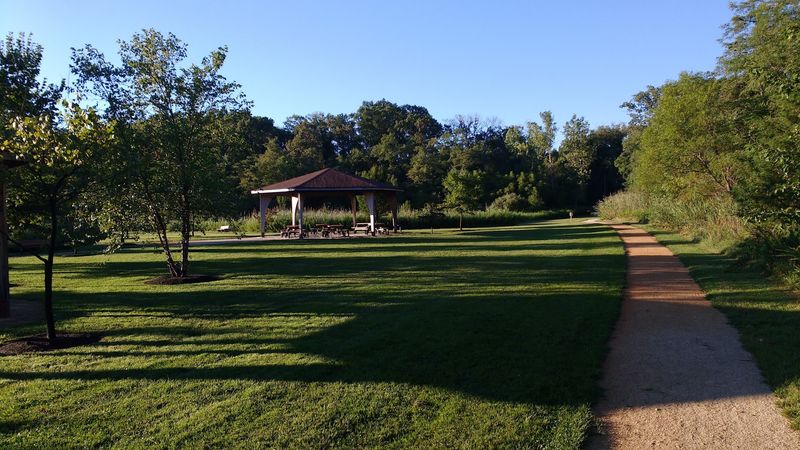
There is something genuinely delightful about spreading out a picnic blanket on land that once witnessed revolutionary-era conflict.
Long Bridge Park offers several picnic pavilions, three of which can be reserved in advance, each equipped with charcoal grills and surrounded by natural shade.
The setup is relaxed and welcoming without feeling overcrowded.
Families gather here for birthday celebrations, casual weekend outings, and quiet afternoon breaks. The pavilions sit within easy reach of both the playground areas and the trailheads, so the day can flow naturally from grilling to hiking without much effort.
Restrooms and drinking fountains are conveniently located throughout the park, which makes longer visits genuinely comfortable.
The park opens daily at 8 AM and closes at 8 PM, giving visitors a generous window to enjoy the space across all seasons. Fall brings a spectacular display of reds and golds along the trail corridors.
Spring arrives with birdsong and blooming wildflowers near the creek banks. No matter when you visit, the atmosphere carries that rare combination of calm history and everyday joy that makes Long Bridge Park feel genuinely special.
Where Kids Play Over Rebel Ground
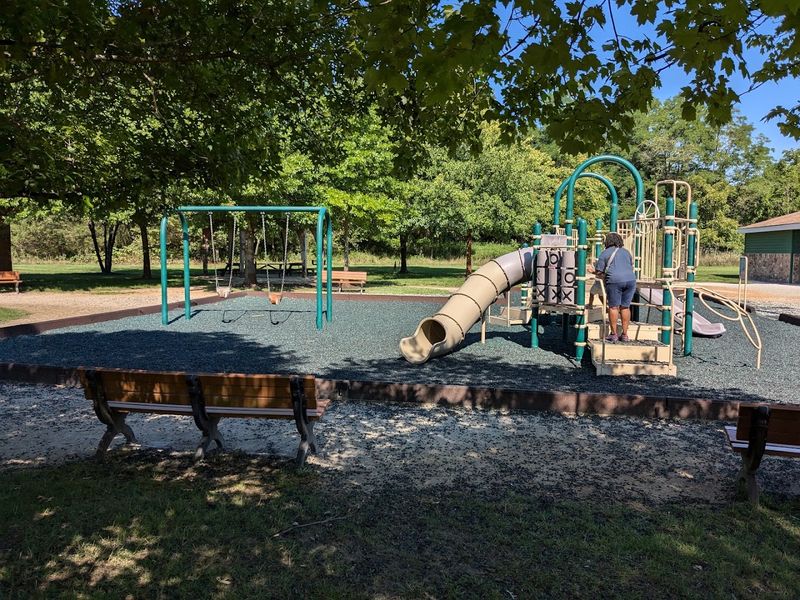
The playgrounds at Long Bridge Park are genuinely impressive. Two separate age-appropriate play areas give younger children and older kids their own dedicated spaces, which parents tend to appreciate more than they expect to.
The equipment is modern, well-maintained, and surrounded by enough natural shade to make summer visits bearable.
What makes playing here feel different is the context. Underneath those climbing structures and swing sets, the earth holds a story that goes back to 1778.
Patriots stood their ground near this creek, destroyed a bridge to protect a cause, and changed the course of a British military advance. Kids running around today have no idea they are sprinting across historically significant soil, and somehow that makes the whole scene even better.
The playground sits near the main parking area, making it easy for families to transition between active play and trail exploration. Benches and shaded seating are scattered nearby for adults who prefer to watch rather than run.
The park genuinely earns its reputation as one of Burlington County’s most family-friendly outdoor destinations, combining modern amenities with layered historical significance.
1700s Grit, 2020s Great Outdoors
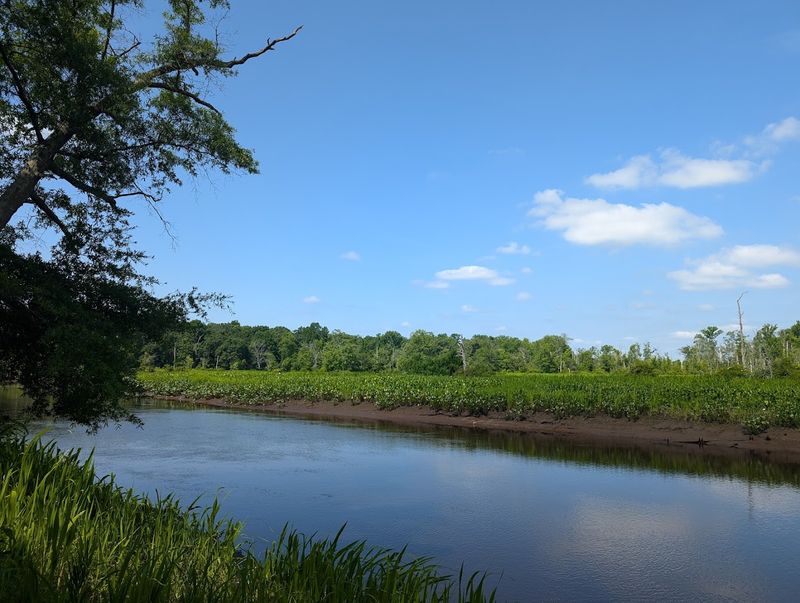
It takes a specific kind of place to bridge two and a half centuries without losing its identity. Long Bridge Park manages that effortlessly.
The park’s name traces directly to the wooden toll bridge that patriots destroyed in 1778, yet everything around you today reflects thoughtful modern park design: crushed gravel paths, maintained boardwalks over wetlands, observation blinds for wildlife, and clean restroom facilities.
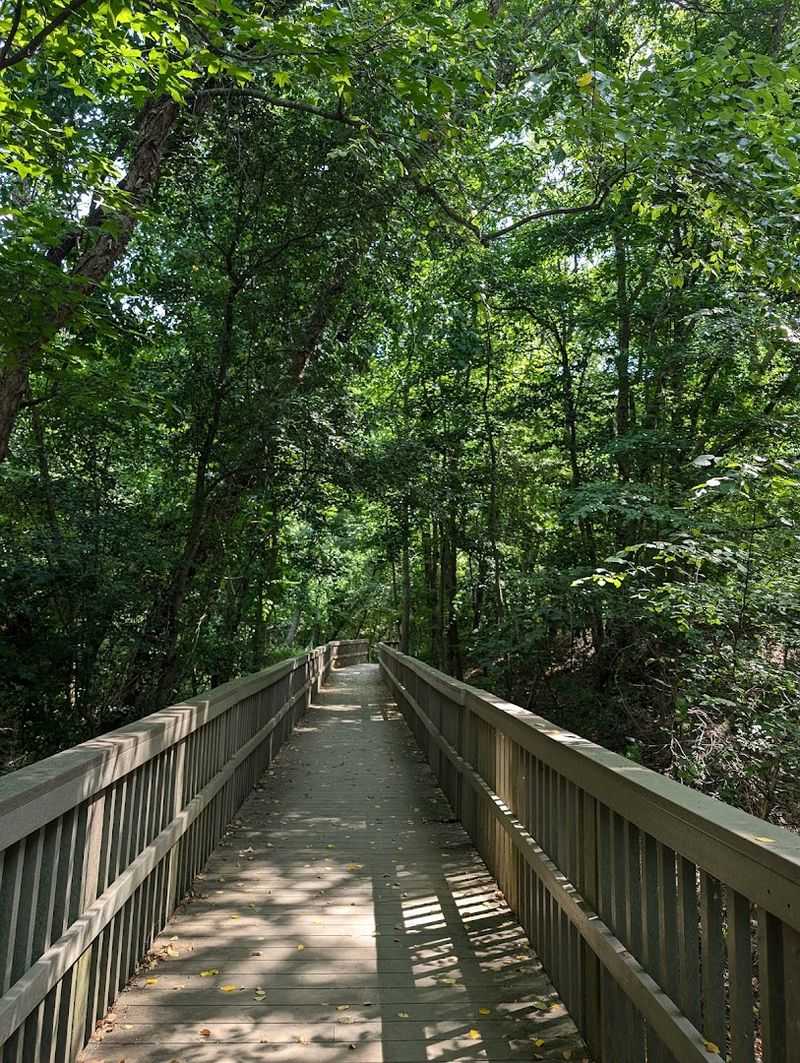
The tidal marshland sections of the park are particularly striking. Boardwalks carry visitors out over the marshy ground near the creek, offering close-up views of wetland plants, water birds, and the slow movement of the Rancocas.
It feels genuinely remote despite being minutes from residential neighborhoods in Hainesport.
Dogs are welcome on the trails, and the park draws a steady crowd of dog walkers who know every twist of the path by heart. Free parking is available from both Deacon Road and the Mount Holly By-Pass.
Whether you come for the wildlife, the history, or just a solid walk through the woods, the park delivers something real and unhurried. The 1700s left their mark here, and the 2020s built something worthy of it.
Hainesport’s Hidden Historic Hangout
Hainesport is a small Burlington County township that most people drive through without stopping. Long Bridge Park gives a genuine reason to slow down.
The park sits at 895 Deacon Road and draws visitors from across the region who come specifically for its trails, wildlife, and the kind of quiet that is increasingly hard to find near populated areas.
The town’s name itself came from Barclay Haines, who established a port here around 1848 to 1850. Before that, the area was simply called Long Bridge, a name tied directly to the wooden crossing that patriots destroyed during the Revolution.
The park carries that original place name forward, keeping the memory of the bridge and the conflict around it alive in a way that feels organic rather than forced.
Locals treat the park like a neighborhood backyard, showing up on weekday mornings with dogs and coffee, or weekend afternoons with kids and lawn chairs. The vibe is relaxed and genuinely welcoming.
For anyone passing through Burlington County, skipping this park means missing one of the most historically grounded outdoor spaces in the entire region. It earns every one of its 4.6 stars.
Walk the Trails, Feel the History
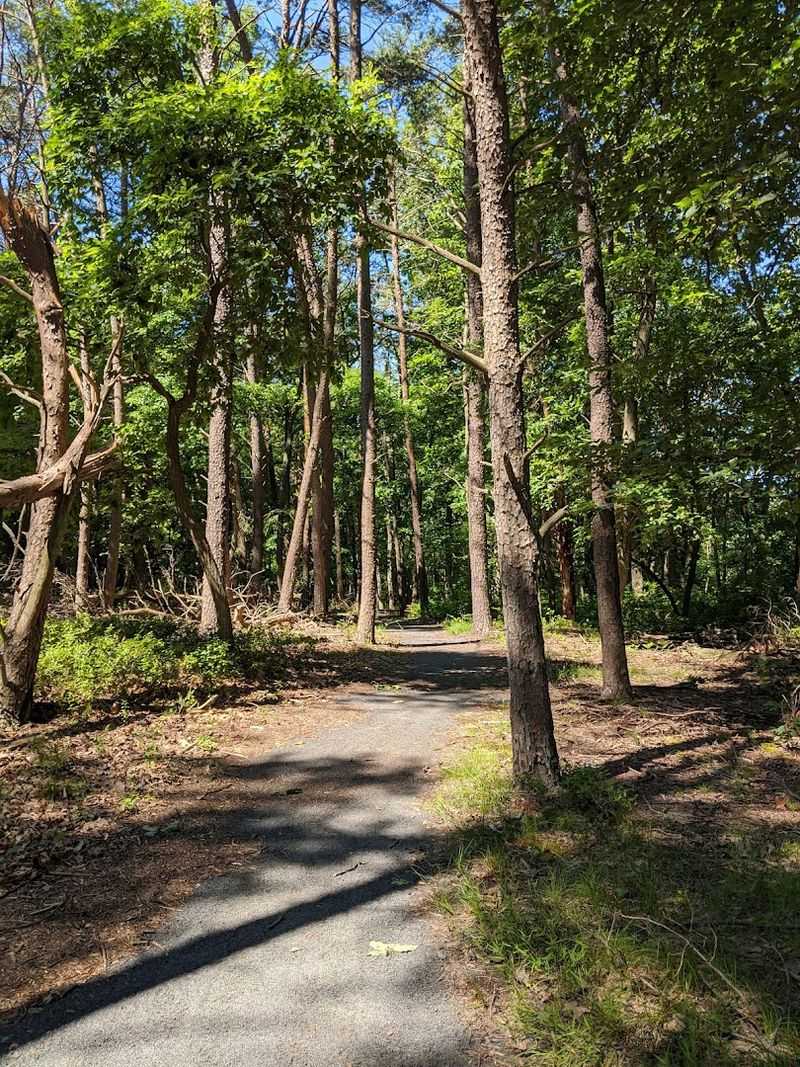
Every trail at Long Bridge Park has a different personality. Some sections run tight through dense woodland where roots cross the path and sunlight arrives in fragments.
Others open onto wide gravel stretches with views across the meadow toward the creek. The variety keeps each visit feeling fresh, even for regulars who have walked every loop multiple times.
The trails are well-marked throughout, with clear signage at intersections that makes navigation straightforward for first-time visitors.
Loop options allow hikers to customize their distance easily, which is part of why the park attracts everyone from casual strollers to runners logging serious mileage.
The intertwining paths make it simple to extend or shorten a route on the fly.
Fall transforms the entire park. The leaf canopy shifts into deep reds and brilliant golds that make even a short walk feel like something worth remembering.
Spring brings wildflowers near the creek banks and the return of migratory birds to the observation areas.
Walking these trails carries a quiet awareness that the ground beneath your feet once played a small but meaningful role in American Revolutionary history, and that awareness adds something intangible to every step.
Nature, Nostalgia, and One Epic Bridge
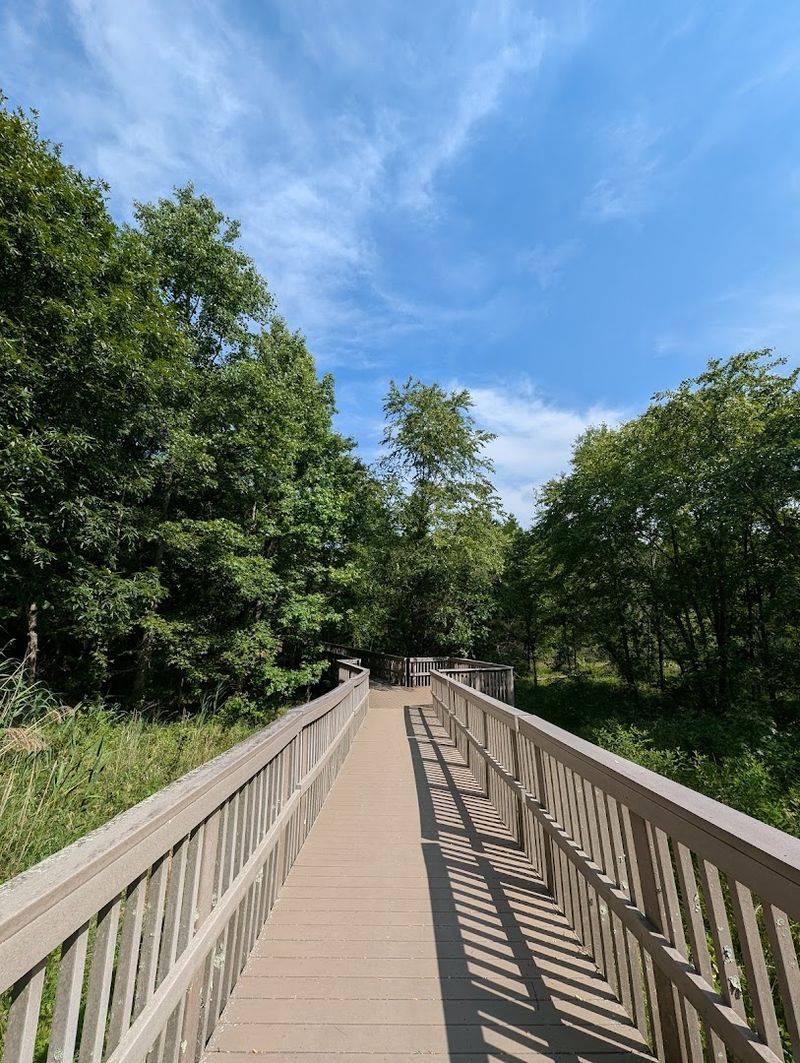
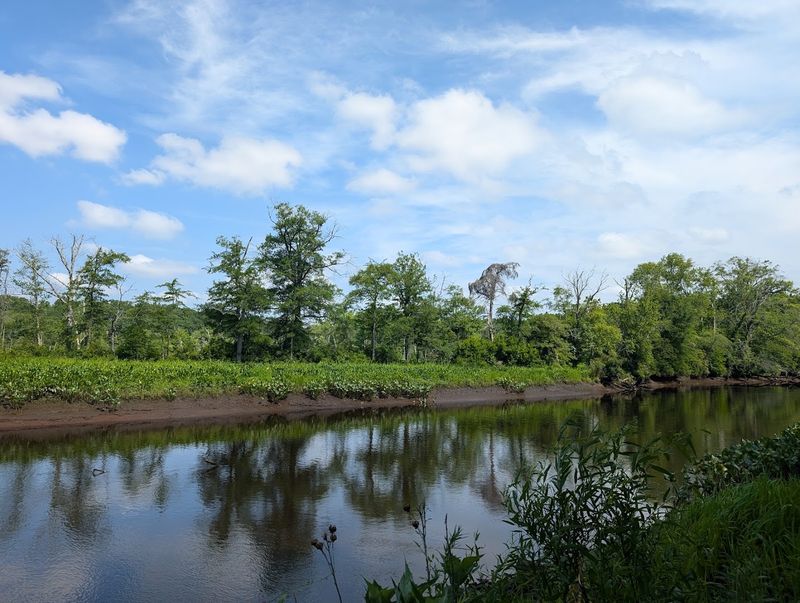
Standing near the Rancocas Creek at Long Bridge Park, it is easy to let the mind drift back to 1778. The water moves the same way it did when patriots made their stand here.
The trees along the bank have changed, but the creek has not. Remnants of the original bridge pilings are reportedly still visible on the eastern bank during low tide, a quiet physical echo of everything that happened on this ground.
The park wraps that history in 115 acres of living, breathing natural beauty. Freshwater ponds, tidal marshlands, upland forests, and open meadows create a landscape that shifts with every season and rewards patient observation.
Wildlife sightings, from indigo buntings to snapping turtles, turn ordinary walks into genuinely memorable outings.
What Long Bridge Park offers, beyond trails and playgrounds and picnic spots, is a sense of connection. Connection to the land, to the creek, and to a moment in American history when ordinary people made an extraordinary decision just a short distance from where you are standing.
That is not something most parks can claim.
Address: 895 Deacon Rd, Hainesport, NJ
