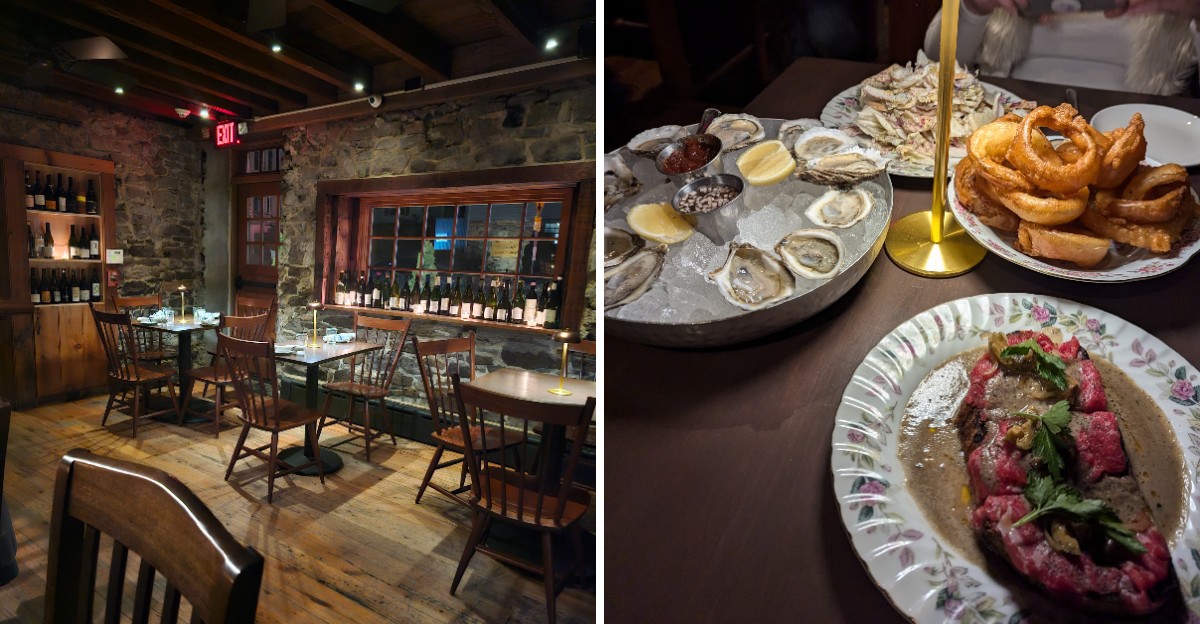
A 2015 fire burned this restaurant down to its stone walls. Less than a year later, it was serving dinner again by New Year’s.
The building’s story stretches back to the 1700s, according to the restaurant itself. It has been a home, a grain and feed store, a grocery, and even an ice cream parlor.
One part once held the whole town’s ice supply.
I like how the kitchen treats its rural New Jersey neighbors as partners. Nearby farms supply the ingredients, and the chefs break down whole animals in-house.
That is serious dedication in a very old room.
I can’t imagine a cozier place for a winter supper than beside an old stone fireplace. So how does a building survive fire, centuries, and a dozen different jobs and still feel this inviting?
Those Thick Stone Walls Have Outlasted Nearly Everything
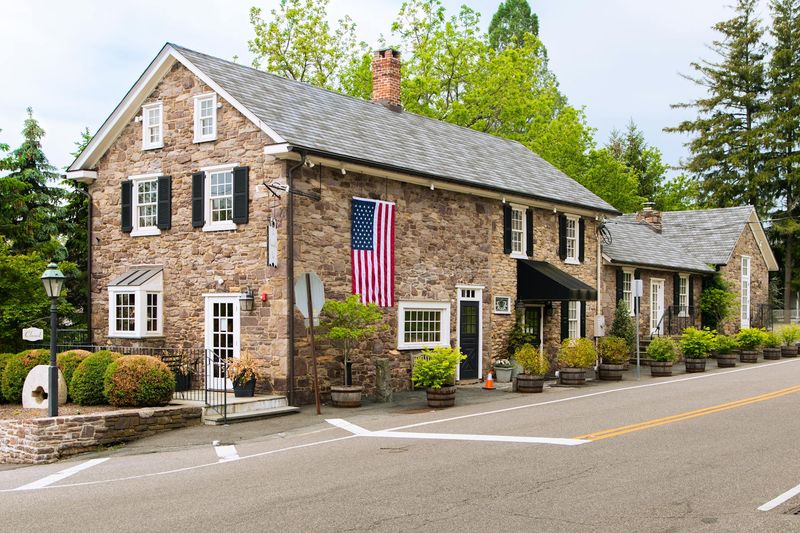
Stone walls tend to tell the truth about a building’s age. At The Sergeantsville Inn, those walls are the star of the show long before any plate arrives.
The restaurant proudly says its history runs since 1734. Some sources point to 1730 or 1737 for the earliest parts of the structure.
Here’s an honest twist, though. After the 2015 fire, a structural study found no clear proof that the entire building dates to the 1700s.
The land itself has deep roots. Daniel Robins acquired it around 1712 to 1714, so this corner has been occupied for a very long time.
From the road, the inn looks the part. Weathered stone, classic shutters, and an aged face give it a storybook look in this small New Jersey village.
I love that the building doesn’t need a flashy sign to grab attention. The masonry does the talking, and it speaks fluent old-fashioned charm.
Take a slow lap around the outside before heading in. It’s worth seeing how the stone sections fit together after so many changes.
Every renovation and owner left a mark. The result feels layered, like a history book you can sit down and eat inside.
Feed Store, Grocery, Ice Cream Parlor, And Then Dinner
Few restaurants have a resume this strange. Over the years, this stone building has worked as a private home, a grain and feed store, and a grocery store.
It also spent time as an ice cream parlor. Then there’s the oddest job of all, a pelt trading center.
That last one makes more sense once you know the town’s old nickname. Sergeantsville was once called Skunktown, because it served as a market center for skunk pelts in the late 1700s.
Yes, really. The village officially became Sergeantsville in 1827, honoring Revolutionary War soldier Charles Sergeant.
Legend adds even more spice. Local stories claim General George Washington stopped here during the American Revolution.
The Marquis de Lafayette is also said to have spent time inside. The original tavern may have hosted troop messengers and officers gathering for news.
Treat those tales as legend rather than proven fact. They’re still fun to think about while you sit near those old walls.
I believe this mix is what makes the place memorable. Kids and adults alike can enjoy guessing which room once sold groceries or scoops of ice cream.
Not many dining rooms come with that kind of backstory.
A Fire Nearly Ended The Story In 2015
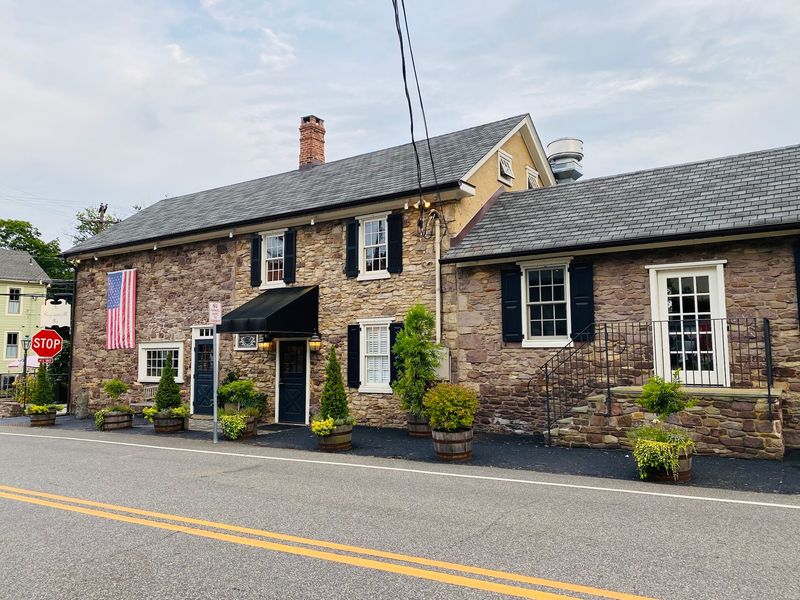
March 2015 brought the inn’s hardest moment. A devastating fire swept through the business, leaving little more than the stone walls standing.
Plenty of places would have closed for good. This one bounced back fast, reopening by New Year’s 2016.
The rebuild wasn’t about making things shiny and new. The reconstruction carefully kept the historic charm that made the inn special in the first place.
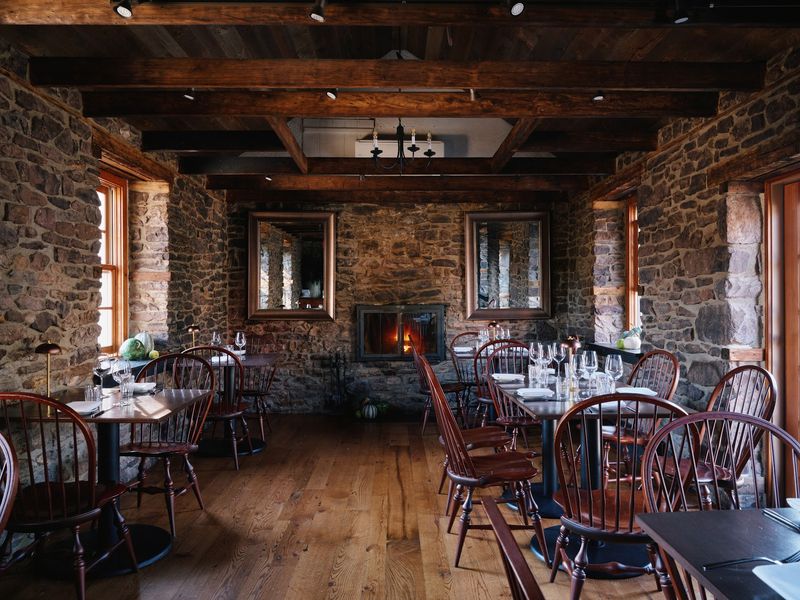
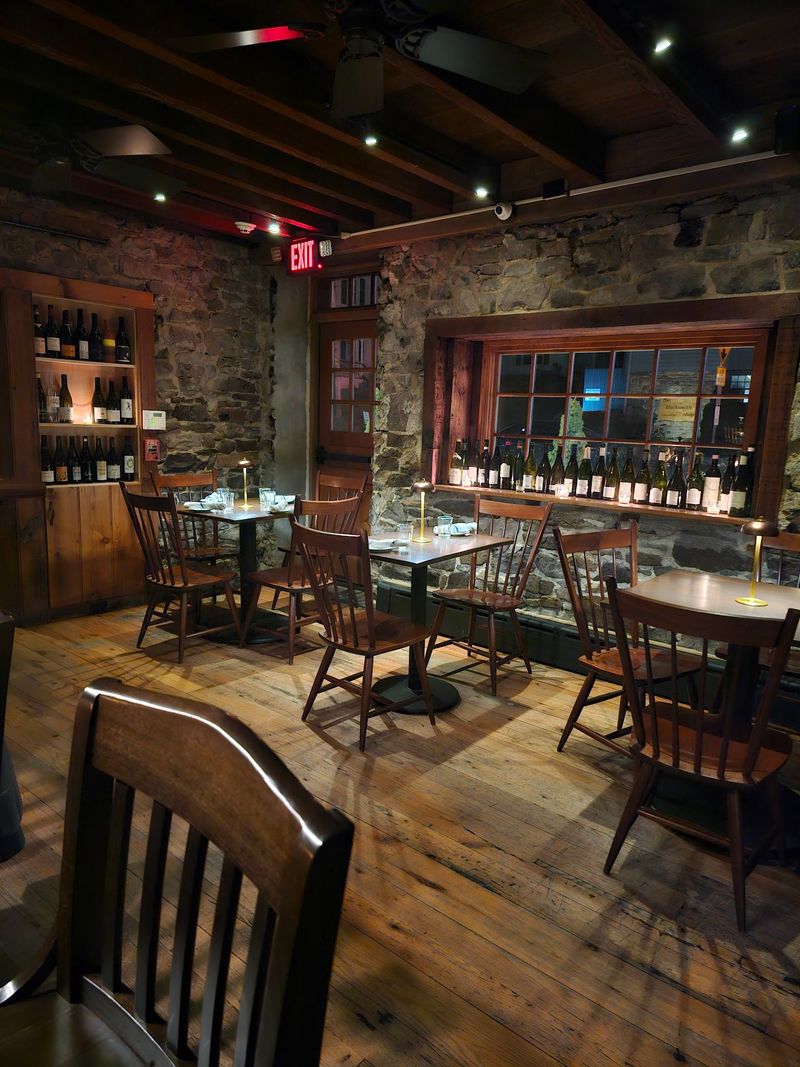
That’s why the inside still feels old in the best way. Exposed stone, hardwood floors, and wood beams overhead blend the past with fresh craftsmanship.
Ownership has also changed with time.
Next time you rest a hand on that cool stone, think about what it has endured. It’s survived centuries of use and one terrible night.
Somehow it still looks ready for a few more hundred years of dinners.
The Old Town Ice House Got A Clever New Job
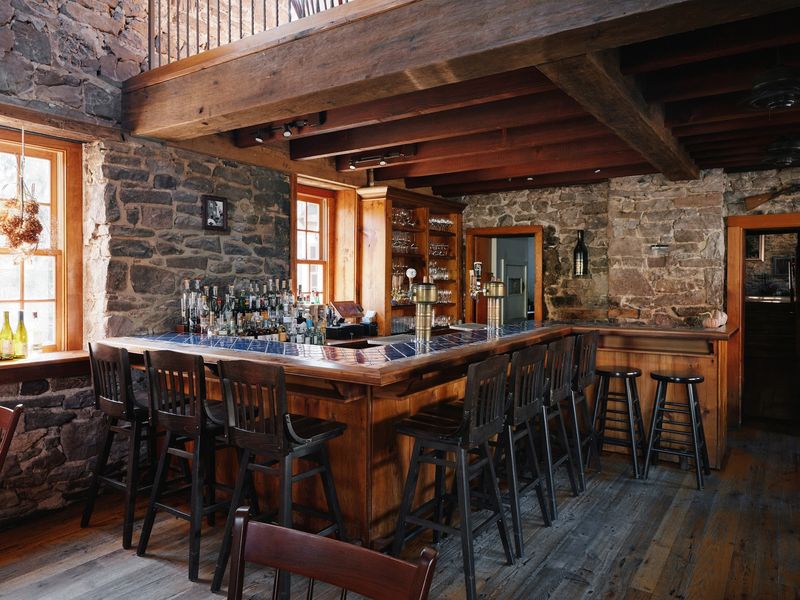
Before refrigerators, towns needed somewhere to keep ice through warm months. Sergeantsville’s only township ice house sits right beside the inn.
That small stone building is attached to the main structure. Its job today is a lot more relaxed than storing frozen blocks.
It now works as a cozy shop with curated goods. Guests can also order small bites from the inn next door while they hang out there.
I adore this kind of reuse. Rather than tearing down an old outbuilding, the owners gave it a fresh purpose that fits the whole property.
One of the downstairs dining rooms also carries the Icehouse name. It’s a nice nod to the building’s practical past.
Think about how hard ice storage once was. Workers cut ice, hauled it, and packed it to last as long as possible.
Now the space feels snug and welcoming. It’s a fine spot to pause before or after dinner in the main inn.
Take a peek even if you’re not shopping. The little building is one of the most charming survivors on the property.
Small structures like this rarely last. Seeing one still in use feels like a quiet win for history.
The Kitchen Breaks Down Whole Animals In-House
Whole animal butchery is rare in restaurants today. Chef Sean Gray runs exactly that kind of program at The Sergeantsville Inn.
The kitchen breaks down cattle, pigs, chickens, ducks, and fish right on site. That means less waste and more creative cuts on the menu.
Sourcing stays close to home. The team works directly with local farmers and producers, with a strong focus on Hunterdon County.
The inn specializes in pasture-raised meats and wild-caught seafood. Local produce fills out the plates, changing with the seasons.
Even the fields along Rosemont Ringoes Road help out. Those farms are more than pretty scenery, because they supply the kitchen too.
I respect a chef who knows exactly where dinner came from. It shows care for both the food and the neighbors who grow it.
The style is described as New American or Contemporary American. That gives the kitchen room to play while still honoring comfort.
Vegetarian and vegan diners aren’t left out either. The kitchen offers options for them as well.
Because the menu shifts seasonally, a return trip can feel brand new. Some staples stay put, while other dishes rotate in and out with the harvest.
Burgers, Steak Frites, And A Salad With A Reputation

A famous salad sounds like a contradiction. Yet the radicchio salad here has earned that label, which tells you plenty about this kitchen.
Burgers get special treatment too. The meat is ground in-house, thanks to that whole animal program.
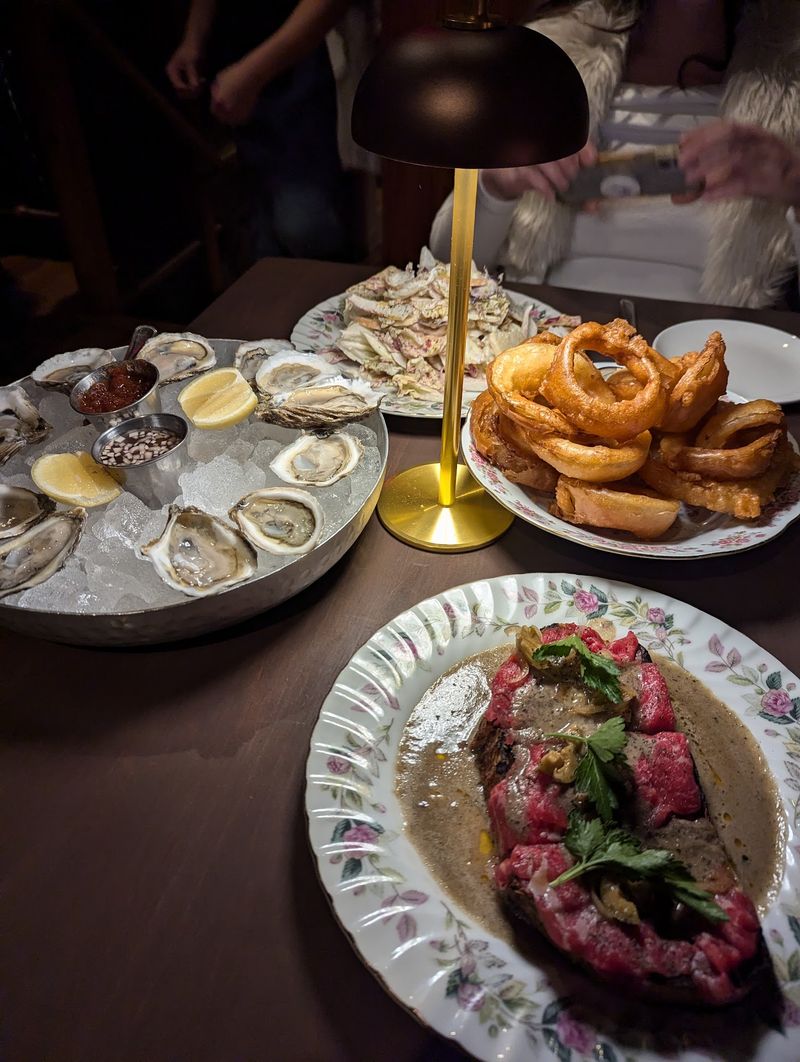
House-cased sausages arrive with beans for a hearty, rustic plate. Classic steak frites and dry-aged NY strip steaks bring the steakhouse energy.
Fresh pasta also shows up on the menu. So do roasted Griggstown Farms Chicken and Barnegat Sea Scallops from the Jersey shore.
Look for the River Bend Farms Daily Cut as well. The name alone hints at how much local farms shape the menu.
I like that the food blends comforting favorites with fresh ideas. Nobody needs a dictionary to order, but there’s still room for surprise.
Remember that the menu changes with the seasons. A dish you spot online might be swapped out by the time you arrive.
That’s part of the charm, honestly. The kitchen follows what local growers have, not a fixed script.
Go with an open mind and maybe a friend who shares. Splitting plates lets you sample more of what makes this menu special.
Show Up Early For The Blue Plate Specials
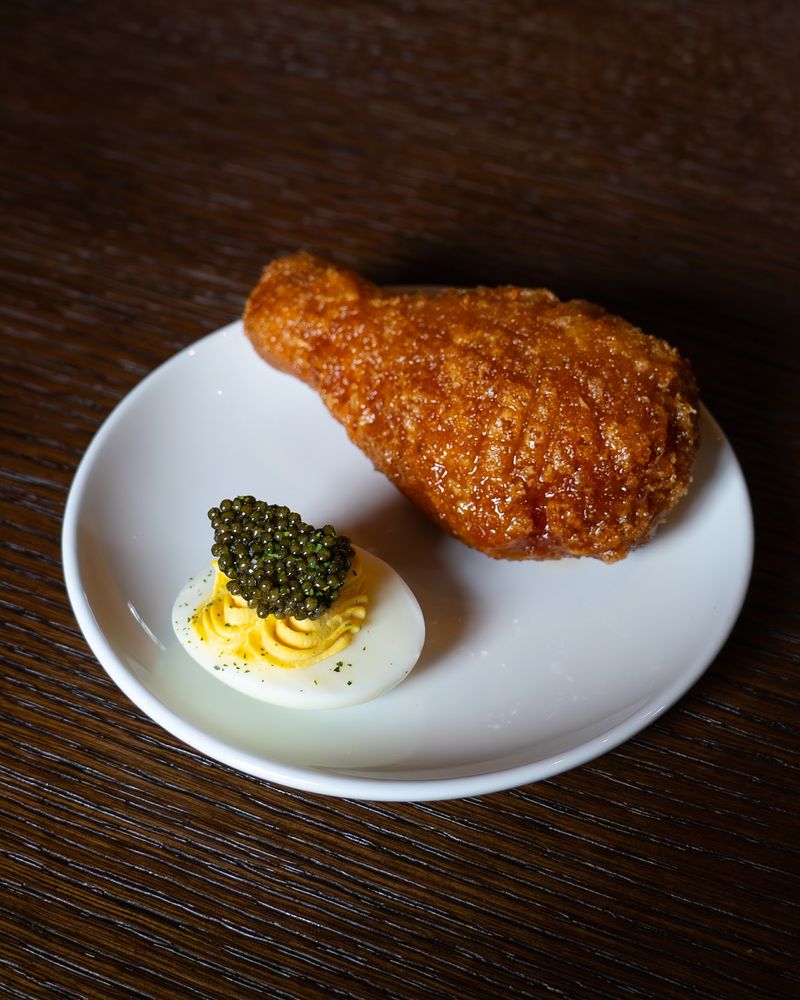
Four-times fried chicken drumsticks, sold by the piece. If that doesn’t make you check your calendar, a pickle sandwich might.
Both have appeared among the inn’s Blue Plate Specials. These run daily from 4 to 6 p.m., giving early diners a playful reward.
The name nods to old diner traditions. Here, the specials carry a whimsical spirit while still showing off the kitchen’s skill.
A pickle sandwich at a historic stone inn? It sounds silly, and that’s exactly why it sticks in your head.
Buying drumsticks by the piece is smart too. You can grab one as a snack or a few for a fuller start.
Timing matters, so plan around that two-hour window. Specials may change, so keep expectations flexible.
I think this is a great way to try the inn without a long, fancy dinner. It’s relaxed, fun, and still totally on brand.
The lively Tavern makes a natural setting for this early bite. No TVs means you’ll actually chat with your table.
Families with flexible schedules might love this option. Eating earlier also leaves time for an evening drive through the countryside afterward.
Make A Day Of It In The Hunterdon County Countryside
Quiet roads and rolling farmland surround this village. Sergeantsville sits in Hunterdon County, in the scenic Delaware Valley of New Jersey.
You’ll find the inn at 601 Rosemont Ringoes Rd, Sergeantsville, NJ 08557. It anchors the heart of this small, historic community.
The village was first settled around 1700. It keeps a calm, rural character that makes the drive feel like part of the outing.
Nearby, you can visit the Green Sergeant’s Covered Bridge. It’s the oldest remaining covered bridge in New Jersey, and it makes a lovely photo stop.
Pair a bridge visit with an early dinner. That combo makes a relaxed afternoon that feels miles from busy highways.
The Sergeantsville Inn has also earned outside praise. Resy named the Sergeantsville Inn one of the ten restaurants that defined Philadelphia dining in 2025.
Hours vary by day, with weekend midday service and dinner nightly. Check the schedule and book ahead before you go.
I can’t think of a better reward after country back roads. A fireside table inside centuries-old stone is hard to top.
Bring a camera, a curious mind, and an appetite for history. This corner of the Garden State delivers all three.
