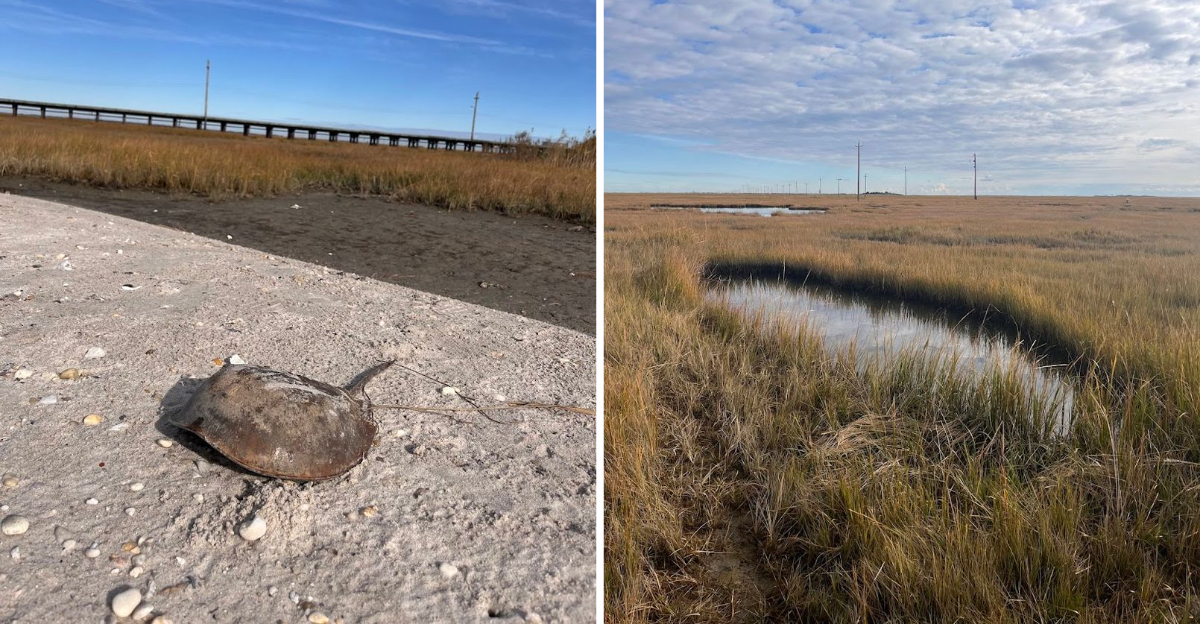
Nobody warned me that a road could feel like a plot twist.
One minute you’re driving through a regular New Jersey town, and the next, you’re creeping along a narrow two-lane strip of asphalt surrounded by nothing but water, marsh grass, and the kind of quiet that makes your ears ring.
There were birds everywhere, a terrapin crossing the road like it owned the place, and a horizon so flat and wide it looked like someone had ironed the earth.
The whole thing felt like a secret that New Jersey had been keeping for decades, tucked behind the pine barrens and barrier islands like a shy kid in the back of class.
Spoiler: the road ends before it gets where it was going, and somehow, that makes the whole trip even better.
Nearly 6,000 Acres of Salt Marsh Serenity
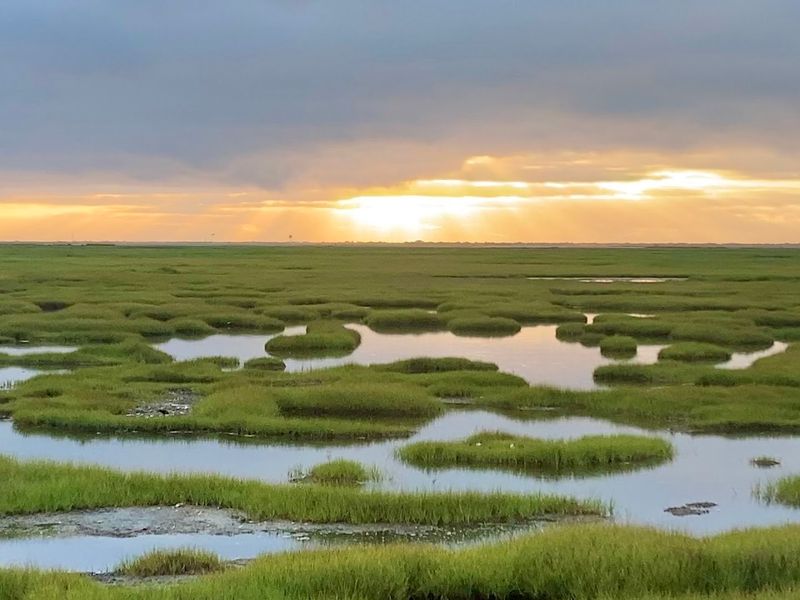
Stretching nearly 6,000 acres across the southern New Jersey coastline, the Great Bay Boulevard Wildlife Management Area is one of those places that genuinely stops you in your tracks. The scale of it is almost hard to process when you first arrive.
You park the car, step out, and suddenly realize the world has gone wonderfully quiet.
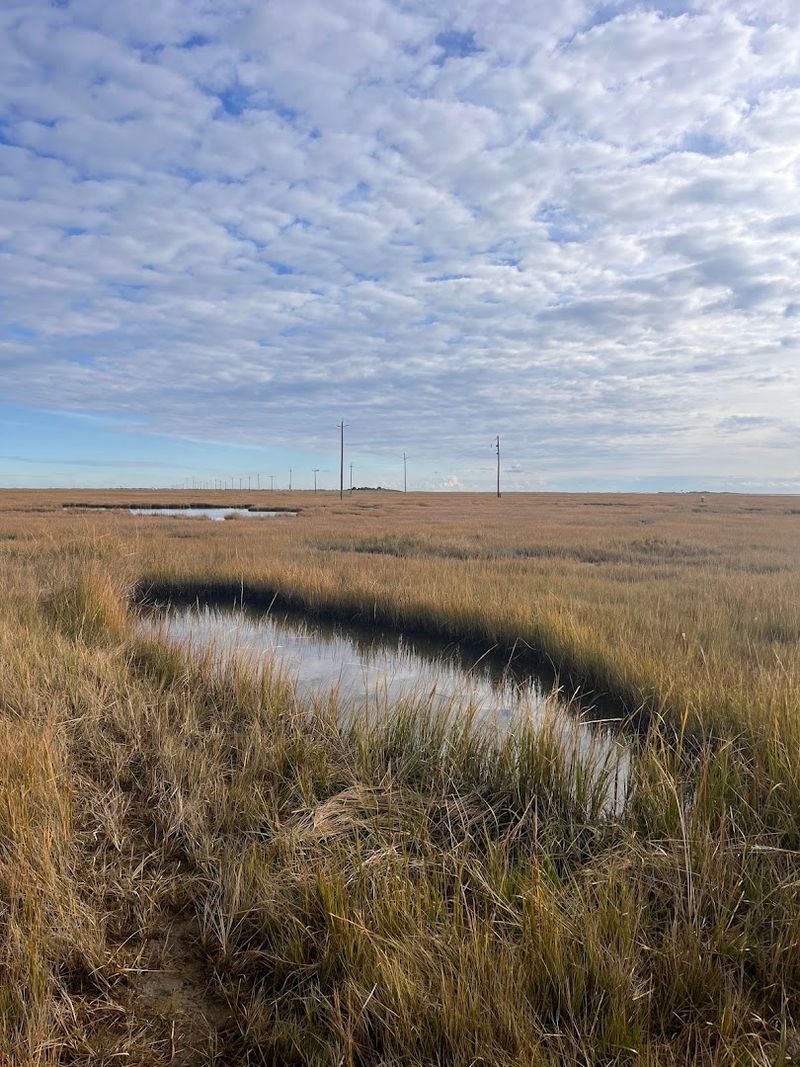
Roughly 5,982 acres of fresh, brackish, and saltwater estuary form a long, low peninsula that juts into the bay like a finger pointing toward the Atlantic. Salt-marsh cordgrass covers most of the land, swaying in the breeze and shimmering gold in the afternoon light.
It smells like the ocean mixed with something earthier, something older.
This area is recognized as one of the most undisturbed marine wetland habitats in the entire northeastern United States. It is part of the Jacques Cousteau National Estuarine Research Reserve, which gives it a level of ecological protection that keeps it beautifully raw.
Coming here feels less like visiting a park and more like stepping into a working, breathing ecosystem.
A Road Built for Seven Bridges, But Stopped at Five
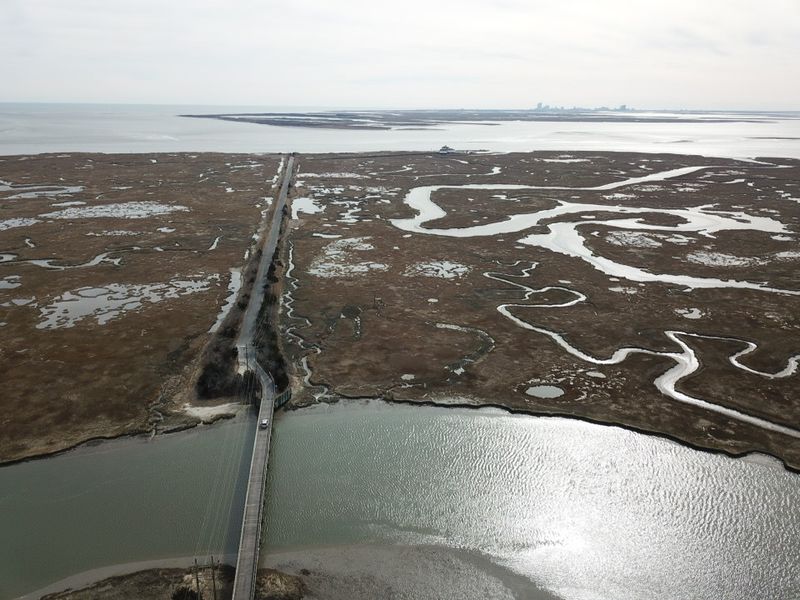
Back in the late 1920s, someone had a very ambitious idea. The plan was to build a causeway called the Ocean Highway, or the Tuckerton Cutoff, that would connect Tuckerton directly to Atlantic City.
It sounded bold, practical, and frankly impressive for its era.
Seven bridges were part of that original vision. Only five were ever built.
The first three you cross on Great Bay Boulevard are modern, two-lane concrete structures that feel completely normal. Then things get interesting.
The last two are older, narrow, single-lane wooden bridges controlled by traffic lights, which gives them a charmingly vintage personality.
The remaining two bridges were never constructed. Deep water, financial pressure from the Great Depression, and environmental regulations introduced in the 1960s all played a role in stopping the project cold.
Atlantic County never even started its portion of the route. The road simply ends at the Little Egg Harbor Inlet, where a small natural beach waits quietly at the tip of the peninsula.
Five bridges in, the journey becomes something entirely its own.
Where Ospreys Rule the Sky and Marshes Stretch Forever
Osprey platforms dot the marsh like little watchtowers, and the birds that occupy them take their jobs seriously. These raptors circle overhead with a focused intensity, scanning the tidal creeks below for fish with almost mechanical precision.
Watching one dive is genuinely one of the most thrilling things you can see without buying a ticket.
Great Bay Boulevard is a critical habitat for a remarkable variety of birds. Sandpipers, willets, plovers, yellowlegs, oystercatchers, and black skimmers all move through or nest here depending on the season.
Eagle sightings have become increasingly common in recent years, which feels like a genuine victory for conservation efforts in the region.
The marshes themselves create the conditions that make all of this possible. Vast stretches of salt-marsh cordgrass form the base of the estuarine food chain, feeding fish, shrimp, and crabs that in turn sustain the birds above.
Standing at the edge of the road with binoculars in hand, the sky above this peninsula feels like it belongs to a completely different world than the one you left behind on the highway.
Drive Into the Bay, Only to Find It Ends in Silence
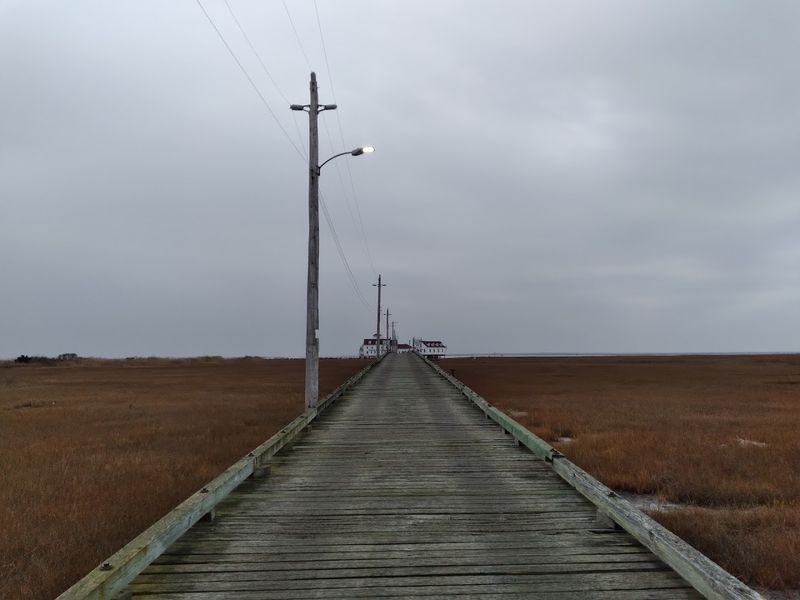
The road just stops. There is no dramatic turnaround, no parking lot with a gift shop, no sign congratulating you for making it.
Just a quiet dead end at the edge of the Little Egg Harbor Inlet, where the land gives way to open water and the wind picks up without anything to slow it down.
A small pathway at the very tip of the peninsula leads to a natural beach, the kind that forms on its own without any human intervention. The sand is coarse, the shells are plentiful, and the view across the water is genuinely spectacular on a clear day.
It feels earned, even though all you did was drive.
What makes this ending so memorable is its honesty. The road was supposed to keep going, to bridge the gap all the way to Atlantic City, but it never did.
Instead of feeling like a failure, though, it feels strangely perfect. The silence here is not empty.
It is full of bird calls, wind, and the soft sound of tidal water moving through the creeks beneath you.
Is This a Road to Nowhere, or a Road to Wonder?
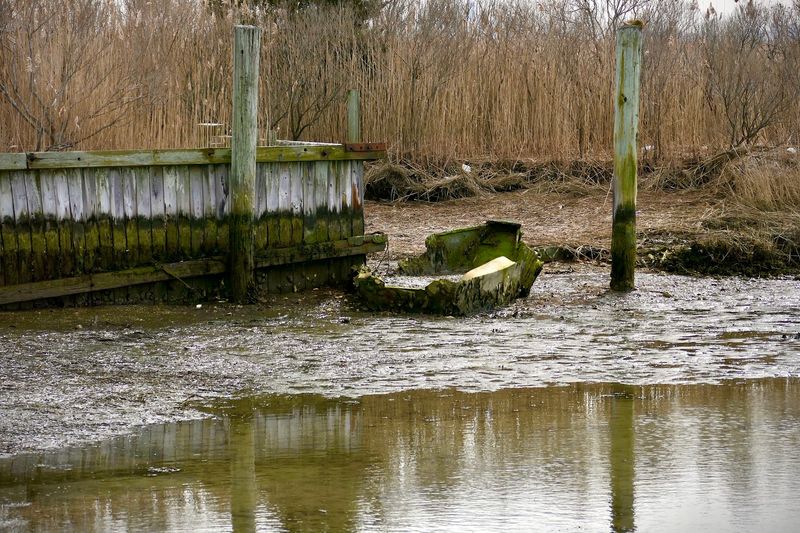
Calling it a road to nowhere would be missing the point entirely. Great Bay Boulevard was built with a destination in mind, but what it accidentally created is something far more interesting than a shortcut to Atlantic City.
It created a corridor through one of the most ecologically significant wetlands on the East Coast.
Driving it feels meditative in a way that is hard to explain. The road is narrow enough that you slow down naturally, which turns out to be exactly the right speed for appreciating what surrounds you.
Tidal creeks cut through the marsh on both sides, some shallow and glittering, others surprisingly deep.
Those creeks can reach depths of up to 25 feet in places, with water flowing between Little Egg Harbor and Great Bay depending on the tides. The peninsula is crisscrossed by these channels, making it feel like the land itself is in constant conversation with the water.
Kayakers love launching into these creeks. Anglers set up along the edges.
And everyone who drives to the end seems to leave a little quieter than they arrived.
Saltwater, Sunsets, and Secrets of Little Egg Harbor
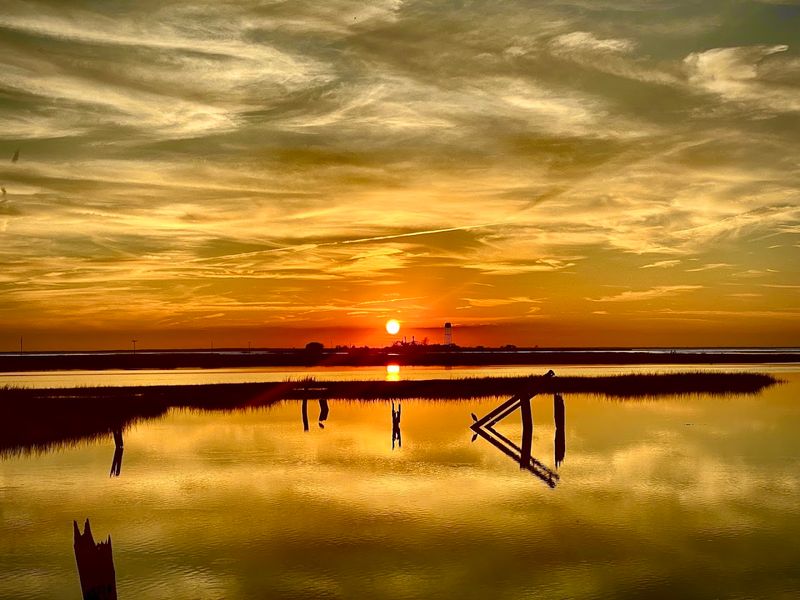
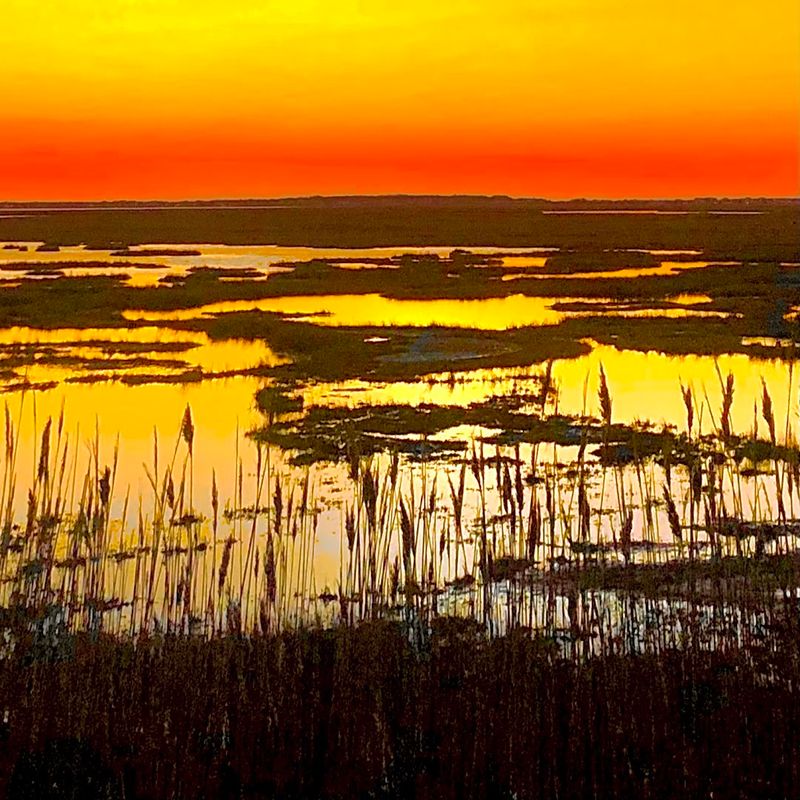
Sunsets at the end of Great Bay Boulevard have a reputation, and they absolutely deliver. The flat, open landscape means there is nothing to interrupt the light as it spreads across the water and marsh grass in shades of orange, pink, and deep amber.
Photographers make special trips out here just for this hour.
Little Egg Harbor itself is a broad, shallow bay with a long history tied to fishing, crabbing, and the kind of coastal life that feels increasingly rare along the Jersey Shore.
The water here is productive in the best possible way, supporting blue crabs, striped bass, flounder, and the shrimp that draw wading birds by the hundreds.
There are a few small marinas along the boulevard where local fishing boats come and go throughout the day. The whole scene carries a relaxed, unhurried energy that is genuinely contagious.
Spending an evening here, watching the light change over the estuary while the birds settle into the marsh for the night, is the kind of simple experience that somehow stays with you for a surprisingly long time afterward.
Wildlife So Close You’ll Forget You’re in New Jersey
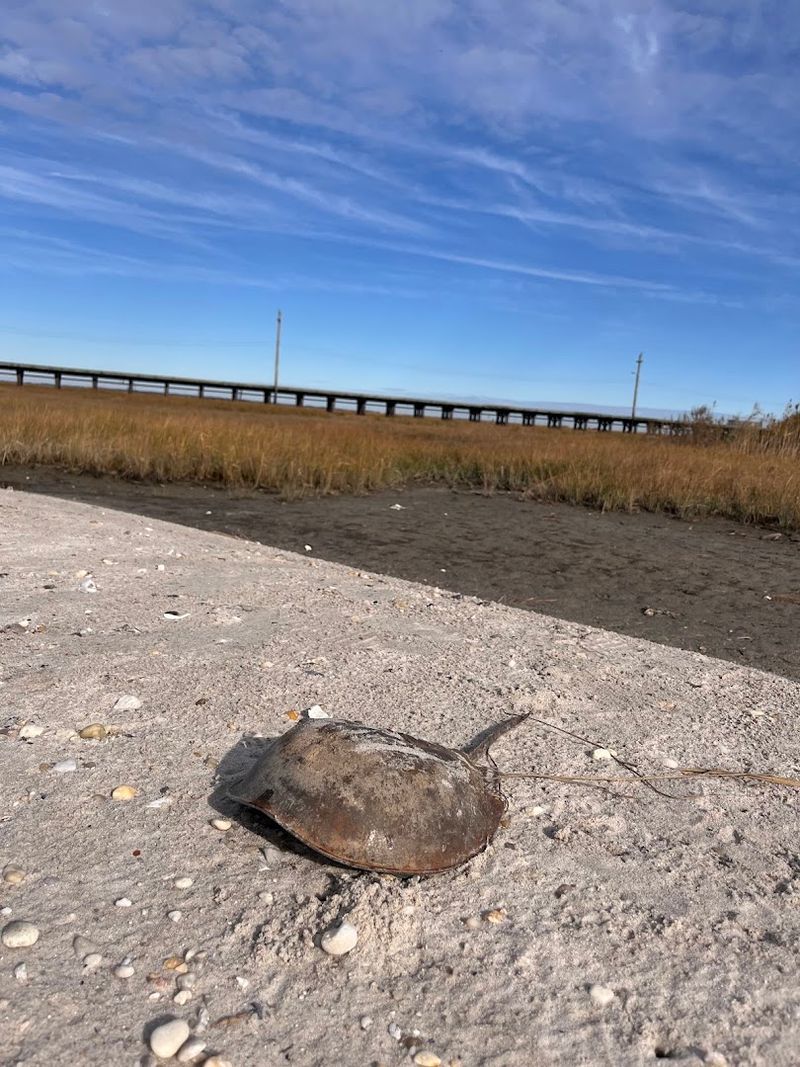
Between May and July, female Northern Diamondback terrapins cross Great Bay Boulevard to lay their eggs, and they do it completely on their own schedule. Slow down for them.
They have been doing this for thousands of years and have no interest in rushing for anyone.
Beyond the terrapins, the wildlife list here reads like something from a nature documentary. Fox, raccoons, mink, and river otters have all been spotted along the edges of the marsh and its tidal creeks.
The sheer variety of animals that call this peninsula home is a direct result of how intact and undisturbed the habitat remains.
Wading birds stand motionless in the shallows with the patience of seasoned fishermen. Black skimmers skim the surface of the bay at dusk with a kind of aerial elegance that seems almost impossible.
Raptors circle above. Shorebirds pick along the mudflats at low tide.
The whole place is alive in a way that feels almost overwhelming at first, then completely addictive. Forgetting you are in New Jersey is not just possible here.
It is practically guaranteed.
History, Habitat, and a Hint of Mystery
Long before the bridges and the boulevard, the Lenni Lenape people used this peninsula for foraging. They left behind shell mounds that archaeologists have dated back more than 1,500 years, quiet reminders that this land has been feeding people and communities for a very long time.
Standing near the water and knowing that history is layered beneath your feet adds a different kind of weight to the visit. The marsh has been a source of food, shelter, and connection to the natural world across many generations and many different ways of life.
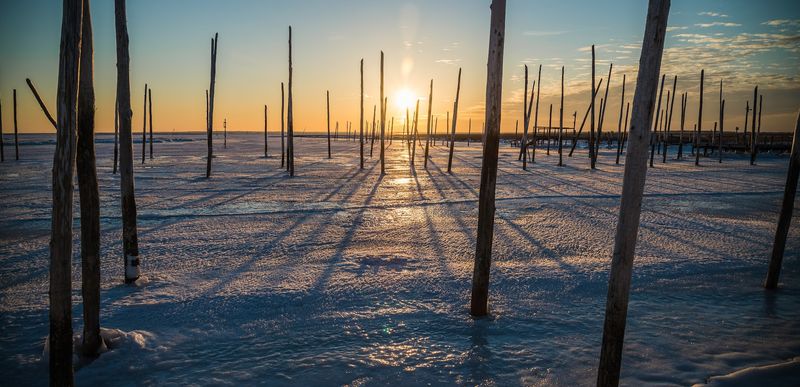
An abandoned fishery is visible from certain points along the boulevard, its weathered structure sitting out in the water like a faded postcard from another era.
The Rutgers University Marine Field Station near the end of the road continues the tradition of learning from this place, tracking fish and crab larvae as part of ongoing research.
History, science, and nature all overlap here in a way that feels genuinely layered and rich. The mystery comes from wondering what else this marsh is still keeping to itself.
A Peninsula That Promised More, But Gave Us Magic Instead
The original plan was grander, no question. A full causeway connecting Tuckerton to Atlantic City would have been a significant piece of infrastructure.
Instead, what exists today is something that could not have been engineered on purpose, a wild, breathtaking, ecologically vital peninsula that somehow slipped through the cracks of twentieth-century development.
Kayaking through the tidal creeks, fishing along the edges, watching an osprey carry a fish back to its platform, or simply sitting at the dead end and listening to the bay move against the shore, all of it adds up to an experience that feels genuinely rare.
Not rare like expensive. Rare like irreplaceable.
Great Bay Boulevard Wildlife Management Area is the kind of place that earns its reputation quietly, through repeat visitors and whispered recommendations rather than billboards. It promised a shortcut and delivered a sanctuary instead.
The road did not reach the shore as planned, but it reached something better, a corner of New Jersey that still feels wild, still feels honest, and still feels worth every slow, careful mile of the drive out there.
Address: Great Bay Boulevard, Little Egg Harbor Township, NJ 08087
