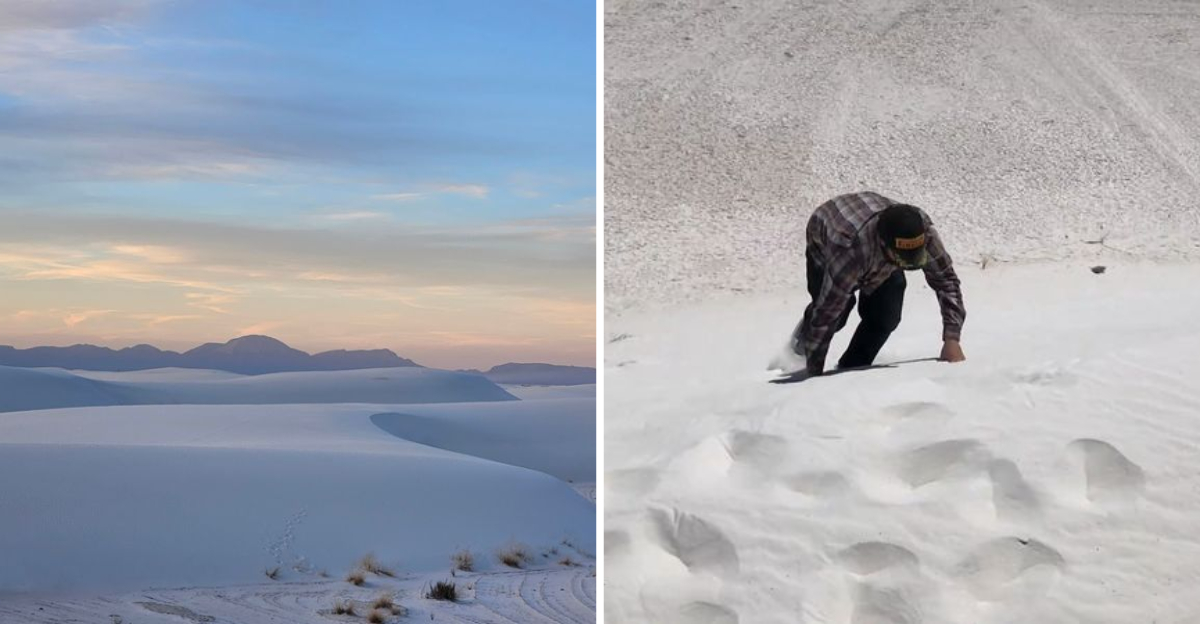
Powdered sugar dunes stretching across the desert floor. Bright white.
Impossible to soften. No trees.
No shade. Just raw, open New Mexico landscape that catches you completely off guard. I pulled off the highway, stepped out of the car, and just stood there.
The quiet hit me first. Then the scale.
You can see for miles in every direction, nothing but white sand and blue sky. No crowds. No noise.
Just space. If you have never been, put it on your list.
Right now.
The Gypsum Dunes That Defy Everything You Know About Sand
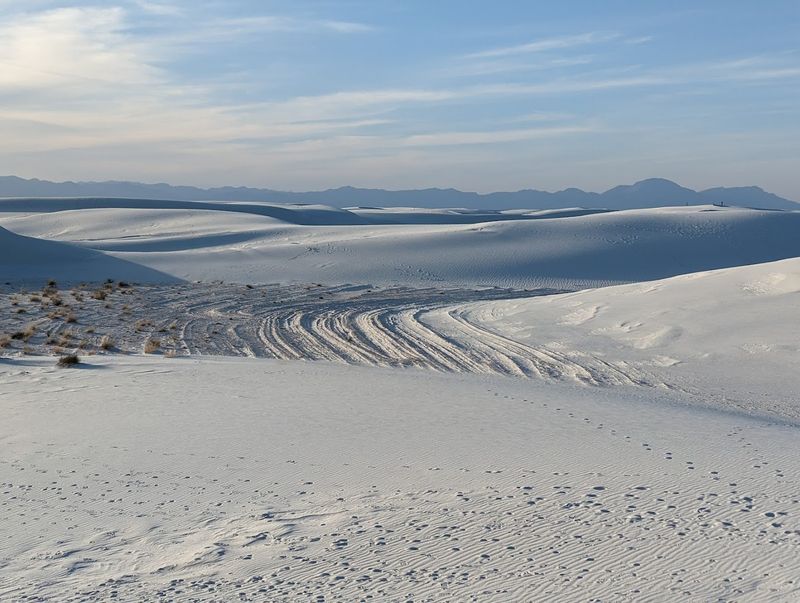
Most people assume sand is sand, but the moment you scoop up a handful at White Sands, you realize something is very different here. These dunes are made entirely of gypsum crystals, the same mineral used in drywall and classroom chalk.
That is not something you find at your average beach or desert.
Gypsum does not absorb heat the way regular silica sand does. Even on a scorching summer afternoon when the air temperature hits triple digits, the sand under your feet stays surprisingly cool and soft.
It almost feels moist, which catches nearly every first-time visitor completely off guard.
The park sits inside the Tularosa Basin and protects the largest gypsum dunefield on Earth, covering roughly 275 square miles in total. The dunes are also relatively young in geological terms, only about 4,000 to 7,000 years old.
Rain carries gypsum down from surrounding mountains, water evaporates in the basin, and crystals are left behind. Wind breaks those crystals into fine grains, and over thousands of years, the dunes slowly build.
It is a process that is still happening right now, which makes every visit feel like witnessing something alive.
No Trees, No Shade, and Why That Actually Makes It Better
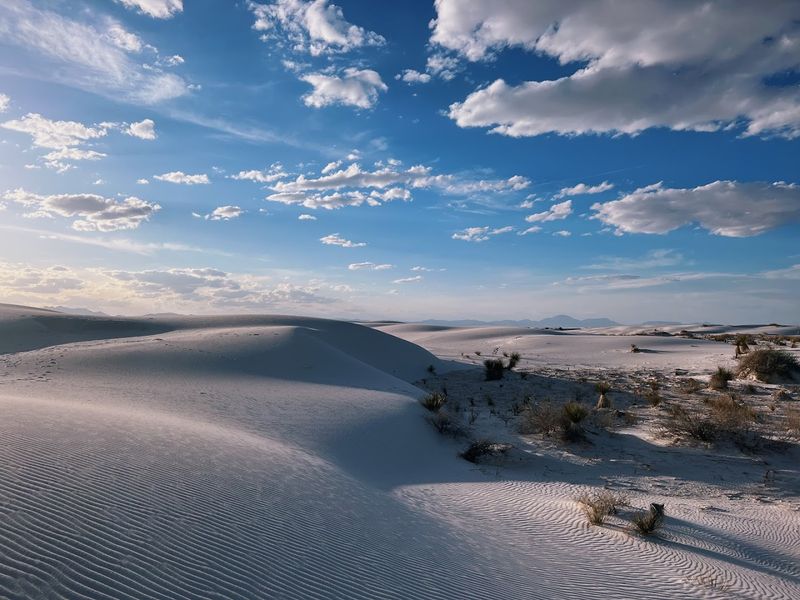
One of the first things you notice is just how open everything feels. There are no tall trees lining the trails, no canopy overhead, nothing between you and the sky except pure desert air and blinding white light.
For some people, that sounds uncomfortable, but it creates a sense of freedom that is genuinely hard to find anywhere else.
A few hardy plants do manage to survive out here. The soaptree yucca is probably the most iconic, stretching its long stalk upward in an almost desperate attempt to stay above the shifting dunes.
Skunkbush sumac and Rio Grande cottonwood also pop up in certain areas, often forming little pedestals of sand around their roots as the dunes move around them.
Picnic areas along Dunes Drive do offer some shade structures, so you are not completely without relief. Still, for most of the trails and open dune areas, the sun is relentless.
Bring a wide-brimmed hat, a good pair of sunglasses, and more water than you think you need. The brightness alone is intense enough to strain your eyes, especially if you have light-colored irises.
Sunscreen is not optional in New Mexico, it is survival gear.
Sledding Down Sand Dunes Is Exactly As Fun As It Sounds
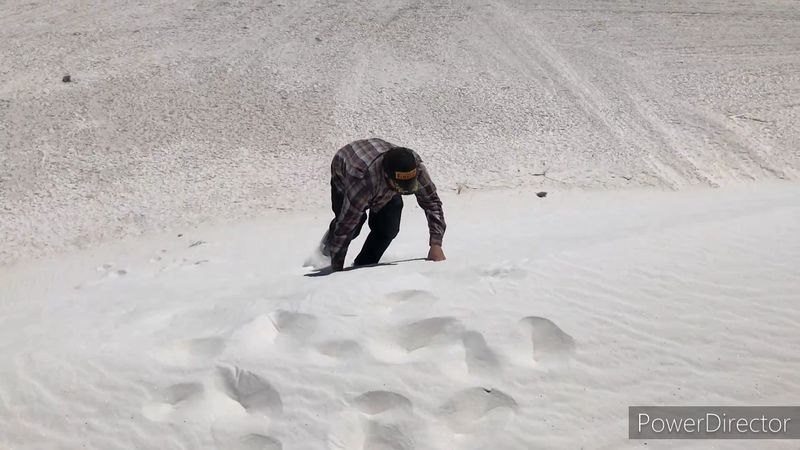
Renting a sled from the visitor center gift shop and launching yourself down a dune is one of those experiences that turns grown adults into giggling kids instantly. The dunes have enough slope to get a solid run going, and the gypsum sand is just smooth enough to give you real speed if you pick the right hill.
The sleds available at the park are simple plastic ones, and some visitors mention that waxed sleds perform noticeably better. A few people bring their own boogie boards or sleds from home, which seems to work well too.
The key is finding a dune with a good steep face and a flat run-out at the bottom so you do not faceplant into a wall of white powder.
Kids absolutely love it, but honestly, adults seem to have just as much fun. There is something about the total openness of the dune field, no fences, no rules about which hill to use, no crowds blocking your path, that makes the whole thing feel wonderfully free.
Just be ready to hike back up after each run, because the climb back is real exercise. Your legs will feel it, but the laughs are worth every step.
Trails That Take You Deeper Into the White
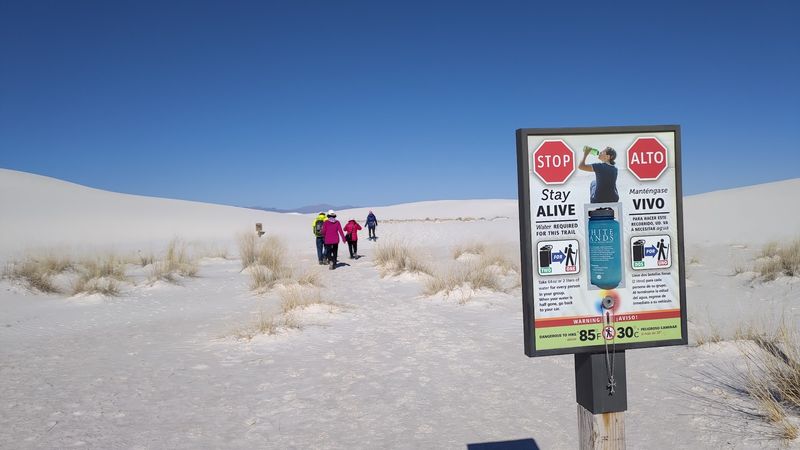
The park has several trails, and each one shows you a slightly different side of the dunes. The Alkali Flat Trail is the longest and most immersive option, taking you out into the heart of the dune field where the landscape feels almost extraterrestrial.
Trail markers are essential here because it is genuinely easy to lose your sense of direction when everything around you is the same shade of brilliant white.
The Dune Life Nature Trail is a shorter, easier walk that focuses on the plants and animals that have figured out how to live in this unusual environment. Interpretive signs along the way explain how species adapt to constantly shifting sand and low-nutrient soil, which is more fascinating than it sounds.
The Playa Trail offers views of the dry lakebed of the Lake Lucero system, giving real context to how all this gypsum ended up here in the first place.
Wind can make the longer hikes genuinely challenging, so checking conditions before heading out is smart. The park is well-marked and rangers are helpful if you have questions.
Always pay attention to the trail marker ahead of you, not just the one you are standing at, especially on the Alkali Flat route where disorientation sneaks up fast.
Sunset at White Sands Is a Whole Different World
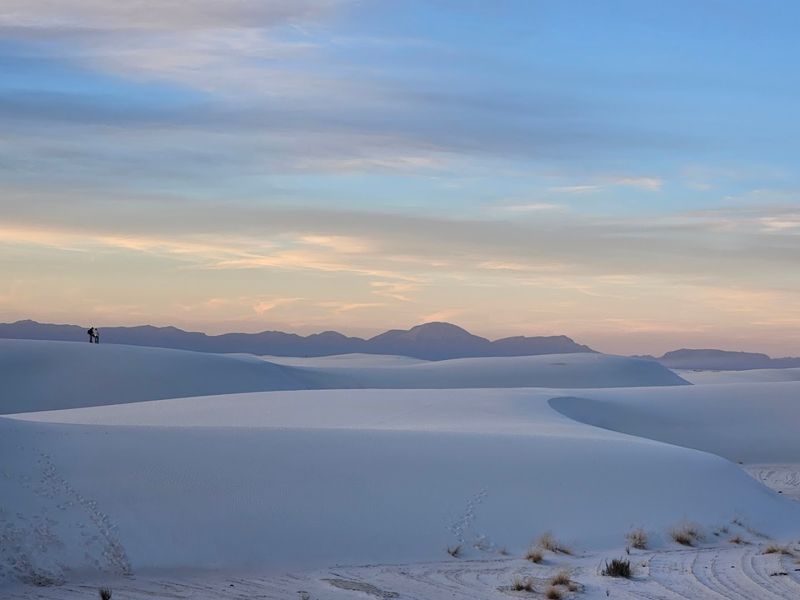
If there is one moment at White Sands that people talk about most, it is sunset. The light shifts from harsh and white to warm gold, then deep pink, then a soft purple that settles over the dunes like a slow exhale.
The San Andres Mountains and Sacramento Mountains frame the horizon on either side, and the whole scene looks almost too pretty to be real.
The sand catches every color change in a way that feels amplified. Shadows stretch long and dramatic across the dune faces, turning simple ripples in the sand into bold graphic lines.
Photography here at golden hour is genuinely stunning, whether you are using a professional camera or just your phone. People come out for weddings, graduation photos, and family portraits specifically because the backdrop is so otherworldly.
The park closes at sunset, so timing your visit to catch that last hour of light means you also get to watch the crowds thin out as people head to their cars. Those final twenty minutes before the gates close can feel almost private.
The air cools quickly once the sun drops, which is a huge relief after a hot afternoon. Staying until the very last moment is always worth it.
Wildlife and History Hidden Beneath the Surface
At first glance, the dunes look completely lifeless, but look closer and you start noticing things. The bleached earless lizard is one of the park’s most famous residents, its pale coloring evolved specifically to blend into the white sand.
Roadrunners, coyotes, and various hawk species also move through the area, and the early morning hours are the best time to spot animal tracks pressed into the fresh surface of the dunes.
The history buried beneath the sand is just as remarkable as what lives on top of it. Millions of years ago, this basin held a massive lake called Lake Otero.
Giant mammoths, ground sloths, and early humans all walked its shores, and fossilized footprints from that era have actually been discovered in the region. The same basin that once held prehistoric life now holds the most unusual sand on Earth.
The park also sits adjacent to the White Sands Missile Range, which occasionally causes temporary closures. Checking the park’s website before visiting is genuinely important, not just for hours but also for missile testing schedules that can block access for part of the morning.
The park phone number is (575) 479-6124 if you want to call ahead and confirm access before making the drive.
When to Visit and How to Make the Most of Your Day
Timing really does make a difference at White Sands. September, October, and early November are widely considered the sweet spot for visits, with comfortable temperatures, fewer crowds, and that golden fall light that makes everything look better.
Winter months are quieter still, though mornings can be chilly enough to need a jacket. Spring, especially March, is the busiest season, sometimes drawing over 100,000 visitors in a single month.
Summer visits are absolutely doable but require real preparation. Temperatures regularly hit 100 degrees or higher, so arriving right when the park opens at 7 a.m. gives you the cooler morning hours before the heat becomes oppressive.
Bring far more water than you think is reasonable, wear light-colored clothing, and take breaks in the shaded picnic areas along Dunes Drive when you need them.
The visitor center is worth at least fifteen minutes of your time. There is a short film that explains the geology and history of the dunes in a genuinely engaging way, and the gift shop carries sleds, souvenirs, and helpful gear.
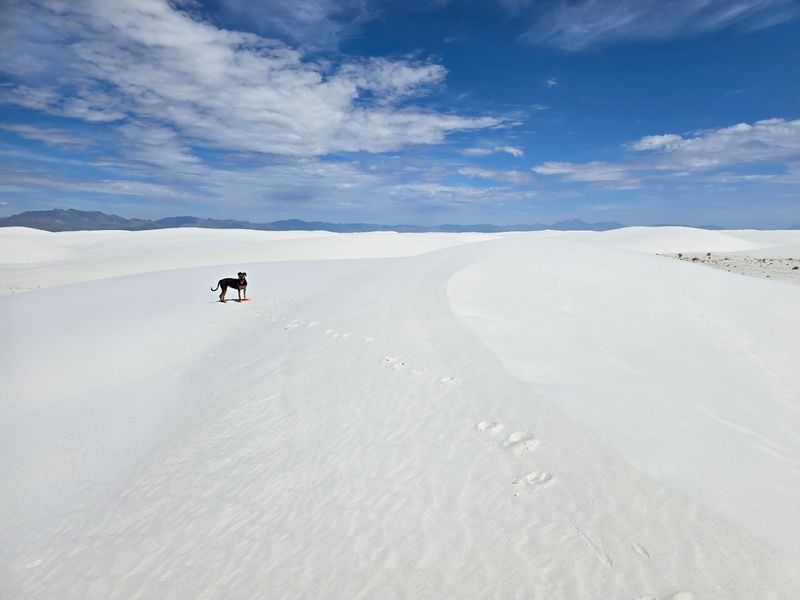
The park has gone cashless at the entry point, so have a card ready. Dogs are welcome on leashes, which is a nice bonus for people traveling with pets.
Address: US Highway 70, between Las Cruces and Alamogordo, New Mexico
