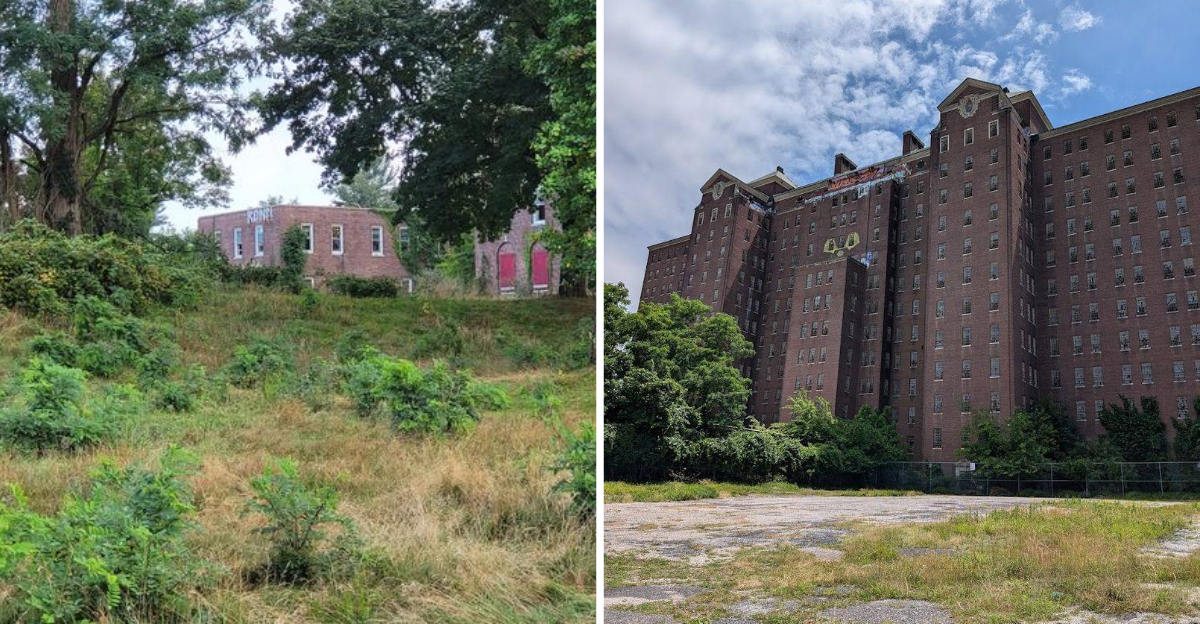
Long Island has a field where the grass grows quietly over thousands of graves, and most of them have no names. That psychiatric center operated for over a century before closing its doors in 1996, leaving behind crumbling buildings, overgrown grounds, and stories that never got told.
At its peak, it housed over 10,000 patients, a self-contained town with its own farm, power plant, and railroad spur. Today, the campus is a state park where trails wind past decaying brick structures and down to the shoreline.
What makes this place especially haunting is how the deceased ones were marked: numbers instead of names, metal capsules buried in corners of plots. One section has a gate with a Star of David, the closest thing to an identity in a field of anonymity.
I walked those grounds on a gray afternoon, watching the wind move through the weeds, and felt a deep obligation to remember what happened there. Forgotten places deserve to be remembered, and this one stays with you long after you leave.
The History Behind the Hospital That Housed 10,000 People
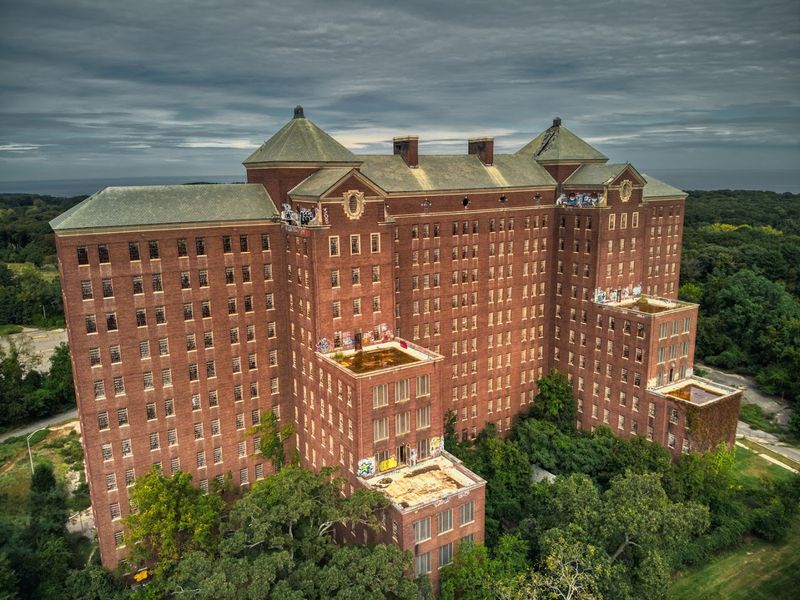
Kings Park Psychiatric Center did not start out as the massive, haunting complex it became. It opened in 1885 under the name Kings County Asylum, a modest operation meant to relieve overcrowding in New York City’s mental health facilities.
Over the following decades, it grew into something almost unimaginable in scale.
At its peak in the mid-20th century, the hospital housed over 10,000 patients. It was essentially a self-contained town, complete with its own farm, power plant, and railroad spur that brought supplies directly to the campus.
The sheer size of the operation reflects how differently mental illness was understood and managed back then.
Patients were often admitted for conditions we would treat very differently today. Some were institutionalized for reasons that had more to do with social stigma than medical necessity.
That context matters a lot when you start thinking about the thousands of people buried on these grounds.
The hospital officially closed in 1996 after decades of declining patient populations and shifting approaches to psychiatric care. The Nissequogue River State Park was established on the former campus in 2000, giving the public access to trails, waterfront views, and the haunting architectural remains of the old facility.
The history here is not just interesting, it is genuinely sobering in a way that makes you think carefully about how society treats its most vulnerable members.
Building 93 and the Ruins You Can See From the Outside
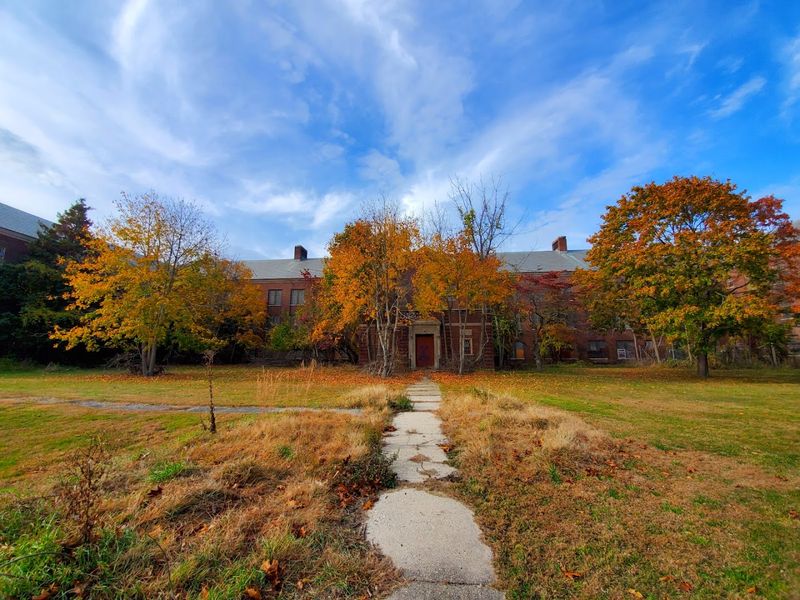
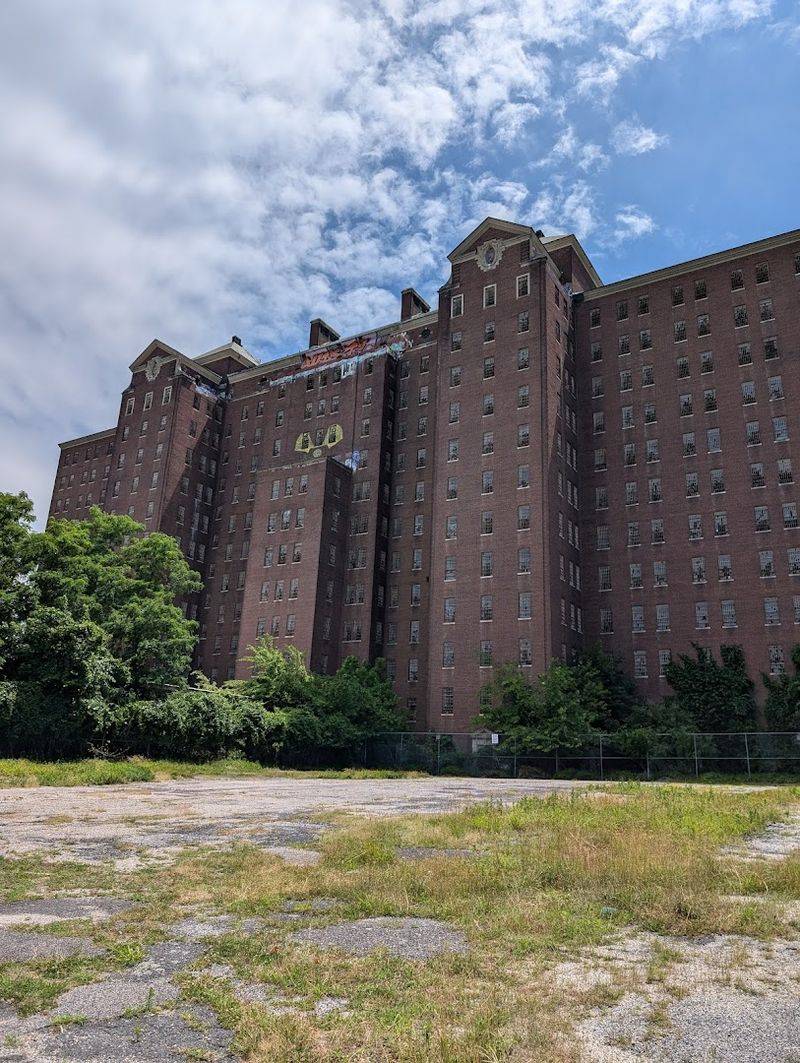
Building 93 is the centerpiece of the entire Kings Park campus, and the first time you catch a glimpse of it rising above the tree line, it genuinely stops you in your tracks. The structure is massive, a multi-story brick tower that once served as the main patient ward and administrative hub of the hospital.
It was constructed in the 1930s and was considered a modern marvel of institutional design at the time.
Today, the building is sealed tight. Concrete blocks cover the entry points, fences surround the perimeter, and the state has made serious efforts to keep people from getting inside.
From the outside, though, the scale of the place is still remarkable. The windows are dark and broken in places, and the brickwork is streaked with decades of weathering.
Visitors who come to the Nissequogue River State Park can walk the grounds and photograph the exterior legally without any issue. The views from certain angles, especially in the early morning light, are genuinely striking.
There is something about the contrast between the natural beauty of the surrounding park and the stark, decaying architecture that makes for unforgettable photos.
The building has become something of a landmark for urban explorers and history enthusiasts across New York. Even if you never set foot inside, just circling the exterior gives you a real sense of how enormous this institution once was and how completely it has been left behind.
The Potter’s Field Cemeteries Hidden Across the Grounds
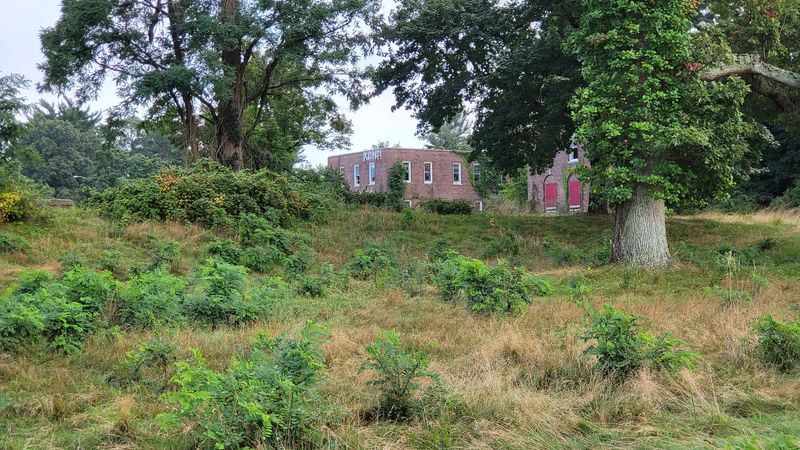
Most people visiting Kings Park for the first time do not realize that the burial grounds are scattered across multiple locations, not just one central cemetery. The term Potter’s Field refers to a burial ground for the poor or unidentified, and that is essentially what these sites are.
Thousands of former patients were laid to rest here without headstones bearing their names.
One cemetery sits behind William T. Rogers Middle School at 97 Old Dock Road in Kings Park.
Another is located on Indian Head Road and is estimated to hold around 1,500 patients. A much larger cemetery near the Touro Law Center contains an estimated 5,500 graves from Kings Park and two other Long Island psychiatric hospitals.
What makes these sites especially haunting is the method of identification used. Instead of names, most graves were marked with numbers.
In the Indian Head Road cemetery, a small metal capsule containing the patient’s hospital identification number was placed in the corner of each plot. A database now exists to help families match those numbers to real people.
There is something profoundly moving about knowing that each numbered marker represents a full human life, someone with a family, a past, and a story. The ongoing efforts to restore these cemeteries and install historical markers speak to a growing recognition that these individuals deserve to be remembered as people, not just patients.
The Jewish Cemetery Section and the Gate With One Symbol
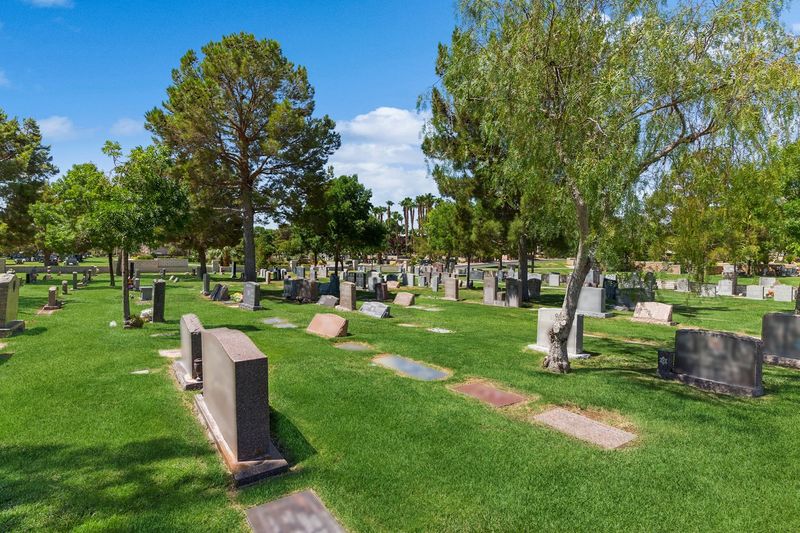
Of all the layers of history buried within the Kings Park grounds, the Jewish cemetery section carries a particular kind of quiet significance. Consecrated in 1980, this section of the burial ground holds approximately 500 graves.
It was set apart from the larger Potter’s Field and marked with a gate bearing a Star of David, making it one of the few identifiable features across these otherwise anonymous burial sites.
That gate is what gives the title of this article its meaning. In a field where most of the passed ones were identified only by numbers, a single religious symbol on a gate becomes the closest thing to a name.
It is a small but powerful distinction, a way of honoring a community even when individual identities were lost to institutional record-keeping.
The broader practice of numbering graves rather than naming them was not unique to Kings Park. It was common across many state psychiatric hospitals of the era.
But knowing that does not make walking near these grounds feel any less personal or affecting.
Efforts to restore this section and others have been ongoing for years. A 2016 New York State law was passed specifically to help families locate relatives buried in these grounds, though it limits the release of names to cemetery organizations rather than individuals directly.
The law reflects a slow but real shift toward accountability and recognition for the people buried here.
Nissequogue River State Park and What the Campus Looks Like Now
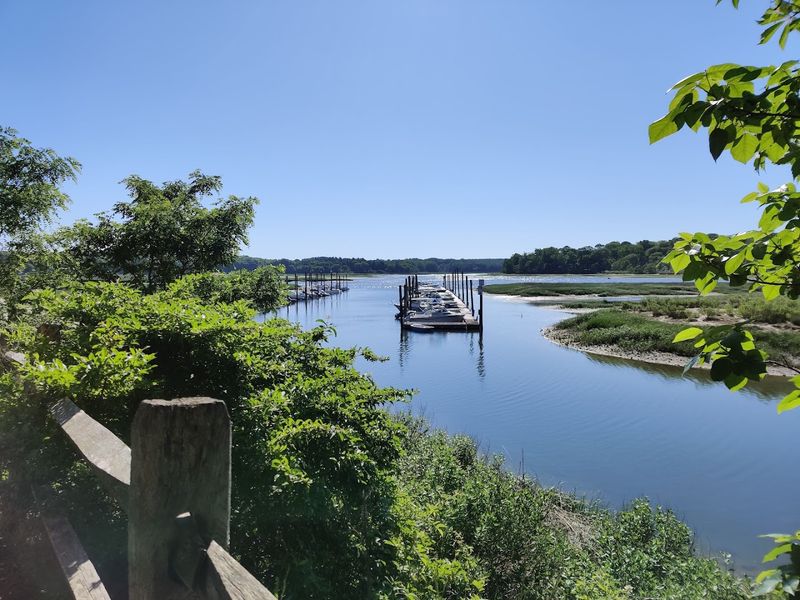
When the hospital closed in 1996, the campus did not simply disappear. The state converted the former grounds into Nissequogue River State Park in 2000, and today the property is open to the public for hiking, dog walking, photography, and waterfront access.
The transformation is genuinely surprising the first time you experience it.
You can walk trails that wind past crumbling brick buildings, through open fields, and eventually down toward the shoreline of the Nissequogue River. The combination of natural beauty and architectural decay creates an atmosphere unlike anything else on Long Island.
Some visitors come purely for the scenery, while others are drawn by the history.
The park has become popular with dog walkers, photographers, and history enthusiasts who appreciate the unusual setting. The grounds are easy to find and the entrance is accessible from St. Johnland Road.
Parking is available, and the trails are relatively easy to navigate even for casual walkers.
What strikes me most about the park is how ordinary it can feel in stretches, just trees and grass and river views, and then suddenly a massive abandoned building appears around a bend and reminds you of everything that happened here. That contrast is part of what makes the place so memorable.
It is not a typical park visit, and it is not trying to be. It is something more layered and more honest about the complicated history of the land it sits on.
Visiting Responsibly and Understanding What This Place Really Means
A place like Kings Park invites curiosity, but it also asks something of the people who visit. The buildings are sealed for safety reasons, and attempting to enter them is both illegal and genuinely dangerous.
The structures have been deteriorating for nearly three decades, and the risks inside are real. Respecting those boundaries is part of being a responsible visitor.
Beyond the physical safety concerns, there is a deeper reason to approach this place thoughtfully. These grounds hold the remains of thousands of people who had very little control over their own lives.
Coming here with a sense of respect, rather than just looking for a thrill, changes the experience entirely. It becomes less about the ruins and more about the people.
The Touro Law Center has been involved in cemetery restoration efforts and has worked with the New York Office of Mental Health to install historical markers and help families identify relatives. Those efforts are worth knowing about before you visit, because they give context to what you are seeing.
If you are planning a trip, the park is located at 799 St Johnland Road in Kings Park and is open to the public during regular park hours. Bring comfortable shoes for the trails, and take your time.
The place rewards slow, attentive exploration more than a quick drive-through. This is a site where history is literally underfoot, and it deserves the kind of attention that most New York landmarks never receive.
Address: 799 St Johnland Rd, Kings Park, NY 11754
