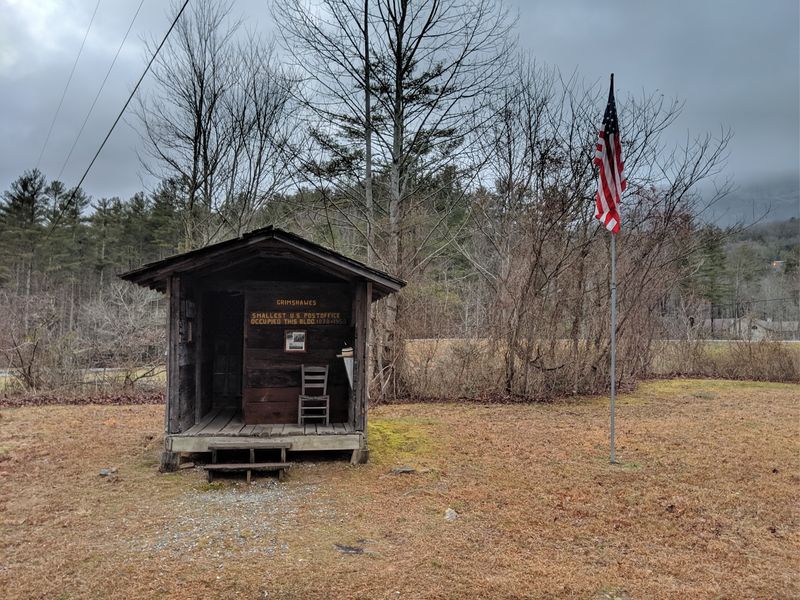
That wooden building was so small I thought someone had built a fancy toolshed by mistake. I had turned onto a winding mountain road in North Carolina, and there it sat in a curve, with a ridge rising above it.
A 5?by?6?foot structure that handled mail for families scattered across these steep coves for 75 years. I pulled over, peeked inside, and felt oddly moved by how much life once passed through a space smaller than my bathroom.
The drive out here is winding, quiet, and full of mountain views that make the trip worth it on their own. The post office operated from 1910 to 1985, and the original wooden door is still intact, worn smooth by generations of hands reaching for their mail.
I stood there for a long moment, trying to imagine the families who once depended on this tiny building to connect them to the outside world. History that comes in unexpectedly small packages is the kind worth seeking out, and this stop deserves a place on any mountain route.
A Building Smaller Than Most Bathrooms
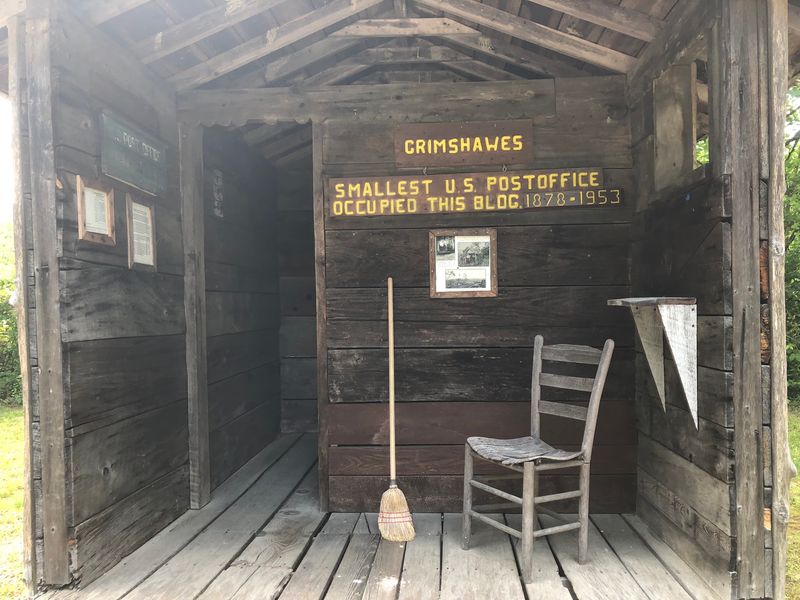
Thirty square feet. That is the entire footprint of this building, measuring roughly 5 feet by 6 feet, which makes it smaller than a lot of walk-in closets.
I stood beside it and realized my outstretched arms nearly matched the width of the front wall. Photos honestly do not prepare you for how compact it feels in person.
Somehow that small box of a building handled letters, packages, and news for an entire scattered mountain community. Families living up in the coves depended on it, walking or riding in to collect whatever had arrived.
During its working years, it carried the title of smallest post office in the United States, a bragging right that locals clearly enjoyed. That crown has since moved along to a facility in Ochopee, Florida, since Grimshawes no longer operates.
What struck me most was the practicality of it. Nobody needed a lobby or a waiting area out here, just enough room for a postmaster, a shelf, and the mail.
If you bring kids, have them guess the size before you tell them. The reaction is worth the setup, and it makes the history stick better than any plaque could.
Seventy-Five Years of Mountain Mail, From 1878 to 1953
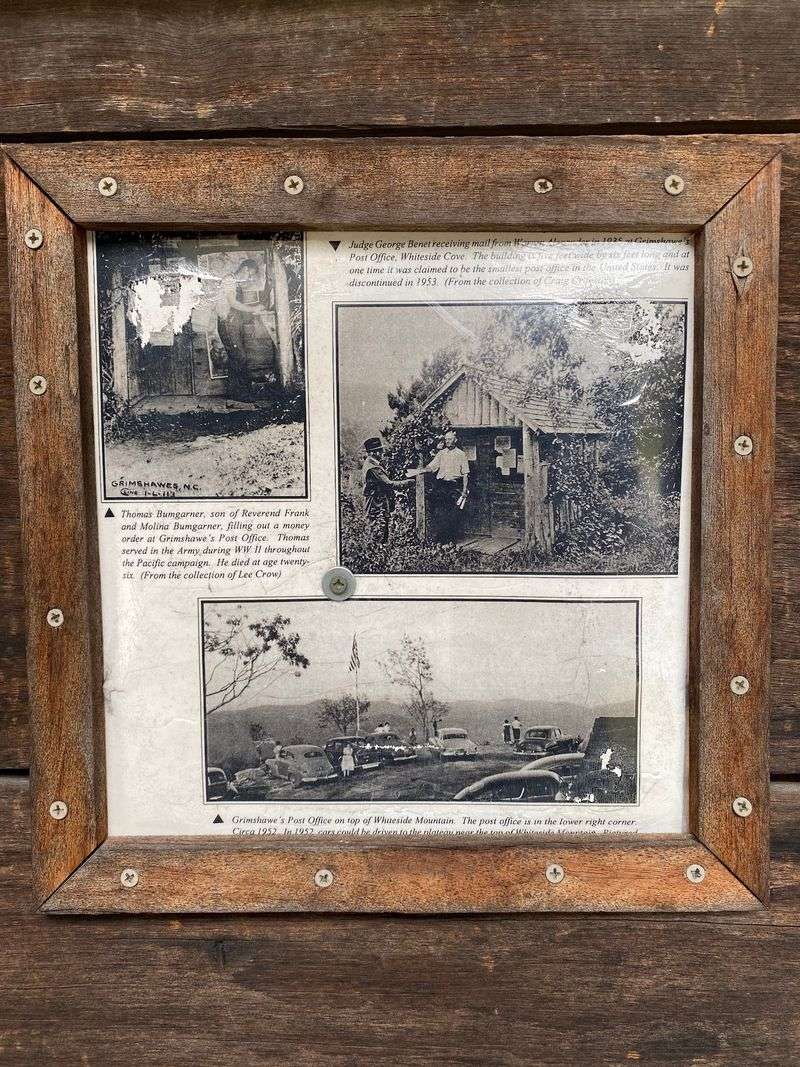
Back in 1878, when this place first opened its door, it went by a different name entirely: the Whiteside Cove Post Office. Mail service out here was not a convenience, it was a lifeline.
Roads were rough, neighbors were far apart, and letters carried everything that mattered. Births, endings, business, and family news all traveled through that one small window.
The post office kept running for 75 straight years, closing in 1953. That is three generations of mountain families collecting their mail from the same tiny wooden building.
I like thinking about how ordinary it must have felt at the time. Nobody was calling it charming or historic back then, it was just where you got your mail.
Its closing came as part of a nationwide push under President Eisenhower to shut down third-class post offices. Efficiency won, and hundreds of small operations across the country went quiet.
Reading the display inside, I found myself doing the math on all those years. Seventy-five is a long run for any business, let alone one squeezed into thirty square feet on a mountain road.
Come here with a little patience, and the timeline starts to feel personal rather than dusty.
The Grimshawe Family Left Their Name Behind
Here is the detail I did not expect: every single postmaster who worked here shared the same last name. Grimshawe, start to finish.
Thomas Grimshawe took the first postmaster job, and he was already a known figure locally. He owned a grist mill along with a sizable chunk of land in the area.
In 1909, the post office was officially renamed in his honor, switching from Whiteside Cove to Grimshawes. That name has stuck for well over a century now in North Carolina.
I find that kind of family continuity genuinely rare. One household essentially ran the community’s connection to the outside world for decades, passing the responsibility along like a family heirloom.
Standing outside reading the name on the building, it felt less like a landmark and more like someone’s front porch. The history here is small-scale and human, which is exactly what makes it memorable.
You will not find costumed guides or gift shops explaining any of this. The story comes through the display mounted on the wall and whatever you piece together yourself.
Take a minute to look at the name before you snap your photo. It means more once you know whose it was.
A Peek Inside the Tiniest Room in Appalachia
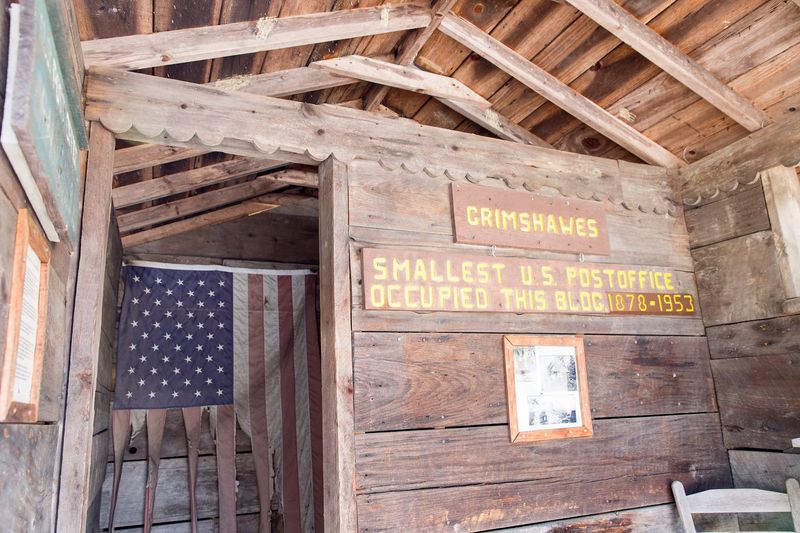
Peering through the doorway, I half expected a velvet rope and a security camera. Instead there is just a small, bare, wooden room that smells faintly of old timber.
A tattered American flag hangs on the wall, and a single small wooden chair sits nearby. That is essentially the entire collection.
A historical display mounted inside fills in the background, giving you names, dates, and the basic story without much fuss. It takes maybe three minutes to read.
What I appreciated was how honest the space feels. Nothing has been dressed up or staged for visitors, and the emptiness actually helps you imagine the postmaster working elbow-to-wall.
Do keep in mind that this is a decommissioned building, not a working facility. You cannot mail a letter or postcard from here, no matter how much you want that postmark.
Contents have shifted over the years, and some visitors have noted items missing at different times. Treat whatever is inside as a bonus rather than a guarantee.
Go easy on the old wood while you look around. Everything here survives because people have chosen to leave it alone.
Rescued From a Mountaintop Ticket Booth
Plenty of old buildings simply rot away. This one had a stranger fate.
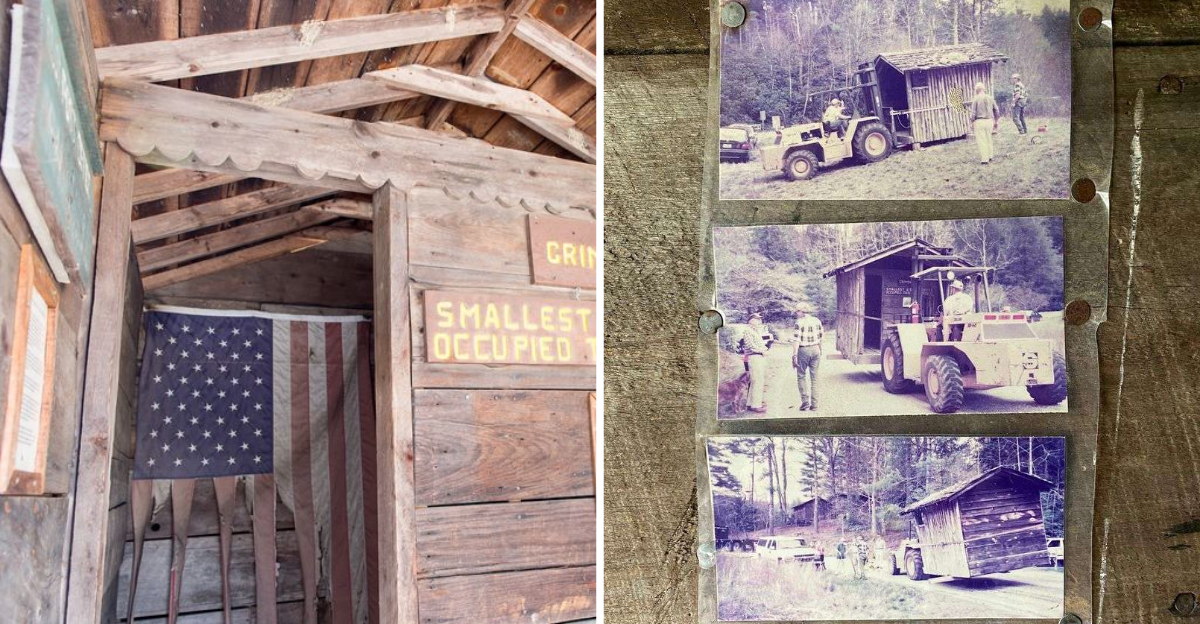
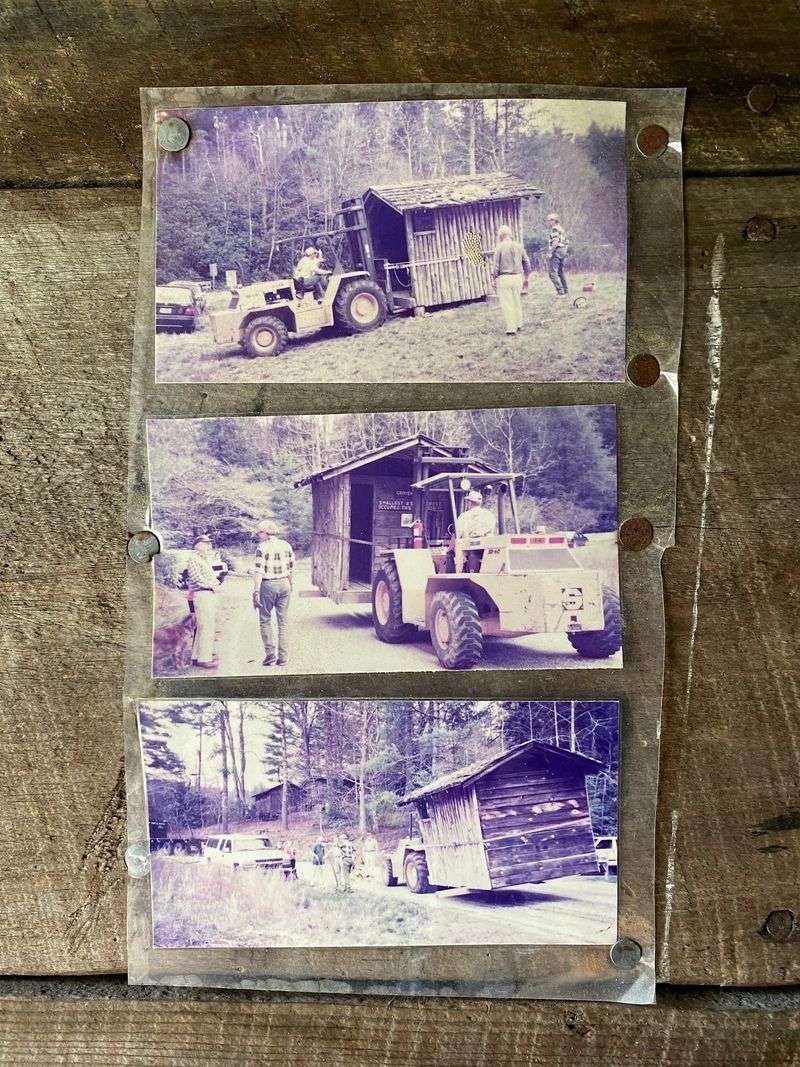
After service ended in 1953, the little structure was hauled up to the top of Whiteside Mountain and put to work again. It spent years functioning as a ticket booth and postcard stand for visitors.
Eventually it fell into rough shape, sitting neglected and weather-beaten. A group of local residents stepped in during the 1970s, taking on the repairs and finding it a new home along the roadside where it sits today.
Knowing that history changed how I looked at it. The building I photographed is not standing on its original spot, and that fact somehow makes it more interesting rather than less.
It has been moved, repurposed, abandoned, and saved. Not many thirty-square-foot structures can claim that kind of resume.
Credit goes entirely to people who decided a tiny wooden box was worth their weekends and their tools. Without them, there would be nothing here but a curve in the road.
When you visit, notice how solid it still looks. That is restoration work holding up decade after decade in mountain weather.
Whiteside Mountain Steals the Show Behind It
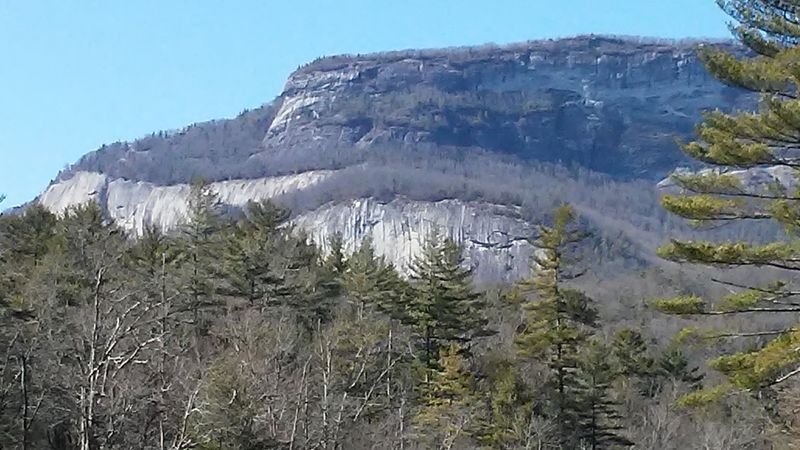
Honestly, the scenery almost outshines the landmark. A few steps behind the post office, the valley opens up and Whiteside Mountain rises with its broad, flat-topped cliffs on full display.
I spent longer looking up at that rock face than I did looking at the building. The contrast is almost funny: the smallest post office in the country sitting beneath one of the region’s most dramatic mountains.
Light changes things quickly out here. Morning haze softens the cliffs, while late afternoon sun brings out the texture in the stone.
Photographers will find plenty to work with, and you do not need fancy gear. A phone camera handles the mountain-and-cottage combo just fine.
The setting also explains why the post office existed at all. Families were spread through these coves and hollows, tucked between ridges that made travel slow and communication difficult.
Bring a jacket even in warmer months, since mountain air at this elevation stays cooler than you expect. A thermos of coffee makes the stop feel like a proper break.
Give yourself a few extra minutes here. The view rewards standing still.
Getting There Along Winding Whiteside Cove Road
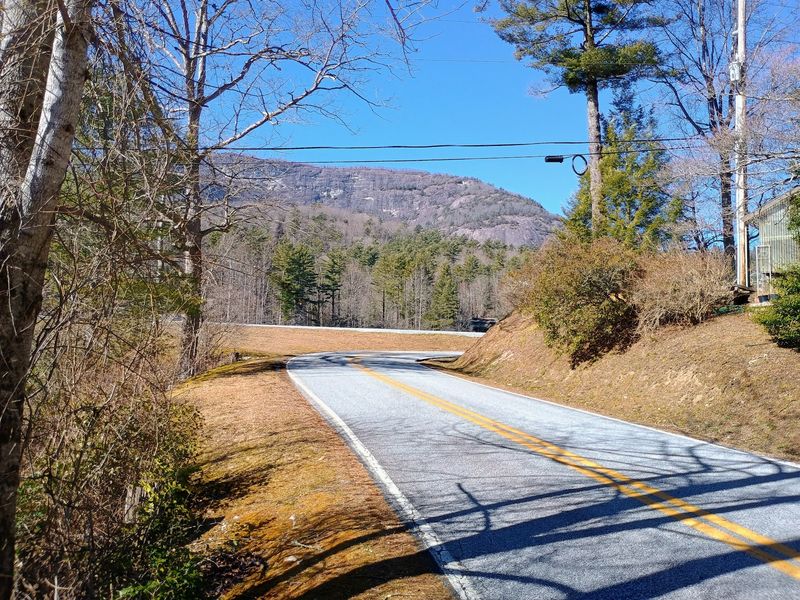
Half the fun is the drive, and I mean that sincerely. The route from Cashiers twists through forest and along creek bottoms, with the pavement narrowing as you go.
From the center of Cashiers, it is roughly 5.6 miles total. Take U.S.
Highway 64, then head onto N.C. Highway 107 South for about 1.7 miles.
Turn right onto Whiteside Cove Road and continue roughly 3.9 miles until the small building appears on your right. Expect the trip to take around 15 to 18 minutes depending on how cautiously you handle curves.
Large vehicles and RVs are a poor match for this road, since it is narrow with limited room to maneuver. A regular car or motorcycle suits it much better.
Visits are free and open daily, and there is no gate, ticket window, or staff. Plan on a quick stop rather than an afternoon outing.
Set your expectations properly and you will love it. Arrive hoping for trails, restrooms, or activities and you will be disappointed.
Pair it with a Cashiers lunch and a mountain hike for a full day.
Address: Whiteside Cove Road, Cashiers, North Carolina 28717
