The building looked like it had missed two centuries of change, sitting there among cornfields as if time had simply skipped it. I had turned off a quiet country road in Ohio, half expecting my map to be wrong.
Instead, a three-story red brick structure built in 1837 rose up, and that little jolt of discovery hit me before I even parked. Seven dining rooms spread through the interior, each furnished like an early American tavern, with fireplaces, antique mirrors, and old documents framed on the walls.
The floors creaked in that friendly old way, and the smell of wood smoke drifted through the hallways. The food coming out of the kitchen was better than I expected for a village this small and this quiet.
I left with a full stomach, a camera roll full of fireplaces, and a real urge to book a room upstairs next time.
A Brick Landmark Built for Canal Travelers in 1837
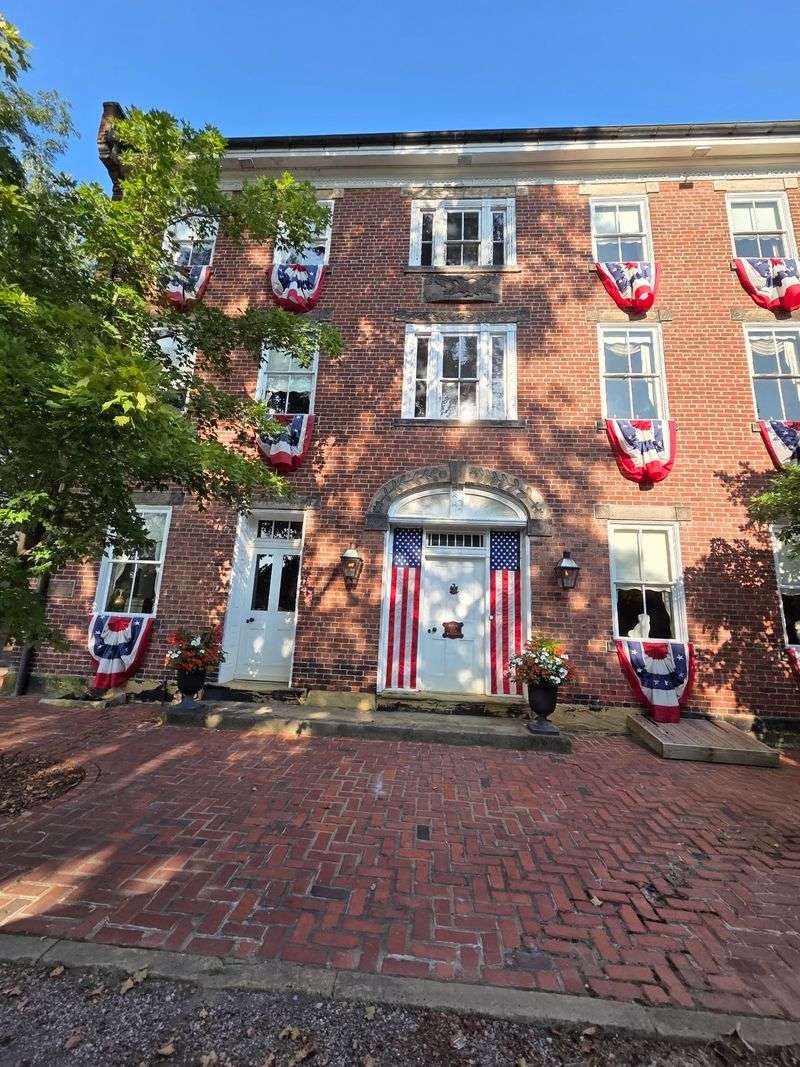
My first impression came from the sidewalk, before I even opened the door. Will Rhodes put this building up in 1837, back when the Sandy and Beaver Canal was moving goods and people through Hanoverton, and travelers needed somewhere decent to eat and sleep.
The design follows the Federal style, and the details are believed to be influenced by Asher Benjamin, a well-known architect of that era. You can see it in the symmetry, with a wide central hallway splitting the building and rooms opening off both sides.
Here’s a detail I love: the ceiling heights actually get shorter as you climb to the upper floors, which was a deliberate architectural choice back then.
Hanoverton was a busy little port town in the canal days, and this tavern sat right in the middle of that activity. The building eventually fell on hard times, but Peter and Jean Johnson spent two full years restoring it before reopening in 1990.
It now sits on the National Register of Historic Places, which feels about right.
If you’re driving in, it’s only about two-tenths of a mile off US Highway 30, so it’s easier to reach than its tucked-away location suggests.
That history feels especially tangible once you step inside, where the proportions, woodwork, and long central hallway make it easy to picture weary canal-era travelers arriving here nearly two centuries ago.
Seven Dining Rooms, Each With Its Own Personality
Picking a table here is genuinely a decision. There are seven period-furnished dining rooms plus several smaller, more private spaces, and no two of them feel the same.
The Barn Room won me over first, mostly because of its enormous stone fireplace that anchors the whole space. Over in the Patriot’s Room, there’s a 1779 Revolutionary War battle flag on display along with tiles that show scenes from the canal era.
Many rooms carry the names of historical figures, including the McKinley, Taft, Lincoln, Washington, and Jefferson rooms, plus the Asher Benjamin parlor named for the architect.
The details are what kept pulling my eyes around. Carved lintels sit above the doors and windows, raised paneling runs along the walls, and shelves hold pewter ware, candlesticks, and old photographs.
Fireplaces show up constantly, and they’re one of the most talked-about features of the whole place.
My advice is simple: call ahead and ask about seating, because certain rooms fill up fast, especially on weekends and holidays. Reservations are strongly recommended here, and regulars sometimes book months in advance to land the exact room they want.
Arrive a few minutes early so you can look around properly.
Moving between the rooms almost feels like touring a historic home, since every doorway reveals another collection of antiques, old photographs, period furniture, and architectural details worth stopping to examine.
Down the Stairs Into Gaver’s Rathskeller and the Tunnels
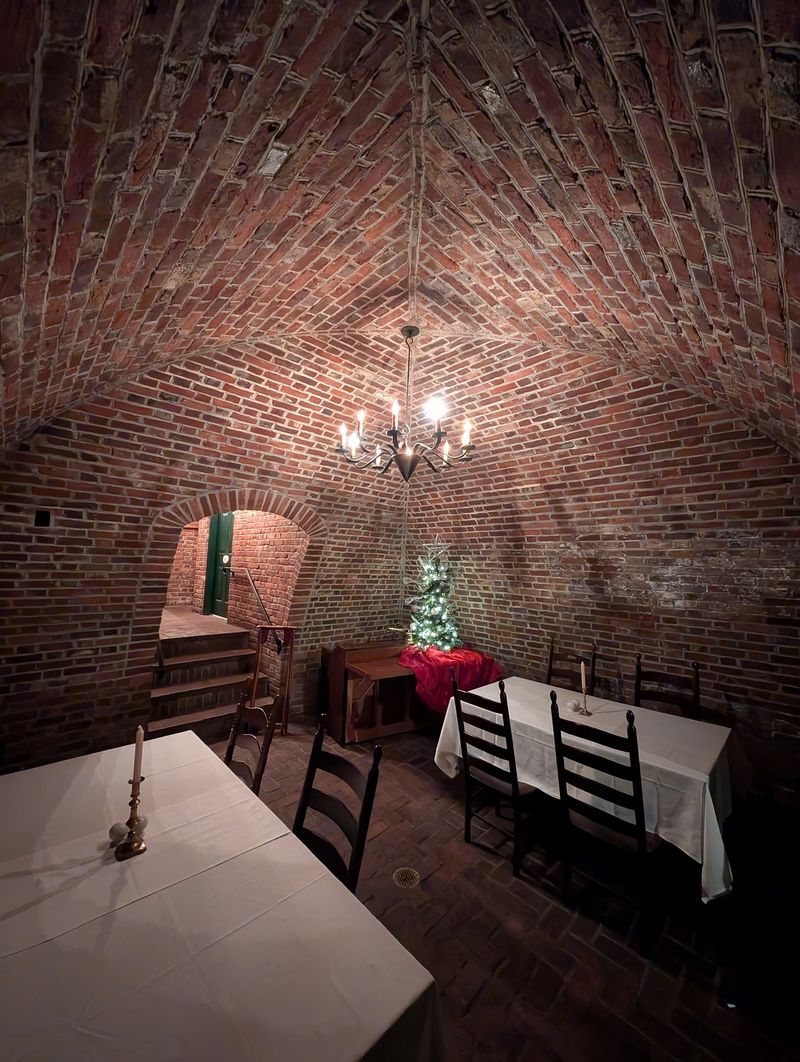
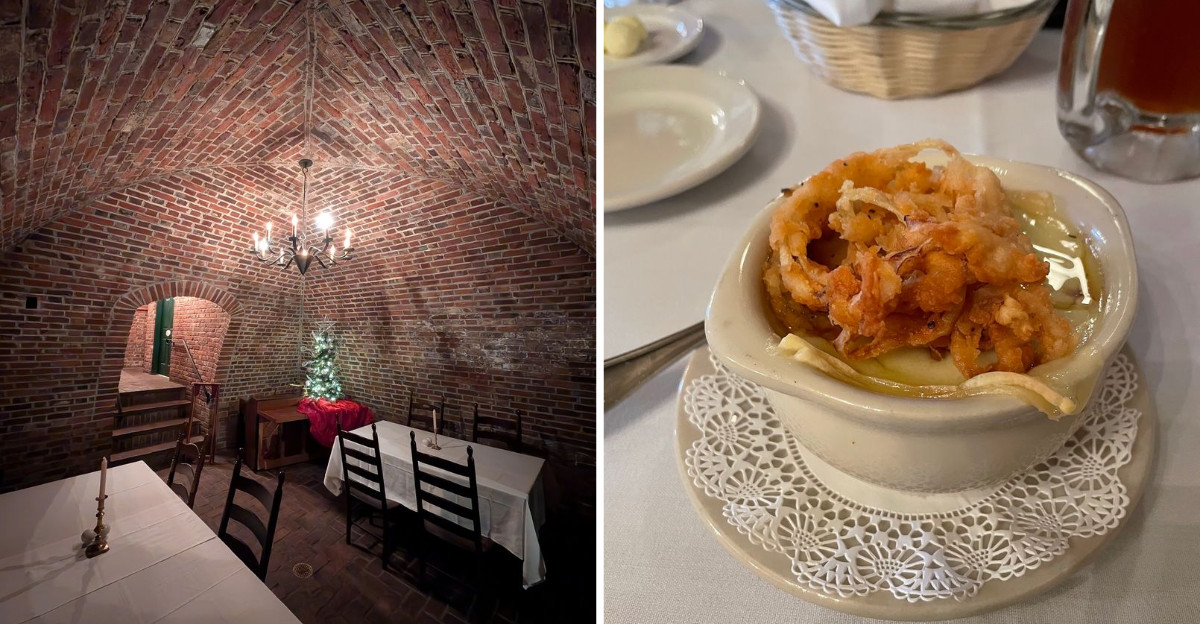
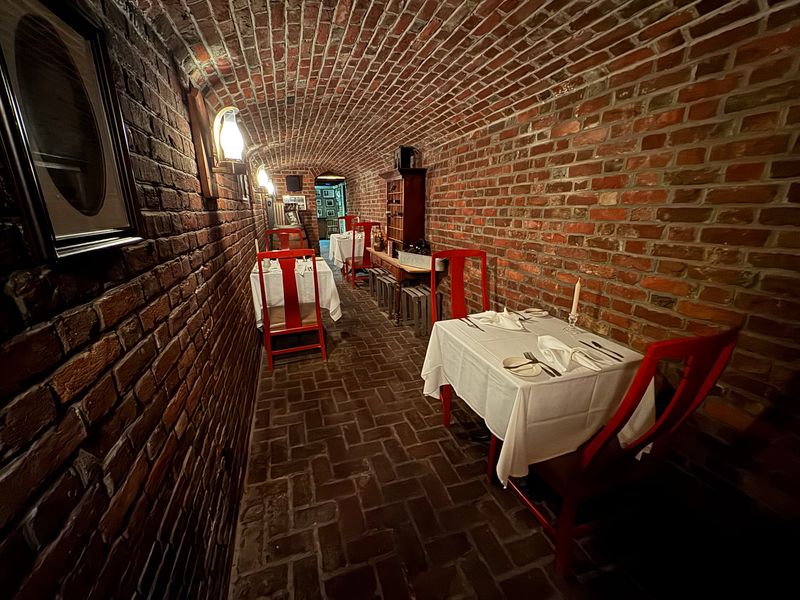
The lower level caught me completely off guard. Gaver’s Rathskeller sits beneath the main floor, and it’s built from hand-chiseled stone and brick with vaulted brick ceilings arching overhead.
The temperature drops a little down there, the light softens, and sound behaves differently under all that masonry. It’s the kind of space that makes an ordinary Tuesday dinner feel like an occasion.
Guests also mention dining in what they call the tunnels and the Speakeasy room, both of which are small, candlelit, and very much worth requesting when you book.
Candlelight against those rough stone walls does something no modern restaurant can copy with a dimmer switch.
Because these lower-level spaces are limited in size, they book up long before the main dining rooms do. If you’re planning something for an anniversary or a holiday, reserve early and say specifically which area you’d like.
One practical note: the stairs are original to a building from 1837, so watch your footing on the way down and take it slow.
The whole basement level reminds you that this place was never designed as a restaurant. It grew into one, and the bones underneath are the real thing.
The deeper you move into the lower level, the easier it becomes to forget about the restaurant upstairs, especially with thick masonry walls and candlelight creating such an enclosed atmosphere.
Presidents, the Underground Railroad, and Gold Plates on Chairs
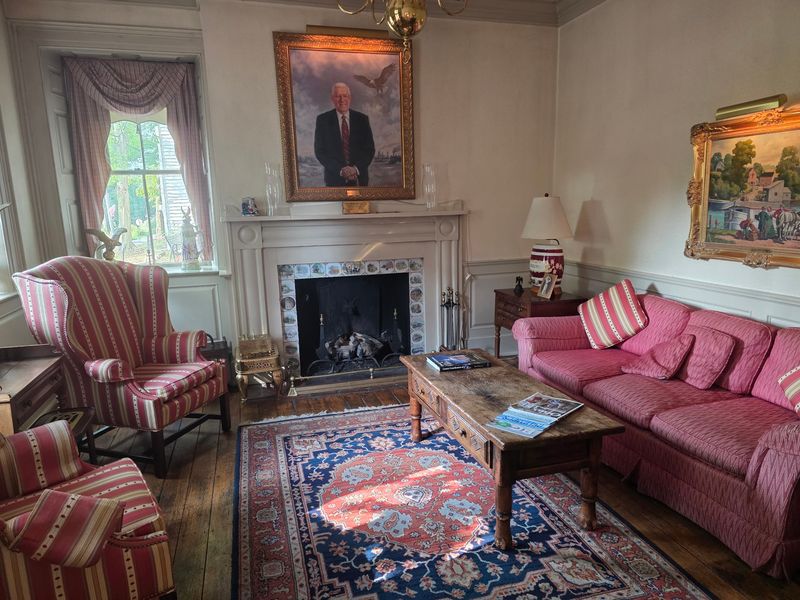
Reading the walls here takes longer than reading the menu. Old deeds, framed newspaper clippings, and historical documents hang throughout the building, and people genuinely wander around between courses to look at them.
The tavern served as a stop on the Underground Railroad, which gives the place a weight that goes well beyond pretty antiques.
Several U.S. presidents have passed through over the years. Abraham Lincoln is said to have given a speech in one of the rooms, and William McKinley, an Ohio native, is part of the story too.
My favorite quirk involves the chairs. Small gold plates are attached to the backs of some of them, marking where famous politicians once sat, so half the fun is checking your seat before you settle in.
There’s also an original Spirit of ’76 painting by Archibald Willard hanging in the hall, plus an authentic cobbler’s bench tucked into an alcove.
Ghost stories float around the property as well, including tales about Olivina Nichols, a former occupant connected to the Jefferson Room.
Staff are used to curious guests exploring the building, and that freedom to roam is part of what makes a meal here memorable.
Even without knowing every story beforehand, you quickly realize this building witnessed far more than ordinary tavern life, with nearly two centuries of local and national history gathered under one roof.
A Smokehouse, a Garden Across the Street, and Real Cooking
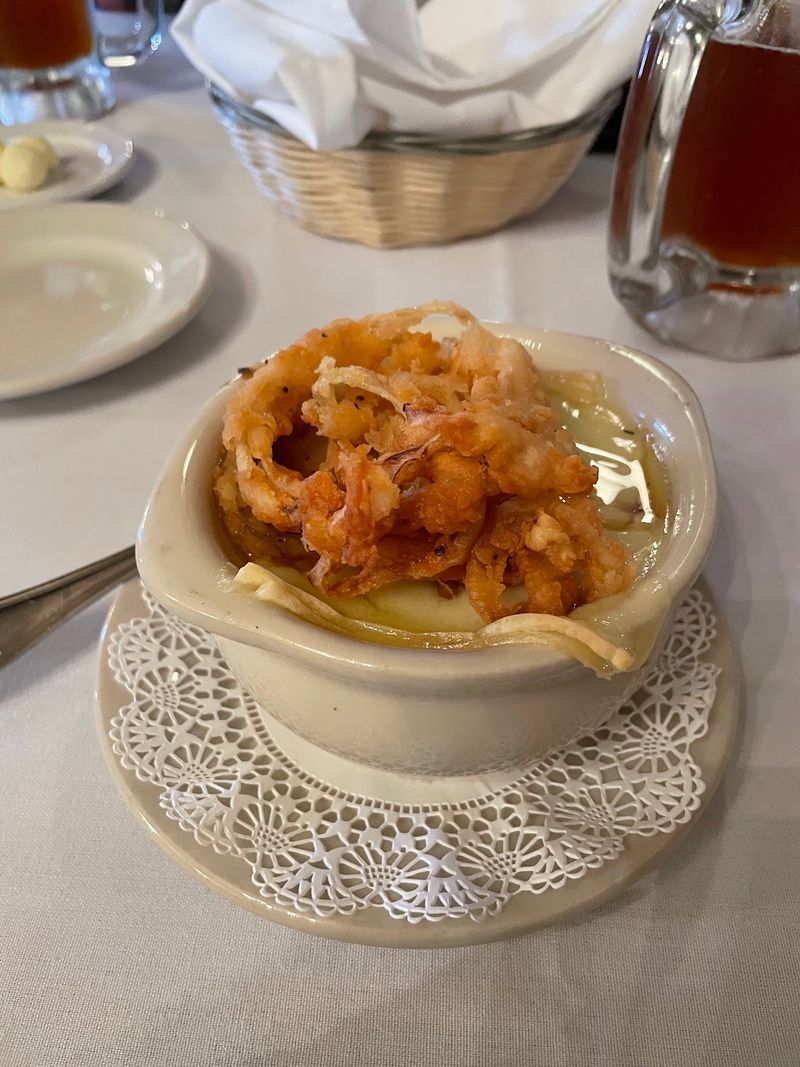
Nobody expects serious cooking in a village this size, and that contrast is half the charm. There’s a house smokehouse on the property that uses hickory, sassafras, and apple woods for specialty smoked meats.
The kitchen leans on beef and seafood, with signature plates like pheasant and rack of Ohio lamb showing up alongside the steaks.
What impressed me most was where the ingredients come from. Beans and tomatoes are grown in a garden directly across the street, and local fruit goes into desserts like the apple crisp.
The menu borrows from different American regions, so you’ll find things like sweet-potato-encrusted snapper with a pickled okra and tomato vinaigrette sitting near Northwest-inspired shrimp dumplings.
Chicken pot pie and prime rib are among the most talked-about orders, and beef Wellington gets mentioned constantly by regulars.
House-made soups, including New England clam chowder and a Liberty onion soup, are a good way to start.
Lunch runs from 11:30 to 3, and dinner service begins at 5, with Sunday running straight through until 6.
Expect fine-dining prices, and expect the kind of plating that matches them.
That combination of homegrown produce, house-smoked meats, and ambitious dishes makes the food feel connected to the property rather than like an afterthought added simply because visitors need something to eat.
Five Guest Rooms Upstairs and a Breakfast Worth Waking Up For
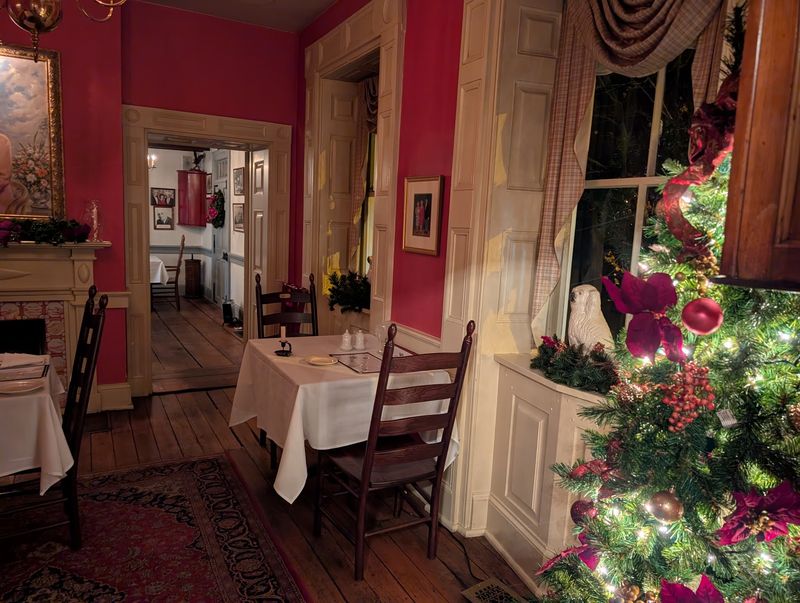
Climbing to the second floor after dinner, I started rethinking my drive home. Five guest rooms sit upstairs, each filled with period antiques and named after figures like Washington, Jefferson, and Taft.
Some rooms come with canopy beds, others with claw-foot tubs, and fireplaces appear throughout as decorative features rather than working ones.
Modern comforts are quietly worked in, including air conditioning, so you get the atmosphere without the 1837 discomfort.
A full breakfast is included with every stay, which is a genuinely nice way to start a morning in a building like this. Rates start around $150, and the inn is pet-friendly, which surprised me for a property this historic.
There’s also a neighboring 1820 house available to rent, complete with a kitchen, two bedrooms with canopy beds, and fireplaces of its own.
Location-wise, Guilford Lake State Park is about 5.6 miles away and the Lisbon Historical Society sits roughly 9.5 miles out, so there’s plenty to fill a weekend.
Staying overnight lets you wander the halls after the dining rooms empty out, which is when the building feels most like itself.
Address: 10150 Plymouth Street, Hanoverton, Ohio
