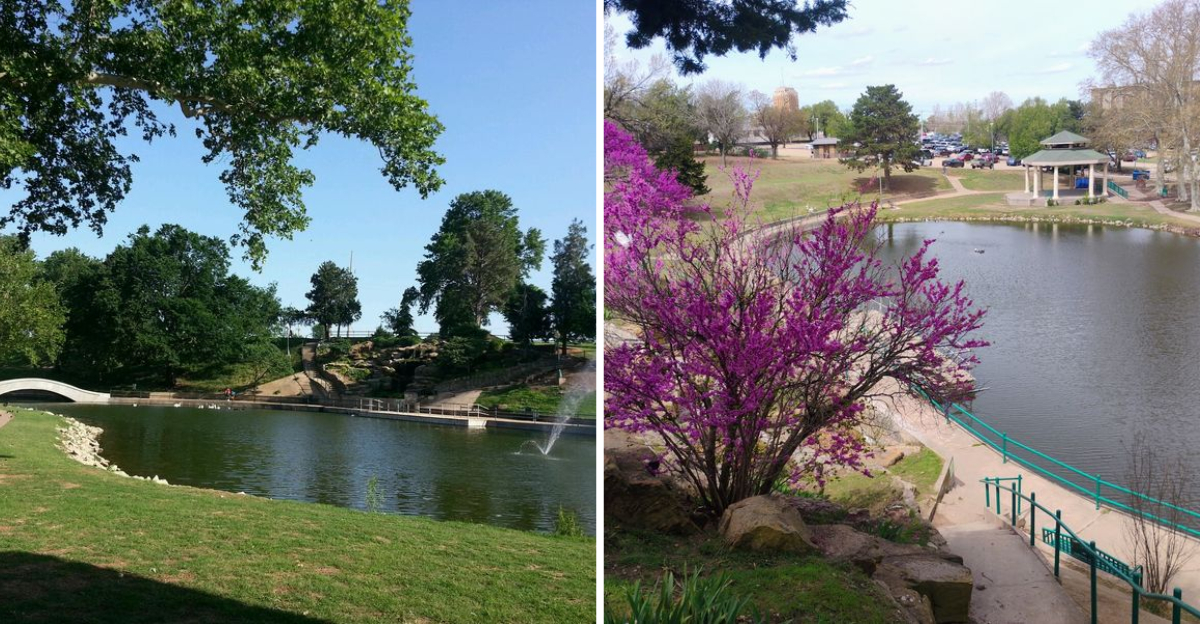
That natural spring bubbling up in the middle of an Oklahoma city stopped me cold. I had pulled off a quiet street expecting a plain park with a few benches and maybe a swing set.
Instead, I heard water falling before I even saw it, which is not a sound I associate with the prairie. That same spring fed Native families long before statehood, then soldiers, and later cowboys pushing longhorn cattle north along the Chisholm Trail.
It still feeds the lagoon today, and the ducks act like they own the place. I stood at the water’s edge and tried to imagine the thousands of cattle that once stopped here to drink, the dust and the noise and the long drive north.
What surprised me most was how much history sits between the picnic tables, from bronze cowboy statues to metal longhorn cutouts telling the story of the 1893 Land Run. I ended up staying far longer than planned, walking the paths, reading the markers, watching families feed the ducks.
A place where a natural spring and a land rush and a cattle trail all converge in one city park; that is the kind of Oklahoma stop that stays with you.
The Waterfall That Started It All
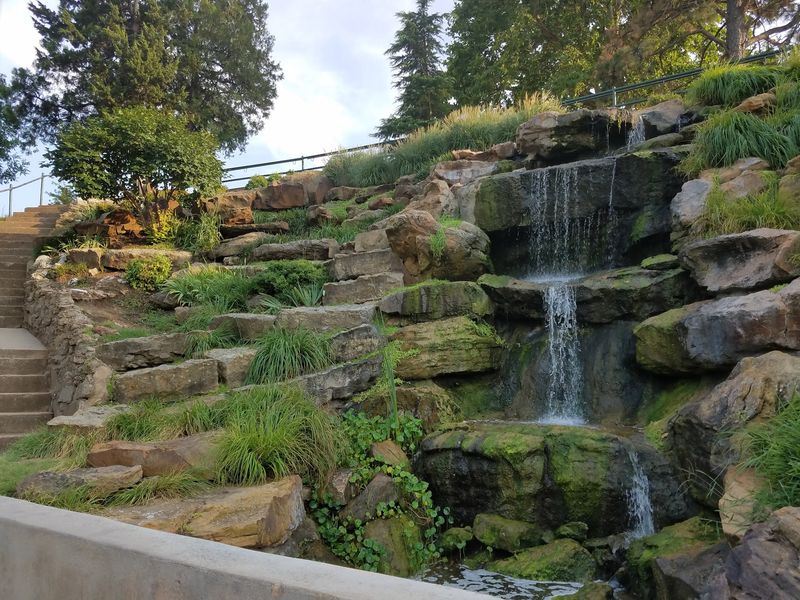
Water on the prairie feels like a small miracle, and that is exactly how the waterfall at Government Springs Park North hit me. I heard it first, a steady rush tucked behind the trees, then followed the paved path until the stone ledge came into view.
The spring underneath all of this is the reason the park exists. Long before Oklahoma became a state, this natural water source drew travelers of every kind, including cowboys moving cattle along the Chisholm Trail.
Herds needed water badly on those long drives north, and Government Springs was a known, reliable stop.
Standing beside the falls today, I found it easy to picture dust, hooves, and thirsty longhorns crowding the banks.
The waterfall itself has changed shape over the decades, reworked and rebuilt as the park grew, but the spring still feeds the lagoon it spills into. Visitors reach it by short walking trails, so you do not need hiking boots or a plan.
Mornings are my favorite time here because the light hits the water sideways and the sound carries farther without traffic noise. Bring a camera if you like photographing moving water, since the drop is small enough to catch clearly.
Benches sit close by, and I watched a couple eat lunch there without saying much to each other, just listening.
Fun bit of history worth knowing: the springs gave the park its name, and the whole area carries an Oklahoma State Historical Landmark designation because of that trail connection.
Bronze Cowboys and Metal Longhorns Scattered Through the Grass
Public art usually feels like an afterthought in city parks, but here it does real storytelling work. I rounded a corner and came face to face with a bronze cowboy, then another figure a little farther on, and pretty soon I was walking a loop just to find them all.
Artist Harold T. Holden created several of the bronze pieces, with titles like Holding the Claim, Plainsman, Chisholm, Wrangler, Boomer, Pioneer, and Dressing the Bit.
Each one captures a moment rather than a pose, a hand adjusting a bit, a figure planting a claim stake.
What I liked is how low and close they sit, no tall pedestals keeping you at a distance.
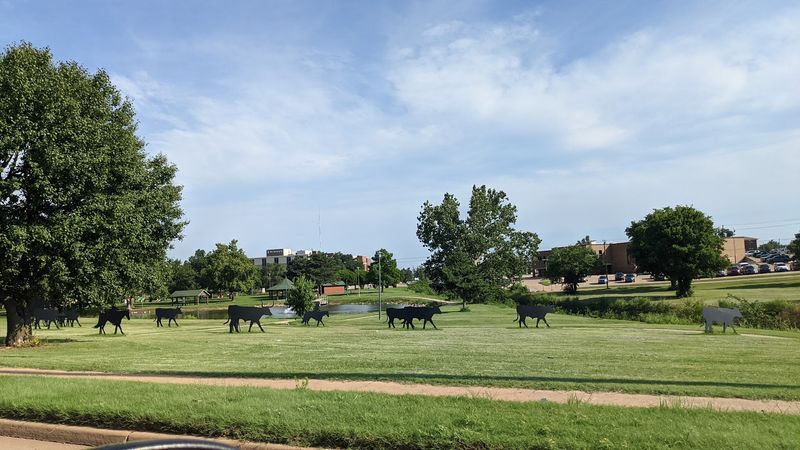
Then there are the metal cutouts by local artist Michael Klemme, made to mark the Land Run. Longhorn cattle, a stagecoach, horses, and a Native American figure appear as dark silhouettes against the grass and sky.
From certain angles they almost look like shadows of the herds that actually passed through, which is a clever trick for flat metal.
Kids tend to run between them, and honestly that seems like the right response. I watched a grandmother point at the longhorns and explain cattle drives to a small boy who was more interested in a nearby duck.
Give yourself thirty minutes to see the sculptures properly. Read the interpretive art in Dillingham Gardens too, since it lays out the Land Run and Chisholm Trail stories in plain language anyone can follow.
Ducks, Geese, and a Lagoon Fed by an Ancient Spring
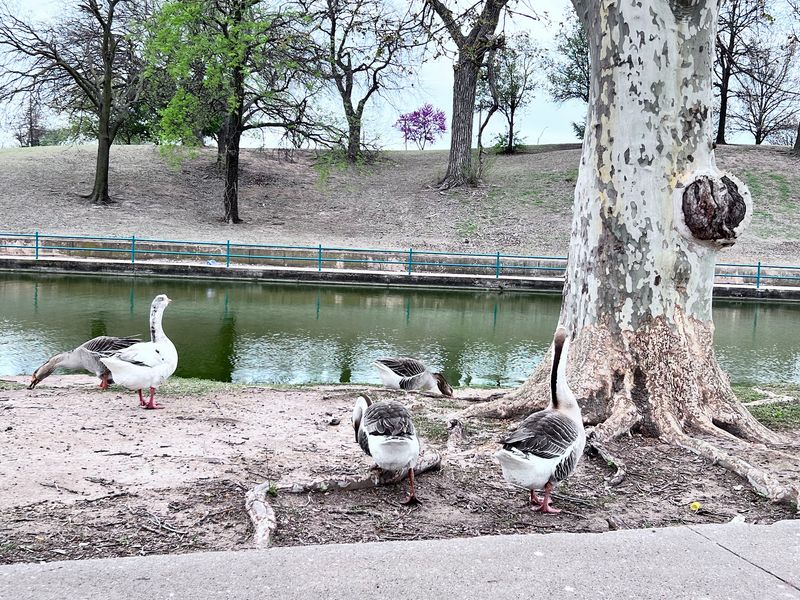
Nobody warned me about the geese. They approached with the confidence of animals who have never once lost an argument with a human, and I respected it.
The lagoon here is the heart of the park, fed by that same original spring that once served trail drivers. Ducks patrol the edges, Canada geese cruise the middle, and turtles pop up like little periscopes whenever anything hits the water.
Visitors regularly mention how many turtles live here, and after twenty minutes of watching I understood why.
Feeding the birds is part of the tradition, and feeders sit at spots around the shoreline. If you bring your own snacks for them, cracked corn or duck pellets are far better than bread, which is not great for their health.
Watch your step on the sidewalks near the water, because geese leave evidence everywhere.
Photographers will find good reflections in the late afternoon when the trees mirror across the surface. I got my best shot when a family of ducklings crossed a patch of gold light, entirely by accident.
A visitor from Arizona wrote that the sheer number of turtles, fish, geese, and ducks felt remarkable, and coming from a desert state I can see how it would.
Bring a hat, sit on one of the benches, and let the wildlife come to you. Ten minutes of doing nothing beside this water resets something in your brain.
Walking the Paved Trails Around the Water
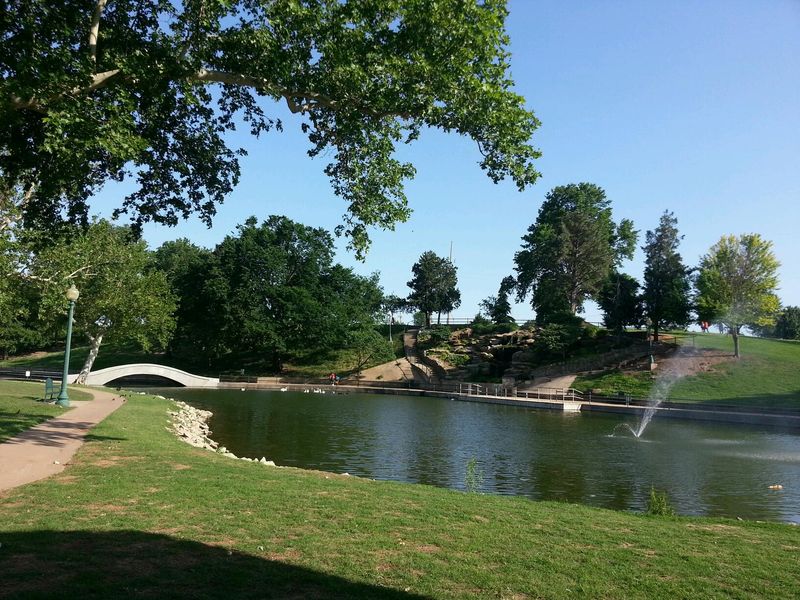
My legs needed a stretch after driving, so the loop trail was the first thing I tried. Paved, mostly flat, and shaded in long stretches, it turned out to be the easiest way to understand how the park is laid out.
The path curls around the water and connects the main features, so you pass the waterfall, the sculptures, and the fishing spots without doubling back much. Strollers roll fine on it, and I saw plenty of people walking dogs.
There is a hill on one side of the park, which locals remember as the old zoo site from decades past.
Shade is genuinely valuable in Enid, and this park has more of it than most places in town. One regular visitor mentioned coming here for lunch specifically because finding shade nearby can be tricky.
I found a spot under a big tree and stayed there longer than intended.
Evenings are lovely for walking. The light softens, the water goes quiet, and kids run around the playground while parents sit within earshot.
Since the park stays open around the clock, daytime and early evening remain the most comfortable choices, and I would keep to well-used sections after dark, as with any urban park.
Pace yourself and take the loop twice if you want a real workout. The second time around, you notice things you missed, a plaque here, a turtle sunning on a log there.
Fishing Docks, Picnic Shelters, and Room to Spread Out
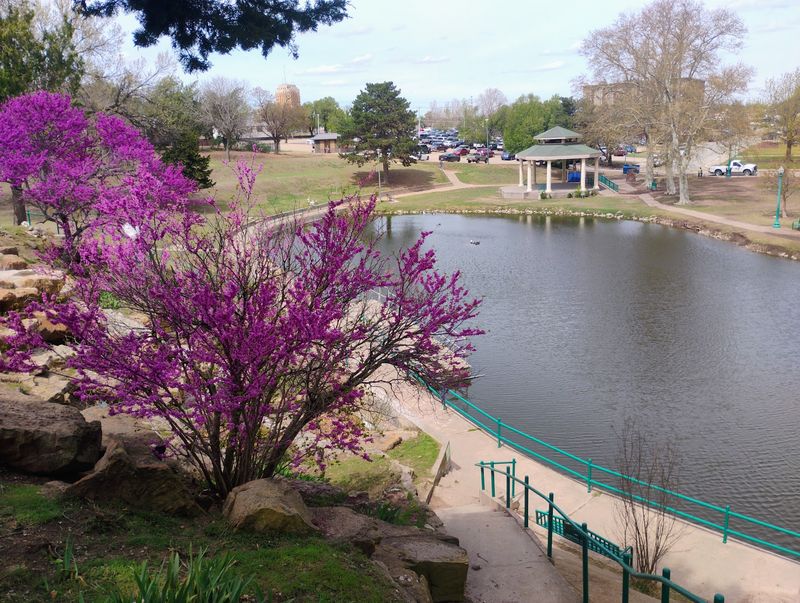
An angler on the dock told me the turtles were more aggressive than the fish, and after watching a bobber get bumped twice, I believed him. Fishing here is casual and welcoming, which is part of the charm.
Docks and piers reach out over the lake, and the water gets stocked through the Oklahoma Department of Wildlife city-pond program. Trout show up in the cooler months, and that draws a steady group of local fishers with folding chairs and thermoses.
Check current state fishing regulations before you cast, since city ponds have their own rules.
Picnic tables sit throughout the grounds, and several covered shelters can be reserved for events. Families use them for birthdays and reunions, and one visitor described an outdoor community Easter celebration held here.
The playground and youth activity area keep younger kids busy while adults handle the grill and the folding chairs.
I liked how spread out everything feels. You can find a table away from the crowd even on a busy Saturday, which is not true of every city park.
Practical tips from my visit: pack your own trash bag, bring wet wipes, and do not count on a specific restroom being open, since conditions vary. Call the city at 580-234-0400 if you want to ask about shelter reservations.
Simple planning goes a long way, and this park rewards anyone willing to settle in for a few unhurried hours.
Dillingham Gardens, Memorials, and Layers of Local History
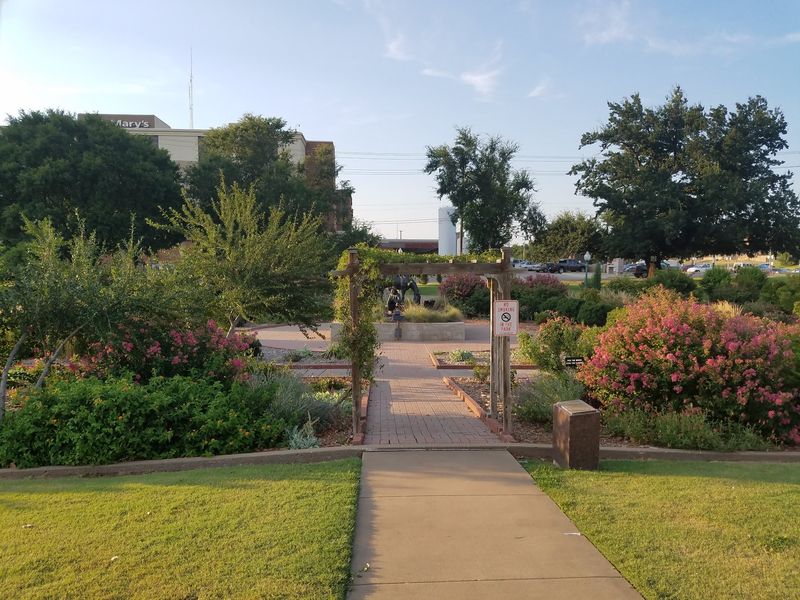
History sneaks up on you here, tucked between flower beds and gazebos rather than locked behind glass. Dillingham Gardens holds interpretive public art that walks visitors through the Oklahoma Land Run and the Chisholm Trail, and I read every panel I passed.
The park was formally established in 1911, making it one of Enid’s oldest, and the springs handed it the name. It also played a role during the 1893 Land Run, when thousands rushed for claims in this part of the territory.
Time capsules on the grounds commemorate the Enid Springs Sanitarium and the Oklahoma Centennial, small markers that reward slow walking.
At the northeast end stands a memorial honoring Garfield County war dead. I stopped there for a minute, as most people seem to do, and the traffic noise felt very far away.
Another layer matters too. The park was once segregated, and it has since become a shared space open to everyone in the city, a change worth acknowledging while you stand in it.
Summer evenings bring performances from the Gaslight Theatre’s annual Shakespeare in the Park, staged right here among the trees. If your trip lines up with those dates, bring a blanket and arrive early for a decent spot.
Gazebos, a flower garden, and shaded benches make this the calmest corner of the grounds. I left thinking about how much sits under one ordinary-looking hill.
Address: 509 E Oklahoma Avenue, Enid, Oklahoma
