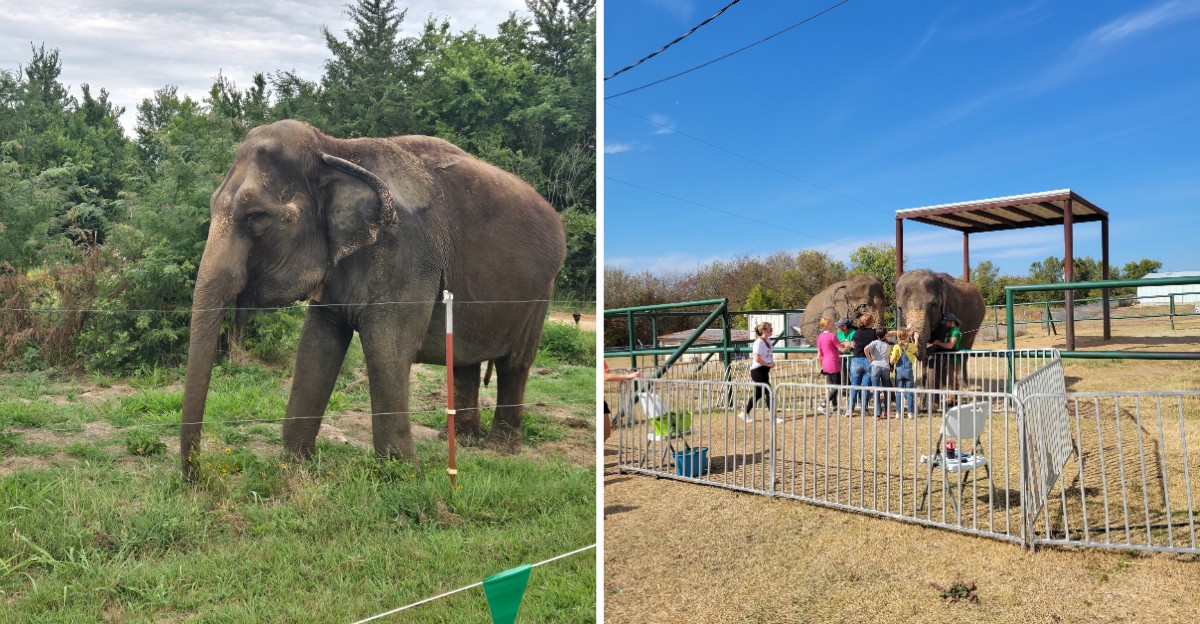
Somewhere in southeastern Oklahoma, down a county road that gives you no warning whatsoever, there is a porch where your morning coffee and pastries arrive carried in a pail by an elephant. I found out about it secondhand and spent a solid week assuming somebody had exaggerated.
They had not. What looks like ordinary pastureland turns out to hold the second-largest herd of Asian elephants in America, and you can stand close enough to hand one a banana while you eat your own breakfast.
Pastureland Off a Choctaw County Back Road
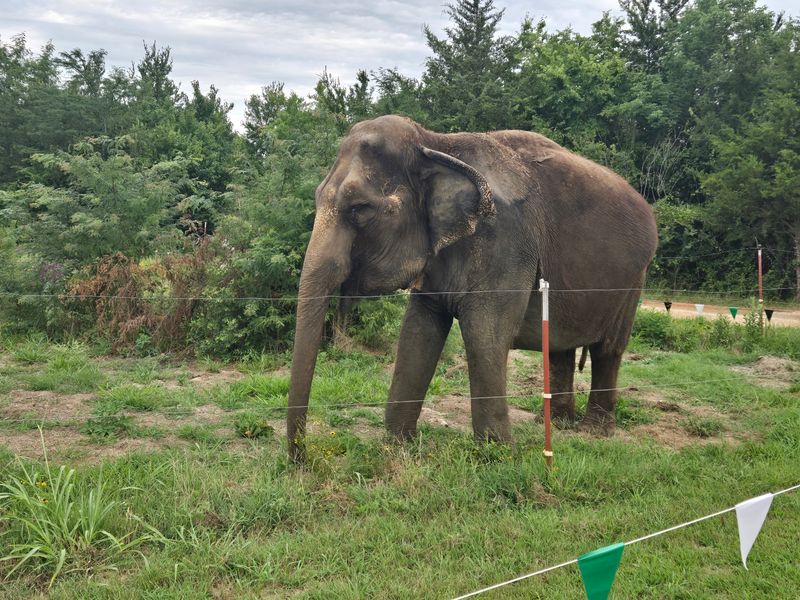
Hugo sits in Choctaw County, close to the Red River and the Texas line, and the Endangered Ark Foundation spreads out on roughly 250 acres of grassland just east of town at 2657 E 2070 Rd. There is no flashy gate or theme-park signage announcing what waits inside.
Google lists it simply as a zoo, which undersells things considerably. Fifteen to sixteen Asian elephants live here, most of them retired from circus life, cared for by a small staff that knows each animal by name and temperament.
Hugo has long carried the nickname Circus City because winter quarters for traveling shows once sat here, and the elephants are the living remainder of that history. The foundation opened in 1993 under D.R. and Isla Miller with a straightforward mission: preserve the species and teach people about it.
Drive-wise, you are looking at roughly 150 to 160 miles south of Tulsa and less than an hour from Broken Bow, which makes it an easy add-on to a Beavers Bend weekend. Visitors regularly mention how startling it is to round a bend in rural Oklahoma and see an elephant.
A Circus Town’s Quiet Second Act
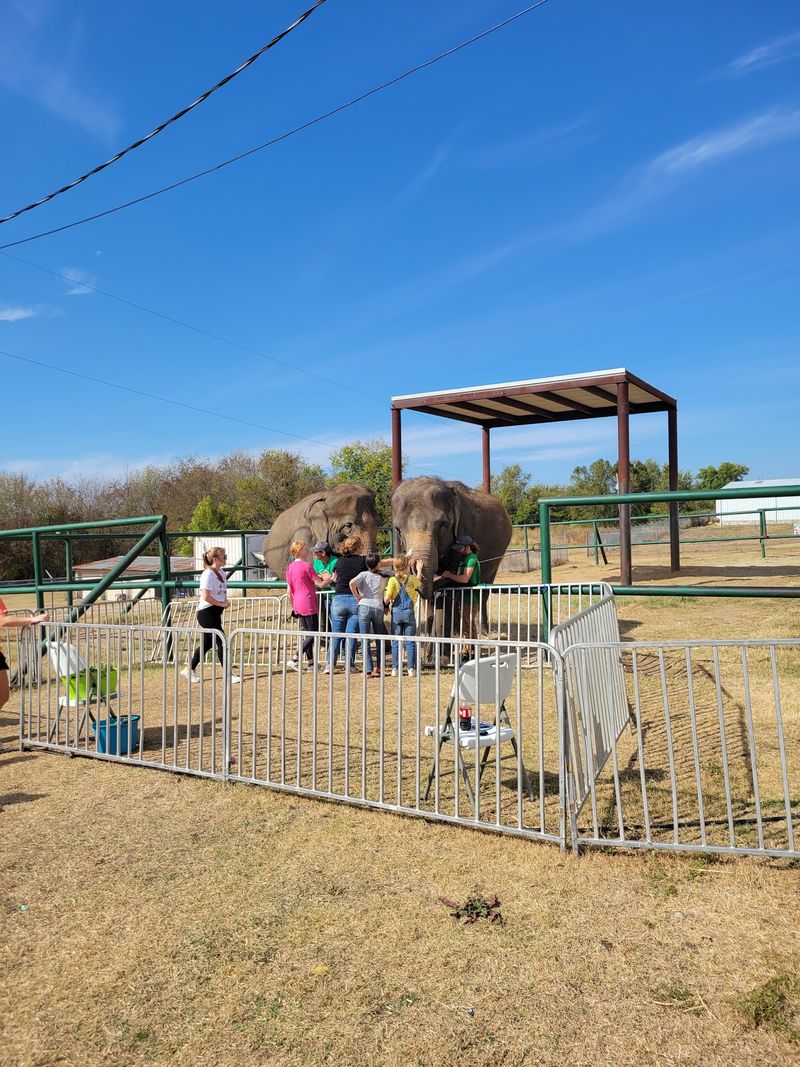
Back in 1993, D.R. and Isla Miller looked at the shrinking numbers of Asian elephants worldwide and decided their corner of Oklahoma could do something about it. The nonprofit they founded became a retirement ground and breeding program rolled into one.
Family involvement continues today. Visitors on public tours have been greeted by Brandon, a grandson of the original owner, who has been known to phone latecomers to make sure nobody got lost on the county roads.
The herd itself reads like a family tree. Suzy, the matriarch, is past 70 years old.
At the other end sits Cameron Lee, born in 2020, which means guests occasionally get to watch a young elephant figure out how his own trunk works.
Names like Bunny and Ilia come up often from returning guests, and the keepers clearly track personalities rather than inventory numbers. One visitor shared a story about a relative who had loved an elephant named Bunny at a hometown zoo decades earlier, and a keeper walked them over to meet the Bunny who lives here.
That kind of unhurried kindness has done more for the place’s reputation than any advertising ever could.
Breakfast Delivered by Trunk
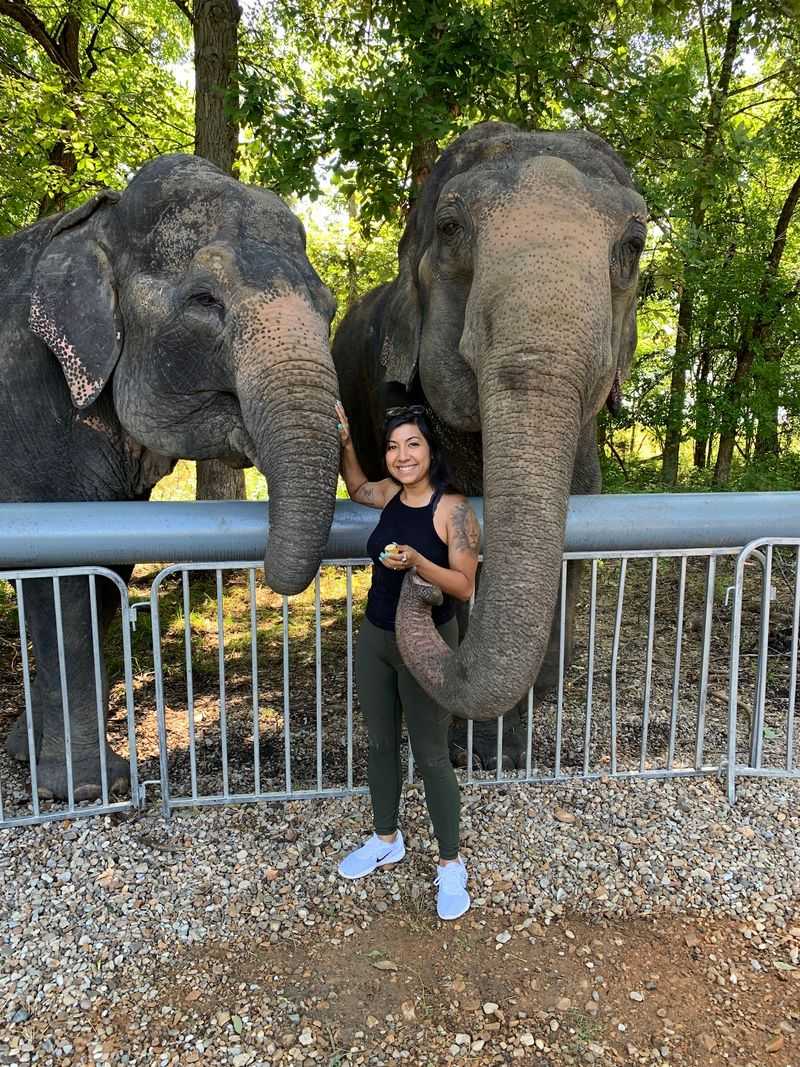
Here is the part nobody believes until they see photos. Guests who book an overnight cabin or treehouse wake up, step onto the porch, and watch an elephant walk over carrying a pail with a continental breakfast inside.
Pastries, fruit, coffee, the usual morning spread. Then the trade happens: you hand over bananas and pineapple chunks while she stands close enough that you can hear her breathing.
One family described Ilia bringing their breakfast and lingering afterward for a proper visit, which seems to be the norm rather than a fluke. Staff typically hang around to snap photos so you are not fumbling with a phone in one hand and fruit in the other.
Availability runs seasonally, generally March through November or December, and weather can reshuffle plans. A guest who booked during a stormy stretch reported that the team simply moved to a backup arrangement rather than canceling outright.
Cabin rentals often include the breakfast as part of the package. Because feeding times depend on the elephants and their keepers, treat the schedule as flexible and confirm details when you reserve.
Cabins, Treehouses, and Where You Actually Sleep
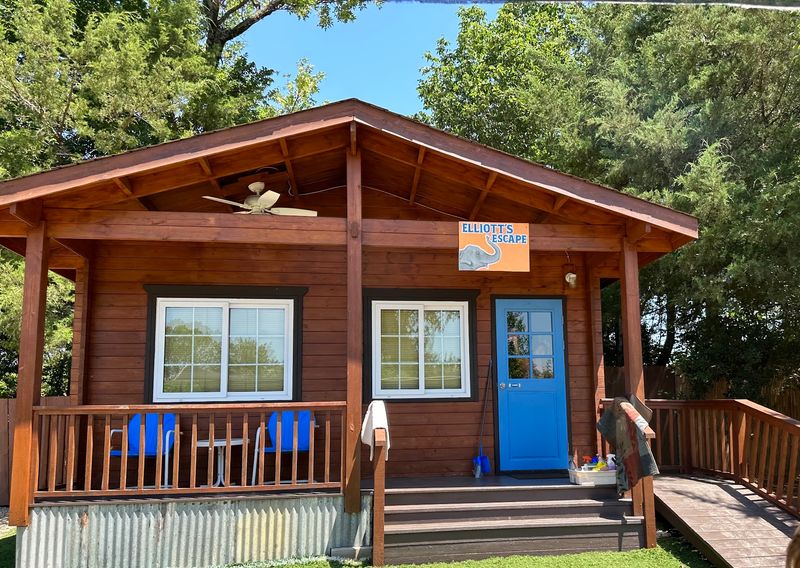
Sleeping arrangements come courtesy of a partnership with Oklahoma Awesome Adventures, and they range from ground-level cabins to elevated treehouses tucked among the trees.
Pricing runs around $400 per night for a single treehouse sleeping up to three people, or roughly $800 for two treehouses covering four to six guests, with about $15 per night for each additional person. Cabin rates reportedly shift with demand and day of the week, with past guests citing somewhere in the $300 to $500 range.
Nobody is calling that cheap, and reviewers say so plainly. The common follow-up is that the money funds elephant care, which is genuinely expensive, so the sting fades fast.
Service has a homespun quality worth mentioning. One couple’s treehouse roof took storm damage right before their stay, and staff showed up immediately with a tarp, swapped out the bedding, and refunded part of the cost without being asked twice.
Meals can be delivered to your door in the evening as well, so you are not driving back into Hugo for dinner. Waking up with elephants in view of the window is the whole point.
The Hour-Long Public Tour
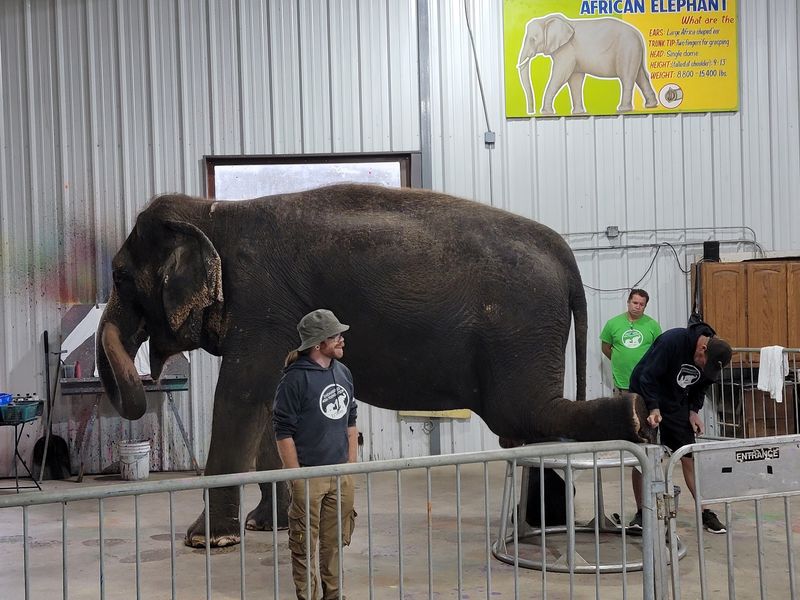
Not everyone can swing an overnight, and the public tour exists for exactly that reason. It runs about an hour and starts indoors with an educational presentation that manages to hold both kindergarteners and grandparents.
Keepers walk through foot care demonstrations, explain daily routines, and answer whatever the crowd throws at them. Some tours include an elephant painting a canvas or a t-shirt, occasionally auctioned afterward to raise money for feed.
After the talk, guests board a covered wagon or trolley and roll out across the property where the elephants roam. Families get their turn to step off, hand over a snack, pet a trunk, and pose for pictures.
Tours have been offered Fridays, Saturdays, and Sundays, though the foundation asks that you call ahead at 580-317-8470 to set up a visit. Appointments matter here more than walk-ins.
Walking is minimal. One guest who uses a walker completed every activity with staff assistance, and the team shuttles anyone who needs it from parking to the indoor facility at no charge.
All-Day Expeditions for the Truly Obsessed
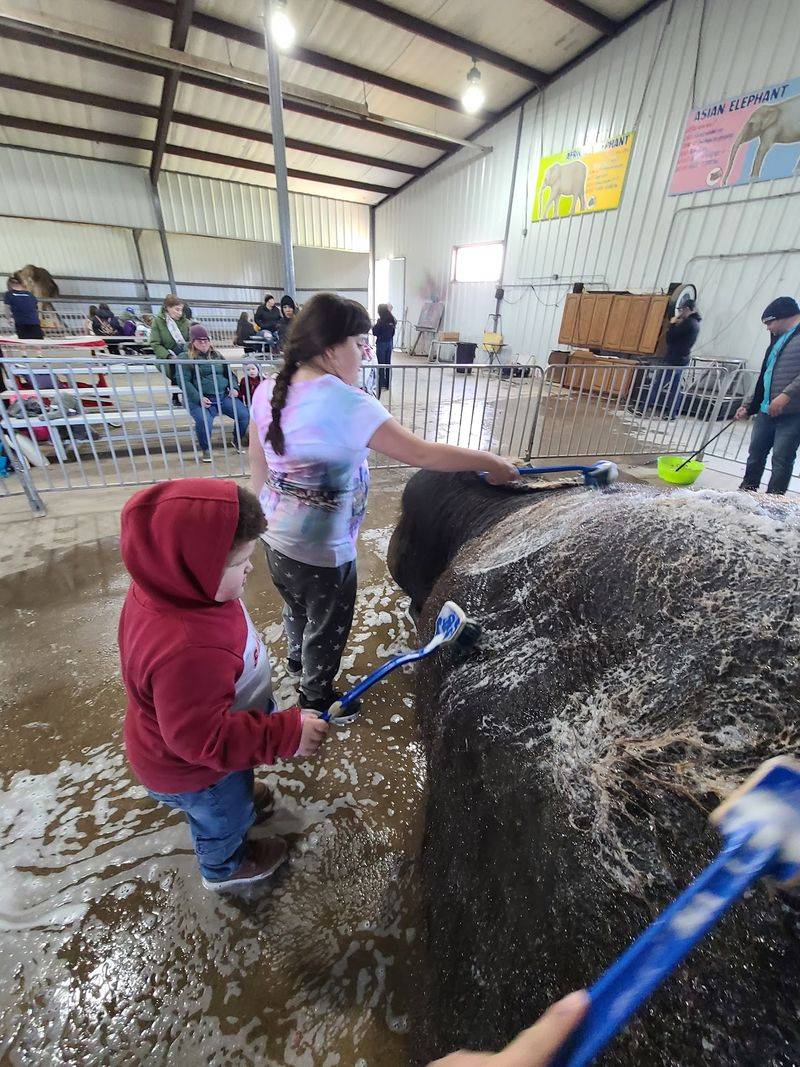
For anyone whose bucket list has elephants written near the top, the foundation offers private excursions and full-day expeditions that go considerably deeper than the standard tour.
These longer sessions can include feeding, petting, and actually bathing an elephant, plus lunch alongside the specialists who handle daily care. Bathing shows up repeatedly in guest accounts as the moment that undid them emotionally.
Small group sizes help. One visitor noted around 15 to 20 guests with six or more staff on hand, which meant questions got answered and nobody felt herded along.
Fair warning from mixed feedback: the shorter public tour has struck a few guests as rushed, with brief carrot-handing moments before moving to the next family. The extended options exist partly to solve that, giving you unhurried time rather than a quick pass down the line.
Evening feeding experiences can also be tacked onto an overnight stay. One family did the Sunday tour, added an evening feeding, slept in a cabin, and got the trunk-delivered breakfast the next morning, which is about as complete a visit as anyone could engineer.
What It Takes to Feed Sixteen Elephants
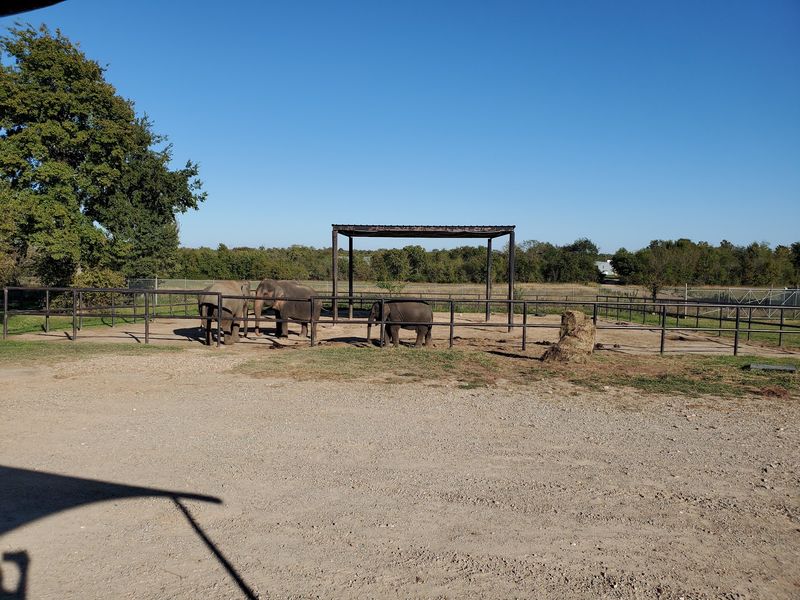
Twenty-five bales of hay. One hundred sixty-five pounds of feed.
Every single day, and that is before anybody talks about water.
Care here runs around the clock. The routine includes multiple waterings, daily washes, tusk filings, and pedicures roughly every two weeks, because elephant feet require the kind of maintenance most people reserve for their vehicles.
Learning those numbers reframes the ticket prices in a hurry. Guests who initially winced at the cost tend to circle back and say the figures made sense once they understood the grocery bill.
Proceeds go toward feeding and caring for the herd, which the staff mention openly during presentations. The onsite gift shop stocks shirts and elephant-made artwork at prices visitors describe as reasonable, and some families take home an elephant footprint print as a souvenir.
Educating the public is the other half of the mission. Asian elephants are endangered, and the foundation treats every tour as a chance to explain why breeding programs and long-term sanctuaries matter.
Watching a keeper file a tusk while narrating the process is oddly mesmerizing, and kids ask surprisingly sharp questions afterward.
Pumpkin Patches, Holiday Tents, and Other Seasonal Add-Ons
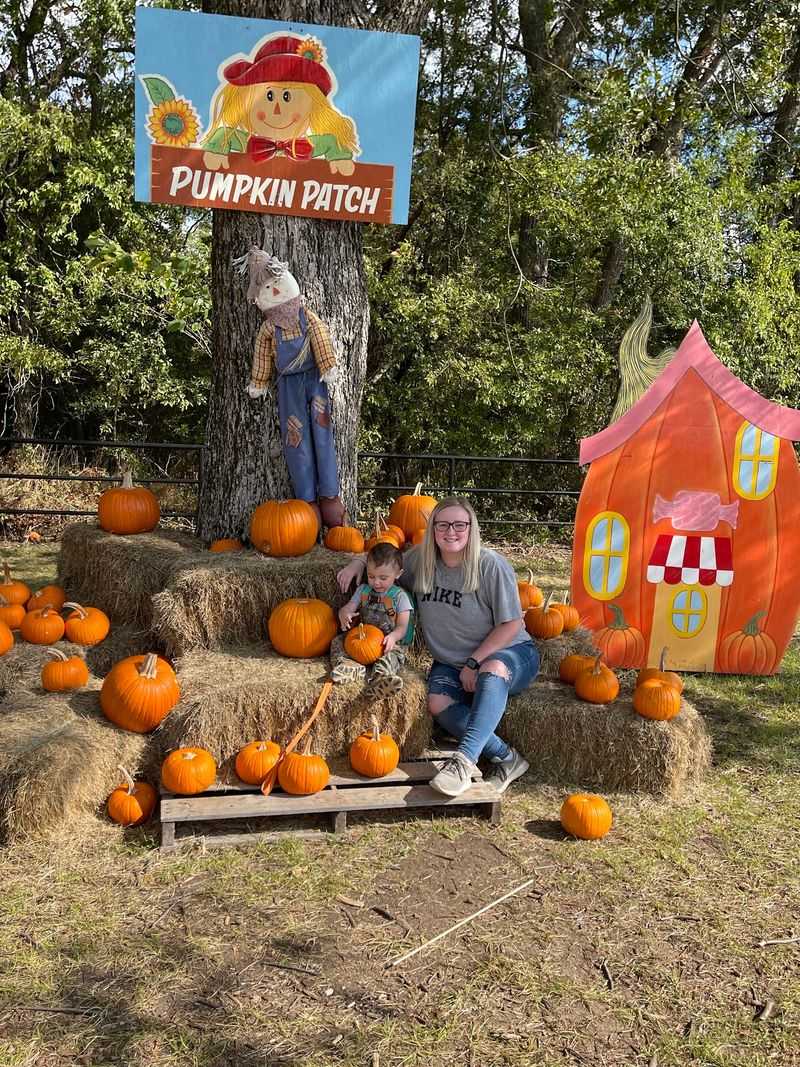
Autumn turns the property into something closer to a small-town fall festival. The pumpkin patch draws families for hay rides through the grounds, games, rides, zip lines, and bouncing attractions, with the elephant tour often included in general admission.
Extra activities usually require additional tickets, so budget a little cushion. Parents of toddlers report that kids around three and up get the most out of it, while the very youngest may lose interest between attractions.
Winter brings a decorated holiday event under a large tent with seasonal music. Past pricing for that ran $25 per adult with infant admission waived, which is about as affordable as this place gets.
Open house days have historically been the budget-friendly entry point too, and one mom admitted she kept buying add-on experiences once she saw her daughter’s face.
The property has also hosted stargazing-style gatherings, including a memorable eclipse viewing where guests fed elephants and watched them paint shirts between glances at the sky.
Oklahoma weather deserves respect in every season here. Storms roll through in spring, summer heat is real, and shade is limited in the pastures.
The Mood on the Ground and Who Fits Here
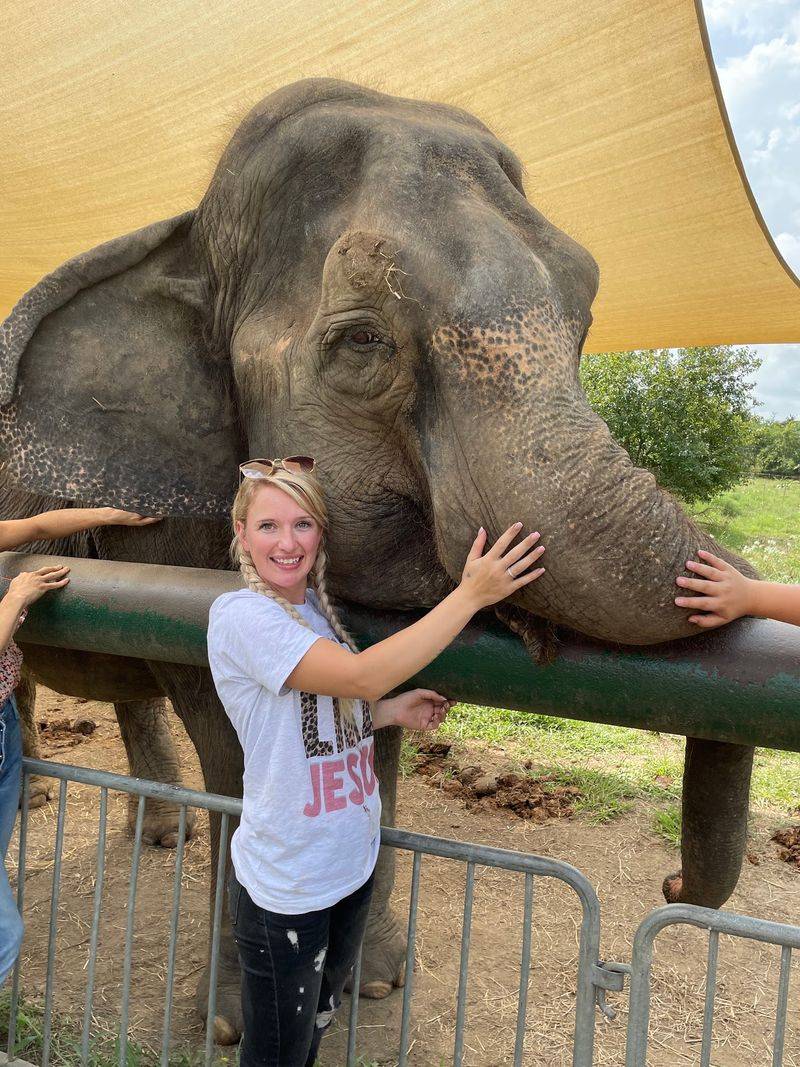
Calm is the word that keeps surfacing. Even during the busy pumpkin patch season, guests describe an unhurried, family-friendly atmosphere rather than a crowded attraction scramble.
Multigenerational groups seem to do especially well. One family reported grandparents, parents, and kids all leaving satisfied, with the youngest members asleep in the car before they hit the highway.
Accessibility is handled thoughtfully. Free shuttling from the parking area, minimal walking, and staff willing to adapt activities mean mobility concerns need not cancel the trip.
Birthdays come up a lot in visitor accounts, and the team leans into it. A five-year-old obsessed with elephants got a photo with one holding a happy birthday sign, which is the sort of detail that turns a day trip into family legend.
Honest note for balance: the sanctuary has drawn criticism from some visitors and animal advocacy groups regarding enclosure sizes and the herd’s circus background, while many others describe animals that appear well cared for with plenty of acreage. Reading up beforehand and forming your own view is reasonable.
Overall sentiment sits at 4.6 stars across more than 550 reviews.
Hours, Costs, and Booking the Thing Properly
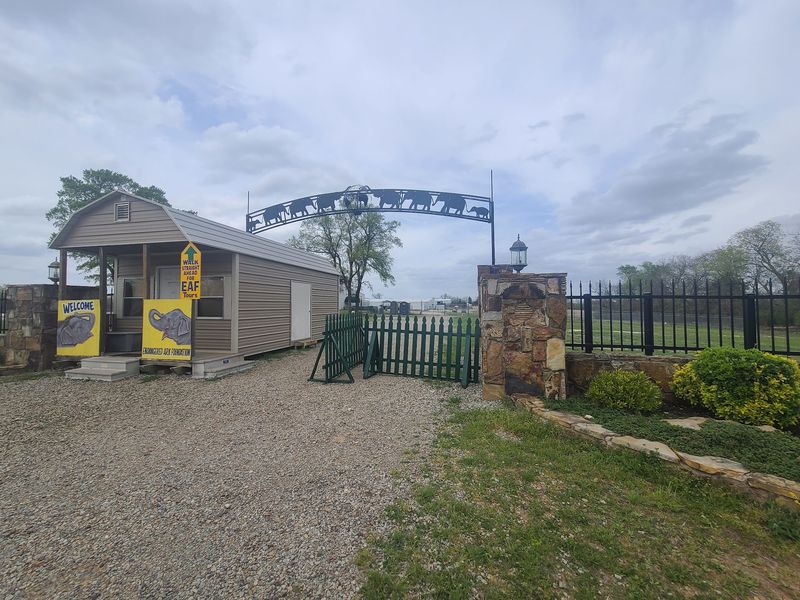
Calling ahead is not optional advice here, it is basically the system. Appointments should be scheduled through 580-317-8470, and the office keeps Monday through Friday hours of 9 a.m. to 4 p.m.
Listed gate hours run 9 a.m. to 4 p.m. Monday through Friday, 9 a.m. to 5 p.m.
Saturday, and 1 p.m. to 5 p.m. Sunday, though tours operate on their own schedule and seasonal closures happen.
Standard tour pricing has been reported around $50 for adults and $25 for children, with special events like the holiday tent running about $25 per adult. Overnight stays land in the $300 to $800 range depending on the setup.
Parking is easy and close, with a short walk to the indoor facility. The gift shop makes a decent waiting spot before your tour begins.
Bring sun protection, closed-toe shoes, and cash or card for the add-ons you will inevitably want. Prices and schedules shift, so verify everything on the foundation’s website or by phone before loading the car.
Worth the Two and a Half Hours South
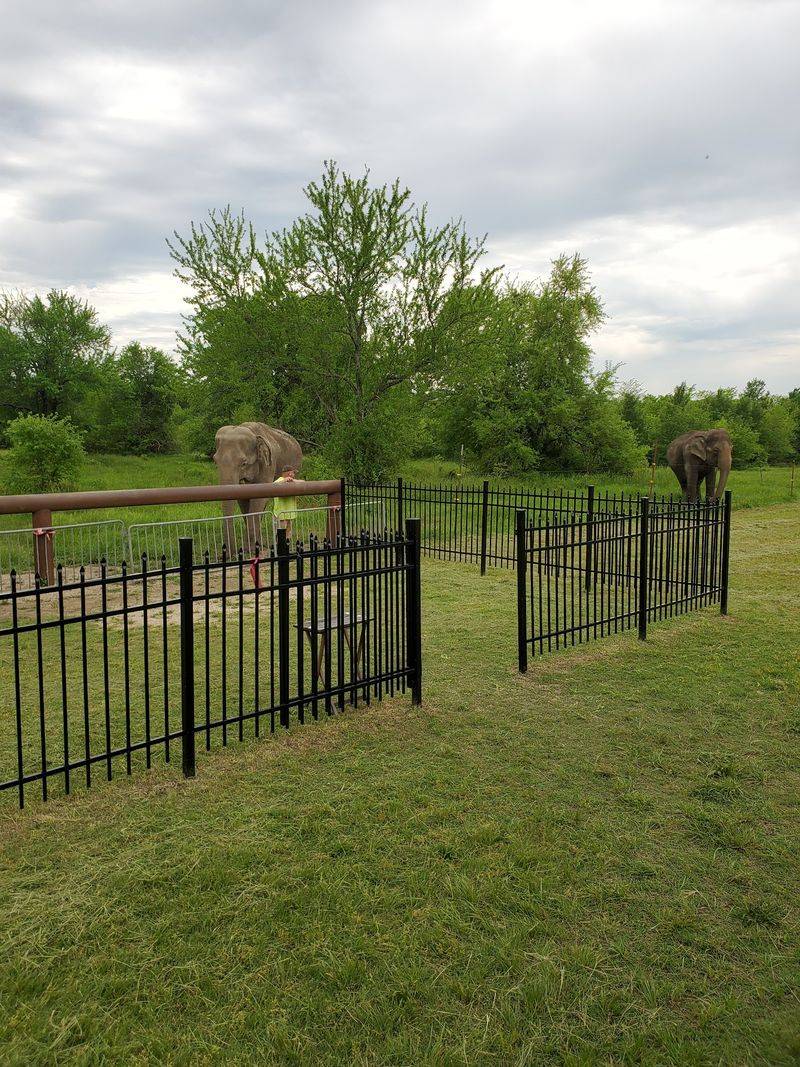
Two and a half hours from Tulsa, a little more from Oklahoma City, and you end up somewhere most people assume requires a passport. That math works out in favor of the drive.
Nobody should pretend this is a budget outing. Between tour tickets and overnight rates, a family weekend adds up, and a few guests have found the shorter tours moved faster than they wanted.
What tips the scale is the sheer strangeness of the memory. Handing pineapple to a several-ton animal that just carried your coffee up the porch steps is not an experience you can replicate anywhere else in the state.
Pair it with a Broken Bow cabin weekend, less than an hour away, and the trip stops feeling like a single-purpose expedition. Add a stop in Hugo itself, where the old circus connection still lingers around town.
Go in curious, ask the keepers plenty of questions, and let the kids do the feeding. Then book early, because cabin dates during the March through November window tend to fill up long before you think about them.
