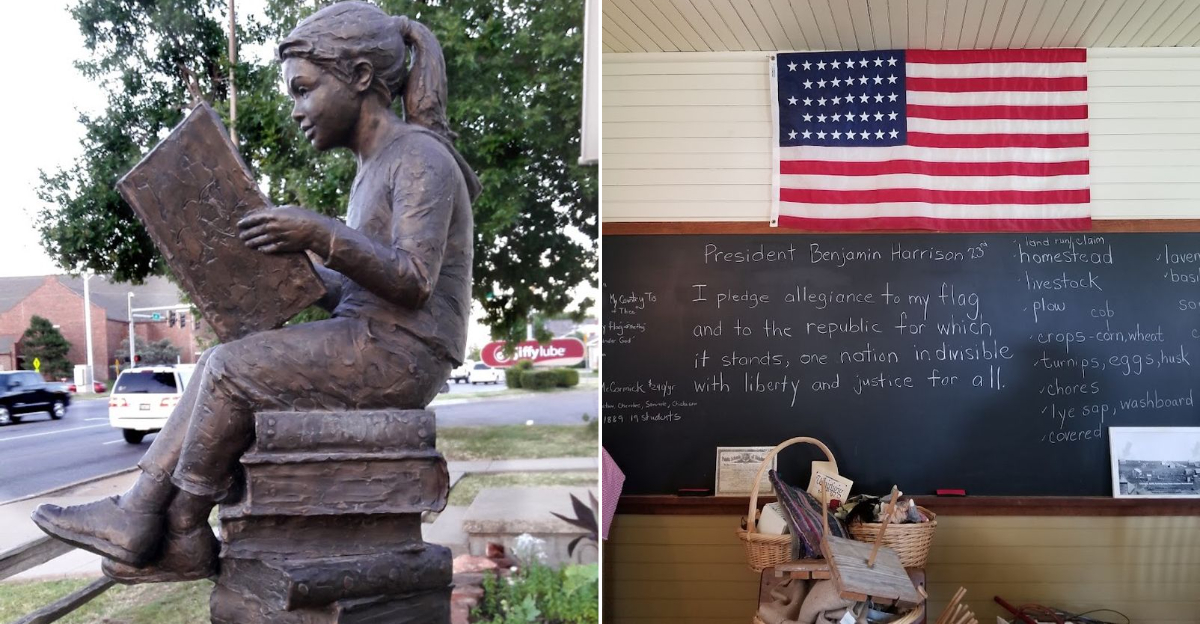
A wooden schoolhouse that has stood since the Land Run of 1889 still holds the marks of its first students. Inside this Oklahoma landmark, the original blackboards remain on the walls, their surfaces painted with a recipe of charred sweet potatoes and milk that has lasted well over a century.
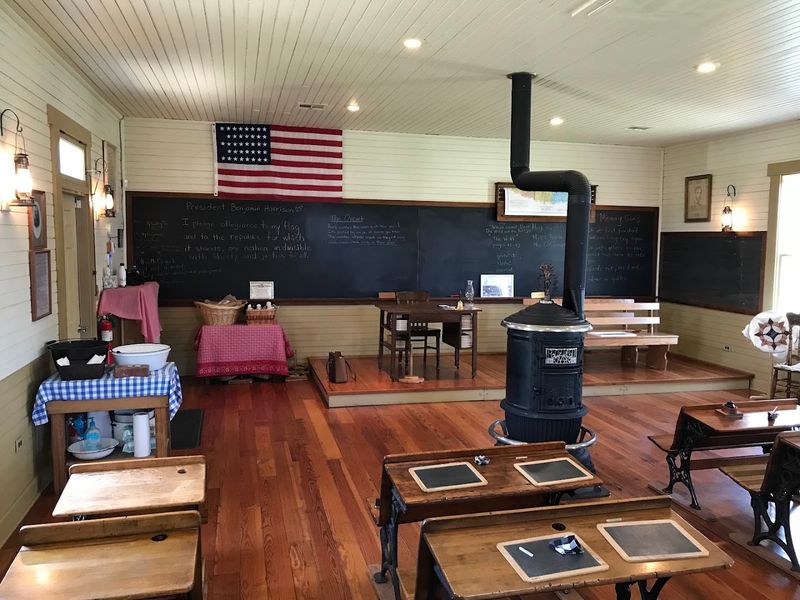
You can run your fingers along the worn desks, stand where a schoolmarm once taught, and see the faint chalk marks left behind by children who sat in these same seats before Oklahoma was even a state.
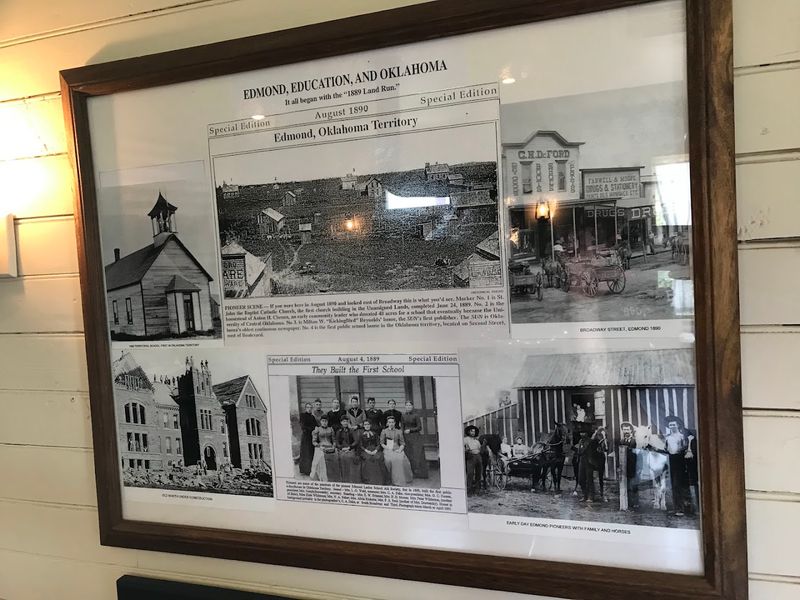
The building is the oldest standing structure in the county and the first public schoolhouse in the territory, a place where the past is not just remembered but preserved in the most tangible way.
Walking through its doors feels less like a museum visit and more like stepping into a classroom that has been waiting for its students to return.
The bell still rings, the lessons are still told, and the blackboards still hold their silent stories.
Why The Building Stops You Cold
The first thing that got me was how modest the whole place looks, because it does not try to impress you with size or drama, and somehow that makes it land even harder. You walk up expecting a nice old building, and then it hits you that this was where public education in territorial Oklahoma actually began.
That thought settles in slowly, and once it does, the walls start feeling a lot bigger than they look from the sidewalk.
I think some historic sites lean so hard on spectacle that you end up admiring them from a distance, but this schoolhouse works in the opposite way and pulls you close. Its scale feels personal, like you can picture boots at the doorway, voices in the room, and a teacher trying to hold attention on a windy day.
Instead of feeling polished or staged, it feels lived with, which is a huge part of the charm.
Even before you step inside, the place carries this quiet sense of endurance that is hard to fake and even harder to ignore. It has stood through change after change in Edmond, and yet it still gives off the feeling that its original purpose matters.
That is why it sticks with you, because it feels less like a relic and more like a survivor.
Where You Will Find It
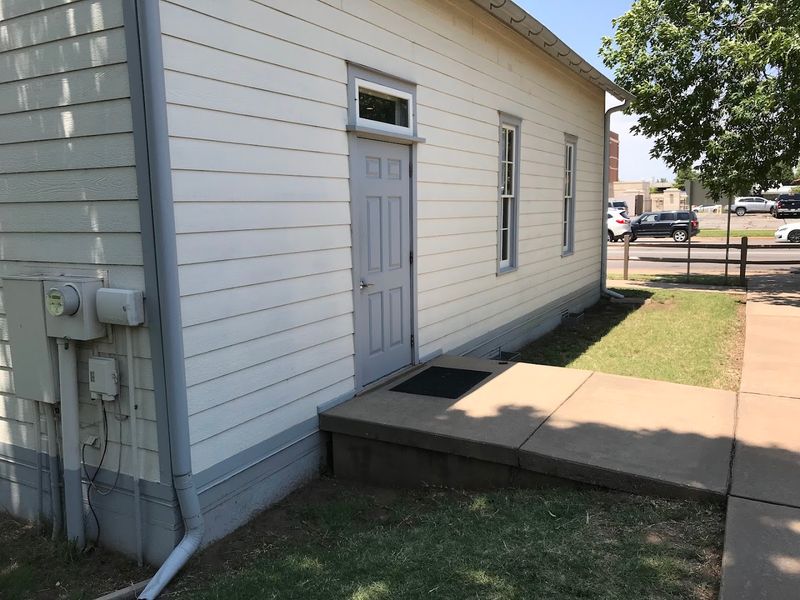
If you are heading there for the first time, it is easy to work into a relaxed day around downtown Edmond instead of making it some big formal outing. The schoolhouse sits at 124 E 2nd St, Edmond, OK 73034, and the location makes the visit feel surprisingly grounded in everyday life.
I liked that right away, because the history does not feel isolated from the town that grew around it.
That setting matters more than you might think, since you can stand there and feel the contrast between present-day Oklahoma and the much rougher place this area once was. The building is small, but the context around it helps you understand just how early this chapter really was.
You are not looking at a recreated frontier scene tucked far away from everything, and that gives the whole experience more honesty.
I would honestly tell a friend not to rush the approach, because the neighborhood helps frame what you are about to see inside. Take a minute, look around, and let your brain connect the schoolhouse to the modern streets around it.
That little pause makes the visit feel richer, and it turns a quick stop into something you actually remember later.
The Blackboards Are The Real Shock
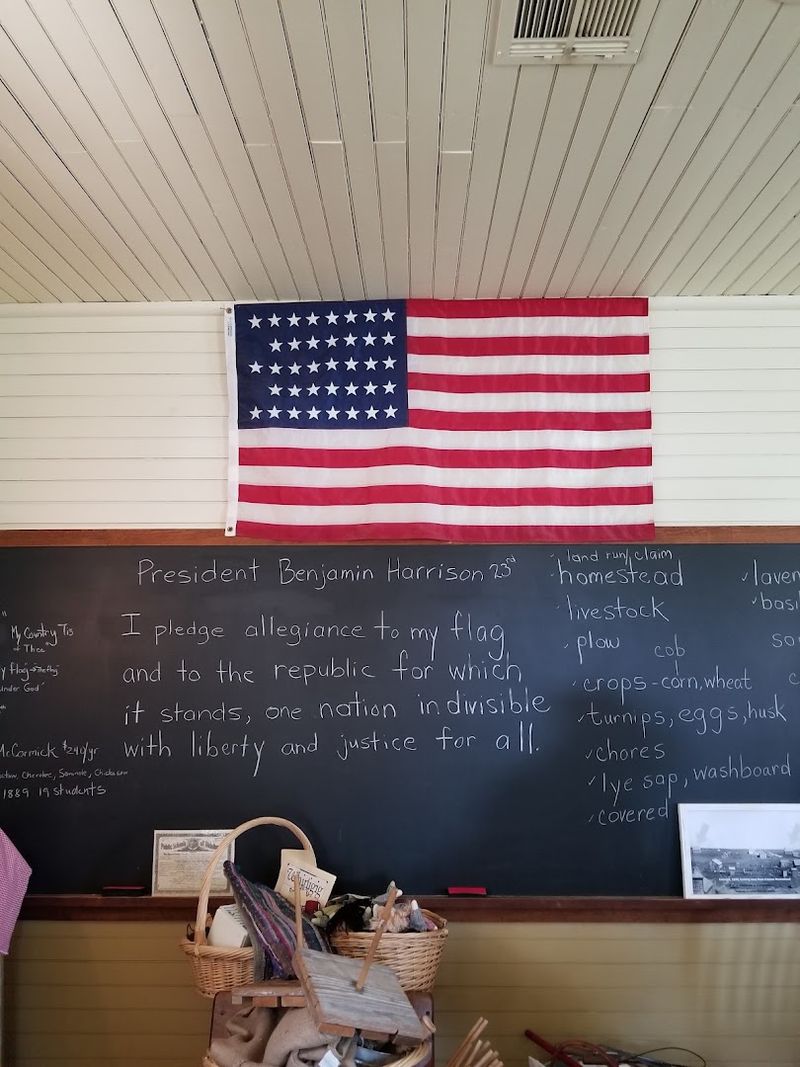
I had heard about the original blackboards before visiting, but hearing about them and actually seeing them are two completely different experiences. These were painted directly onto the walls, and that detail makes the room feel immediate in a way that loose objects in a case never can.
You are not just looking at old school artifacts, because the classroom itself is the artifact.
What really gets me is that the blackboards were hidden beneath later changes and only came back into view during restoration. There is something almost cinematic about that, like the building kept one of its most honest details tucked away until someone cared enough to look closely.
Once that story clicks, the walls stop being background and start feeling like witnesses.
I think that discovery is a huge reason the schoolhouse feels so convincing when you stand inside it. The room is not relying on imitation or mood lighting to tell you what it used to be, because the evidence is right there in plain sight.
If you care about places that still carry their own fingerprints, this part of the visit will absolutely stay with you after you leave.
It Feels Like A Real Classroom
Some old buildings feel a little distant once you are inside, like you are admiring them through a layer of museum glass even when no glass is actually there. This place did not feel that way to me, and I think it is because the classroom scale is so easy to understand in your body.
You know where the teacher would have stood, where students would have fidgeted, and where attention probably drifted toward the windows.
That kind of immediacy makes the visit feel less academic and more personal, which I mean in the best possible way. Instead of memorizing a few facts and moving on, you start imagining the rhythms of an ordinary school day in early Oklahoma.
The room invites that naturally, because it still holds onto the kind of plain usefulness that classrooms are supposed to have.
I also liked that the space does not overwhelm you with too much interpretation all at once. There is enough there to ground the story, but not so much that your own imagination gets crowded out.
When a historic room leaves space for you to picture the people who used it, the whole thing becomes warmer, more believable, and honestly a lot more moving than I expected.
The Story Behind Its Survival
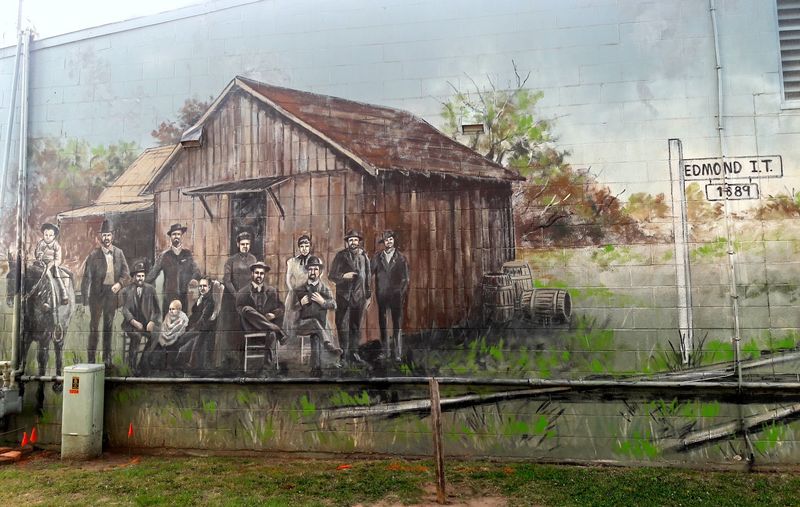
Here is the part that really gives the schoolhouse its emotional weight, because it did not survive by sitting untouched in some perfect bubble. Over time, the building served other purposes, including life as a residence and later as a camera shop, which means it had every chance to lose the things that made it special.
A lot of places do lose them, and that is usually the end of the story.
Instead, this one held on long enough for people to recognize what was still there and restore it with real care. I always find that more affecting than a simple preservation story, because recovery takes a different kind of attention.
Someone had to ask better questions, look beneath later layers, and trust that the building might still have something true to say.
That is probably why the schoolhouse feels earned when you visit it now. You are not just seeing a historic structure that got lucky, because you are seeing a place that was brought back through patience and belief.
For me, that adds a whole extra layer of respect, and it makes the quiet details inside feel even more meaningful once you know how close they came to disappearing.
The Women Who Made It Happen
One of my favorite things about this place is that the story is not just about a building, because it is also about the people who refused to wait around for someone else to solve the problem. The Ladies School Aid Society helped push the project forward, and Jennie Forster played a major role in securing materials and rallying support.
That kind of determined, practical community effort gives the schoolhouse a pulse that you can still feel today.
I love history most when it stops sounding abstract and starts sounding like actual neighbors making hard things happen. You can picture conversations, favors being called in, and the kind of faith it takes to build a school before life around you feels settled.
In Oklahoma especially, those acts of ordinary resolve tell you as much about the past as any official marker ever could.
Knowing that background made the room feel warmer to me, because the building becomes more than an early public institution. It starts to feel like a direct expression of local priorities, with education placed right in the middle of community life.
When you visit with that in mind, the schoolhouse is not only interesting, it is deeply human, and that is the kind of history I always remember longest.
Pair It With A Walk Around Edmond
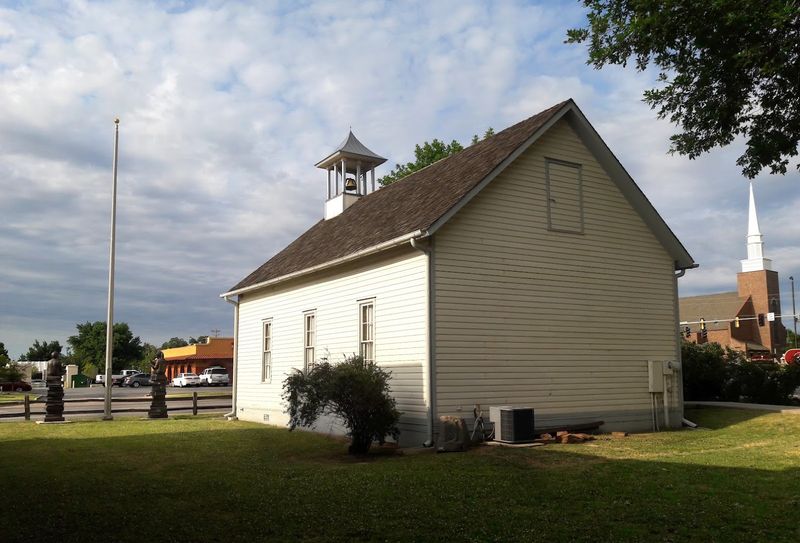
I would not treat this as a drive up, snap a photo, and disappear kind of visit, because the surrounding area adds a lot to the mood. Edmond has a way of making local history feel connected to daily life rather than locked away from it.
That blend works especially well here, where the schoolhouse sits as a reminder of how much the town has changed without losing every trace of its beginnings.
After spending time inside, it feels good to wander a little and let the visit stretch out naturally. You notice how the old and the current version of Oklahoma share space with each other, and that contrast helps the schoolhouse story settle in.
I always think places like this become more memorable when you give yourself a few extra minutes to absorb the neighborhood around them.
There is also something nice about leaving a historic site and immediately returning to ordinary street life. It keeps the experience from feeling sealed off or overly precious, which suits this schoolhouse perfectly.
The whole thing feels approachable from start to finish, and that easy rhythm is a big part of why I would gladly send a friend here without needing to oversell it.
The Reason It Stays With You
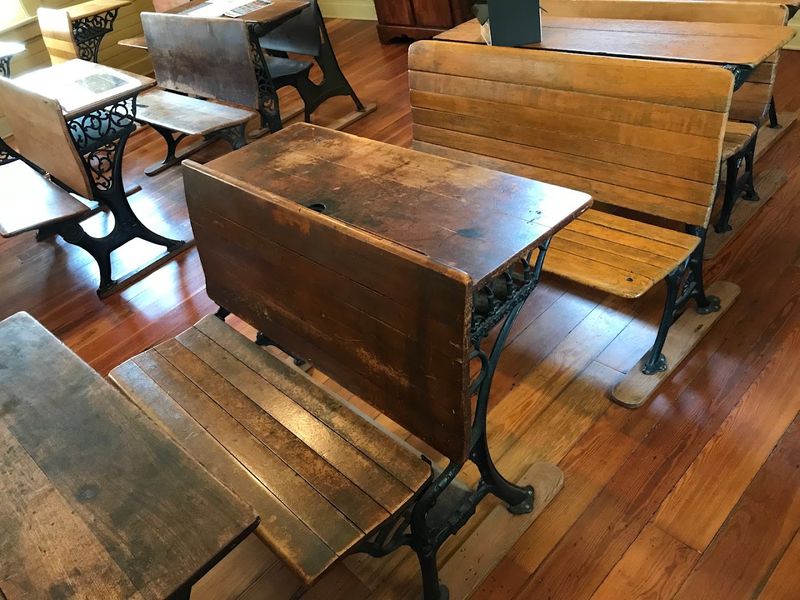
By the end of the visit, what stayed with me was not just the age of the building or the fact that it still stands at all. It was the sense that this place still carries the purpose it was built for, even after everything that happened around it.
That is a rare feeling, and it gives the schoolhouse a kind of steadiness you do not forget quickly.
The original blackboards have a lot to do with that, of course, because they make the history feel direct instead of summarized. But just as important is the building’s overall honesty, from its humble scale to the story of how the community first brought it into being.
Nothing about it feels inflated, and that restraint is exactly why it resonates so strongly.
If you are the kind of person who loves a place because it helps you feel time in a physical way, this schoolhouse absolutely delivers. It is small, quiet, and deeply rooted in Oklahoma, yet the emotional reach is much bigger than you expect when you first arrive.
I left feeling grateful that it survived, and even more grateful that it still invites people in close enough to really listen.
