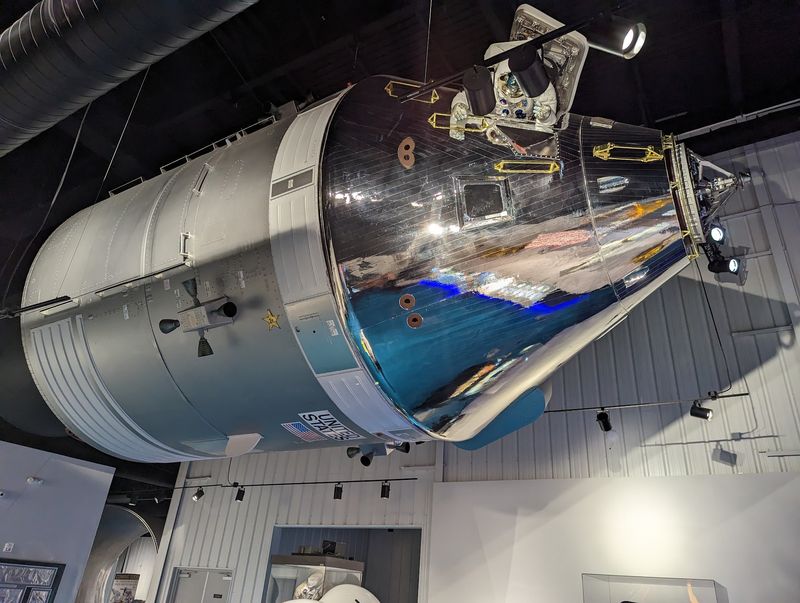
You are cruising across western Oklahoma, the radio is fading in and out, and a highway sign promises rockets. Most folks keep driving.
The ones who pull off find a ten-story rocket standing in the parking lot, a stealth fighter under one roof, and a space capsule that circled the planet with an Oklahoma farm kid strapped inside. What looks like a quick leg-stretch turns into an entire afternoon you never planned on.
A Ten-Story Rocket Beside the Interstate
Exit 84 off I-40 in Weatherford does not look like the gateway to anything cosmic. Then the Titan II comes into view, ten stories of actual launch vehicle pointed straight up over the flatland, and suddenly the whole stop makes sense.
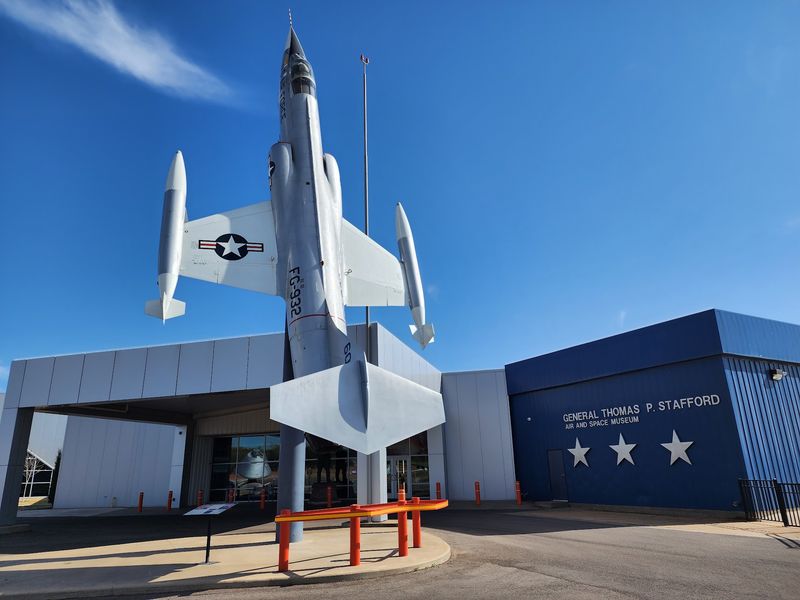
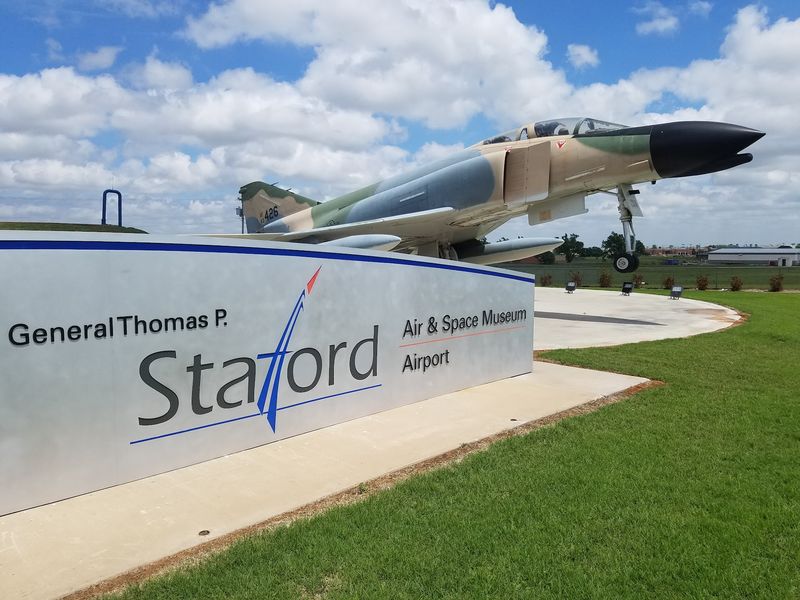
The Stafford Air & Space Museum sits at 3000 Logan Rd, a straight shot off the highway with free parking and no maze of one-way streets to navigate. From Oklahoma City it runs a little over an hour west.
From Tulsa, figure closer to two and a half.
Inside those walls sit more than 3,500 aerospace artifacts spread across tens of thousands of square feet, tracing flight from cloth-and-wood biplanes all the way to reusable spacecraft hardware. It is a Smithsonian Affiliate, which explains the caliber of the labeling and the loans.
Travelers regularly admit they stopped because of a road sign and stayed for hours. That reaction repeats itself often enough that the staff seem used to it.
Whatever you budgeted for this stop, quietly double it before you walk through the doors.
The Farm Boy Who Flew Around the Moon
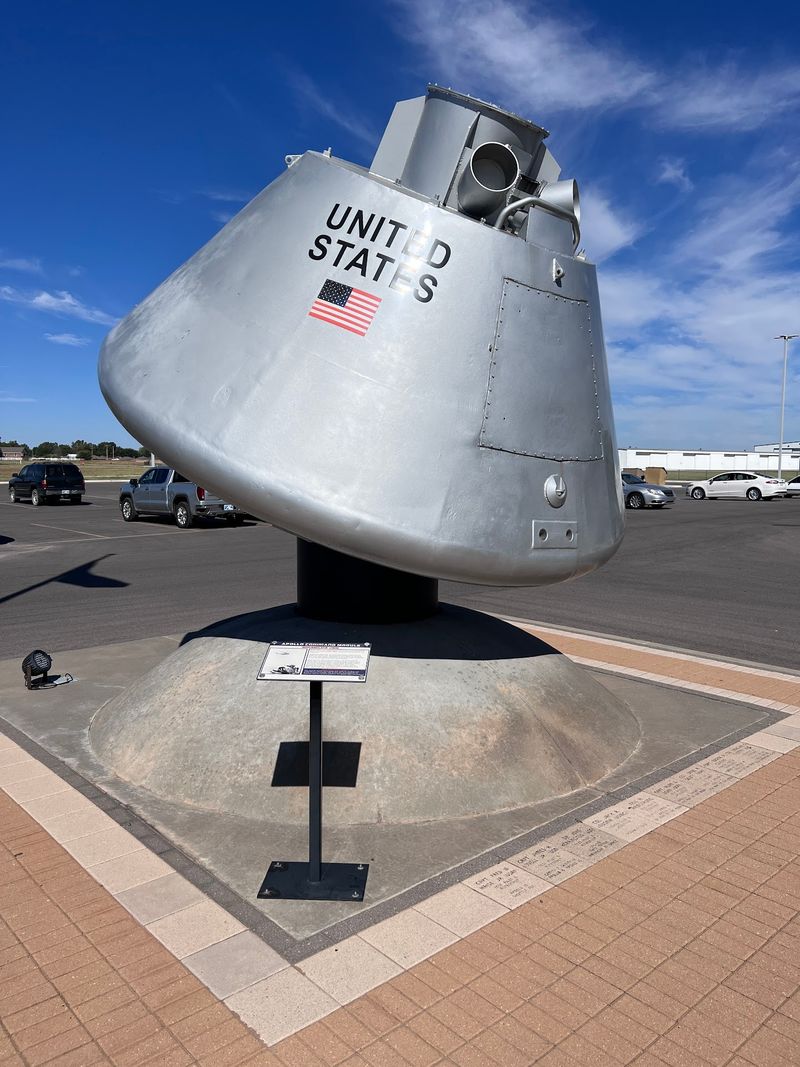
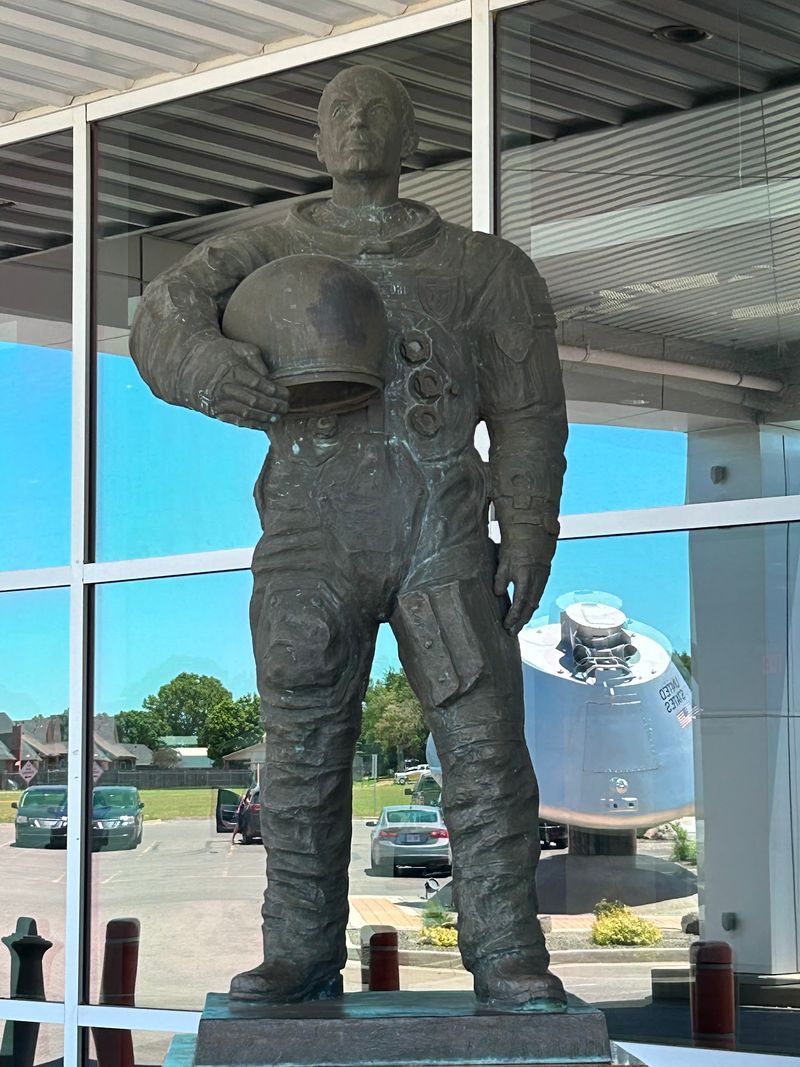
Every great museum has a person at its center, and here that person is Lt. General Thomas P.
Stafford, born and raised right in Weatherford. He flew four missions: Gemini 6A, Gemini 9A, Apollo 10, and the Apollo-Soyuz Test Project.
Apollo 10 is the one that stops people cold. Stafford rode the Lunar Module down toward the lunar surface just months before the first landing, scouting the path without touching down.
Imagine being that close and turning back on purpose.
There is a detail in his story that Oklahomans tend to love. His mother came to the territory in a covered wagon, and she lived long enough to watch her only child fly to the Moon.
Two generations, wagon wheels to rocket engines.
Exhibits trace his Air Force test-pilot years right through his diplomatic role in the 1975 handshake mission with Soviet cosmonauts. Visitors often say they arrived knowing nothing about him and left feeling like they had met a neighbor.
That hometown thread runs through every gallery here.
Gemini 6A and the First Rendezvous in Space
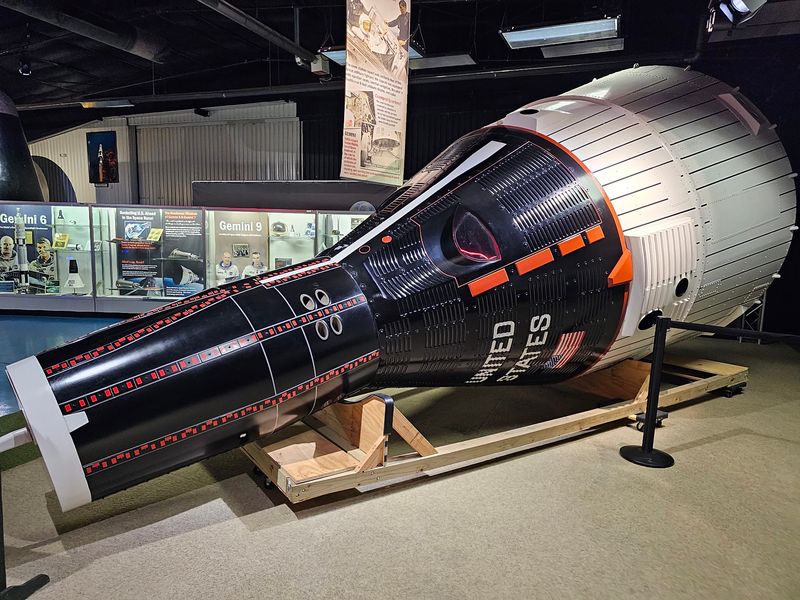
Hardware that has actually left the atmosphere carries a weight that photographs never capture. The Gemini 6A spacecraft sits here, the same craft Stafford piloted when it pulled off the first rendezvous between two vehicles in orbit.
Before that flight, nobody had proven two spacecraft could find each other in the vastness above and hold formation. Without it, the Apollo program had no path forward, because a lunar mission depended on a module catching up with its mothership 240,000 miles from home.
Standing beside the capsule, the first thing most people notice is how cramped it is. Two grown men, a wall of switches, and a seam of scorched metal where reentry did its work.
Guests frequently comment that the capsules and space-flown items are what elevate this place beyond a typical regional collection. Original Gemini and Apollo hardware sits within arm’s reach of the walkway.
Take a moment with it. That metal circled Earth, came back through fire, and now rests quietly in western Oklahoma.
Engines Built to Shake the Ground
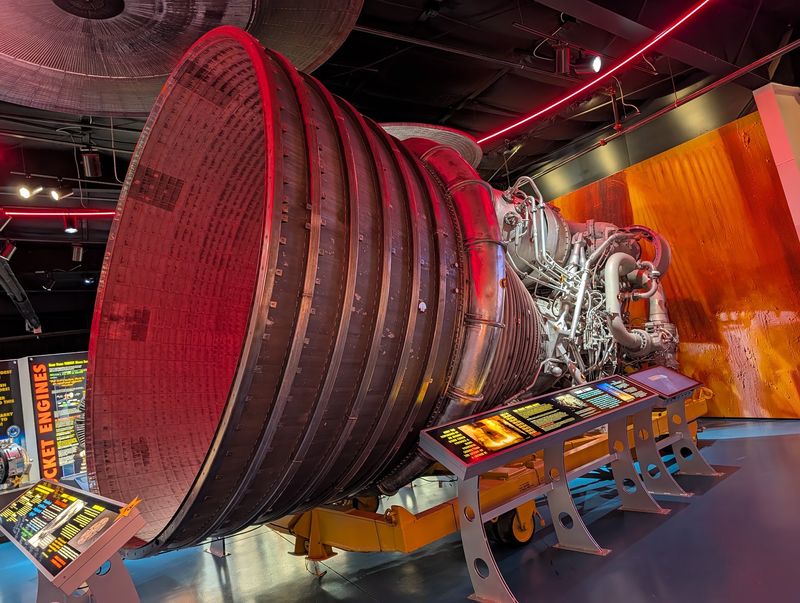
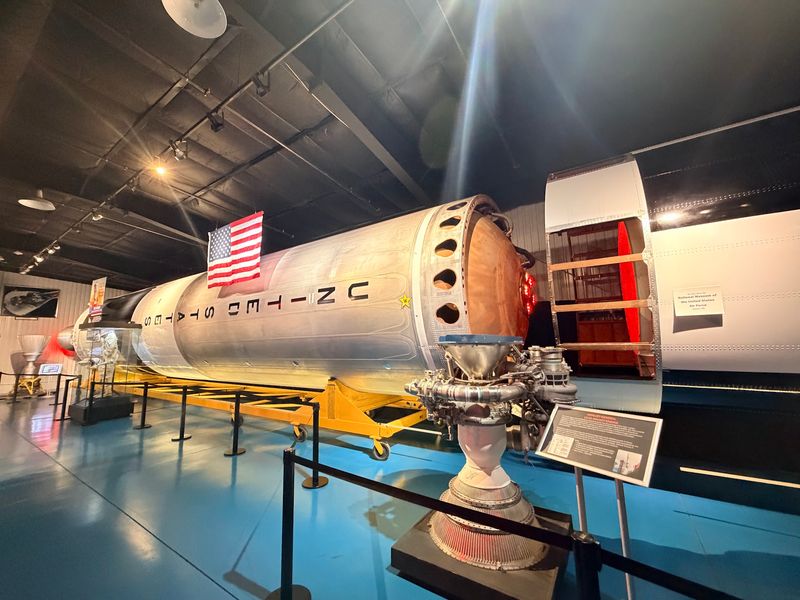
Rocket engines are where this museum flexes hardest. An actual F-1 engine from the Saturn V anchors one gallery, and it remains the largest single-chamber rocket engine ever flown.
Five of them lifted astronauts toward the Moon.
A few steps away sits a Soviet NK-33, widely regarded as the highest-performing liquid oxygen and kerosene engine ever built. Weatherford holds the only spot on the planet where you can see both the American F-1 and the Soviet NK-33 under one roof.
Think about what that means for a second. Two rival space programs, two engineering philosophies, parked in the same building in rural Oklahoma.
The collection also includes actual F-1 turbine wheels recovered from Apollo 11, a flown Space Shuttle Main Engine, and a segment of a Solid Rocket Booster large enough to walk through.
Engineering-minded visitors tend to linger here longest, reading plumbing diagrams and muttering about turbopumps. Even if the technical details slide past you, the raw scale lands immediately.
Twenty-Plus Aircraft, From Sabres to Stealth
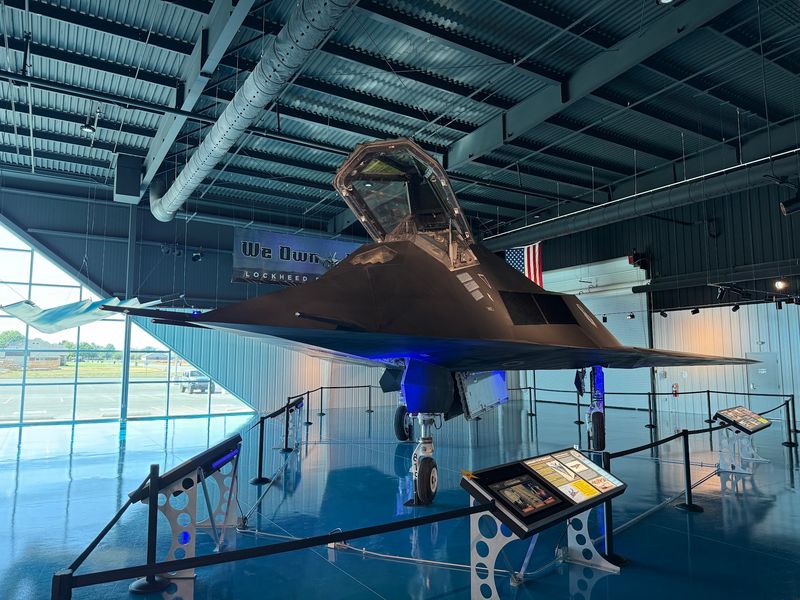
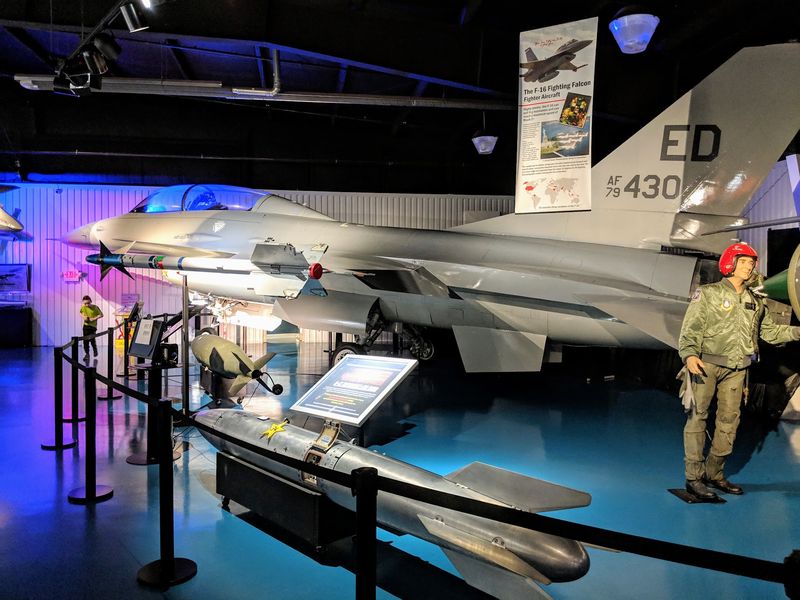
Jet fans, clear your schedule. More than twenty historic aircraft fill the indoor galleries and the grounds outside, and the lineup reads like a Cold War greatest-hits list.
An F-86 Sabre, an A-10 Warthog, an F-4 Phantom, an F-15 Eagle, an F-16 Fighting Falcon, a T-33 and T-38 trainer pair, and a genuine Russian MiG-21 all share the space. Seeing American and Soviet designs side by side does something to your sense of history.
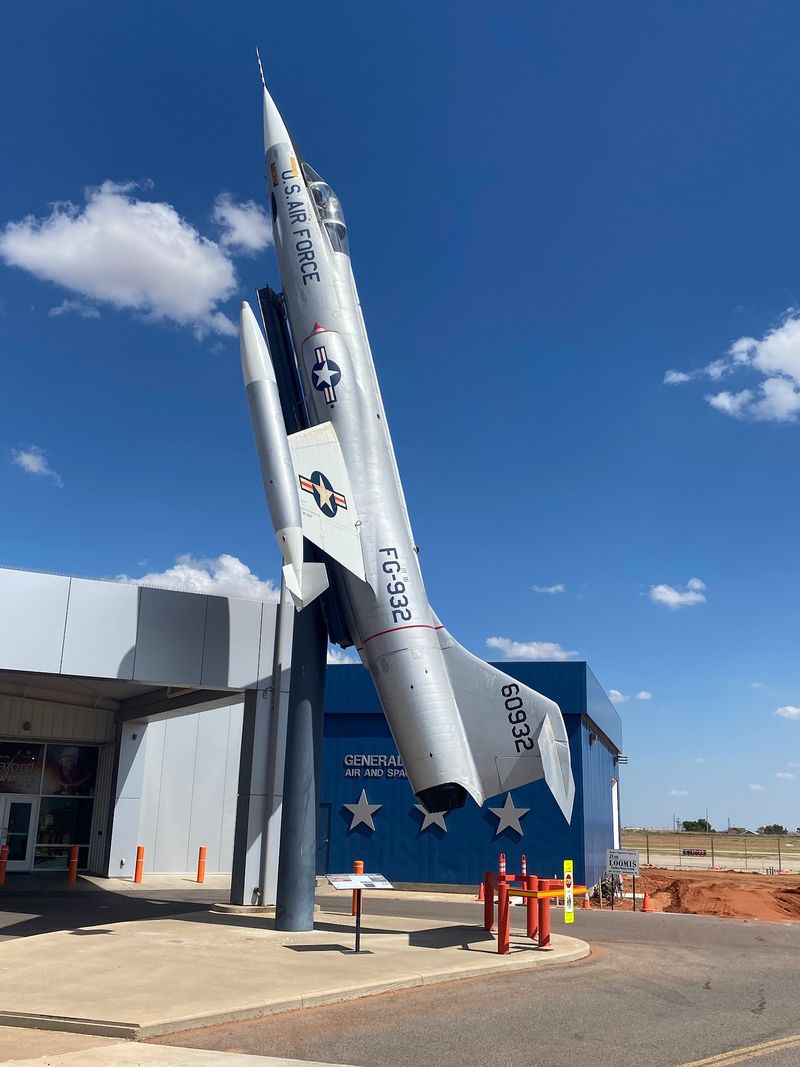
The F-104 Starfighter gets the most theatrical treatment, mounted nose-up and climbing roughly six stories toward the ceiling. Photographers love it.
Kids just stare.
Then there is the F-117A Nighthawk, the angular stealth fighter that looks like it was folded rather than built. Plenty of visitors admit the Nighthawk alone justified their detour, and several say it was the first stealth aircraft they had ever laid eyes on.
Make sure you walk the outdoor displays too. Several aircraft sit out front, free to circle on foot before or after your ticket.
Objects That Carry Real Mission History
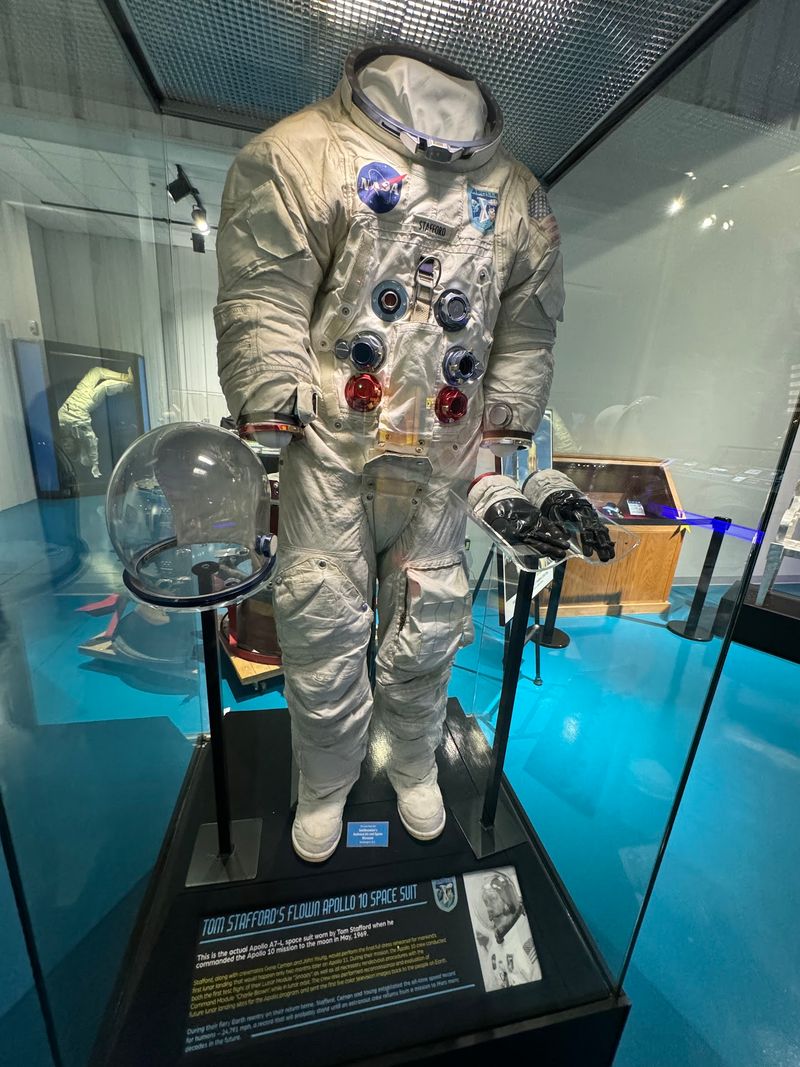
Replicas are fine. Flown artifacts are something else entirely, and this collection holds a surprising number of them.
Stafford’s actual Apollo 10 pressure suit hangs here, the one he wore during the first flight of the Lunar Module to the Moon. Nearby sits the hatch from the 1975 Apollo-Soyuz mission, the very opening through which American and Soviet crews shook hands in orbit at the height of the Cold War.
There is also a lunar sample collected by Gene Cernan during Apollo 17, a piece of another world resting behind glass in Custer County.
One more item tends to slow people down: an actual Mission Control console from Johnson Space Center, complete with the worn switches that flight controllers worked during missions. A section of Mission Control used during the Apollo program is on display, alongside an original Space Shuttle simulator.
Guests often mention that knowing certain pieces have genuinely been to space changes the entire experience. Reading a label that says flown hits differently than one that says model.
Full-Scale Replicas That Fill the Room
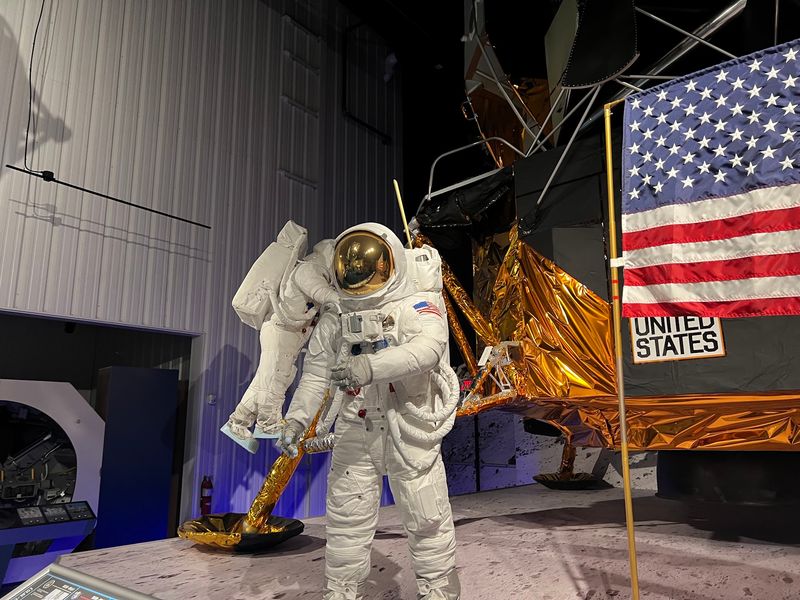
Not everything here flew, and the replicas earn their floor space honestly. A full-scale Apollo 11 Lunar Module stands with its gold foil and spindly legs looking almost too fragile for the job it did.
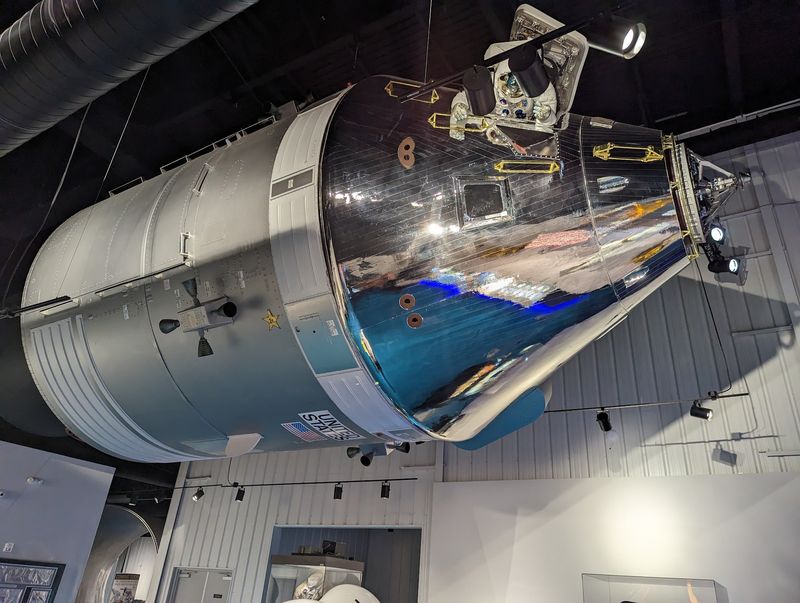
The Apollo Command and Service Module replica gives you the other half of that equation, showing exactly how the pieces fit together during a lunar mission.
Aviation history gets equal treatment. A Wright Flyer reproduction represents the twelve-second beginning of everything, and a Spirit of St. Louis replica marks Lindbergh’s solo Atlantic crossing.
Walking from the Flyer to the Lunar Module in a few dozen steps compresses about sixty-six years of human progress into a short stroll. That layout is intentional, and it works.
Smaller-scale models round things out, including a 1/24th International Space Station complete with a live feed and interactive touch screens, plus a 1/15th Hubble Space Telescope. Visitors often note the balance between authentic artifacts and well-built reproductions, which keeps the story complete rather than patchy.
Shooting Star Park and the Kid Problem
Here is a problem you may face: your kids might not want to go inside. Shooting Star Park sits across the parking lot, an aerospace-themed playground standing more than thirty feet tall with picnic areas scattered around it.
Families have reported parking, unloading, and never making it through the museum doors because the outdoor play area held everybody hostage in the best possible way. Water features factor into that, which matters enormously during an Oklahoma summer when afternoons flirt with triple digits.
The park is built around STEAM-based experiences, so the climbing and running comes wrapped in a little science by accident. A model Saturn V rocket anchors the scene, giving parents a chance to explain what actually carried people to the Moon.
My honest suggestion: hit the museum first while everyone is fresh, then release the children into the park afterward as a reward. Reverse that order at your own risk.
Picnic tables mean you can pack a cooler and turn a highway stop into a genuine afternoon without spending another dollar.
Hands-On Corners and the Scavenger Hunt
Museums that only let you look tend to lose younger visitors by the second gallery. That is not the situation here.
Interactive exhibits show up throughout the building, with touch screens, hands-on models, and a flight simulation computer lab tucked into the on-site Educational Center. The International Space Station model runs a live feed, so kids can poke around and see what is happening above them right now.
The scavenger hunt deserves its own mention. Families pick one up and suddenly the children are hunting specific artifacts, reading labels voluntarily, and dragging parents toward displays instead of the other direction.
Plenty of guests bring up the scavenger hunt unprompted as the thing that kept their kids engaged for two full hours. It is a simple tool, and it does heavy lifting.
Staff circulate through the galleries and ask whether you have questions, which helps when a seven-year-old wants to know why rockets have that funny bell shape. Younger visitors and adults both come out having learned more than they intended.
Snoopy, Mission Control and the Stories Behind the Objects
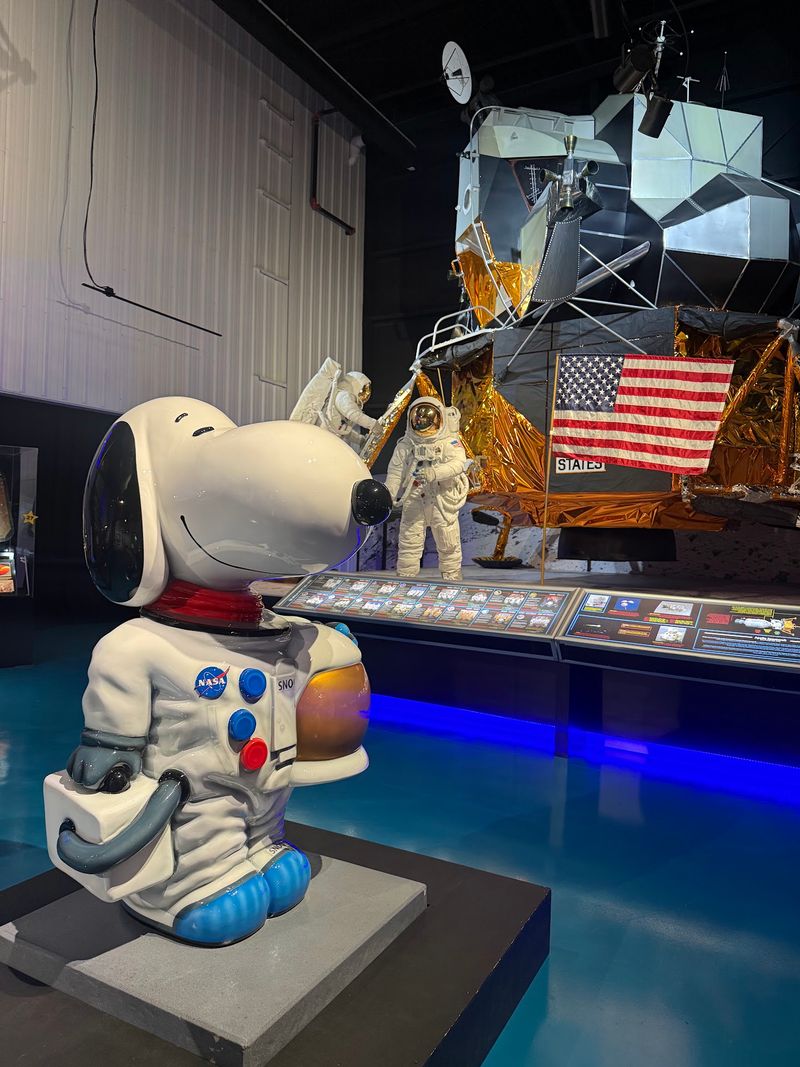
Ask most people what a beagle has to do with spaceflight and you will get a blank look. Apollo 10 changed that, because Stafford and his crew named their Lunar Module Snoopy and their Command Module Charlie Brown.
The museum unpacks that partnership between NASA and the comic strip, including how Snoopy became a lasting safety symbol within the agency. Visitors regularly single this exhibit out as the surprise that made them laugh and then made them curious.
The gift shop leans into it too, and Snoopy souvenirs leave the building in plenty of shopping bags.
Elsewhere, storytelling does the same trick with heavier material. The Cold War sections, the Space Race timeline, and the Apollo-Soyuz handshake all get context rather than just captions.
What makes the museum work is that the objects come with narrative attached. You are not reading specifications off a placard.
You are following people who solved impossible problems, sometimes with slide rules, and the displays keep that human thread visible from the Wright Brothers onward.
What It Costs to Get In
Pricing here stays firmly in road-trip territory. Adults between 19 and 61 pay $14, students aged 6 through 18 pay $8, and kids 5 and under walk in free.
Seniors 62 and up pay $12, and veterans pay the same $12. Active military get in at no charge, which feels right for a building filled with Air Force history.
Groups of ten or more drop to $12 per adult and $7 per student, so church outings, scout troops, and family reunions can pencil this out easily.
There is one delightfully specific perk worth knowing: anyone who flies into Weatherford Stafford Airport receives free admission. Not many museums reward you for arriving by air.
Parking is free, and a family of four with two school-age kids lands around $44 for an attraction that people routinely spend two to three hours exploring. Visitors frequently say the price felt low for what they got.
Prices can shift, so a quick check with the museum before a long drive is never wasted effort.
Hours, Timing and Beating the Oklahoma Heat
Planning is simple. Doors open Monday through Saturday from 9 AM to 5 PM, and Sunday runs a shorter 1 PM to 5 PM window.
The museum operates roughly 360 days a year, closing only for New Year’s Day, Easter, Thanksgiving, Christmas Eve, and Christmas Day. That reliability makes it a genuine year-round option rather than a summer-only stop.
Timing advice: give yourself two hours minimum. People who budgeted one hour regularly report walking out closer to the three-hour mark, still feeling like they skipped things.
Arriving by mid-morning on a weekday tends to mean thin crowds and unhurried browsing. Sunday’s late start catches some travelers off guard, so double-check before building a morning around it.
Summer in western Oklahoma can push past 100 degrees, and an air-conditioned building full of rockets is an excellent place to wait out the worst of an afternoon. Winter works just as well, since nothing here depends on weather.
Phone ahead at 580-772-5871 if your schedule is tight.
A Route 66 Stop With Serious Credentials
Historic Route 66 runs right past the front door, which puts this museum on one of the most traveled nostalgia corridors in the country. Mother Road pilgrims pull in between diners and neon signs and find something considerably more ambitious than expected.
Smithsonian Affiliate status is the credential that surprises people most. It means the collection meets standards you would associate with far larger cities, and the exhibit design shows it.
Comparisons to national-level institutions come up often from travelers who have seen the big ones. That is unusual praise for a town of Weatherford’s size.
Route 66 travelers heading west can fold this into a day that already includes small-town cafes and preserved storefronts. Folks driving in from Oklahoma City for the afternoon get a clean round trip with time to spare.
For Oklahomans specifically, there is a quiet satisfaction in the whole thing. World-class space hardware did not end up in Houston or Florida.
Some of it landed here, an hour west of the capital, because one local kid grew up and flew around the Moon.
Worth Pulling Off the Highway
Some stops reward the detour and some just break up the drive. This one firmly belongs in the first group.
Everything lines up in the visitor’s favor: easy interstate access, free parking, admission under $15 for adults, an outdoor playground that costs nothing extra, and a collection deep enough that aviation buffs need multiple visits. Families, veterans, grandparents, and curious kids all find their footing here.
If you have an hour, you will see the highlights and regret not having more. With three hours, you can actually read things, sit with the Gemini capsule, and let the kids burn off energy in the park afterward.
Bring a picnic, wear comfortable shoes, and resist the urge to speed-walk the galleries.
Western Oklahoma does not always advertise itself loudly, which is exactly why a building holding 3,500 aerospace artifacts and hardware that orbited Earth feels like such a find. Take Exit 84.
The rocket in the parking lot is not subtle, and neither is the reason to stop.
