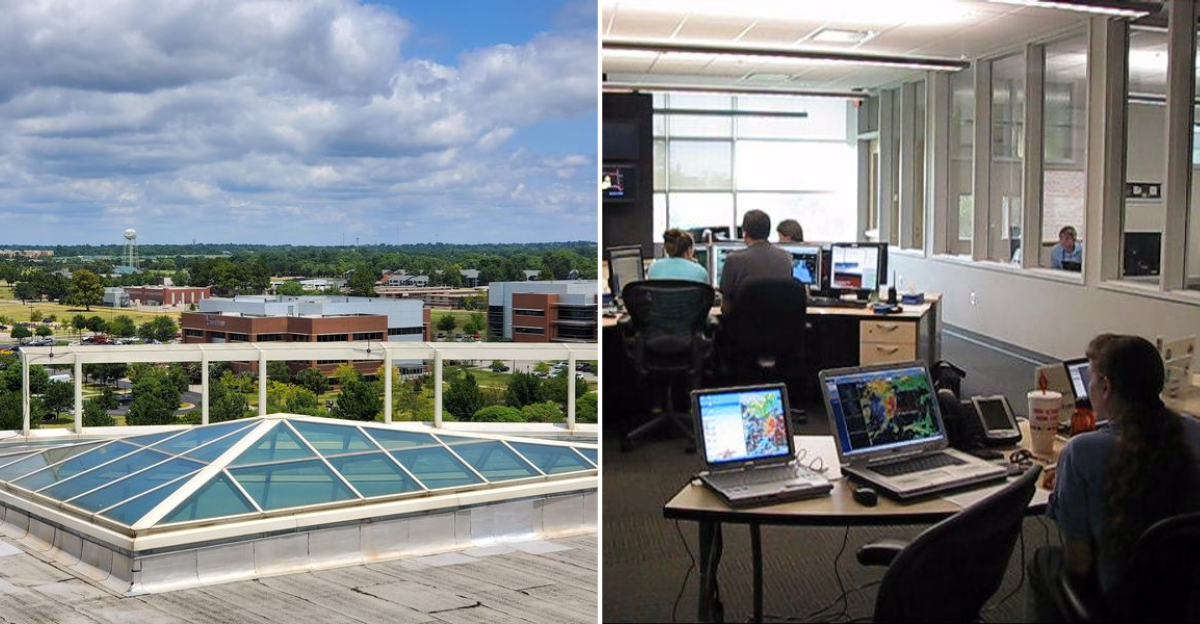
The same building where forecasters track tornadoes across the country also holds the props from a classic storm-chasing film. An hour-long tour of this Oklahoma facility takes you inside the rooms where life-saving decisions are made.
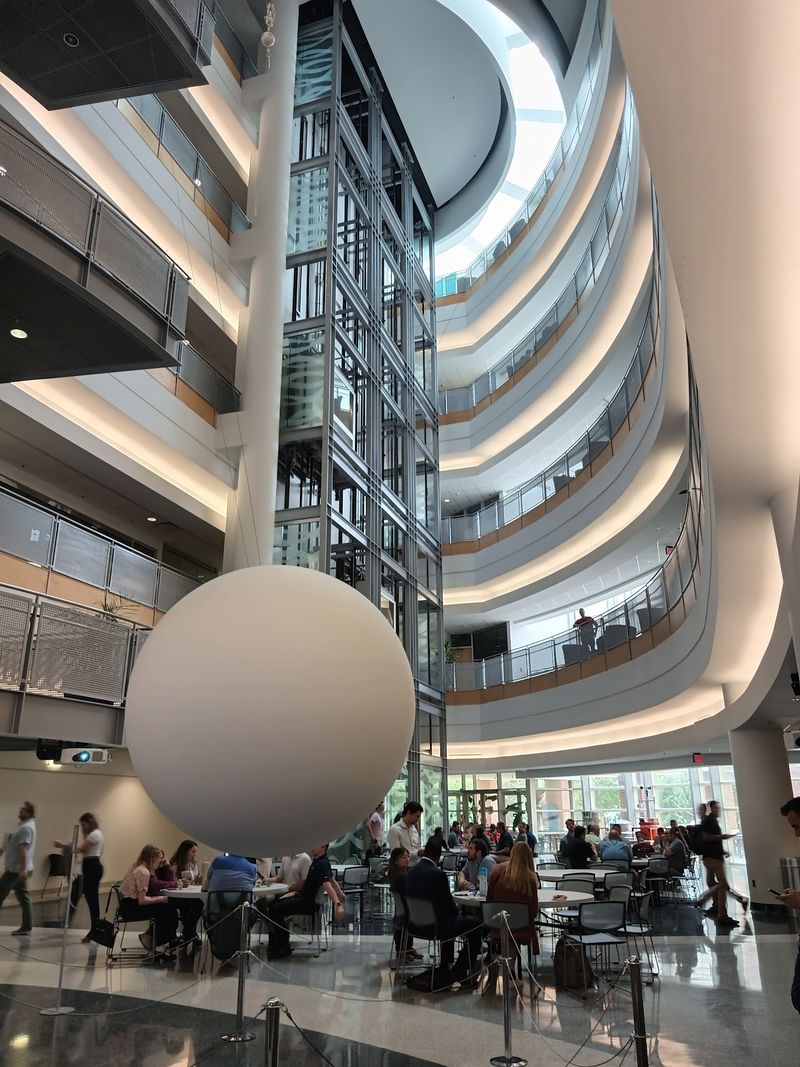
You will see the Storm Prediction Center, the National Severe Storms Laboratory, and a working weather forecast office. A giant animated globe displays real-time climate data in the atrium.
The observation deck offers a view of the campus and the horizon beyond. The daily weather briefing gives you a glimpse into how experts predict the unpredictable.
The tour is completely free and open to the public. It is a rare chance to stand where science meets survival, and to see firsthand how Oklahoma helps keep the rest of the country safe from the sky.
The Building Where Everybody Who Studies The Sky Works Together
Picture one enormous building where the federal government, a state agency, and a major university all decided to stop working separately and just share a roof. That is basically what happens here, and it is the reason this spot is considered one of a kind anywhere in the country.
The University of Oklahoma is a huge part of the operation, with students and professors studying the atmosphere just down the hall from people whose job is issuing real warnings. You have research scientists, engineers, forecasters, and classrooms all mixed together, which means an idea can go from a research paper to actual forecasting practice without traveling very far.
What I find genuinely interesting is how practical the goal is. Everything happening inside comes back to the same question, which is how do we understand storms well enough to give people more time to get somewhere safe?
When you walk through, you start noticing that the whole place is built around that idea, from the layout of the offices to the way the labs sit near the operational floors. It is science with a very clear purpose, and Oklahoma is exactly where you would expect to find it.
How To Actually Find The Place
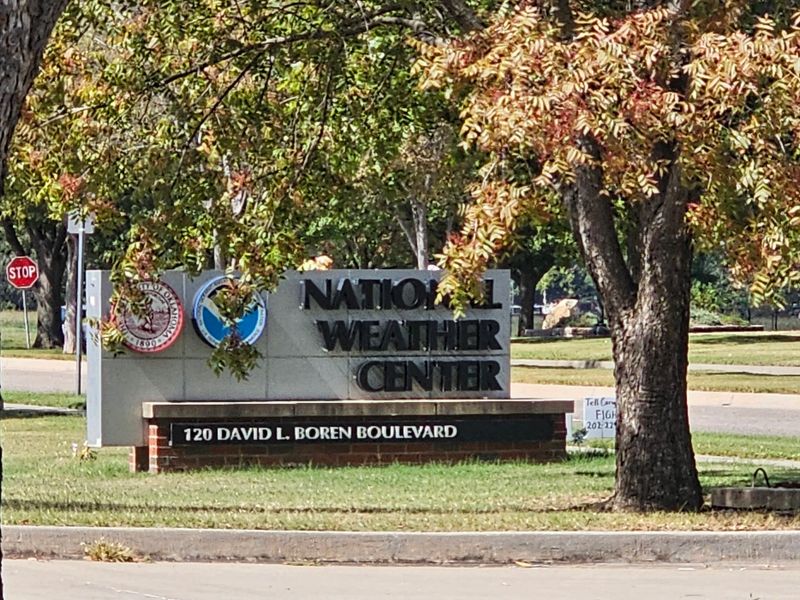
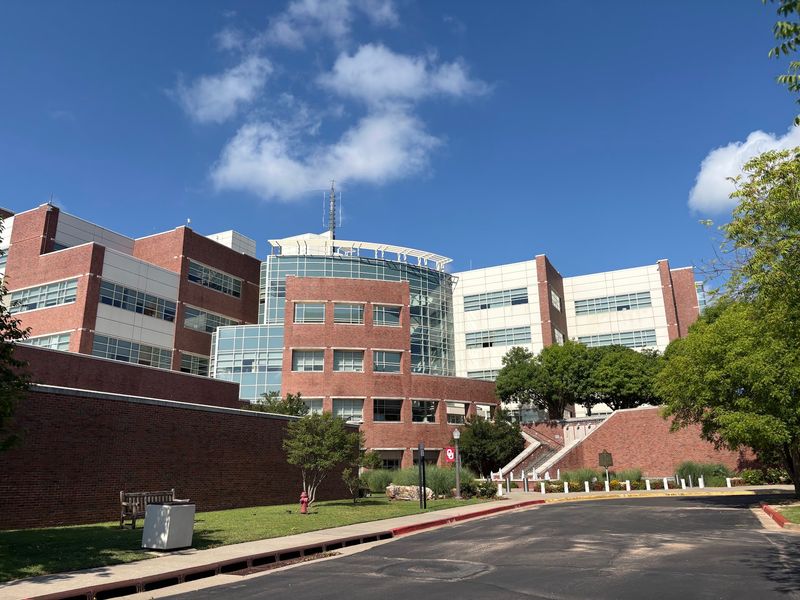
Getting here is easier than you might guess, because it is not tucked away on some back road in the middle of nowhere. You are looking for the National Weather Center at 120 David L Boren Boulevard, Norman, OK 73072, which sits on the South Research Campus of the University of Oklahoma.
The drive over is calm and straightforward, and the building itself is hard to miss once you get close, since it stands tall with a lot of glass catching whatever light the sky is offering that day. If you are coming from the Oklahoma City area, it is a short and simple trip, which makes it easy to fold into a bigger day of wandering around Norman.
I would suggest giving yourself a little extra time to park and find the main entrance, mostly because the campus is spread out and you do not want to be rushing.
One more thing worth knowing is that this is a working facility with federal offices inside, so the entrance experience feels a bit more official than a typical attraction. Show up relaxed, allow some buffer time, and the whole thing goes smoothly.
Standing Inside The Storm Prediction Center
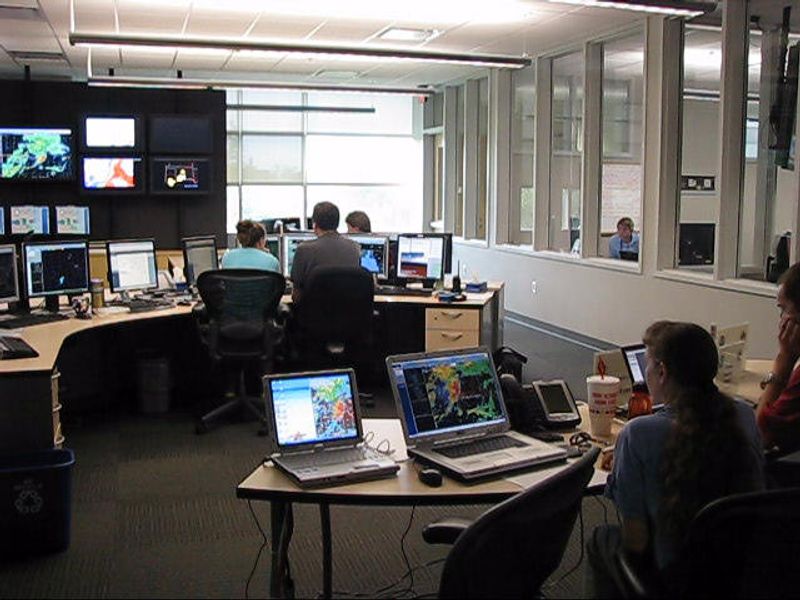
Here is the part that made me stop and reread the tour description. The Storm Prediction Center, which is part of NOAA, operates inside this building, and it is the office responsible for forecasting hazardous weather across the lower forty eight states.
Those tornado watches you hear announced on the news, the ones that make everybody check their phones and glance out the window? They come from this room.
Forecasters here look at the entire country and decide where conditions are lining up for something dangerous, sometimes days ahead of the first raindrop.
Seeing a place like that in person hits differently than reading about it, because you realize the warnings are not generated by some faceless machine somewhere. Real people sit at real desks, surrounded by screens full of data, making calls that affect millions.
Tour groups get to observe the operations area, and the mood inside depends entirely on what the atmosphere is doing that day. On a quiet afternoon it feels calm and studious, and on an active day you can sense that everyone has their full attention on the maps in front of them.
Peeking Into The Norman Forecast Office
Ever wonder who writes the forecast for your specific town? The National Weather Service Norman Weather Forecast Office lives in this same building, and it covers a big stretch of counties across central and western Oklahoma plus a slice of northern Texas.
Walking past those workstations gives you a real sense of how much information one forecaster juggles at once. There are radar loops, satellite images, computer model runs, surface observations, and reports coming in from spotters out in the field, all needing to be read and weighed quickly.
The thing I keep thinking about is how local this work is. Somebody in that room is deciding whether a small town needs a warning right now, which is about as direct as public service gets.
Tours give you a behind the scenes look at how storms get tracked minute by minute and how forecast models are constantly being tested and improved. If you have kids who like maps, charts, or anything that beeps and blinks, this is the room that will hook them.
It is also a good reminder that the weather app on your phone starts with people like these.
Where Severe Storm Research Actually Happens
Beyond the forecast desks, there is a whole side of the building focused on figuring out things we do not fully understand yet. The National Severe Storms Laboratory, usually shortened to NSSL, is where scientists and engineers work on better ways to observe and predict violent weather.
Their whole mission comes down to saving lives and cutting down on damage, and they chase that by studying what actually causes severe storms to form and turn dangerous. Some of the work involves new radar technology, some involves testing warning methods, and some involves heading out into the field when storms are firing.
What makes this part of the tour interesting is the sense of unfinished business hanging in the air. The atmosphere still keeps plenty of secrets, and these are the folks trying to pry them loose one experiment at a time.
You start to appreciate that today’s routine warning was once somebody’s research project. Advances that seem obvious now, like knowing which storms are likely to produce a tornado, came out of years of patient study in labs exactly like this one.
Oklahoma is the natural home for that kind of work.
The Observation Deck With A Wide Open View
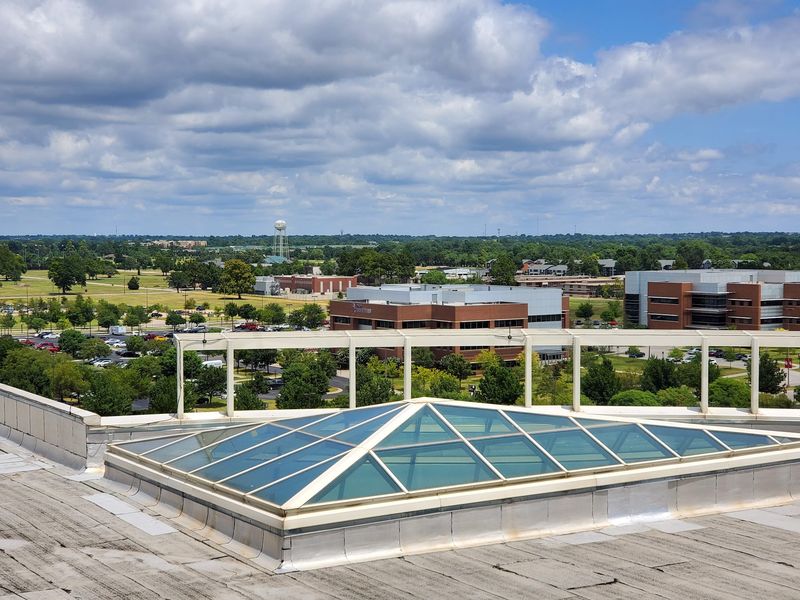
An observation deck inside a weather building sounds almost too fitting, right? Tours usually include a stop at the McCasland Family Observation Deck, and it is easily one of the most memorable spots in the whole place.
From up there you get a long, uninterrupted view across the flat land surrounding Norman, which is exactly the kind of horizon that makes Oklahoma skies so dramatic. On a day with big clouds building in the distance, you understand instantly why this state became the center of storm science.
The deck also gives you a sense of scale for the building itself, and how everything you just walked through fits together underneath you. It is a nice pause in the middle of a tour packed with screens and technical talk.
Bring a camera, because the sky does the heavy lifting here and you will probably want a photo of whatever it is doing while you are standing there. Even a plain blue afternoon looks enormous from that vantage point.
Take a minute up there to just look out and think about the work happening in the rooms below you.
Science On A Sphere Steals The Show
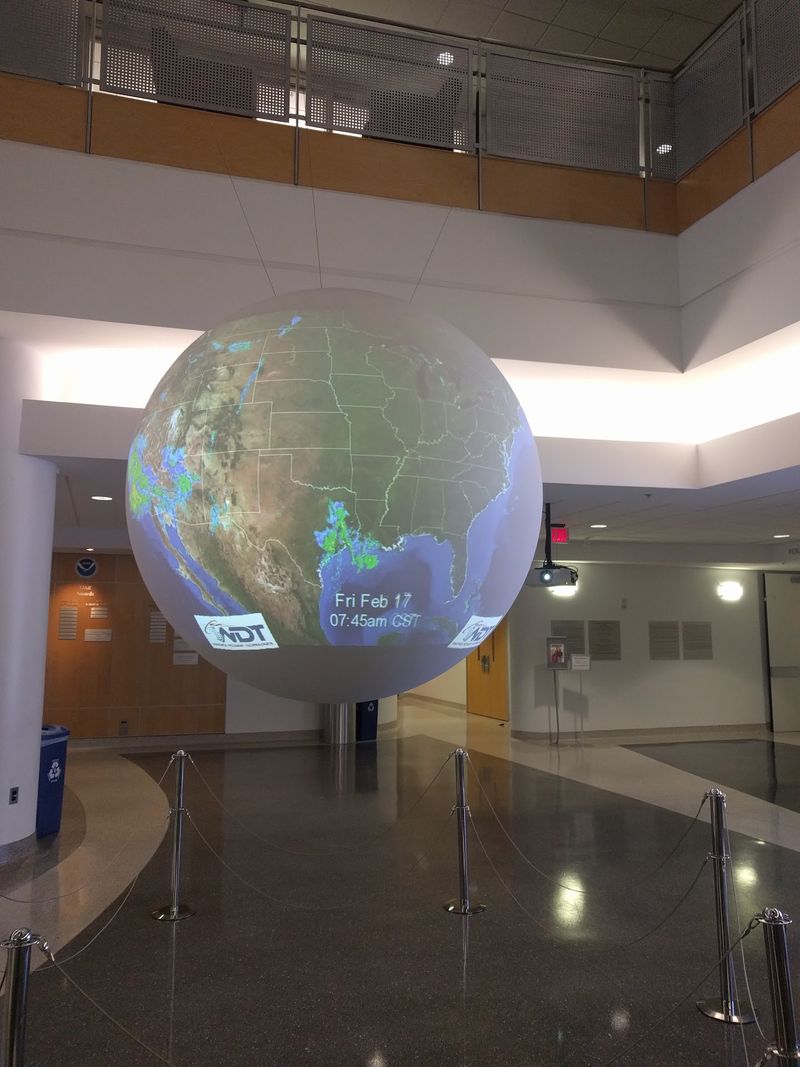
Even if you never book a tour, there is something on the first floor worth the drive by itself. Science on a Sphere is a big suspended globe that displays animated images of Earth, and watching it turn is weirdly hypnotic.
Storms swirl across the oceans, temperatures shift colors, and climate patterns move in ways that a flat map could never show you properly. It takes complicated environmental processes and makes them make sense in about thirty seconds of watching.
Kids tend to plant themselves in front of it and refuse to move, which honestly seems like the right response. Adults do the same thing, they just pretend they are being educational about it.
The first floor exhibits are open to the public, so this is the easy, low commitment way to experience the building if your schedule is tight or your reservation plans fell through.
Give yourself a few minutes to watch several different animations cycle through, because each one tells a different story about the planet. Hurricanes forming over warm water and ocean temperature maps are the ones that usually get the biggest reaction.
Movie Props Sitting Next To Real Instruments
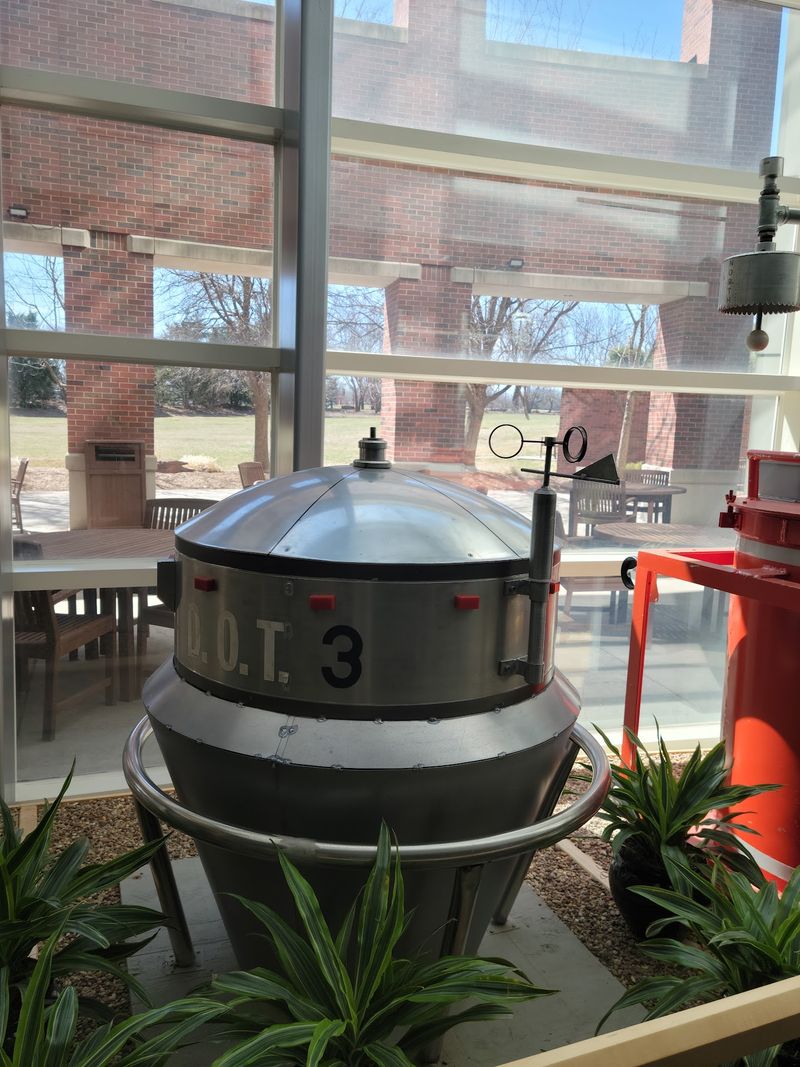
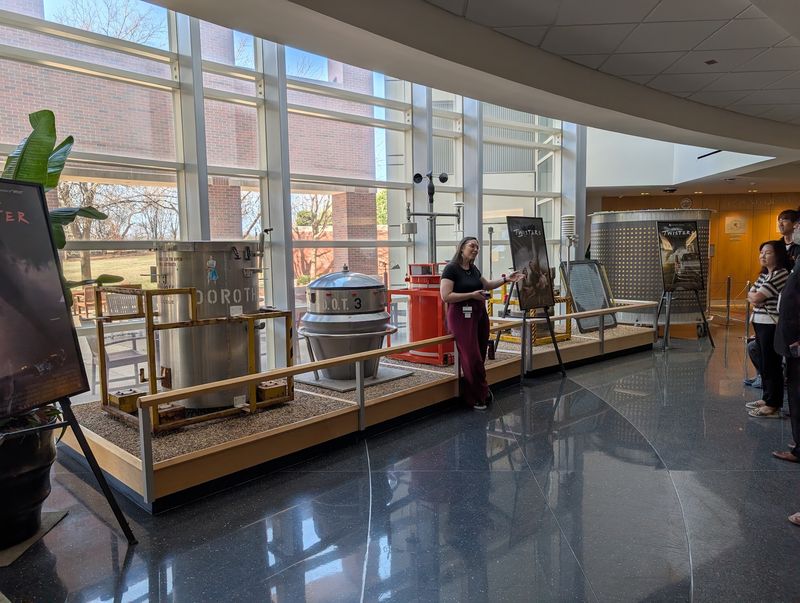
Okay, this detail delighted me more than it probably should have. Props from the movie Twister are on display inside the building, including Dorothy and D.O.T., the tornado testing gadgets from the film.
Seeing Hollywood equipment sitting near genuine NOAA field instruments creates this funny contrast, where the fictional version of storm chasing shares space with the real thing. It also makes a decent point about how much that movie shaped the way people picture tornado research.
There is even a spot inside called the Flying Cow Cafe, named after one of the most famous scenes from the film, which tells you the scientists here have a sense of humor about their pop culture fame.
If you grew up watching that movie on repeat, standing next to those props is a small thrill you will not expect from a research facility. And if you have never seen it, the display still works as a look at how storm data gets collected out in the field.
It is the kind of quirky touch that makes a place stick in your memory long after the visit.
What To Sort Out Before You Go
Before you get too excited and just show up, there are a couple of things you need to handle first. Tours are free to the public, which is great, but reservations are required and walk ins are not allowed under any circumstances.
Plan on booking several weeks ahead, since the tour slots fill up and there is no way to talk your way in at the door. It is a security requirement rather than a popularity thing, and it makes complete sense given the federal offices operating inside.
Anyone over eighteen needs to bring a government issued ID, so double check that everyone in your group has theirs before you leave the hotel. Nothing would be more frustrating than driving out there and getting turned away over a forgotten wallet.
Wear comfortable shoes, because you will be walking through a large building with multiple floors and long hallways.
Once all that is handled, you get to spend a stretch of time inside one of the most fascinating working buildings in Oklahoma. Honestly, for a stop that costs nothing, the planning effort pays off in a big way.
