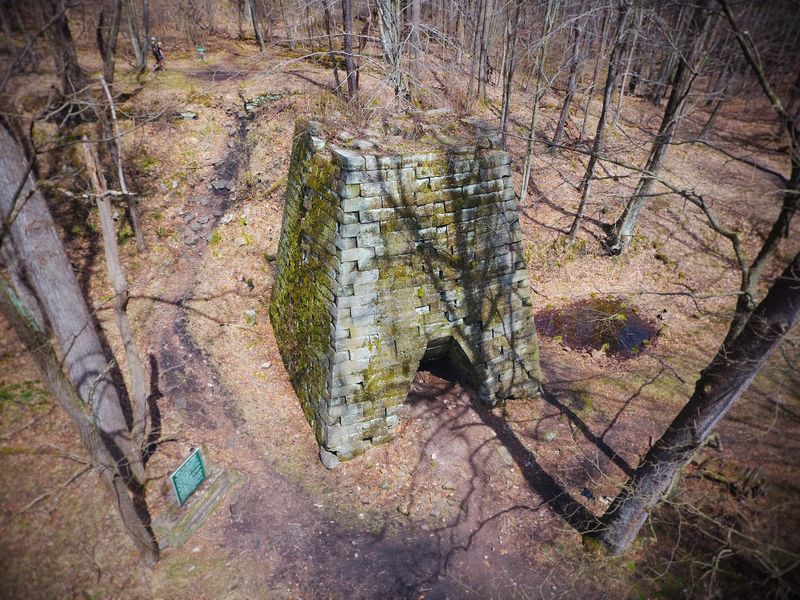
Around 200 people once worked at a single stone furnace that now sits a mile down a rocky trail in the woods. Today, the loudest sound around it is a creek.
That furnace reportedly turned out about four tons of iron a day. A whole village may have grown up around it, with homes, a store, a church, and a school.
Now the trees have taken almost all of it back.
I love finding places like this in West Virginia. They remind me that our hollows weren’t always quiet.
Folks raised families and earned a living in spots that feel completely remote today.
I can’t imagine the noise, the smoke, and the steady work that filled this valley. So how does a busy little town simply fade into the forest?
A Stone Giant Waiting At The Bottom Of The Trail
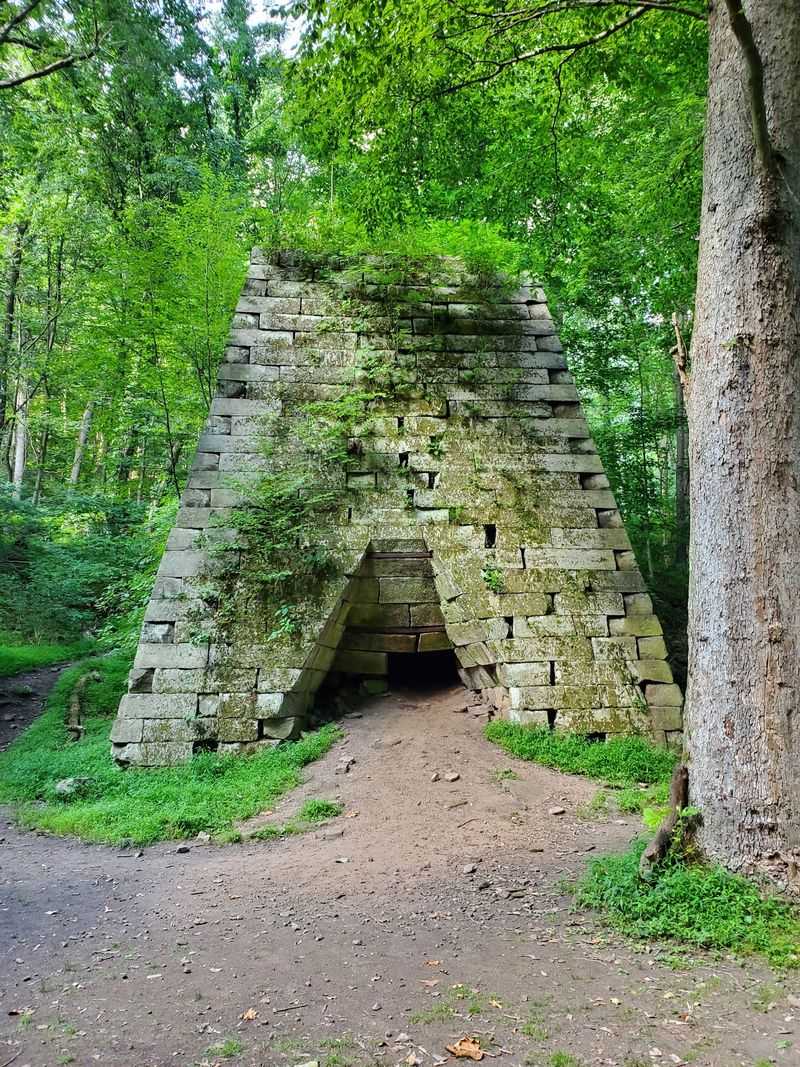
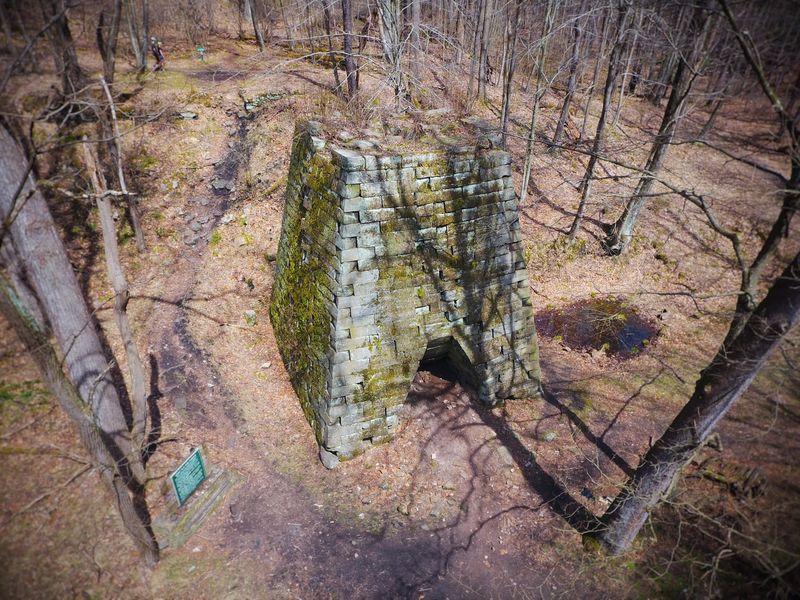
Down a rocky old log road in the woods stands a square stone tower built nearly two centuries ago. Meet the Henry Clay Furnace, one of the most surprising sights in Coopers Rock State Forest.
The furnace sits in Monongalia County, not far from Morgantown, West Virginia. Coopers Rock is better known for its famous overlook, but this ruin tells a deeper story.
Workers built the structure from cut stone in the mid-1830s. It was a blast furnace, which means it melted iron ore into rough bars called pig iron.
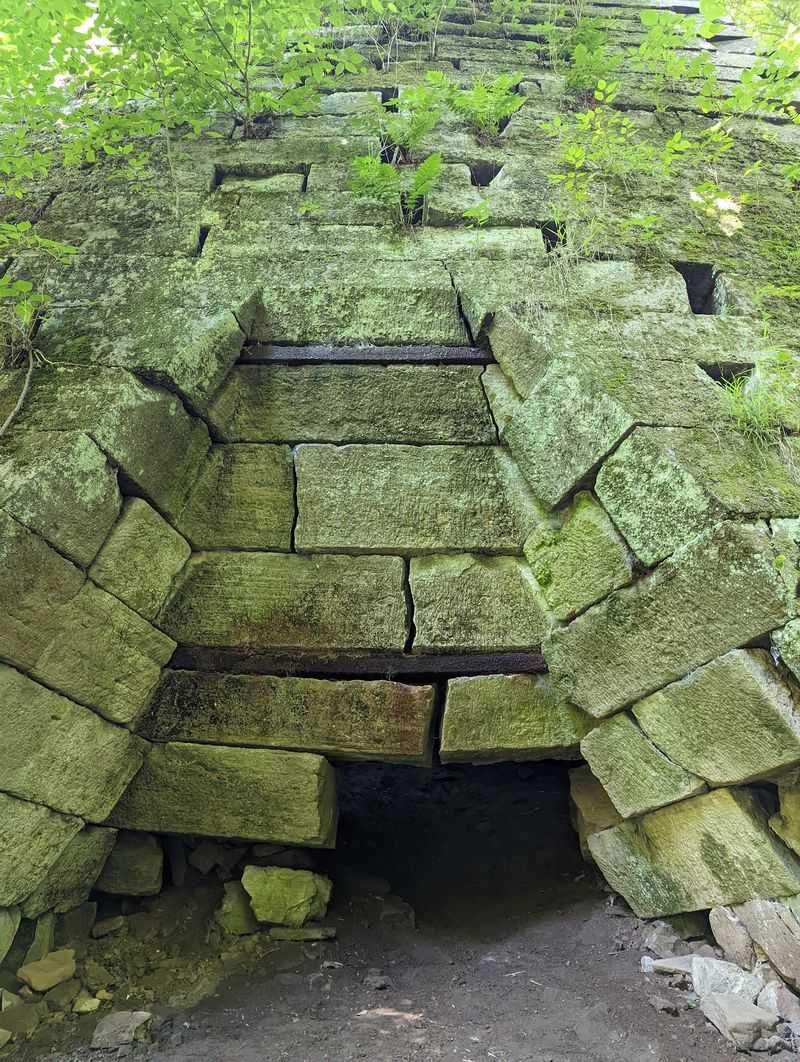
The Henry Clay Furnace still stands remarkably intact today. Its thick walls and tapered shape make it look a little like a pyramid somebody forgot in the forest.
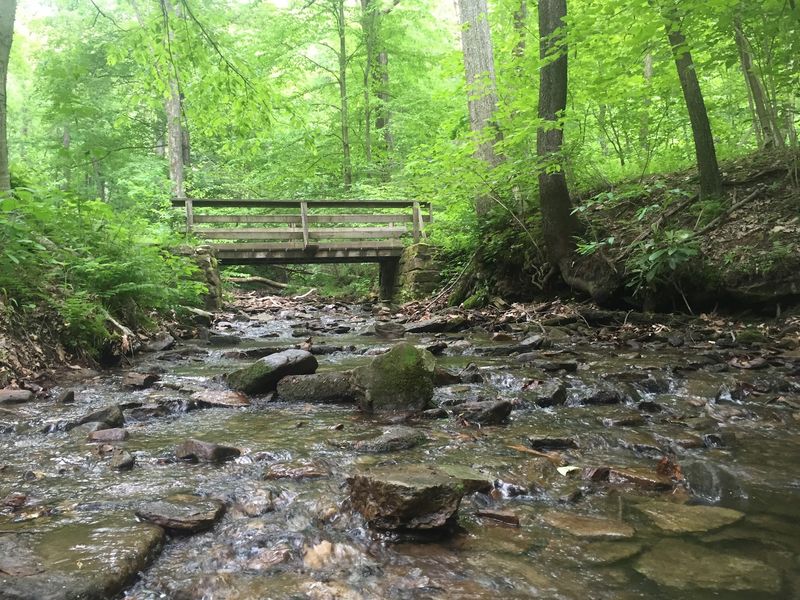
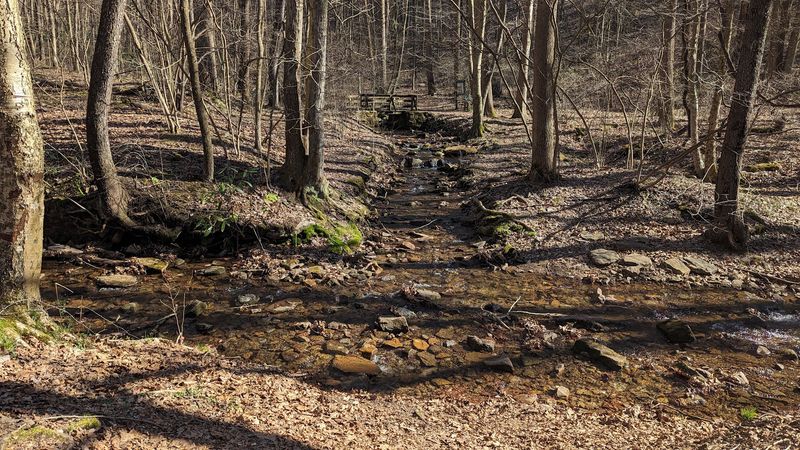
A small stream runs nearby, and two creeks meet close to the site. The setting feels calm, green, and miles away from anything industrial.
That calm is the funny part. This spot was once anything but quiet, and the furnace was the reason people lived here at all.
Historical signs near the ruin share background on the operation. They help connect the stone in front of you with the busy community that once surrounded it.
Two Hundred Workers And A Whole Village In The Woods
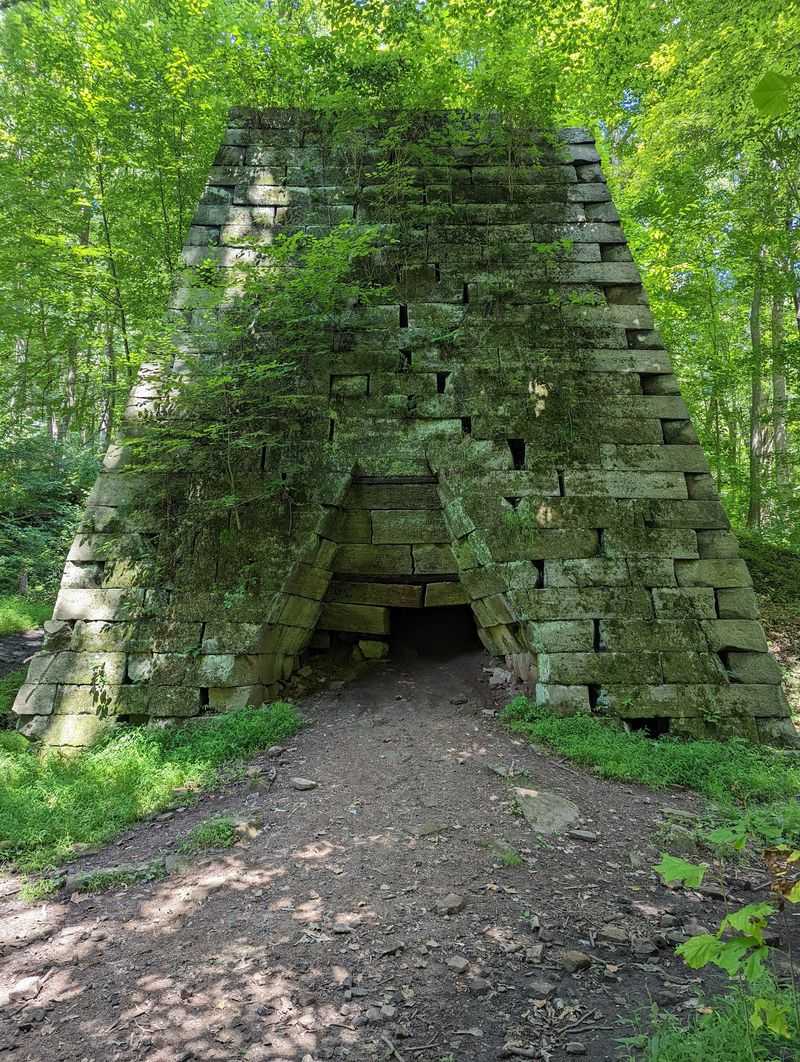
Two hundred people. That’s roughly how many workers the Henry Clay Furnace reportedly employed during its busiest years.
For a remote West Virginia valley in the 1830s and 1840s, that number is huge. Plenty of small towns today couldn’t fill that many jobs at one business.
The furnace didn’t just need people tending the fire. It needed miners digging ore, woodcutters felling trees, colliers making charcoal, and teamsters hauling loads.
Historical accounts say a real community grew around all that labor. Around 100 houses may have stood nearby, along with a general store, a church, and a schoolhouse.
Think about kids walking to school past a roaring furnace. Families likely bought flour and cloth at the company store, then gathered for worship on Sunday.
Almost none of that village remains now. The houses, store, and church have faded away, leaving the furnace as the last solid reminder.
I find that both a little sad and really inspiring. It shows how hard-working mountain families built full lives wherever the work took them.
Those families deserve to be remembered. Standing near the stone walls makes that history feel a lot more personal.
Steam Power Made This Furnace Ahead Of Its Time
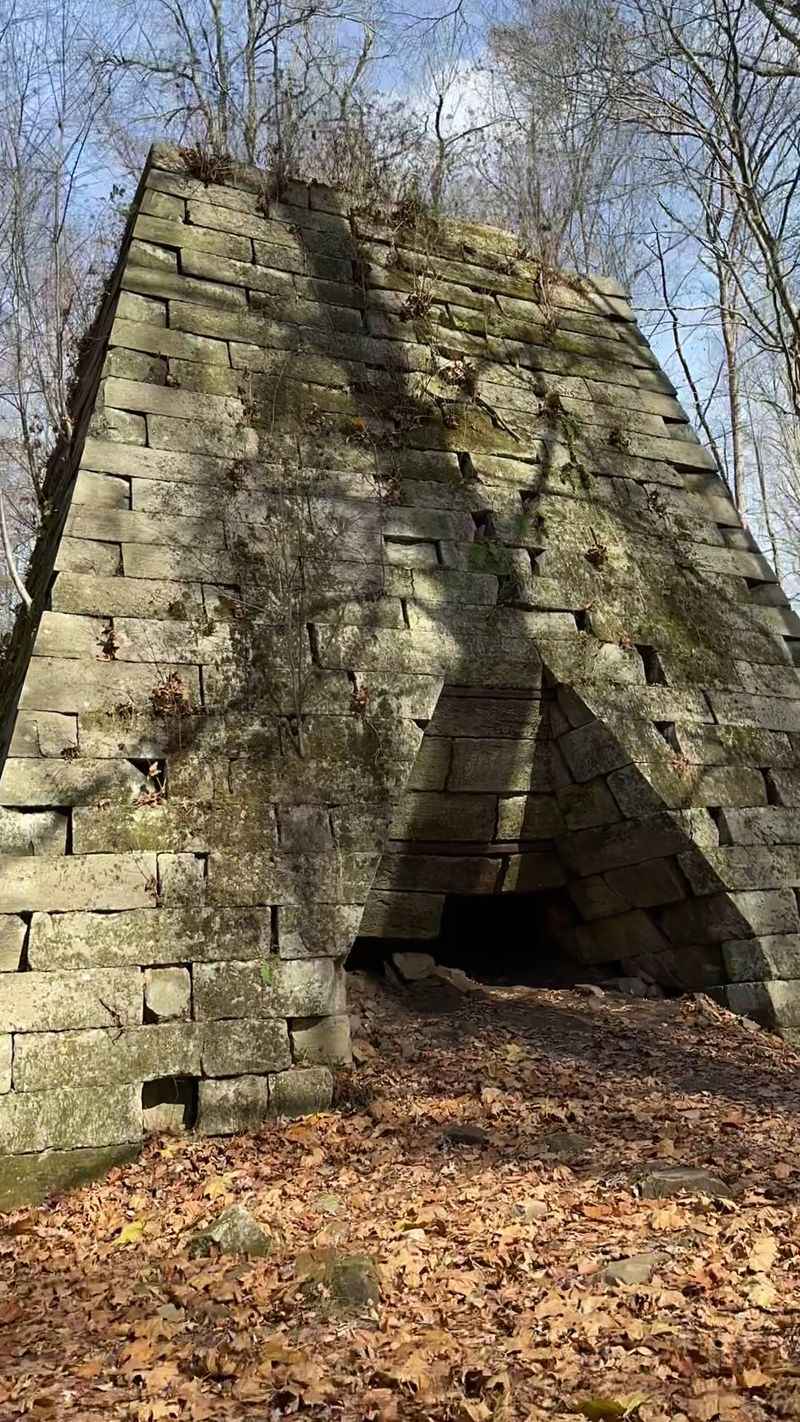
Most early iron furnaces relied on water wheels to push air into the fire. The Henry Clay Furnace reportedly did something bolder.
Historical sources describe it as the first steam-powered blast furnace in what was then western Virginia. Remember, West Virginia didn’t become its own state until 1863.
Steam power meant a stronger, steadier blast of air. More air meant hotter fires and more iron, without depending entirely on creek levels.
The results were impressive for the era. The furnace may have produced about four tons of pig iron every day.
Fuel came from the surrounding forest. Workers burned timber into charcoal, and that charcoal kept the fire going around the clock.
Iron ore and limestone came from nearby land too. Everything the furnace needed was close at hand, which explains why someone built it in such a rugged spot.
Much of that iron reportedly went to the cut-nail industry in the Monongahela Valley. So some early buildings in the region may have been held together by nails born right here.
That’s a pretty big legacy for one stone tower. Not bad for a structure most passing drivers never even know exists.
How Iron Floated Its Way To Market
Making four tons of iron a day is one thing. Getting it out of a steep, wooded valley was a whole other puzzle.
The answer, for many years, was the Cheat River. Historical accounts say pig iron from the Henry Clay Furnace traveled downstream toward bigger markets.
River travel made sense in an age before good roads. The Cheat connected this remote spot to the Monongahela Valley and the busy towns beyond.
Moving raw materials took clever planning too. Wooden tramways were reportedly built to carry iron ore from nearby pits to the furnace.
Picture the coordination involved, minus the forced imagery. Ore, charcoal, limestone, and finished iron all had to move by muscle, mule, cart, or current.
That kind of system kept dozens of jobs busy beyond the furnace itself. It’s a big reason the workforce grew so large.
The Cheat River still winds through this part of West Virginia today. Coopers Rock’s famous overlook gives you a sweeping view of the gorge it carved.
Seeing the river from up high adds context to the furnace below. Suddenly that long trip downstream feels a lot more real.
The Fires Went Out, But The Walls Stayed Put
Boom times rarely last forever, and iron was no exception. The Henry Clay Furnace reportedly shut down around 1847.
Some accounts suggest it may have run off and on until 1868. Either way, its working days ended well over a century ago.
Charcoal furnaces like this one ate through huge amounts of timber. As bigger mills and new fuels took over, small operations in the mountains often couldn’t keep up.
Once the fire stopped, the reason for the village stopped too. Families moved on, buildings fell apart, and the forest slowly crept back in.
What amazes me is how much of the furnace survived. Its stone walls still stand tall and solid after all those winters.
The site gained historic recognition in the late 1960s. That helped protect it as a piece of West Virginia’s early industrial story.
Today the ruin feels peaceful rather than forgotten. Moss and trees soften the edges, but the shape is still easy to read.
It’s a quiet reminder that prosperity in the mountains came in waves. The people who rode those waves left behind something sturdy enough to visit.
Downhill Is Easy, The Climb Back Builds Character
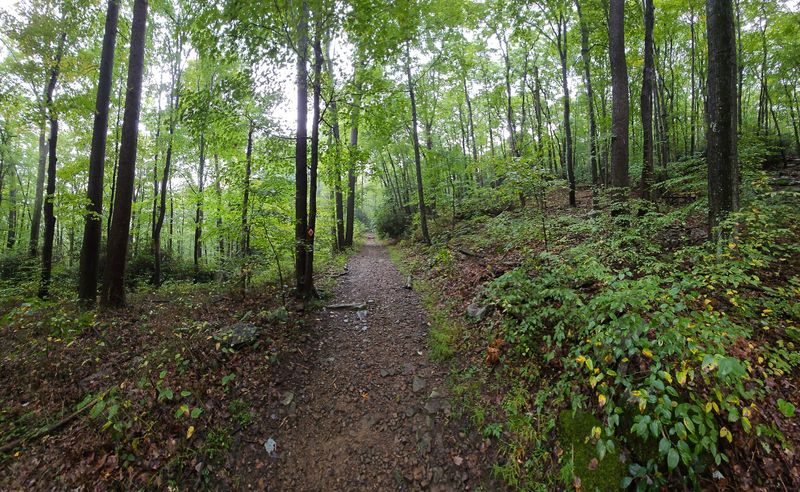
Gravity is your best friend on the way in. The trail to the Henry Clay Furnace heads mostly downhill along a rocky old log road.
From the nearby parking area, the walk is roughly a mile each way. That puts the round trip at about two miles for most people.
Here’s the catch your legs will notice. Everything you descend on the way down, you’ll climb on the way back out.
The path can be rocky in spots and muddy after rain. A stream crosses parts of the route, so sturdy footwear is a smart call.
Families with young kids make the trip, though little ones may want a lift on the uphill stretch. Taking breaks is part of the fun anyway.
Longer options exist if you want more miles. The Clay Run Trail and routes from McCollum Campground can connect you here, adding a bigger workout.
Summer heat and humidity can make that return climb tougher. Bring water, start early on hot days, and give yourself plenty of time.
The effort pays off when the stone walls appear through the trees. Few rewards at the end of a trail feel this historic.
Creeks, Quiet, And A Picnic-Worthy Clearing
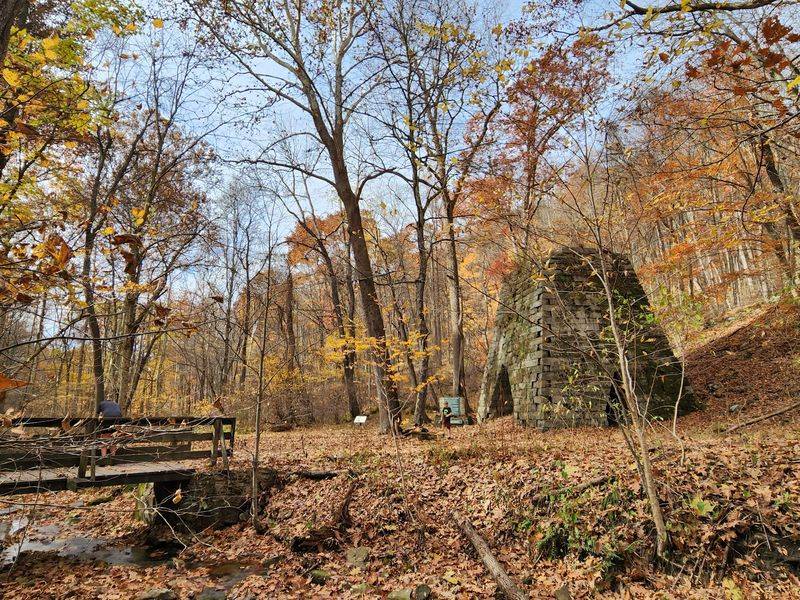
Bring a sandwich. The area around the furnace makes a lovely place to rest before tackling the hike back up.
A clear stream flows close by, and two creeks come together near the site. The sound of moving water sets a relaxed mood right away.
Tall hardwoods shade much of the valley. On a foggy morning, the furnace rising through the mist looks almost storybook.
Fall brings its own charm here. Just keep an eye out for acorns dropping from high branches, because they come down with surprising speed.
History lovers will enjoy the informational signs near the ruin. They explain the furnace, the workers, and the village that once stood here.
Photographers get plenty to work with too. Old stone, flowing water, and layered forest make easy, striking shots in any season.
The furnace also suits curious kids who like a destination. Telling them a whole town once lived here tends to spark plenty of questions.
Solo hikers looking for calm will find it as well. The setting feels secluded, which makes the history feel even more striking.
Planning Your Trip Without Any Guesswork
Good news for early birds and late starters alike. The furnace site is listed as open 24 hours a day, every day of the week.
Of course, daylight is your real schedule on a rocky forest trail. Plan to hike out before dark for safety.
The site’s listed address is Clay Furnace Trail, Masontown, WV 26542. It sits within Coopers Rock State Forest, which is managed through West Virginia State Parks.
Most people reach Coopers Rock from Interstate 68 east of Morgantown. From there, park near the trail access and follow signs toward the furnace.
Parking is generally available near the trailhead. The main Coopers Rock area also has restrooms and a gift shop, handy before or after your hike.
Wear shoes with good grip, since the path stays rocky and can turn muddy. Pack water, snacks, and maybe a light layer for cooler valley air.
Hot summer days call for extra caution and extra water. Spring and fall often make the climb back far more pleasant.
Check with the state forest before you go for any trail updates. Conditions in the mountains can change quickly after storms.
Why This Stone Tower Deserves A Spot On Your List
Some history lives in museums behind glass. The Henry Clay Furnace sits right out in the open, waiting at the end of a forest trail.
That’s what makes it special to me. You get the fresh air of a good hike and a real story about West Virginia working families.
Around 200 workers once kept this place running. Their homes, church, store, and school may be gone, but the furnace keeps their memory standing.
It also fits easily into a bigger Coopers Rock day. Catch the famous overlook, explore a few trails, then head down to the furnace.
The hike won’t scare off most active folks. Just respect that uphill return, and you’ll be fine.
Bring the grandkids, a camera, or simply some curiosity. Each group seems to find a different reason to love it.
Maybe your own family has roots in iron, coal, or timber. If so, this old furnace might feel a little like visiting relatives.
Go see it while the leaves are green or glowing gold. Then tell somebody that a busy town once thrived in those quiet woods.
