Some of the best stops in Oklahoma are the ones you almost drive right past. I pulled off the highway expecting nothing more than a stretch of the legs, and ended up standing inside a tiny stone-and-block building older than most of the roads around it.
The door was open, the wind was doing all the talking, and I stayed a lot longer than the ten minutes I planned. If you love history you can actually walk into without paying a dime, keep reading.
A Tiny Lockup At The Edge Of The State Line
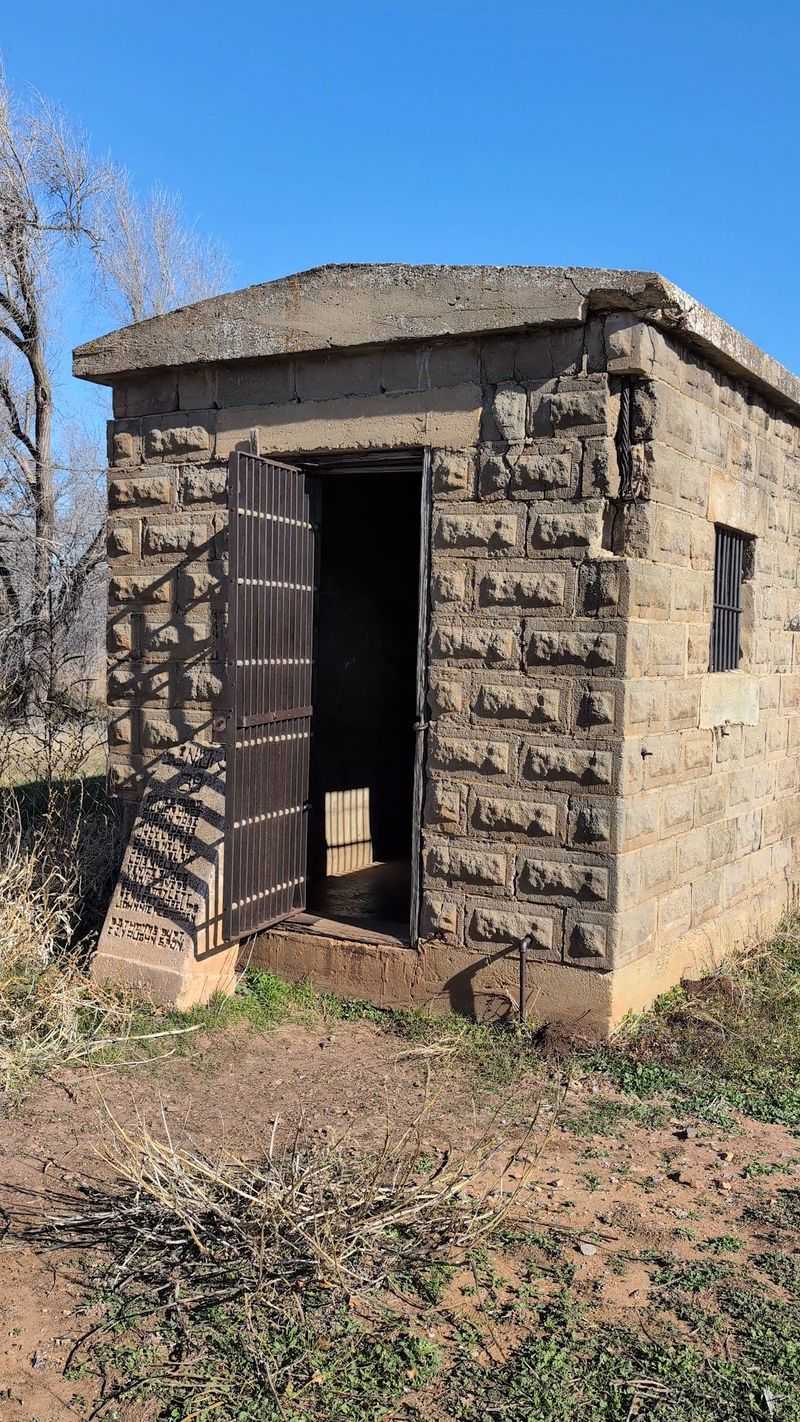
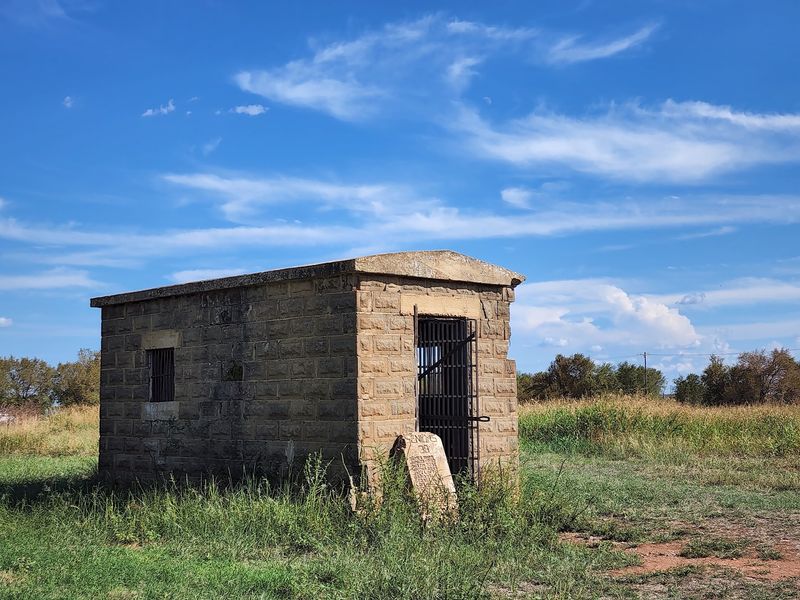
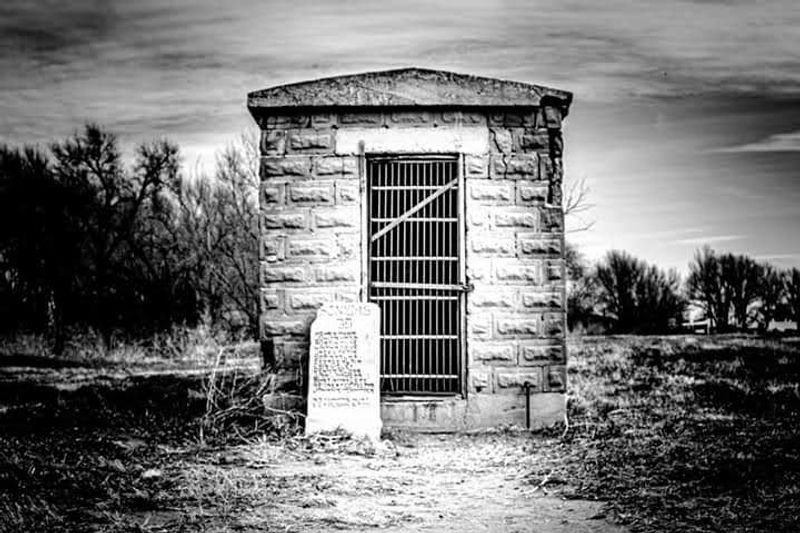
Out on Main Avenue in Texola, Oklahoma, at the corner of 4th Street, sits a squat little building that measures about the size of a backyard shed. Locals and road-trippers call it the One Room Jail, and the name is exactly accurate.
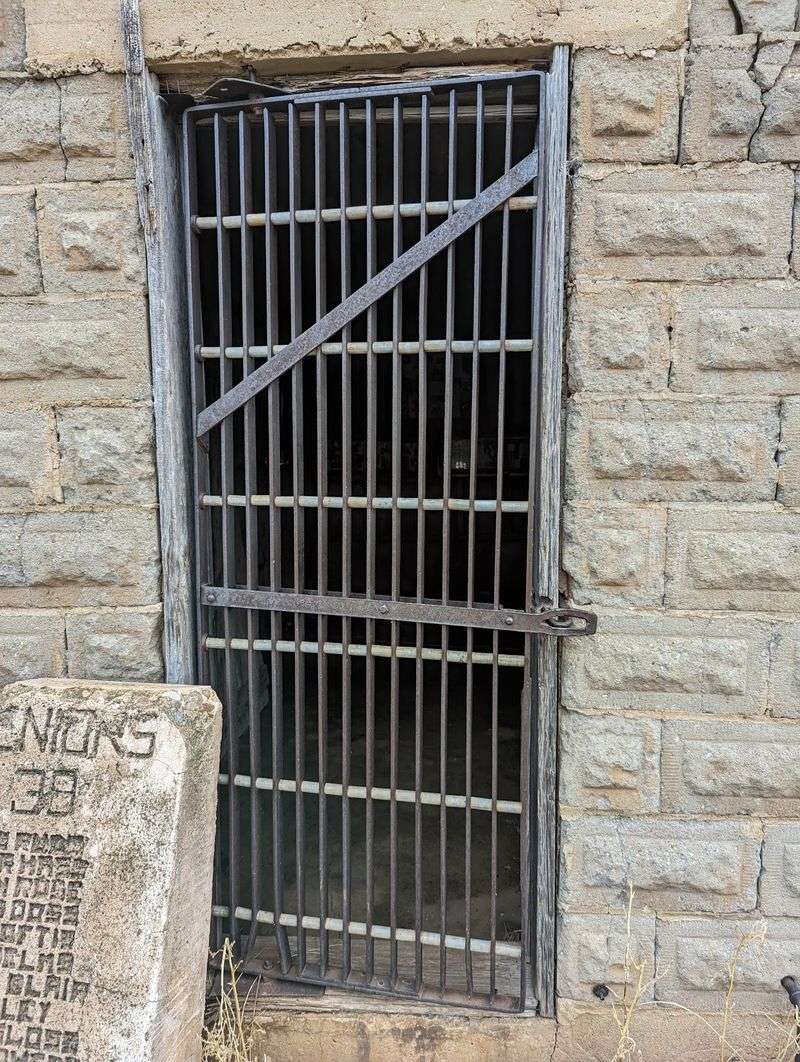
One room, one iron-barred door, one iron-barred window.
Texola sits right against the Oklahoma-Texas line in Beckham County, the last Oklahoma town you pass before crossing over on Historic Route 66. The jail is listed as a historical place museum, though there is no front desk, no gift shop, and nobody collecting tickets.
What makes it stick with people is the scale. You expect an old jail to loom.
Instead you get a boxy little structure you could walk around in twenty paces, sitting quietly in a town that has mostly gone still.
Visitors consistently describe it as a genuinely cool piece of American history parked in the middle of nowhere, and that mix of tiny and historic is the whole appeal. It rates 4.6 stars across 177 reviews, which is remarkable for a building with nothing inside but walls, air, and old stories.
Built Before Statehood Had Settled In
Dating the building gets a little slippery, which honestly adds to its charm. Some sources place construction in the late 1800s, others say sometime before 1910, and at least one pins it specifically at 1908.
Either way, you are looking at a structure that went up right around the time Oklahoma became a state in 1907. Reports say it was used until roughly 1910, meaning its working life was short even by frontier standards.
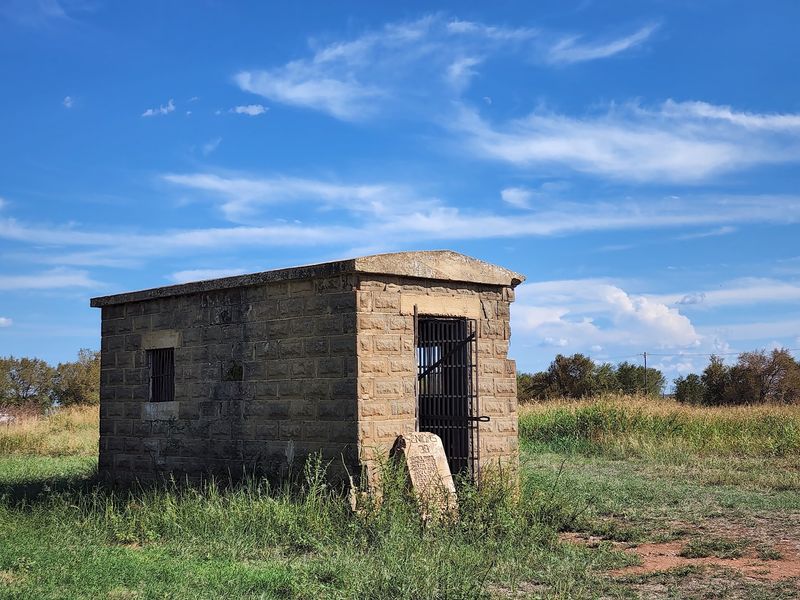
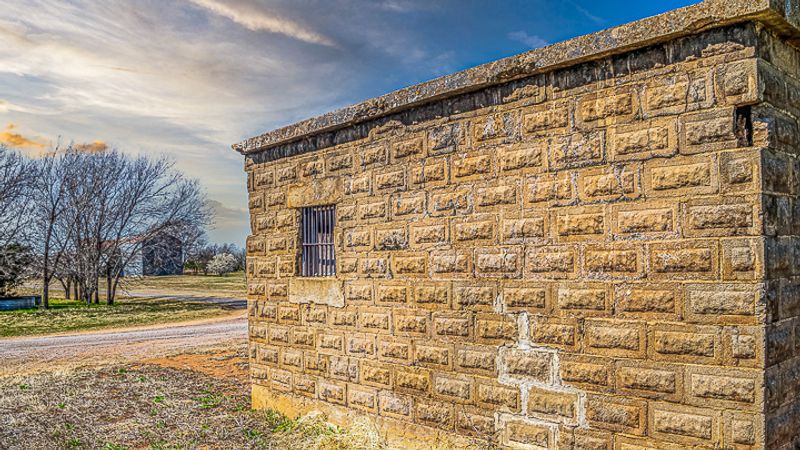
The construction is cinderblock, plain and unfussy, built by people who needed something sturdy and did not care about looking fancy. That practicality is likely why it outlasted almost everything else on the block.
Fun detail worth chewing on: Texola once counted around 500 residents in the early 1900s, a real town with schools and businesses and a need for a place to hold someone overnight. Today the population sits near 30.
Visitors often remark that the little jail looks surprisingly well preserved for its age, which says something about how it was put together more than a century ago.
The Iron Door You Can Actually Walk Through
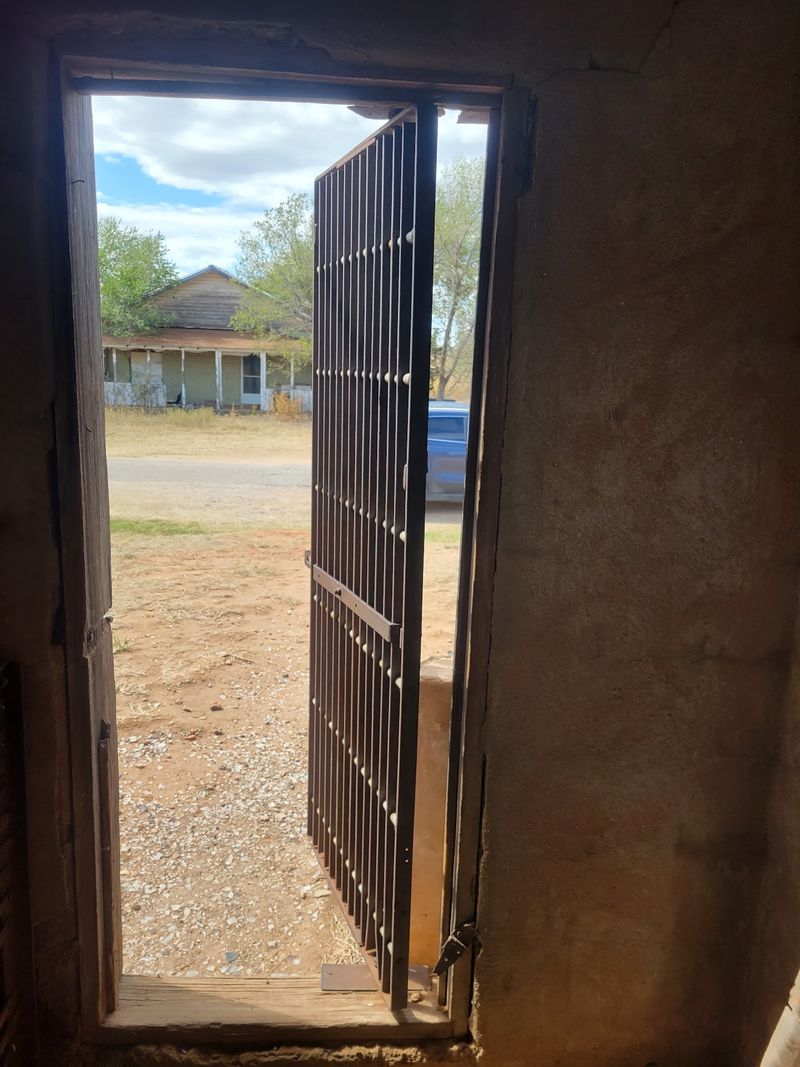
Here is the part that surprises almost everybody: the door is open. Not roped off, not behind plexiglass, not viewable by appointment.
The heavy iron-barred door typically swings wide, and you are free to step inside.
Plenty of travelers admit they did not realize the interior was accessible until they were standing right in front of it, and the discovery turns a quick photo stop into a real experience. One family described being genuinely thrilled to find they could go in.
The barred window on the side lets a shaft of daylight cut across the floor, which makes for the kind of photo that needs no filter. Photographers tend to linger here longer than they expect to.
A practical caution worth passing along: people have noted broken glass on the ground inside at times, so closed-toe shoes are the smart call, especially with kids along.
Standing in a space where someone was actually held over a century ago, with nothing between you and the past but a doorway, hits differently than reading a plaque from behind a rail.
Outlaw Posters, An Old Heater, And A Sleeping Pallet
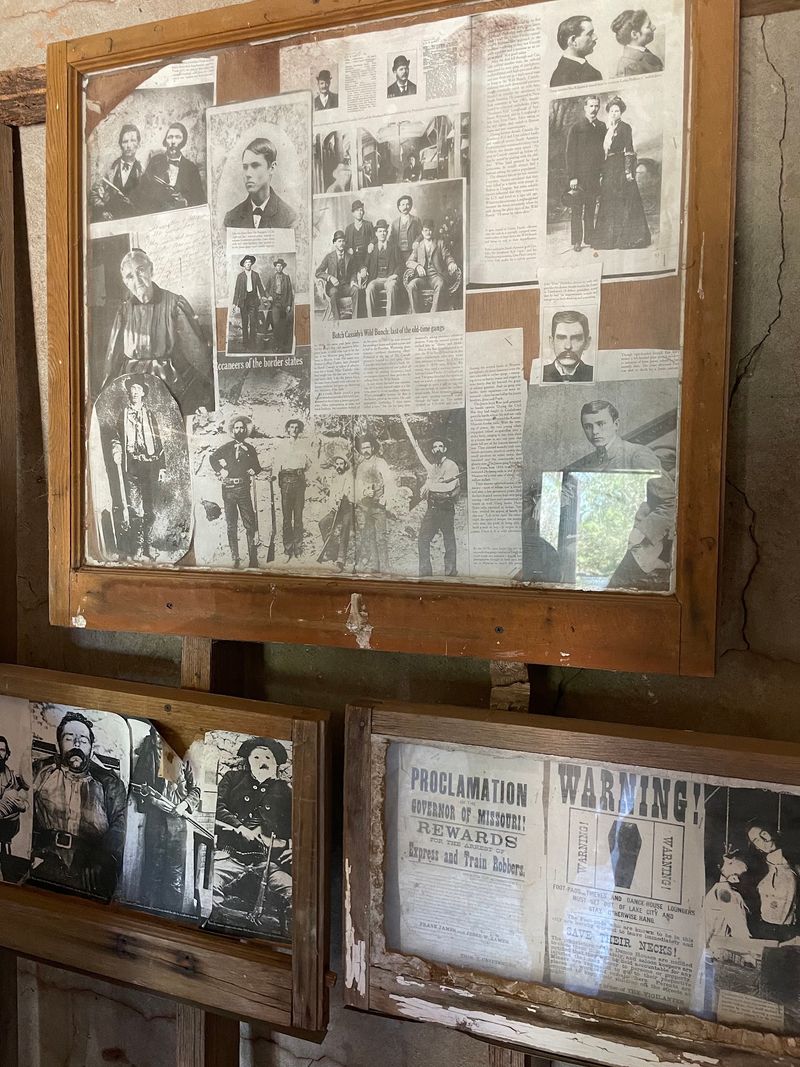
Step through the doorway and the single room reveals its odd little museum. Informational posters and articles line the walls, covering notorious figures of the old west including Billy the Kid and Butch Cassidy.
Worth being honest about: historians consider it unlikely that any of those famous names ever spent a night in this particular building. The displays are more about the era than about this exact address, which does not make them less fun to read.
Visitors have also spotted an old heater and a pallet said to have served as bedding for anyone locked up. Those humble objects tend to land harder than the outlaw posters do.
A handful of folks call the interior a touch eerie, mostly because of the imagery on the walls. Parents of younger children have mentioned that a few of the historical photos may not suit little ones, so a quick look before ushering the kids in is reasonable.
Most people report spending about ten minutes inside, reading, taking pictures, and imagining what a night in here felt like when the wind kicked up.
The Class Of 1938 Memorial Out Front
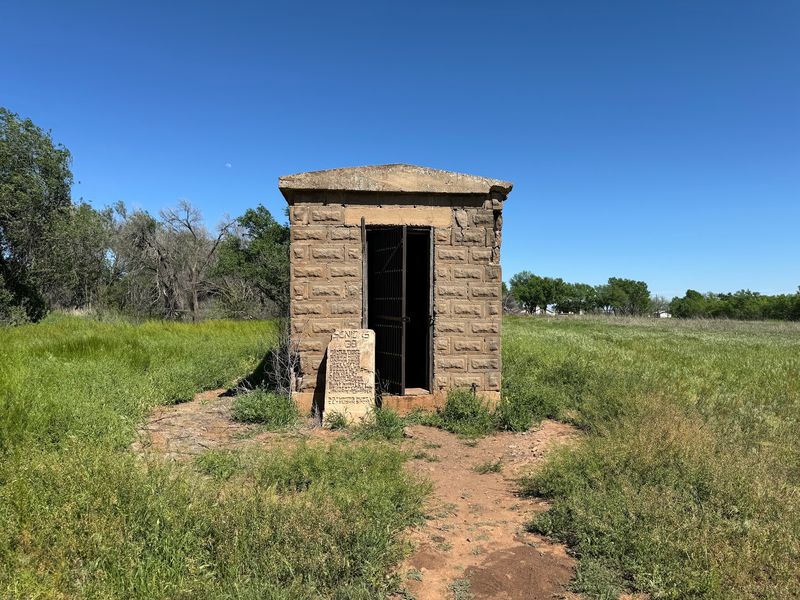
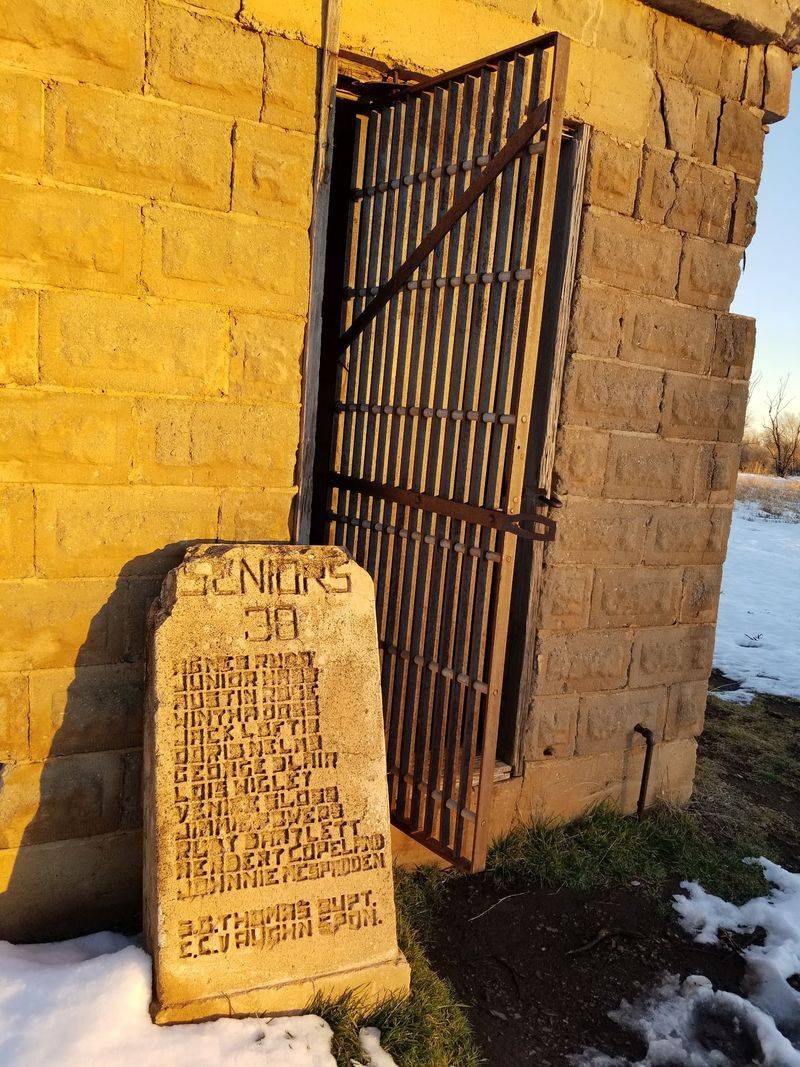
Just outside the jail, an easy detail to overlook, stands a stone memorial shaped something like a grave marker. It honors the Texola High School graduating class of 1938, with some accounts listing 1939.
There is something quietly moving about it. A school that no longer exists, in a town that has shrunk to a few dozen people, remembered by a slab of stone that somebody cared enough to place and maintain.
The marker is a reminder that Texola was not always a curiosity for passing travelers. Kids graduated here.
Families cheered. There were ceremonies and photographs and plans for the future.
Take a minute with it before or after you visit the jail. It reframes the whole stop, turning a quirky roadside oddity into something closer to a small town memorial.
Photographers often frame the marker with the jail behind it, which captures the two sides of Texola in a single shot: the hard practical side and the hopeful one.
No signage explains much, so most folks piece the story together afterward.
Walking A Town That Time Let Go
Ghost town is the phrase visitors reach for most often, and it fits. Texola went from roughly 500 residents in its early days to something like 30 today, and the buildings around the jail tell that story without a word.
Empty storefronts, sagging roofs, foundations returning to grass. One traveler compared the whole scene to a film set, which is exactly the vibe on a windy afternoon when nothing moves but tumbleweeds and your own shadow.
The quiet is the real attraction. There is no traffic hum, no chatter, just prairie wind pushing across an open plain that runs uninterrupted to the horizon.
Photographers and history buffs treat the whole town as the destination rather than the jail alone. Give yourself twenty or thirty minutes to wander the couple of streets that remain.
Do keep in mind that people still live here. A handful of residents call Texola home, so stick to public areas, do not enter private property, and leave everything as you found it.
Respect goes a long way in a town this small.
Wear And Tear On A Century-Old Landmark
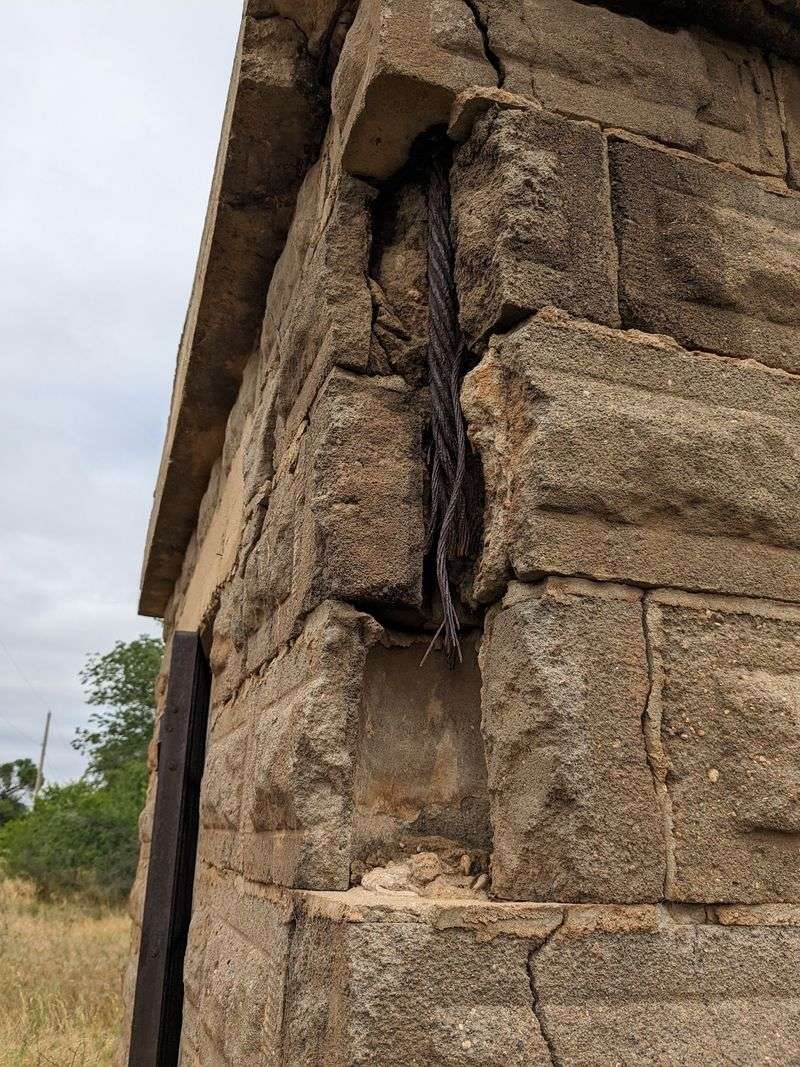
Honesty matters with a place like this. Not every visit lands the same way, because the jail has taken some abuse over the years.
Some travelers have arrived to find graffiti on the interior walls and informational posters torn or damaged, along with a similarly marked building across the street. One family mentioned their children felt uneasy going inside because of it.
Others, visiting at different times, have reported the opposite, describing the little jail as surprisingly intact with everything left alone. Conditions clearly shift depending on when you show up.
Nobody staffs the site, there is no fence and no caretaker on duty, so the building relies entirely on visitors treating it well. That is a lot to ask of an unlocked landmark on a highway shoulder, and mostly people rise to it.
The simple ask: take pictures, take nothing else, and leave no marks. A quick bag of trash carried out does more for this place than any donation box could.
Preservation here is genuinely a community effort, one carload of travelers at a time.
Who Gets The Most Out Of A Stop Like This
Route 66 completists are the obvious crowd. If your goal is collecting every roadside marker between Chicago and Santa Monica, Texola is a required box to check on the Oklahoma leg.
History-minded travelers get plenty here too, especially the kind who would rather stand in a real structure than read about one. The wall displays give you a few minutes of actual reading material.
Photographers do well. The barred door, the weathered block walls, and the empty streets around them make for strong frames in almost any light, though morning and late afternoon flatter it most.
Families can absolutely make it work, with one caveat already mentioned: a couple of the interior images lean grim for little ones, so a parent should step in first and decide.
Folks looking for restrooms, snacks, or anything resembling amenities should plan ahead. There is nothing like that here, and the nearest services are a drive away.
Anybody who enjoys the pure oddity of American roadside stops, the sort who pulls over for giant statues and old filling stations, will feel right at home.
Getting There, Hours, And What It Costs
Cost is the easy part: nothing. No admission, no parking fee, no donation required.
Free is hard to beat, especially on a long driving day.
Access is listed as open 24 hours every day of the week, though daylight is strongly recommended since there is no lighting and no paved walkway. Mornings work well, and several visitors have gone at first light and loved the emptiness.
Finding it is straightforward. The jail sits at Main Avenue and 4th Street in Texola, roughly a block off the historic Route 66 alignment, and it is reached easily from Interstate 40 near the Texas line.
From Oklahoma City, plan on something close to a two and a half hour drive west. Elk City and Sayre make sensible fuel and food stops on the way out or back.
Parking is informal roadside gravel and dirt, with room for a car or truck without trouble.
Weather deserves a mention: western Oklahoma gets serious heat in summer and hard wind nearly year-round, so a hat and water are practical calls.
Worth The Turn Off The Highway
Ten minutes. That is the average visit, and somehow it is enough to make the stop stick in your memory longer than a lot of pricier attractions do.
One traveler summed up the skeptics perfectly, noting that anyone dismissing this as just a shed probably thinks the Grand Canyon is just a hole. There is real truth in that.
The value is in what you bring to it.
If you need polished exhibits and a guided tour, this will underwhelm. If you like standing inside something old and slightly crooked, imagining a prairie town that once bustled and now barely breathes, it delivers.
Pair it with Elk City attractions or the other Route 66 stops scattered across western Oklahoma and you have a full day of cheap, unhurried driving through country most people only see at 75 miles per hour.
Bring a camera, wear sturdy shoes, and give Texola a slow lap before you leave.
Small, free, strange, and still standing after more than a century. That is a pretty good reason to take the exit.
