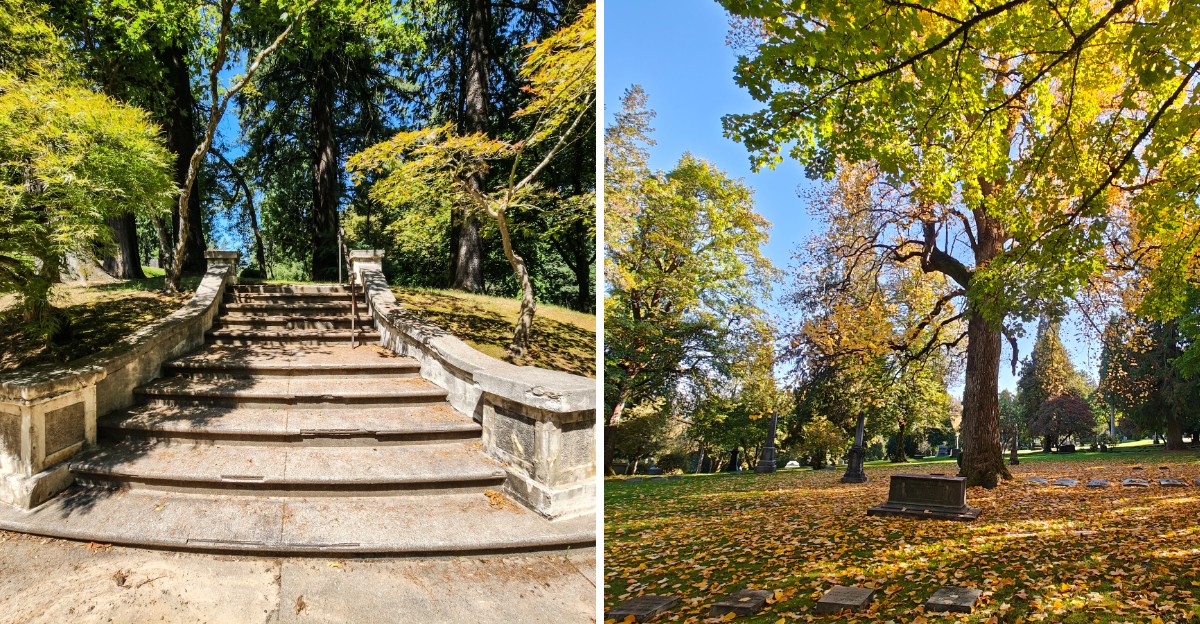
Dusty trails, saloon doors, and tales of frontier legends usually live in movies. Sometimes they rest quietly under old trees instead. Winding paths here lead past weathered stones that carry names from a rougher, wilder era.
Some belong to travelers, some to lawmen, and some to characters whose stories still get retold with a raised eyebrow. Visitors who wander through Oregon expecting only quiet scenery often leave with a head full of history.
Finding these stories takes curiosity, since nothing shouts for attention. A slow walk and a little reading do all the work.
Bring comfortable shoes, keep your voice low, and follow the paths with an open mind. History hides in the calmest places, and Oregon has tucked a surprising slice of the Old West right here.
Virgil Earp, a Lawman Far From Tombstone
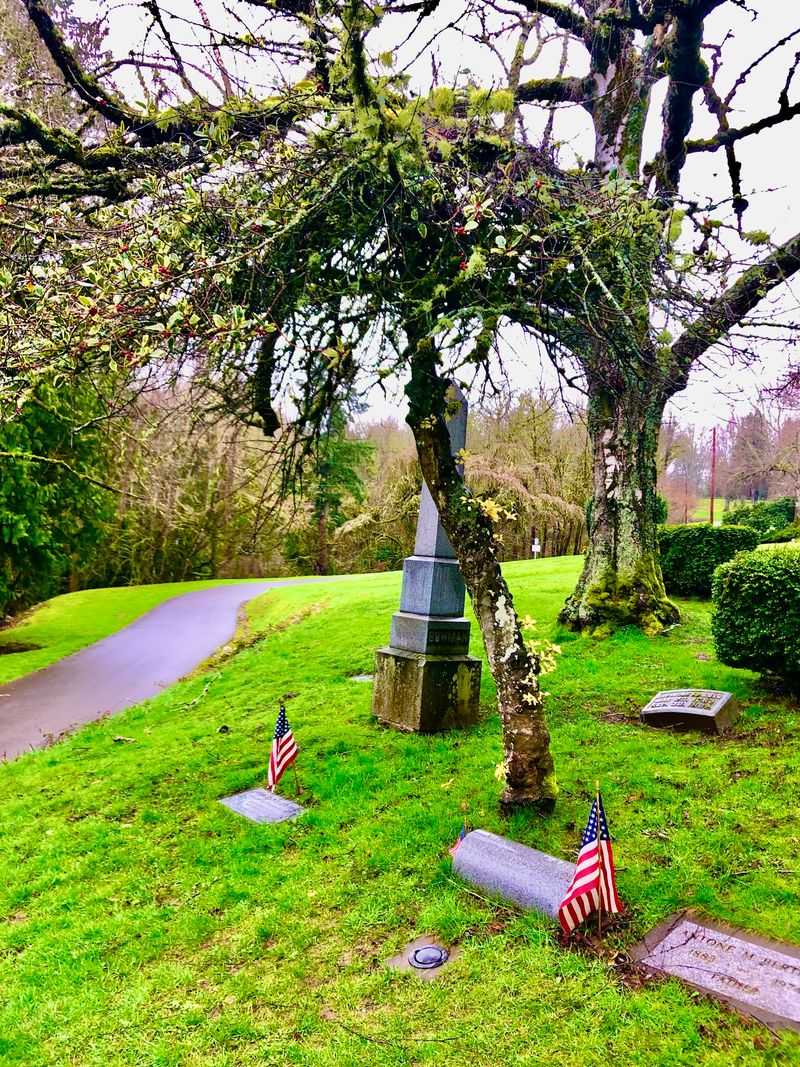
My first goal was simple. Find Virgil Earp. Yes, that Earp, the older brother of Wyatt and a US Marshal during the famous 1881 gunfight near the O.K. Corral in Tombstone, Arizona.
So why is a Wild West legend buried in rainy Portland? Virgil died in 1905 in Goldfield, Nevada, and his daughter lived in Portland. She asked that he be brought here, and that is how a piece of frontier history ended up on a quiet Oregon hill.
His life was rough and full. He served as a Union soldier in the Civil War, worked as a farmer, and was badly wounded in an ambush after the Tombstone fight. He kept going anyway, which says a lot about the man.
The grave itself is modest, and that surprised me. No giant monument, no flashing sign. It blends in with neighbors who lived much quieter lives.
Here is my best advice. Ask the friendly office staff for a map before you head out, because the grounds are big and wandering blindly can take a while.
A Hill That Is Basically One Giant Park
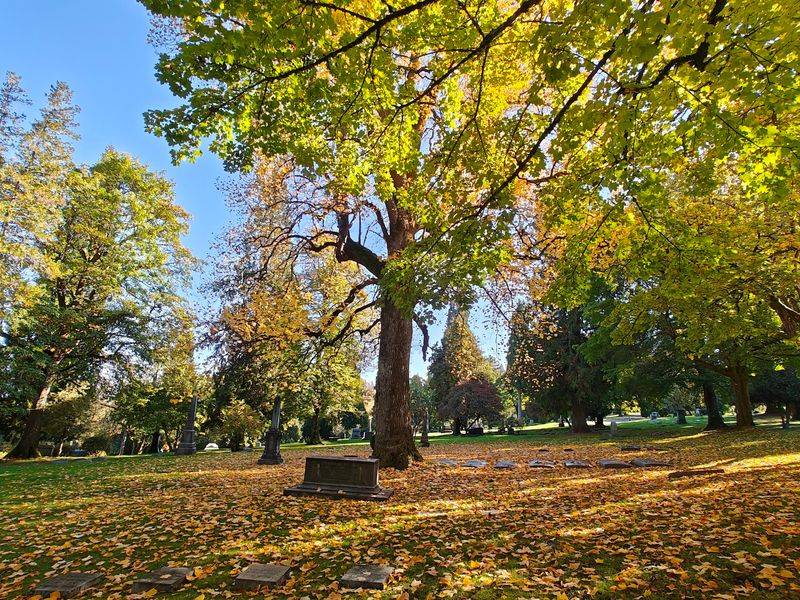
Honestly, the size caught me off guard. River View covers roughly 350 acres, which means the whole hillside is part of the cemetery, from the top near the West Hills down to the river level.
Founded in 1882, it is one of the oldest cemeteries in Portland. The founders wanted a calm, park-like place, and that idea still shows today. Curving roads loop around big old trees, grassy slopes, and small sections that feel like hidden rooms.
I lost track of time quickly. One minute I was near tidy rows of newer stones, and the next I was under towering firs next to markers from the 1800s. Wear comfortable shoes. The paths climb and dip a lot, and the hills can sneak up on your legs.
Bring water too, especially on warm days. Shade is plentiful in some spots, but open sections can feel sunny. Take breaks, look around, and enjoy how the place changes with every turn of the road.
Mount Hood Peeking Over the Trees
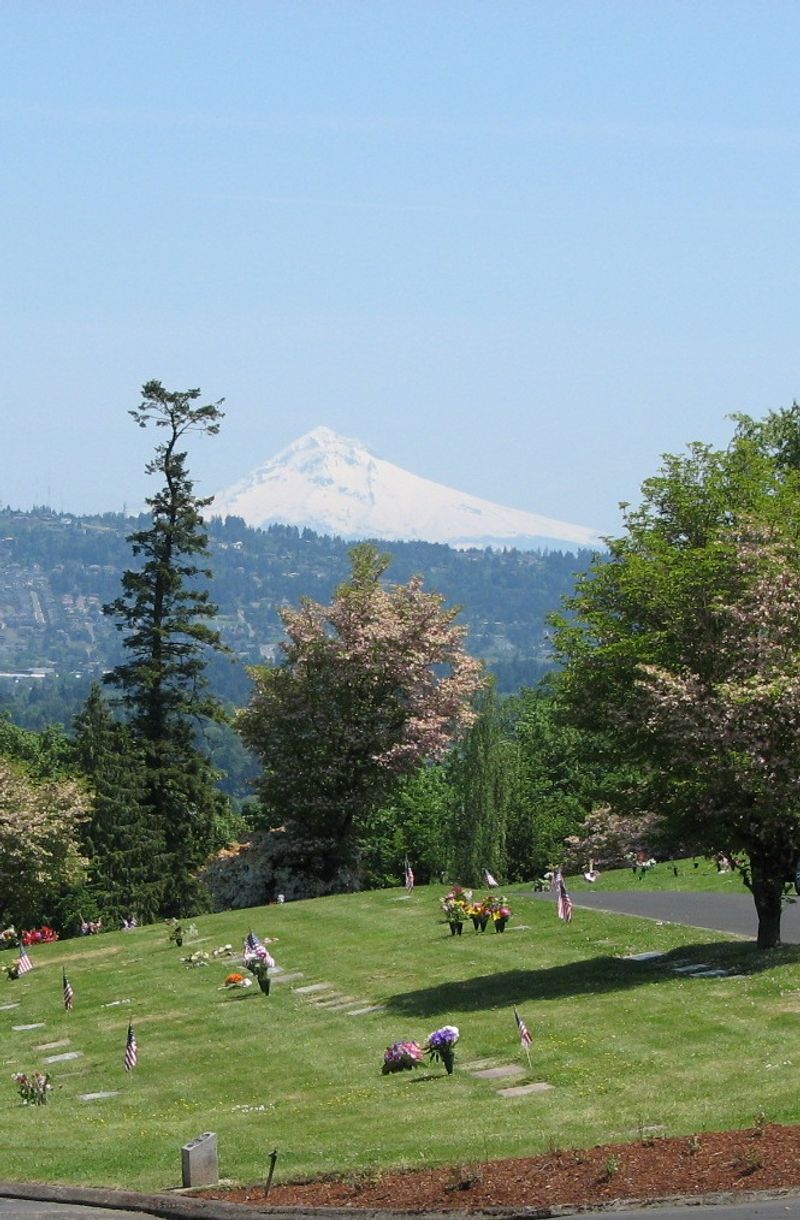
On a clear day, the mountain just shows up. You round a bend, glance east, and there is Mount Hood, white and sharp above the city like it was painted onto the sky.
The higher sections of the cemetery give the best views. From up there, you can see the Willamette River below, the east side neighborhoods, and the Cascade Range stretching across the horizon.
I stood still for a good few minutes. It is hard not to. The mix of old headstones, tall trees, and distant peaks creates a calm feeling that is tough to find in a busy city.
Timing matters here. Portland weather loves clouds, so check the forecast and aim for a bright morning if the mountain is your main goal.
Bring a camera or phone with a little zoom. Photos look amazing when you frame the mountain between branches. Just stay respectful and keep your photo spots on roads and paths, away from graves and anyone who is visiting loved ones.
Founders of Portland Resting Side by Side
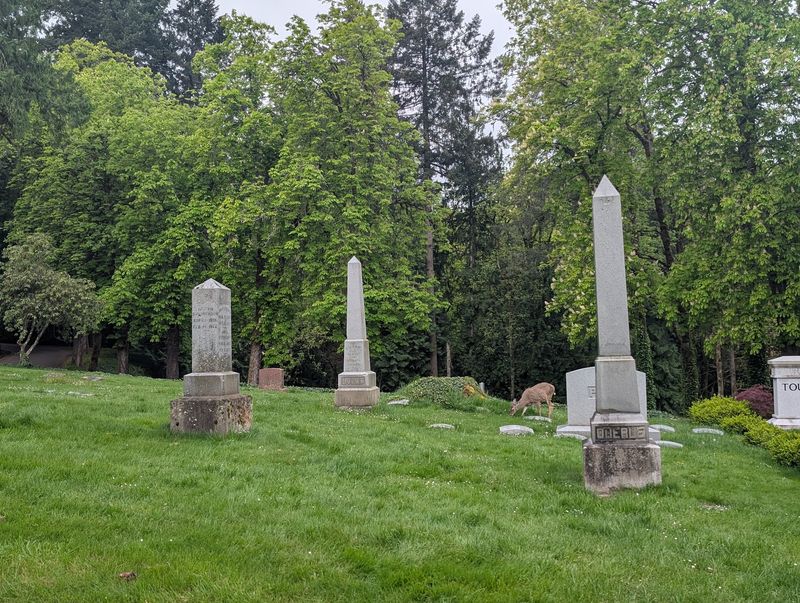
Think of River View as a history book you can walk through. Many of the people who shaped early Portland are buried here, and their names still pop up on streets, buildings, and schools around the city.
George Abernethy, the provisional governor of Oregon before statehood, rests on these grounds. So does Simon Benson, the businessman known for the Benson Bubblers, those bronze drinking fountains you see all over downtown.
Albertina Kerr is here as well. Her name lives on through a Portland organization that has helped children and families for many decades.
Spotting these names felt a bit like meeting celebrities, only quieter. Each stone made me want to look up more about the person behind it.
A good tip is to do a little homework before you visit. The cemetery website shares stories about notable people, and reading a few ahead of time makes the walk richer. Kids especially enjoy turning it into a gentle history hunt, matching names to the city landmarks they already know.
Abigail Scott Duniway and the Fight for the Vote
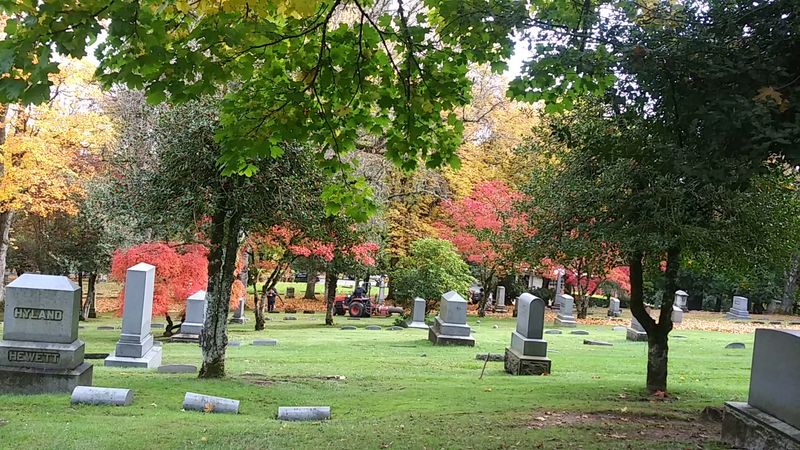
Some graves carry big stories in small spaces. Abigail Scott Duniway is one of those people, and her resting place is easily one of the most meaningful stops on the grounds.
She came to Oregon on the Oregon Trail as a teenager in 1852. Later she became a teacher, writer, and newspaper publisher who pushed hard for women to have the right to vote.
Her work paid off. In 1912, Oregon men voted to give women the vote, and Duniway was the first woman to register to vote in Multnomah County. Not bad for someone who started out bumping along in a covered wagon.
I liked thinking about how her journey connects to Virgil Earp. Both lived in the same rough, changing West, just with very different battles.
If you visit with young people, this is a great place to pause and talk. Ask them what they would stand up for. It turns a simple walk into a conversation they might actually remember.
A Baseball Story With a Twist
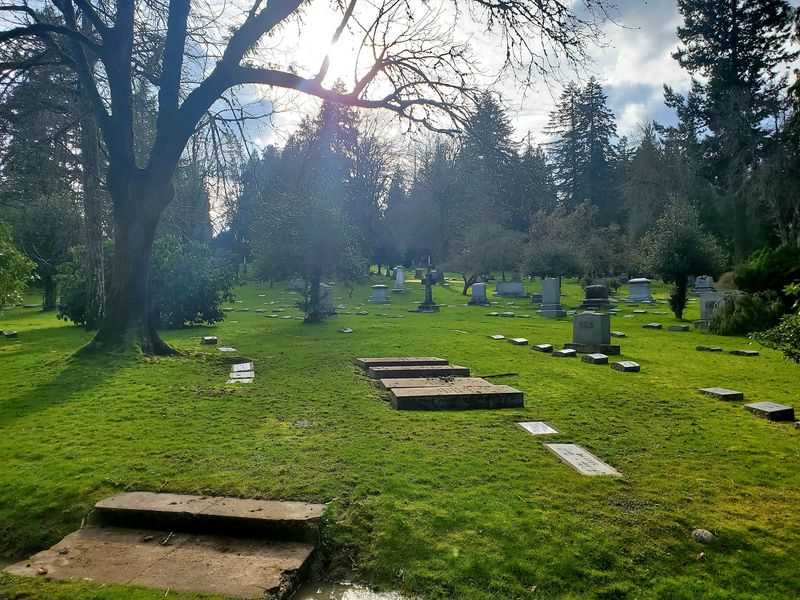
Baseball fans, this one is for you. Carl Mays, a major league pitcher from the early 1900s, is buried at River View.
Mays had a strong career and won more than 200 games. He pitched for teams like the Boston Red Sox and the New York Yankees, and he was known for an unusual underhand style that made batters nervous.
His story has a sad side too. In 1920, one of his pitches struck Cleveland player Ray Chapman, who died the next day. It remains one of the only deaths caused by a pitch in major league history, and it changed rules about how baseballs were used in games.
Mays was never voted into the Hall of Fame, and fans still argue about that. Visiting his grave makes those old debates feel surprisingly close.
It is a good reminder that a cemetery holds every kind of life story. Some are heroic, some are complicated, and all of them make you stop and think for a minute.
Eagles Overhead and Quiet Forest Corners
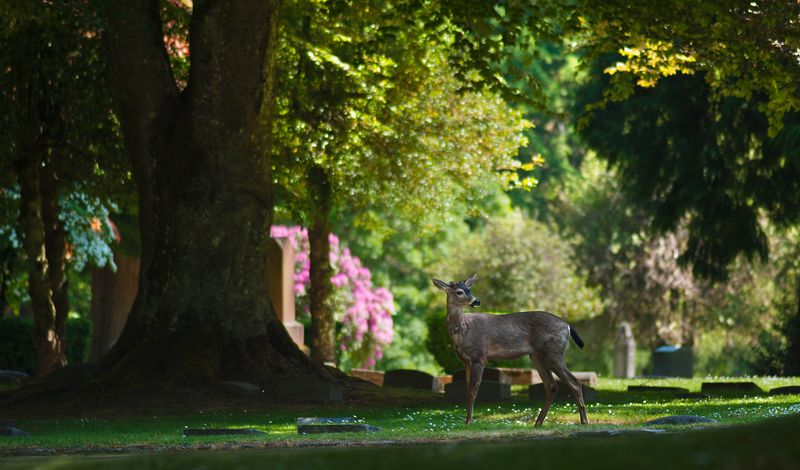
Look up once in a while. Bald eagles are sometimes spotted gliding over the cemetery, riding the air above the trees near the river.
I did not see one on my first try. A few crows scolded me instead, which felt fair. Still, the chance of spotting an eagle kept me glancing at the sky the whole walk.
The grounds are full of nature beyond the big birds. Douglas firs, maples, and leafy hillsides create pockets that feel more like woods than city. Squirrels dash across the roads, songbirds chatter, and in fall the colors are wonderful.
Early morning is a lovely time to come. Wildlife tends to be more active, and the light filtering through the trees is soft and golden.
Pack binoculars if you have them. Move slowly, keep your voice low, and stay on the roads. You will notice far more birds and small details when you give the place a little patience and quiet attention.
Cyclists, Runners, and That Famous Climb
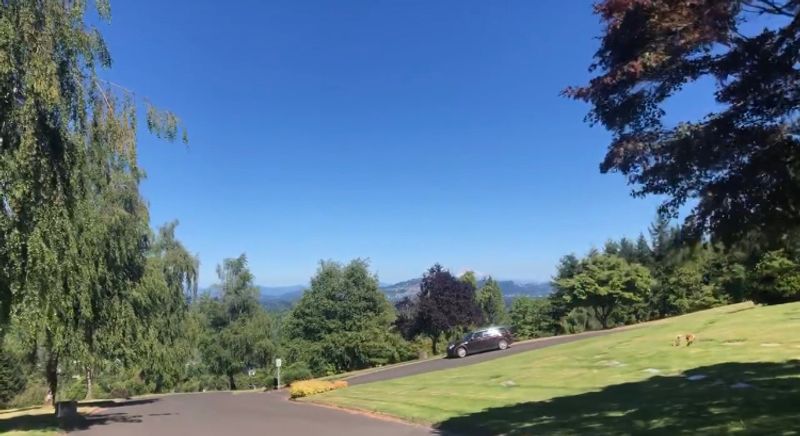
Bring your legs. Or at least warn them. River View is a favorite spot for local cyclists and runners, and the winding roads offer a serious workout.
Riders use the cemetery as a link between Southwest Portland and the Sellwood Bridge area near the bottom. At the top, routes connect toward Terwilliger, a popular stretch for bikes and runners.
Going down is fun, with tight turns that require care. Going up is another story. I pedaled the climb once and spent a lot of it questioning my choices.
Some roads are meant for cars, so pay attention to signs and use the right routes. Ride at a calm speed and remember this is first a place of remembrance.
If a funeral or family visit is happening nearby, slow way down or take another road. Being kind and aware keeps the cemetery welcoming for everyone, from grieving families to the morning joggers who treat these hills like a second home.
Mausoleums Near the Top of the Hill
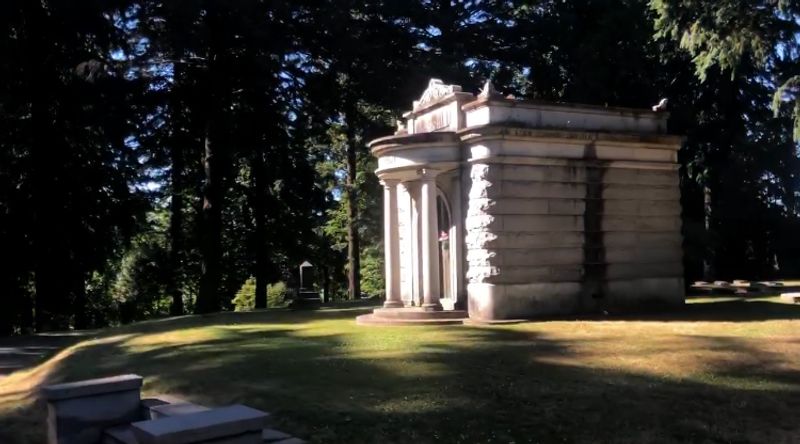
Near the upper sections, a couple of mausoleums stand out from the grassy slopes. Their stone walls and solid shapes give the hilltop a calm, dignified look.
I found myself slowing down here. The buildings feel older and more formal than the open lawns, and the air seems a bit quieter around them.
Mausoleums are buildings where people are laid to rest above ground in spaces called crypts. They became popular with families who wanted lasting memorials, and many have carved details worth a closer look.
Take time to notice the craftsmanship. Look for carved letters, little patterns, and the way moss and weather have softened certain edges over the years.
Remember that these are active, private resting places. Admire them from respectful distances, do not touch fragile surfaces, and never try to enter closed doors. If you are curious about the history of a specific structure, the staff are a good source.
Simple questions can lead to some fascinating answers.
Know Before You Go
A little planning goes a long way. River View is a private, nonprofit cemetery, and visitors are welcome as long as they follow a few simple rules. Pets are not allowed. Leave your dog at home, since the cemetery has had problems with pets on graves in the past.
The office is usually open Monday through Saturday from 9 AM to 5 PM and closed on Sunday. Stop at the office first if you can. The staff can share maps showing famous graves, which saves a lot of guesswork on such big grounds.
Above all, be respectful. Keep voices low near services, stay off graves, and let families have their space. I left feeling calm, curious, and a little closer to the old West. You can find River View Cemetery at 300 S Taylors Ferry Rd, Portland, OR 97219.
