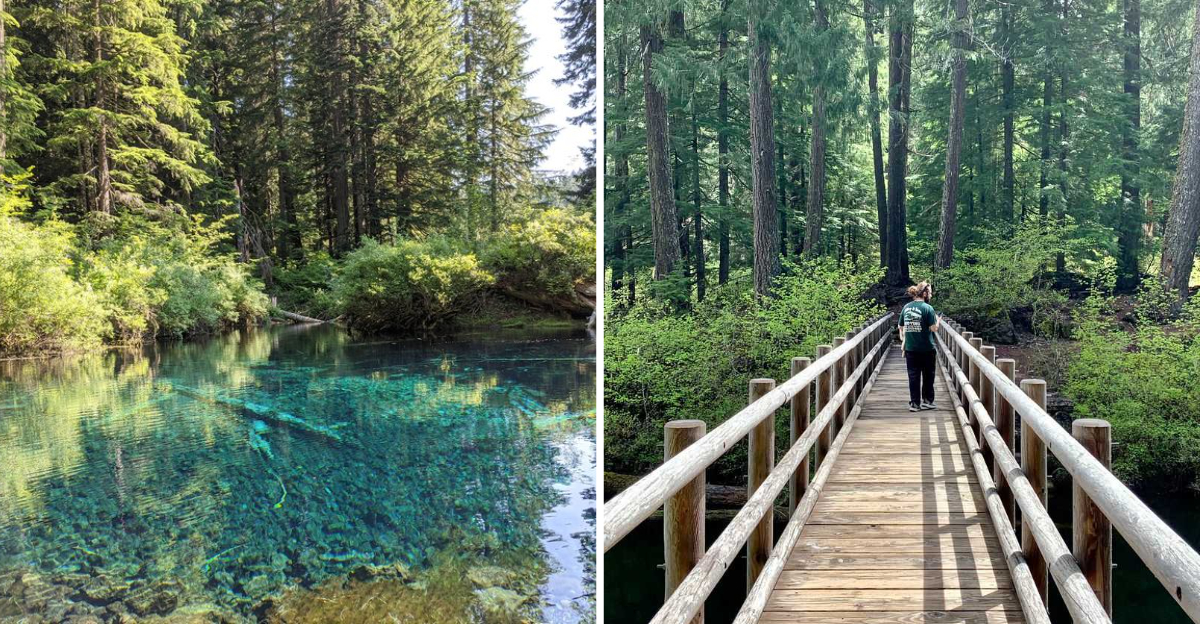
Most forests stand tall above ground, but this one hides beneath the surface. Deep in Oregon’s mountain region lies a lake where ancient trees remain standing, preserved in cold, crystal-clear water for thousands of years. It feels like floating over another world.
The trees were flooded centuries ago, trapped in time by the lake’s frigid temperatures. Today, you can paddle across the surface and peer down at their ghostly silhouettes below. The visibility is remarkable, making it possible to see the forest floor as if you’re looking through glass.
Whether you’re kayaking above or diving beneath, the experience is entirely surreal.
Grab a paddle or a wetsuit and see it for yourself. Oregon’s underwater forest is a sight you won’t soon forget.
The Drowned Forest Beneath the Surface
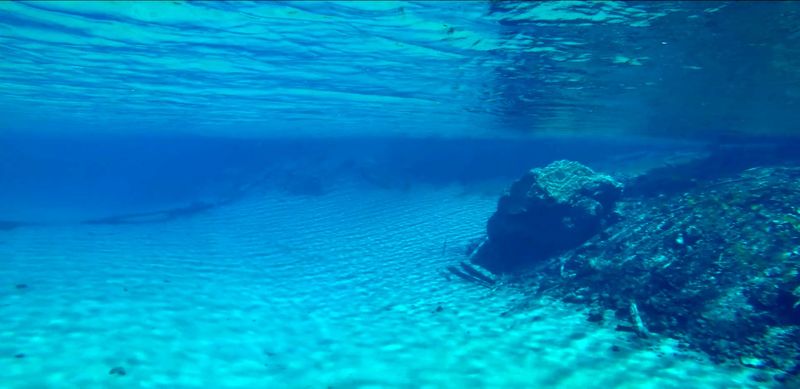
Roughly three thousand years ago, a lava flow from nearby Sand Mountain dammed the McKenzie River and flooded a standing forest. The trees never rotted away.
Water here hovers near freezing year round, fed by springs that filter through volcanic rock, and that constant chill slowed decay to a crawl. What remains is a grove of bleached trunks still rooted in the lakebed, some reaching within a dozen feet of the surface.
Seeing them from a boat on a bright day is the easiest approach, since sunlight cuts straight through and turns the shallows into glass. Divers come with drysuits for a closer look, though the cold gives even experienced ones a short window.
The strangest part is the scale. From above, the trunks look like model pieces, but they were full grown conifers when the lava arrived.
Bring polarized sunglasses. They cut the glare and sharpen the view more than any camera filter will, and they cost far less than a dive certification.
Water So Clear It Plays Tricks on Your Eyes
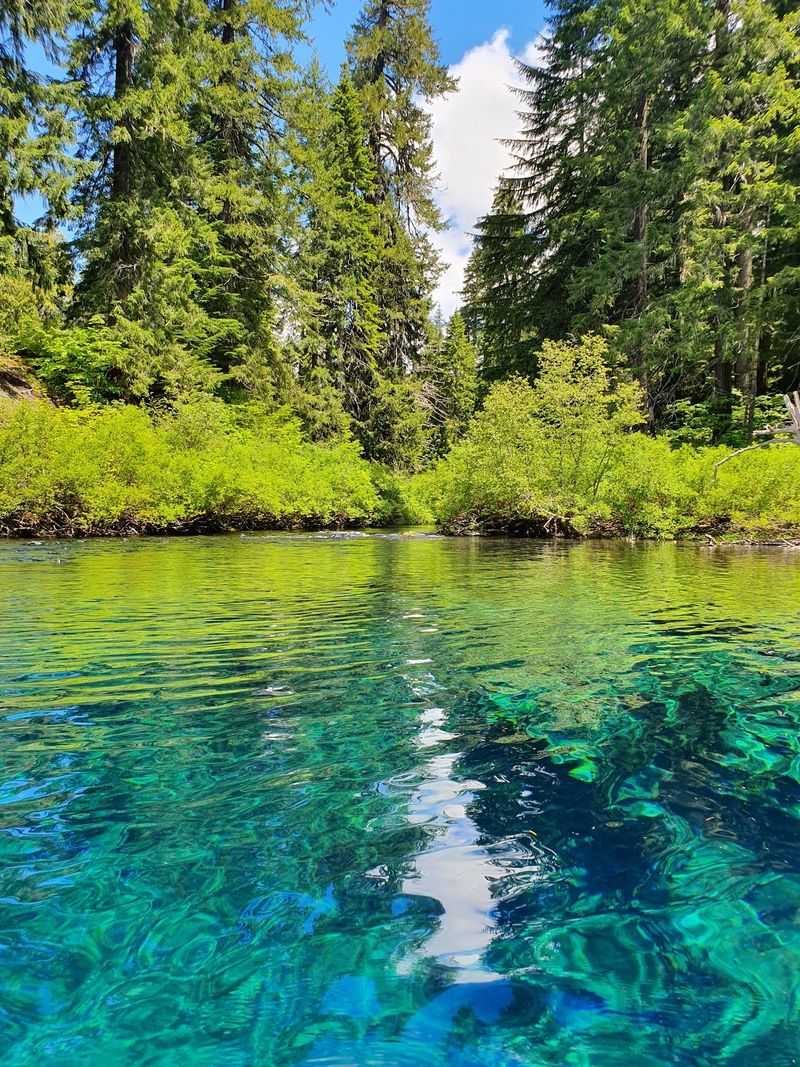
Depth perception falls apart out here. Paddling across a section that looks knee deep, then realizing the bottom is actually thirty feet down, is a common little jolt.
Clarity comes from the springs feeding the lake, especially Great Spring on the eastern shore, where groundwater arrives already filtered through porous lava. Very little sediment ever stirs up, and no motorboats are permitted to churn the bottom.
Color shifts depending on where the sun sits. Morning light gives the water a deep sapphire tone near the drop-offs, while midday turns the shallow shelves a pale, almost tropical green.
Cloudy days flatten everything, so timing matters if visibility is the goal. Late morning through early afternoon under clear skies tends to be the sweet spot.
One warning worth repeating. That inviting color hides temperatures that stay brutally cold all summer, so a quick wade is usually enough for most visitors.
Rowing Out at Sunrise
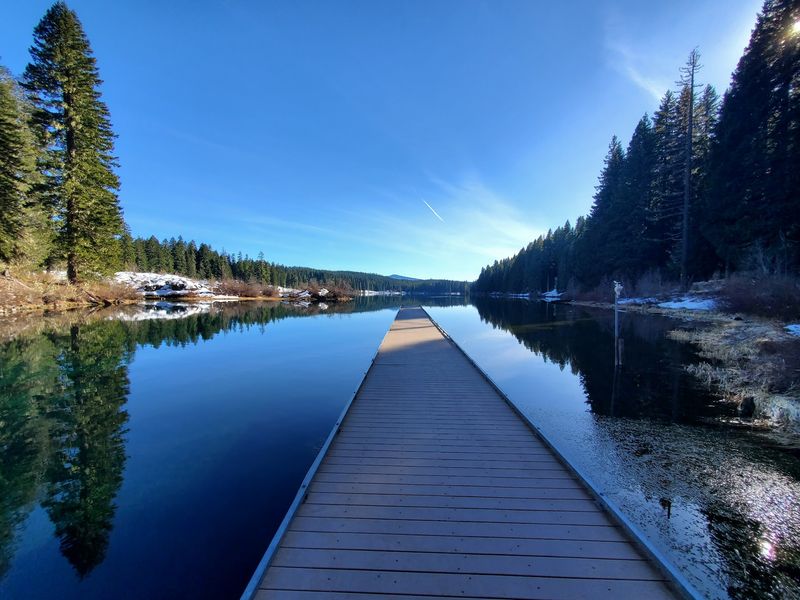
Mornings belong to the rowers. Before the parking lot fills, the surface goes completely flat and every tree on the far shore doubles itself in the reflection.
Rentals at the resort dock include rowboats, kayaks, canoes, and paddleboards, and life jackets come with them. Anyone bringing their own craft pays a small launch fee at the store.
No motors are allowed, gas or electric, which is exactly why the place sounds the way it does. Water lapping against a hull and the occasional splash of a fish are about the loudest things happening.
Bald eagles and osprey hunt these waters, and watching one drop from a snag to snatch a trout a short distance from your boat is unforgettable.
Rowing takes a bit more effort than paddling, but the pace suits the lake. There is nowhere urgent to be, and the drowned trunks slide by slowly enough to actually study them.
The Five Mile Loop Trail
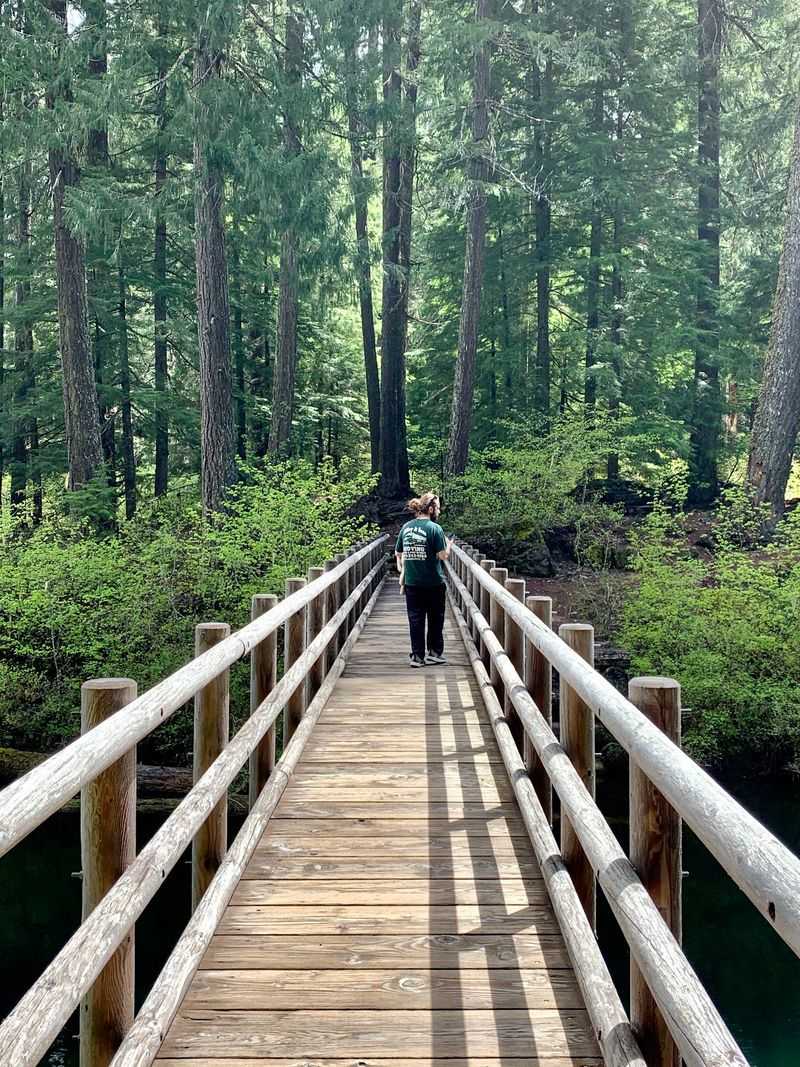
Circling the entire lake takes about five miles and very little climbing, which makes it one of the most rewarding easy hikes in the Cascades. Families manage it without much trouble.
Terrain changes character as you go. The western side runs through shady old growth forest with soft, needle covered tread, while the eastern half crosses jagged black lava with a rockier, more uneven path.
A footbridge near the outlet crosses the McKenzie River where it leaves the lake, and the water there is startlingly clear as it picks up speed.
Dogs on leash do fine, though paws can get sore on the lava sections. Sturdy shoes beat sandals every time.
Photo stops are constant, so budget more time than the distance suggests. Two hours turns into four without much effort, especially in autumn when vine maple along the shoreline goes gold and red against all that blue.
Lava Fields That Frame the Shoreline
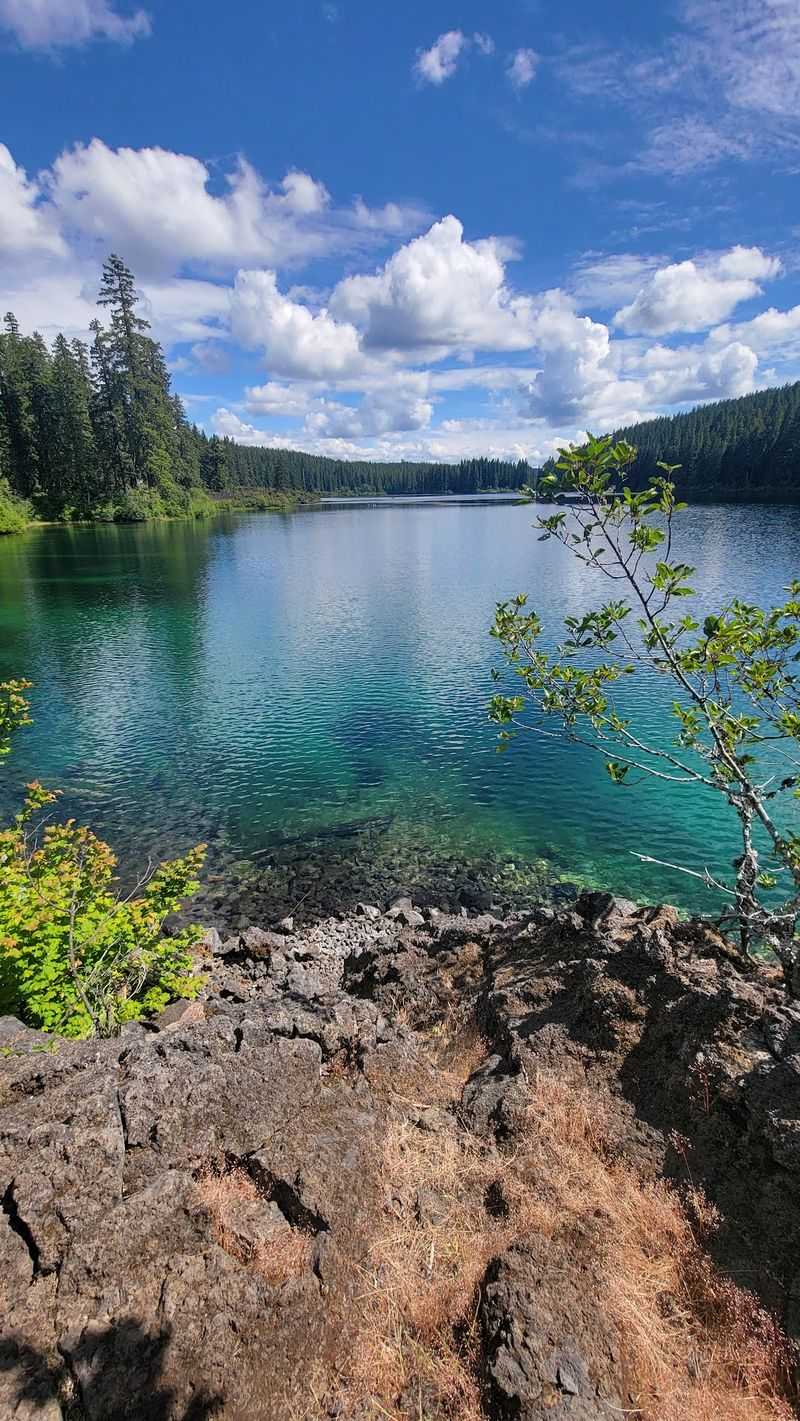
Black rock meets blue water along the eastern shore in a way that looks almost artificial. Sharp, crumbling basalt spills right into the lake, holding the shape it took when it cooled.
That lava is the reason Clear Lake exists at all. The flow blocked the river valley and created the basin, and it also acts as a giant filter for the springs feeding the lake.
Walking this stretch requires attention since the rock is loose in places and unforgiving if you slip. Ankle support helps.
Small pines and stubborn shrubs have wedged themselves into cracks, proof that three millennia is long enough for life to get a foothold on bare stone.
Look for the odd cave-like pockets and pressure ridges along the way. Geology nerds will happily lose an hour here, and everyone else will at least appreciate how the dark rock makes the water look even more electric.
Great Spring and the Birth of the McKenzie
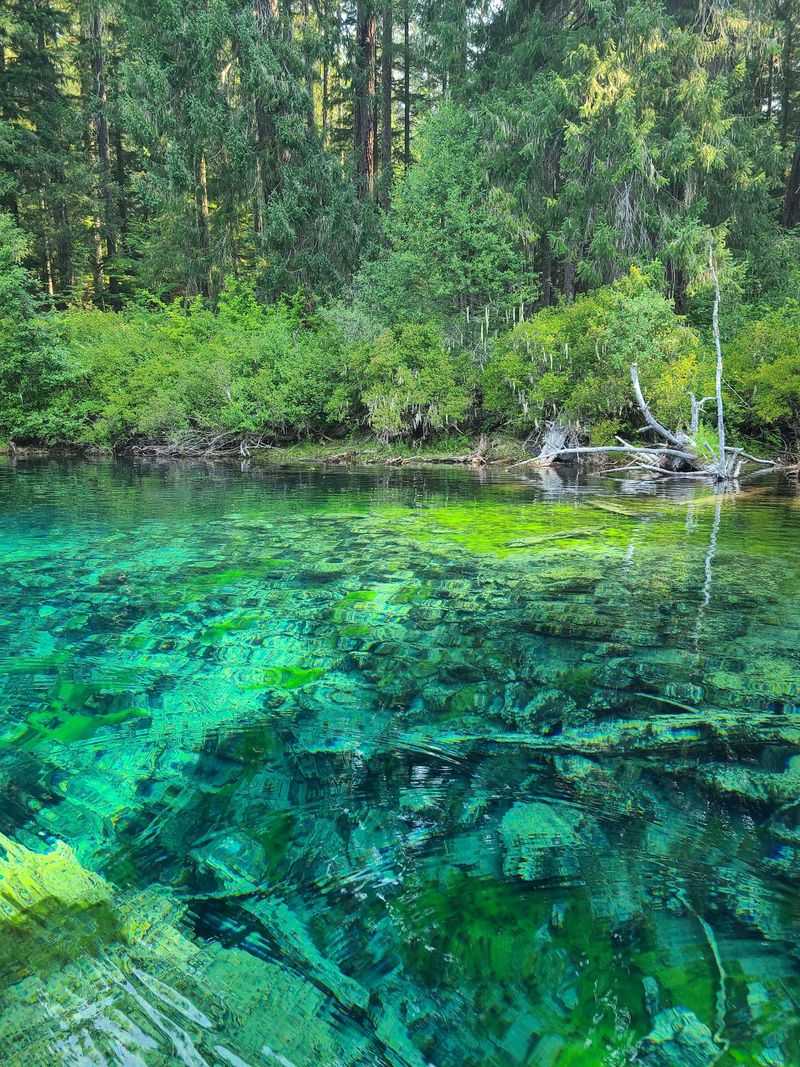
Tucked along the northeastern shore, Great Spring pumps out an enormous volume of ice cold water every single day. Standing above it, the pool glows an unreal shade of aquamarine.
The spring is one of the main sources feeding both the lake and, ultimately, the McKenzie River that flows out the southern end. Water arriving here fell as snow on the high Cascades years earlier, then traveled underground through volcanic rock.
A short spur off the loop trail brings you right to the edge. Sand shifts gently at the bottom where water pushes up.
Temperature holds around the low forties Fahrenheit no matter the season, which explains why swimming never really catches on.
Photographers should come when the sun is high and direct. Shade turns the pool a dull gray, but full light makes the color almost hard to believe, and no editing is required afterward.
Rustic Cabins and Camping by the Water
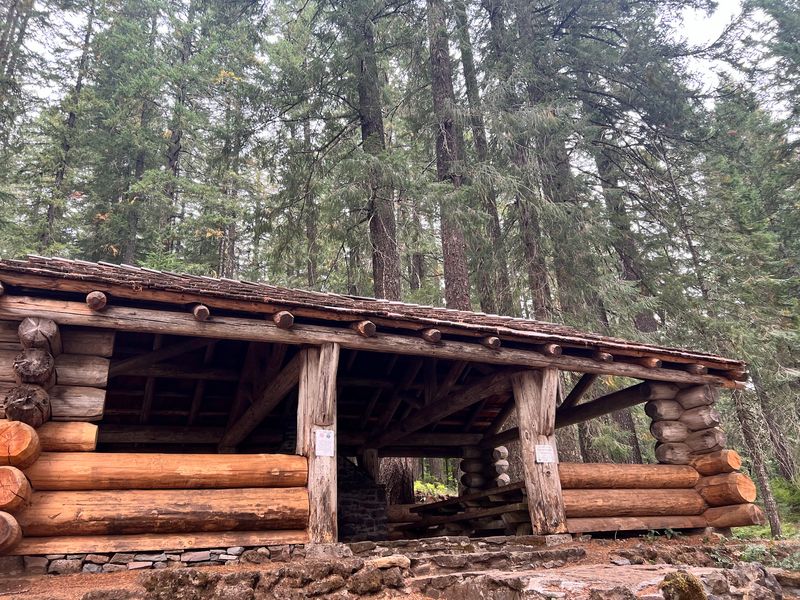
Accommodation here leans old fashioned in the best way. The resort offers simple wooden cabins scattered near the shoreline, some with plumbing and some without, plus a campground for tents and small trailers.
Guests staying in cabins generally need to bring their own bedding, cookware, and towels. Shared bathroom and shower buildings serve the units that lack plumbing, and they are kept clean.
Cell service does not exist out here. A phone at the store handles emergencies, and honestly the silence is part of the appeal.
Nights get cold even in August, so pack layers heavier than the daytime forecast suggests.
Waking up steps from the water means catching that glassy early light without setting an alarm for a long drive. Coffee on a cabin porch while mist lifts off the lake is a genuinely good way to start a day, and the whole place empties out by evening.
Fishing for Native Trout
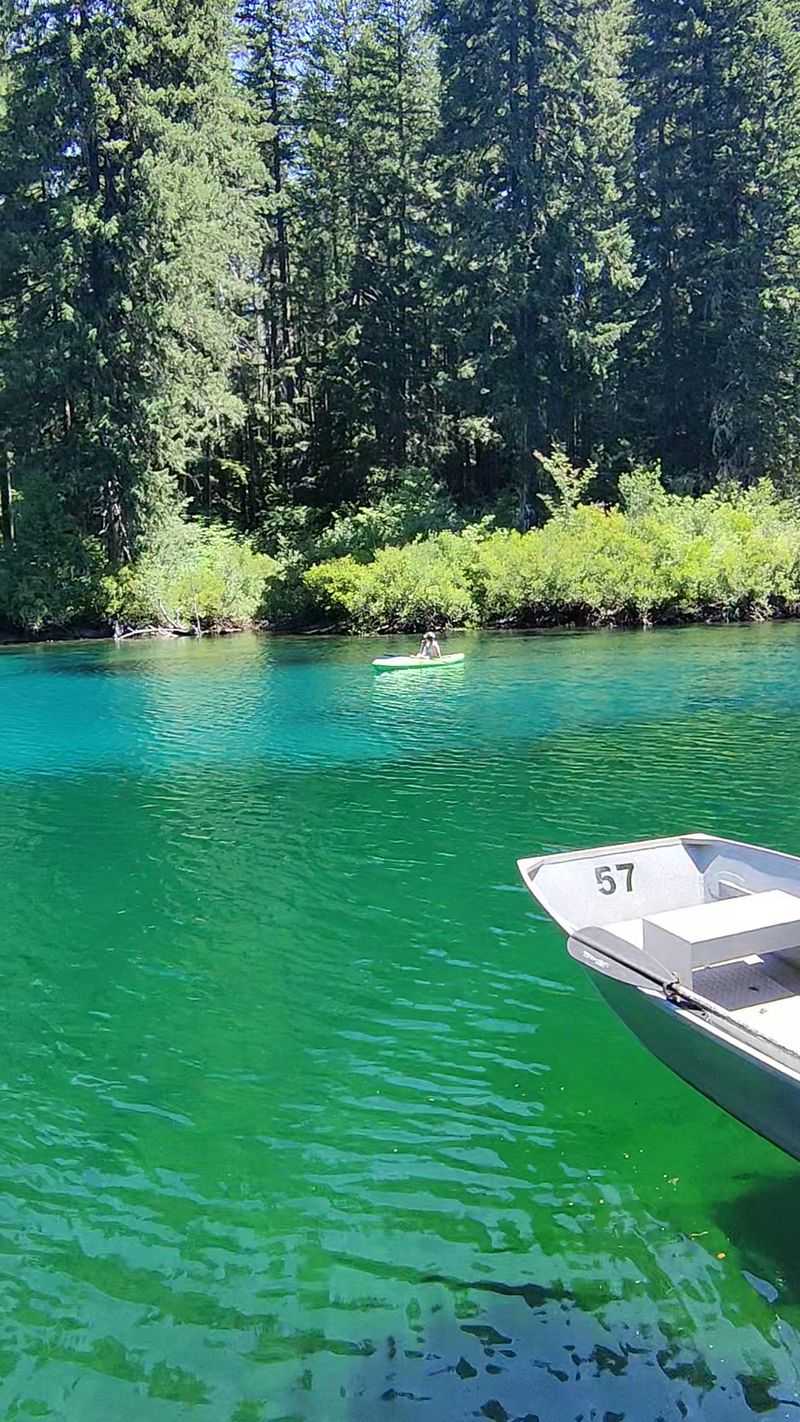
Anglers show up early and leave happy. Rainbow trout, brook trout, and cutthroat all live in these waters, and the visibility means you sometimes watch a fish approach before it takes anything.
Because motors are banned, the lake stays undisturbed and fish behave naturally. Fly casters and spin anglers both do well from boats or from certain shoreline spots.
A designated fish cleaning station sits near the dock, and the store stocks basic tackle if something snaps.
The cold water keeps trout coloring vivid, and released fish here look almost painted.
Timing matters more than gear. Dawn through mid morning brings calm conditions and less traffic, and by late morning kayaks and paddleboards spread across the surface.
Parking near the launch gets tight fast, so arriving before the crowd saves a lot of maneuvering with a trailer. An Oregon fishing license is required, and regulations should be checked before the trip since they change.
Sahalie and Koosah Falls Just Down the Road
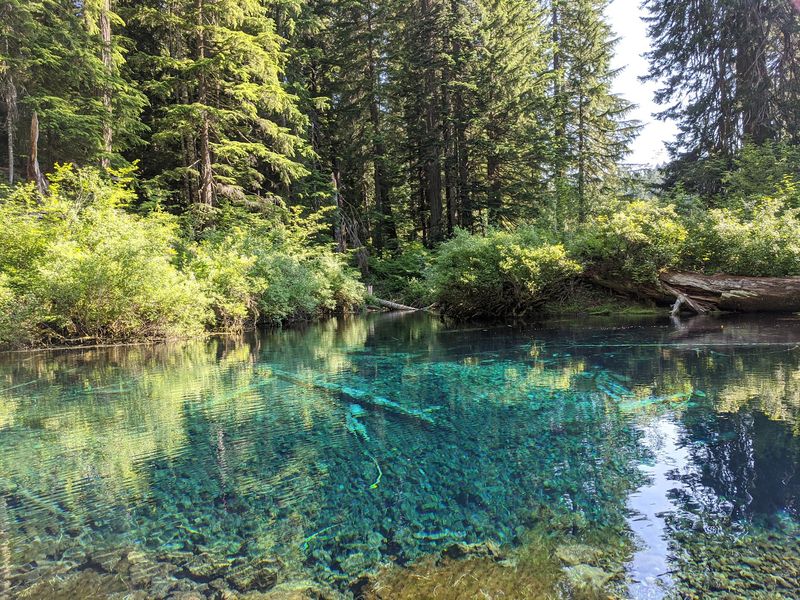
Two of Oregon’s most photogenic waterfalls sit only a few minutes south along Highway 126, and skipping them would be a mistake. Sahalie Falls drops around a hundred feet over a lava ledge, throwing mist across the viewing platform.
Koosah Falls comes next, slightly shorter but wider, with a deep pool churning at the base.
A loop trail connects both falls along the McKenzie River, running roughly two and a half miles through moss draped forest. The whole thing links up with the larger McKenzie River Trail system if you want to keep going.
Spring runoff makes them thunderous. Late summer tames the flow but improves the light for photos.
Pairing the waterfalls with the lake makes for a full, satisfying day trip without much driving between stops. Both have their own parking areas off the highway, and the same recreation pass typically covers them.
Planning the Trip and Getting There
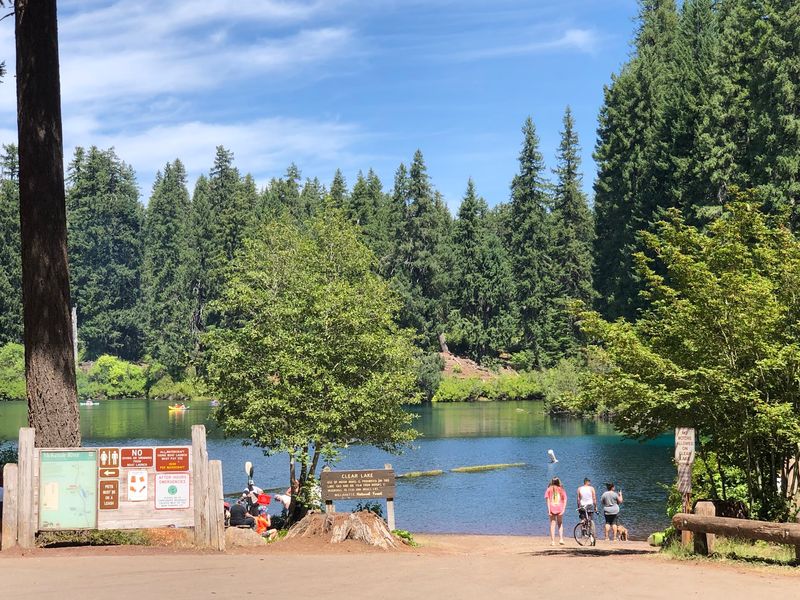
Reaching the lake is straightforward. It sits along Oregon Highway 126, the McKenzie Highway, about an hour and a half east of Eugene and Springfield, and a similar drive west from Bend over Santiam Pass.
Day use parking is limited, with overflow spots along the road. A recreation pass is needed, and the America the Beautiful pass works, or a day pass can be bought at the store.
Summer weekends fill up by late morning, so early arrivals or mid afternoon visits work best.
Insect repellent belongs in the bag, especially in July and August. Sunscreen too, since the reflection off the water is stronger than it feels.
Snacks and simple hot food are available at the dock, along with basic supplies and souvenirs. Winter access can be limited by snow, and services shut down in the off season, so check conditions before setting out.
Address: Oregon Highway 126, Willamette National Forest, Sisters, Oregon 97759
