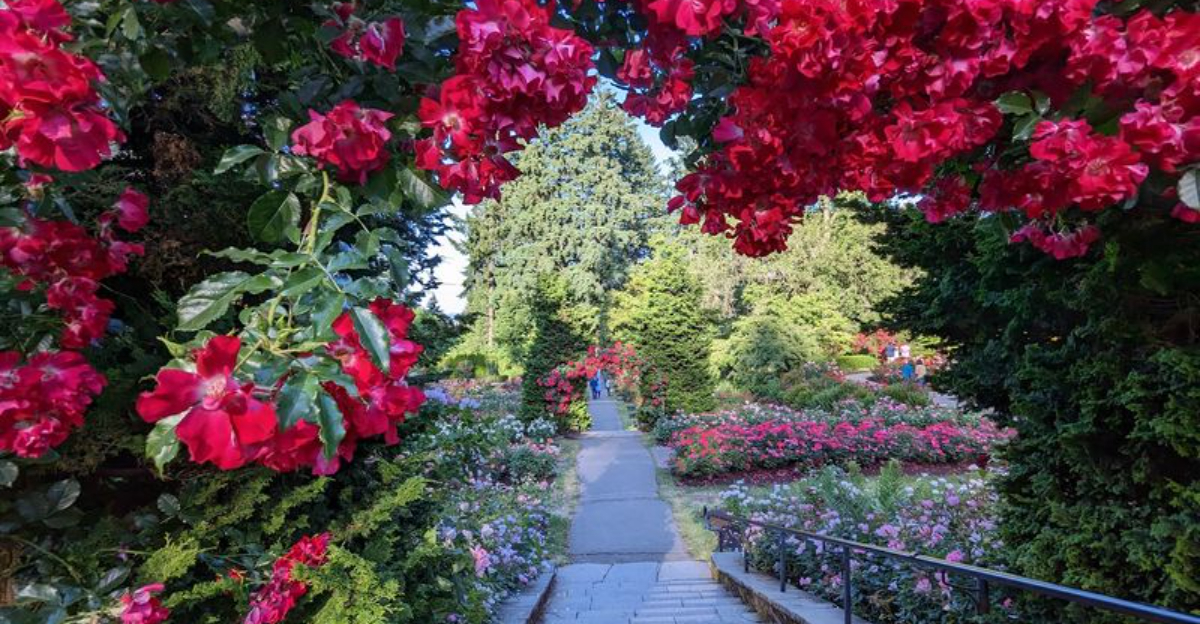
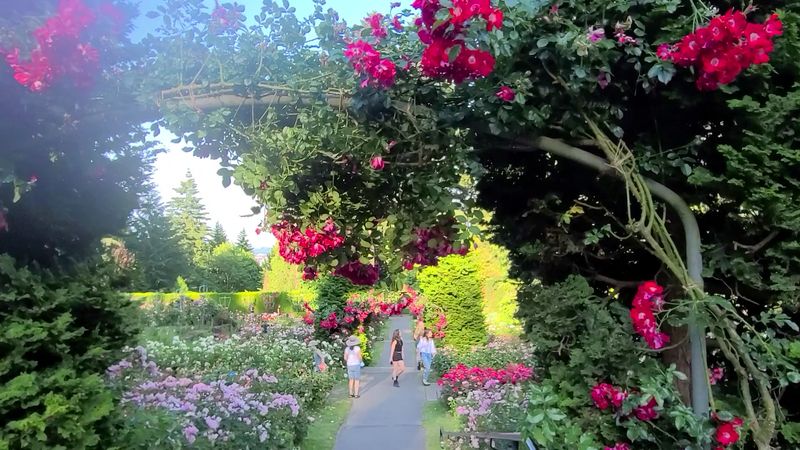
You don’t need to be a gardener to appreciate a view that stops you mid-step. This Oregon garden delivers exactly that, year after year. Over 2,000 roses bloom across terraced hillsides, each one more vibrant and fragrant than the last.
The colors are almost overwhelming, and the scent hits you before you’ve even reached the first row of bushes. It’s the kind of place where you walk slowly, lean in for a closer look, and forget about everything else for a while. Some petals are deep red, others pale pink or creamy white.
Every season brings something new, and the garden feels alive in a way that photos just can’t quite capture.
Find a bench, take a breath, and let the beauty settle in. Oregon’s most stunning garden is proof that sometimes the simplest things leave the biggest impression.
A Wartime Rescue Mission That Started in 1917
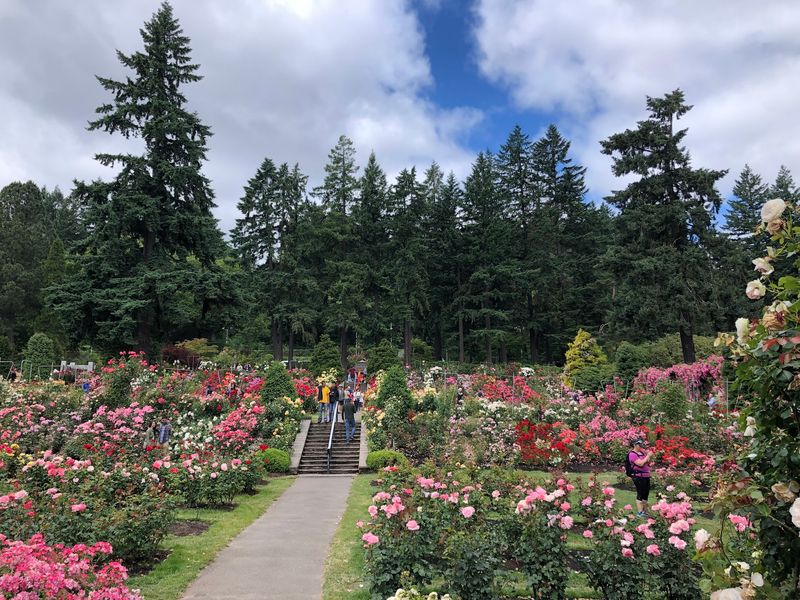
Founded in 1917, the garden began as a safe harbor for European rose varieties during World War I. Growers overseas worried that years of careful breeding could vanish in the fighting, so cuttings were shipped to Portland for safekeeping.
That decision turned into the oldest continuously operating public rose test garden in the United States. Over a century later, the beds still serve their original purpose, with new varieties planted, watched, and judged season after season.
Test roses get scored on color, form, fragrance, disease resistance, and how well they hold up in real weather. Nothing is pampered here, which is exactly the point.
Volunteers and city gardeners keep the records, and some varieties never make it past their first few winters. Only the toughest stay.
Reading the small labels turns a pretty stroll into something closer to a science lesson, and it is oddly satisfying to spot a variety still marked as a trial plant. Portland earned its City of Roses nickname long before this garden existed, but the garden is what made the title stick.
More Than 2,000 Roses, and the Count Keeps Climbing
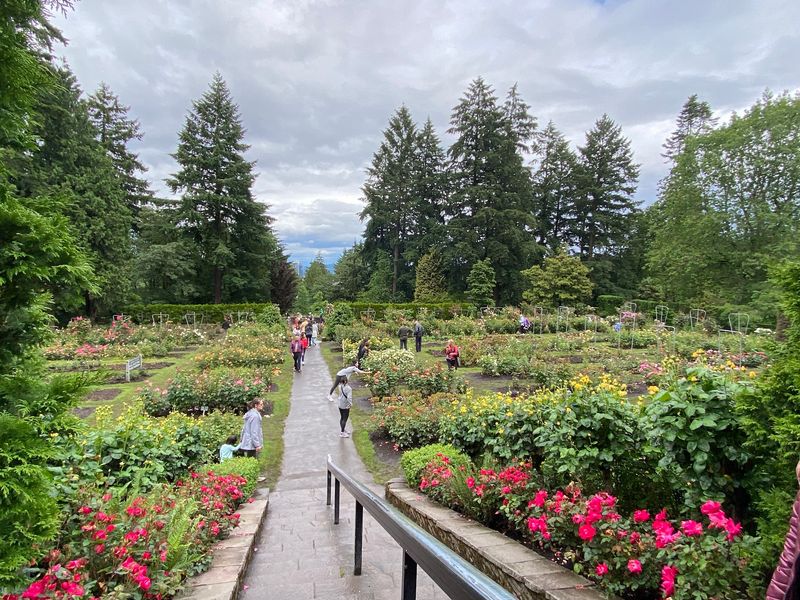
The headline number is over 2,000 roses, but the beds hold far more than that once every bush is counted. Estimates put the plant total above 10,000 across hundreds of named varieties.
Rows are grouped by type, so hybrid teas sit near hybrid teas and miniatures cluster together in low, tidy squares. That layout makes comparison easy, even for someone who cannot tell a floribunda from a grandiflora.
Some blooms are honestly enormous, wide as a palm, heavy enough that the stems bow. Others are barely the size of a thumbnail.
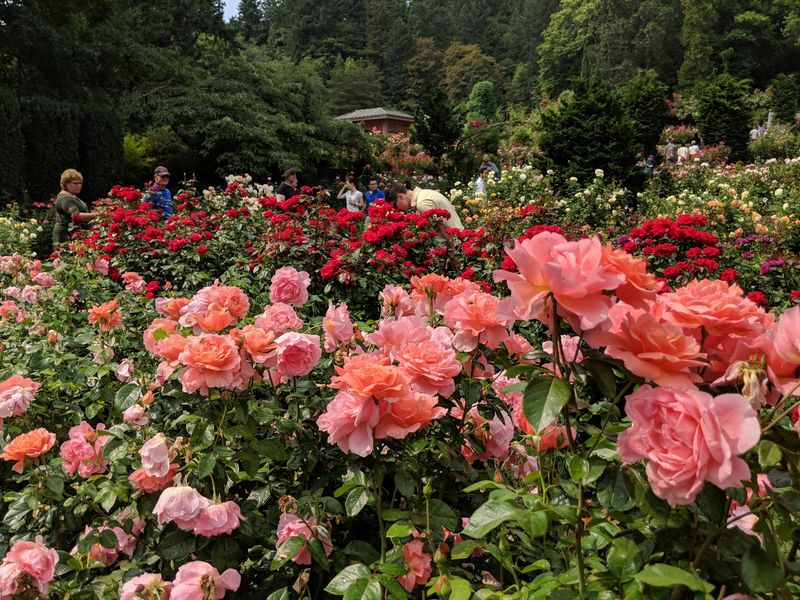
Color runs from near white through butter yellow, coral, hot pink, and a red so deep it looks almost purple in the shade. There are striped petals, ruffled petals, and a few blooms that fade from one shade to another as they open.
Labels sit at the base of nearly every bush, listing the variety name and the year it was introduced. Photographing the label first makes it easier to remember favorites later.
Give the visit two hours if the schedule allows, because rushing through feels like flipping past pages of a good book.
Terraces That Do the Walking For You
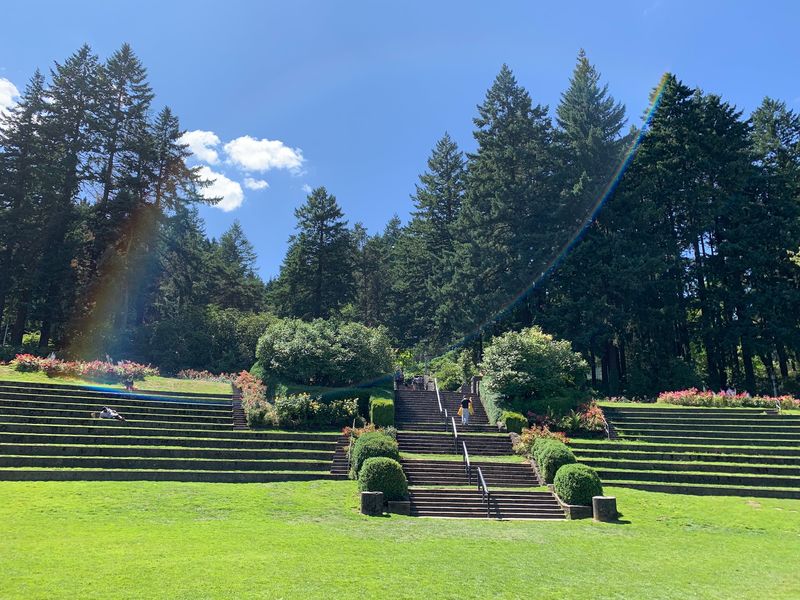
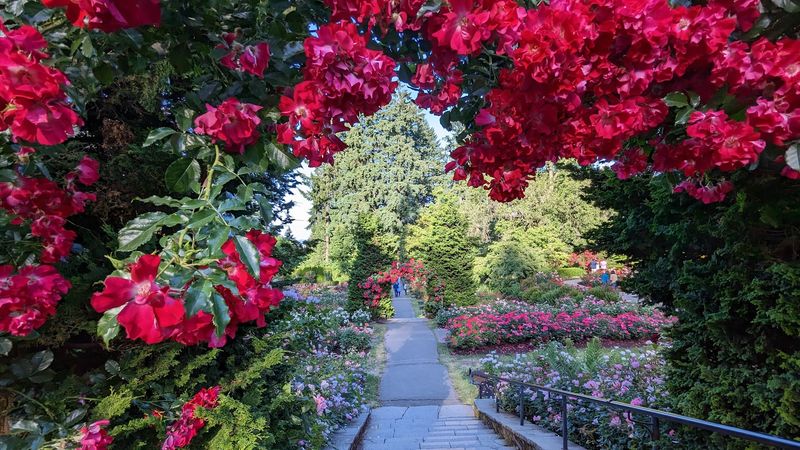
Three tiers step down the hillside, linked by wide paths and a few short flights of stairs. The slope is gentle enough for a slow wander, though the full loop does involve some climbing back up.
A ramped entrance near the top makes the upper beds reachable for strollers, wheelchairs, and cranky knees. Paths are packed gravel and pavement in most sections, wide enough for two people side by side.
Benches show up at useful intervals, usually facing something worth sitting still for. Grass lawns break up the beds, and people spread out blankets there without anyone minding.
Maps are posted at the main entrances, though getting slightly lost between sections is part of the fun and the beds all connect eventually.
The terracing does something clever for the eye, because from the top row the roses stack into layers of color rather than a flat field. Walking down feels different from walking up, so the loop rarely gets boring. Sturdy shoes help. Flip flops on wet gravel are a bad idea.
Scent Worth Slowing Down For
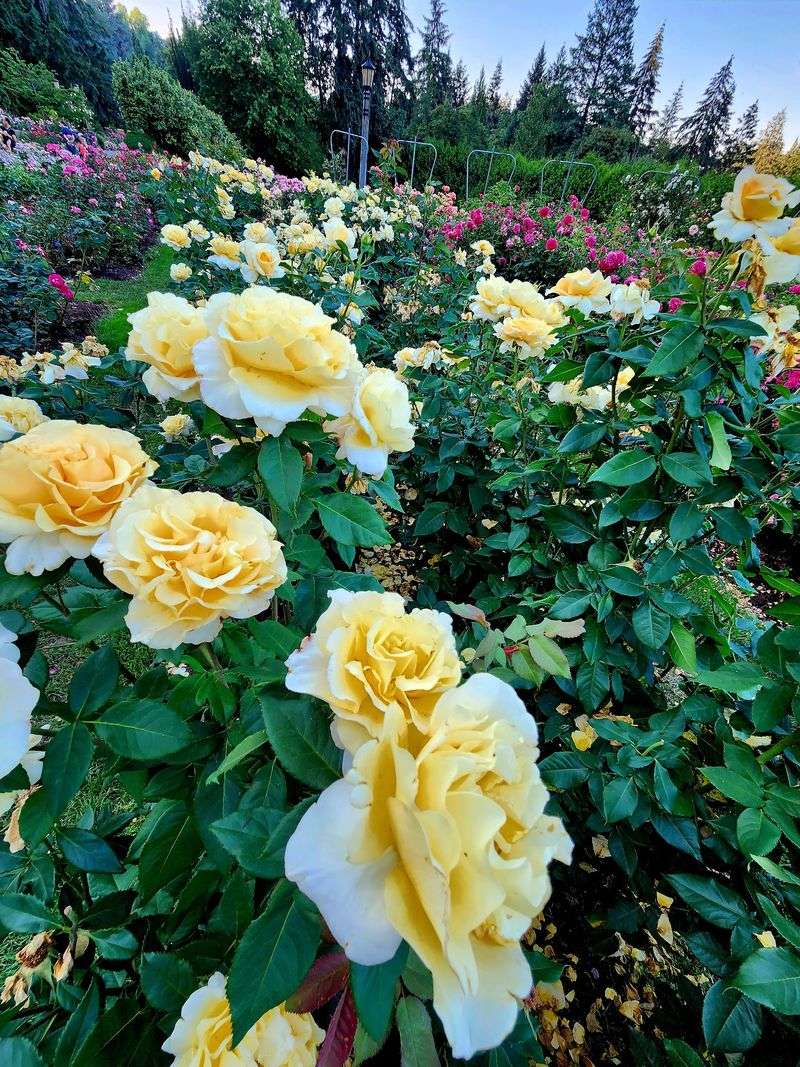
Scent is the part that surprises people who came only for photos. Some bushes smell like fresh citrus, others like tea, cloves, or old fashioned candy.
Not every rose is fragrant, which is worth knowing before leaning in for a disappointing sniff. Modern hybrids often trade perfume for color and shape, so the best noses in the garden tend to belong to older varieties.
Warm mornings after rain are the sweet spot, when moisture holds the scent close to the ground. Midday heat can burn it off fast.
One trick learned the slow way: cup a bloom gently, keep the nose a few inches back, and breathe in rather than snort. Bees are usually busy inside, and they do not appreciate the company.
Certain varieties, like the buttery Julia Child rose, stop visitors in their tracks. Whole rows have people bent at the waist, noses down, quietly comparing notes.
Labels help here too, since noting a favorite scent by name means it can be tracked down at a nursery back home.
Timing the Bloom Without Guesswork
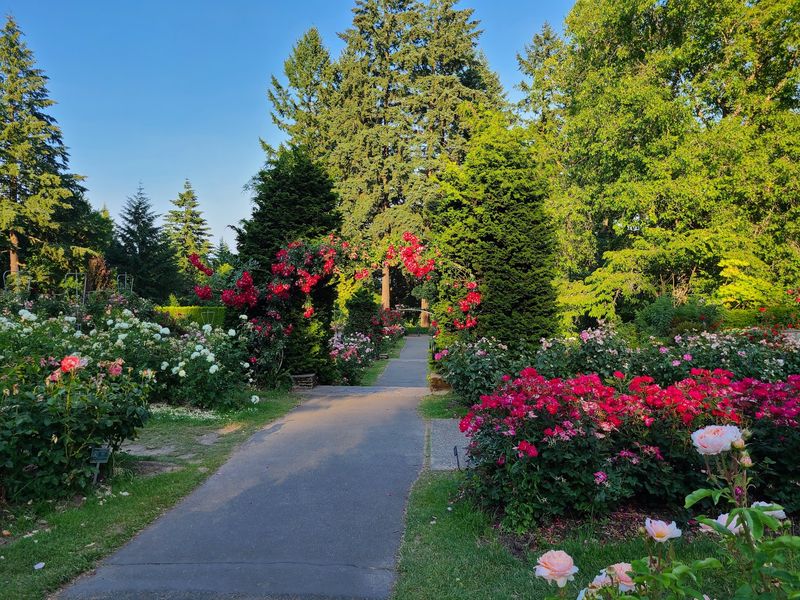
Peak bloom runs from late May through mid June, and locals plan around it. June is when the beds hit full volume, thousands of flowers open at once, scent thick in the air. A second flush usually arrives in late summer, smaller but still generous, often lasting into early autumn.
Visiting outside those windows is not a waste. Early spring shows pruned canes and fresh growth, and the hillside stays peaceful with breezes moving through the trees.
Late season visitors may find fading petals and gaps where gardeners have cut back. That is the honest rhythm of a working test garden rather than a flaw.
Crowds peak in the middle of the day during June. Arriving before nine or after six changes the whole experience, with softer light, cooler air, and space to stand still.
Gates open at five in the morning and stay open until ten at night, which leaves plenty of room to dodge the busiest hours. Sunrise visitors often have entire rows to themselves. Rain is common. A light jacket beats an umbrella on narrow paths.
Getting Up the Hill the Easy Way
Parking is the one genuine headache. Spots along Kingston Avenue fill early on sunny weekends, meters apply in most of Washington Park, and circling can eat twenty minutes.
The easier route uses the MAX light rail to the Washington Park station, then the free park shuttle up the hill. The shuttle loops between attractions and drops off close to the garden entrance.
Evenings after six thirty tend to clear out. Arriving then often means a space right by the entrance with daylight to spare in summer.
Walking up from the neighborhood below is possible for anyone happy with a steady climb, and the trails through the park are shaded and pleasant. Rideshare drop offs work well, though pickup signal can be patchy under the trees.
Admission costs nothing, which still feels surprising for a garden of this size and reputation. No tickets, no lines, no reservation to book ahead. Just show up.
Restrooms are available on site, and a hillside playground nearby keeps younger visitors happy while the adults linger over the beds.
The Little Shop, the Food Cart, and Lawn Picnics
A small seasonal shop sits near the main terrace, packed with rose scented soaps, candles, postcards, and seed packets. Candles and sachets seem to be the favorites, and they make an easy souvenir that actually smells like the trip.
Opening times for the shop shift with the season, so it may be shuttered in the quiet months even when the garden itself is open.
A food cart usually parks nearby during the warmer months, handy for a coffee or a snack mid wander. Cash is not usually necessary, though a small amount never hurts at outdoor carts. Plan for a short line at lunchtime in June.
Picnics work well here too. Bringing a blanket and a bag of fruit turns a one hour stop into a lazy afternoon on the lawn.
Shade is limited in the middle of the beds, so a hat earns its keep on bright days. Water bottles help. Refilling before the climb back up is smart. Postcards from the shop are surprisingly good, and writing one on a bench beats writing it later at a hotel desk.
Hidden Corners Beyond the Main Beds
Bronze plaques set into the Queen’s Walk honor each Rose Festival queen going back to the earliest years, and reading the names turns into a slow history lesson.
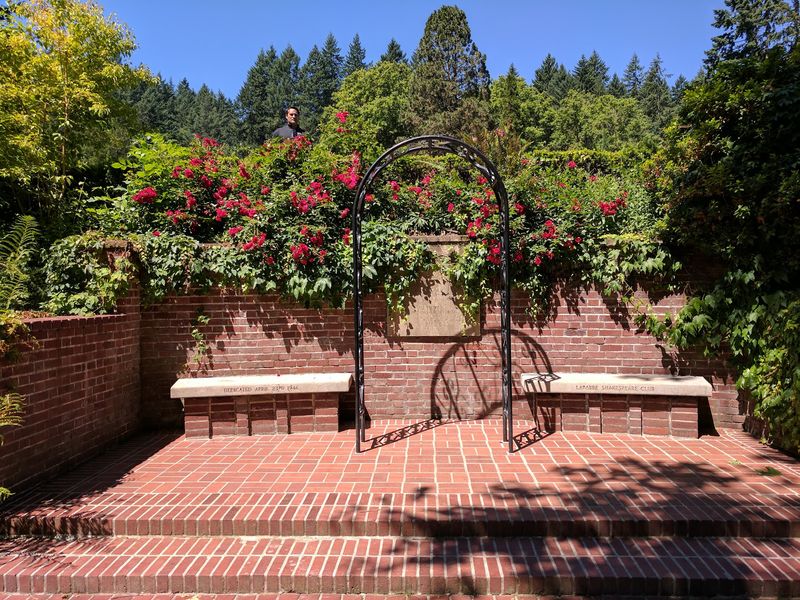
Beyond the main beds, smaller themed sections hide in the corners. The Shakespeare Garden holds plants tied to the playwright’s work, tucked behind a hedge and much quieter than the terraces.
A miniature rose section keeps everything scaled down, with blooms the size of coins on knee high bushes. Kids tend to love that one.
The Gold Award Garden gathers varieties that earned top marks in trials, which makes it a shortcut for anyone wanting to see proven winners in one place.
An amphitheater sits at the upper edge, sometimes hosting concerts and events through summer. Signage explains what each area is for, though half the pleasure comes from stumbling into them by accident.
Even on a busy afternoon, wandering off the main path finds pockets where the noise drops away and it is just bees, sprinklers, and petals.
Building a Full Day Around Washington Park
Right next door, the Portland Japanese Garden offers a completely different mood, all moss, stone, and quiet water.
The boundary between the two is easy to miss, and plenty of visitors wander uphill wondering where one ends and the other begins. Timed tickets are needed for the Japanese Garden, so booking that slot first and building the rose stop around it saves backtracking.
Pittock Mansion sits a short drive away, with another sweeping view over the city. Washington Park also holds the Oregon Zoo, the Hoyt Arboretum, and miles of forest trails, so a half day here stretches easily into a full one.
Squirrels patrol the rose beds like they own the place, bold enough to sit up and stare. Music sometimes drifts through the terraces, adding to the easy atmosphere without competing with it.
Comfortable shoes matter more than anything else, since the park is bigger and steeper than the map suggests. Roses first, gardens next, dinner back in town later.
Address: 400 SW Kingston Ave, Portland, OR 97205
