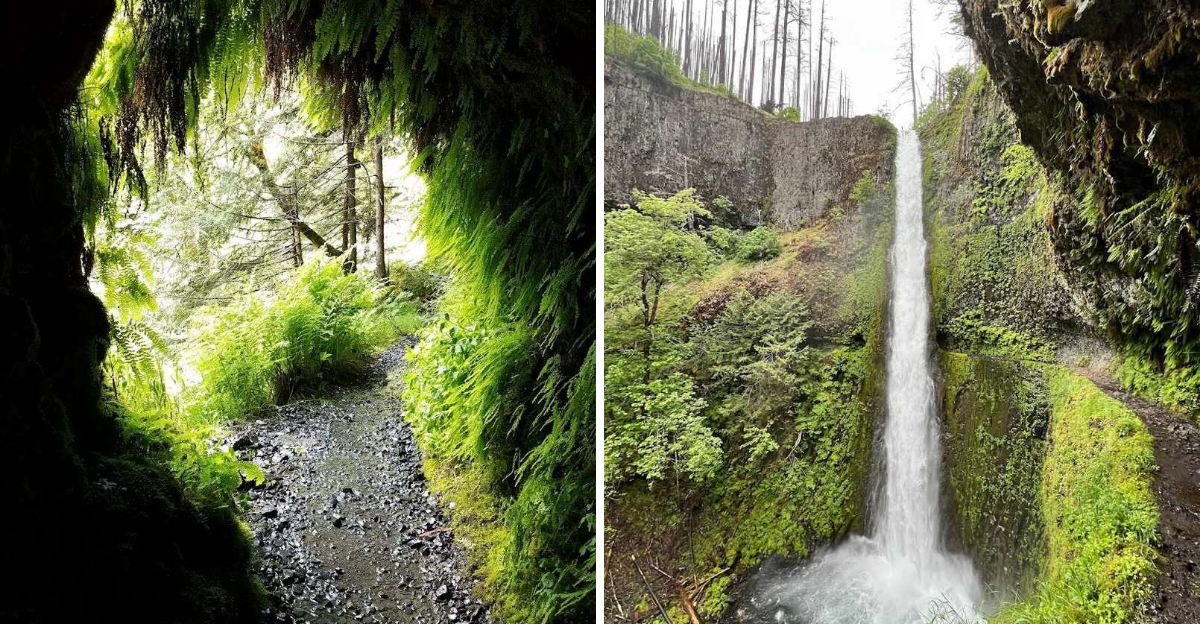
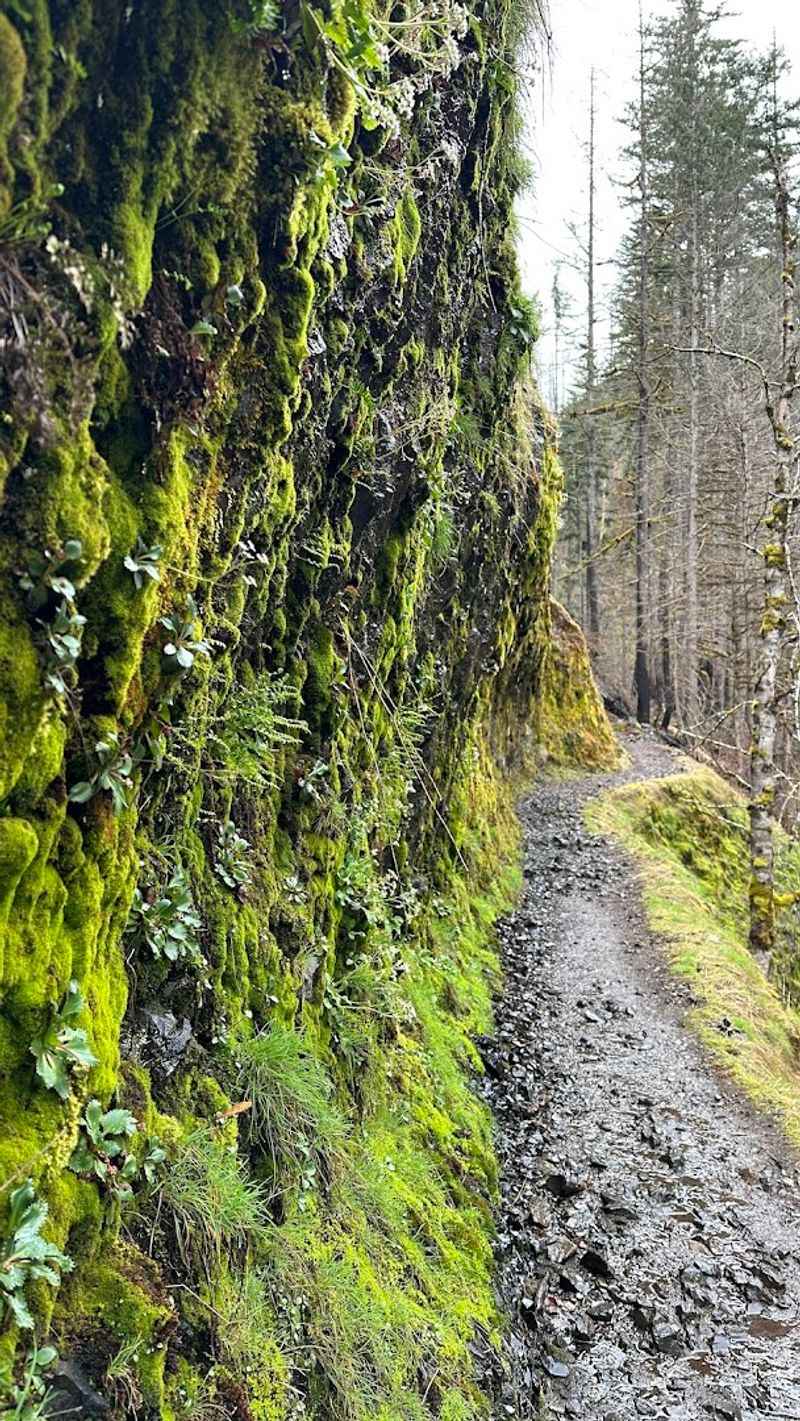
The roar of the falls grows louder with each step, a promise of the reward waiting just ahead. The path itself is a thrilling cliffside trail, carved into the rock with cables for guidance, leading to a moment that feels like stepping into a secret world.
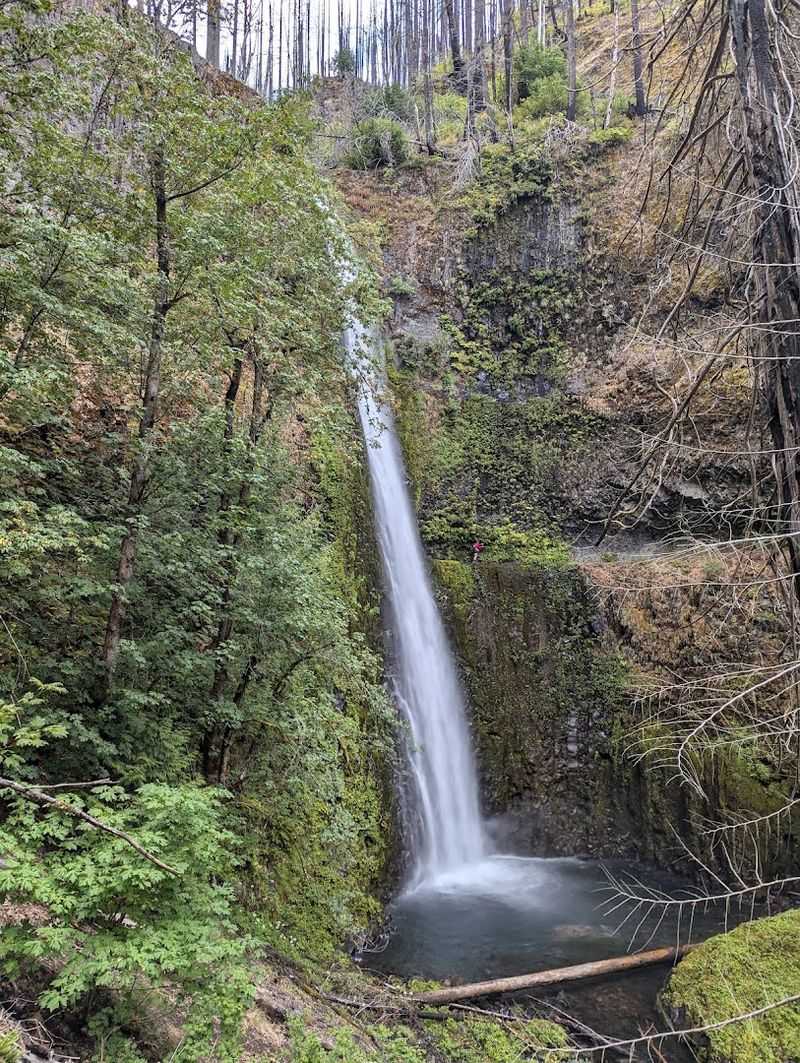
You emerge at a 175-foot waterfall plunging into a basin, and then the real magic happens – the trail leads you through a tunnel blasted directly behind the thundering cascade.
The sound is immense, the mist is cool on your face, and seeing the water crash just feet away is a perspective you will not forget.
A few hours of hiking take you through lush forest, past other waterfalls and across bridges with dizzying views. It is a classic Oregon adventure that reminds you why the journey is just as unforgettable as the destination.
The Eagle Creek Trail, Your Gateway Into the Gorge
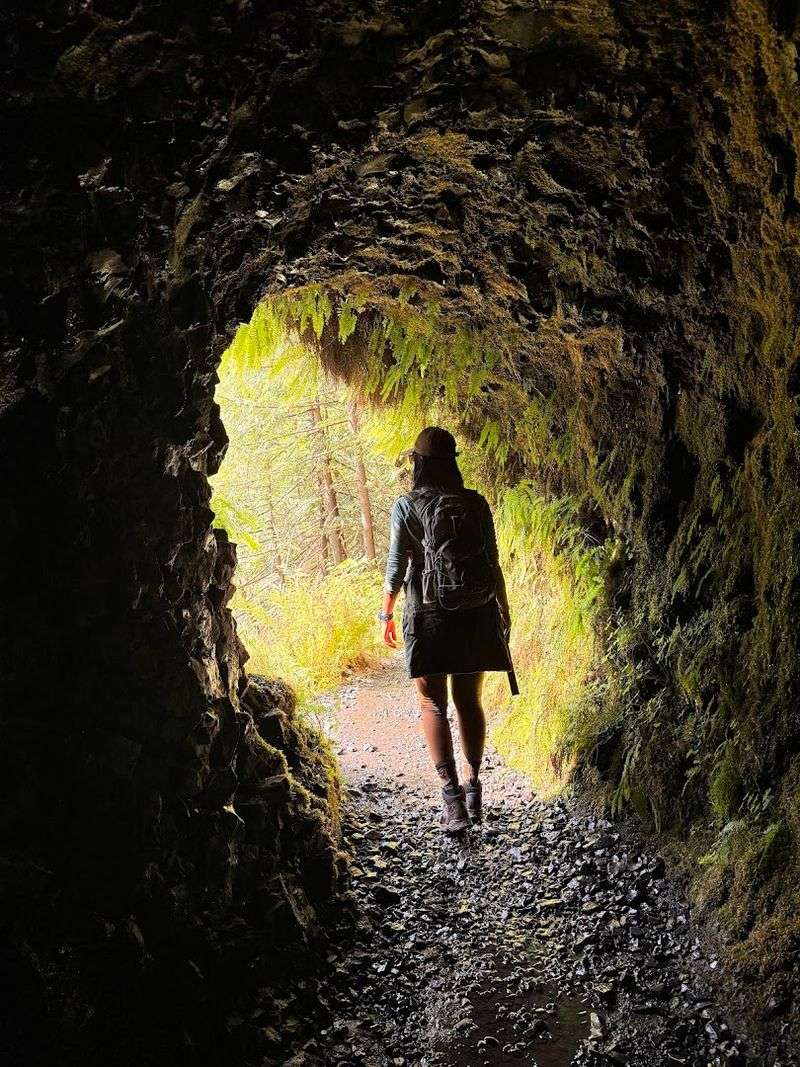
Most great adventures begin somewhere ordinary, but Eagle Creek Trailhead is anything but. Tucked into the Columbia River Gorge just off Historic Columbia River Highway, this trailhead is the starting point for one of Oregon’s most celebrated hikes.
The moment you step onto the path, the canyon pulls you in.
The trail runs alongside Eagle Creek for most of the journey, and the sound of rushing water is your constant companion. Towering basalt walls rise on either side, draped in ferns and moss that glow an almost unreal shade of green.
Early morning light filters through the canopy in long golden rays, and the air smells like earth and cold water.
Parking fills up fast on weekends, so arriving early is genuinely important. A Northwest Forest Pass or day use fee is required, so plan ahead.
The trailhead has restrooms, which you will appreciate after a 13-mile round trip day. Getting here from Portland takes roughly 45 minutes, making it an easy and very rewarding day trip from the city.
How Long Is the Hike and What Should You Expect
Right from the start, it helps to know what you are actually signing up for. Tunnel Falls sits about 6.7 to 7 miles from the trailhead, making the full round trip somewhere between 12 and 14 miles depending on where you park.
That is a solid day of hiking, no question about it.
The good news is that the elevation gain is gradual and well distributed across the whole trail. You never hit a brutal wall of incline that makes your lungs scream.
It builds steadily, which means most reasonably fit hikers can manage it without feeling completely wrecked.
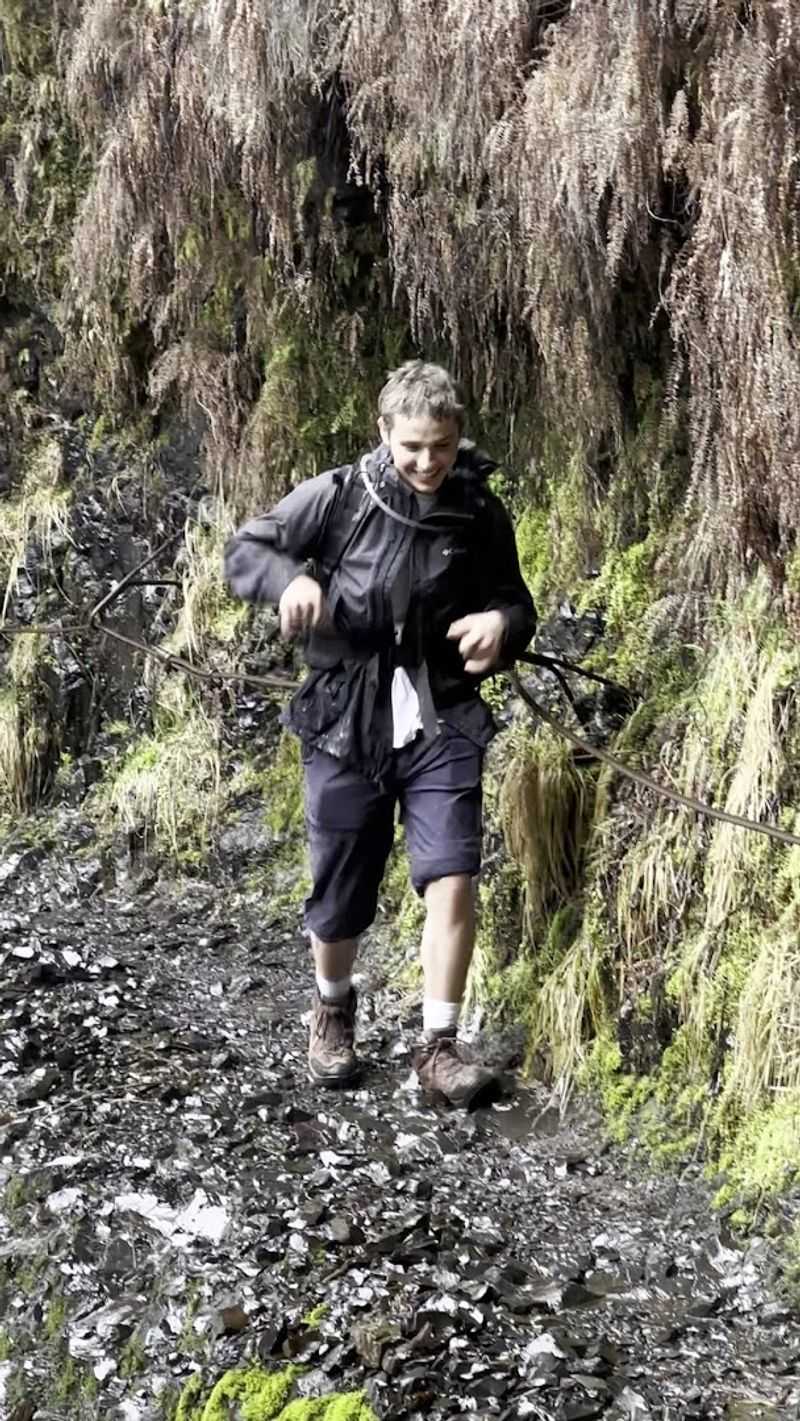
What does require attention is the trail surface itself. Large sections are rocky, uneven, and sometimes wet.
Loose rock patches demand that you keep your eyes on your feet, especially on the return trip when tired legs and downhill momentum are a tricky combination. The trail is not recommended for young children or dogs due to steep drop-offs along certain cliff-side sections.
Solid hiking shoes with ankle support make a real difference out here.
Punchbowl Falls, the Crowd-Pleaser Along the Way
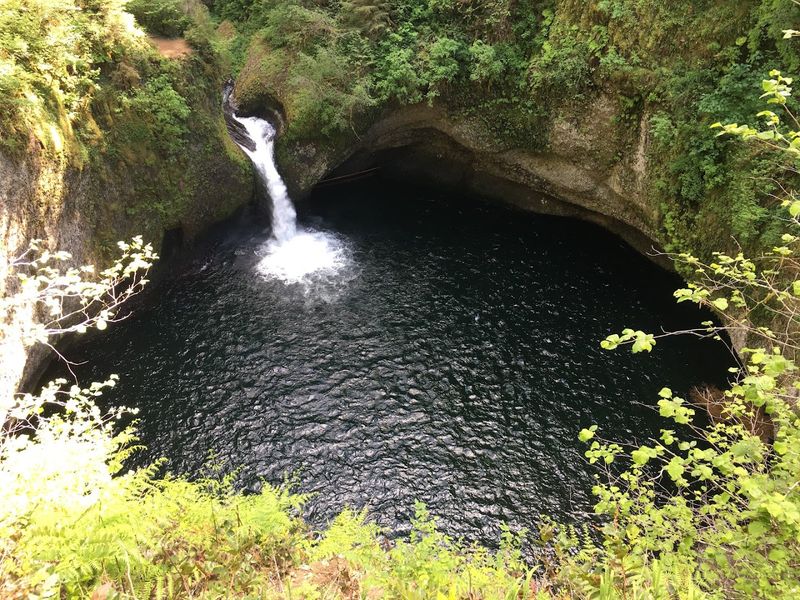
About two miles into the hike, the trail rewards you with one of the most photographed waterfalls in the entire Columbia River Gorge. Punchbowl Falls drops into a wide, perfectly circular pool of the most vivid green water you have ever seen.
It genuinely looks like something from a fantasy novel.
Many hikers treat Punchbowl as their turnaround point, which means the trail beyond it gets noticeably quieter. That shift in atmosphere is noticeable.
After the crowds thin out, the whole hike takes on a more peaceful, exploratory feeling that makes the remaining miles feel special rather than exhausting.
The viewpoint above Punchbowl is excellent, but if conditions allow, a lower scramble gets you right to the water’s edge. The pool is stunning up close, and the mist from the falls keeps things cool even on warmer days.
This is a great spot to refuel with snacks and take a proper break before pushing on toward Tunnel Falls. The remaining miles are absolutely worth it.
Cliff-Side Sections That Will Make Your Heart Race a Little
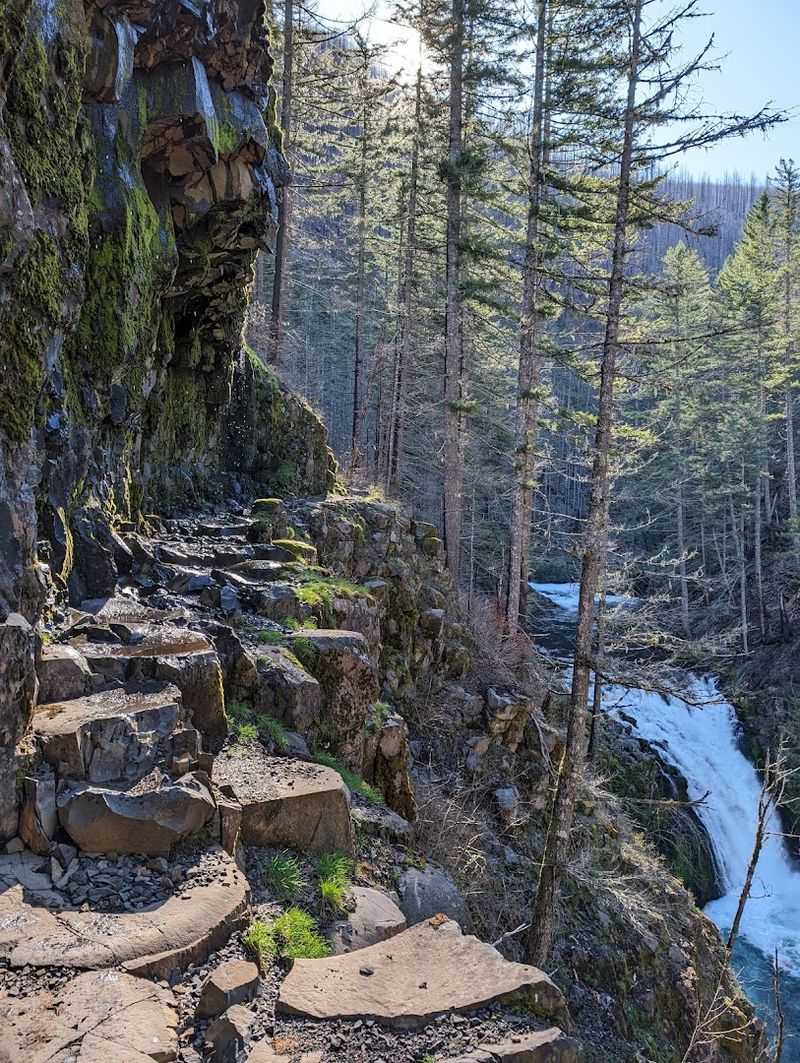
One of the most talked-about features of the Eagle Creek Trail is the series of cliff-hugging sections where the path narrows dramatically and drops away into the gorge below. Steel cables are bolted into the rock face, giving hikers something to hold onto as they navigate these exposed stretches.
For most people, these sections are more thrilling than genuinely scary. The cables are reassuring, and the path is wide enough to walk confidently if you take your time.
That said, anyone with a serious fear of heights should know what they are getting into before committing to this trail.
The views from these cliff-side stretches are extraordinary. Looking out over the gorge from that height, with the creek threading through the canyon floor far below, gives you a real sense of the landscape’s scale.
It is one of those moments where you stop walking and just look. No photo fully captures what it feels like to be perched on that basalt wall with the whole Gorge spread out in front of you.
Absolutely unforgettable.
The Waterfall Parade Before You Even Reach the Main Event
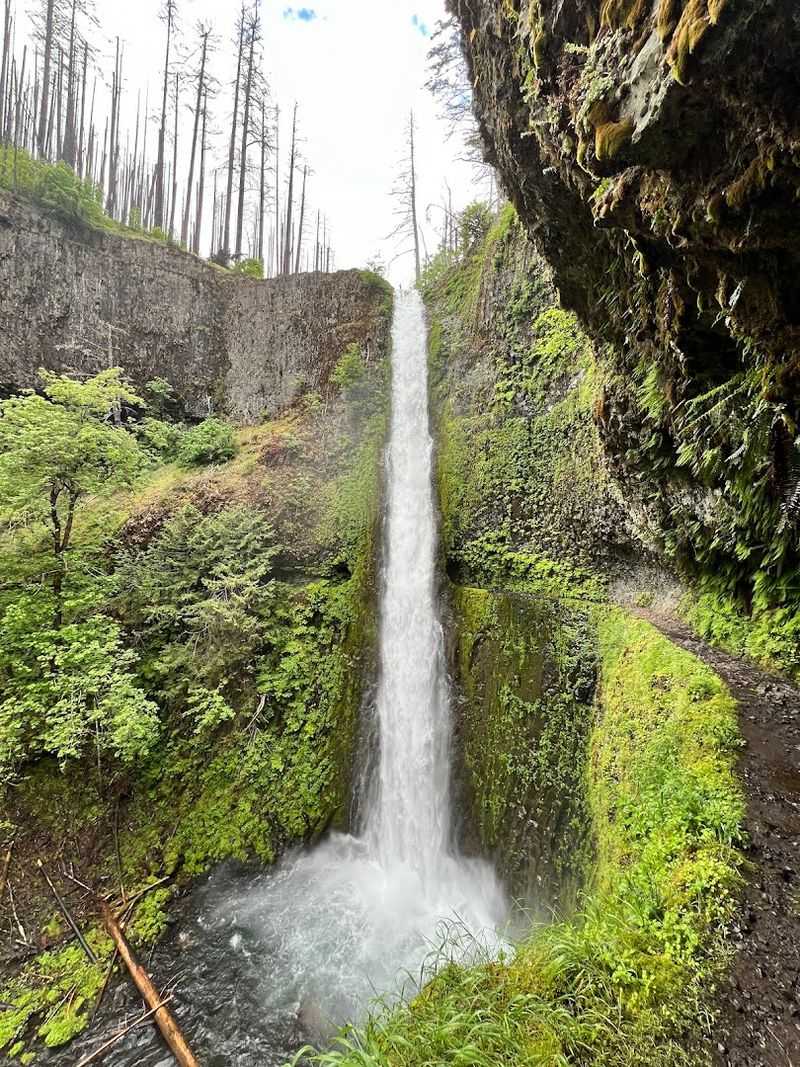
One thing that surprises first-time hikers on this trail is just how many waterfalls appear before you ever reach Tunnel Falls. The creek canyon is loaded with them.
Metlako Falls, Punchbowl Falls, Loowit Falls, and High Bridge Falls are all part of the procession, each one distinct in character and scale.
Some cascade gently down mossy rock faces in thin silver ribbons. Others thunder into plunge pools with real force.
The variety keeps the trail visually interesting across every single mile, which is part of why the distance feels manageable even when your legs are starting to feel the effort.
I kept stopping to take pictures and then realizing I had already taken that same picture four times because every waterfall looked equally worth documenting. It is a good problem to have on a hike.
By the time Tunnel Falls comes into view, you have already experienced a full gallery of natural beauty. The trail earns its reputation not just from one moment but from the entire layered experience of the journey itself.
Walking Behind the Falls, What It Actually Feels Like
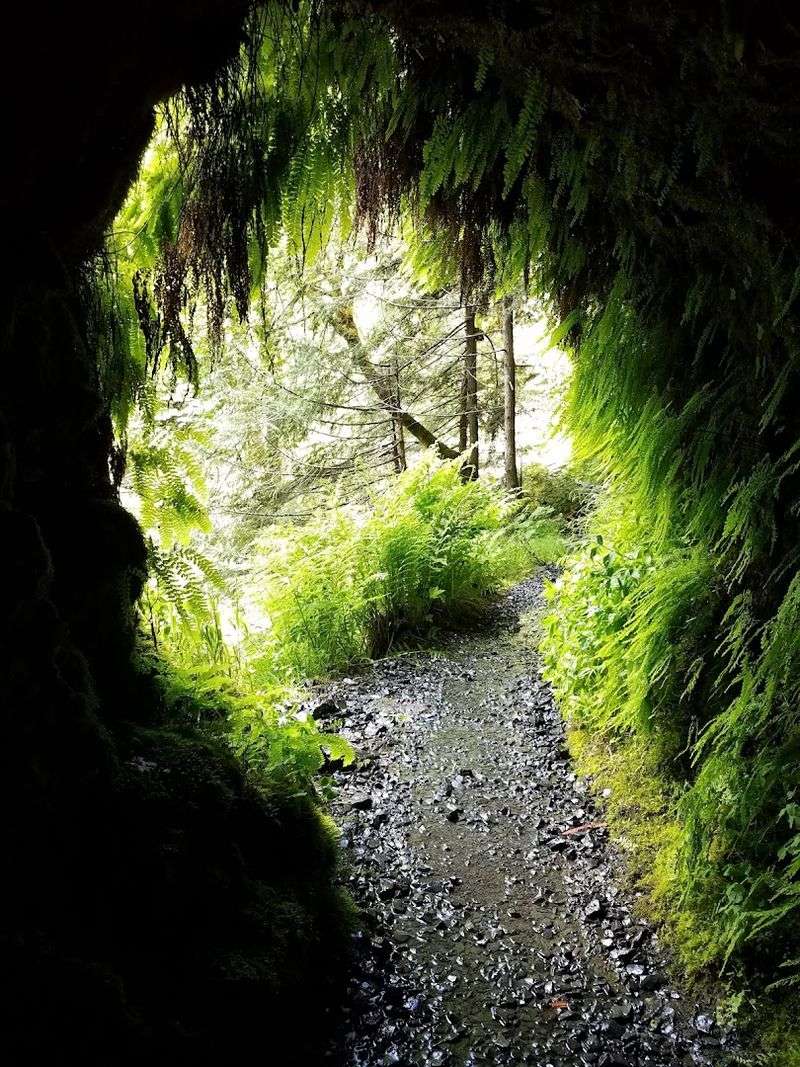
The experience of walking through that tunnel is hard to describe without sounding dramatic, but dramatic is honestly the right word for it. The moment you step into the carved passage, the temperature drops, the light changes, and the noise becomes something you feel in your whole body rather than just hear with your ears.
Looking out through the waterfall from inside the tunnel is a perspective most people never get to experience in nature. The water falls in a thick, roaring sheet just in front of you, and through it you can see the gorge, the trees, the creek far below.
It feels genuinely surreal.
The rock underfoot is wet and slippery, so moving carefully matters here. Trekking poles help if you have them.
The tunnel itself is not long, maybe 30 or 40 feet, but you will want to slow down and stay in that moment for as long as possible. Most hikers pause right at the opening, staring out through the cascade with expressions that say everything.
Pure, uncomplicated wonder is the only way to describe what shows on people’s faces at that spot.
Twister Falls, the Secret Bonus Just Beyond the Tunnel
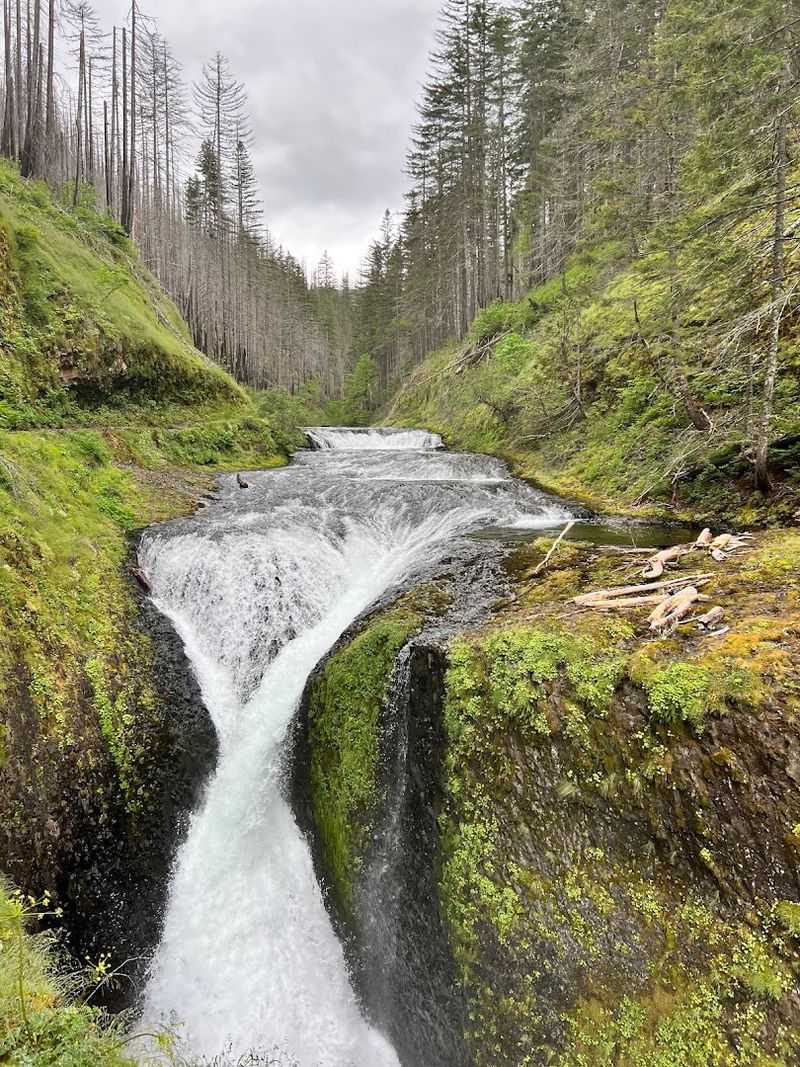
Just past Tunnel Falls, a few extra minutes of hiking leads to something most casual visitors miss entirely. Twister Falls is a compact, spiraling cascade that corkscrews down a narrow basalt channel in a way that looks almost intentional, like the rock was sculpted specifically to create that twisting motion.
It is a completely different visual experience from Tunnel Falls. Where Tunnel Falls is grand and thunderous, Twister Falls is intimate and almost playful.
The scale is smaller, but the personality is just as compelling. Several hikers specifically called it out as a highlight worth the extra effort.
Twister Falls also offers better spots to sit down, eat lunch, and just breathe for a while. There is no great resting area right at Tunnel Falls, so continuing on to Twister gives you a natural place to decompress after the emotional high of the main attraction.
The creek here is accessible and peaceful, and the surrounding canyon feels quieter and more secluded. If you have made it seven miles already, a few more minutes is an easy yes.
What to Pack for a Successful Day on This Trail
A 13-mile round trip through a rocky canyon demands a bit of preparation, and the right gear genuinely changes the quality of the experience. Water is the most critical item.
The hike takes most people a full day, and there are no facilities beyond the trailhead, so carrying enough hydration is non-negotiable.
Snacks and a proper lunch are equally important. The trail to Twister Falls is a long haul, and keeping your energy up makes the return trip far more enjoyable.
Trail mix, sandwiches, fruit, and energy bars all travel well and give you steady fuel across the miles.
Footwear deserves serious thought. Waterproof hiking boots with solid ankle support are the practical choice given the rocky, uneven, and often muddy trail conditions.
Sunscreen matters more than you might expect, since the fire history in the area means several sections have reduced tree cover and direct sun exposure. Trekking poles reduce strain on the knees, especially on the long downhill return.
A light rain jacket is always smart in the Gorge, where weather can shift without much notice.
Tips for Planning Your Visit to Tunnel Falls
Timing your visit makes a significant difference at Tunnel Falls. Parking at the Eagle Creek Trailhead is limited, and on sunny weekends it fills up fast, sometimes by mid-morning.
Arriving by 7 or 7:30 in the morning gives you the best chance of securing a spot close to the start of the trail.
A Northwest Forest Pass is required for parking. Day use passes are also available at a self-service kiosk near the main lot for those who do not have an annual pass.
Cash fee envelopes are available at the trailhead itself for a small day use fee. If the main lot is full, overflow parking at Eagle Creek Car Park or Wauna Viewpoint Trailhead adds a short distance to your starting walk but is a workable backup.
The trail is open year-round, though winter conditions can bring ice to certain sections. Mid-February hikers have reported manageable conditions with solid boots and no crampons needed.
Spring offers lush greenery and full water flow. The falls are located in Oregon 97014, deep within the Columbia River Gorge National Scenic Area, and every season brings its own version of spectacular.
