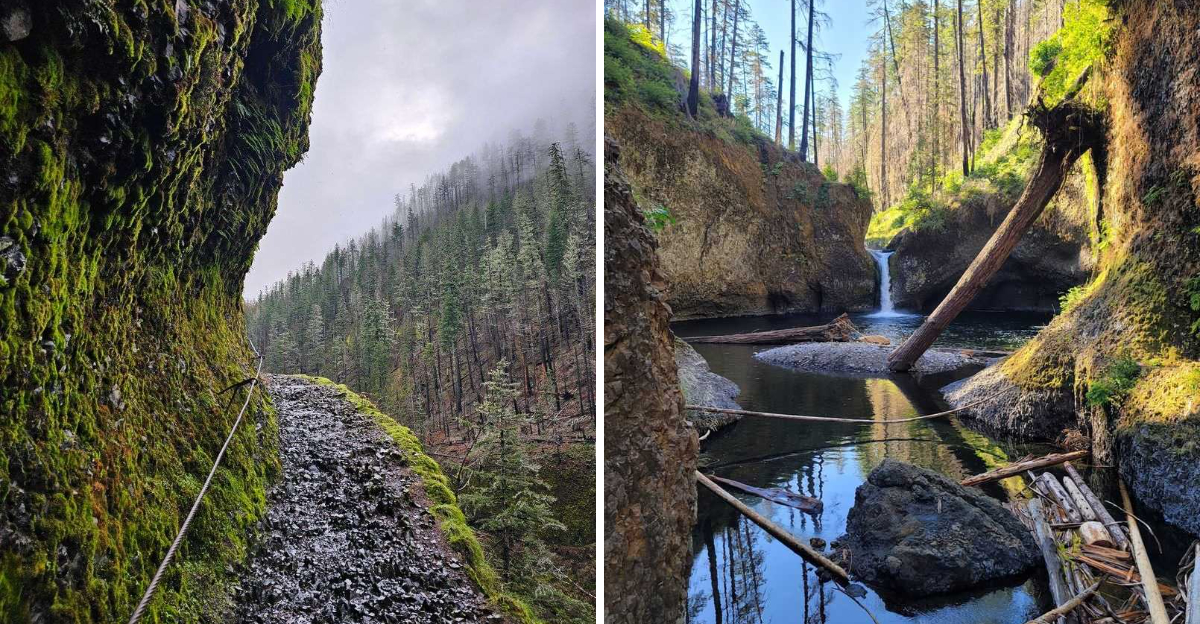
Flat ground and easy footing greet you at the trailhead, tricking most hikers into thinking this one stays simple the whole way.
It doesn’t. Deeper into the canyon, the trail carves right into cliffside, narrowing until cables bolted into rock become your only handrail. Waterfalls appear one after another, each one somehow more dramatic than the last, distracting hikers just enough to forget how far the drop below actually goes.
Oregon trails often get labeled easy or moderate, but this one refuses to sit quietly in either category. Elevation barely changes, yet the exposure alone raises pulses fast. Oregon’s dense forest hides the intensity well until you’re already committed, cliffside, with nowhere left to turn back comfortably.
Some trails lie about what they’re really asking from you. This one just lets you find out yourself.
The Deceptively Mellow Opening Mile
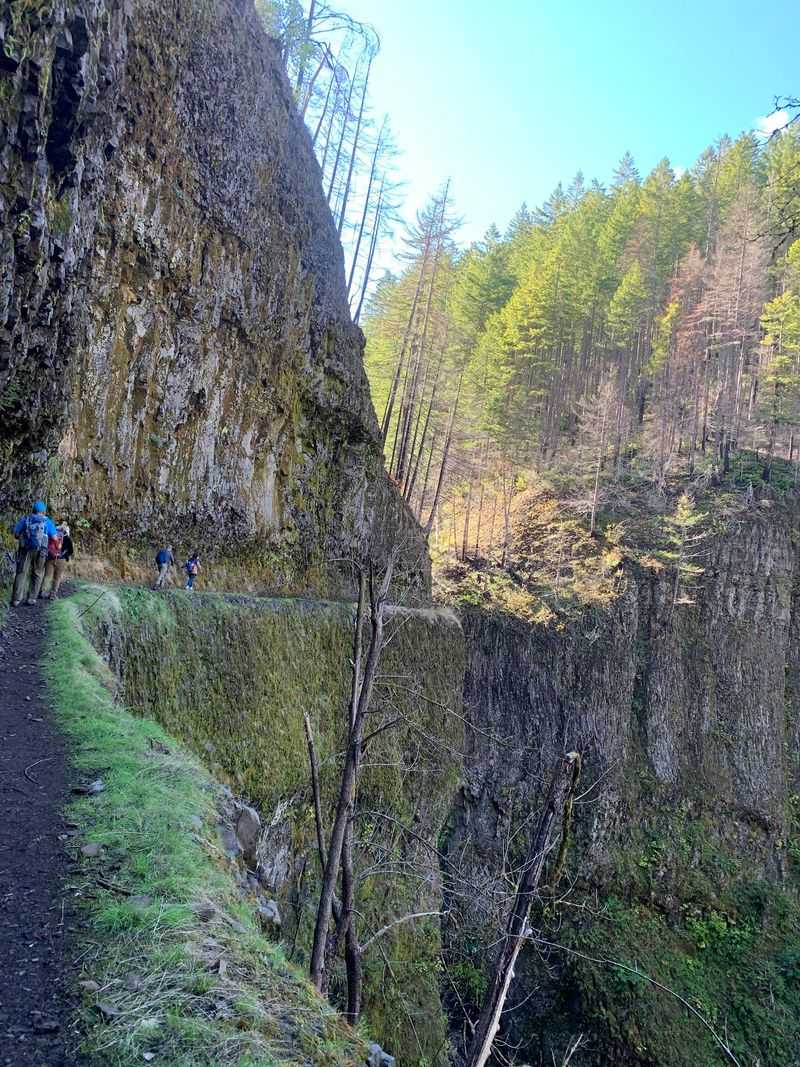
Gravel crunches underfoot for the first few minutes, and the route feels almost suspiciously mellow. The path leaves the lot wide and smooth, with Eagle Creek murmuring somewhere below the trees.
That easy opening fools a lot of people. Hikers in sneakers stroll in like it is a neighborhood park, water bottle swinging from one hand.
Around half a mile in, the character shifts. Loose rock scatters across the tread, the path narrows, and the canyon wall starts pressing in on one shoulder.
Shade thickens where young trees have filled back in, and moss coats the boulders in bright green patches. Ferns crowd the edges. The sound of moving water never really stops.
Pace yourself here, because the gradual climb hides how far the trail actually runs. Elevation gain stays gentle, which tricks the legs into moving faster than they should.
Anyone planning a long day should treat that first mile as a warm up rather than a preview. What comes next looks nothing like it, and that surprise is exactly why hikers keep returning to this canyon year after year.
Ledges Blasted Straight Into The Cliff Face
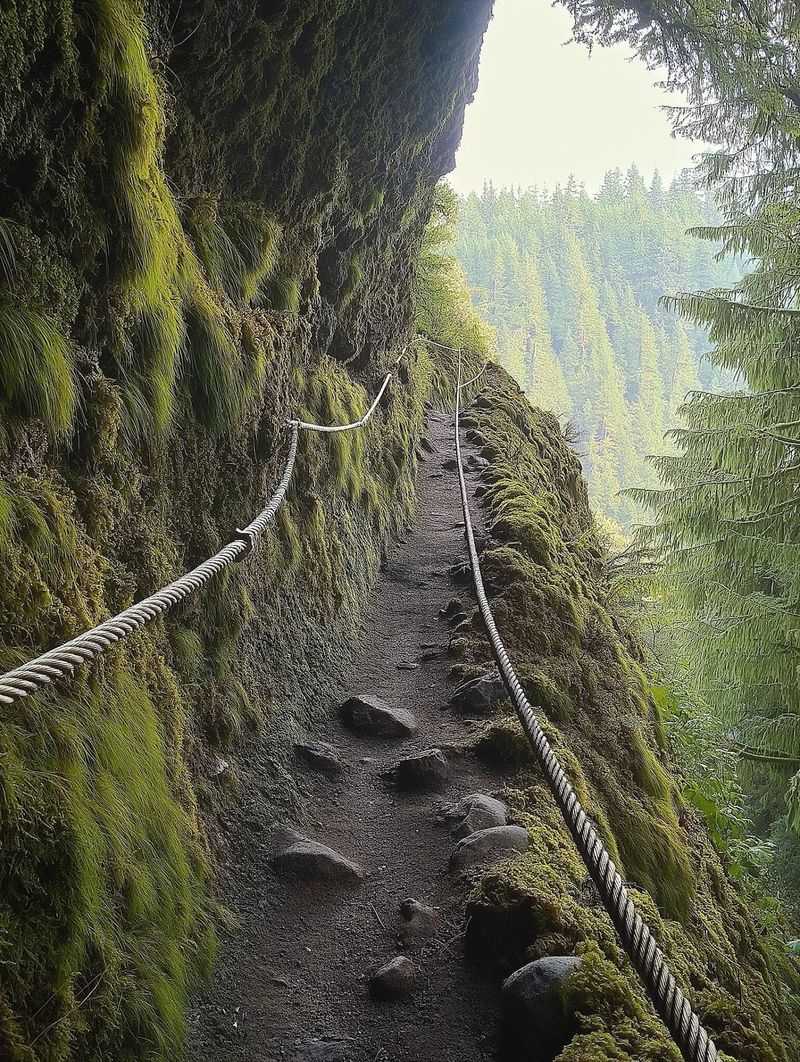
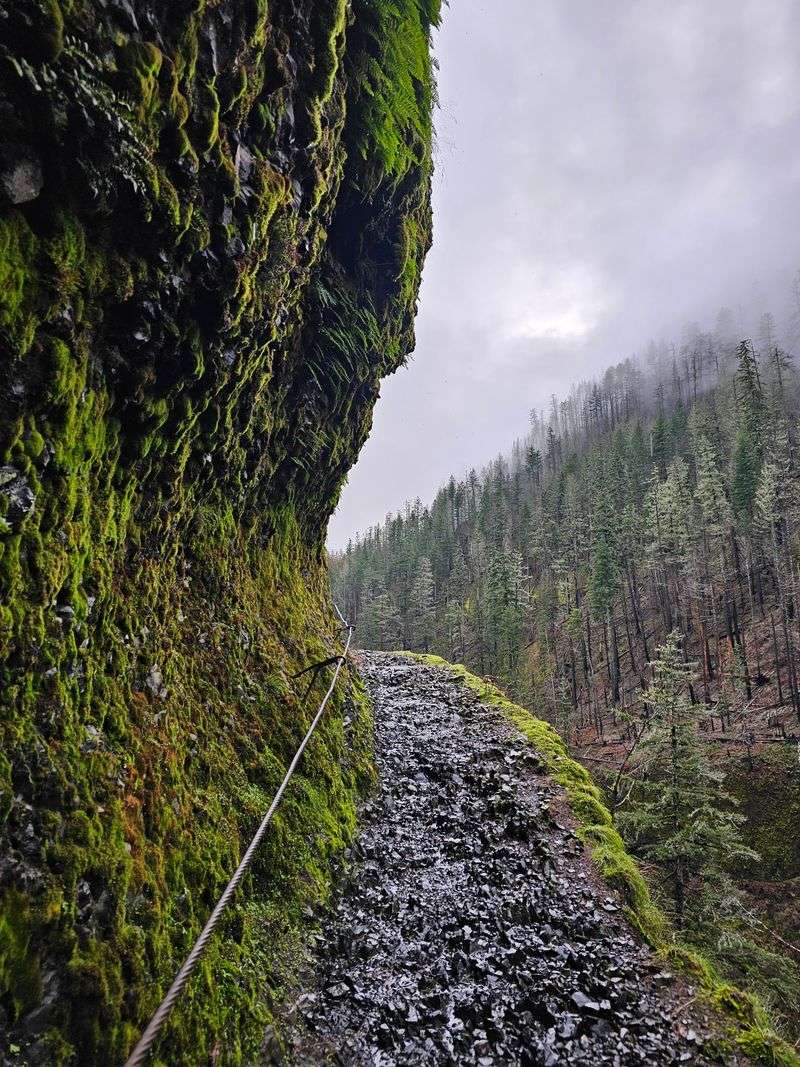
Somewhere past the first bend, the trail stops behaving like a forest path and turns into a shelf cut straight into basalt. Crews carved this route into the rock more than a century ago.
The tread narrows to roughly the width of a hallway in places, with a wall on one side and open air on the other. Cables bolted into the stone give hands something to hold on the most exposed stretches. They help, though they are not fences.
Look down and the creek glitters far below, threading between mossy boulders. Look up and the cliff just keeps going.
People who dislike heights often stop right here, and there is no shame in that. Moving slowly, staying on the inside line, and letting faster hikers pass makes the whole section calmer.
Wet weather turns the rock slick, so traction matters more than speed. Keep dogs on a short leash and children within arm’s reach. The reward for those nerves is a view no ordinary trail offers, a canyon seen from inside its own walls. Photos rarely capture the drop.
Punchbowl Falls And Its Green Swimming Hole
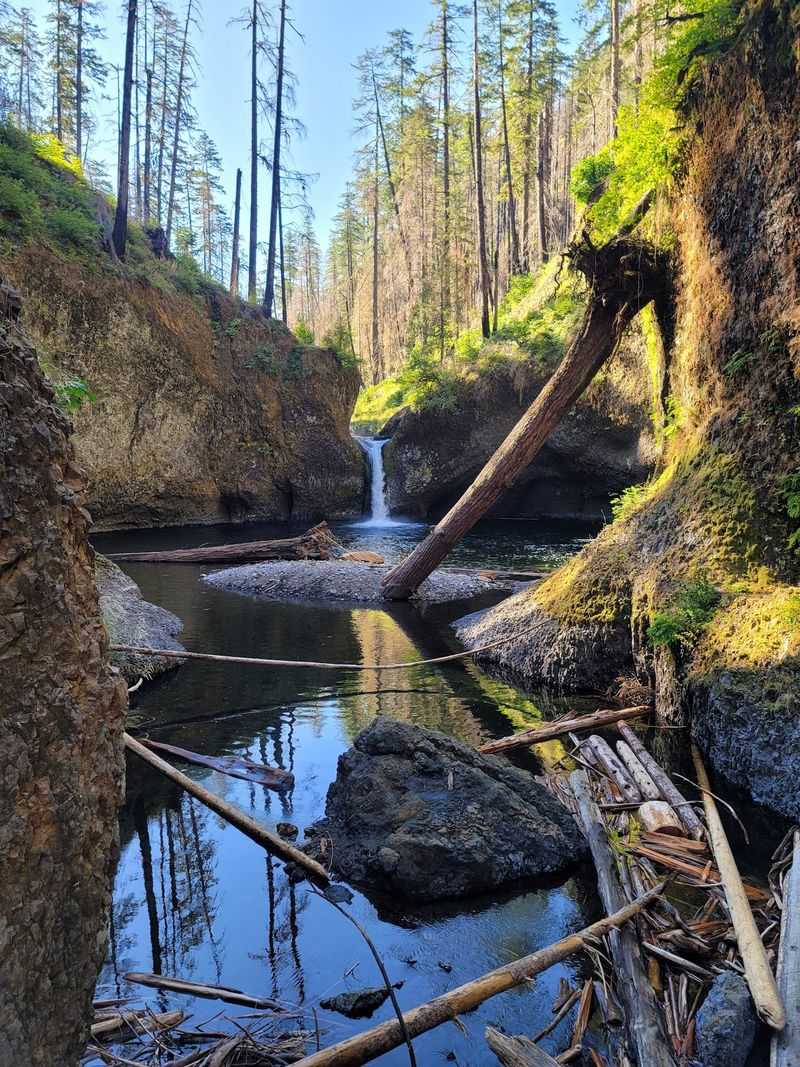
Punchbowl Falls grabs most of the attention on this trail, and for good reason. The creek squeezes through a slot in the rock and drops into a wide, round pool the color of sea glass.
A short spur trail heads down toward the water, though reaching the base takes some scrambling over logs and slick stones. On warm afternoons, swimmers wade in and immediately learn how cold mountain water can be. The shock wears off. Then nobody wants to leave.
An upper viewpoint sits back from the edge, and it delivers the classic postcard angle without any climbing at all. Plenty of hikers make this their turnaround, which keeps the day reasonable while still feeling like a real adventure.
Bring a small towel if swimming sounds appealing, and pack out every snack wrapper. This spot sees heavy traffic.
Arriving before mid morning means quieter water and softer light on the pool. Late afternoon works too, once day hikers start filtering back toward the parking area with tired legs and soaked shoes. Either way, linger a while.
High Bridge Over The Narrow Slot Canyon
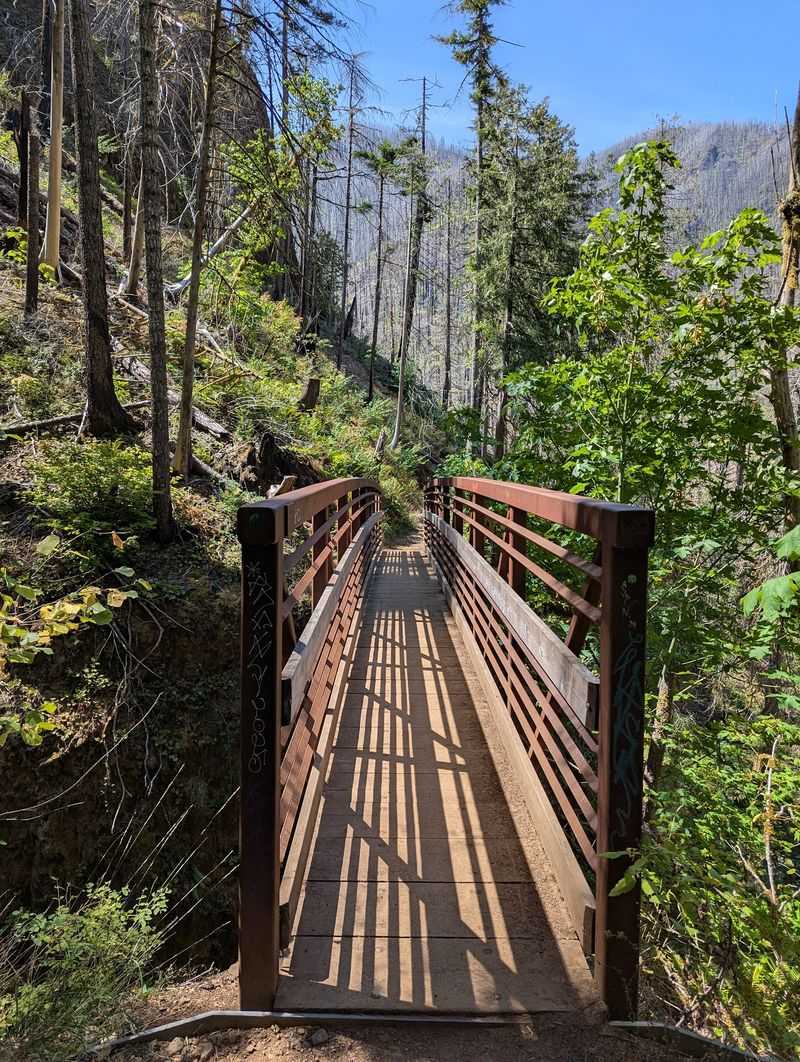
About three miles in, the canyon pinches so tight that the walls nearly touch, and a steel footbridge spans the gap. Crossing it feels like walking over a keyhole. Water roars through the slot far beneath the planks.
The structure is solid and railed, so the crossing is safer than it looks from a distance. What sticks with most hikers is the sound. In that narrow section, the creek echoes off the rock and turns into a low, constant rumble.
Past the bridge, foot traffic thins noticeably. Many day hikers turn back before this point, so the trail suddenly feels more private. Small side streams cross the path here, sometimes trickling and sometimes spilling right over the tread after storms. Rock hopping usually keeps boots dry.
Take a minute mid span to look upstream, where mossy walls glow green even on gray days.
Photographers love this spot, but the bridge is narrow, so step aside when others need to pass. Courtesy keeps things moving, and there is plenty of room on either end to set up a shot without blocking anyone.
Tunnel Falls, Where The Path Goes Behind The Water
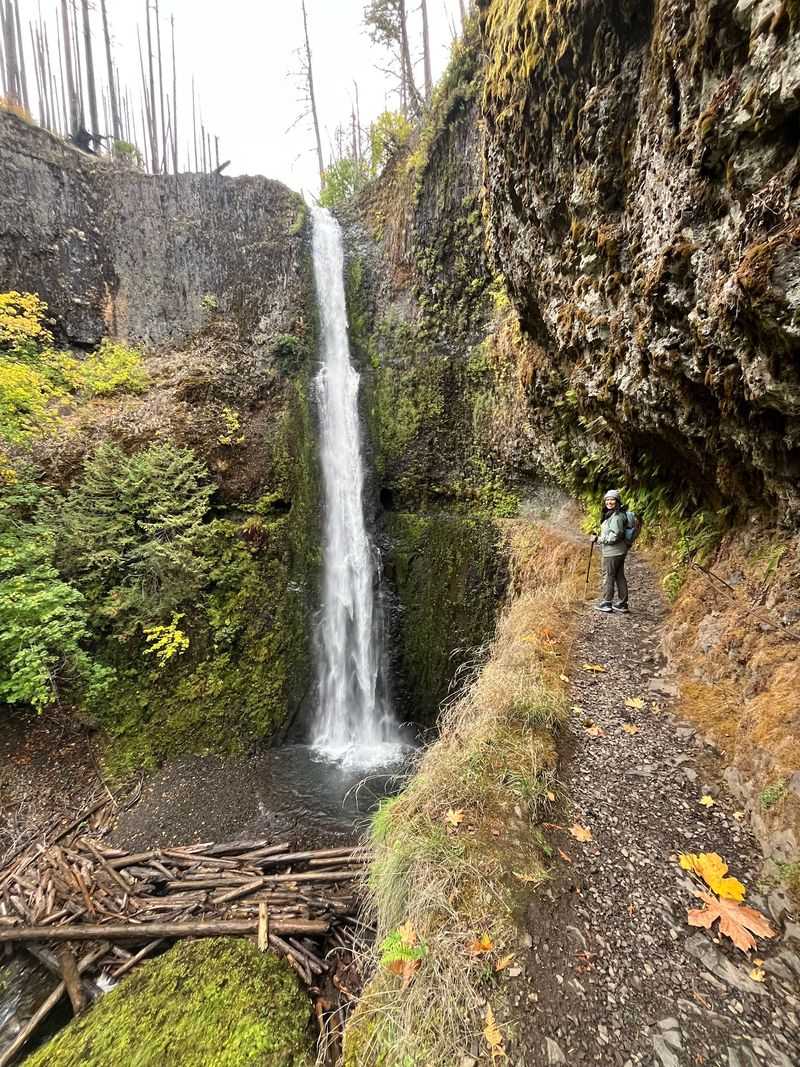
Roughly six and a half miles from the trailhead, the payoff arrives with a bang. A tall ribbon of water pours off a cliff, and the trail vanishes straight into the rock behind it. Someone chiseled a tunnel through the basalt so hikers can walk behind the curtain of falling water.
Spray hits the face, the rock drips, and the noise fills the passage completely. It is genuinely loud in there. The approach ledge is narrow with a cable to grip, and the stone stays wet year round, so slow feet win.
Round trip to this point runs around twelve to thirteen miles depending on the tracker, which makes it a full day rather than a casual outing. Most groups need somewhere between five and seven hours, stops included.
Start early, carry more water than feels necessary, and check the daylight before committing to those last few miles. Walking through that tunnel is the kind of memory people bring up years later, and it explains why so many hikers talk about this canyon long after their boots dry out.
Twister Falls For Legs With Something Left
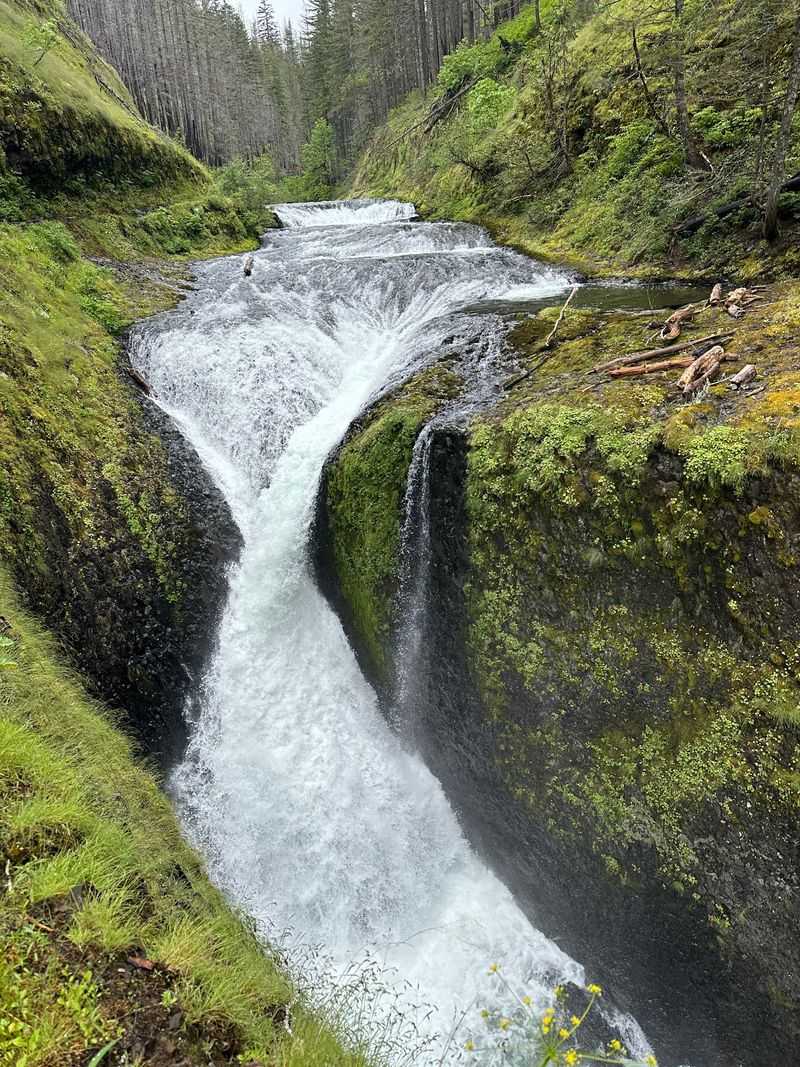
Just past Tunnel Falls, a short push leads to a waterfall that seems to braid itself as it drops. Twister Falls corkscrews through a chute in the rock, spinning the water into ropes before it lands.
Adding it means extra mileage on legs that are already complaining, and yet almost nobody regrets the detour. Crowds thin dramatically out here. Hikers who push beyond the tunnel often see only a handful of other people the rest of the way.
Terrain gets rougher too, with more downed trees and washed out sections to negotiate. Anyone continuing deeper can aim for Wahtum Lake, though that turns the outing into a serious backpacking route rather than a day trip.
Campsites sit along the creek a few miles in, and overnight trips break the distance into friendlier chunks. Before tacking on miles, do the math on time and water. Turning around with energy in reserve beats crossing those cliff ledges in fading light.
The final stretch of canyon rewards patience with quiet, moving water, and a real sense of being far from anything paved.
Fire Scars And A Forest Rebuilding Itself
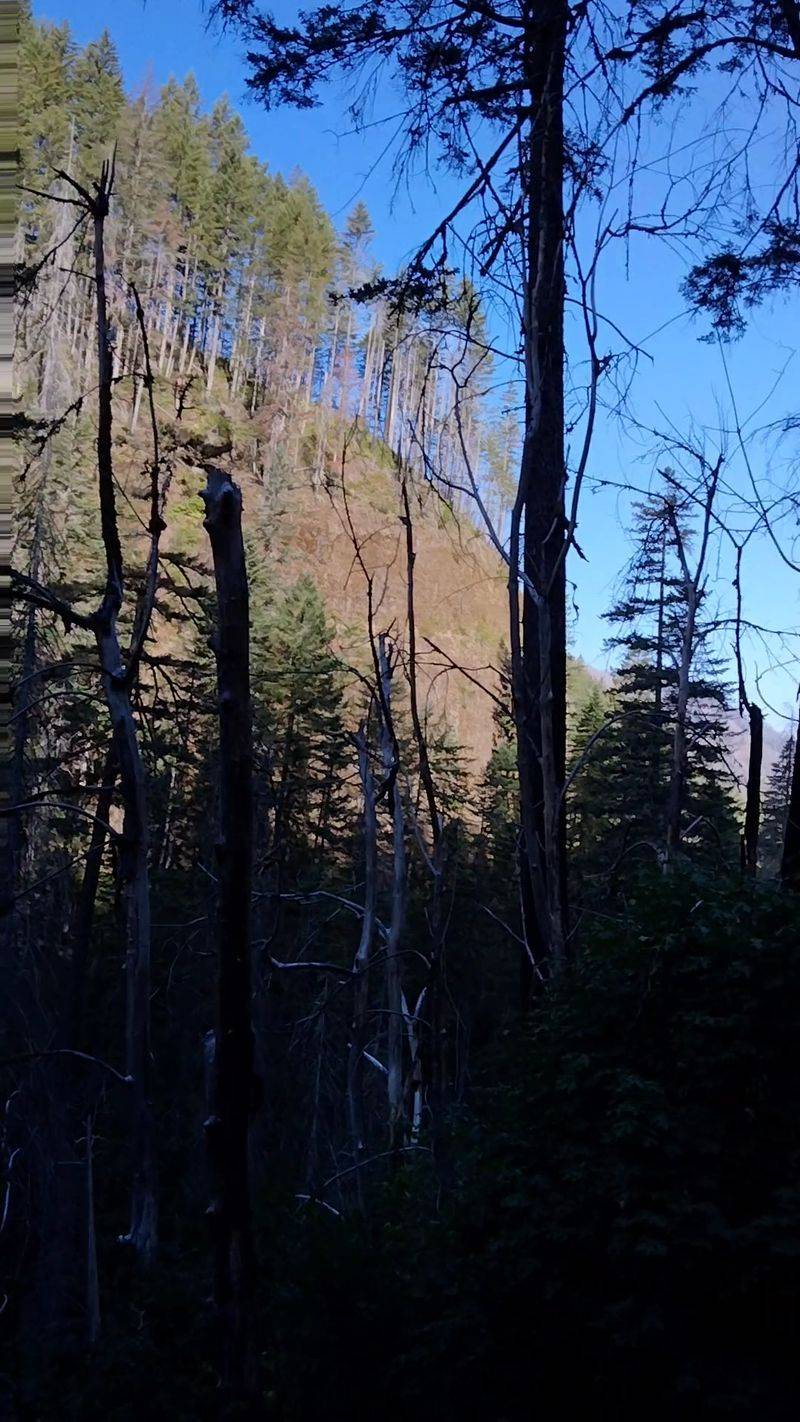
The 2017 Eagle Creek Fire reshaped this canyon, and the evidence still stands along the trail. Blackened trunks rise above the slopes, some bare, some snapped off partway up. It looks stark at first glance, especially where the old canopy once shaded the entire path.
Something unexpected came with the loss, though. With fewer trees blocking sightlines, hikers can now see across the canyon in ways that were impossible before. Ridgelines, cliff bands, and distant waterfalls appear through the gaps.
Underneath the standing snags, recovery is loud and green. Fireweed, young alder, sword ferns, and thick moss have taken over the ground. Wildflowers show up in spring along the sunnier stretches. Shade is limited in burned sections, so sun protection matters more than it used to on hot afternoons.
Weakened trees also fall without much warning, which is one reason the trail closes after big storms or heavy wind. Respect those closures, since crews clear debris and stabilize slopes before reopening.
Watching a forest rebuild itself, slowly and stubbornly, adds a layer to the hike that no guidebook photo can deliver.
Smart Packing, Passes And Trail Conditions
Footwear decides how this day goes, full stop. Loose rock, wet stone, and root steps punish flip flops and worn out sneakers. Sturdy hiking shoes with real tread make the exposed ledges far less nerve racking.
Water deserves the same attention. Many hikers underestimate the distance and run dry on the return, so carry extra or bring a filter for creek water. Snacks, a headlamp, and a rain layer round out a sensible pack.
Parking fills early, especially on weekends. A Northwest Forest Pass or an interagency pass is required, and additional parking sits farther down the road when the main lot is full.
Dogs are welcome on leash, which really matters on narrow sections where there is nowhere to step aside. Check current conditions before driving out, since landslides and fallen trees can close stretches with little notice. Cell service is unreliable deep in the canyon, so tell someone your plan.
The trailhead sits at NE Eagle Creek Loop, Cascade Locks, OR 97014, United States, a quick detour off the highway east of Portland, and an early arrival solves both the parking puzzle and the crowd problem.
