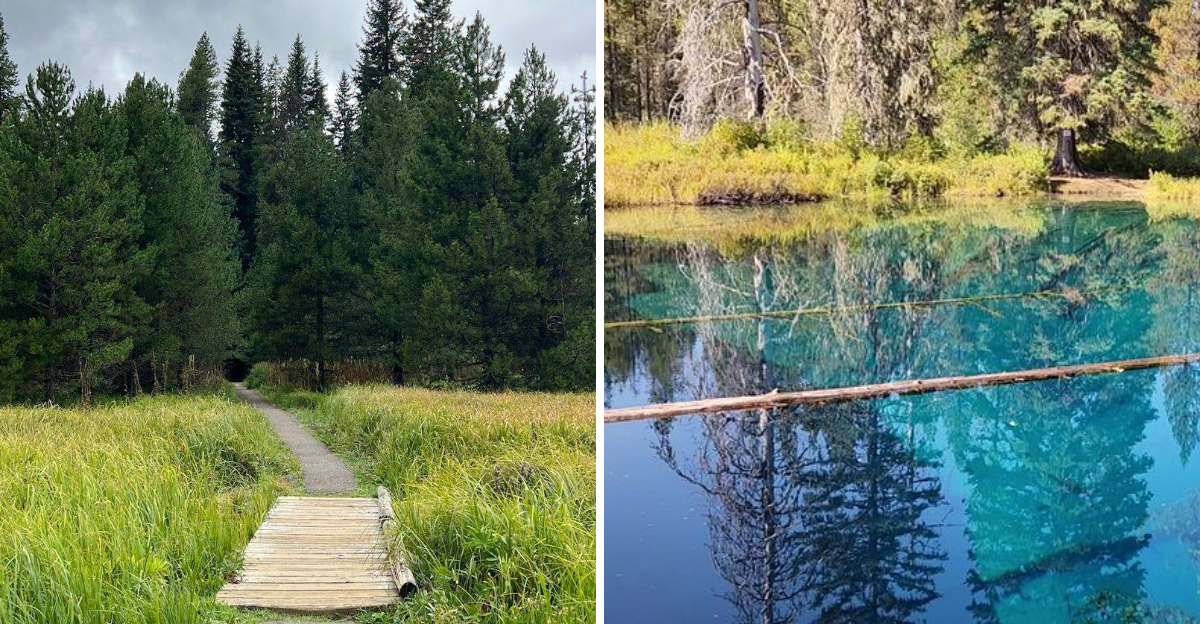
A lake so clear that you can see every pebble and shadow on the bottom like looking through pure glass. I stood at the edge and the turquoise water sparkled in the sunlight making me feel like I had found a tropical secret.
Oregon has a stunning spot nicknamed the Little Bahamas of the Northwest and the nickname makes perfect sense in person. The shoreline is dotted with pine trees that frame the water like a postcard from a dream vacation.
I dipped my hand in and the cool freshness felt nothing like the ocean but the beauty rivaled any island escape. Oregon really hides a gem where crystal clear water and peaceful surroundings create a perfect summer afternoon destination.
The lake is small enough to walk around in a few minutes but you will want to stay much longer just staring. I watched a family wade into the shallow edge and their laughter echoed across the calm surface like music.
The color changes with the light from deep blue to bright aqua and every shade in between throughout the day. You leave with photos that look photoshopped and a memory of water so clear it felt almost unreal.
What Makes Little Crater Lake So Unbelievably Clear
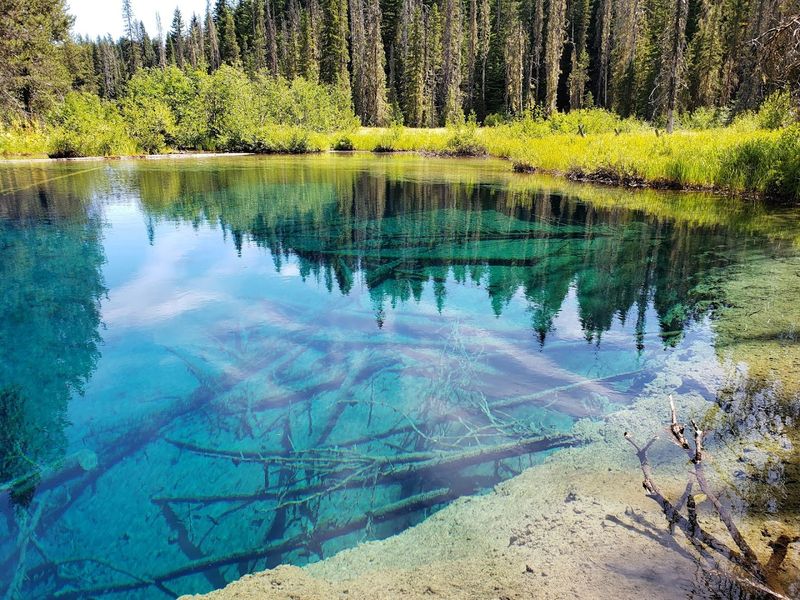
Standing at the edge of this pool, you almost expect to see a trick of the light. The water is not just clear.
It is startlingly, almost unnervingly transparent all the way down to the bottom.
Little Crater Lake is a spring-fed artesian pool. Cold groundwater pushes up from deep underground, keeping the lake at a near-freezing 34 to 38 degrees Fahrenheit year-round.
That icy cold temperature slows algae growth dramatically.
Without algae clouding things up, the water stays pure. Visitors have described seeing all the way down to the 45-foot bottom as mind-boggling.
The color shifts from a pale aquamarine near the edges to a deep, rich blue at the center.
It honestly looks painted. No filter on a camera ever quite captures the real shade.
You have to see it in person to fully believe the color is natural and completely real.
The Geology Behind This Hidden Oregon Gem
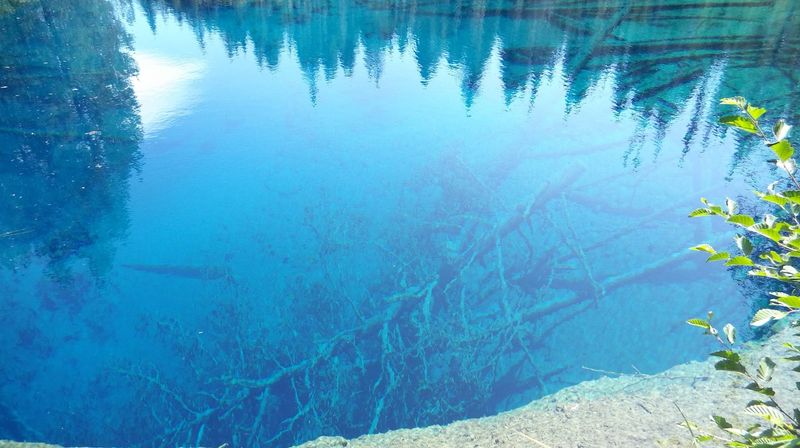
Not many people realize that Little Crater Lake is not technically a crater at all. It did not form from a volcanic blast or a meteor strike.
The name comes from its striking circular shape and dramatic depth.
The pool was carved by artesian spring activity over thousands of years. Pressurized groundwater pushed upward through a weak point in the earth, slowly eroding the surrounding soil and rock.
The result is a nearly perfect circle of impossibly deep, cold water.
The lake sits within a meadow bordered by tall conifers in the Mount Hood National Forest. Corn lilies ring the shoreline in warmer months, adding a lush, almost tropical texture to the scene.
That geological quirk is exactly what makes this spot so rare. You will not find many places in Oregon, or anywhere in the Pacific Northwest, that combine this kind of clarity, depth, and natural formation all in one compact, accessible location.
Getting There: The Easiest Trail You Will Ever Love
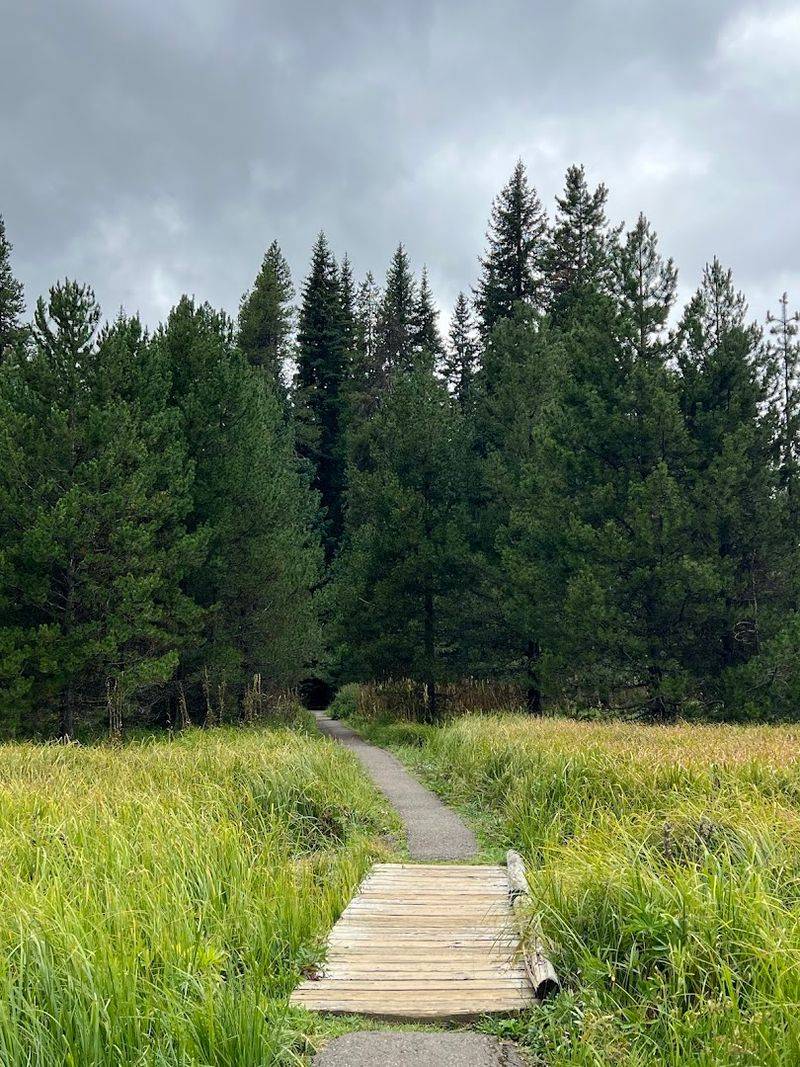
The hike to Little Crater Lake is refreshingly short. From the day-use parking area inside the Little Crater Lake Campground, the trail is roughly 250 yards.
That is barely a quarter mile of flat, easy walking.
The path winds through a quiet meadow first. You catch glimpses of tall grasses and wildflowers before the trees close in around you.
Then suddenly, the pool appears.
Kids handle this trail with zero trouble. Older visitors and those with mobility concerns will also find it manageable.
The surface is mostly packed dirt with a boardwalk section closer to the lake.
One important note: there is a day-use fee to enter the campground. Pay it at the entrance station.
Skipping it is not worth the risk of a ticket, and the fee helps maintain the site.
Parking fits roughly six to ten vehicles near the trailhead. Arriving early on sunny weekends is a smart move to snag a spot without the stress.
Why Swimming Is Not Allowed Here
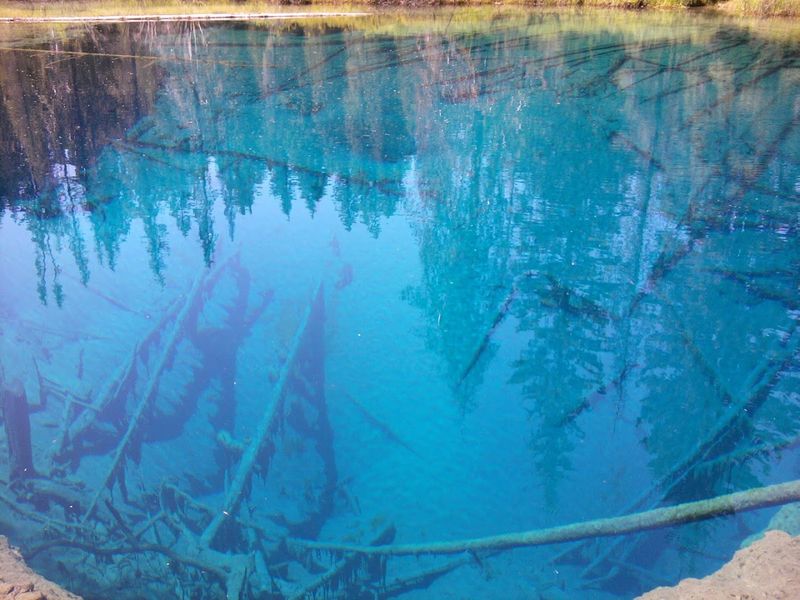
The water looks so inviting that the no-swimming rule genuinely stings. Visitors consistently describe the urge to jump in as almost irresistible, especially on a warm summer afternoon.
But there are real reasons behind the restriction. The lake is a protected natural resource.
Swimming would introduce bacteria, sunscreen, and other contaminants into a delicate spring ecosystem.
The water temperature is also a serious safety concern. At 34 to 38 degrees Fahrenheit year-round, the cold alone poses a risk of cold water shock.
That can cause muscle cramps and breathing problems almost instantly.
Some visitors have dipped a hand in and described it as shockingly cold within seconds. Tiny fish actually live in the pool.
Keeping the water pristine protects that fragile little ecosystem from disruption.
Respecting the no-swim rule is a small sacrifice for a big payoff. The lake stays beautiful precisely because people follow the rules.
Future visitors will thank everyone who leaves it exactly as they found it.
The Best Time of Year to Visit Little Crater Lake
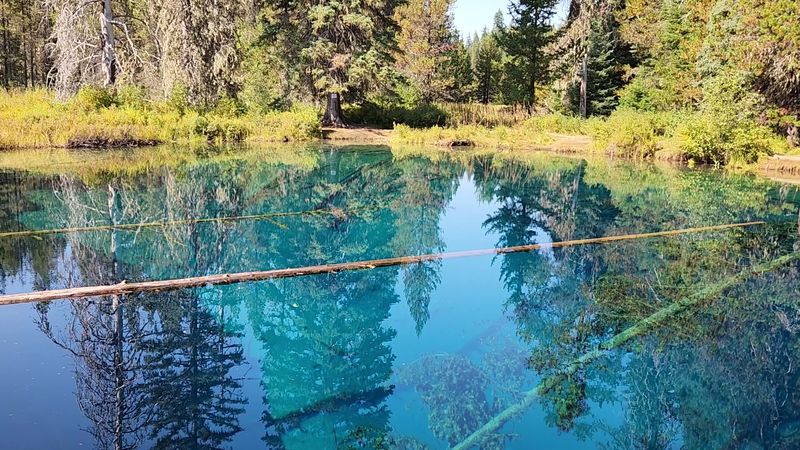
Summer is the most popular season here, and for good reason. The meadow blooms with corn lilies.
The sky above the forest turns a brilliant blue that mirrors the pool below.
Sunny days between June and September offer the most dramatic water colors. Morning light hits the pool at a low angle and sends blue and green reflections shimmering across the surface.
It is genuinely spectacular.
Early morning visits reward the patient traveler. The campground is quieter before 9 a.m., and the light is softer and more photogenic.
One visitor noted arriving at 9 a.m. and catching beautiful rays dancing through the water even before full sun.
Fall is underrated here. The surrounding forest shifts to gold and rust tones that frame the electric blue water in an almost surreal way.
Crowds thin out considerably after Labor Day.
Winter access depends on road conditions. The campground may close seasonally.
Always check current road and facility status with the Mount Hood National Forest before planning a cold-weather visit.
Camping at Little Crater Lake Campground
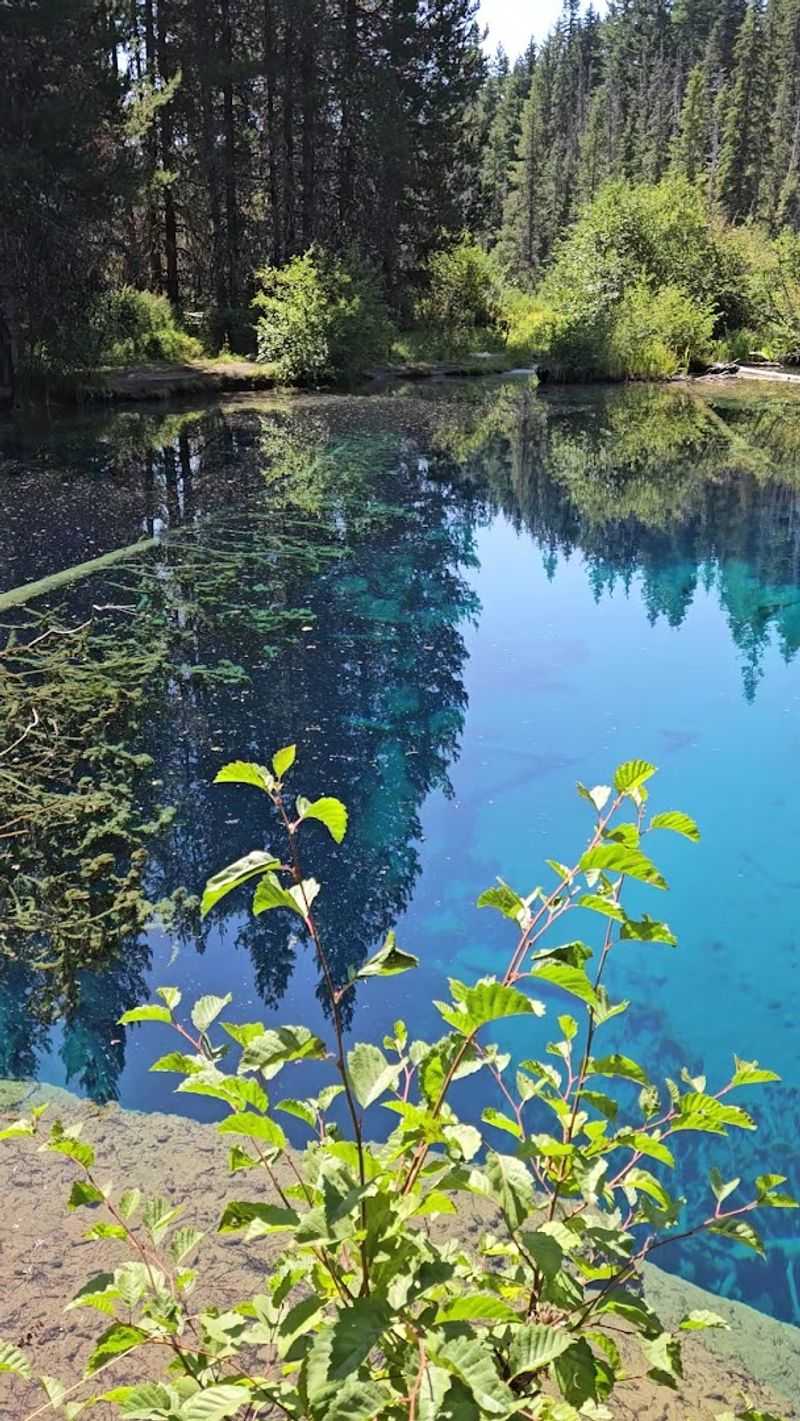
Spending a night here shifts the whole experience. The campground sits right next to the lake, and waking up in that forest feels genuinely restorative.
The sites are nestled among tall conifers with decent shade.
The campground is managed and has a host on-site.
One thing to keep in mind: campsites near the day-use parking lot for the lake can get noisy. Foot traffic picks up during daylight hours as visitors come to see the pool.
Choosing a site farther from the trailhead parking area helps.
The campground connects to the Pacific Crest Trail. That means hikers passing through on the PCT can also access the area.
It adds an energetic, adventurous atmosphere to the whole campground.
Reservations are recommended during peak summer weekends. Spots fill quickly once the weather turns warm and word spreads about how stunning the lake looks in full sunlight.
Connecting to the Pacific Crest Trail from the Lake
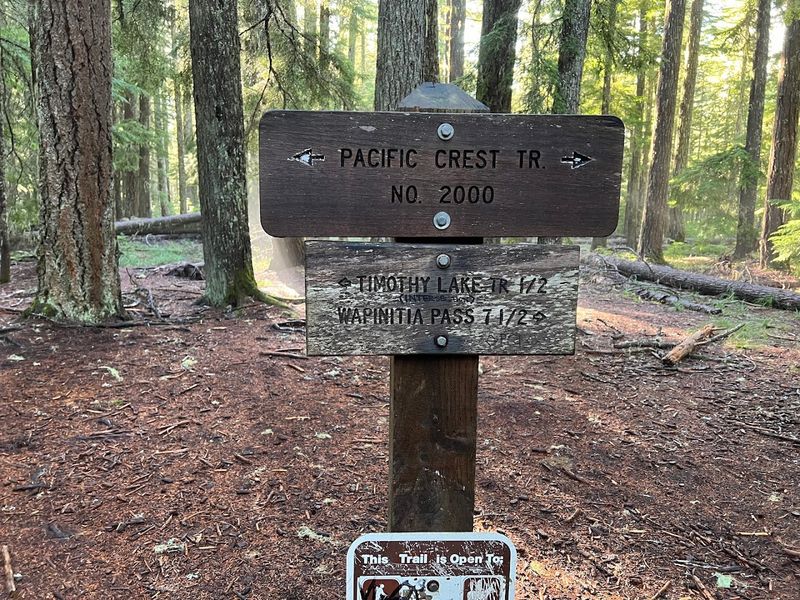
One of the most underrated features of this spot is how it connects to something much bigger. Just past the lake, the boardwalk path links directly to the Pacific Crest Trail.
That is one of the most famous long-distance trails in the entire country.
For day hikers, this connection opens up miles of beautiful forest walking. The PCT through this section of the Mount Hood National Forest is peaceful and well-maintained.
Tall trees line the path and block the summer heat nicely.
You do not need to hike far to enjoy it. Even a short walk along the PCT from Little Crater Lake gives you a completely different perspective on the landscape.
The dense forest feels ancient and quiet in a way that is hard to describe.
Thru-hikers passing through on the PCT often stop at the lake as a side trip. It has become a beloved waypoint on the trail.
Seeing the lake through the eyes of someone who has walked hundreds of miles to reach it adds a whole new layer to the visit.
Photography Tips for Capturing the True Color
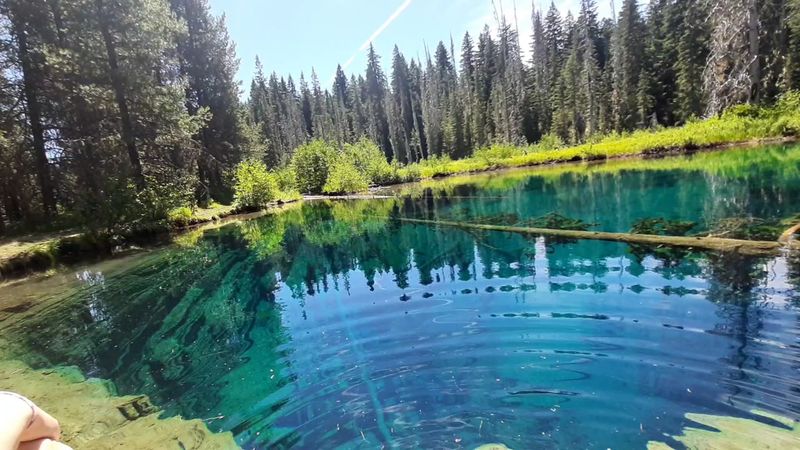
Every photographer who visits Little Crater Lake says the same thing: no image fully captures the real color. That is both a frustration and a challenge worth accepting.
The water is more vivid in person than any screen can reproduce.
Midday sun on a clear day produces the most intense blue tones. The light penetrates the water deeply and illuminates the bottom in a way that looks almost artificial.
Shooting from a low angle near the water’s edge brings out the depth and color contrast best.
A polarizing filter helps cut surface glare dramatically. Without one, reflections from the sky compete with the underwater view.
With one, the color beneath the surface pops in a way that feels much closer to reality.
Avoid shooting on overcast days if color is your priority. The water still looks beautiful, but it shifts to a muted gray-green rather than that signature electric blue.
The boardwalk and surrounding corn lilies make excellent foreground elements. Frame the pool between the greenery for a composition that tells the whole story of this remarkable little place.
Wildlife and Nature Around the Lake
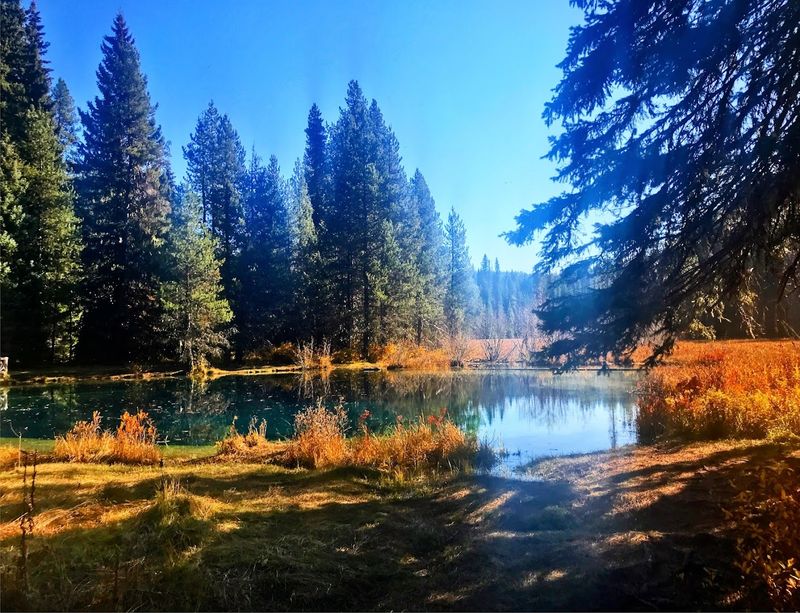
The meadow surrounding Little Crater Lake is alive in a way that sneaks up on you. Corn lilies grow in thick clusters around the pool’s edge.
Their broad, ribbed leaves create a lush green border that makes the blue water pop even more dramatically.
Tiny fish live in the lake itself. They dart through the clear water and are surprisingly easy to spot from the viewing area.
Watching them move against the pale sandy bottom is oddly mesmerizing.
The surrounding forest hosts a variety of bird life. Woodpeckers, nuthatches, and various warblers are common in this section of the Mount Hood National Forest.
Early morning visits increase the chances of spotting something interesting.
Deer occasionally wander through the meadow near the campground. The area feels genuinely wild even though it is accessible and well-visited.
Respecting the wildlife here matters. Staying on the trail and keeping noise low helps preserve the calm that makes this place feel so special.
The animals and plants are part of what makes the visit memorable.
Nearby Attractions Worth Pairing with Your Visit
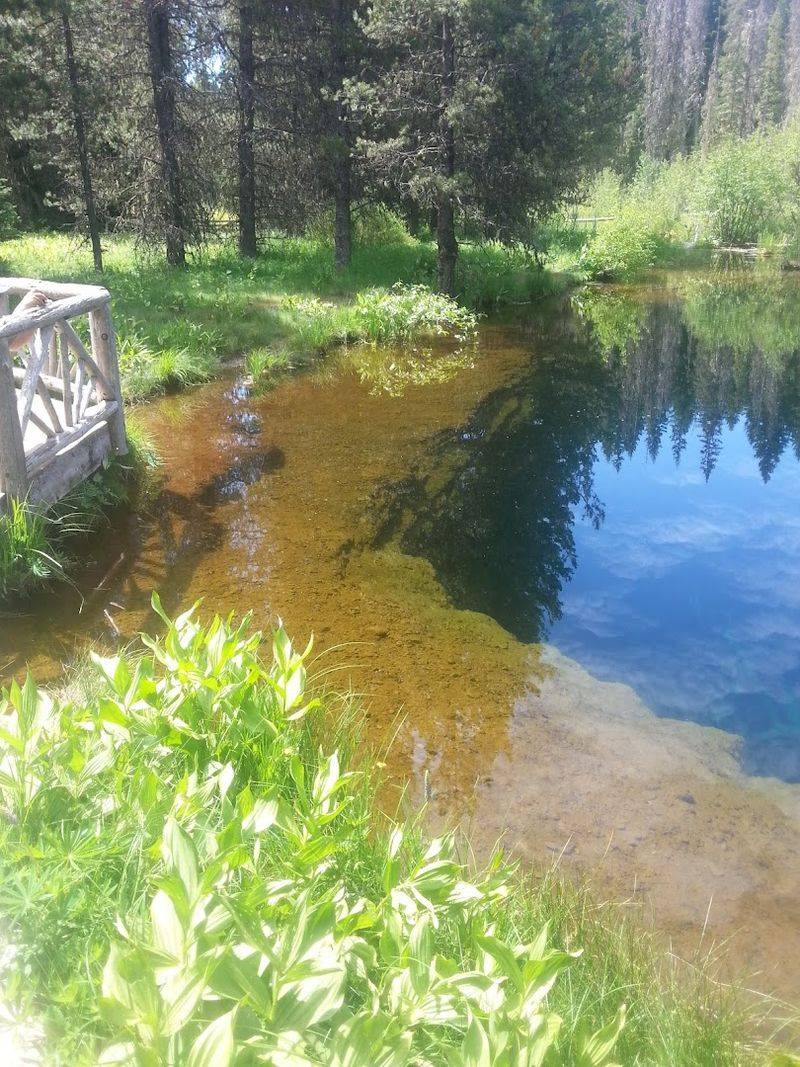
Little Crater Lake is wonderful on its own, but the surrounding area rewards exploration. Timothy Lake is just a short drive away and offers a completely different water experience.
It is large, swimmable, and great for paddling and fishing.
Timberline Lodge sits higher up on Mount Hood and is worth a stop for its stunning architecture and mountain views. Many visitors pair a morning at Little Crater Lake with an afternoon drive up to Timberline.
The contrast between the two settings is striking.
The Mount Hood National Forest has dozens of trailheads within easy reach. Ramona Falls is a popular nearby hike with a dramatic waterfall payoff.
Mirror Lake offers a classic reflection view of Mount Hood on calm days.
For a simple picnic, the meadow near Little Crater Lake works perfectly. Pack your own food and settle in near the trees.
The setting is peaceful and the views are unbeatable for a relaxed outdoor lunch.
