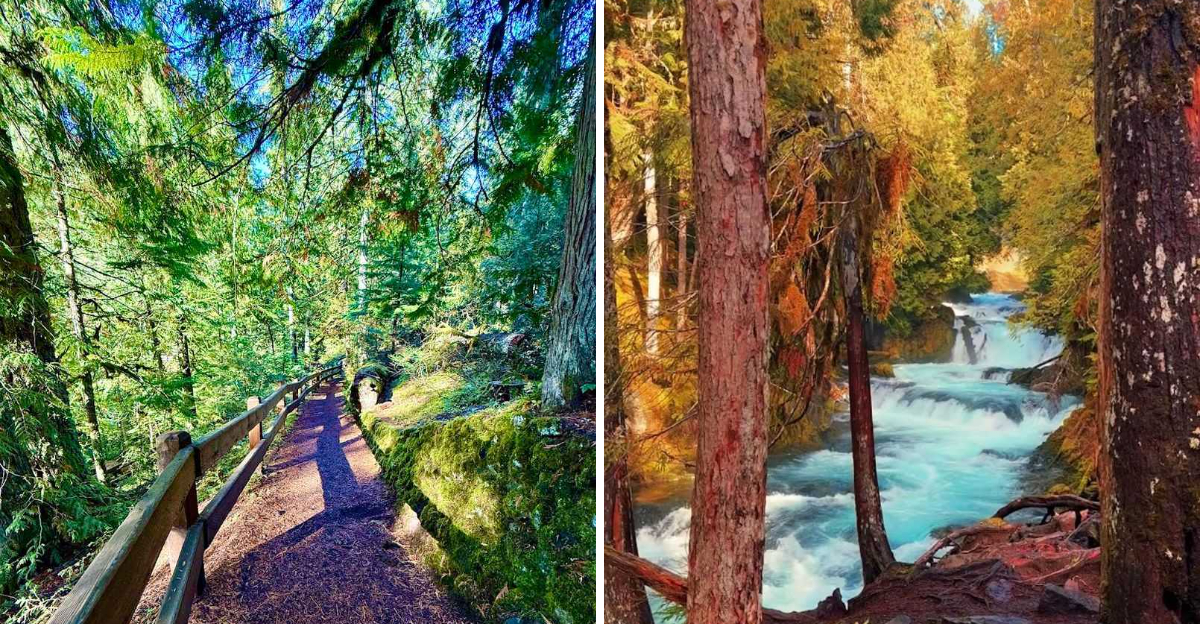
The trailhead is easy to miss, tucked away off a winding forest road. That is part of its charm, because the reward is a 2.6-mile loop that delivers two spectacular waterfalls in one hike.
You start through towering old-growth forest, where moss drapes every branch and the air smells cool and damp. Soon you hear the first waterfall, a powerful cascade that crashes into a deep pool below.
The trail continues through lush greenery before opening to the second falls, wider and more dramatic. Both are stunning, and the loop makes it easy to see them without backtracking.
Oregon has no shortage of waterfall hikes, but this one packs serious beauty into a short distance. It is the perfect way to spend a morning in the woods.
The Trailhead Itself, Where the Adventure Begins
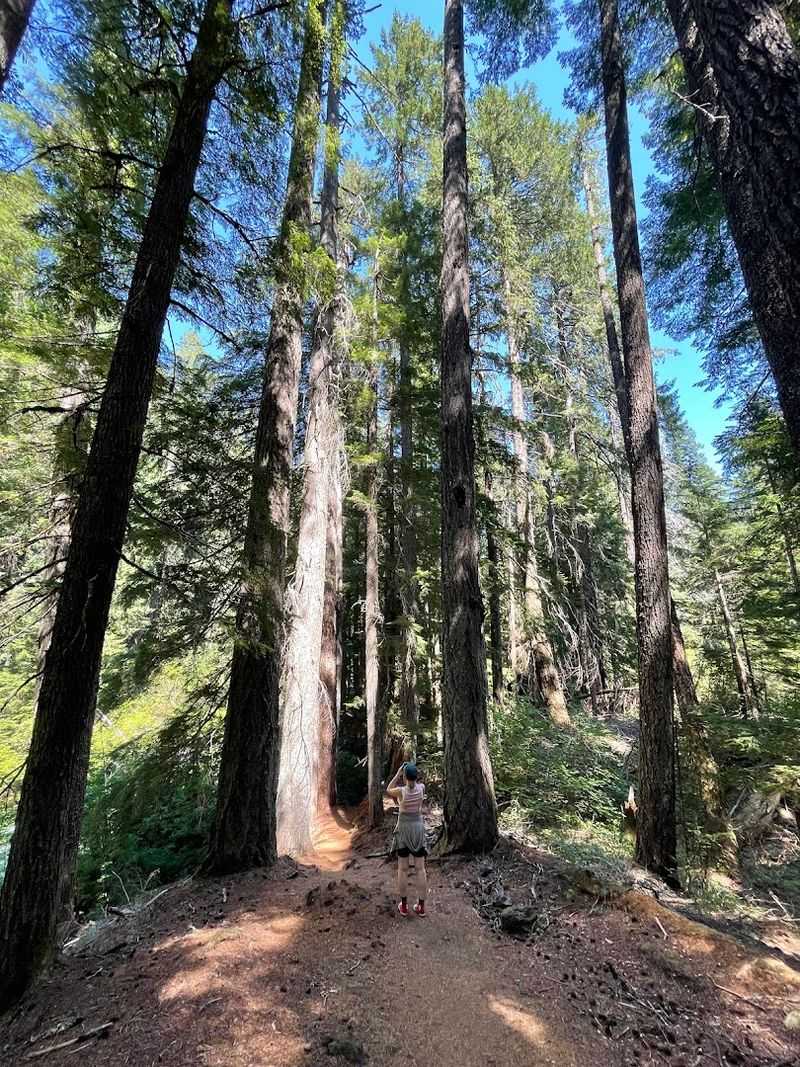
Arriving at the Waterfalls Loop Trailhead feels like pulling back a curtain on something the Pacific Northwest has been quietly keeping to itself. The parking area near Koosah Falls is small, so getting there early on weekdays is a smart move.
The trailhead is open from 10 AM to 4:30 PM Thursday through Monday, which is worth double-checking before you plan your visit.
The forest greets you immediately. Massive conifers stretch overhead, filtering light into soft green columns that fall across the path. There is a coolness in the air even on warm days, thanks to the river nearby and the dense canopy above.
Trailhead signage is clear and easy to follow, which takes the guesswork out of navigation. Parking is limited, so carpooling is always a good idea. The site is managed under the Willamette National Forest system, and it shows in how well the trail and surrounding area are maintained.
Koosah Falls, the First Roar You Will Hear
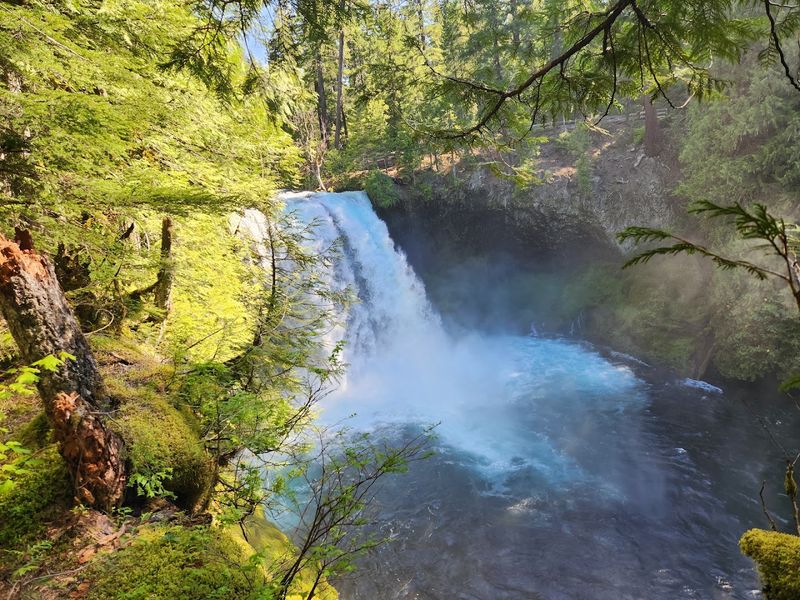
Koosah Falls hits you before you fully round the bend. The sound builds gradually, then all at once the river drops roughly 70 feet over a wide basalt ledge, sending mist across the viewing area and filling the air with a deep, constant thunder. It is genuinely hard not to just stop and stare for a while.
The water here runs an extraordinary shade of blue-green, something between a tropical lagoon and a glacier melt. It does not look entirely real. The color comes from the volcanic rock the McKenzie River passes through, filtering and chilling the water as it moves.
Viewing areas near Koosah are well-positioned and safe, giving you multiple angles on the falls without requiring any scrambling. Kids love it here, and dogs are welcome on leash.
Many hikers actually start at this end of the loop and work their way north toward Sahalie, which is a perfectly solid strategy for the day.
Sahalie Falls, the Crown Jewel of the McKenzie
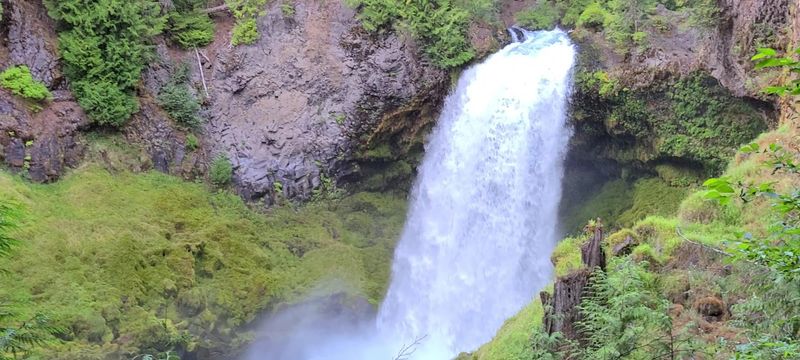
Of the two falls on this loop, Sahalie tends to steal the spotlight. It drops around 100 feet in a wide, thundering curtain of white water that crashes into a mist-filled basin below. The sheer volume of water moving over that ledge is something you genuinely have to see in person to understand.
The name Sahalie comes from a Chinook word meaning high or heaven, and it is not hard to see why early travelers chose that name. Spray drifts outward from the base in a fine mist that coats your face and jacket. On sunny days, small rainbows appear and disappear in the vapor.
A series of stone steps leads down closer to the falls, giving you a front-row perspective that feels almost cinematic. The viewing platforms are well-maintained and positioned at different elevations.
Some hikers mention spotting slackliners above the falls on certain days, which adds an unexpected and slightly surreal element to the whole scene.
The Old-Growth Forest Corridor Between the Falls
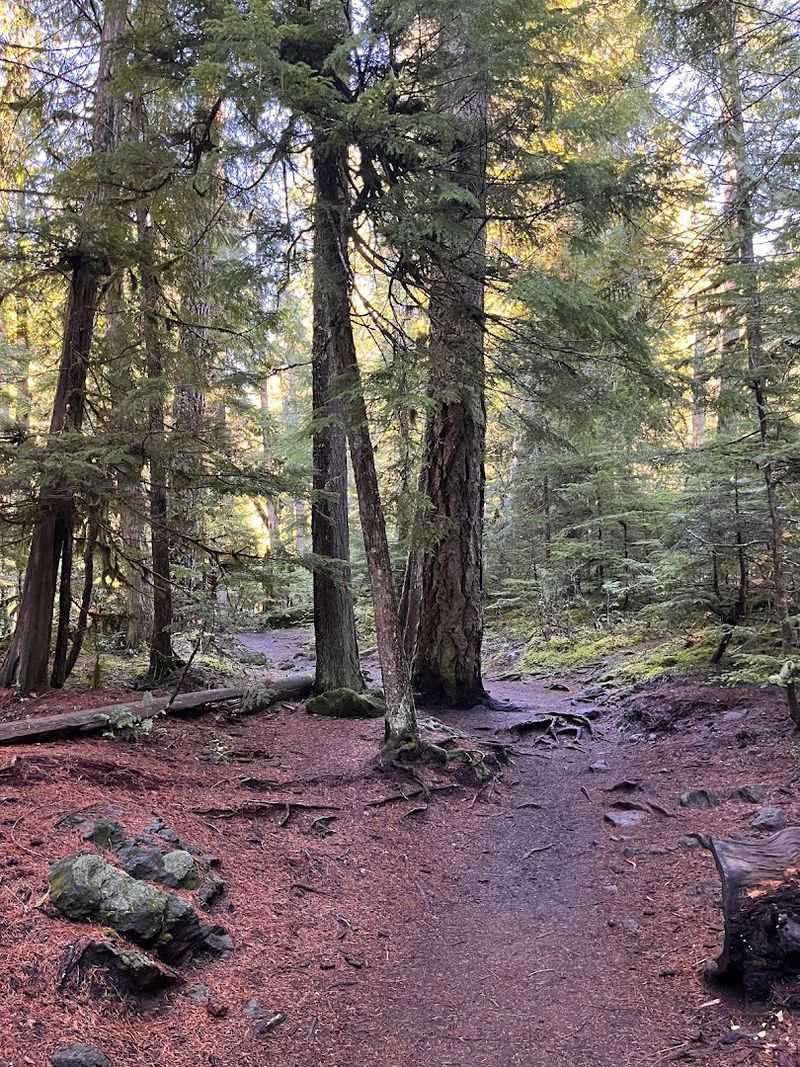
The stretch of trail connecting Koosah and Sahalie is where the forest really earns its reputation. Ancient Douglas firs and western red cedars line the path, their root systems raising and dipping the trail in gentle waves.
Ferns carpet the ground in layers of deep green, and moss covers nearly every exposed rock and log.
This section hugs the McKenzie River closely, and you can hear the water rushing beside you for most of the walk. The sound is constant and oddly calming, the kind of background noise that slows your thoughts down without you realizing it.
Old-growth forests like this one take centuries to develop. The trees here are massive, some with trunks wider than a car is long. Woodpeckers, dippers, and various songbirds are regular visitors along this corridor.
It is worth slowing down in this section and letting the scale of the forest actually register, because it is easy to rush through on the way to the next waterfall.
Trail Difficulty and What to Realistically Expect
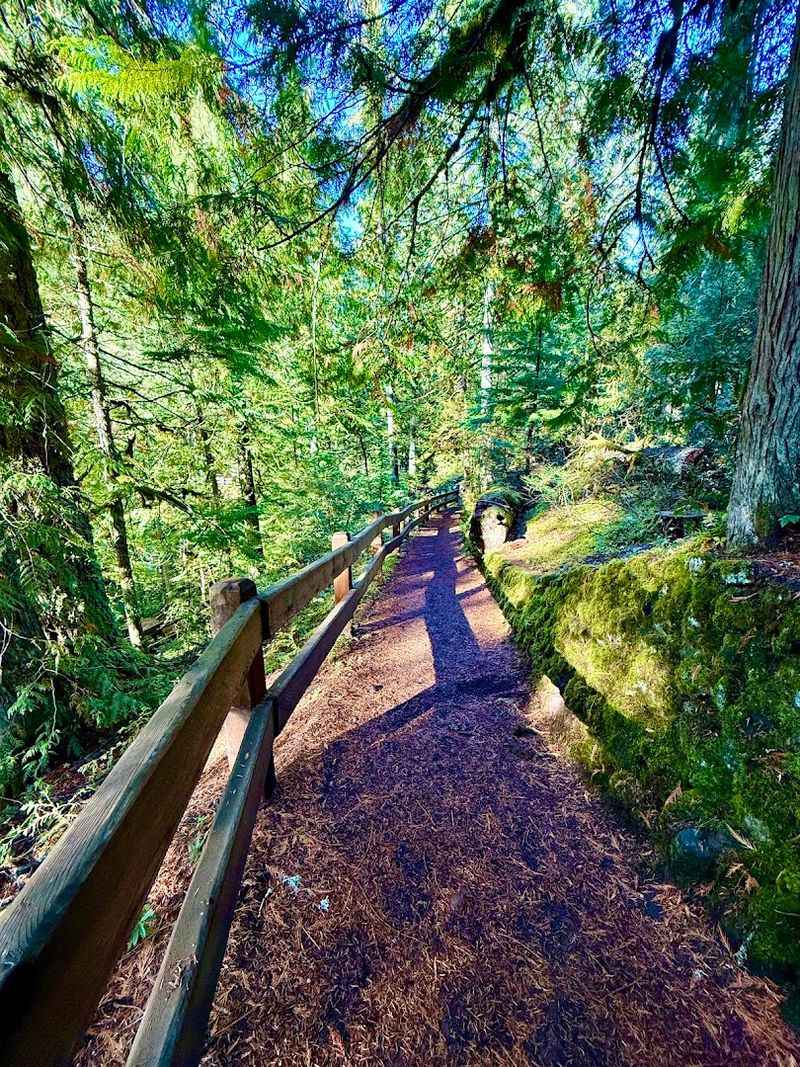
Honest truth: this trail is genuinely accessible to almost everyone. The 2.6-mile loop has minimal elevation change, and what little gain exists is gradual enough that most people barely notice it. The path is well-worn, clearly marked, and wide enough that passing other hikers is never awkward.
The trail surface varies between packed dirt and some rocky sections near the falls. Decent walking shoes or light trail runners are perfectly fine. You do not need technical hiking boots, though they never hurt on the wetter sections near the water.
One thing worth knowing is that the return portion of the loop is noticeably more primitive than the main river-side trail. Some hikers prefer to do an out-and-back along the river rather than completing the full loop. Both options are valid, and neither leaves you feeling shortchanged.
Families with young kids, older adults, and casual walkers all do this trail comfortably. It is low-pressure hiking at its most rewarding.
The McKenzie River, the Backbone of the Whole Experience
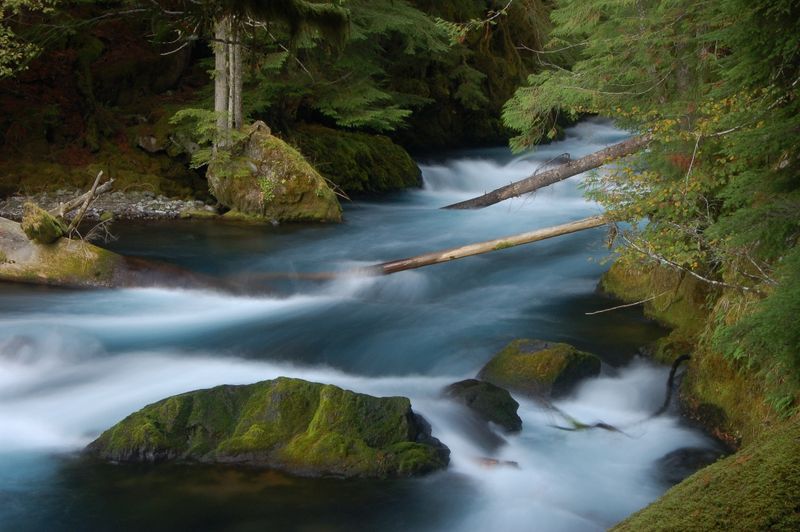
The McKenzie River is not just a backdrop here. It is the main character. From the moment you step onto the trail, the river is beside you, audible and visible through the trees, shaping the landscape and the mood of the entire hike.
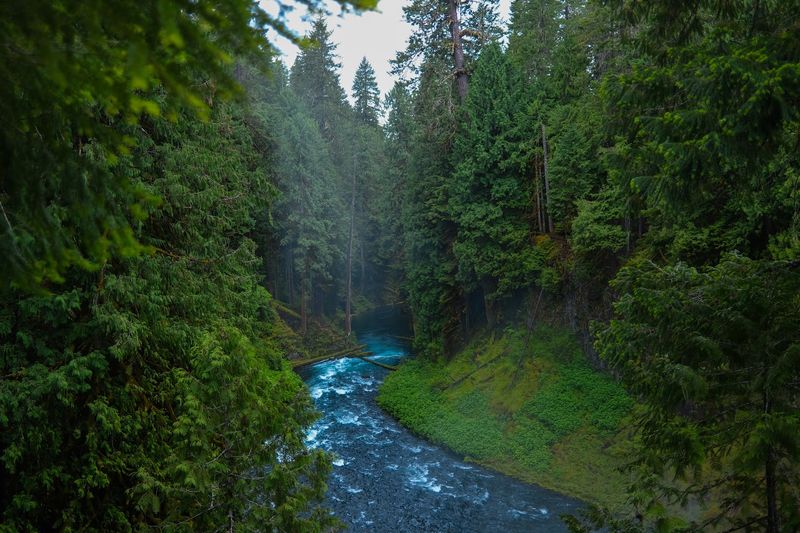
The water runs with a clarity that feels almost impossible. You can see the riverbed through several feet of moving water, the basalt and gravel clearly visible beneath that signature blue-green surface. The volcanic geology of the Cascades gives the McKenzie its distinctive color.
There are several spots along the trail where the path runs close enough to the river that you can crouch down and feel the current with your hand. Picnic areas exist nearby for those who want to sit with the river for a while.
The McKenzie River National Recreation Trail, which connects to this loop, extends for miles in both directions. Ambitious hikers have plenty of room to keep exploring if the loop leaves them wanting more.
Best Time of Year to Visit and Seasonal Conditions
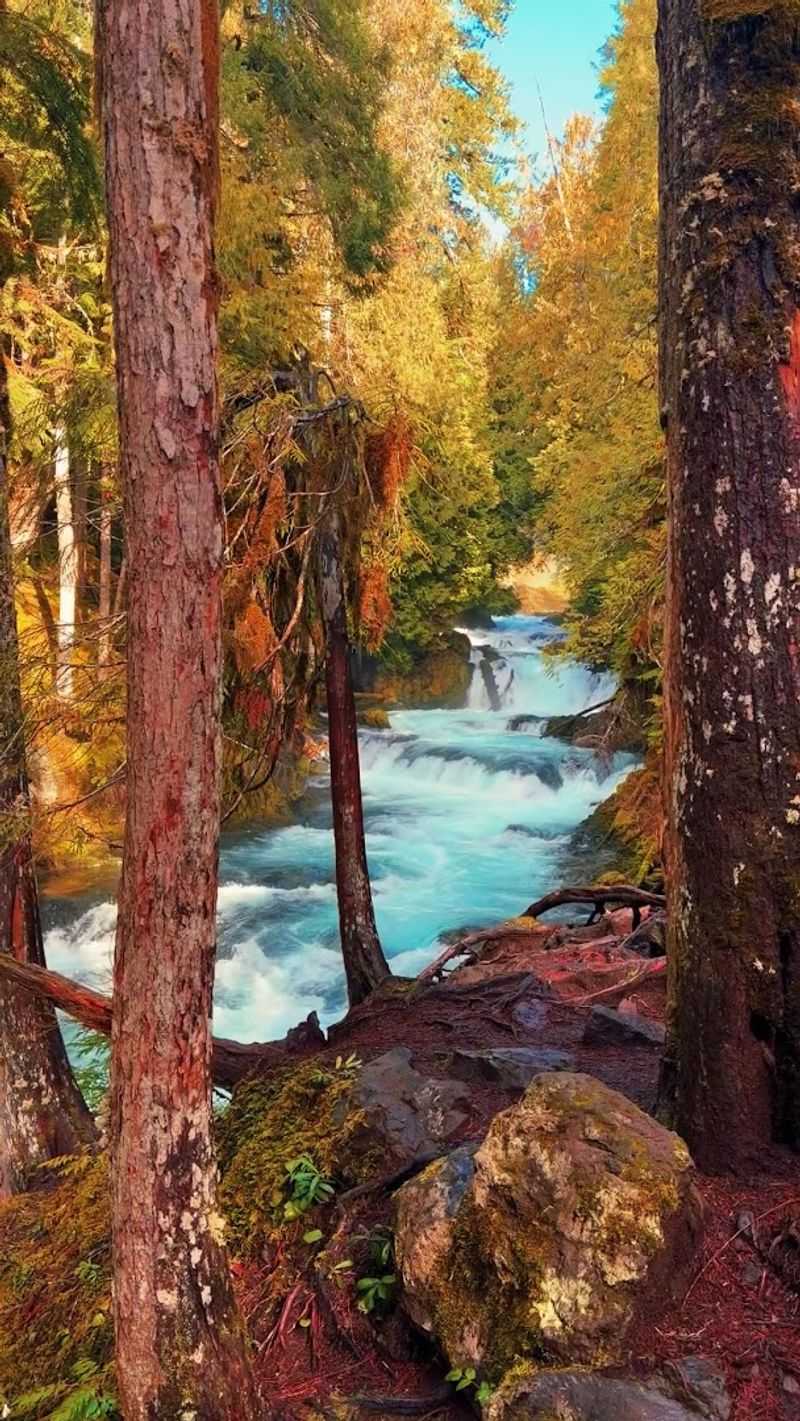
Timing matters on this trail more than people expect. Late spring and early summer bring peak water flow, which means the falls are at their most dramatic and the forest is intensely green.
The snowmelt from the Cascades feeds the McKenzie directly, so visiting in May or June often means catching the falls at full volume.
Summer is the most popular window, and for good reason. Temperatures are comfortable, the trail is dry, and the days are long enough to make a relaxed morning trip feel unhurried. Fall brings a quieter crowd and a shift in light that makes the forest feel different, warmer in color and softer in mood.
Snow can linger into late spring at this elevation, so checking recent trail reports before heading out in April is genuinely useful advice. The trail can also be muddy after heavy rain. Winter visits are possible but require caution and appropriate footwear.
The trailhead operating hours also shift seasonally, so always verify current access before making the drive.
Wildlife and Nature Along the Loop
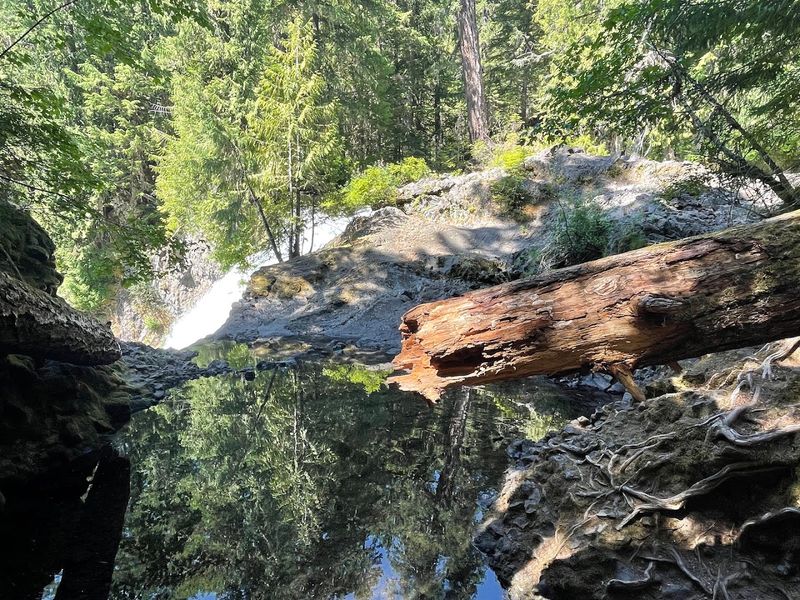
The ecosystem along this trail is quietly rich. The McKenzie River corridor supports a surprising variety of wildlife, and if you move slowly and stay observant, you will likely spot more than you expected. American dippers are common here, small gray birds that bob on rocks and literally walk underwater to feed.
Osprey occasionally patrol the river above the falls. Varied thrushes call from the deep forest in spring, their eerie, single-note song drifting through the trees. Squirrels and chipmunks are almost guaranteed sightings, especially near the trailhead where visitor foot traffic has made them fairly bold.
The plant life is just as interesting as the animals. Trilliums bloom along the trail in spring, and various wildflowers dot the forest floor through summer. Old fallen logs host ferns, fungi, and mosses in dense, layered communities that look almost miniature in scale.
The biodiversity here reflects how healthy and intact this particular stretch of old-growth forest remains, which is something genuinely worth appreciating while you walk through it.
Practical Tips for Getting the Most Out of Your Visit
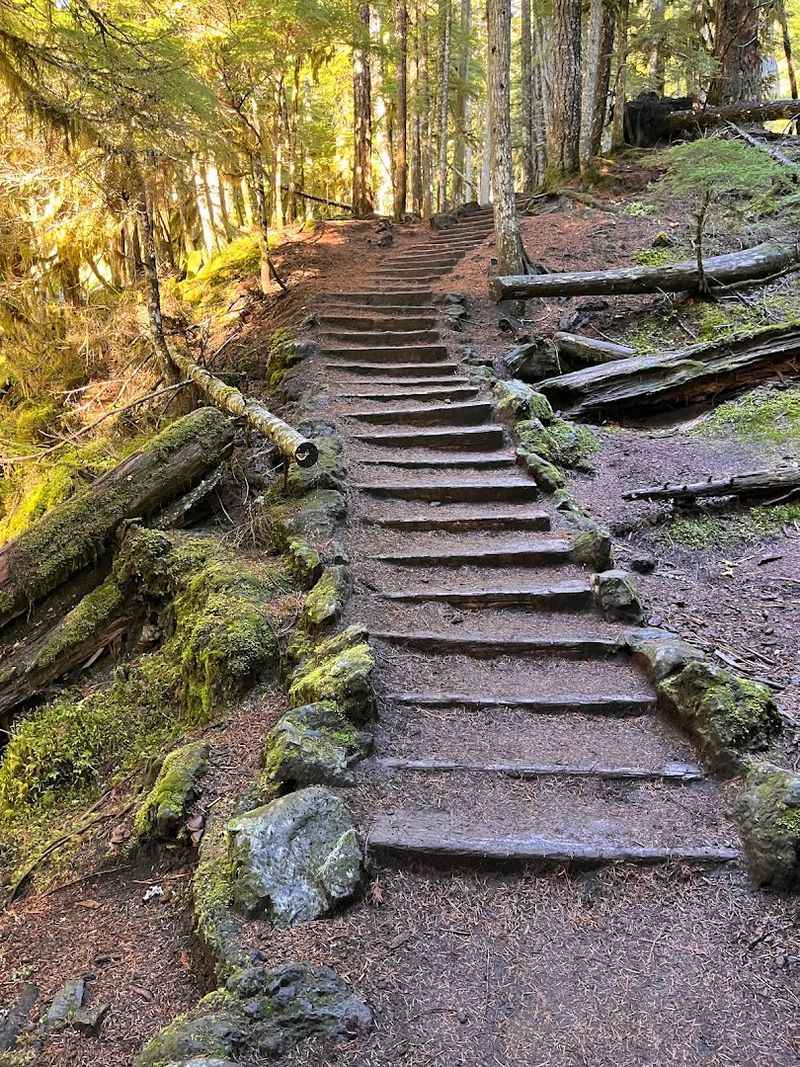
A few small preparations make a real difference on this trail. Bring water, even though the hike is short. The mist from the falls is refreshing, but it is not hydration. Layers are smart too, since the temperature near the falls drops noticeably compared to the parking area, especially in the morning.
The parking lot near Koosah Falls is small, with limited spots. Arriving at or just after opening time on a weekday gives you the best chance of finding a space without stress. Weekends can be significantly busier, and overflow parking options are limited in the immediate area.
Dogs are welcome on leash, which makes this a solid option for hikers traveling with pets. There are no significant amenities at the trailhead itself, so pack whatever snacks or supplies you need before arriving.
Cell service in the area is unreliable, so downloading offline maps in advance is a practical move. The Willamette National Forest website has current conditions and closure information worth checking before any visit.
Why This Trail Deserves a Spot on Every Oregon Itinerary
There is a version of Oregon hiking that requires multi-day permits, technical gear, and serious planning. This trail is not that, and that is exactly the point.
The Waterfalls Loop Trailhead offers something genuinely rare: a short, easy walk that delivers the kind of scenery most people associate with much harder adventures.
Two world-class waterfalls, an intact old-growth forest, and a turquoise river, all within a 2.6-mile loop that most people finish comfortably in under two hours. It is the kind of place that rewards first-time visitors and regulars equally, because the landscape simply does not get old.
Whether you are road-tripping the McKenzie River Highway, day-tripping from Eugene or Bend, or just looking for something beautiful to do on a weekday morning, this trail fits. It is proof that not every great Oregon experience requires suffering for it.
Sometimes the most memorable hikes are the ones that feel almost too easy for how much they give you in return.
