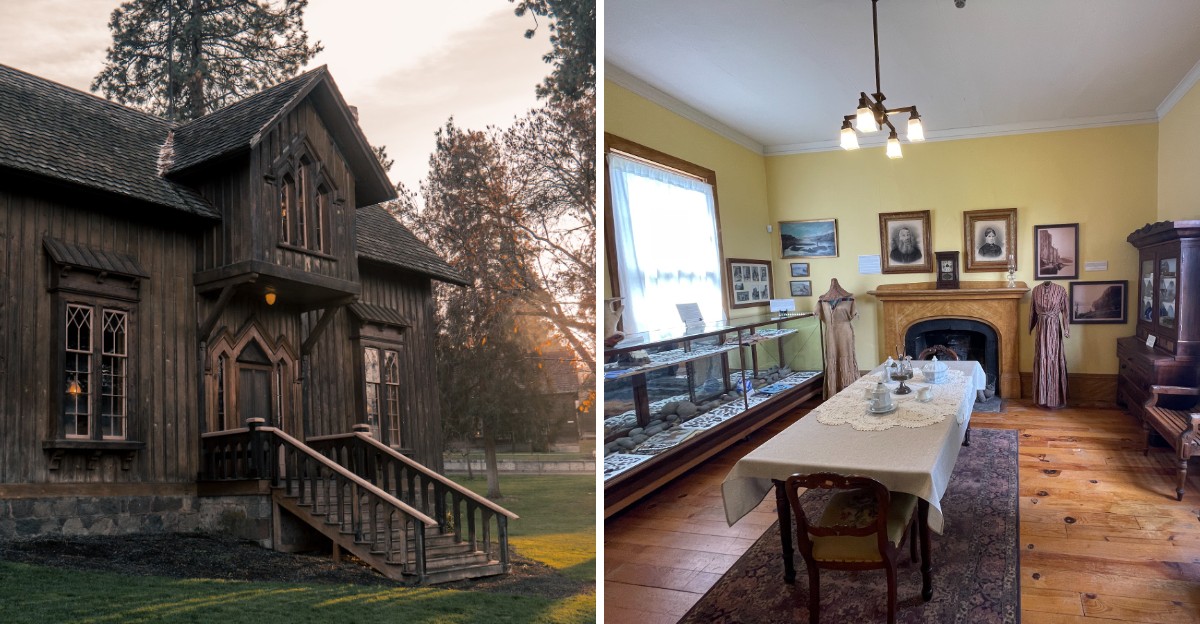
A frontier Army surgeon once lived in a Gothic Revival house with woodwork painted to look like oak and marble. The real wood underneath? Humble local alder, dressed up for company.
That 1856 house is the only officer’s home left from an entire Oregon military post. It opened as a museum in 1905, which makes it one of the oldest history museums in the state.
I’m particularly drawn to how much else shares the property. There’s a log homestead built by a Swedish immigrant, a barn packed with wagons and stagecoaches, and an early electric car.
The Last Officer’s House Standing Still Has Plenty To Say
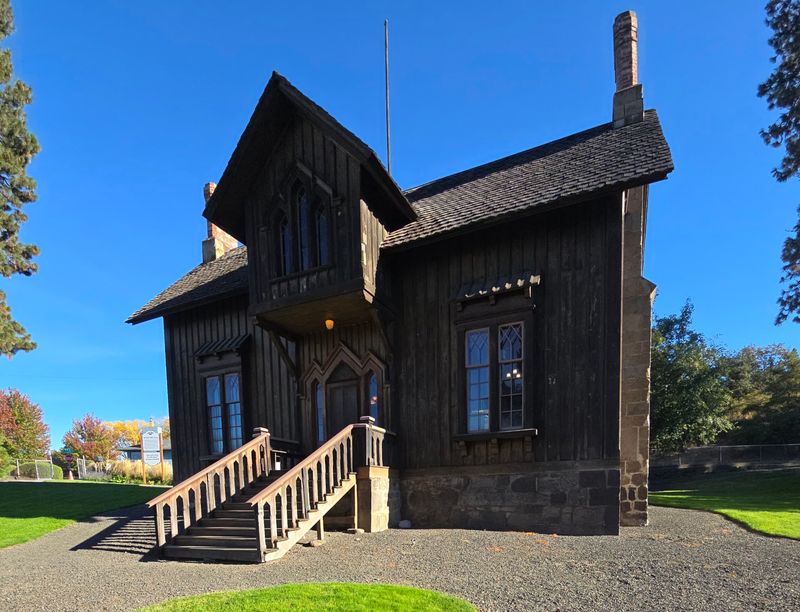
Out of an entire 1850s Army post, exactly one officer’s house survived. That house is the heart of the Fort Dalles Museum and Anderson Homestead, and it’s a striking survivor.
Built in 1856, it’s known as the Surgeon’s Quarters because the post surgeon lived there. The style is Gothic Revival, which means pointed gables and fancy trim on a frontier outpost. Somebody clearly wanted a little elegance far from the big cities.
Think about how unusual that is. Most frontier forts in the West were built quickly and later torn down, burned, or sold off for lumber. This one house made it through more than 165 years.
The museum treats the building itself as its largest artifact. That’s a fair claim, since you’re standing inside the real home where officers and the surgeon lived. No replica, no reconstruction, just the actual walls.
Here’s a fun angle for families. Ask kids to spot which parts of the house look old and which look surprisingly modern. The answers can spark great talks about how people lived before electricity and running water.
Give yourself time to look at the outside before heading in. Those sharp rooflines tell a story about Army ambitions in early Oregon.
An Army Camp Grew Up Where The Oregon Trail Wound Down
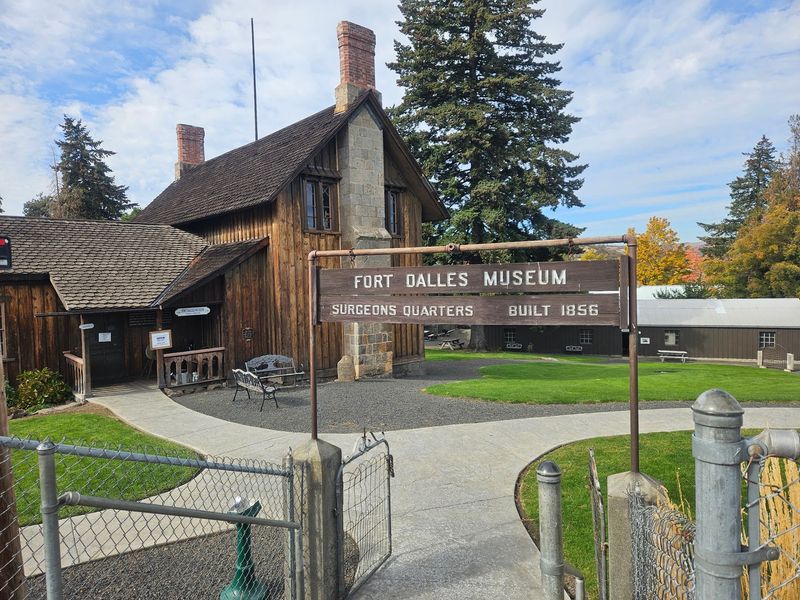
May 20, 1850, is when it all started. The post opened as Camp Drum and officially became Fort Dalles in June 1853.
The Army placed it here to protect travelers on the Oregon Trail. The fort also helped steer pioneers toward the Willamette Valley, where many hoped to start new farms and lives.
From 1856 to 1858, Fort Dalles served as a major Army headquarters during the Yakima conflicts. After that period ended, the post slowly lost its military importance. Soldiers stayed through late 1867, and then a caretaker looked after the grounds.
By the mid-1880s, the property became part of the city. Most fort buildings faded away over time. The Surgeon’s Quarters stuck around, which is why this museum exists at all.
Knowing this timeline makes a visit much richer. When you stand on the grounds, you’re on a spot that shaped how Oregon was settled. Thousands of trail families passed through this region with worn wagons and big hopes.
Try reading up on the Oregon Trail before you go. Kids especially enjoy connecting school lessons to a real place. Suddenly those textbook maps feel a lot more real and personal.
Cross The Street For A Swedish Pioneer’s Log Farmhouse
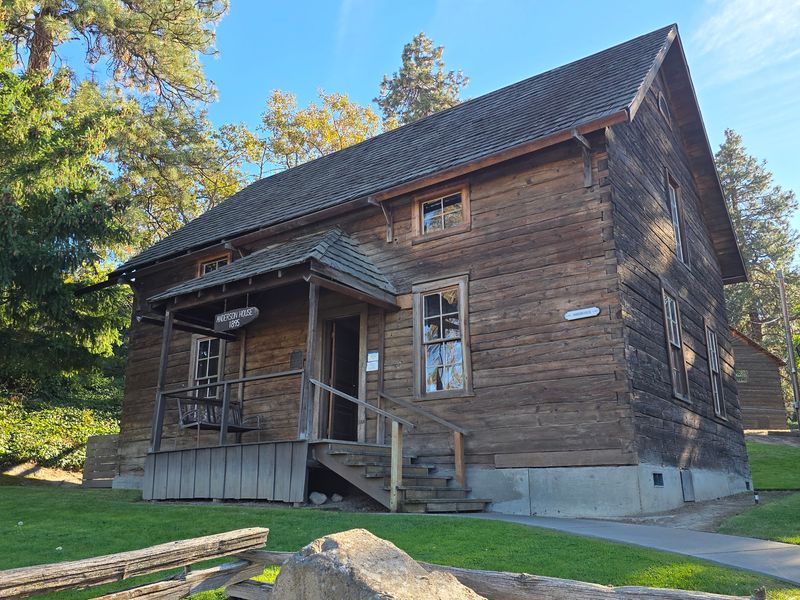
Lewis Anderson, a Swedish immigrant, built a farm on Pleasant Ridge in 1895. Today his log house, granary, and barn sit right across the street from the Surgeon’s Quarters.
Getting them there was no small job. The buildings stood about 25 miles southwest of The Dalles until 1971. That year, they were moved to the museum site to save them.
The farmhouse is hand-hewn from tamarack and pine. The logs fit together tightly, and wood pegs hold the corners. No hardware store runs, just skill and patience.
Inside, the house is furnished to show farm life around 1900. It’s a nice contrast to the officer’s home. One building shows Army life, and the other shows a family working the land in Wasco County.
That pairing is what makes the Fort Dalles Museum and Anderson Homestead feel so complete. You get two sides of early Oregon on one visit. Soldiers and settlers, side by side.
Point out the corner joints to younger visitors. It’s a great moment to ask how they’d build a house without nails. Expect some creative answers.
More Than 30 Historic Vehicles Fill The Museum Grounds
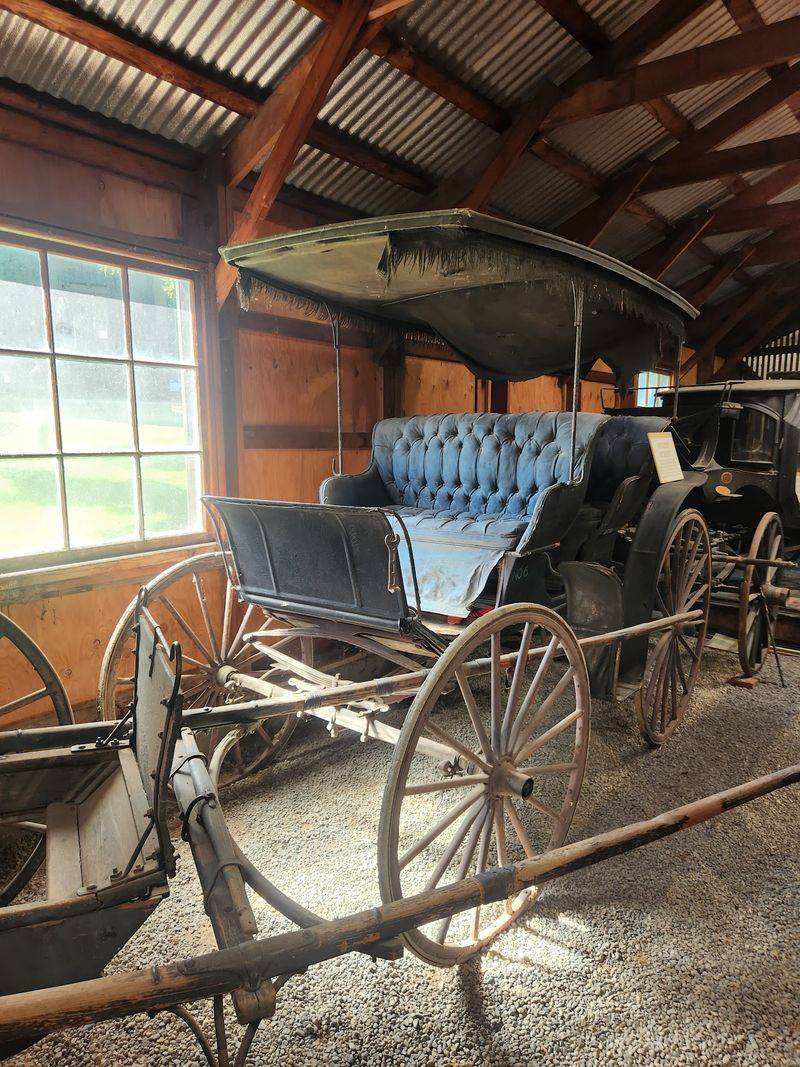
A 1902 Studebaker electric car is parked on these grounds. Yes, electric, more than a century before charging stations showed up at grocery stores.
It’s part of a collection of more than 30 historic wheeled vehicles housed in several buildings on the museum grounds. Freight wagons and farm wagons from the 1800s share space with grand stagecoaches. Victorian buggies add a dash of style.
The variety keeps going. You’ll see a military escort wagon and horse-drawn hearses. There’s even a surrey once owned by Oregon Governor Zenas Moody.
Together, these vehicles show how travel changed in the Columbia Gorge region. People went from hoofbeats to early motors in just a few decades. Seeing them lined up makes that leap easy to understand.
Car fans and history buffs tend to overlap here, and for good reason. The old vehicles are one of the most popular parts of the museum. Even folks who skip the house tour often wander through the wagons and carriages.
Bring a camera and some patience. Every wagon seems to have a different story, and the electric car alone deserves a long look. It’s a fun reminder that new ideas are often older than we think.
Fake Oak And Pretend Marble Make The Rooms Surprisingly Clever
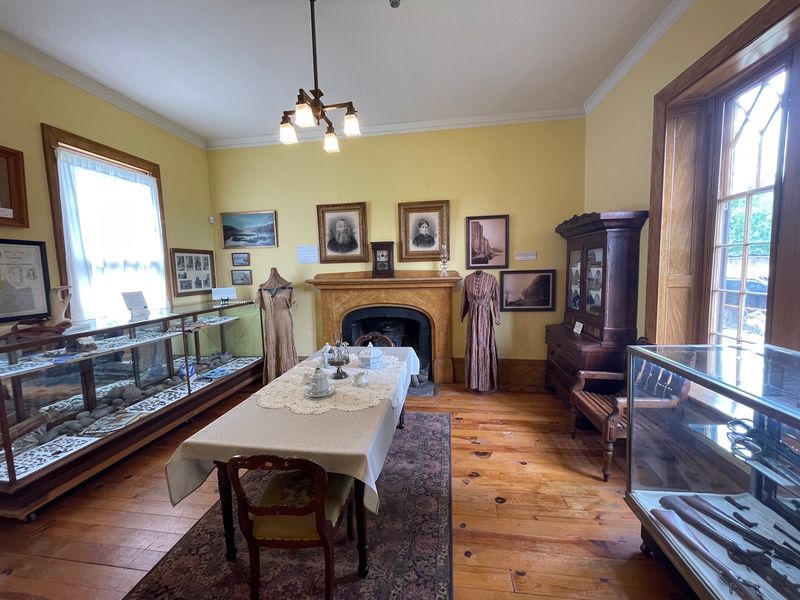
Frontier decorators had a sneaky trick up their sleeves. The woodwork inside the Surgeon’s Quarters is local alder, but it was faux-painted to look like pricier oak or marble.
It’s basically the 1850s version of peel-and-stick wallpaper. Fancy materials were hard to ship to the edge of the frontier, so paint did the heavy lifting. The result still looks impressive today.
Several rooms are furnished to show life in the 1860s. You’ll notice high ceilings and a central hallway that runs through the home. The parlor has a bay window, which let in light and gave the room a touch of class.
Period rooms mix with photographs and objects that trace pioneer life. Some exhibits also touch on frontier medicine, which fits a house built for a doctor. It helps you picture a surgeon working with very limited tools.
Tours here are self-guided, so you can move at your own speed. That’s handy if you like to linger over small details like painted wood grain. Look closely and try to guess which surfaces are real and which are clever fakes.
Bring a curious eye. Half the fun is catching how much effort went into looking fancy.
A Bonnet From Ford’s Theater Is Only One Of The Odd Treasures
The museum has a bonnet reportedly worn at Ford’s Theatre on the night of President Lincoln’s assassination. Her bonnet now sits in a museum in the Columbia Gorge.
That’s the kind of personal link that makes history click. A single object connects a small Oregon town to a moment every student learns about. It’s hard not to stare at it a little longer.
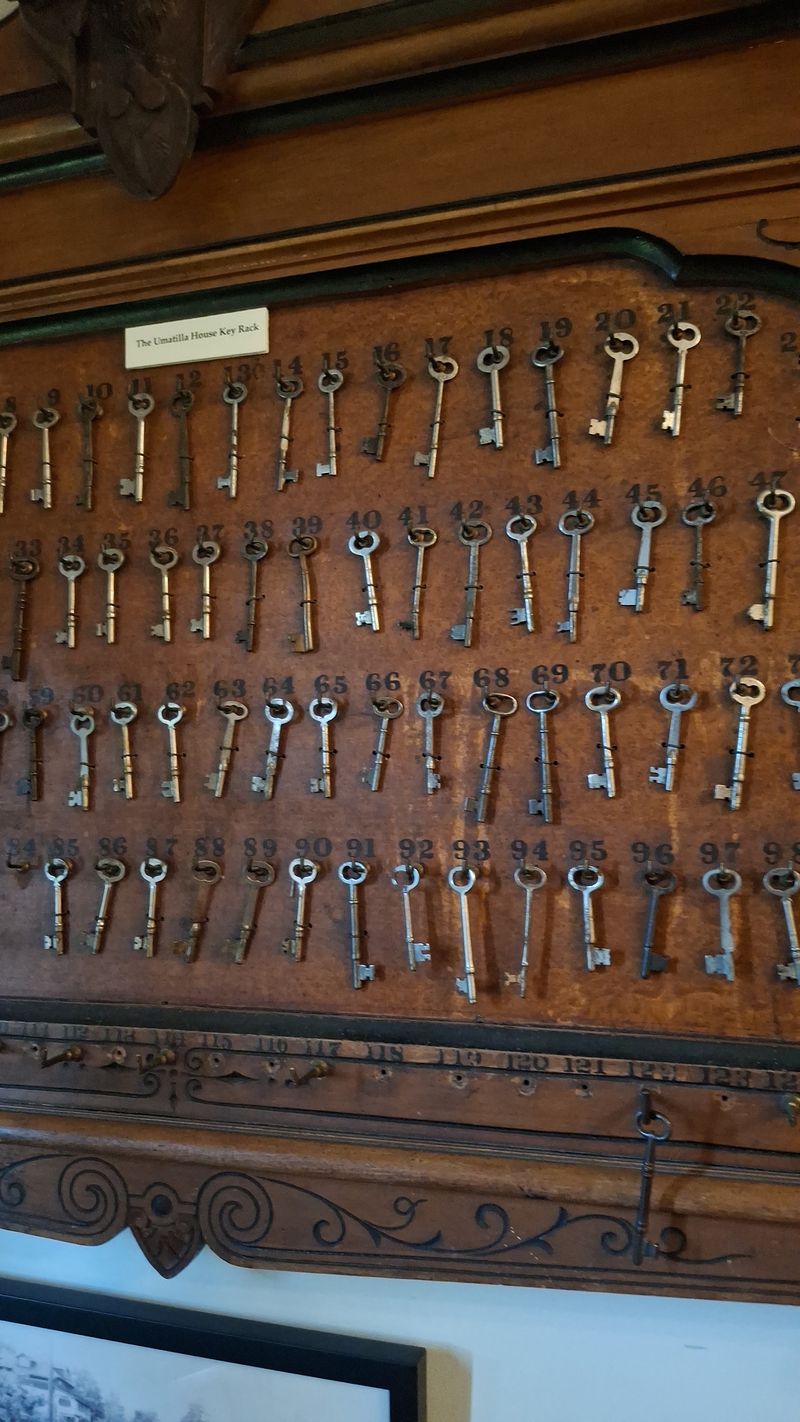
The quirky finds don’t stop there. An exhibit on the historic Umatilla House, a well-known local hotel, includes its original key rack. You’ll also spot a list of 19 rules and regulations for guests. Reading those rules is half the fun.
The museum also displays pioneer and military artifacts that reveal daily routines on the frontier. Native American artifacts, including tools and crafts from Columbia River tribes, honor the Indigenous history of the area. Those pieces remind visitors that this land had deep roots long before any fort.
A display of original Winchester cartridges also catches attention. It adds another layer to the military side of the story.
Plan to read labels slowly. The best surprises here often hide in the small print. Kids can turn it into a scavenger hunt for the strangest item.
Bring A Picnic Blanket For These Shady Bluff-Top Grounds
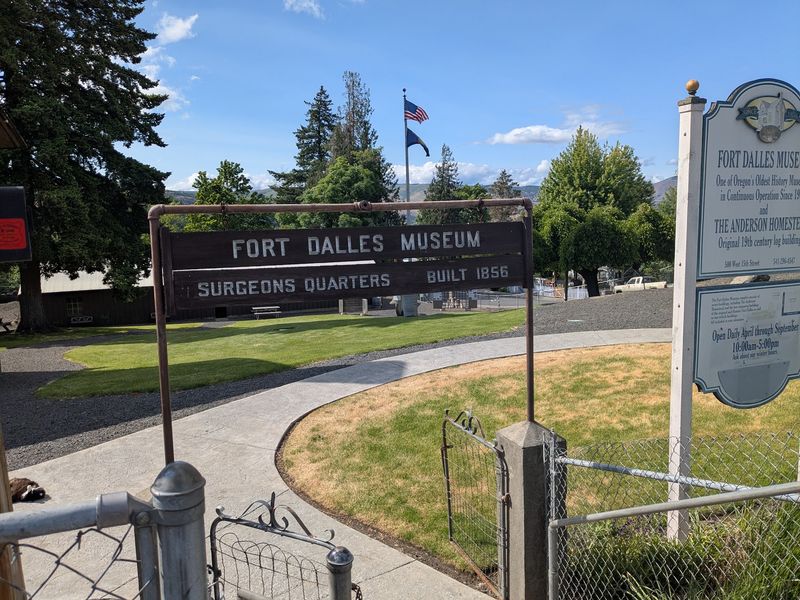
Few museums come with a view this good. The grounds sit on a bluff above downtown The Dalles, looking out toward the Columbia River.
On a clear day, you can see the hills of Washington across the water. If the sky cooperates, Mount Adams may even show up on the horizon. That’s quite a backdrop for a history lesson.
You’ll find the museum at 500 W 15th and Garrison St, The Dalles, OR 97058.
The museum is open daily from 10 a.m. to 5 p.m. from April through November, while January and February hours are Friday through Sunday from 11 a.m. to 4 p.m., weather permitting.
The spacious lawns are often shady, which helps on hot Eastern Oregon afternoons. Families find plenty of room to stretch out between exhibits. A picnic lunch fits right in here.
The grounds also host private events. Small weddings, engagement parties, family reunions, and company picnics are all possible. Saying vows near an 1856 officer’s house is a pretty memorable choice.
Plan to spend a few extra minutes outside before you leave. The view helps explain why the Army picked this spot in the first place. High ground made it easier to watch the river and the trail below.
Watch For Midnight, The Furry Greeter Who Runs The Front Gate
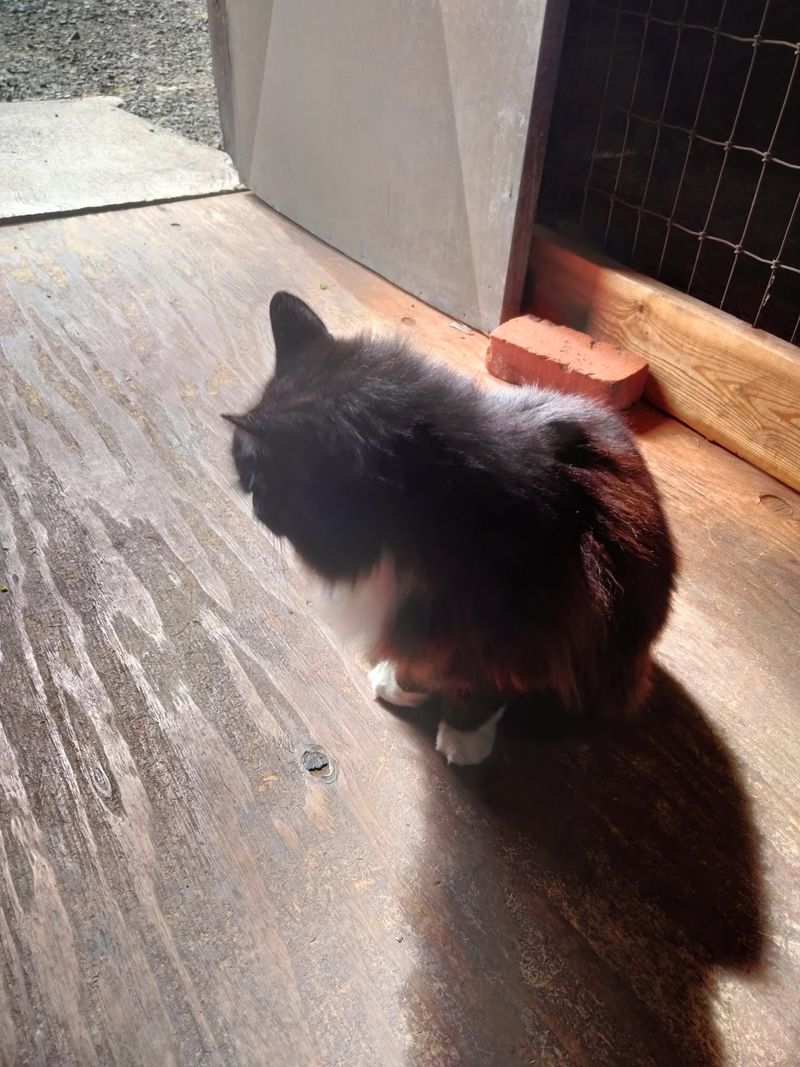
Every great museum needs a mascot, and this one has a cat. Midnight is a friendly black-and-white kitty who often greets visitors near the gate.
She’s the unofficial mascot of the Fort Dalles Museum and Anderson Homestead. Cat lovers, consider yourselves warned. Your tour may start with a few minutes of petting before you even reach the house.
Beyond Midnight, the people here add a lot of warmth too. Docents and volunteers often share local stories and fort history with visitors. Those chats can turn a quick stop into a much deeper visit.
Self-guided tours let you explore at your own pace. Accessible pathways lead to the main exhibits and restrooms.
Accessible pathways and restrooms help visitors navigate the museum grounds, although the historic Surgeon’s Quarters building is not fully wheelchair accessible.
Teachers and group leaders have options as well. School groups and adult groups can book tours by reservation. It’s a smart pick for a field trip that mixes buildings, vehicles, and outdoor space.
Got questions? Ask them. Volunteers here clearly enjoy sharing what they know. Just don’t be surprised if Midnight wanders over and steals the spotlight halfway through a good story.
Pioneer Women And A 1904 Act Of Congress Saved The Whole Story
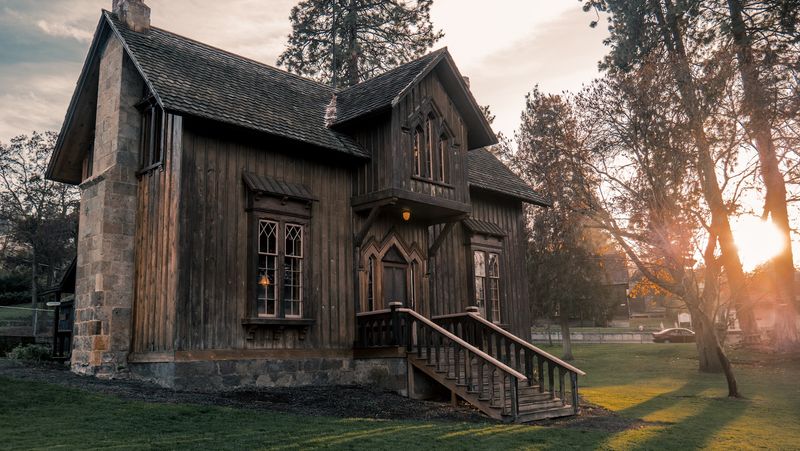
Without a group of determined pioneer women, this house might be gone. Around 1900, civic-minded women in The Dalles pushed hard to save it.
Their effort reached all the way to Washington, D.C. In 1904, an act of Congress gave the building to the Oregon Historical Society. The society then let the Old Fort Dalles Historical Society open it as a museum.
Doors opened to the public in 1905. That makes it one of the oldest history museums in Oregon. Plenty of museums today can’t claim more than a century of welcoming guests.
The saving spirit kept going decades later. In 1971, community volunteers helped move the Anderson Homestead to the site. Hauling log buildings 25 miles is not a weekend hobby.
Today, the Fort Dalles Museum/Anderson Homestead Foundation helps protect the site. It seeks funding and resources for daily operations and artifact care. Old buildings need steady attention, and that work never really ends.
So when you visit, you’re seeing more than old rooms and wagons. You’re seeing over a hundred years of neighbors caring about their past. Buying admission or donating helps keep that streak alive for the next generation.
