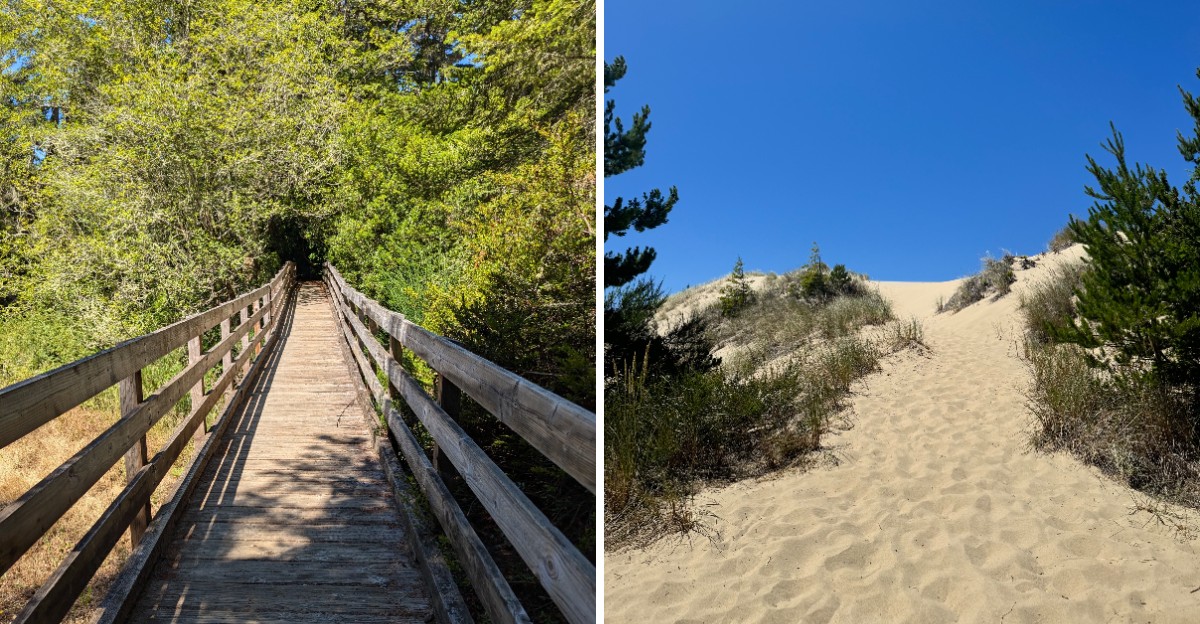
Sand this tall shouldn’t exist outside a desert, yet somehow it does, rising just off the coast rather than anywhere near one.
Climbing here takes more effort than expected, feet sinking with every step until reaching the top feels like a real accomplishment rather than a casual walk. Forest surrounds the dunes on one side, ocean waits somewhere past the ridge on the other.
Maintaining a dune system this massive so close to dense forest takes a strange kind of ecological balance most places never quite pull off naturally. Wind and geography apparently conspired here to build something that shouldn’t logically coexist with the landscape surrounding it.
Reaching the top rewards climbers with a view unlike anything else nearby. Oregon’s dunes keep drawing hikers who want a workout with genuinely strange scenery attached.
Mossy Beginnings in the Coastal Forest
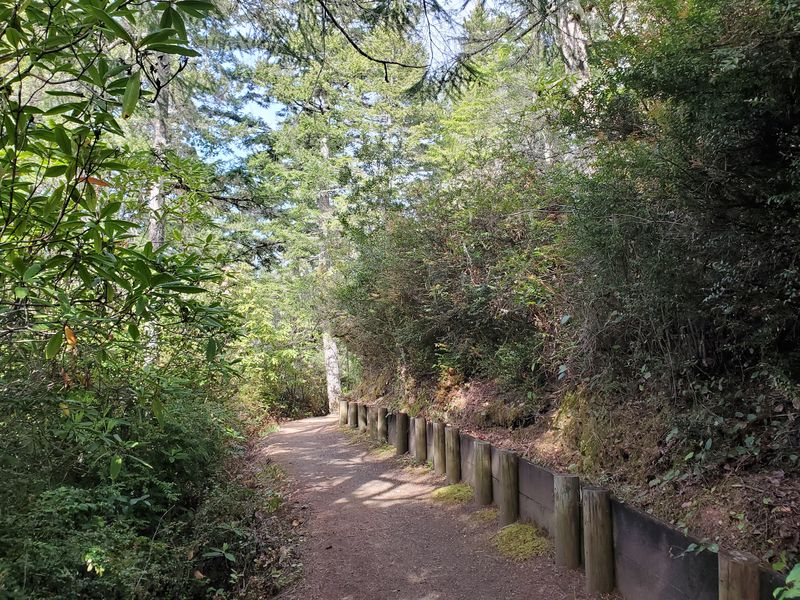
Nothing about the parking lot hints at what’s coming, and honestly, that’s part of the fun. The trail starts by crossing a small bridge over Eel Creek, then slips into a thick coastal forest full of shore pines, salal, and ferns.
It looks like classic western Oregon, green and damp and calm. The path here is mostly packed dirt, so it’s easy on the legs, and kids or non-hikers can handle it fine. You’ll wind around the edge of Eel Creek Campground, which feels a little odd at first. Keep going.
Signs point the way, and the trail continues across the road on the other side.
I liked this stretch more than I expected. Birds chatter in the branches, the air smells like pine needles, and the light filters through in soft patches. It’s quiet in a way that makes you slow down without meaning to.
Climb, Slide, Repeat
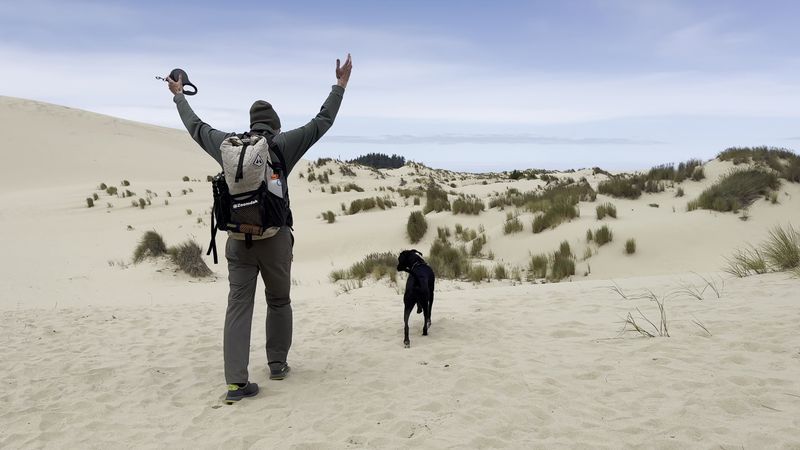
Kids figure this part out in about four seconds. They scramble up the steep face of a dune, stand at the top like tiny explorers, then run, roll, or slide all the way down. Adults catch on pretty fast too.
Climbing sand is a workout, though, and it sneaks up on you. Every step sinks a little, so your legs burn in a way that feels totally different from a dirt trail. Take short steps, lean forward slightly, and pause whenever you need to catch your breath.
Going down is the reward. The soft sand cushions each big leap, and there’s something silly and freeing about bounding downhill like you’re on the moon. I may have done it more times than any grown-up should admit.
A few smart moves help. Wear shoes you don’t mind filling with sand, or go barefoot when the sand is cool. Sunglasses keep blowing grit out of your eyes, and a small towel makes the drive home much cleaner. Out in the open sand, there’s plenty of room to roam, so go explore.
Tree Islands Floating on Sand
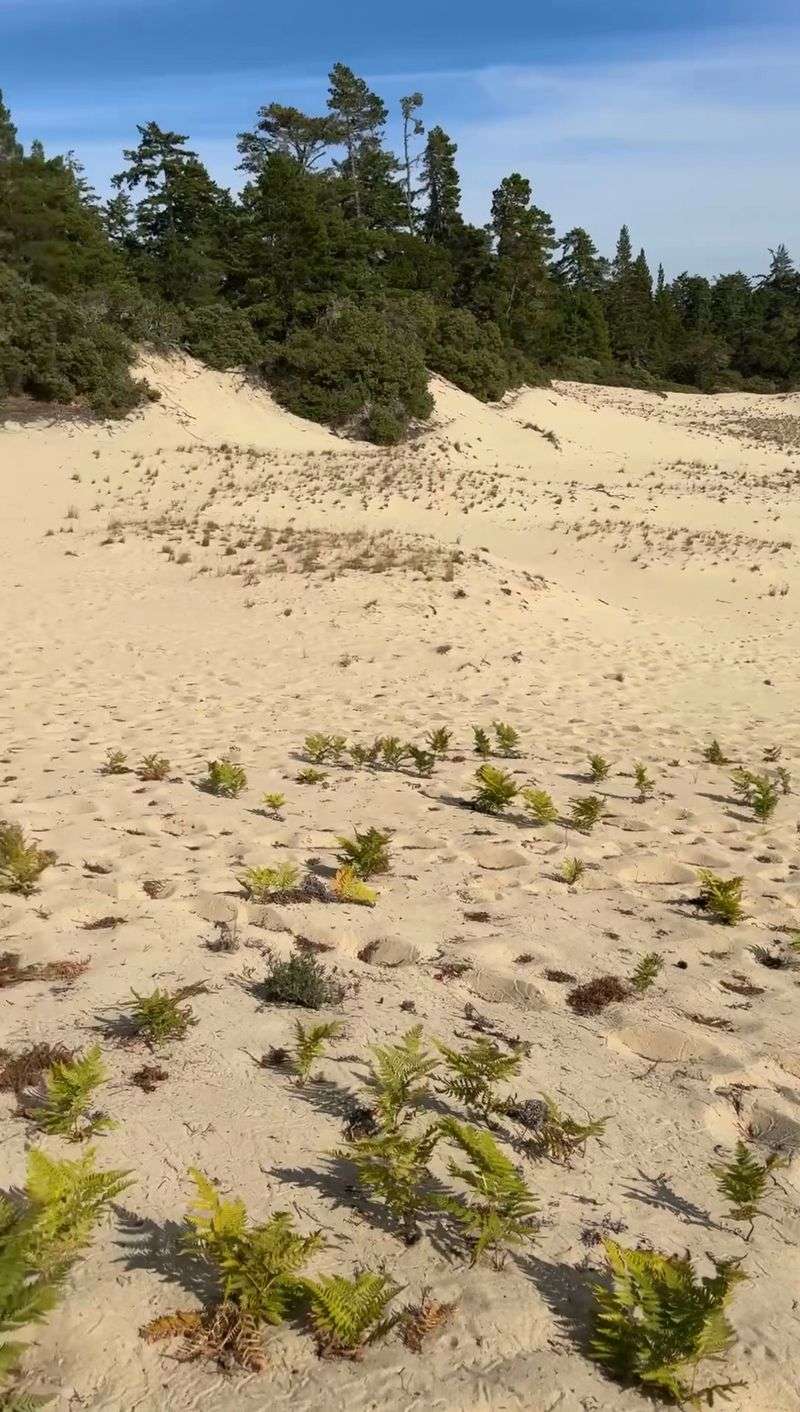
Out in the middle of all that golden sand, dark green clusters of trees pop up like islands in an ocean. They’re called tree islands, and they’re one of the coolest sights on this hike.
These patches are leftover bits of forest that the moving dunes haven’t swallowed yet. Wind pushes the sand slowly east over time, burying some trees and exposing others. Standing next to one, you can almost picture the whole landscape shifting inch by inch.
I found myself drifting toward them again and again. They offer a little shade, a break from the wind, and a fun landmark for spotting where you are. Up close, you’ll notice twisted shore pines and low shrubs holding on with stubborn roots.
Photographers love the contrast here. Bright ripples of sand against deep green branches make a picture that looks almost too perfect, especially in soft morning or evening light.
Please be kind to these plants. Their roots help hold the ground together, and trampling them does real damage. Admire them from the edges, snap your photos, and let them keep doing their quiet, important job.
The Moment the Trees Open Up
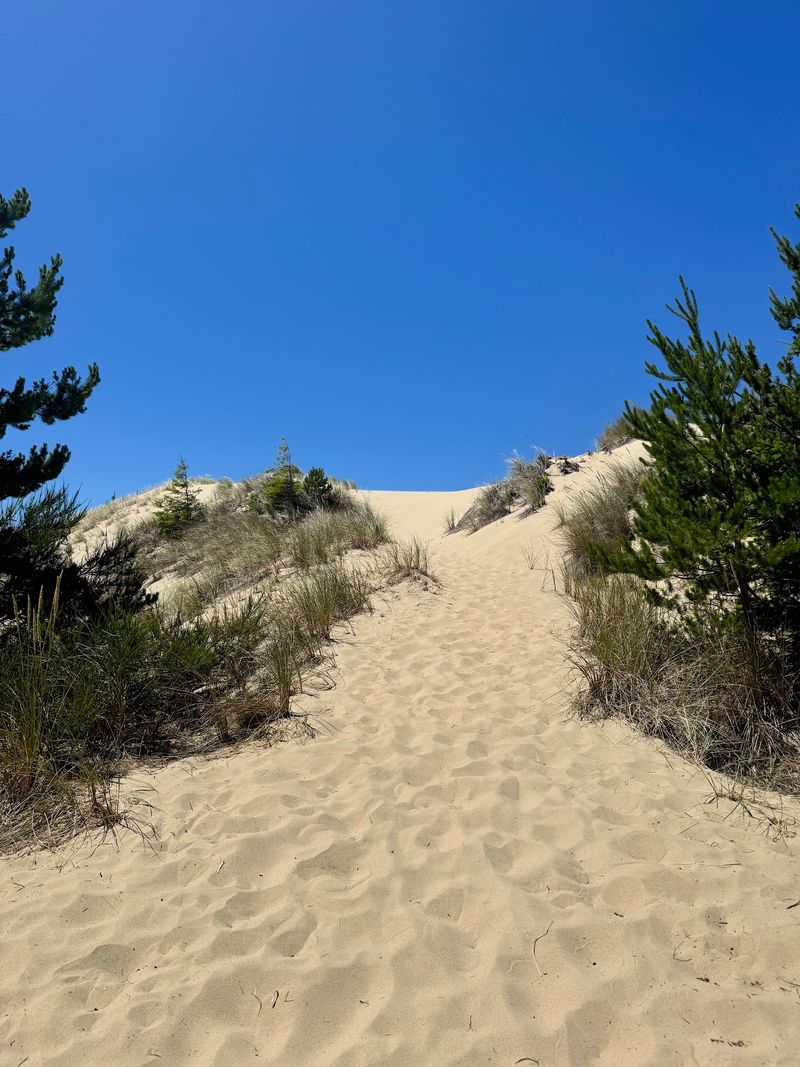
Roughly half a mile to a mile in, the forest simply stops. One step you’re under branches, and the next you’re blinking at a huge wall of pale sand climbing toward the sky. My jaw honestly dropped.
This first big dune is the star of the show for a lot of visitors. It rises right at the forest edge, and from the top you can see rolling ridges of sand stretching west, dotted with dark clumps of trees. On a clear day, the scale is hard to wrap your head around.
The Oregon Dunes are among the largest stretches of coastal sand dunes in North America, and some of the tallest ones in this area tower hundreds of feet high. Pictures never quite capture it. Your phone camera will try its best anyway.
Here’s a tip worth remembering. You don’t have to go any farther than this to have an amazing day, since the first few dunes can easily fill an hour or more. Families with little ones, or anyone short on energy, can call this the finish line and still leave happy.
Blue-Topped Posts Are Your Best Friends
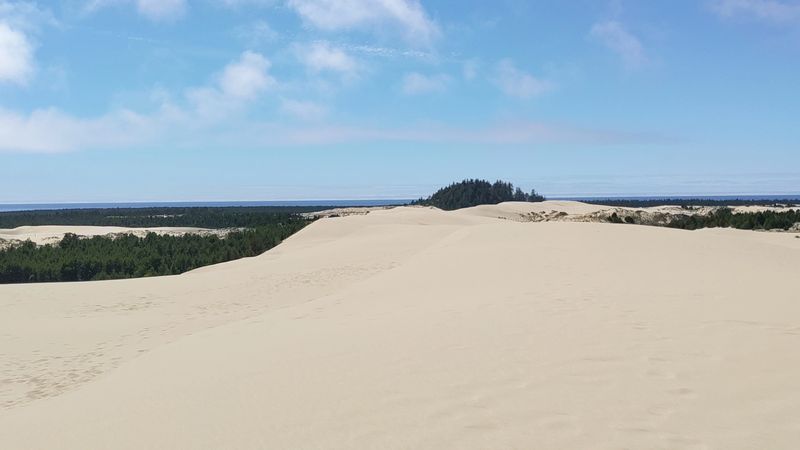
Sand erases footprints fast, which is both beautiful and a little sneaky. Once you’re out on the open dunes, there’s no dirt path to follow. Instead, tall wooden posts with blue tops mark the route toward the ocean.
Keep your eyes peeled, because those posts can be pretty far apart. In some spots, you’ll need to scan the horizon for a minute before you spot the next one. Wind and drifting sand sometimes make them harder to see, too.
One trick that helped me a lot was turning around every so often. The view behind you looks completely different from the view ahead, and knowing what the way back looks like makes the return trip much less confusing.
Near the far side of the dunes, where the trees start again, pay close attention. Rather than charging straight west, look for the trail sign pointing you north along the tree line, then follow it to the next marker.
The Long, Sandy Trek to the Pacific
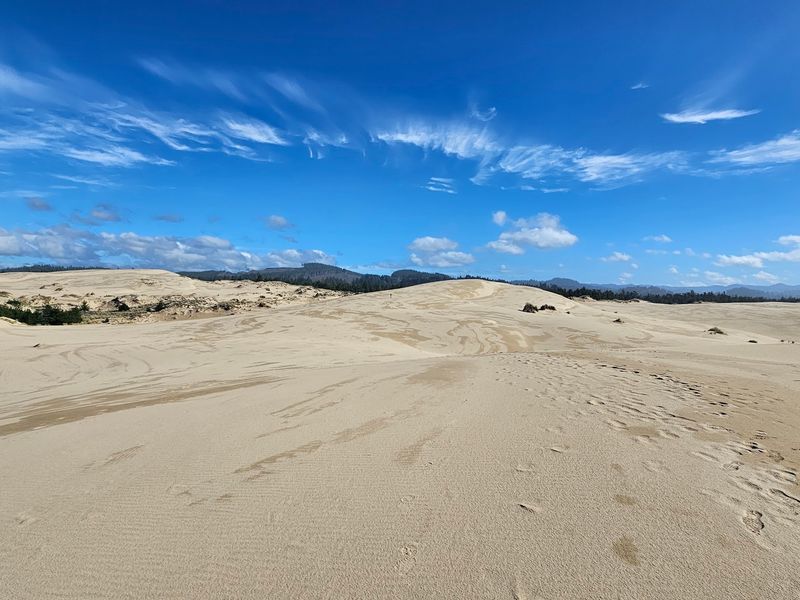
Reaching the ocean from here takes real effort. The full out-and-back route runs roughly six miles, and most of it crosses deep, shifting sand that makes every mile feel like two.
Plan on around four hours or more for the round trip, depending on your pace and how many times you stop to stare. Steady walkers can cross the dunes in about an hour each way, but breaks are part of the joy. Give yourself a generous window.
After the open sand, the trail enters a band of trees and brush near the coast. A boardwalk carries you through this green stretch for a good distance, and then the forest parts to reveal a wide, quiet beach. And that beach? Often gloriously empty.
Few people make the whole trek, so there’s a decent chance you’ll have long stretches of shoreline mostly to yourself.
Honestly, the solitude felt like a prize for all that sandy slogging. Pack snacks, bring more water than seems necessary, and save some energy for the return, because the dunes don’t get any flatter on the way back.
When Winter Rain Changes the Map
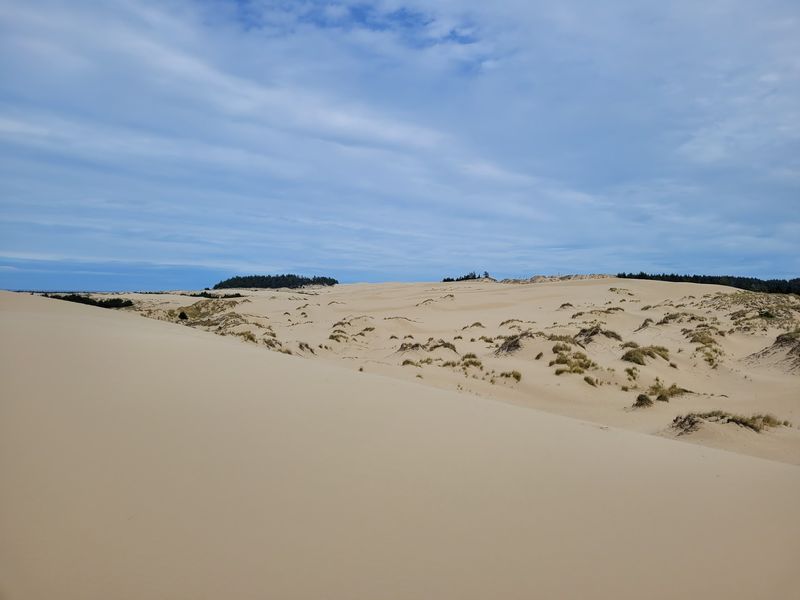
Rainy months bring a surprise that catches plenty of hikers off guard. The low area between the dunes and the beach, sometimes called the deflation plain, can fill with standing water after heavy storms. Parts of the route to the ocean may flood completely.
Some visitors have reached this spot only to find the way forward underwater, with no easy path around. It’s a good reminder that the coast plays by its own rules. Nature doesn’t check your schedule.
Wet weather also soaks the overgrown sections near the trees. Brushing past wet branches can leave you drenched from the knees down, so waterproof layers and quick-dry pants are smart picks from fall through spring.
Don’t let any of this scare you off, though. The forest trail and the first big dunes stay very doable in cooler months, and misty days give the sand a moody, silvery look that I found strangely gorgeous.
Check the Siuslaw National Forest website for current conditions before heading out. If the beach route is soggy, simply enjoy the dunes and save the ocean push for a drier day.
Sun, Wind, and a Smart Daypack
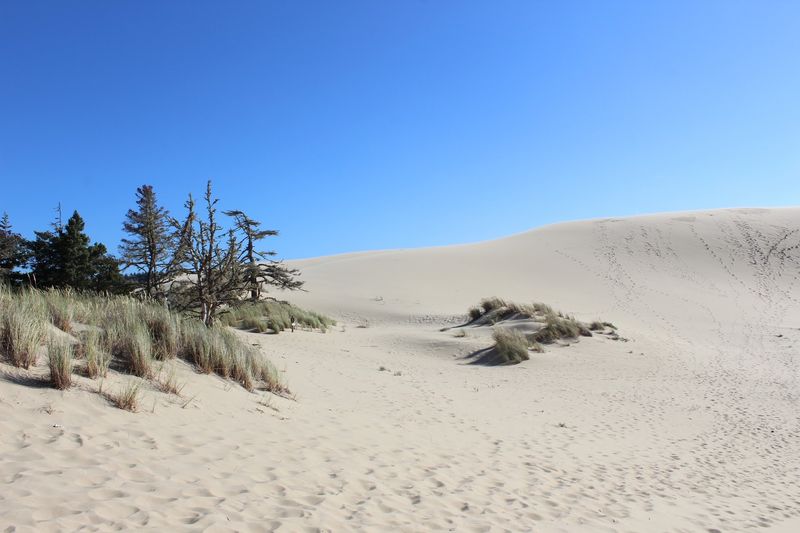
Sand reflects heat like a giant mirror. On a bright summer afternoon, the open dunes can get surprisingly hot, even when the air at the parking lot felt mild and breezy.
Water is the big one. There’s none available out on the trail, so carry plenty for everyone in your group, plus a little extra. Sunscreen, a hat, and sunglasses matter just as much, since there’s almost zero shade once you leave the trees.
Wind is the other wild card. Gusts can whip fine sand across the dunes, stinging your legs and sneaking into every zipper and pocket. A light jacket and a buff or bandana to cover your face make windy days far more comfortable.
Early mornings are my favorite time out here. The sand is cooler, the light is soft, and fewer people are around, so it feels peaceful and wide open.
Dog owners should read posted signs carefully. Western snowy plovers, a threatened shorebird, nest near the beach, and seasonal restrictions apply in certain areas. Blowing sand can also bother pets low to the ground, so keep an eye on furry friends.
A Trail Named for a Dune Defender
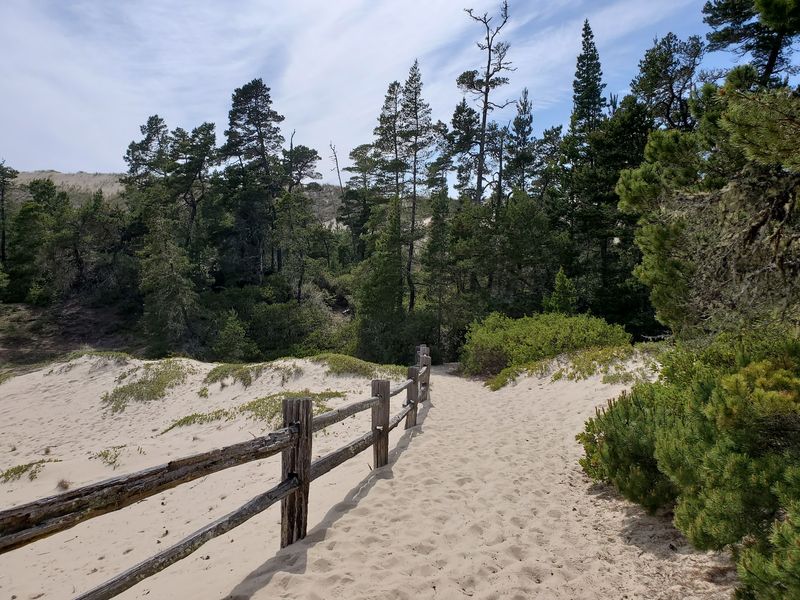
Ever wonder who John Dellenback was? He was a congressman from Oregon who played a key role in protecting this stretch of coast. His work helped create the Oregon Dunes National Recreation Area, which was established in 1972.
Before that, these dunes faced pressure from development that could have changed them forever. Setting the land aside meant future generations could hike, explore, and simply enjoy the sand the way you can today. Pretty great legacy, if you ask me.
Signs near the trailhead share some of this history, and they’re worth a quick read before you start walking. Knowing the backstory made the whole landscape feel more meaningful to me.
The recreation area is managed by the Siuslaw National Forest and stretches around forty miles along the coast. It covers towering dunes, lakes, forests, and beaches, with some areas open to off-highway vehicles and others, like this one, kept quieter for hikers.
The Easy Loop and Planning Your Visit
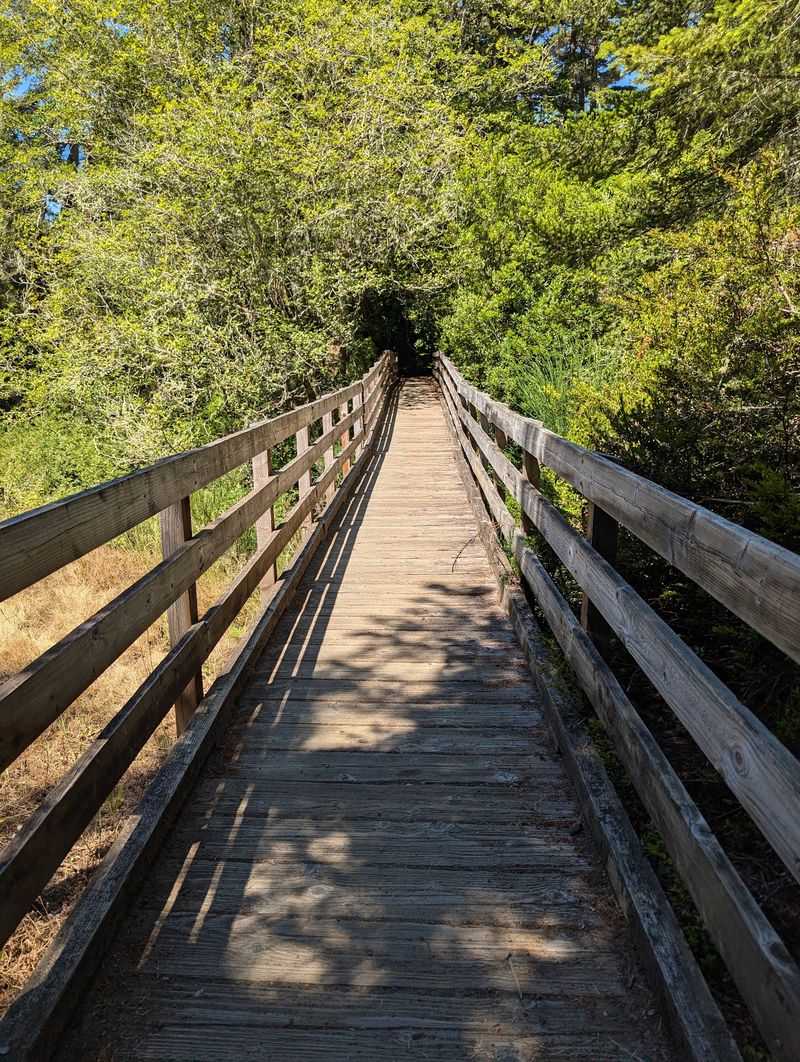
Not everyone wants a six-mile sand slog, and that’s completely fine. A shorter loop of about a mile gives you the forest, the big dune, and those wide views without the marathon. Many families finish it in under an hour, with time to play.
One heads-up about the loop’s return half. It passes through deep, soft sand with a couple of forks that can feel confusing. If little legs are tired, simply turning around and heading back the way you came on the packed dirt trail is a totally smart move.
The trailhead is open daily from 7 AM to 7 PM, and parking requires a Northwest Forest Pass, an America the Beautiful pass, or a day-use fee paid on site. Vault toilets sit near the lot, so take advantage before heading out.
Find John Dellenback Dunes Trailhead at US-101, North Bend, OR 97459, right next to Eel Creek Campground near Lakeside, and get ready to climb.
