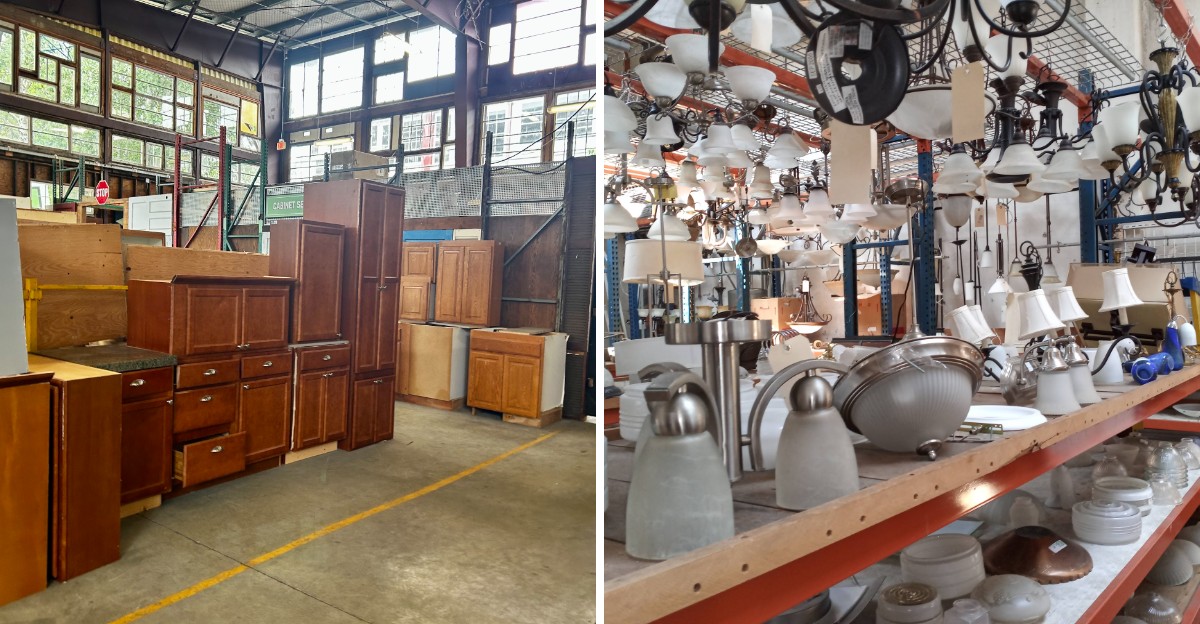
Salvaged doors and vintage fixtures don’t usually pile up quite this deep anywhere outside a warehouse built specifically for hoarding them.
Shelves stretch high with hardware pulled from demolished buildings, doorknobs and hinges organized just enough to make searching feel purposeful rather than overwhelming. Stained glass windows lean against walls nearby, waiting for someone with the right vision.
Rescuing materials at this scale takes serious commitment most salvage operations never sustain long term. This shop built an entire identity around it instead, turning what could’ve ended up in a landfill into something worth actually seeking out.
Few places let history sit this literally within reach. Oregon’s architectural past keeps circulating here, one reclaimed piece at a time.
A Front Entrance Built From Earth And Timber
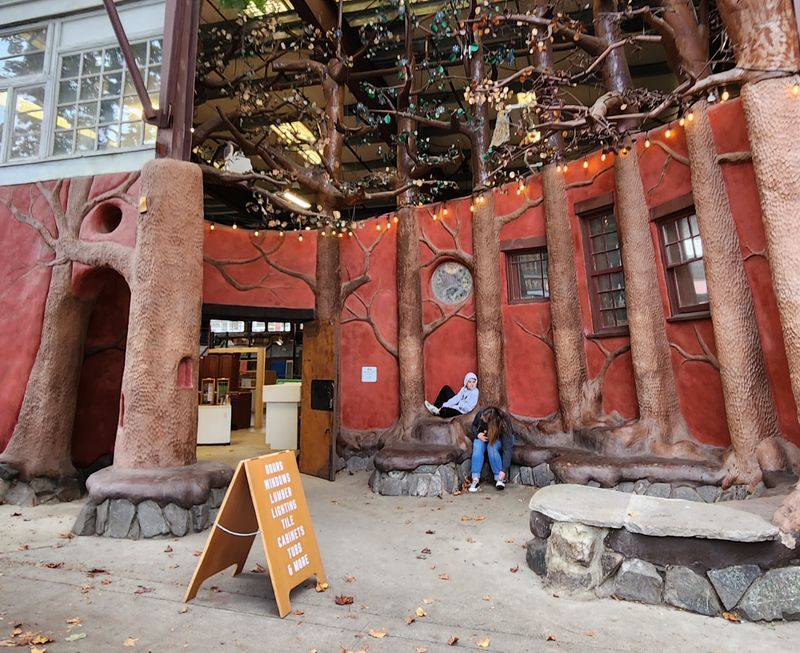
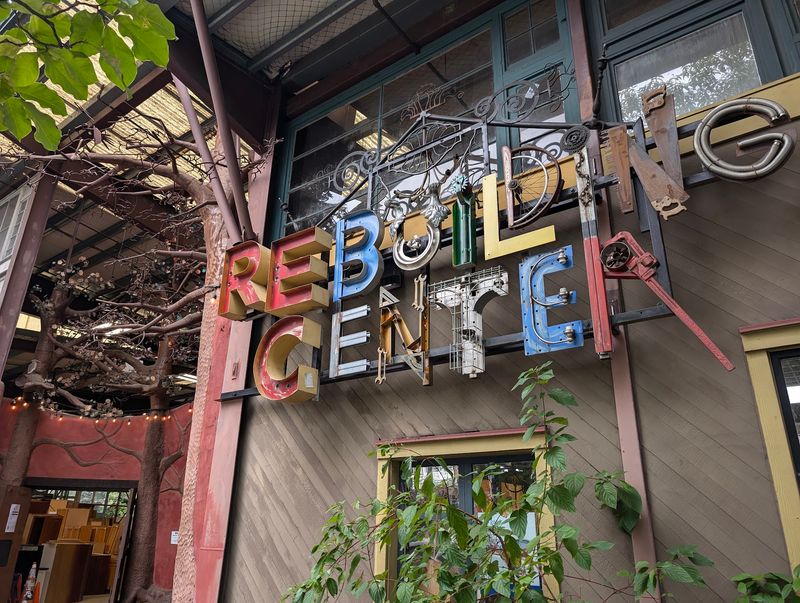
Most building supply stores greet you with a metal door and a parking lot. Not this one. The facade is a sculpted cob wall shaped into trees, with curved branches, natural plaster, and benches carved right into the base.
People sit out there sipping coffee before heading inside, and kids run their hands along the textured surface like it is a piece of playground art. It sets the mood before you even reach a shelf.
Cob is a mix of clay, sand, and straw, one of the oldest building techniques on the planet, and seeing it used on a modern storefront in North Portland feels wonderfully out of place in the best way.
Give yourself a minute outside before shopping. Notice the hand-shaped details, the uneven curves, the way the whole thing seems grown rather than built.
It quietly explains the philosophy of the place. Materials get reused, reshaped, and given another life instead of heading to a landfill somewhere.
Rows And Rows Of Salvaged Doors
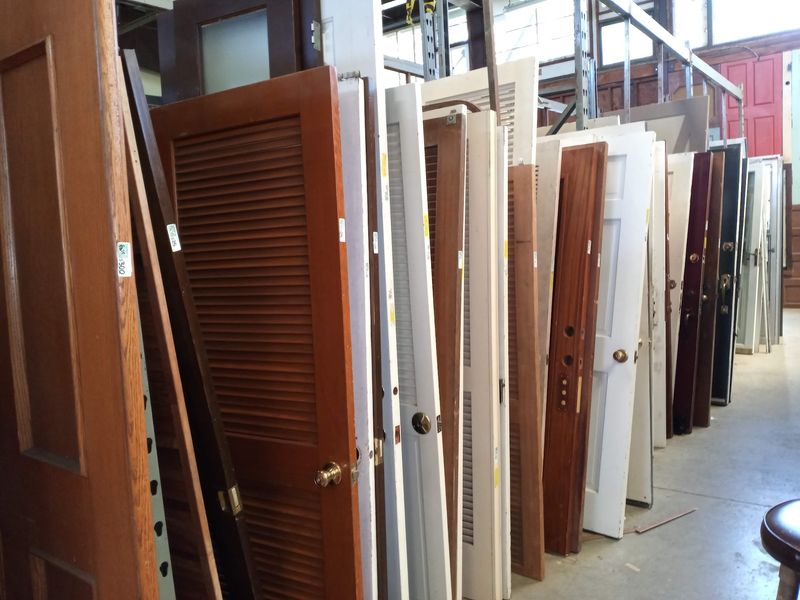
Hundreds of doors stand shoulder to shoulder in long racks, and flipping through them feels a little like browsing oversized records. Panel doors, French doors with wavy old glass, screen doors with chipped green paint, closet doors with original hardware still attached.
Some came out of century-old Portland bungalows. Others look like they spent decades in a farmhouse somewhere east of the Cascades. Shoppers here rarely use them as doors. One customer turned a pair into closet fronts.
Others build headboards, desks, sliding barn panels, or garden gates from them.
Bring a tape measure and write down your rough opening size before you come. Door sizes from older homes vary wildly, and guessing leads to heartbreak in the parking lot.
Check the edges for warping and give each one a gentle tug to test the hinges. Stock moves fast. If a door speaks to you, take it home that day, because it likely will not be waiting next weekend.
Antique Hardware Bins Worth Digging Through
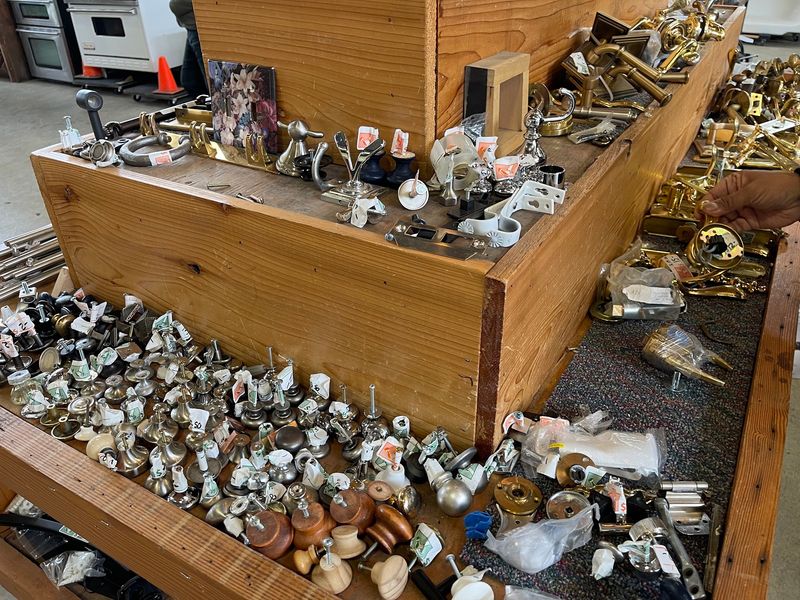
Tiny treasures hide in the hardware section, and honestly, that is where the hours disappear. Bins overflow with brass doorknobs, glass knobs, cast iron hinges, decorative drawer pulls, escutcheon plates, and switch covers in shapes you cannot buy new anymore.
Some pieces still carry their original patina. Others have been polished until they shine. Swapping out builder-grade knobs for old brass ones is one of the cheapest ways to make a plain dresser look like an heirloom. Furniture flippers know this trick well.
A practical tip: bring one original knob or pull from your project so you can match screw spacing. Mismatched hole centers ruin more restoration plans than anything else. Look for full sets when you can. Finding six matching pulls in one bin feels like winning a small prize.
Staff here tend to know what came from where, and asking questions often leads to a better find than wandering alone does.
The Lumber Yard Behind The Alley
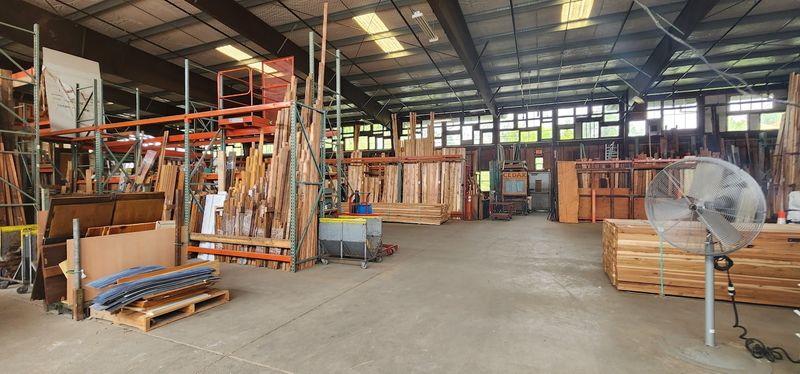
Plenty of first-time visitors never make it past the front building, which is a mistake. Head out the back door, cross the alley, and a whole second warehouse opens up, stacked with reclaimed lumber, plywood, trim, and beams.
Cedar, fir, and old growth boards show up regularly. So do odd lengths perfect for shelving or raised beds. Pricing varies by wood species and condition, so ask which list applies to the pile you are standing next to. Cedar and specialty stock are priced differently from general seconds.
Inspect ends carefully for splits and check boards for straightness by sighting down the edge. Salvaged wood carries history, and sometimes that history includes a nail.
Bring gloves, a tape measure, and something to tie loads down with. Twelve foot boards do not politely fit in a hatchback. The yard also cycles through used tools, which makes a quick lap worthwhile even when lumber is not on the list.
Chandeliers, Sconces And Lighting With A Past
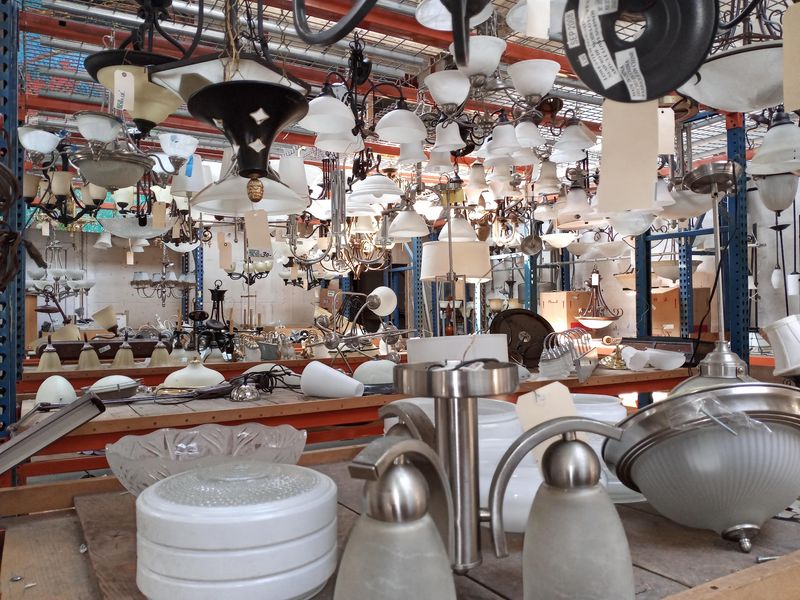
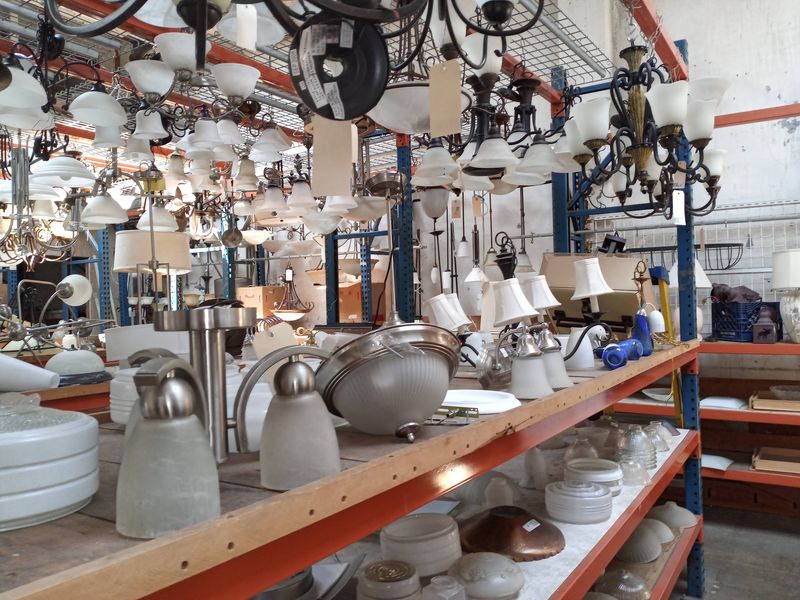
Look up. Dozens of light fixtures hang overhead, from enormous brass chandeliers to milk glass pendants and simple mid-century sconces that would cost a fortune at a boutique. Some still have their original sockets. Others have been rewired and tested by volunteers.
Lighting is one of the fastest ways to change how a room feels, and salvaged fixtures bring character that new ones struggle to imitate. A single old schoolhouse globe can carry an entire hallway.
Before buying, check whether the fixture has been rewired or needs new wiring, and ask about missing parts like canopies or mounting brackets. The store stocks electrical components nearby to fill gaps.
If wiring makes you nervous, there is good news. The center runs classes covering how household electricity works, including outlets, switches, and fixtures, with heavy emphasis on safety. Take the class, then take the chandelier. That order works better.
Cabinets, Countertops And Full Kitchen Sets
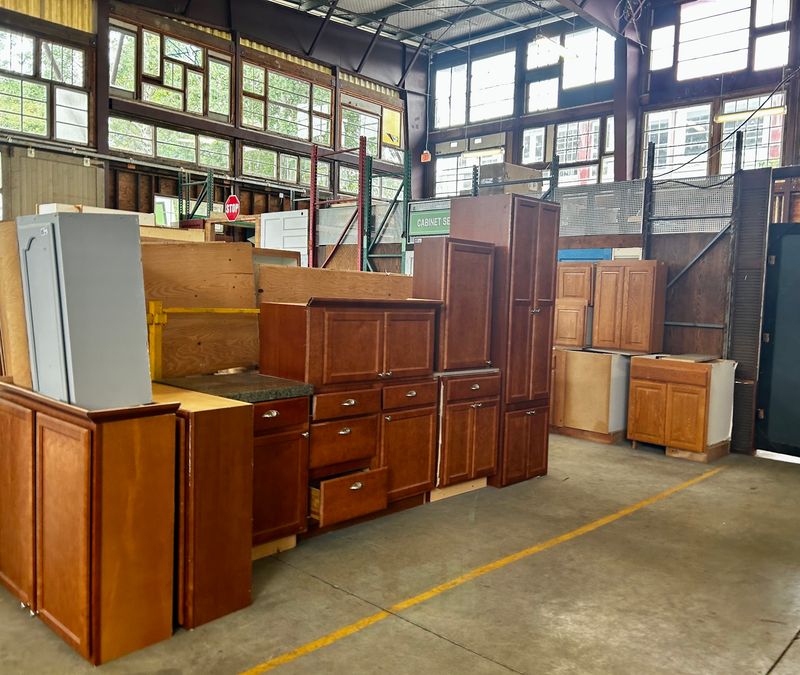
Whole kitchens land here after remodels, and sometimes they arrive nearly intact. Upper cabinets, base units, vanities, countertops, and the occasional matching set show up on the floor looking barely used. Finishes range from oak shaker to painted vintage units with original latches.
Mixing and matching is half the fun. A couple of cabinets can become a laundry room counter, a garage workbench, or storage in a garden shed without much fuss.
Measure your space first and sketch it on paper. Cabinet depths differ between eras, and a unit that looks right in a warehouse can overwhelm a small kitchen wall.
Check drawer glides, hinge condition, and whether the boxes are solid wood or particle board. Solid boxes handle refinishing much better. Bathroom vanity and sink combinations move quickly, so weekday mornings tend to offer better picking than a busy Saturday afternoon.
Claw Foot Tubs, Sinks And Bathroom Finds
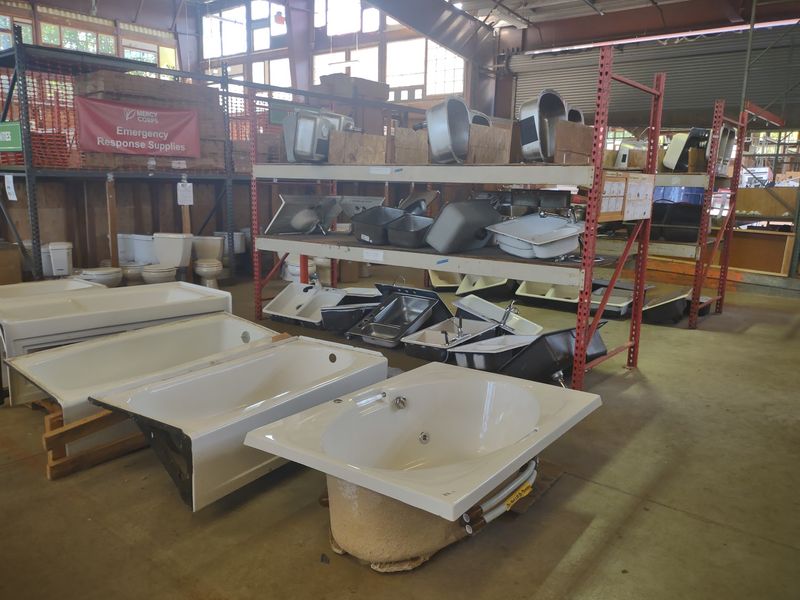
Bathtubs sit in a row like sleeping whales, and yes, some of them are gloriously oversized. Fiberglass tubs, jetted models, and older units turn up alongside pedestal sinks, toilets, faucets, and tile.
Colorful handmade glass bowl sinks by a local artist sometimes appear near the checkout counter with cards explaining the maker.
Bathroom projects get expensive fast, which is exactly why this section draws so many renovators. Replacing a cracked sink or finding vintage tile to patch a floor becomes realistic here.
Bring a flashlight to inspect drains and check tubs for hairline cracks along the base. Run your hand around rims for chips. Also confirm drain placement and rough-in measurements for toilets before committing, since older plumbing layouts differ from modern standards.
Heavy items require a truck and a friend, so plan transportation in advance. Tile sold by the box or the piece makes small backsplash projects surprisingly doable for a weekend.
Hands On Classes For Curious Beginners
Learning happens here as much as shopping does. Workshops cover practical skills like wiring a lamp, understanding outlets and switches, and building a raised garden bed from scratch. Instructors focus heavily on safety, which matters when electricity is involved.
Classes appeal to people who have never held a multimeter and folks who just want to stop calling someone for every small repair. Sessions stay small enough for questions.
Check the website ahead of time for the current schedule and registration details, since popular sessions fill up. Wear closed-toe shoes and clothes you do not mind getting dusty.
What makes the program work is the connection to the store itself. Learn how a lamp is wired, then walk twenty steps and pick out a vintage fixture to practice on.
Volunteering is another option for anyone wanting deeper involvement. Regular volunteers help sort donations and keep the salvage flowing back into the community.
Mississippi Avenue Makes A Great Pairing
Shopping here pairs nicely with a stroll, because the surrounding neighborhood is one of Portland’s most walkable stretches. North Mississippi Avenue runs with independent shops, bookstores, record stores, food carts, and bakeries within a few blocks.
Murals cover side walls, and the street has a relaxed, creative energy. Parking near the salvage warehouse is limited, so many visitors leave the car a few blocks away and walk in. Bus lines serve the corridor well.
Plan a loop. Browse the salvage aisles first, grab lunch on the avenue, then circle back if something you spotted keeps nagging at you. Summer brings street festivals to the neighborhood, and the whole area fills with music and vendors. Winter visits are quieter and easier for hauling large items.
Either way, the trip works as a half day outing rather than a quick errand, which is exactly how most regulars treat it.
Donations, Mission And Planning Your Visit
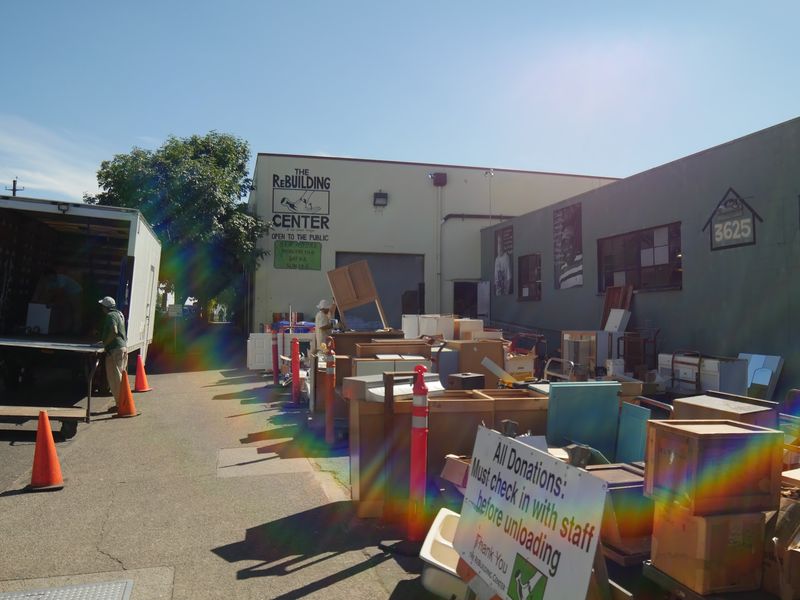
Keeping usable materials out of landfills sits at the heart of this nonprofit, and the donation dock behind the building is where that mission starts. Homeowners and contractors drop off doors, windows, fixtures, hardware, and lumber that still have life left.
Staff review each load to confirm there is space and resale potential. Call ahead if you plan to donate something large or unusual. A quick conversation saves a wasted trip and helps the team prepare.
Doors open Tuesday through Sunday from 9 AM to 5 PM, with Monday closed, so weekend browsers have plenty of options. Give yourself at least an hour, wear sturdy shoes, and expect to leave with something unplanned.
Find it all at the ReBuilding Center, 3625 N Mississippi Ave, Portland, OR 97227, where salvaged materials keep finding new homes every single day.
