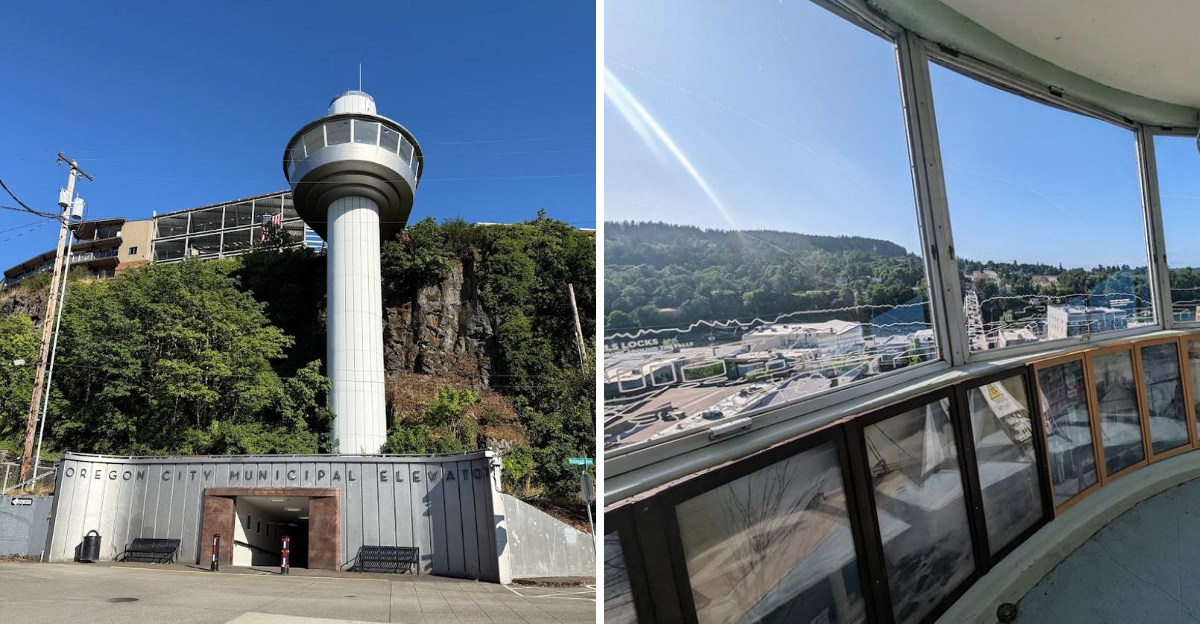
Forget streets that go from block to block. This one goes from bottom to top, and it is the only one of its kind in the entire country.
It is not a road you drive on. It is a free, 130-foot elevator that connects the lower part of Oregon City to the historic neighborhood perched high on a bluff above. Built to save people from a brutal 722-step climb, this vertical street is a quirky piece of history that still runs today.
Step inside the futuristic-looking observation deck at the top for panoramic views of the Willamette River and the city below. It is a ride that turns a simple commute into an unforgettable adventure in Oregon.
The Only Outdoor Municipal Elevator in the United States
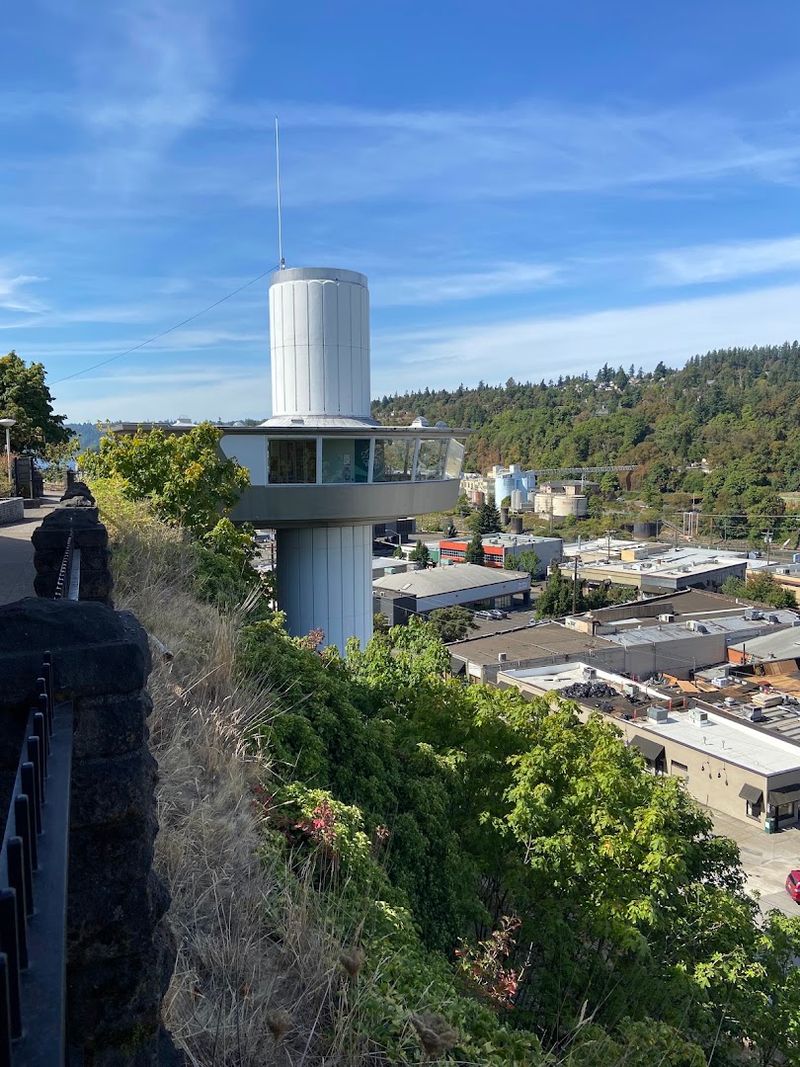
There are plenty of elevators in the world, but none quite like this one. The Oregon City Municipal Elevator holds the rare title of being the only outdoor municipal elevator in the entire United States.
That is not just a fun trivia answer; it is a genuine piece of American infrastructure history tucked into a small Oregon town.
The elevator connects the lower commercial district near the Willamette River to the upper residential plateau above it. Before it existed, getting between the two levels meant a long, winding walk or a steep climb up hundreds of stairs.
The elevator changed daily life for the people who lived and worked here.
It has been doing its job since the early 1900s in various forms, with the current tower opening in 1954. Free to ride and open most days of the week, it functions as a real city street, not just a tourist novelty. That blend of practicality and uniqueness is what makes it so genuinely special to visit.
The Tunnel Entrance That Feels Like Another Era
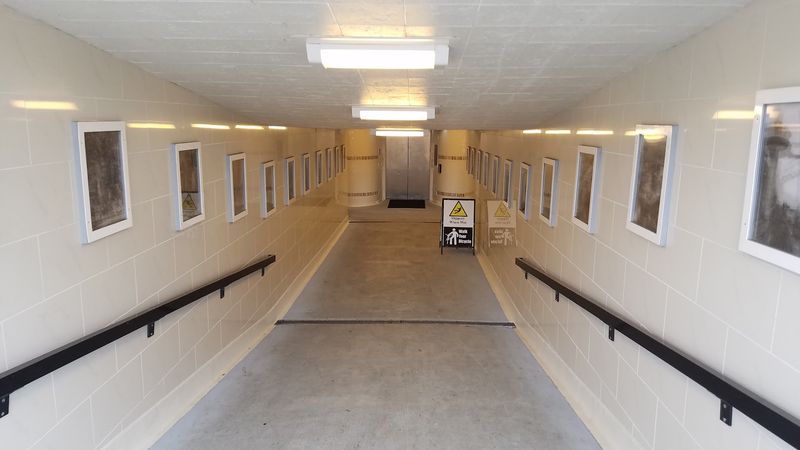
Before you even step into the elevator itself, the entrance does something interesting to your sense of time. A smooth, sloped tunnel runs underneath the train tracks and leads you directly to the elevator doors at the base of the bluff.
It is wheelchair accessible and thoughtfully designed, but the atmosphere inside that passage feels like it belongs to a different decade entirely.
The stone walls and the low ceiling give it a quiet, almost underground quality. It is not dramatic in a theatrical way, just genuinely atmospheric. You get the sense that thousands of people have walked this same path over many decades, some rushing to work, others out for a stroll.
That moment just before the elevator doors open is oddly memorable. One visitor described it as feeling like the entrance to a time machine, and honestly, that tracks.
The tunnel is one of those small architectural details that does not show up in most travel guides but ends up being one of the things you remember most about the whole experience.
The Ride Itself, Fast, Free, and Surprisingly Fun
Let’s be honest: the elevator ride is short. We are talking about one floor, straight up, done in seconds. But there is something quietly thrilling about pressing that button and feeling the lift carry you up a cliff face inside a narrow metal tower.
It is free to use, which makes it one of the better deals in Oregon tourism.
The cab itself is simple and functional. No frills, no fancy lighting, just a clean metal box that does its job well. Some people arrive expecting an elaborate vintage contraption, and while the mechanism is genuinely historic, the experience inside is more utilitarian than ornate.
What makes the ride memorable is not the cab itself but the context around it. You are riding a public street. The city officially designates this elevator as part of its transportation network, which means taking it feels less like a tourist activity and more like participating in how Oregon City actually moves.
That quiet sense of civic participation adds a layer to what might otherwise just be a brief vertical trip.
A Brief History That Spans Over a Century
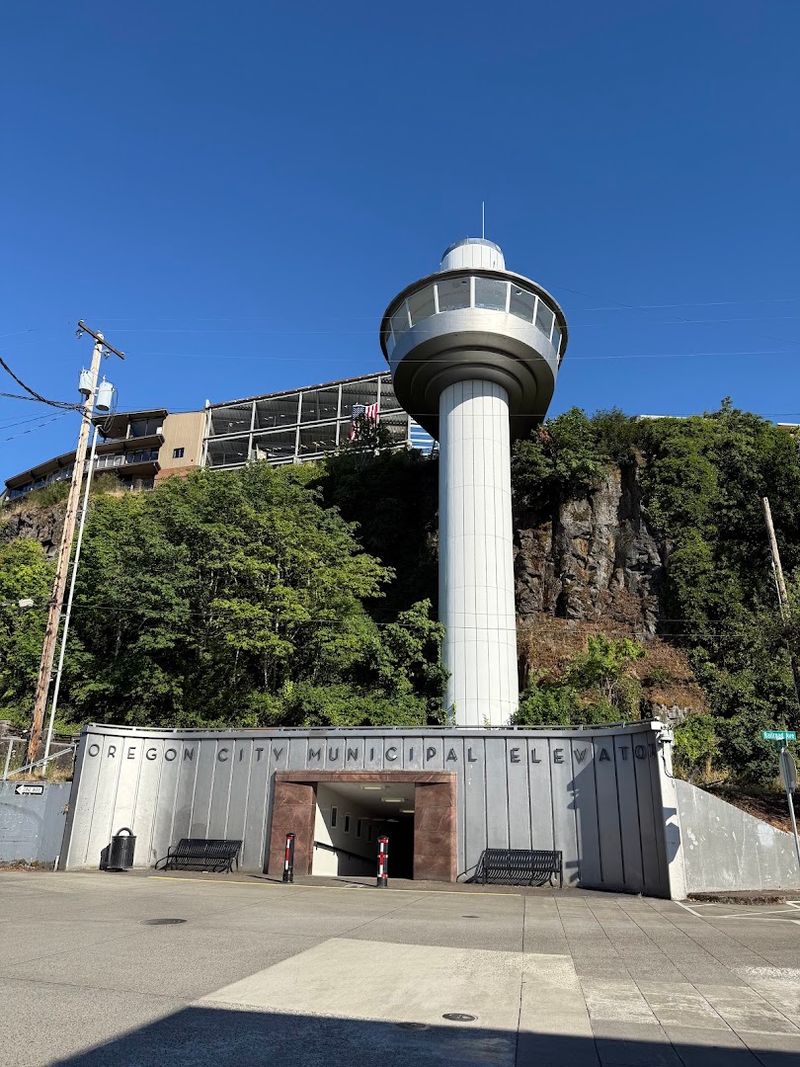
Oregon City has a long memory, and the elevator is one of its most vivid chapters. The first version of this lift was steam-powered and took over three minutes to make the ascent, which feels almost comical compared to the quick ride visitors experience today.
It was built to solve a very real problem: a city divided by geology.
Oregon City sits on a basalt bluff, and the dramatic elevation difference between the lower and upper town made everyday movement genuinely difficult. The elevator was the city’s practical answer to a geographic challenge.
Over the decades it was updated, rebuilt, and eventually replaced by the current structure in 1954.
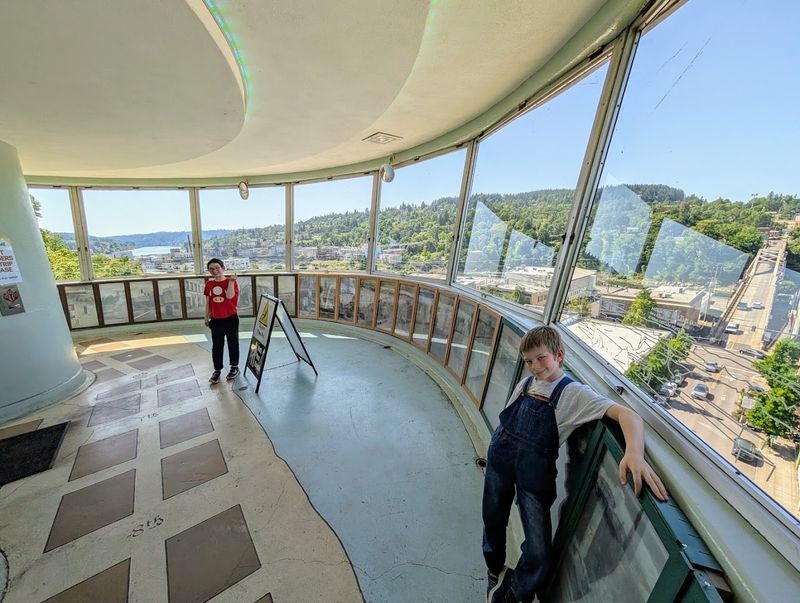
Inside the elevator lobby and at the top observation area, there are plaques, photographs, and lenticular images that show how the local landscape has shifted over time. Some of those changes are inspiring, others are sobering.
Seeing the historical record laid out like that gives the whole experience a weight that a regular elevator ride simply does not carry.
Willamette Falls Visible from the Top
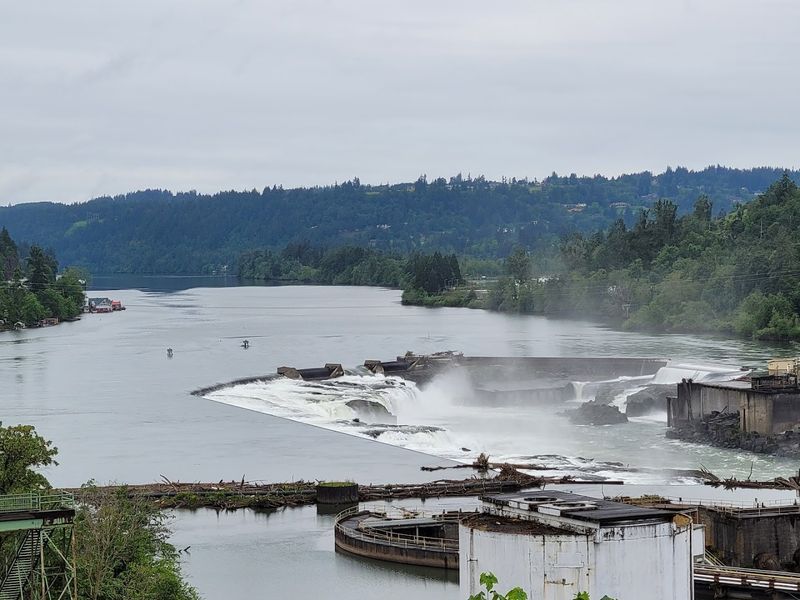
Not many elevator rides come with a waterfall on the side, but this one does. From the top observation deck, on a clear day you can make out Willamette Falls in the distance. That is a striking fact to hold in your head while looking out from a city bluff.
The falls have a complicated history tied to Oregon City’s industrial past. Paper mills and hydroelectric dams were built around them for over a century, and the view from the elevator reflects that layered reality.
There is beauty there, but also evidence of how dramatically humans can reshape a natural landscape.
Lenticular photographs inside the observation area show what the falls and surrounding land looked like at different points in history. Some of those images are striking in how much has changed.
Getting that historical context alongside the live view makes the whole experience feel more meaningful than a simple sightseeing stop. It is a good reminder that landscapes carry stories.
The Observation Deck with Views Worth Talking About
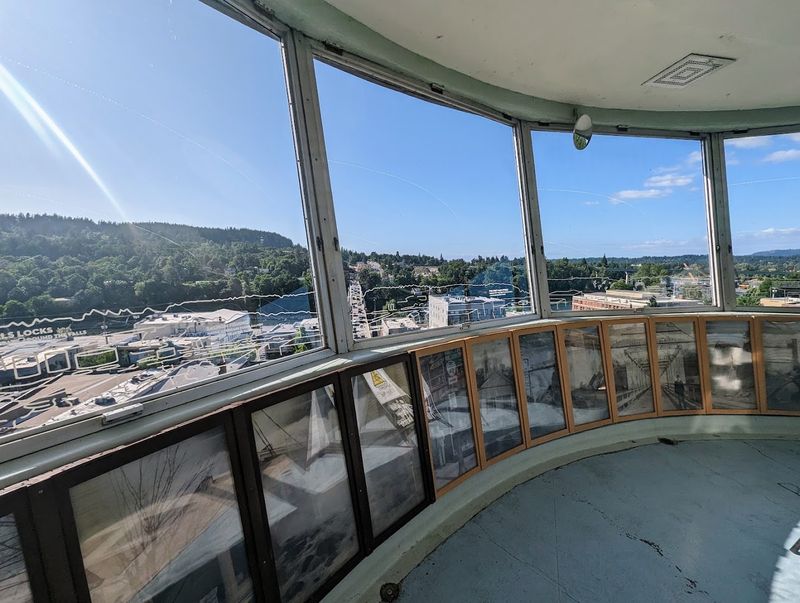
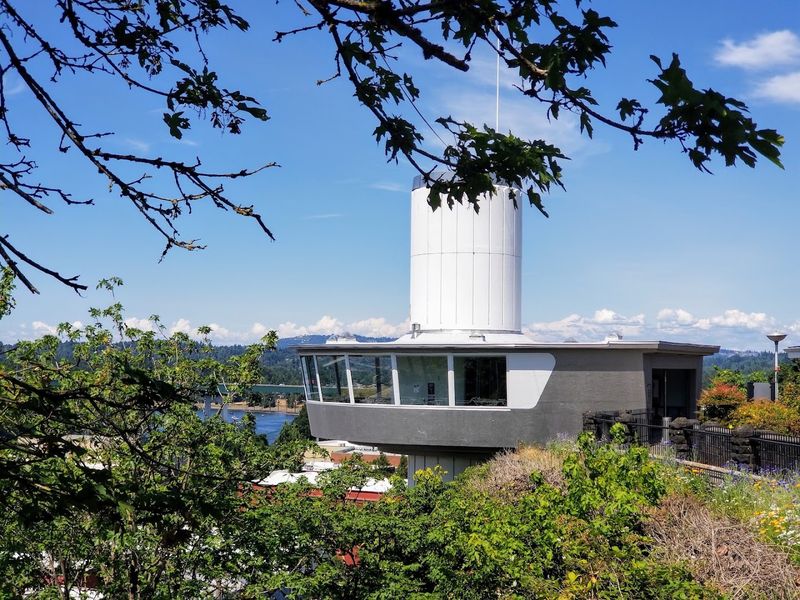
At the top of the elevator, the city opens up in a way that genuinely catches you off guard. The observation deck is a circular, glass-enclosed structure that juts out over the bluff. It offers roughly 180-degree views of Oregon City, the Willamette River, and on clear days, the mountains beyond.
It has a slightly futuristic look compared to the historic surroundings, almost spaceship-like.
The river view is the centerpiece. From up here, you can see the industrial waterfront below, the old paper mills, and depending on conditions, a glimpse of Willamette Falls. The falls are the second largest by volume in the United States, trailing only Niagara.
That is a remarkable thing to see from a free public platform.
On foggy or overcast days, the view takes on a moody, atmospheric quality that feels very Pacific Northwest. Sunny days bring mountain silhouettes and sparkling water. Honestly, the deck rewards every kind of weather.
It is a good spot to slow down, look around, and appreciate just how much geography Oregon City is working with.
The Volunteer Staff Who Bring the History to Life
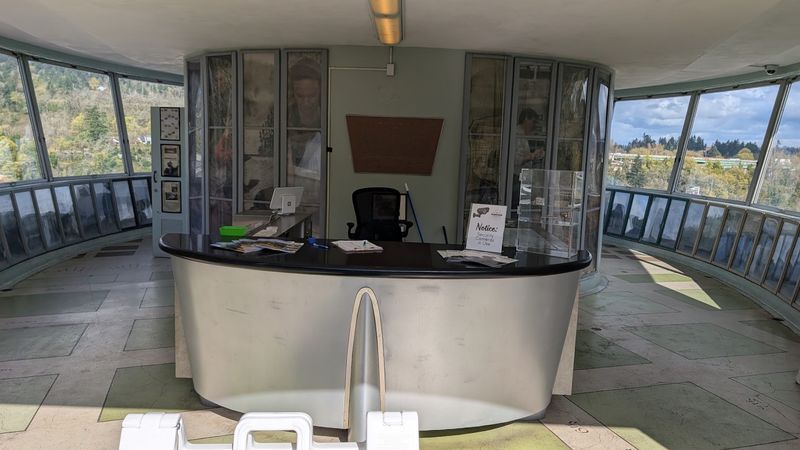
One of the genuinely unexpected highlights of visiting the elevator is the people staffing it. Volunteers work the information desk at the top, and they carry an impressive depth of knowledge about Oregon City’s history, the elevator’s past, and the surrounding area.
The kind of knowledge you simply cannot get from a plaque on a wall.
Multiple visitors have mentioned a volunteer named Beverly as someone who made their entire visit worthwhile. She has shared personal connections to the elevator, including accompanying her father to the dedication ceremony when the current tower opened in 1954.
That kind of living memory is rare and genuinely moving to encounter.
Beyond the personal stories, these volunteers point visitors toward nearby walking paths, historical sites on Main Street, and viewpoints that most people would otherwise miss entirely. They are the kind of local guides who make a short stop feel like a full afternoon.
If you get the chance to chat with whoever is working the desk, take it. You will leave knowing far more than you expected to.
The Stone Stairway as an Alternative Route
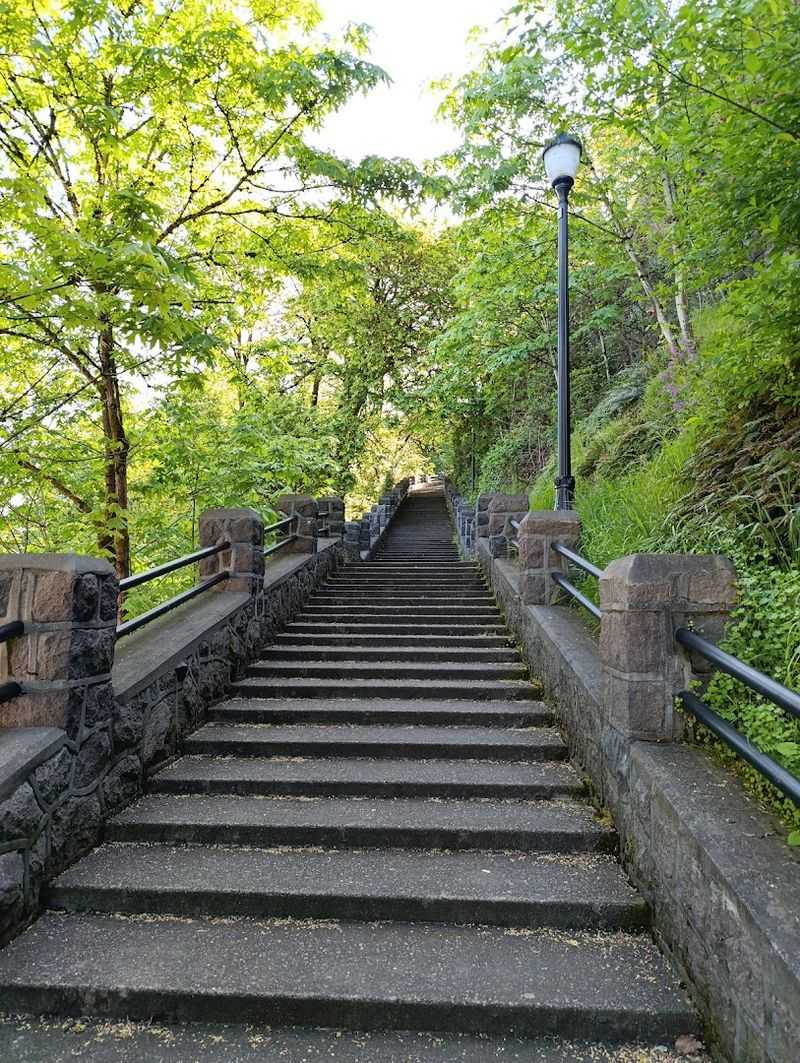
Not everyone takes the elevator, and that is completely fine because the alternative is its own kind of experience. A long stone stairway runs alongside the elevator tower, offering a more physical way to make the climb between the lower and upper town.
It is a solid workout, but the views along the way make it worth the effort.
At the top of the stairway, there is a small waterfall that catches many visitors by surprise. It is not massive, but finding a little cascade tucked beside a city staircase feels like a quiet reward for choosing the longer route.
Small discoveries like that are what make a place feel worth exploring slowly.
The stairway has a different energy than the elevator. It is quieter, more meditative, and gives you time to notice details you would miss in a 30-second lift ride. Some people take the elevator up and walk the stairs down, or vice versa, turning the whole trip into a small loop.
Either direction works, and doing both means you get the full picture of how this unique vertical street actually functions in daily city life.
Why Oregon City Deserves a Spot on Your Oregon Road Trip
Oregon City does not always make the top of Oregon travel lists, and that is genuinely puzzling once you spend a few hours there. It was the first incorporated city west of the Rocky Mountains, and it carries that history in its streets, buildings, and yes, its vertical transportation system.
The elevator is a symbol of what makes this town worth slowing down for.
The lower town has a Main Street worth exploring, with local spots recommended by the elevator volunteers themselves. The surrounding area offers river views, historical walks, and the kind of unhurried atmosphere that bigger cities have long since lost.
It is a good reminder that the most interesting travel experiences are often the ones you did not plan for.
Fitting the Oregon City Municipal Elevator into a Portland day trip is easy since the two cities are only about 20 minutes apart. But Oregon City rewards more than a quick stop. Give it a half day, chat with the volunteers, take the stairs down, and follow one of the walking paths.
The address is 6 Railroad Ave, Oregon City, OR 97045, and it is absolutely worth finding.
