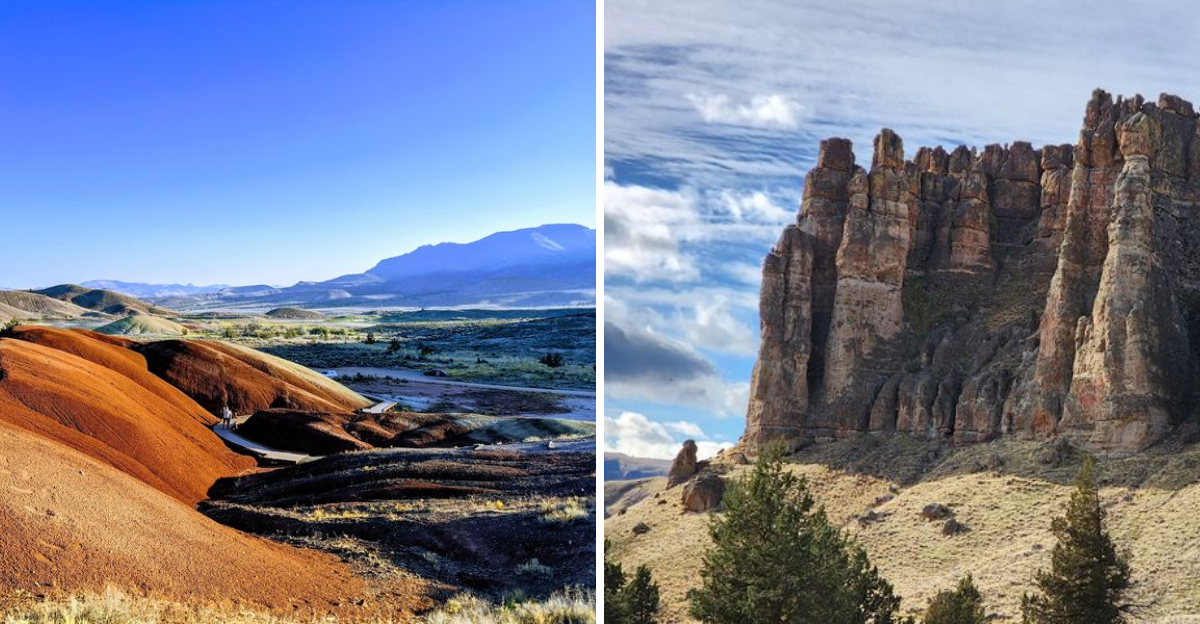
In a quiet corner of Oregon, the earth has cracked open a window into a world that vanished millions of years ago. This isn’t a museum of dusty bones behind glass. It’s a sprawling landscape where the very ground holds ancient history.
The fossils here span nearly 50 million years, from tropical rainforests to the creatures that roamed them – ancient relatives of elephants, saber-toothed cats, and creatures you’ve never even heard of. Layers of volcanic ash buried entire ecosystems, freezing them in time.
It’s the kind of place that makes you feel small in the best possible way.
Walk through the badlands and let your imagination wander. Oregon’s underground fossil bed is waiting to show you just how deep time really goes.
Sheep Rock Unit and the Thomas Condon Paleontology Center
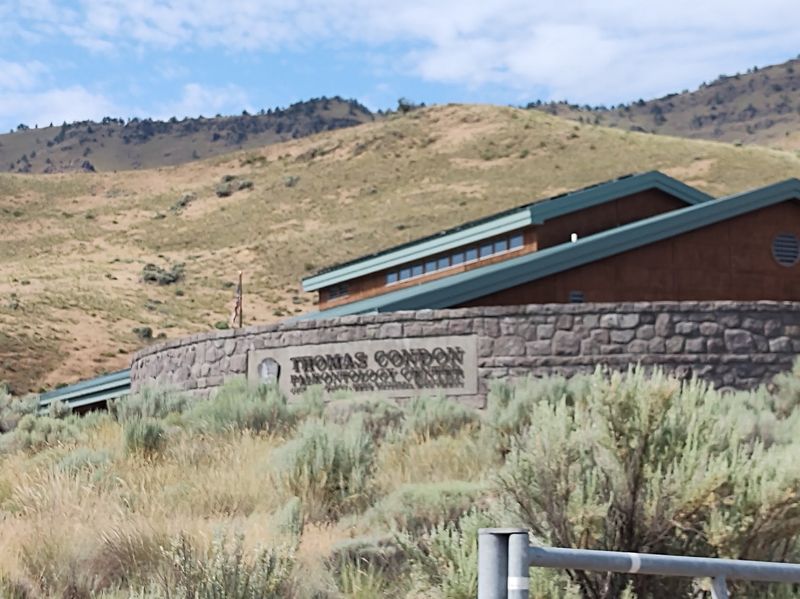
Fossils behind glass often feel far away, yet the specimens inside the Thomas Condon Paleontology Center are real bone rather than plaster copies. Skulls of ancient rhinos, small early horses, and sharp-toothed predators line the gallery.
The Sheep Rock Unit works as the scientific heart of the monument, and this building anchors the whole visit. A short park film explains how volcanic ash smothered forests, lakes, and swamps across millions of years.
Exhibits compare this dry corner of Oregon to the steamy climate of modern Panama, a claim that seems wild until the evidence stacks up.
Rangers here answer questions with genuine energy, restrooms stay clean, and printed maps are available at the desk. Grab one. Cell signal disappears fast outside the parking area.
Doors open at 10 AM most days, with Tuesday and Wednesday closed, so check the schedule before driving out. An hour covers the highlights. Two hours passes quickly for anyone who reads every label and lingers at the fossil cases.
Kids usually gravitate straight toward the big mammal skulls, so allow extra patience in that room.
Painted Hills and Their Shifting Colors
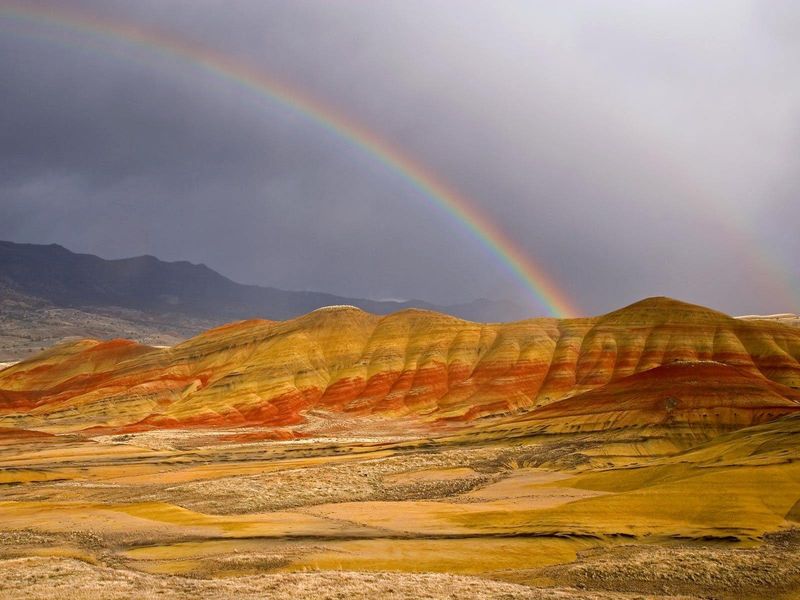
Color is the whole point at the Painted Hills, and the shades refuse to stay the same. Rust reds, buttery golds, and charcoal bands stripe the mounds like layers in a dessert nobody should eat.
Each band records a different ancient soil, shaped by iron, minerals, and shifting climates over millions of years. Late afternoon light saturates the tones. After rain, the reds deepen so much they look almost wet with paint.
Visitors who can return twice, once in morning and once near sunset, often say it feels like two separate places. The overlook near the main parking area gives the classic wide view with almost no effort.
Staying on marked paths matters more here than almost anywhere in the monument. The clay crust is fragile, and footprints pressed into those slopes can last for years. Photos from the boardwalks and viewpoints look better anyway.
Shade is scarce, so hats and water belong in the day pack, especially in July and August. Summer heat builds fast in this open basin, and the gravel access road kicks up dust behind every car.
Blue Basin and Its Turquoise Canyon Walls
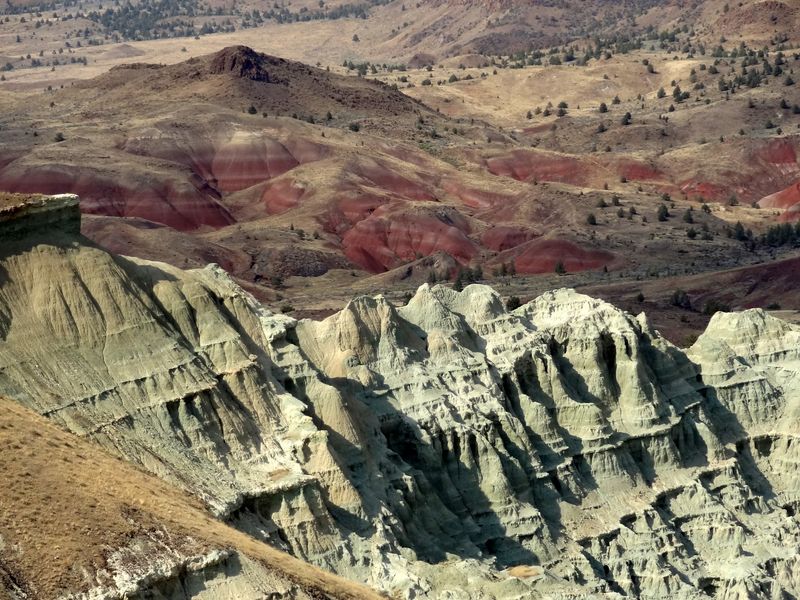
Blue-green rock feels out of place in central Oregon, which is exactly why Blue Basin sticks in memory. The claystone glows in soft turquoise tones, the leftovers of ancient volcanic ash turned to clay.
The Island in Time Trail runs roughly 1.3 miles round trip and stays mostly flat, following a creek bed into a natural amphitheater. Replica fossils sit along the way, showing what was pulled from these slopes, including turtles, ancient dogs, and grazing mammals.
For bigger views, the Blue Basin Overlook Trail loops about three miles with real climbing and a rim view over the whole basin. Trail conditions change, so checking status at the visitor center saves a wasted hike.
Footing gets slick when wet, since clay turns to paste. Sturdy shoes help. Morning shade keeps the lower canyon cool, a small gift in summer.
Swallows nest in the cliffs, and lizards dart across the path, so quiet walking pays off. Benches near the amphitheater invite a long pause. Anyone hoping to understand how the fossils were actually found should walk this one first.
Clarno Palisades and the Trail of Fossils
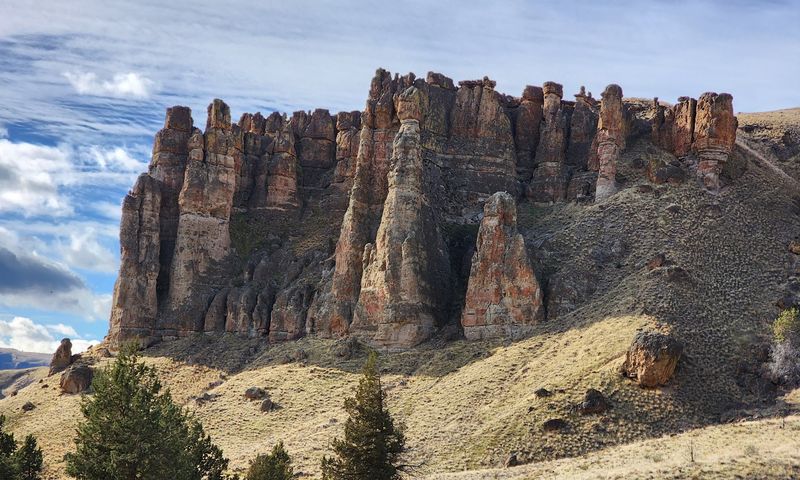
Oldest rocks in the monument stand at Clarno, where the Palisades rise like a wall of hardened mud and stone. Ancient volcanic mudflows swept through a subtropical forest here and sealed pieces of it inside the rock.
The Trail of Fossils is short, roughly a quarter mile, and it is the only spot in the monument where plant fossils are visible right in the cliff face. Leaf shapes, seeds, and branch impressions hide in plain sight once eyes adjust.
Looking closely becomes a game. Kids often spot details adults walk past. Nothing gets collected, of course, since everything stays where it sits for the next visitor and for researchers.
Clarno sits farthest from the other units, north near Fossil, and reaching it takes commitment on quiet two-lane highways. Facilities are basic, with picnic tables and restrooms.
The payoff is solitude, along with cliffs that look almost sculpted in late light. Anyone chasing all three units in one day should start here early, then work south toward Sheep Rock and the Painted Hills. Fuel up before that drive, because gas stations are scarce.
Mitchell, the Tiny Town at the Doorstep
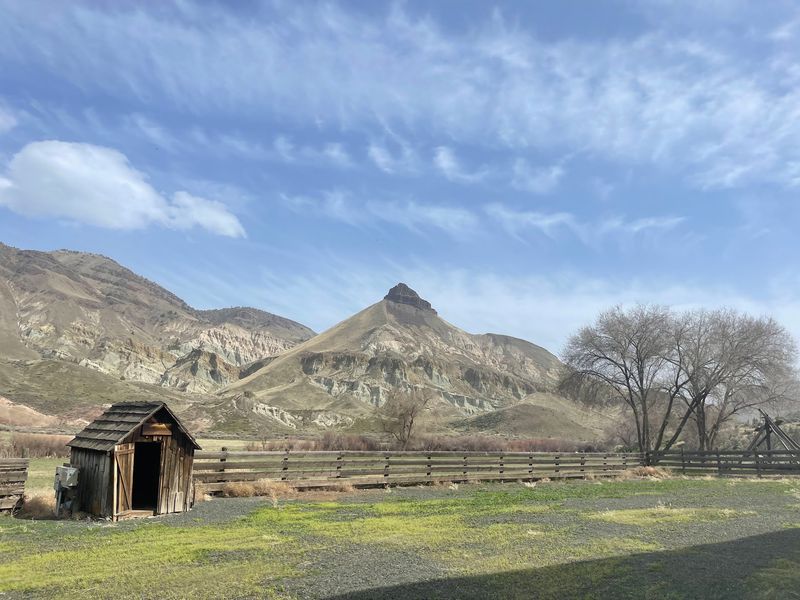
Mitchell has a population you could fit on a school bus, and that smallness is part of its charm. The town sits along Highway 26, roughly fifteen minutes from the Painted Hills turnoff.
Staying nearby makes a real difference for photographers and anyone chasing changing light. Sunrise trips become simple. Sunset trips do not end with an exhausting late drive across dark country roads.
Services are limited, so plan groceries, snacks, and fuel in advance. Options thin out quickly after dark, and the nearest larger stops sit an hour or more away in either direction.
Night skies over Mitchell go seriously dark, which makes stargazing an easy bonus after a day of hiking. Deer wander through at dusk. Bring a jacket, because desert nights cool off fast even in midsummer.
For travelers used to towns with a dozen coffee shops, the pace here takes adjusting. Give it an evening. The quiet starts to feel less like emptiness and more like room to breathe, which fits the fossil country waiting up the road.
Watching Real Fossil Work Behind Glass
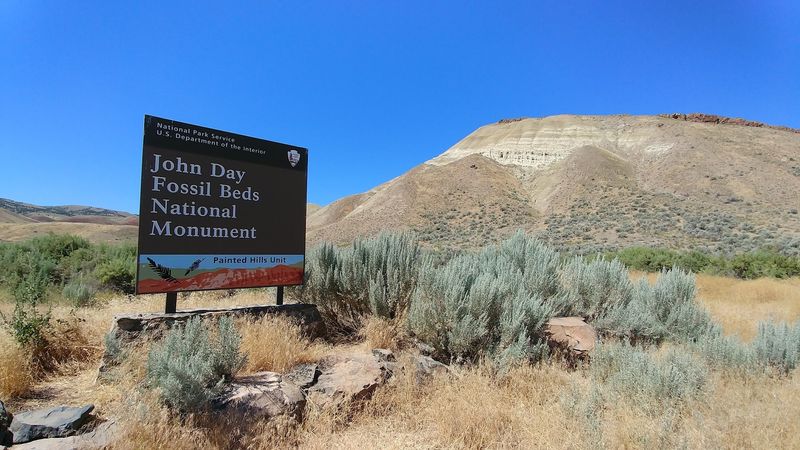
A paleontologist working at a bench, visible through a window, turns the whole visit from museum to laboratory. Screens above the glass share the magnified view, so the fine work of cleaning bone becomes something anyone can follow.
Tools look almost dental, tiny picks and brushes moving grain by grain. Progress is slow. A single jaw can take weeks to free from surrounding rock.
Watching that patience up close changes how the gallery next door reads. Every polished skull on display once sat under those same lamps, and every label represents months of careful hands.
Lab activity depends on staffing and the day, so seeing someone at the bench is a bit of luck. Weekday visits tend to improve the odds. Even an empty lab is interesting, with specimens, trays, and half-finished work sitting exactly where they were left.
The monument protects the most continuous record of mammal life on land anywhere, spanning tens of millions of years, and this small window is where that record gets read. Questions are welcome at the front desk when the lab is quiet.
Painted Cove Boardwalk and the Popcorn Clay
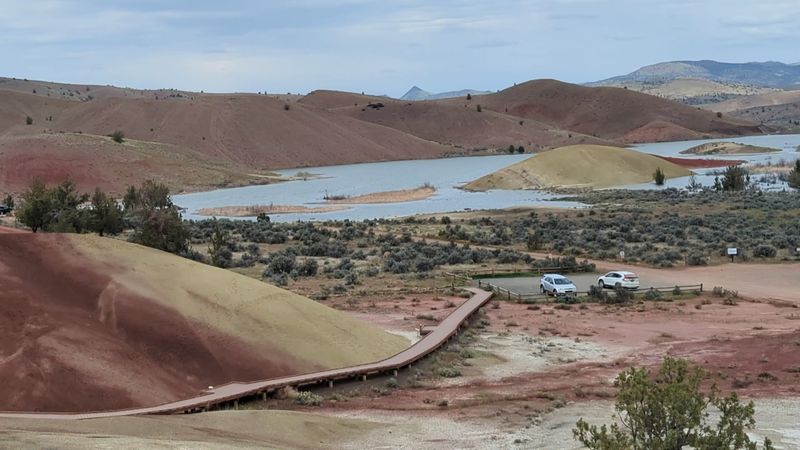
Popcorn-textured red clay sits inches from the boardwalk on the Painted Cove Trail, close enough to see how strange the surface really is. The loop runs about a quarter mile, flat and quick. Little effort, big reward.
Up close, the hills stop looking smooth. Cracked clumps swell and shrink with moisture, creating that crumbly texture. The deep brick color comes from iron in ancient soils.
Two other short walks share the same area. The Leaf Hill Trail explains fossil plants found in the mounds, and Red Scar Knoll adds another angle on the color bands. All three together take under an hour.
Midday sun flattens the reds, so aim for late afternoon if the schedule allows. Cloudy days still work. Colors read differently under soft light, moodier and cooler, which some photographers actually prefer.
Boardwalk railings exist for a reason, since one careless step damages a surface that took ages to form. Keeping shoes on wood also keeps that sticky clay out of the car. Dry clay dust clings to everything, especially pale sneakers. Restrooms sit near the parking area, which helps with kids.
Carroll Rim Trail for the Big Picture
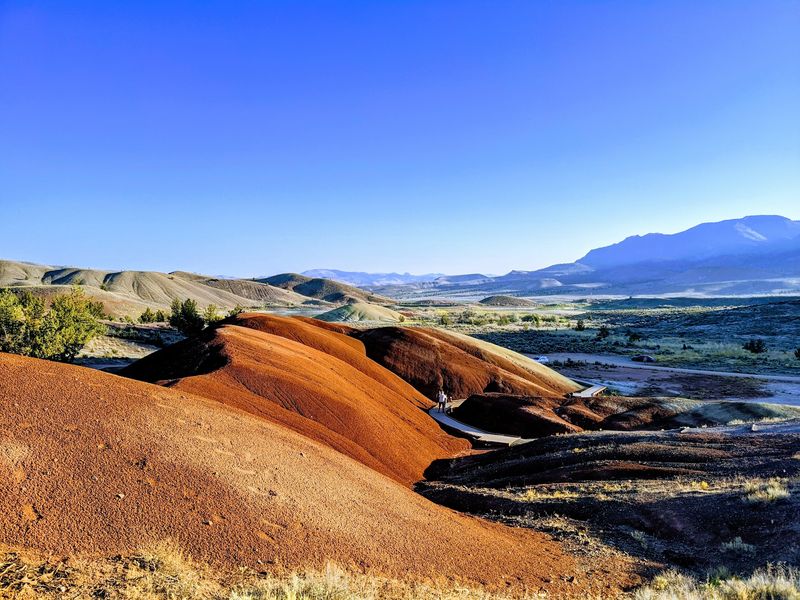
Climbing pays off fast on Carroll Rim, where about 1.6 miles round trip lifts you above the striped mounds. Switchbacks cut up a dusty slope, gaining a few hundred feet.
From the top, the whole basin spreads out in bands of red, gold, and grey, with Sutton Mountain standing behind it. The pattern only makes sense from up there.
Wind hits hard on the ridge, so hats need a chin strap or a firm grip. Shade is nonexistent. Summer afternoons here get genuinely hot, which makes early starts smart.
The trailhead sits across the road from the Painted Hills Overlook parking area, marked with a small sign. Footing stays solid on packed gravel, though loose bits roll underfoot on the descent. Hikers with knee trouble may prefer trekking poles.
Water bottles empty faster than expected on this climb, so carry more than seems necessary. Most walkers finish in under an hour, longer with photo stops, and the view rewards every minute.
Sunset from the rim is spectacular, but remember the walk down happens in fading light, so a headlamp belongs in the pack.
Long Drives, Gravel Roads, and Zero Bars
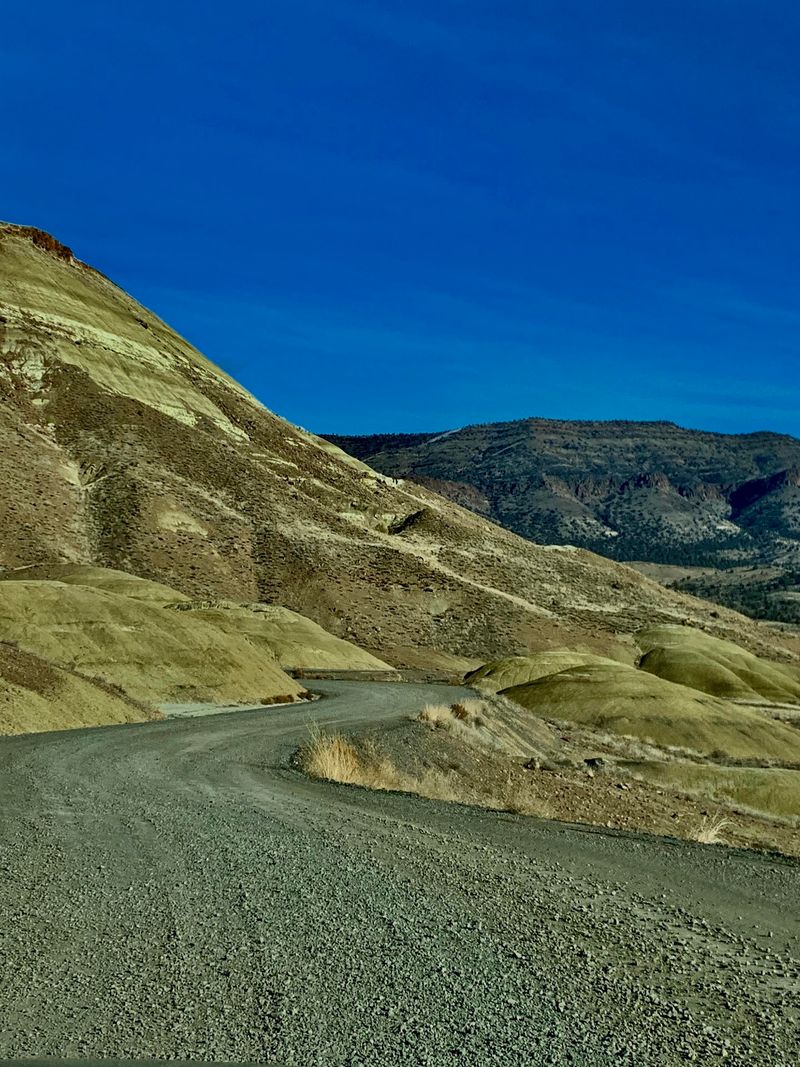
Distance is the sneaky part of visiting here, since the three units sprawl across a wide stretch of eastern Oregon. Expect one to two hours of driving between them on winding highways.
Cell coverage basically vanishes across most of the monument. Download maps ahead. A paper map in the glovebox costs nothing in battery and never loses signal.
Some access roads run on gravel, with washboard sections and potholes that punish low-clearance cars. Slow speeds help more than anything. Sports cars and long trailers face a rough time on the narrower stretches.
Fuel deserves attention too. Stations are few and hours are short, and diesel can be harder to track down than expected. Filling up in a larger town before heading in prevents a stressful afternoon.
The drives themselves earn their place on the itinerary, rolling past ranchland, basalt rimrock, and the John Day River. Bald eagles, deer, and quail turn up along the way.
Smart Planning Before Rolling In
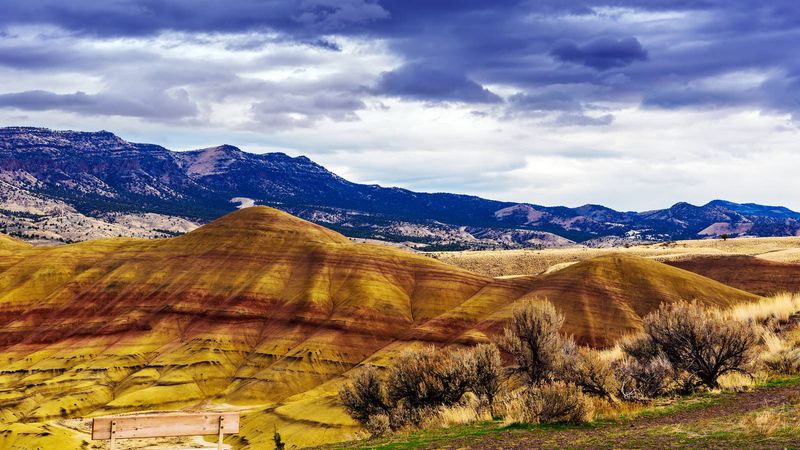
Timing shapes this trip more than almost anything else. Visitor center hours run 10 AM to 4 PM Thursday through Monday, with Tuesday and Wednesday closed, though the trails and overlooks stay open daily from dawn to dusk.
Spring brings wildflowers and greener hills, fall brings cooler air and thinner crowds, and summer brings heat that builds through the afternoon. Winter access depends on weather and road conditions.
Pack a picnic, since food options inside the monument do not exist. Picnic areas with tables sit at several spots, including the Foree area in the Sheep Rock Unit. Carry more water than the day seems to require.
Two days makes the whole monument comfortable, one day covers Sheep Rock and the Painted Hills at a brisk pace.
Fossils and rocks stay in place, always, so photos are the only souvenirs allowed. Leave the hills as they were found, and the next visitor gets the same jaw-drop.
Address: 32651 OR-19, Mitchell, OR 97750
