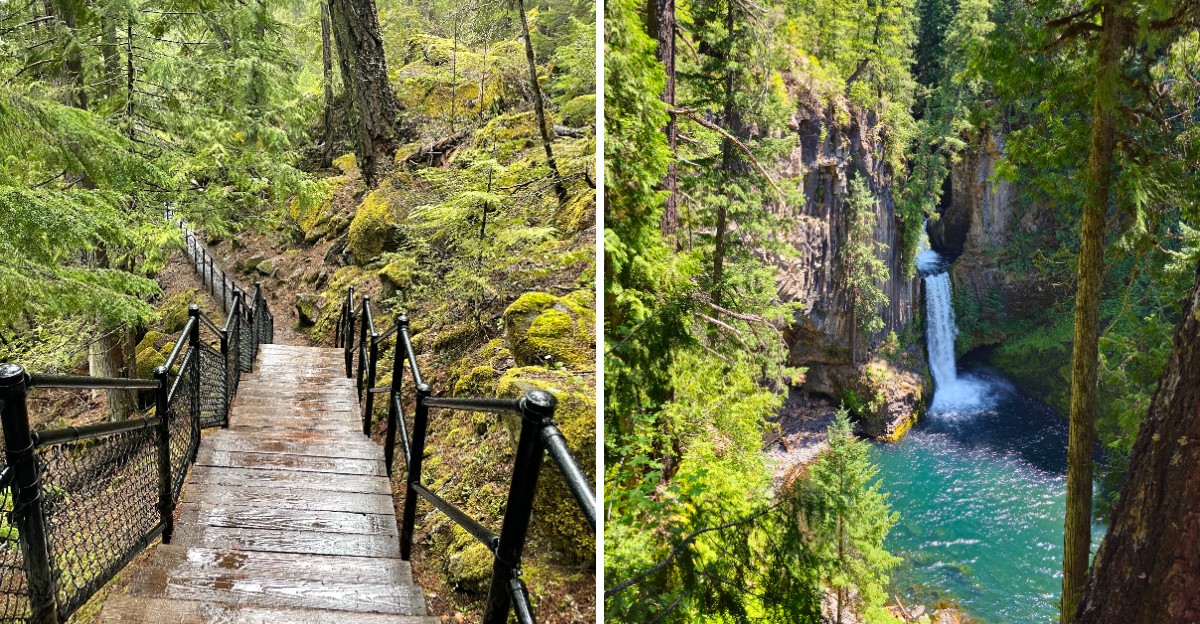
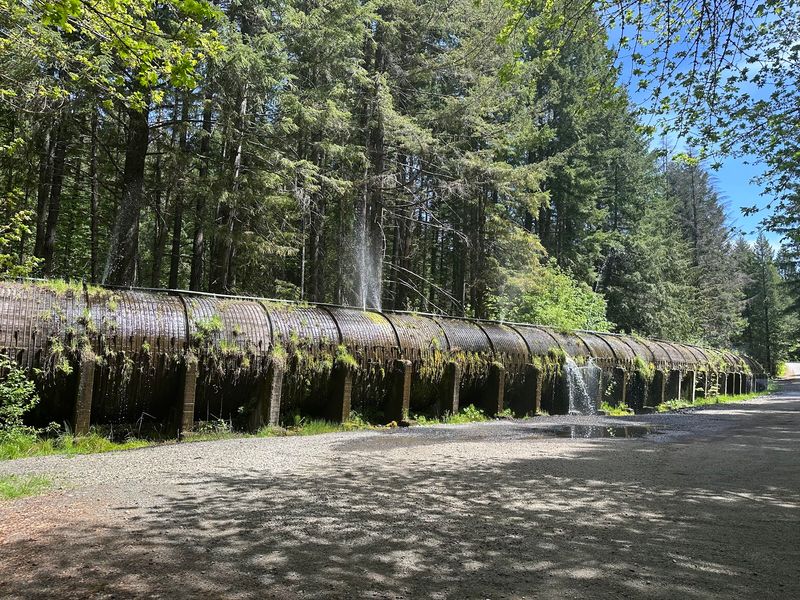
The walk to this waterfall starts beside a giant wooden pipe that leaks a cool mist into the parking area. Yes, a leaky pipe. It’s one of the strangest welcome mats in Oregon.
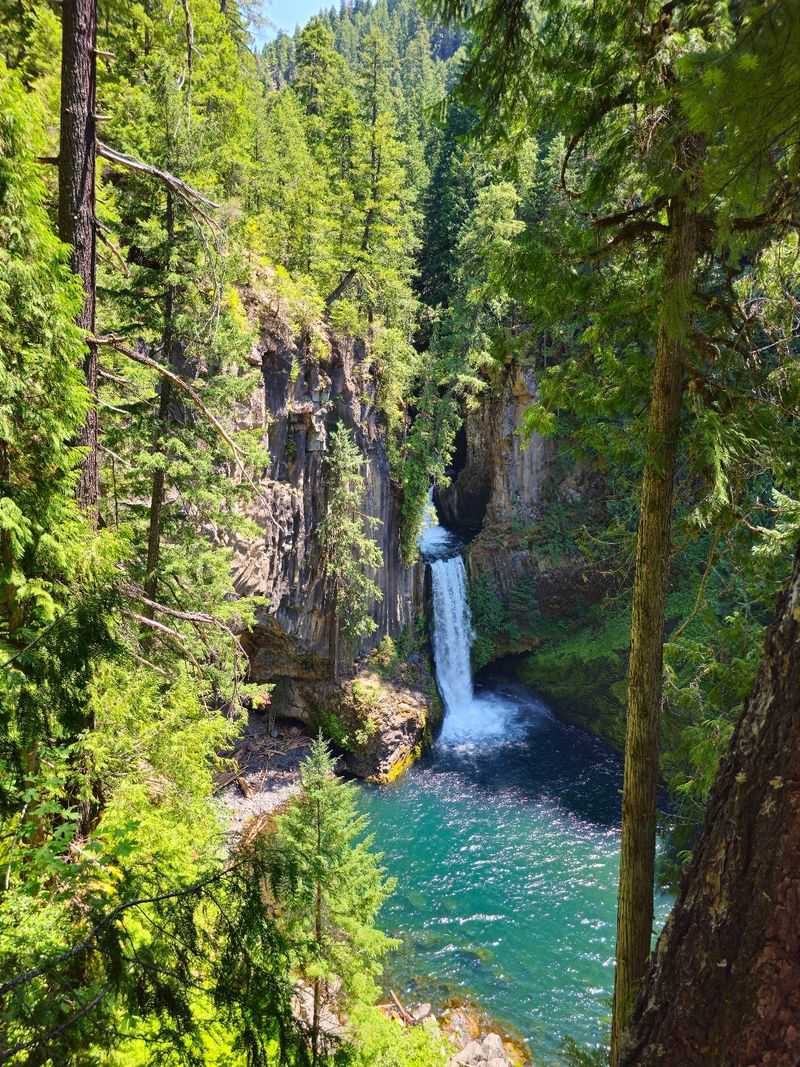
Then the real show begins. The river plunges in two tiers between walls of basalt columns that look like stacked organ pipes. Those columns formed from lava roughly 750,000 years ago.
I’m particularly drawn to the color of the pool below. It glows a bright blue-green that hardly seems possible in a forest canyon. Photos make it look edited, but nobody had to touch the saturation.
A Two-Tier Plunge That Makes Your Camera Feel Underqualified
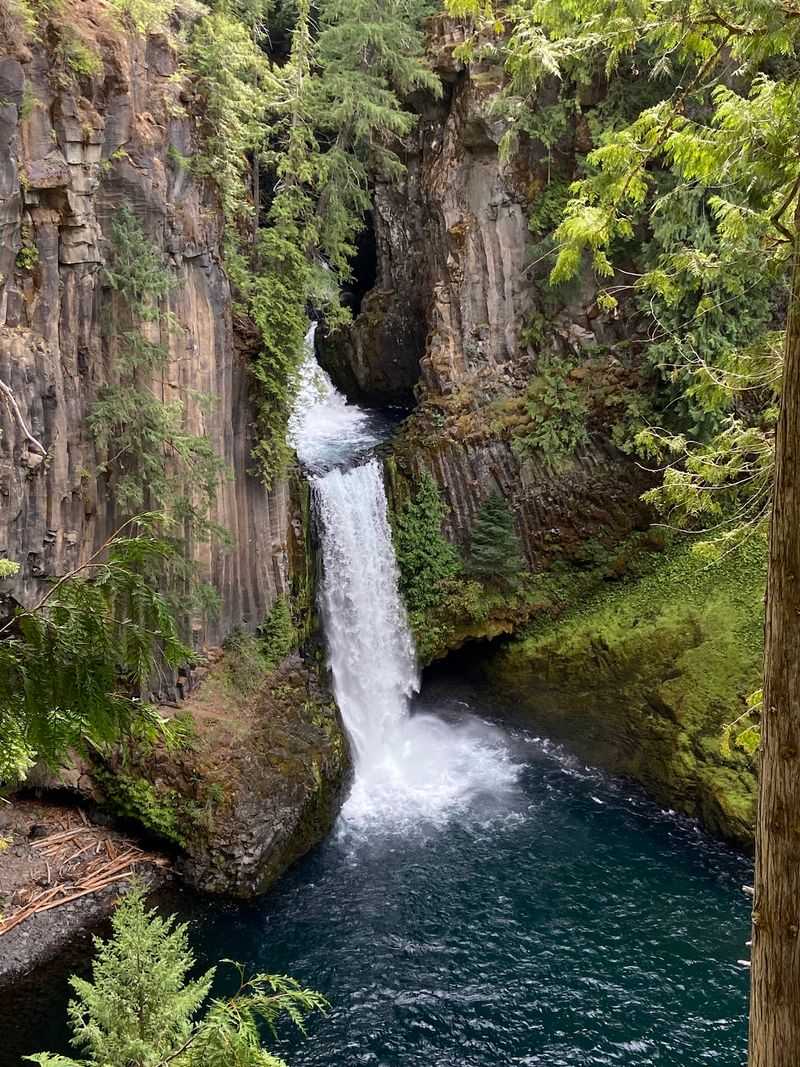
Two drops, one canyon, and a pool colored like a gemstone. Toketee Falls pulls off a lot in a small space.
The upper tier falls about 40 feet into a rocky bowl. Then the water squeezes through a notch and plunges roughly 80 more feet below.
Measurements vary a little depending on the source. Most put the total somewhere between 113 and 120 feet.
Height isn’t really the headline here, though. The frame is what grabs people, because the water drops between dark walls of stacked stone columns.
Those walls give the falls a sculpted, almost staged look. It’s like nature hired a set designer and gave them a generous budget.
The pool at the bottom adds the final touch. Its emerald and aquamarine shades shift with the light and season.
Photographers love it for obvious reasons. Even a quick phone snapshot can look like a postcard from somewhere far more remote.
Bring a little patience to the viewing area. Clouds, sun angle, and mist all change the scene from minute to minute.
One extra look often reveals details you missed at first. A fern, a ledge, or a ripple in the pool can suddenly steal the show.
Lava Built These Walls, And They Took Their Sweet Time
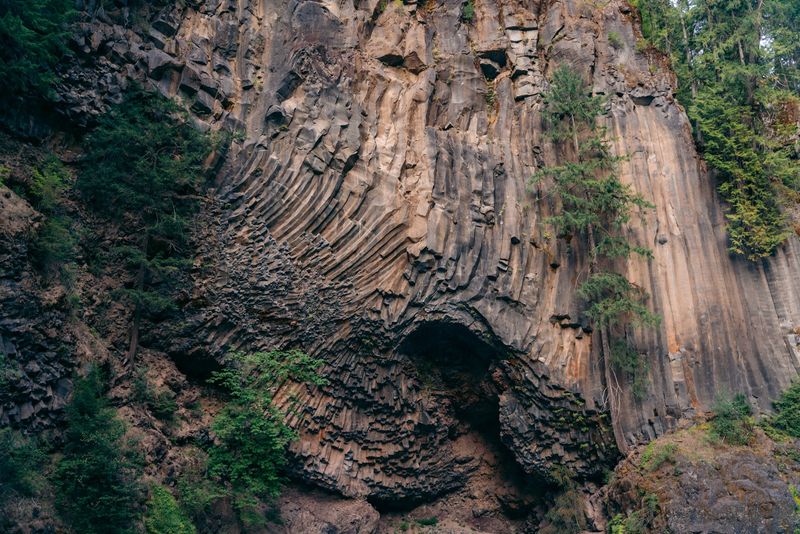
Around 750,000 years ago, thick lava flows spread out from the High Cascades near Mount Bailey. That molten rock set the stage for everything you see today.
As the lava cooled slowly, it shrank and cracked. The cracks formed long, many-sided columns, much like mud splitting in a dry puddle.
Geologists call this columnar basalt. Many visitors compare the shapes to giant organ pipes lined up along the canyon.
Over a very long stretch of time, the North Umpqua River carved right through those layers. The result is a narrow gorge with columns standing on both sides of the falls.
It’s a rare chance to see geology without a textbook. The rock tells its own story in plain view.
Look closely at the edges where water hits stone. You can spot how individual columns break off in chunky, angular pieces.
Kids usually find this part surprisingly fun. Hexagon-shaped rocks feel like something out of a video game.
Adults tend to enjoy it too, especially once they realize how old it is. Few backyard rock collections can compete with three-quarters of a million years.
The Leaky Wooden Pipe Is Weirdly Charming
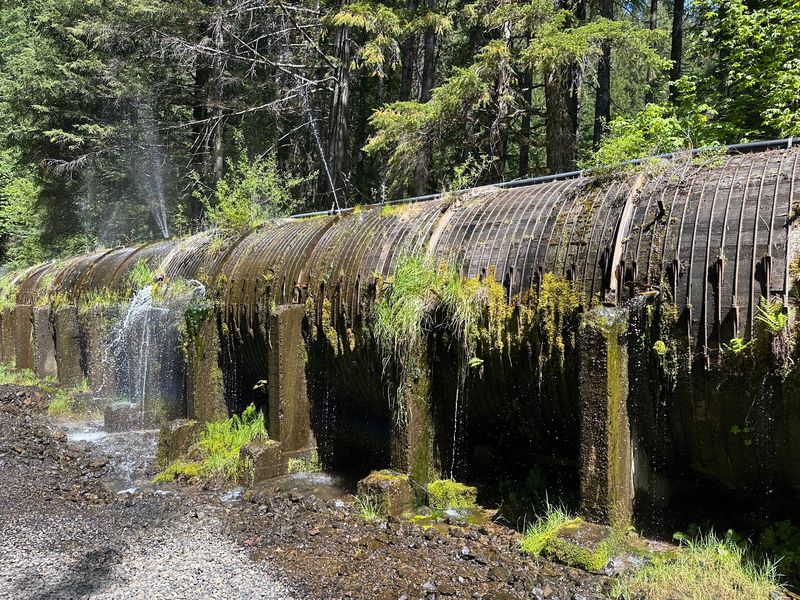
Most trailheads greet you with a sign and a map. This one adds a massive wooden pipeline that sprays water like a lazy sprinkler.
The pipe measures about 12 feet wide and is made from redwood staves. It’s part of PacifiCorp’s North Umpqua Hydroelectric Project, which was constructed between 1947 and 1956, with the Toketee power plant beginning operations around 1949.
Its job is moving water from Toketee Lake down to a powerhouse. Wooden pipes like this tend to seep, and this one definitely does.
The leaks create a fine mist around the parking area. On a warm day, that spray feels like a free cooldown station.
Families often treat it as a bonus attraction. Small kids can get thoroughly soaked before the hike even begins.
Plan for that if you’re bringing little ones. A spare shirt in the car can save a soggy ride home.
Engineering fans will appreciate the craftsmanship. It’s not every day you see a working wooden pipeline this size.
So take a minute before heading down the trail. That quirky pipe makes the whole visit feel a little more memorable.
Short Trail, Big Staircase, Zero Regrets
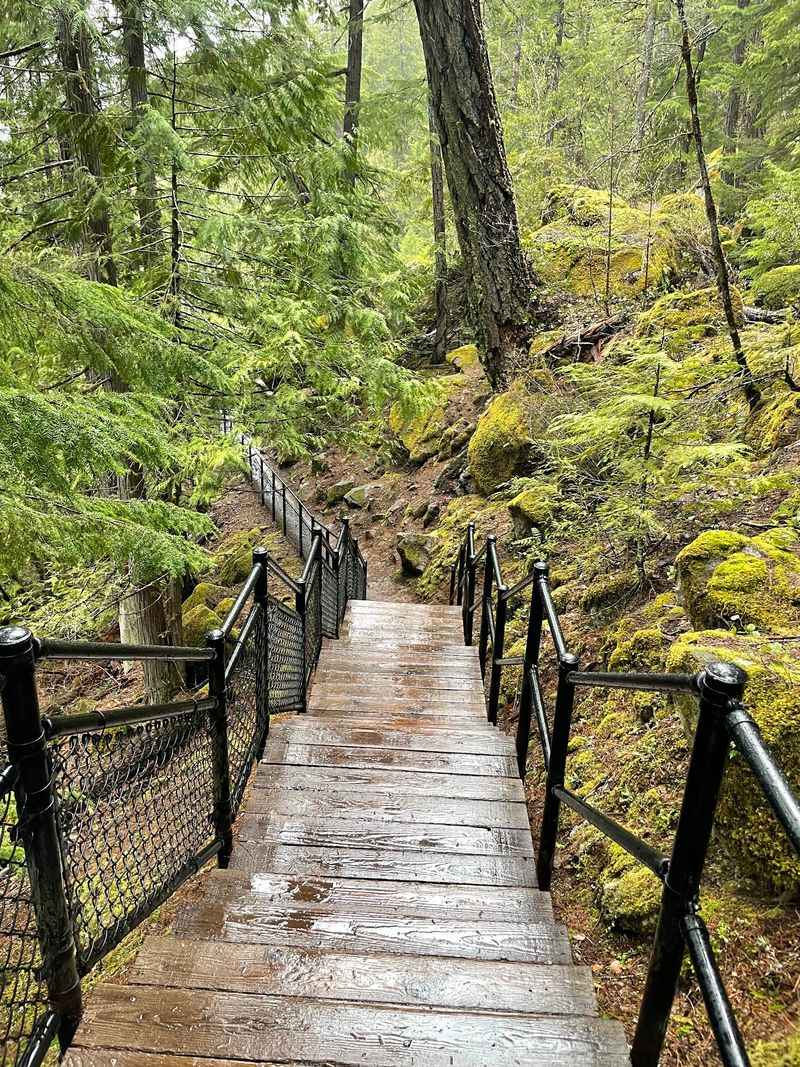
Just 0.4 miles separates the parking lot from the falls. That makes the full Toketee Falls Trail, number 1495, about 0.8 miles round trip.
Don’t let the short distance fool your legs, though. The path includes nearly 200 steps and gains around 165 to 170 feet.
Most people rate it easy to moderate. The stairs come with railings, and the trail is simple to follow.
The climb back up is where you’ll feel it most. Take breaks whenever you want, since nobody’s timing you.
Along the way, the trail offers peeks at the North Umpqua River below. Several spots invite a quick pause for photos.
Wear shoes with decent grip. Wooden steps and rocky patches can get slick when the forest stays damp.
One practical note matters for some groups. The trail is not ADA accessible because of all those stairs.
Leashed dogs are welcome, which is great news for pup owners. Just bring water for everyone, since none is available at the site.
Old-Growth Giants Line The Way
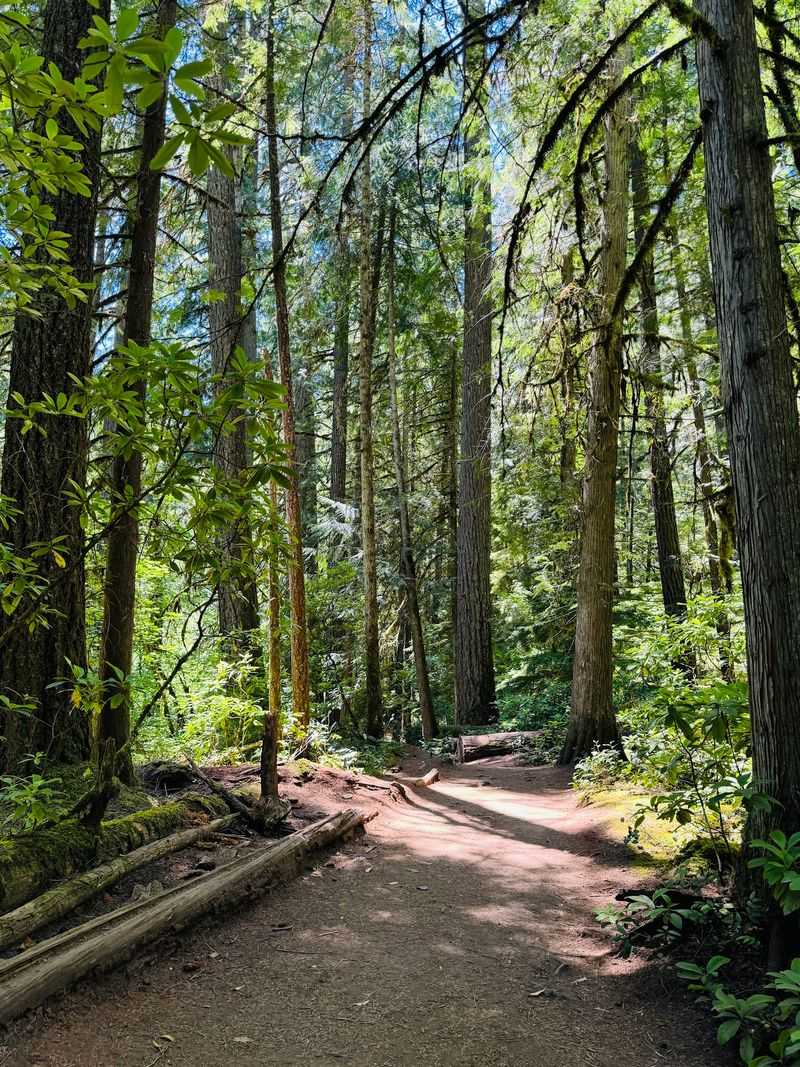
Ever walked past trees older than your great-great-grandparents? That’s the vibe on this trail.
The route winds through old-growth forest in Oregon’s Umpqua National Forest. Douglas-fir and western red cedar tower overhead.
Big leaf maple adds broad leaves to the mix. You’ll also find Pacific yew, a slower-growing tree with flat, dark needles.
All that green makes the walk feel calm and shady. It’s a nice warmup before the dramatic payoff at the end.
The forest also helps explain the setting. Rich tree cover keeps the canyon lush, which makes the blue pool pop even more.
Bring a curious eye for small details. Moss, ferns, and twisting roots fill the spaces between the giants.
Spring tends to bring the brightest greens. Fall adds vine maple color that warms up the whole scene.
Remember there are no trash cans on the trail. Pack out everything you bring so these old trees stay surrounded by forest, not wrappers.
Stay On The Platform And Let The View Do The Work
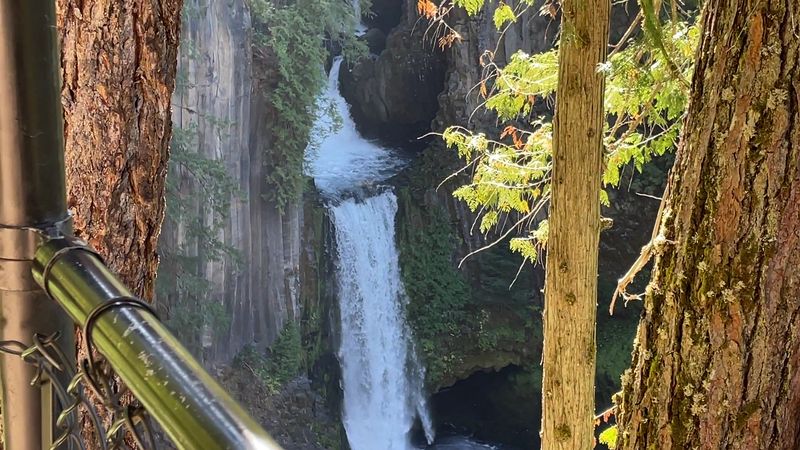
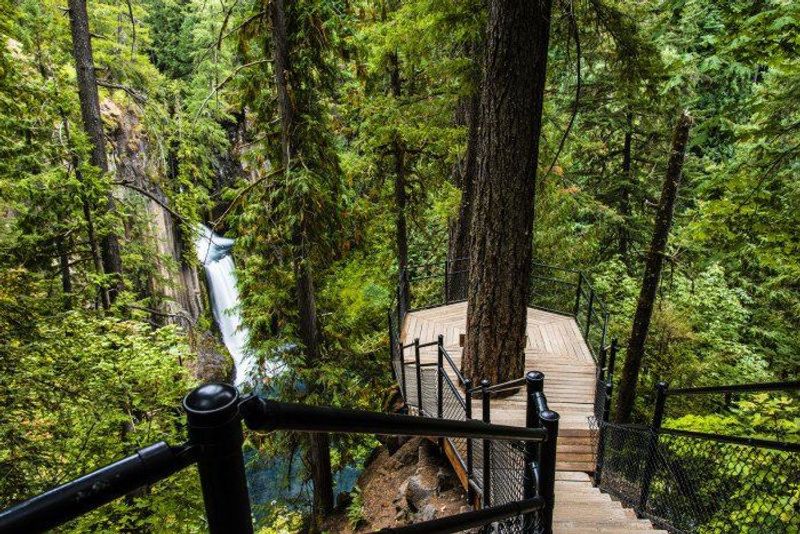
Here’s the deal at the end of the trail. A sturdy wooden viewing platform gives you a clear look at both tiers of Toketee Falls.
It’s the official endpoint, and it delivers. The canyon walls, the falls, and the colorful pool all fit into one view.
Some people still eye the canyon floor and get ideas. Officials strongly advise staying on the designated trail and behind the safety fences.
That warning exists for a serious reason. Attempts to reach the bottom have led to serious injuries and fatalities.
The slopes are steep, loose, and often slippery. A bad step there can turn a fun outing into an emergency fast.
The platform view is honestly gorgeous on its own. You don’t need a risky scramble to appreciate this place.
Give yourself time up there. Watch how the mist drifts and how the light changes the water color.
Patience also helps on busy days. Let others step forward for photos, then grab your own turn at the railing.
Steady Water All Year, Thanks To A Dam Upstream
Plenty of waterfalls shrink to a trickle by late summer. Toketee Falls mostly skips that disappointing phase.
The reason sits upstream. A PacifiCorp dam, part of the North Umpqua Hydroelectric Project, regulates the river’s flow.
The regulated flow keeps Toketee Falls relatively consistent throughout the year, although the hydroelectric system diverts much of the river’s natural volume away from the waterfall. Rain and snowmelt matter less here than at many other cascades.
So when should you go? Late spring through fall is generally the sweet spot.
Spring paints the canyon walls a vivid green. Summer usually brings drier trails and easier footing.
Fall tends to be quieter, with fewer crowds around. Vine maple turns warm shades that look great against the dark basalt.
Winter visits are possible, but use caution. Snow and ice can cover the trail and stairs.
Parking at the trailhead is limited, so timing helps. Arriving earlier in the day can make finding a spot much easier.
A Pretty Name With A Surprising Backstory
Toketee, pronounced TOKE-uh-tee, comes from Chinook Jargon. It translates to pretty or graceful, which feels almost too accurate.
The name wasn’t automatic, either. In 1916, the U.S. Board on Geographic Names made it official.
Other options were on the table. Ireland Falls and Toketie Falls both lost out.
Honestly, the right choice won. Graceful fits a waterfall this elegant much better than a borrowed country name.
The area also has a lively construction history. By 1948, temporary construction camps had been established near Toketee Falls to house workers and their families during the hydroelectric project.
By 1952, more than 800 employees were working across the larger hydroelectric project, although many lived in construction camps outside the main Toketee settlement. The town had dining halls, recreation areas, and even a small school.
It’s fun to picture that buzz of activity in such a quiet forest. Today, the main traffic is hikers heading for the stairs.
Knowing that history adds a layer to the visit. The massive pipe and steady river both connect back to those busy years.
Your Road Trip Has More Waterfalls Waiting
Finding the place is part of the fun. Toketee Falls sits in the Umpqua National Forest, about 58 to 60 miles east of Roseburg off OR-138.
Its mailing address is Idleyld Park, OR 97447, in Douglas County. There are no fees or passes required, and the trail is available for day-use visits.
The trailhead offers vault toilets and picnic tables. That makes it an easy spot for a snack break before or after the hike.
Don’t stop here, though. Watson Falls, a 272-foot giant, sits about two miles east on OR-138.
Toketee Lake is close by and has a campground. Umpqua Hot Springs can be reached via Forest Road 34.
Head farther east and you’ll reach Diamond Lake. Keep going and Crater Lake National Park enters the picture.
That lineup makes this corner of Oregon a waterfall lover’s dream drive. You could easily fill a full day without much effort.
Toketee Falls makes a perfect opening act. Short, stunning, and free is a pretty tough combination to beat.
