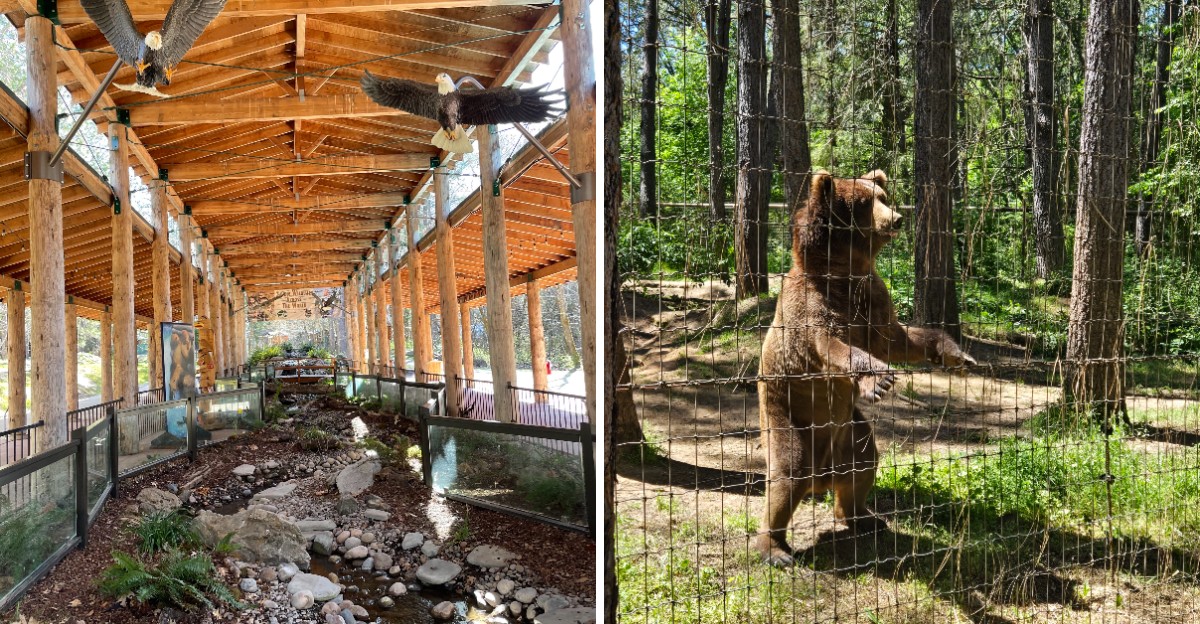
A 400-pound grizzly named Gilbert lives here, and he’s just one of more than 60 permanent animal residents. Many of the center’s permanent residents were rescued, while others arrived from zoos, educational programs, or other captive settings.
I noticed that this place doesn’t charge a single cent to treat injured wildlife. It cares for over 1,000 rescued animals each year, and most of them go back home to the wild. The ones that can’t stay on as ambassadors.
One detail I find worth mentioning is how close you can get. You can feed wallabies, hold out forceps to hungry river otters, or meet a hawk perched on a handler’s glove. That’s a lot of personality packed onto one riverside property in Oregon.
Every Resident Here Arrived With A Rescue Story
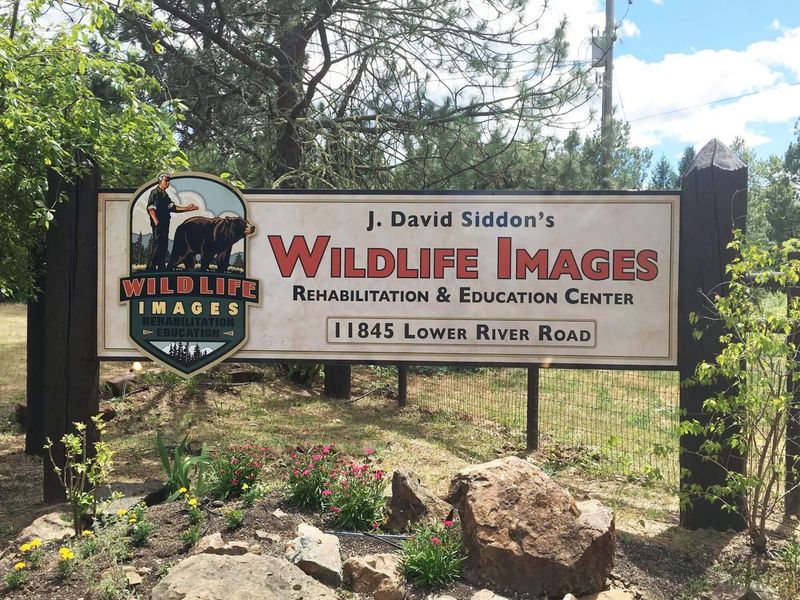
Back in 1981, wildlife rehabilitator J. David Siddon started something that still runs strong today. Wildlife Images Rehabilitation & Education Center focuses on wildlife rehabilitation and education, guided by its mission to involve, educate, and inspire.
Today, his son Dave Siddon Jr. serves as executive director. Keeping it in the family clearly hasn’t slowed anything down.
The center now cares for roughly 1,000 to more than 1,200 rescued animals every year. The main goal is always the same. Heal them, then send them back to their natural homes.
Here’s a detail that impresses me. The center releases a higher percentage of rehabilitated animals than the national average. That’s a big win for Oregon wildlife.
Some animals have injuries that make life in the wild impossible. Those creatures get a permanent home here as Animal Ambassadors. They help visitors learn why wild spaces matter.
Running all of this takes a budget of more than a million dollars a year. Even so, the center never charges for animal treatment. Memberships, volunteers, and donations keep the lights on and the patients fed.
So when you buy a ticket, you’re not just sightseeing. You’re helping pay for the next injured hawk’s recovery. That makes the visit feel pretty meaningful, right from the parking lot.
Yes, You Can Actually Hang Out With Wallabies
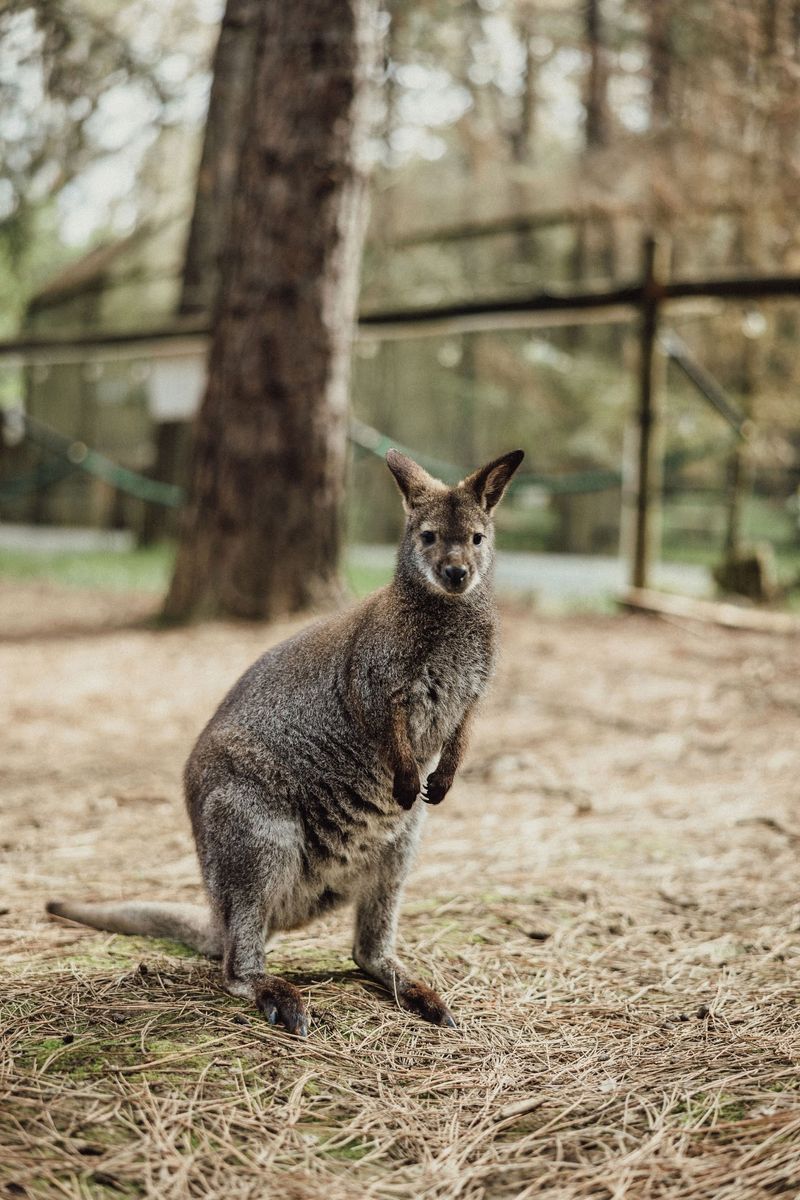
Wallabies in Southern Oregon sounds like a typo. It isn’t, and they’re part of one of the most popular hands-on experiences at the center.
The Wallaby Walkabout & Cavy Connection lasts about 30 minutes. Guests step right inside the wallaby enclosure to meet and feed these hoppy little Aussies.
Cavies join the fun too. If you’ve never met one, they’re relatives of guinea pigs with a laid-back charm all their own.
The group size tops out at eight people. That keeps things calm for the animals and personal for you.
Kids ages 5 and up can join, which makes this a smart pick for families. Little ones get a real moment with an animal instead of just pressing noses against glass.
One rule worth knowing ahead of time matters a lot. You may touch the animals only if they approach and allow it. The wallabies set the terms here, and honestly, that seems fair.
This encounter costs extra beyond general admission. You’ll also need to reserve it at least three days before your visit.
Plan ahead, and you might leave with the cutest photo on your phone. Your camera roll will thank you.
Otters Make Lunchtime Look Like A Party
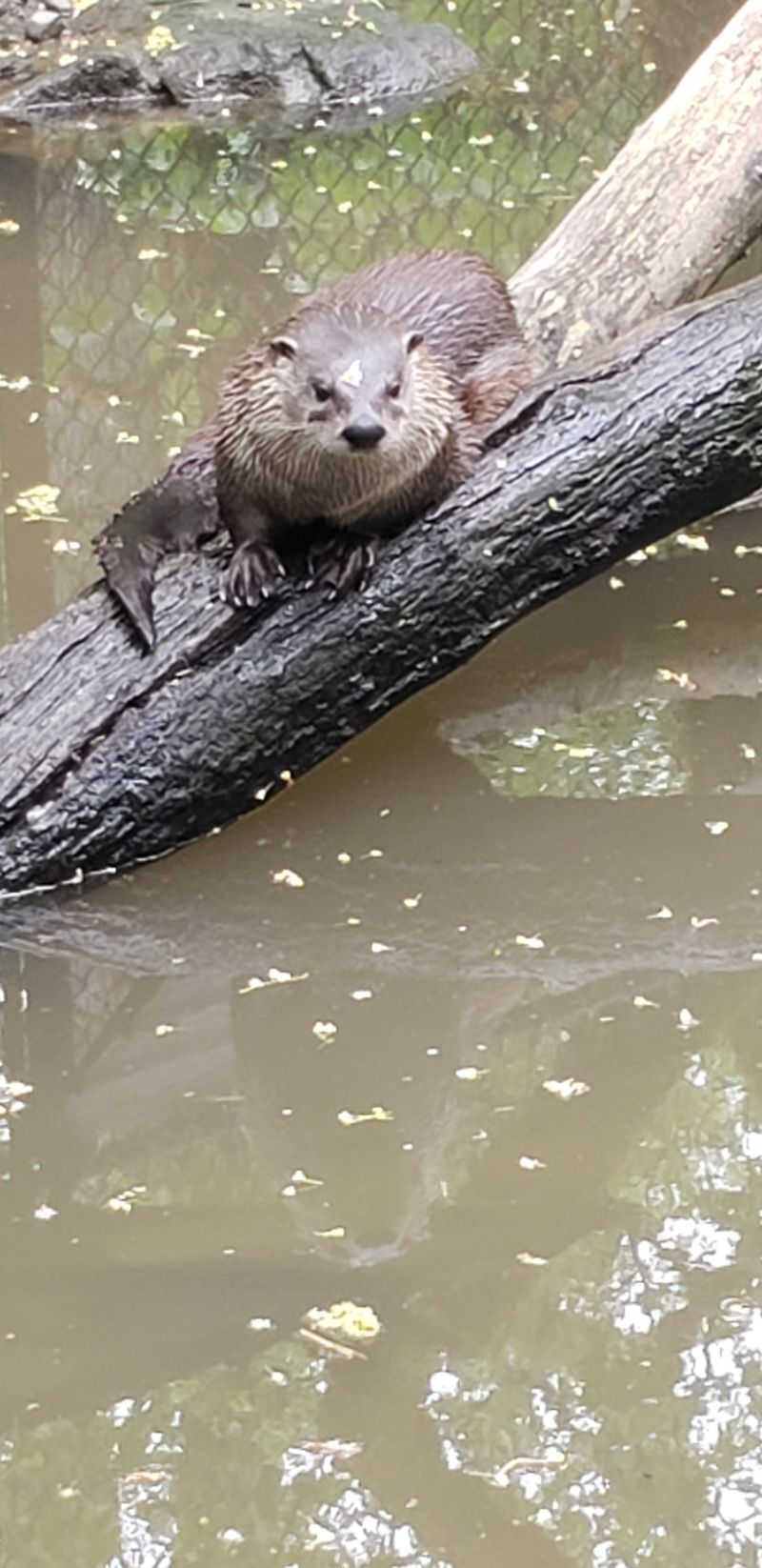
Luke and Mitch are North American river otters, and they bring serious energy to the place. If any animals here look like they’re having fun, it’s probably these two.
River otters are built for water. They have sleek bodies, webbed feet, and thick fur that keeps them warm in cold streams.
At Wildlife Images, guests ages 12 and up can book the River Otter Encounter. You’ll feed the otters using forceps, which keeps fingers safe and snacks on target.
It’s not just snack time, though. The encounter also teaches you about otter natural history. You’ll learn how these animals live and hunt in the wild.
That age limit makes this a great choice for teens. It’s a cool experience that feels more grown-up than a petting zoo.
Like other special encounters, this one costs extra. It also needs a reservation at least three days ahead.
Fun fact to share on the drive home: river otters belong to the weasel family. So yes, Luke and Mitch are distant cousins of badgers and minks.
Watching them zip around is the kind of thing that makes you forget to check your phone. That’s a rare treat these days.
Gilbert The Grizzly Might Steal Your Whole Afternoon
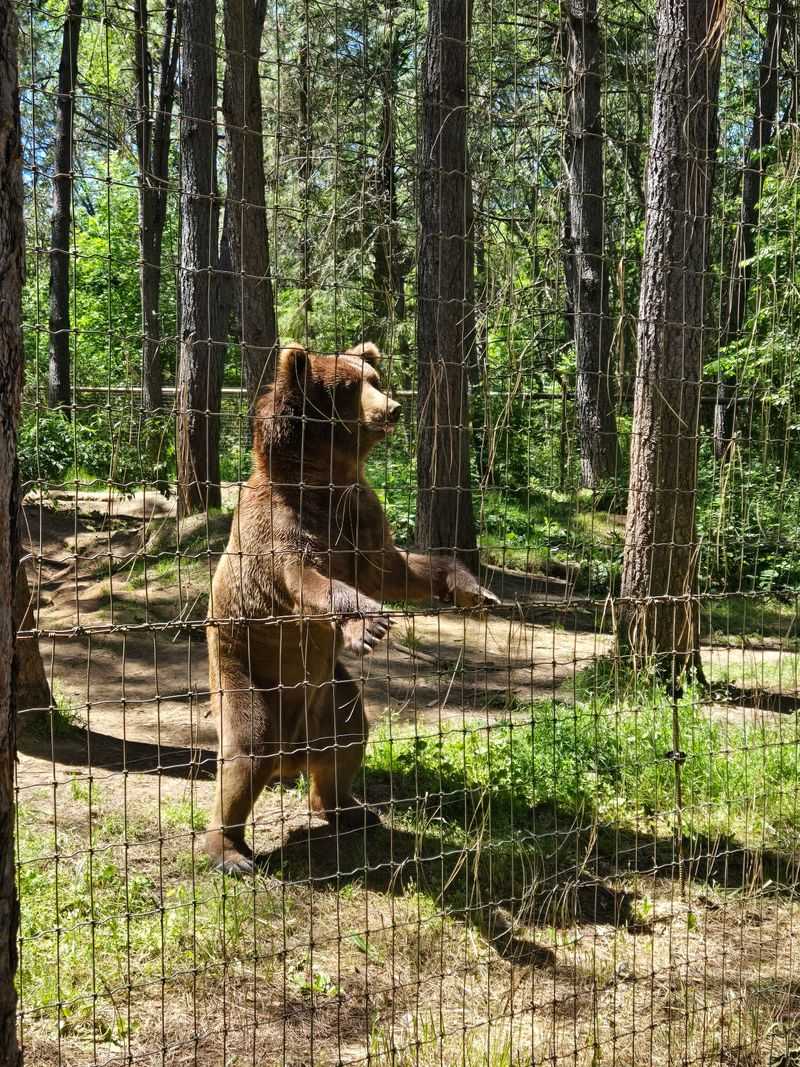
Four hundred pounds of fur and curiosity. That’s Gilbert, the grizzly bear who lives at Wildlife Images as one of its best-known ambassadors.
Grizzlies are huge, powerful animals that most people only see on nature shows. Here, you can watch one from a safe viewing area without a long trek into the backcountry.
His habitat sits in Critter Creek, a premier animal area that opened in 2010. It was built to bring guests closer to bears, cougars, wolves, and birds of prey.
The exhibits at the center are designed to look like natural habitats. Animals also get to choose whether they want to be seen. So if Gilbert decides to nap out of view, that’s his call.
That choice is a good reminder of something bigger. These animals aren’t performers on a schedule. They’re wild creatures getting the best life possible after a rough start.
My advice? Give the bear area a little patience. Walk around, see a few other animals, then swing back for another look.
For an even bigger thrill, the center also offers a special chance to meet a grizzly bear through its encounter programs. Just make that reservation at least three days early.
Scales, Pouches, And A Wolf-Dog Walk Add Surprise
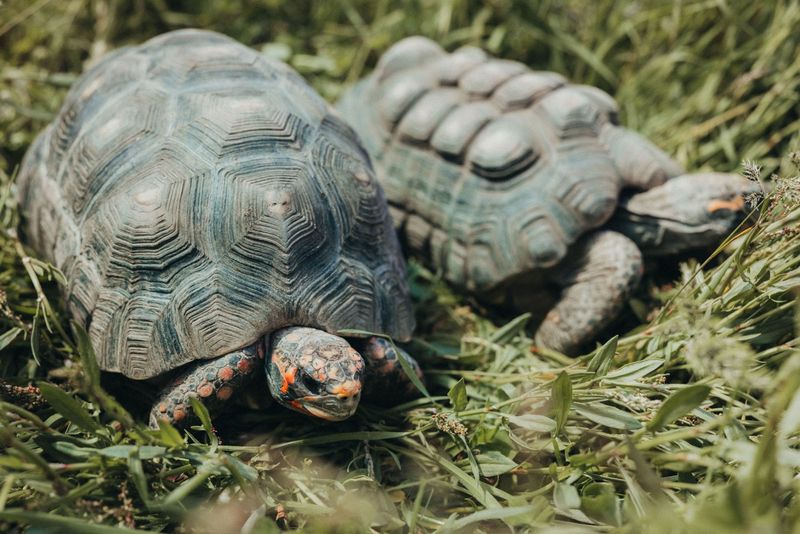
Not every star here has fur and fangs. Some have scales, and one even plays dead as a famous defense trick.
The Reptile Encounter runs about 20 minutes in the pavilion. You’ll meet four reptile ambassadors and can gently touch them on their backs.
Groups max out at 10, and guests must be 6 or older. It’s a great way to help a nervous kid swap fear for curiosity.
Opossums get their own program too. The Opossum Encounter introduces North America’s only marsupial, a pouch-carrying animal often misunderstood.
Fun fact: opossums are wonderful neighbors. They help clean up yards and gardens, and they rarely cause trouble.
Then there’s the most unusual option. Guests can join a guided walk with a wolf-dog hybrid. That’s not something you’ll find at the average roadside attraction.
Wolves also live on the grounds, and they’re among the most talked-about residents. Their howls and watchful eyes give the property a wild feel.
All of these programs cost extra and need reservations at least three days ahead. Pick one that matches your crew, and you’ll leave with a story nobody else at school or work has.
Raptors Perched Close Enough To Study Every Feather
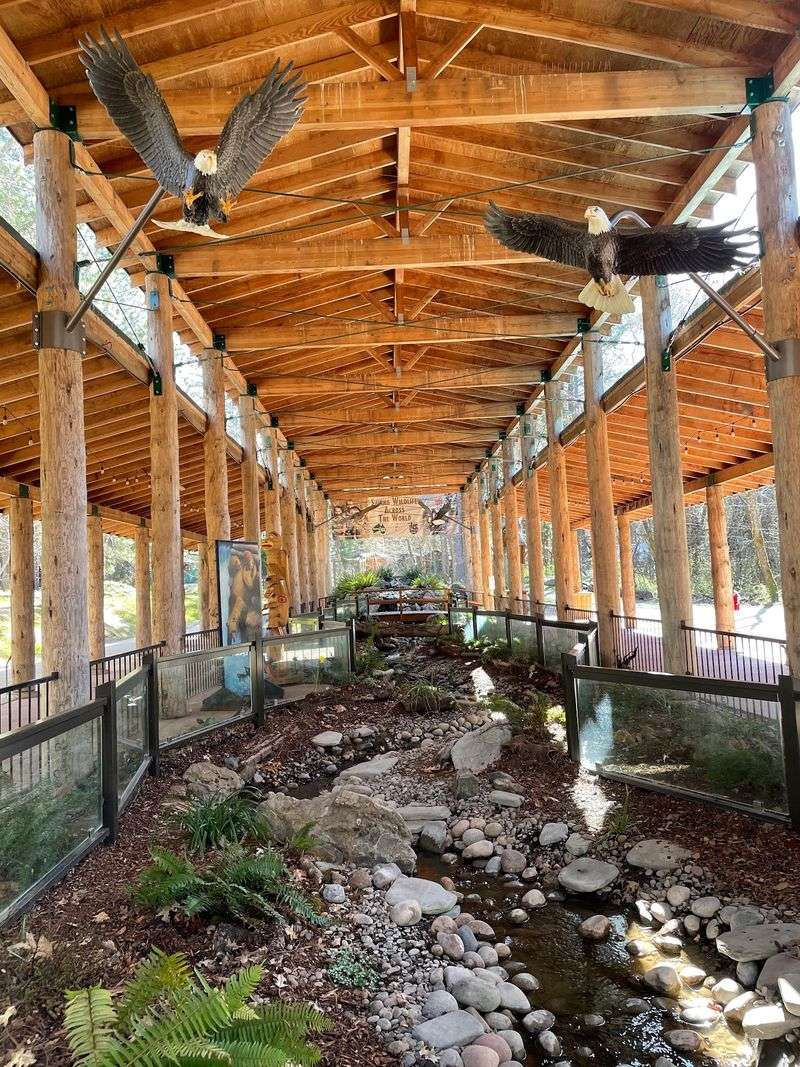
Talons, sharp eyes, and serious attitude. The birds of prey at this center are some of its most striking ambassadors.
Bald eagles named Phantom and Fury live here. Seeing America’s national bird up close feels very different from spotting a speck high in the sky.
The Bird Encounter takes the experience a step further. During this 30-minute program, you’ll meet two or three birds perched on a handler’s glove.
Eagles aren’t part of this encounter, so manage expectations there. Still, the birds that do appear are plenty impressive.
You won’t touch the birds during the program. You will get a chance to snap photos, so bring a charged phone.
The center also celebrates some less famous birds. It has hosted a Celebrate Vultures day, giving these cleanup crews of nature a little spotlight. Vultures don’t win many beauty contests, but they do important work.
Birds of prey are often hurt by cars, wires, and other human-made dangers. Learning their stories helps you understand how to share space with them.
Reserve this encounter at least three days ahead. It’s a calm, eye-level way to meet some truly amazing hunters.
A Riverside Setting That Feels Like Wild Oregon
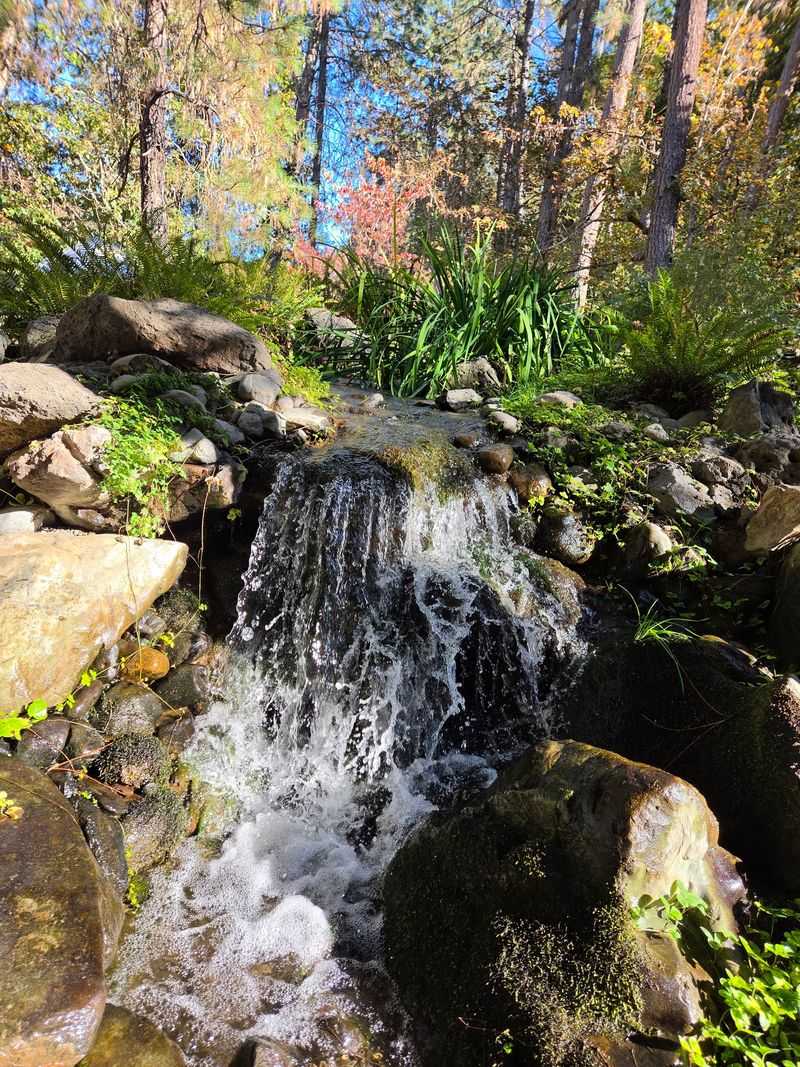
Location matters when your neighbors are cougars and eagles. This center sits along the scenic banks of the Rogue River in Southern Oregon.
You’ll find it at 11845 Lower River Road, Grants Pass, OR 97526. It’s about 14 miles west of downtown Grants Pass.
The property covers around 24 to 25 acres. That’s plenty of room for habitats, a clinic, and a sanctuary.
The setting gives the visit a natural feel. Trees, open sky, and river country surround the animals instead of city noise.
General admission is a self-guided tour that usually takes about an hour and a half. You can buy tickets on-site with no reservation needed.
The center is open year-round. Current hours run daily from 9 a.m. to 4 p.m., with last tickets sold at 3 p.m.
It does close on Thanksgiving, Christmas Eve, Christmas Day, New Year’s Eve, and New Year’s Day. Check before heading out during the holidays.
My tip? Arrive early enough to stroll without rushing. A slow pace lets you read the animal stories and catch more activity in each habitat.
Field Trips And Summer Camp Turn Kids Into Wildlife Fans
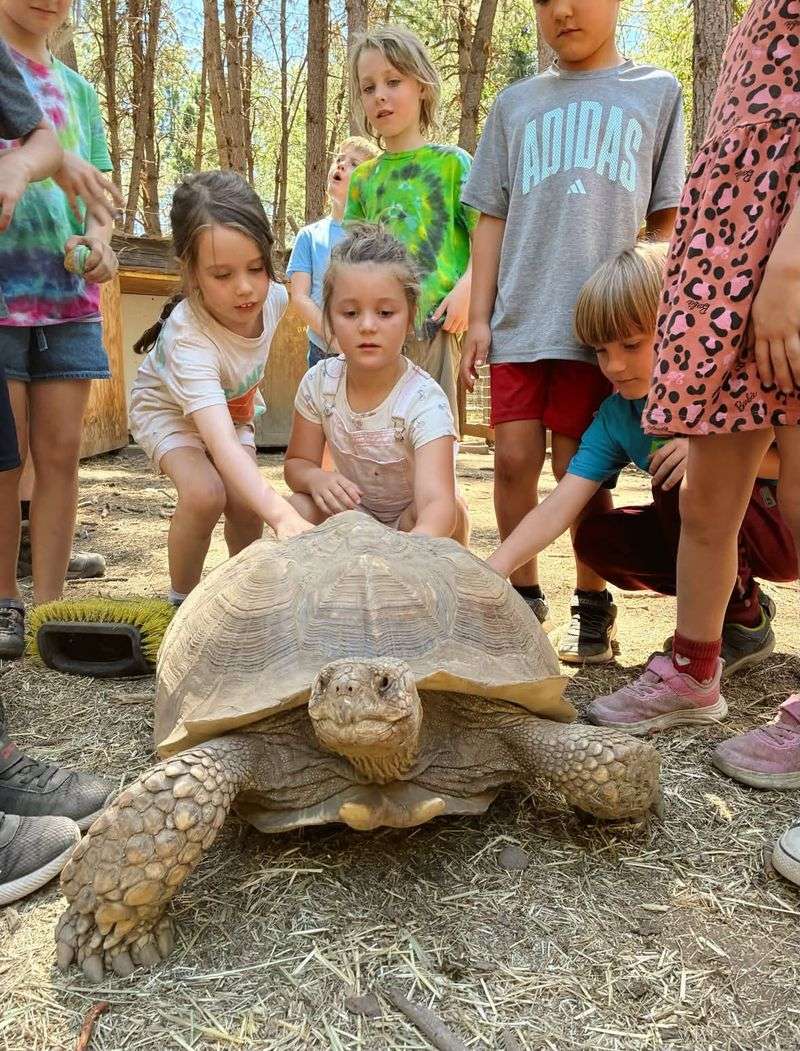
Education is central to the center’s mission, and Wildlife Images takes that responsibility seriously through programs for students of all ages. Wildlife Images takes that part seriously, with programs for students of all ages.
Schools can book field trips for Pre-K through 12th grade. One chaperone is included for every 10 students, which helps teachers keep their sanity.
Field trips here beat a worksheet any day. Students learn about real animals with real stories, right in front of them.
Summer brings Camp EEK! This day camp runs for eight weeks and blends fun with purpose.
Campers focus on environmental education and hands-on conservation projects. The camp also includes social-emotional learning, so kids grow as people, not just as nature buffs.
Can’t make it to the center? The team also offers Animal Ambassador visits. They bring animals out to other locations for programs.
That reach matters a lot. Some kids may never forget the first time they saw an owl up close in their own classroom.
If you’re a parent or teacher in Oregon, these programs are worth a look. Kids who learn to care about wildlife early often grow up protecting it.
Your Visit Can Keep Helping Long After You Leave
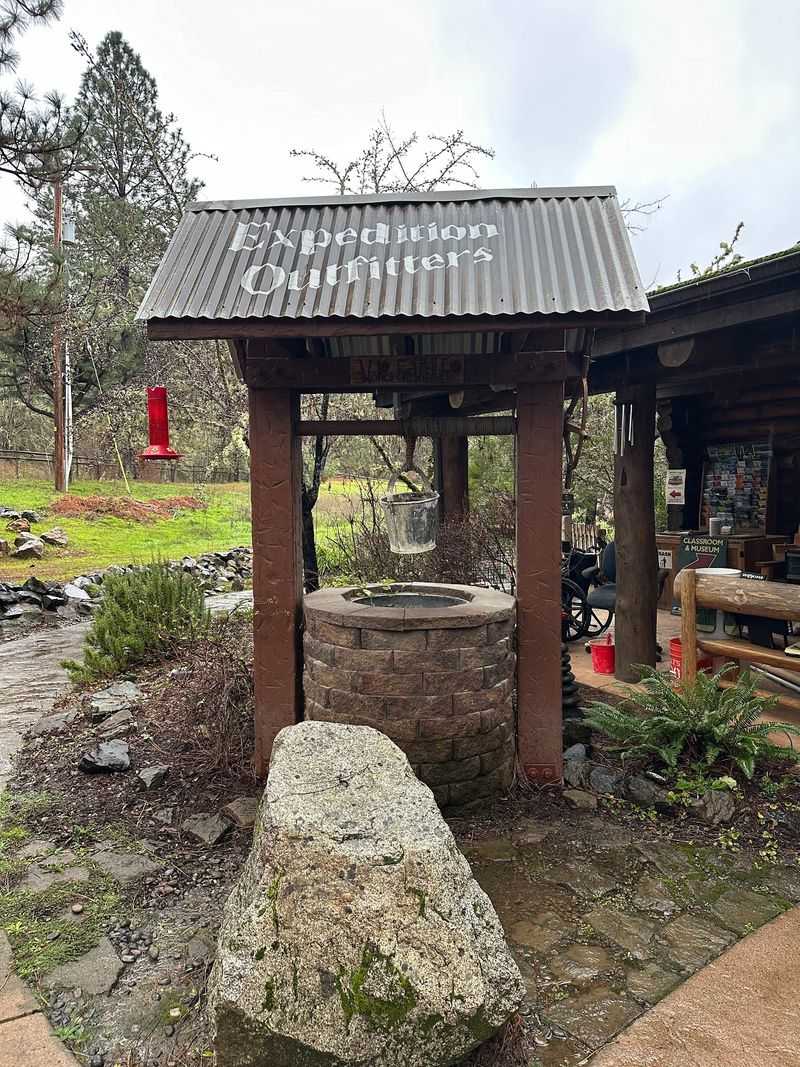
Souvenirs with a purpose? The gift shop at Wildlife Images Rehabilitation & Education Center sells wildlife-themed goodies, and your spending supports animal care.
Ticket sales, purchases, and donations all go toward rescue, rehabilitation, and conservation education. That’s a nice bonus for a stuffed bear.
Memberships take that support further. Members get year-round park access, exclusive events, and gift shop discounts.
If you live nearby, a membership makes sense. You can pop in again and again to see how your favorite animals are doing.
Seasonal events add even more reasons to return. The center has hosted a Howls & Owls Halloween Celebration that sounds perfect for spooky-season fun.
Planning something big? The grounds are available for event rentals, including weddings. Some packages offer unique encounters with rescued wildlife.
Imagine your guests remembering the day a hawk showed up at the reception. Most wedding favors can’t compete with that.
However you choose to help, it matters. The center relies on community support since it treats animals for free.
So grab a souvenir, plan a return trip, or bring friends next time. The animals here have already beaten the odds, and your visit helps keep their story going.
