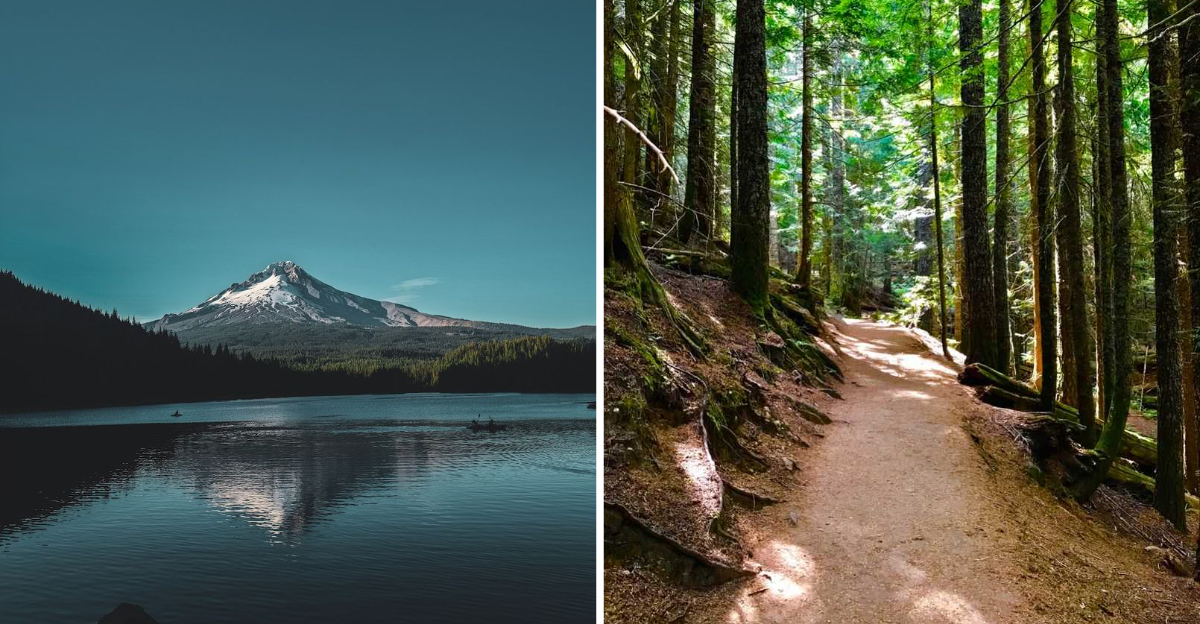
You know those mornings when you’re up before the rest of the world, and everything feels perfectly still? That’s exactly the kind of magic this Oregon lake saves for sunrise. The water becomes so glassy that the mountains seem to double, and you find yourself questioning which reflection is real.
It’s the kind of view that makes you grateful you dragged yourself out of bed early. The colors shift slowly, from soft pinks to warm golds, and the silence is almost sacred. No crowds, no noise, just you and a scene that feels like it was painted just for this moment.
You don’t need to be a photographer to appreciate it, though you’ll probably take a dozen pictures anyway.
Set your alarm and pack a thermos of coffee. Oregon’s mirror-like lake is waiting to reward early risers with a view they’ll never forget.
Sunrise Turns the Water Into Glass
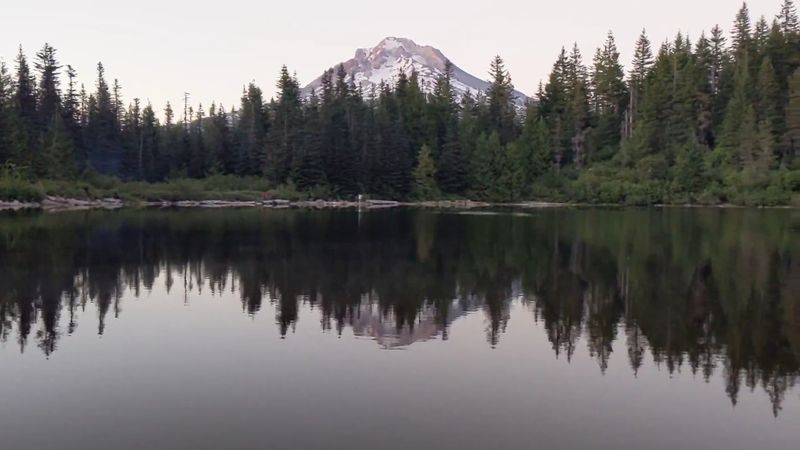
Dawn is when the whole trick happens. Wind usually sleeps until mid-morning, and without wind the surface goes completely flat, turning into something closer to polished glass than water.
Mount Hood lands right in the middle of that reflection, upside down and sharp enough to fool the eye. Photographers show up early for exactly this reason, and most of them stake out the north and northwest edges of the shore.
Timing matters more than gear here. Arriving thirty minutes before actual sunrise gives enough cushion to hike the last switchbacks and settle in while the sky shifts through gray, then rose, then gold.
Cloudy mornings scramble the effect, and a breeze can erase it in seconds. Patience helps. Waiting ten or fifteen quiet minutes often rewards visitors with a sudden calm patch that mirrors everything perfectly.
Bring a headlamp for the dark portion of the trail. The path is well marked, but tree roots hide easily in low light.
A Forest Trail That Climbs Steadily From the Highway
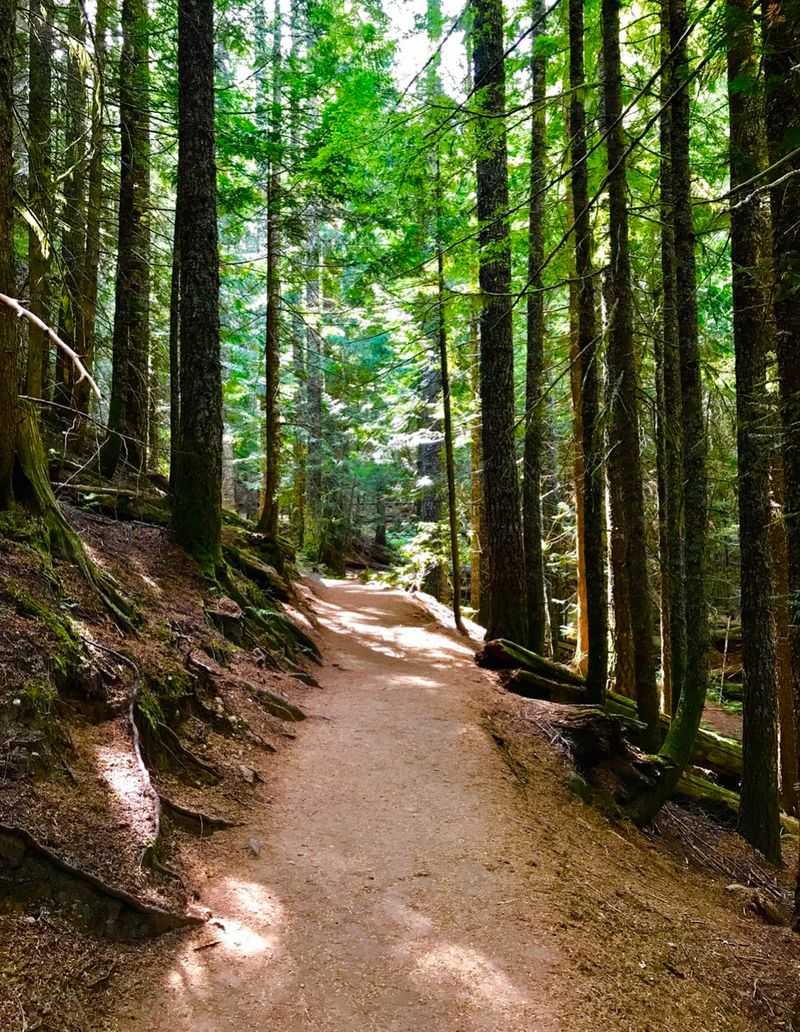
Roughly four miles round trip, the route starts right off Highway 26 near Ski Bowl and climbs the entire way to the lake. Nothing about it is brutal, but the incline never really lets up either.
The first quarter mile or so is paved and flat, which makes it accessible for wheelchairs and strollers. After that, packed dirt takes over, laced with roots and the occasional rocky patch.
Around ten small creek crossings break up the walk, each one bridged. Those bridges make the hike feel tidy and manageable, even for families with young kids.
Douglas firs tower overhead for most of the climb, and in early summer rhododendrons bloom pink along the edges of the path. Traffic noise from the highway carries surprisingly far, so total silence is not part of the deal.
Trail markers are clear throughout. Getting lost would take real effort, which is a nice thing to know before sunrise.
Those Final Switchbacks Everyone Warns You About
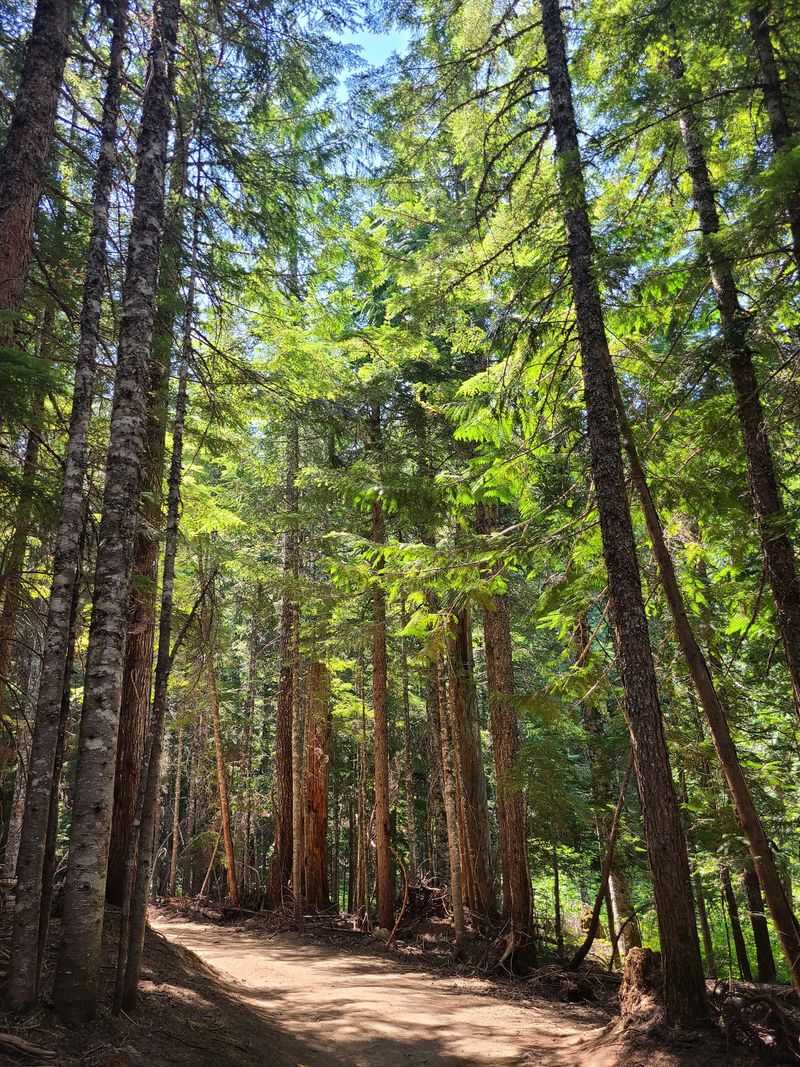
Hikers talk about the switchbacks near the top the way people talk about the last mile of a road trip. They are not dangerous, just persistent, and they arrive right when legs start to feel the elevation.
The path zigzags upward through rockier ground, gaining height quickly. Summer turns this stretch dusty, and boots kick up fine powder with every step. Take it slow. Short breaks at the corners work better than pushing straight through, especially for anyone not used to hiking above 4,000 feet.
Sturdy shoes make a real difference on the loose rock. Trail runners work, hiking boots work better, and flat sneakers turn the descent into a slow shuffle.
What makes the effort worthwhile is the moment the trees thin out and the lake appears without warning. One second there is forest, the next there is open water and a mountain sitting right on top of it. Catching your breath at the shoreline feels earned.
Walking the Loop for Every Angle of Mount Hood
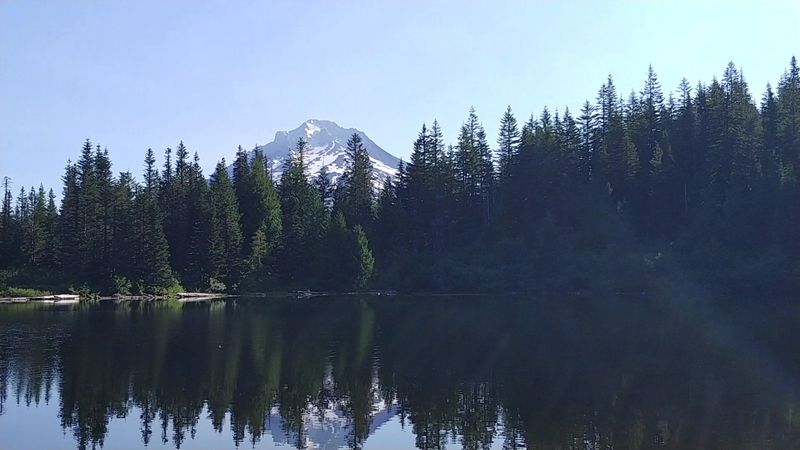
Reaching the water is only half the visit. A short loop wraps the entire shoreline, and skipping it means missing the best viewpoints entirely.
Mount Hood only shows itself from certain sides, mainly the southern and western edges looking back north. Circling around takes maybe twenty to thirty minutes at an easy pace.
The trail narrows in places and dips through marshy ground, so expect a little mud after rain or snowmelt. Small side paths branch toward the water where the reflections look sharpest.
Sound behaves strangely out here. Voices from across the lake carry clearly, bouncing off the water in a way that makes conversations feel closer than they are.
Note that the old boardwalk section has had closures due to disrepair, so check current conditions before counting on it. Even without that stretch, the loop is worth every step. Photographers tend to find their favorite angle somewhere on the far side, away from where most people stop first.
Winter Transforms the Whole Place Into Something Quieter
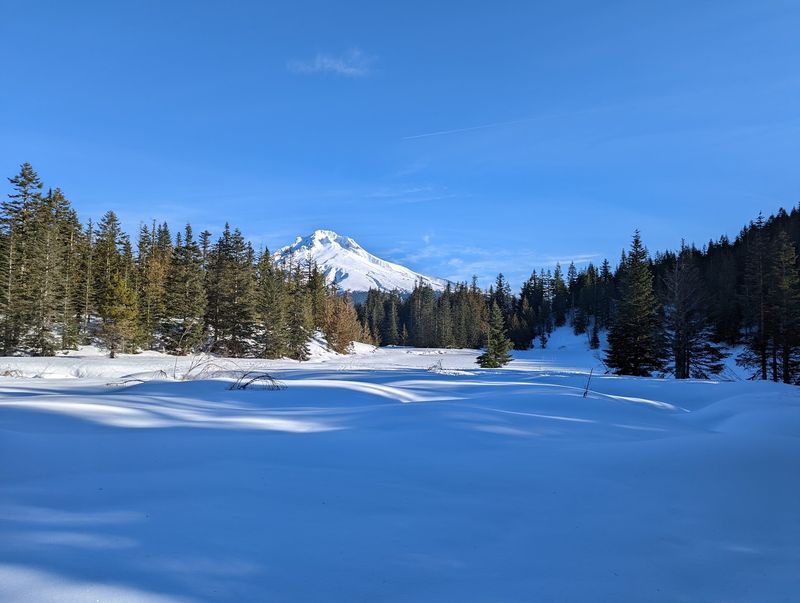
Snow changes the character of this hike completely. The forest muffles every sound, branches sag under white, and the trail feels like a private corridor through the woods.
Traction is not optional. Microspikes or snowshoes turn an icy scramble into a pleasant walk, and the switchback section in particular gets slick enough to send people sliding.
The lake itself often freezes over, which cancels the mirror effect but replaces it with something else entirely. Snow-dusted trees ringing a flat white plate, with Mount Hood peeking through cloud gaps when the weather cooperates.
Wind near the open water bites harder than in the trees. Layers matter, and a thermos of something hot makes the summit stop far more enjoyable.
Fewer hikers come out in winter, so the trail feels roomier. Anyone chasing reflections should know the frozen months are not the season for it. Still, the hush up there in fresh snow is its own kind of reward.
Autumn Color Along the Shoreline
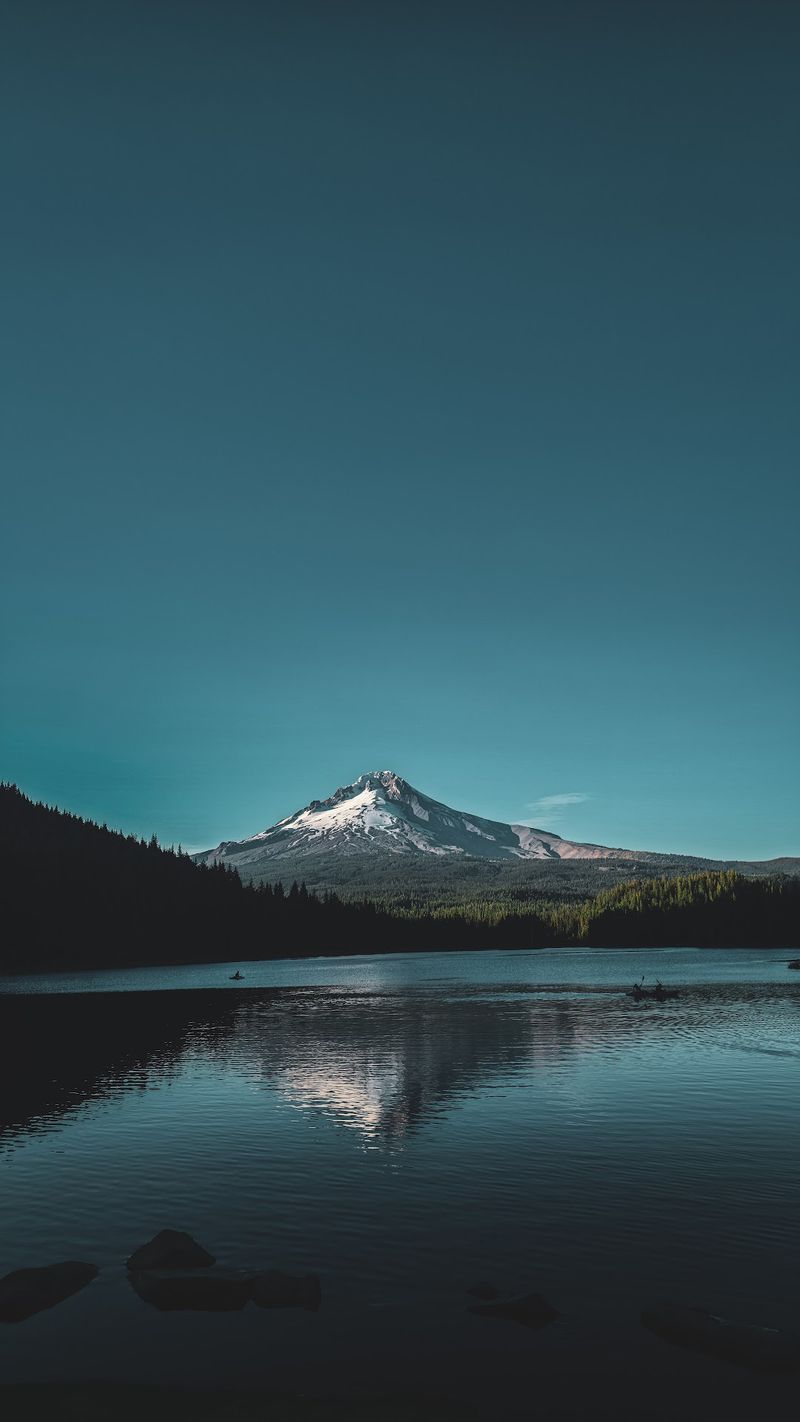
Come October, the huckleberry bushes and low shrubs around the lake shift into deep reds and rusty oranges. Against all those evergreens, the contrast is striking.
Cooler air also means calmer mornings, which is good news for anyone chasing the reflection. Fewer mosquitoes too, which nobody complains about.
Mount Hood usually picks up its first fresh dusting of snow around this time, so the peak looks crisp and white while the shoreline still glows warm. That combination is hard to beat.
Rain becomes more likely, and a wet morning flattens the mirror effect entirely. Even then the lake holds its own, larger up close than it appears in overhead photos.
Trail traffic thins noticeably after Labor Day. Weekday hikes in fall can feel almost private, with just the sound of boots on packed dirt and wind through the branches. Pack a rain shell. Mountain weather here shifts fast, sometimes within a single hour.
Camping Spots Tucked Into the Trees
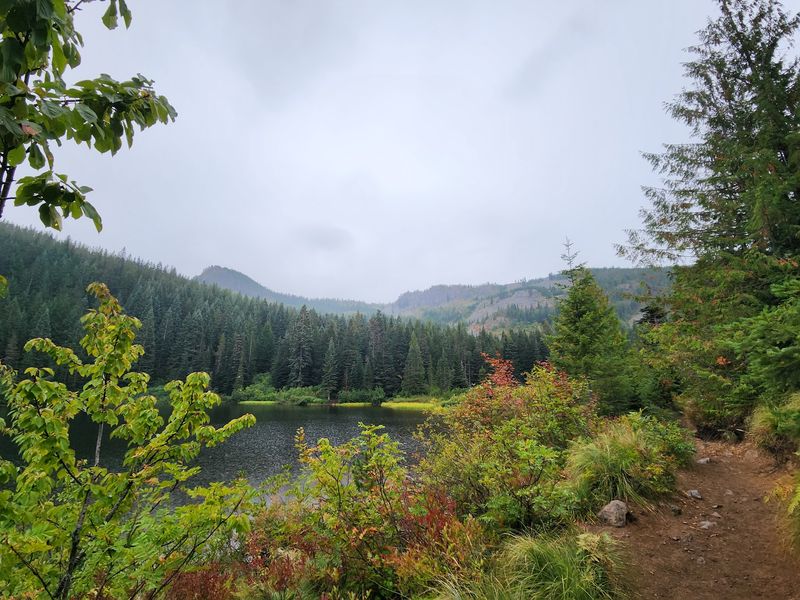
Hidden along the loop are a handful of small campsites, easy to walk past if nobody is using them. They sit back in the trees, close enough to the water to hear it lapping on breezy afternoons.
For anyone new to backpacking, this makes an ideal first trip. Two miles in with a pack is manageable, and sleeping lakeside means catching sunrise without the pre-dawn drive.
Sites are basic. No facilities up at the lake, so plan on packing out everything, including food scraps and toilet paper.
Fire restrictions change with the season and can be strict during dry summer months. Checking the Mount Hood National Forest updates before heading up saves disappointment.
Waking up beside still water with the mountain already lit is a memory that sticks. Morning light hits the peak first, well before it reaches the shoreline. Leave the spot cleaner than you found it. The trail sees heavy use, and small efforts add up.
Parking, Passes and the Practical Stuff
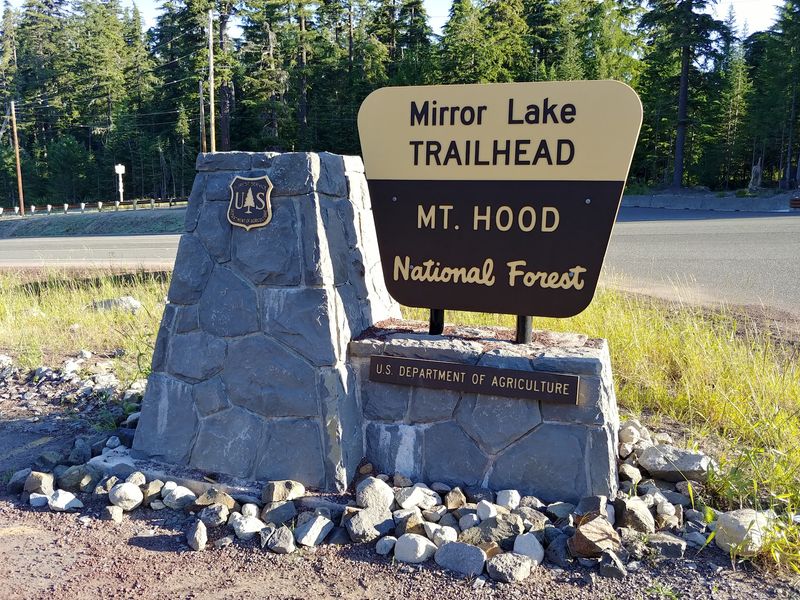
The trailhead sits directly off Highway 26, right beside Ski Bowl, and the lot holds roughly thirty vehicles. On summer weekends it fills early, sometimes before eight in the morning.
A Northwest Forest Pass, an America the Beautiful pass, or a pre-purchased day pass is required. There is no pay station at the trailhead, so buying ahead of time is essential.
Facilities include two vault toilets, a picnic table, bike parking, and a trail information board. Two accessible parking spaces sit near the paved section of the path.
Break-ins have been reported in the lot over the years, so leaving valuables visible in a car is asking for trouble. Take wallets and electronics along.
Arriving before dawn solves the parking problem and rewards the effort with the calmest water of the day. Weekday visits are noticeably easier than Saturdays.
Address: Mirror Lake Trailhead, U.S. Highway 26, Government Camp, Oregon 97028
Summer Swims, Rafts and Warm Afternoon Water
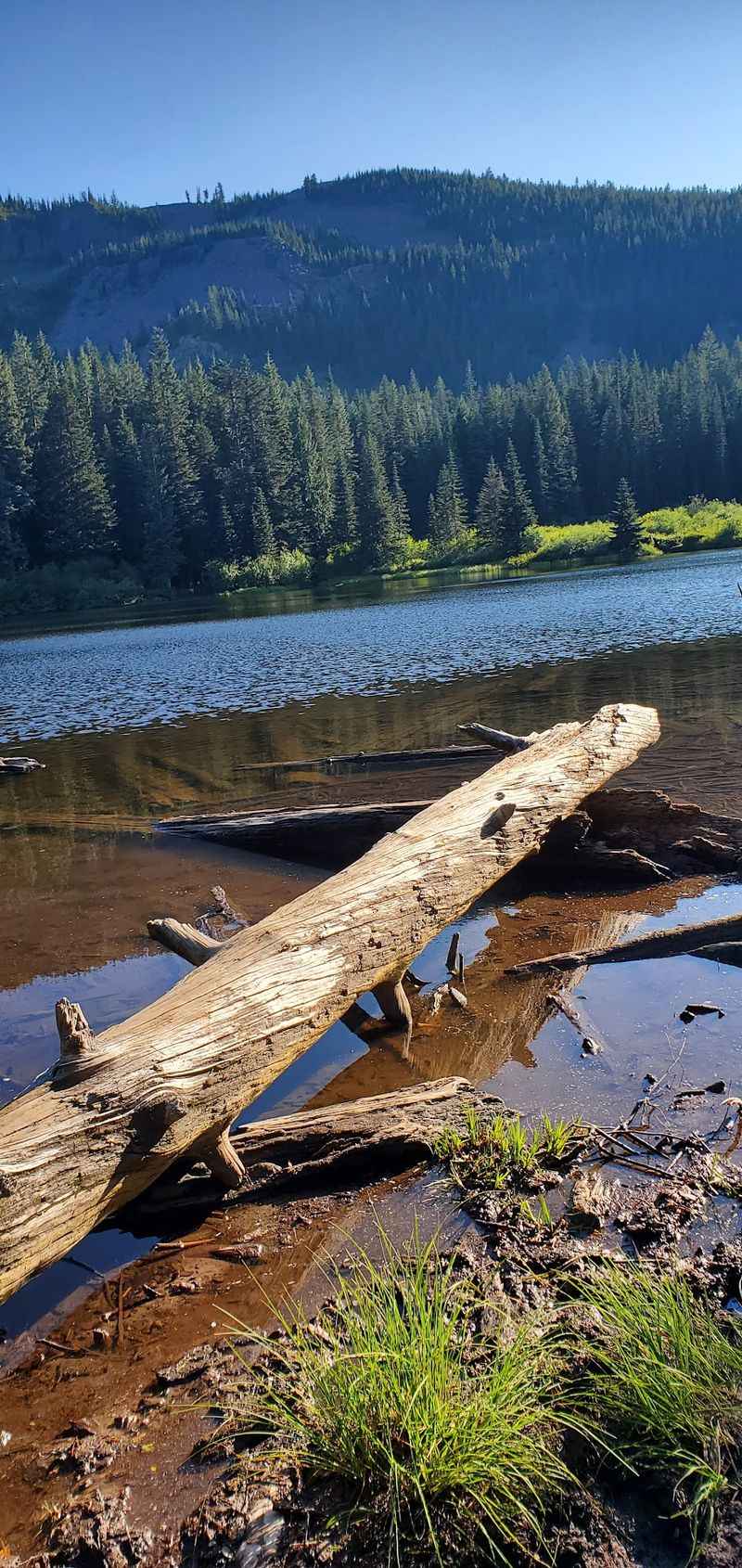
Late August surprises people. The water warms up more than a mountain lake at 4,100 feet has any right to, and swimming becomes genuinely pleasant rather than a dare.
Small inflatable rafts show up on sunny weekends, paddled lazily across the middle. Some visitors bring fly rods and work the shallows from shore.
Sun-warmed logs and flat rocks along the edge make natural spots to dry off. Bringing a towel and a packed lunch turns a two hour hike into a full lazy day.
Mosquitoes deserve a serious warning. Early and mid summer bring clouds of them, especially near the marshy sections, so repellent belongs in the pack.
Afternoons get busy and dusty on the trail. Anyone hoping for solitude should aim for a weekday or plan to stay past the mid-afternoon rush when day hikers head down. Water shoes help on the rocky entry points near the shoreline.
Making It a Full Mount Hood Day Trip
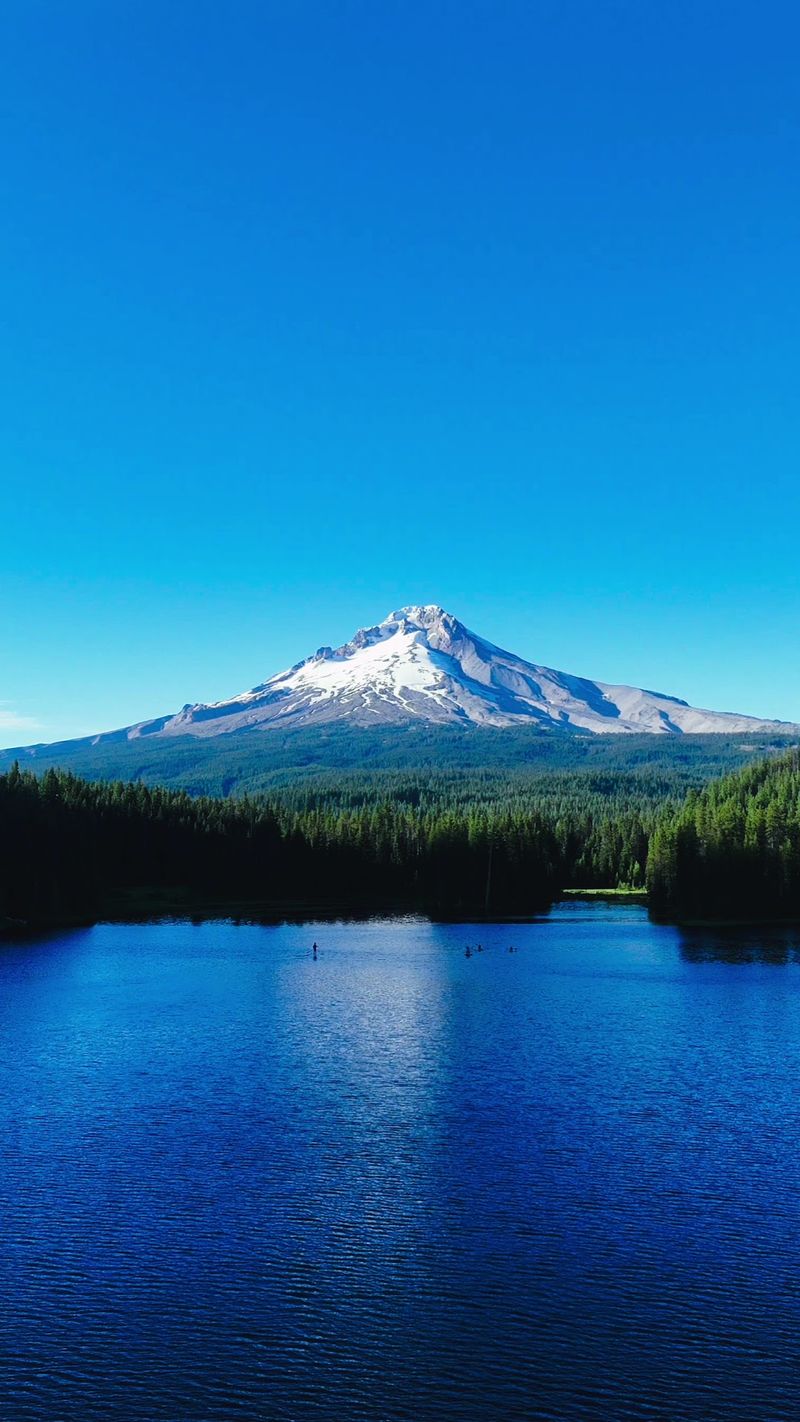
Since the trailhead sits so close to Government Camp, pairing the hike with other stops around the mountain is easy. Trillium Lake is a short drive away and offers a drive-up reflection view for anyone who cannot manage the climb.
Timberline Lodge sits higher up the mountain and makes a natural second stop, with big views and a historic building worth wandering through.
From Portland, the drive out on Highway 26 takes roughly an hour and a half depending on traffic. Leaving before dawn beats both the cars and the wind. Government Camp has cafes and shops for a post-hike bite. Nothing fancy, just what tired legs need.
Building the day around sunrise at the lake, breakfast in town, and an afternoon drive along the mountain loop makes for a satisfying rhythm. No rushing required.
