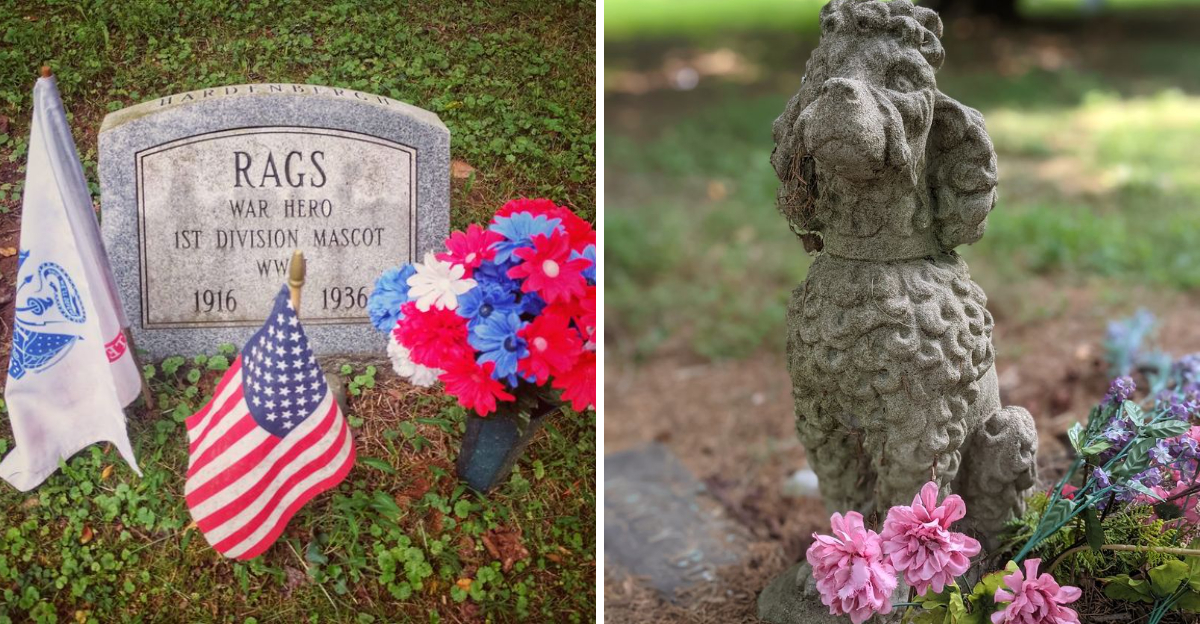
Pet cemeteries are already unusual places to stumble across, but this Maryland memorial park has stories that go far beyond ordinary family pets.
Established in 1920, it is one of the oldest pet cemeteries in the United States and now contains more than 50,000 animal burials, along with roughly 55 people who were buried with their pets.
Among those buried here are animal celebrities from film and television, pets connected to a U.S. president, and animals remembered for wartime service, which makes reading the markers feel surprisingly close to browsing a very unconventional history book.
The six-acre cemetery remains open to the public year-round, surrounded by historic buildings from the property’s early kennel days.
Maryland has plenty of unusual historic sites, but few tell such personal stories about the animals people clearly never forgot.
A Century Old Cemetery Hiding in Plain Sight
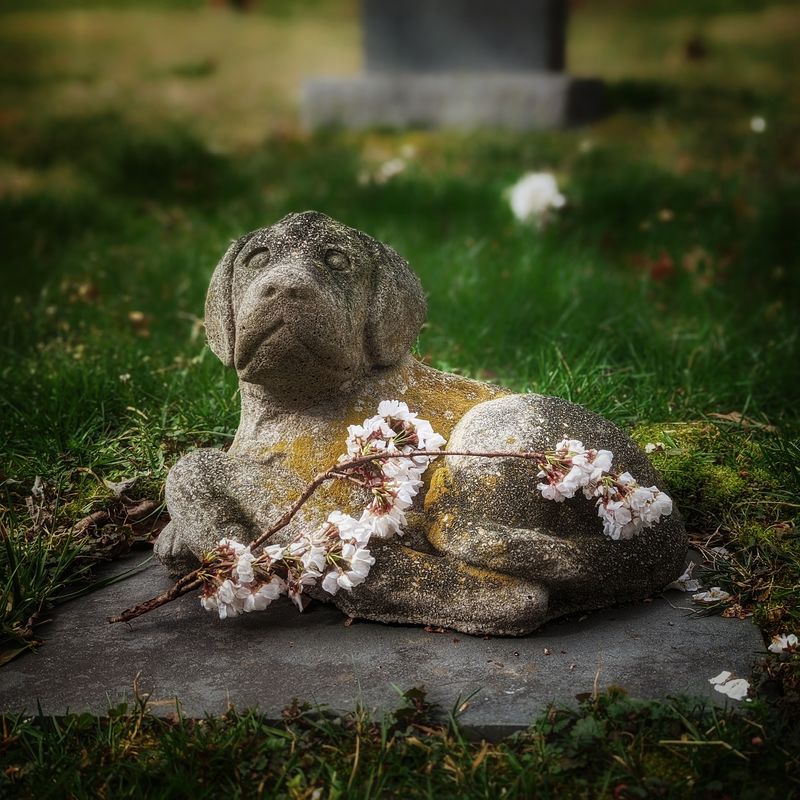
Drivers pass it constantly without a second look. Aspin Hill Memorial Park sits right on a busy suburban stretch, hidden behind trees that hide almost everything until you turn in.
The cemetery opened in 1920 or 1921, founded by dog breeders Richard and Bertha Birney. At first they only buried their own dogs and pets belonging to close friends, but word spread and plots eventually opened to the public.
It is now counted among the oldest pet cemeteries in the United States. Some sources rank it second oldest, others place it fifth among those still operating, and either way that puts it in rare company.
The property covers about eight acres, with roughly six of those given over to graves. More than 50,000 animals rest here, which is a number that takes a minute to sink in when you are standing on a lawn that feels small and neighborly.
Fun detail worth knowing before arriving: the spelling is not a typo. The cemetery took its name from a dog kennel in England, so it is Aspin Hill, while the surrounding community is Aspen Hill.
Recognition came later. The park appears on the Maryland Inventory of Historic Properties and has been considered eligible for the National Register of Historic Places.
Bring comfortable shoes and plan on wandering slowly. The rows are uneven, the ground rolls a little, and the good discoveries happen when you stop reading the map and just follow whatever marker catches your eye.
Rags, the World War I Mascot Dog With a Flag by His Marker
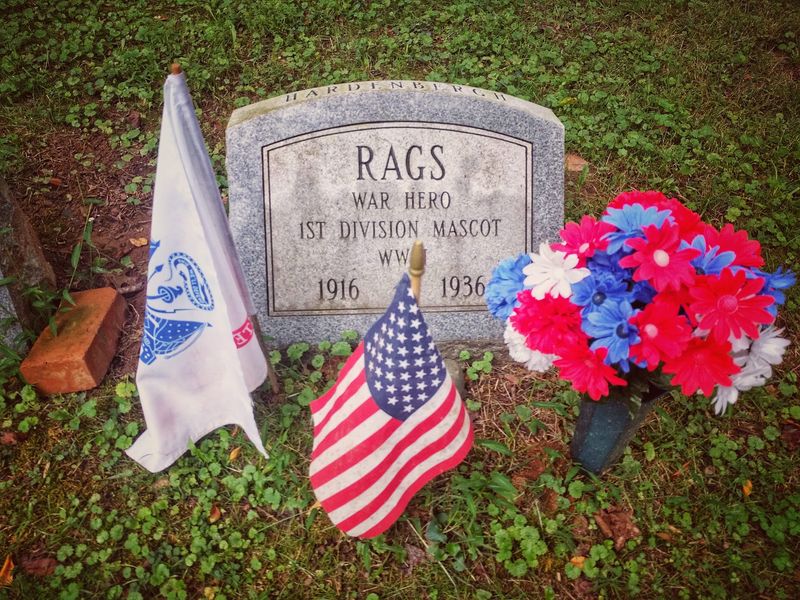
Of all the graves here, this is the one that made me stand still longest. A small American flag often marks the spot, and it looks less like decoration and more like someone still remembers.
Rags served as mascot of the U.S. 1st Infantry Division during World War I. He was not a ceremonial pet kept safely behind the lines either.
His most famous act involved carrying a critical message through enemy fire. The delivery is credited with saving many lives, and Rags came out of the war a decorated dog with a reputation that followed him for the rest of his days.
Reading that on a quiet Maryland lawn hits differently than reading it in a book. There is no dramatic monument, no gift shop, no plaque explaining every detail for visitors.
You simply find a modest stone in the grass and have to fill in the rest yourself. That gap between the size of the marker and the size of the story is exactly what makes the visit stick.
Veterans and history fans tend to seek this grave out first, so ask staff or check cemetery maps if the flag is not immediately visible. Markers shift under leaves and grass over the seasons.
A small suggestion: read his story before arriving rather than after. Knowing what he did while looking at where he rests turns a short stop into something genuinely moving, even for people who came mostly out of curiosity.
Seven of J. Edgar Hoover’s Dogs Rest Here Too
Presidents and FBI directors have odd footprints in unexpected places. In this case, the footprint has paw prints.
Seven dogs belonging to J. Edgar Hoover, the longtime director of the FBI, are buried at Aspin Hill.
One of them carried the wonderfully strange name Spee De Bozo, which is not something anyone forgets after reading it on a stone.
The Washington connection runs deep at this cemetery, and Hoover’s dogs are probably the clearest example. Silver Spring sits close enough to the capital that plenty of politically famous households once looked here when a pet died.
What I liked was how ordinary the markers are. There is no grand mausoleum announcing federal importance, just modest stones sitting in the same grass as everyone else’s terriers and tabbies.
Another political thread runs through the grounds as well. The beagles belonging to President Lyndon B.
Johnson, named Him and Her, were cremated at Aspin Hill, though their remains were eventually interred at his Texas ranch.
So the cemetery holds a piece of that story without holding the graves themselves. It is a small footnote, but it says a lot about how well known this place once was inside Washington circles.
Take your time with this section. Names, dates, and short engraved phrases give a surprisingly intimate look at people who are usually remembered only through headlines and archives, and standing there flattens the distance between famous and human.
Napoleon the Weather Prophet and Other Local Legends
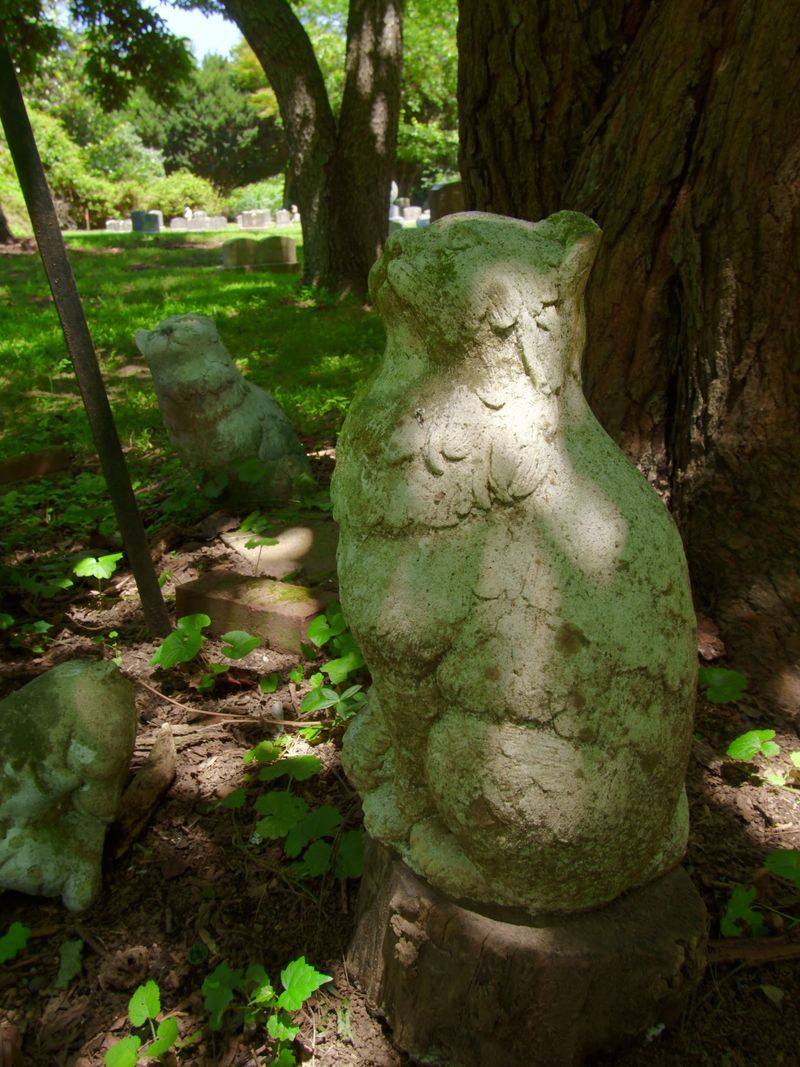
Baltimore once had a cat who forecast rain, and people believed him.
Napoleon, a white cat, earned the nickname Weather Prophet because of a specific habit. When he rested his head between his front paws, rain was supposedly on the way.
His fame took off after he was credited with correctly predicting the end of a drought. Whether that was feline genius or excellent luck is anyone’s guess, but the story was good enough to follow him into the ground here.
Not far away rests Timmie, a much loved cat from Washington, D.C., who lived in the National Press Building. A newsroom cat and a weather forecasting cat in the same cemetery feels almost too perfect.
Then there is Gypsy, a capuchin monkey who spent more than forty years as the constant companion of Eddie Bernstein, a legless panhandler in Washington. Gypsy died in 1976, and their partnership is one of the most unusual stories the grounds hold.
What ties these graves together is that none of the animals were famous for being expensive or pedigreed. They were characters, known by neighborhoods and regulars rather than by fans.
Reading their markers back to back feels like flipping through a scrapbook of mid century Washington and Baltimore street life. If you enjoy local history more than official history, this is the corner of the cemetery worth lingering in longest.
Andy the Well Dressed Monkey and the Hollywood Bulldog Mystery
Some markers here stop you mid step, and Andy’s is one of them.
The tombstone of this capuchin monkey carries a color photograph showing him dressed in blue pants and a pinafore. Seeing an actual portrait instead of just an engraved name changes the whole feeling of the grave.
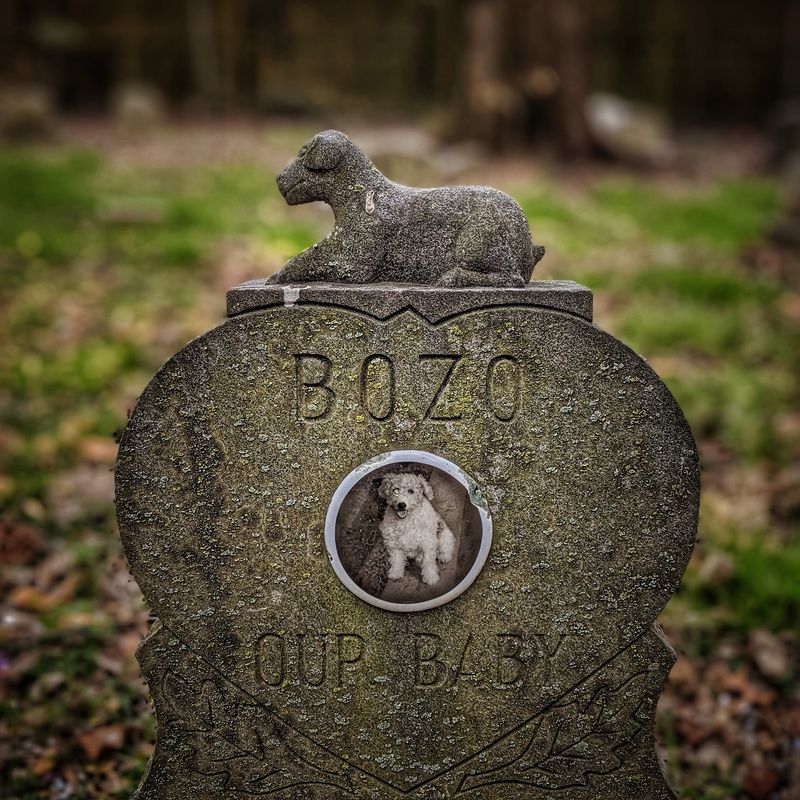
Photo markers appear in several spots around the cemetery, often as porcelain images set into stone. They turn a row of anonymous rock into a row of faces, which is oddly powerful.
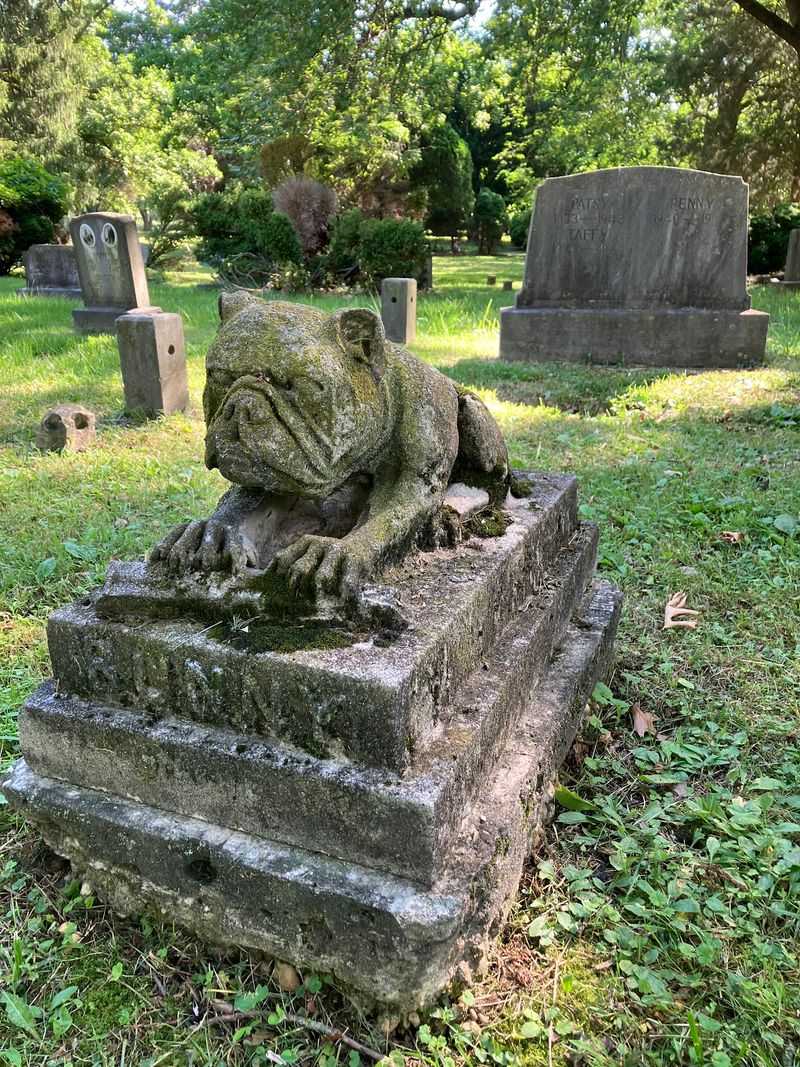
Then comes the mystery. A bulldog buried here, listed as General Grant of RKO and also known as Jiggs, was long rumored to have played Petey in the Our Gang films.
Historical accounts complicate that claim. Some researchers believe he was mistakenly identified as Petey, and separately note that he was briefly owned by Franklin D.
Roosevelt, which is a plot twist nobody expects from a bulldog.
Truth or legend, the marker keeps the conversation alive. That is part of what makes wandering here fun instead of somber, because half the stones come with a question attached.
Movie fans and old Hollywood buffs will get a kick out of hunting this one down. Bring a little skepticism and a lot of curiosity, because the best stories at Aspin Hill live in the space between documented fact and neighborhood retelling, and the cemetery has never tried to tidy that up.
Birdland, Medical Rats, and the Graves Nobody Expects
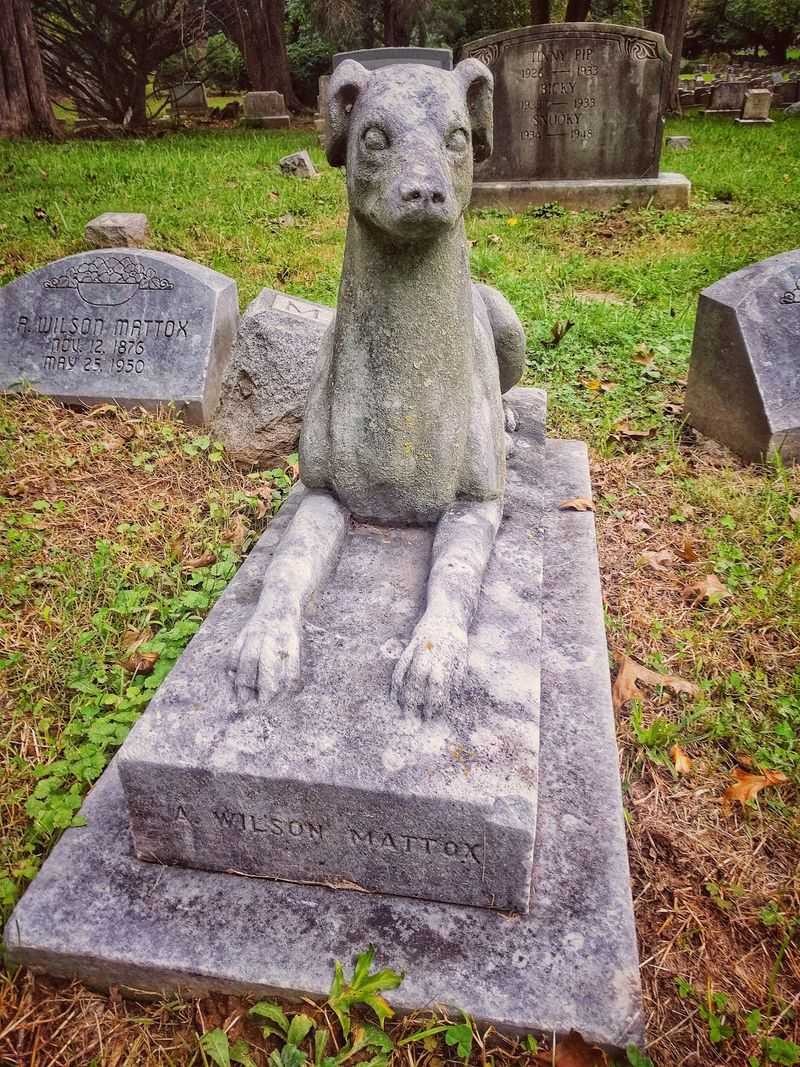
Dogs and cats fill most of the rows, but the outliers are what I kept talking about afterward.
A small plaque honors medical rats named Emily, Annie, Jane, and Rue. Four rats, four names, one quiet acknowledgment that they mattered to somebody.
Nearby sits a granite marker showing a raccoon and a mink, sometimes called the Fur Coat Memorial. Whether animals are actually buried beneath it remains unclear, which only adds to its strangeness.
There is also a designated section for birds known as Birdland. Parakeets, canaries, and other small companions get their own patch of ground, and the markers there tend to be tiny.
The full species list at this cemetery reads like an unusual inventory. Monkeys, horses, goats, hamsters, frogs, goldfish, turtles, and snakes all rest somewhere on the property alongside the more expected pets.
A goldfish grave might sound funny at first. Standing in front of one, it just reads as love, because someone cared enough to make it permanent.
Humans are part of the picture as well. More than two dozen people, possibly as many as seventy, chose burial here so they could rest beside their animals.
Walk the edges rather than the center paths if you want to find these. The unusual markers hide in corners, under low branches and behind larger monuments, and spotting them feels like a genuine reward for slowing down.
Mausoleums, Rock Walls, and Beautifully Crumbling Statues
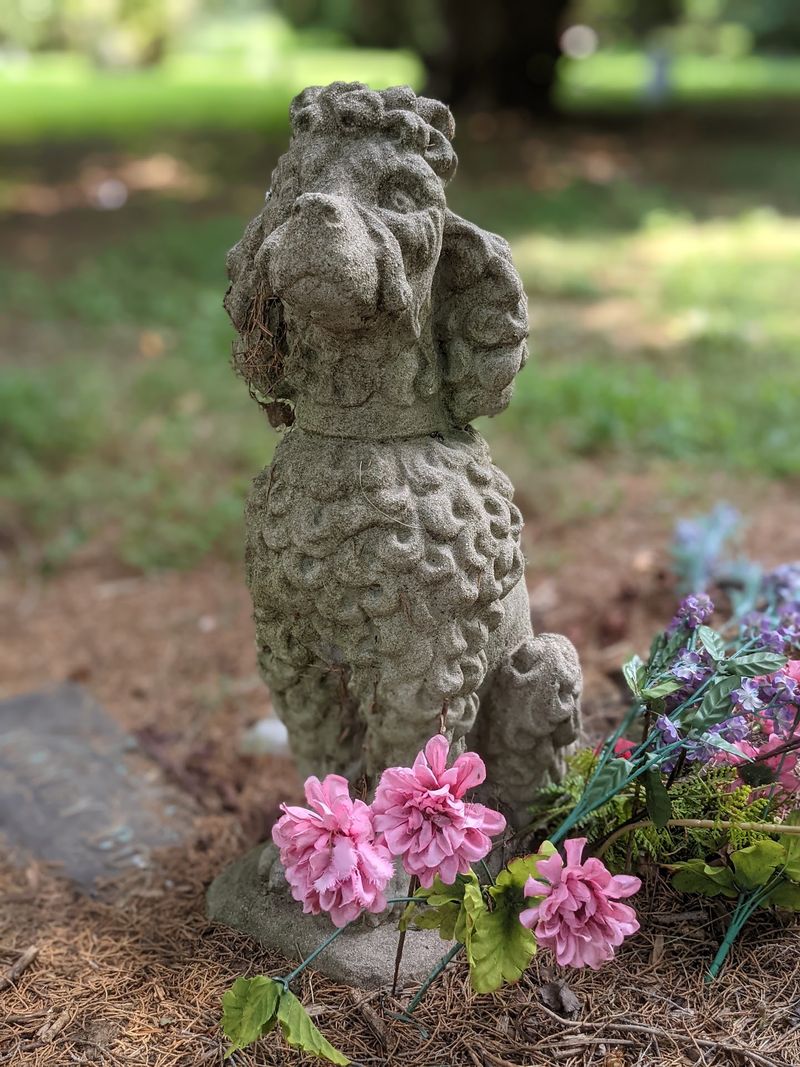
Grave markers here range from a flat stone the size of a paperback to structures you could photograph for an hour.
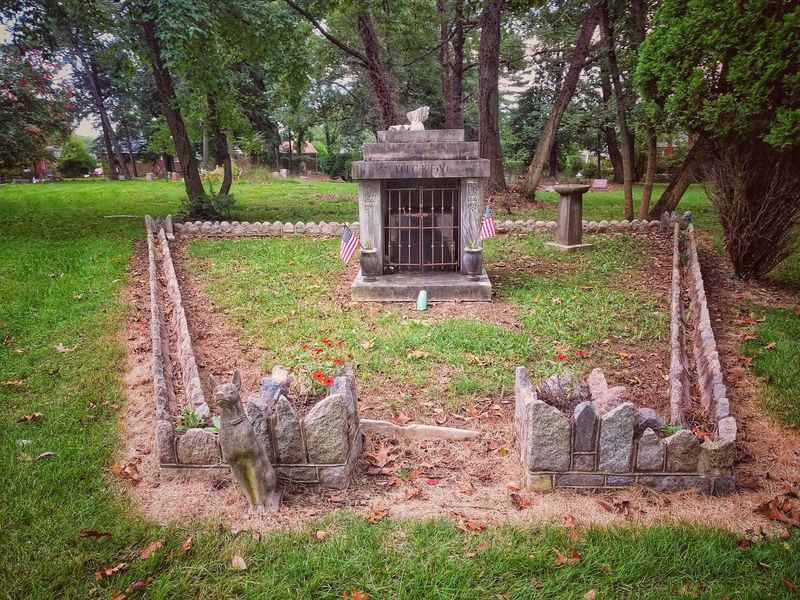
Mickey, a beloved Boston terrier, got an actual mausoleum built in his honor. His owners were later interred in front of it, which flips the usual arrangement in a way that is genuinely touching.
Elsewhere the grounds hold rock walls, large statues, and elaborate monuments mixed among humble markers. There is no uniform style, and that inconsistency is exactly the charm.
Parts of the cemetery lean toward wild. Fallen trees rest where they landed, ivy climbs stone, and a few statues have started to crumble at the edges.
Rather than looking neglected, it reads as honest aging. Places that are scrubbed too clean lose their sense of time, and Aspin Hill has kept every layer of its hundred years visible.
Photographers will love the light here in the late afternoon, when shade drops across the older sections. Bring a lens you like for close details, because engraved lettering and worn porcelain photos are the real subjects.
Also worth noticing: Missy, a Palomino Shetland pony belonging to S. Alfred Nash, a former owner of the cemetery.
A pony grave sits differently in the mind than a dog grave.
Move gently through the older rows. Ground can be soft, markers sit low, and the whole place rewards visitors who treat it like the historic property it actually is.
How to Visit Respectfully and What Comes Next for the Grounds
Plan a visit around quiet curiosity rather than sightseeing energy, and the place opens up.
The Montgomery County Humane Society has owned Aspin Hill Memorial Park since 2007. Earlier owners included People for the Ethical Treatment of Animals and the Chesapeake Wildlife Sanctuary, so the property has passed through several animal focused hands.
It remains an active cemetery, though new burial plots are not currently available. Families still visit existing graves, which is worth remembering while wandering with a camera.
Future plans point toward something larger. The Humane Society has discussed transforming the property into a campus for animal welfare, including humane education, adoption services, and its headquarters.
That means the grounds could look different in years to come. Seeing them now, quiet and half wild, feels like catching a chapter before the page turns.
Practical tips: wear shoes that handle uneven grass, go on a dry day, and keep voices low. Leave markers, flags, and flowers exactly where you find them.
Give yourself at least an hour. Rushing this cemetery defeats the entire point, since the good stuff hides in details you only notice on a second pass.
What stayed with me was not the celebrity graves, honestly. It was the sheer volume of ordinary devotion stacked across six acres, one small stone at a time, in a spot most Silver Spring drivers never think about.
Address: 13630 Georgia Avenue, Silver Spring, Maryland
