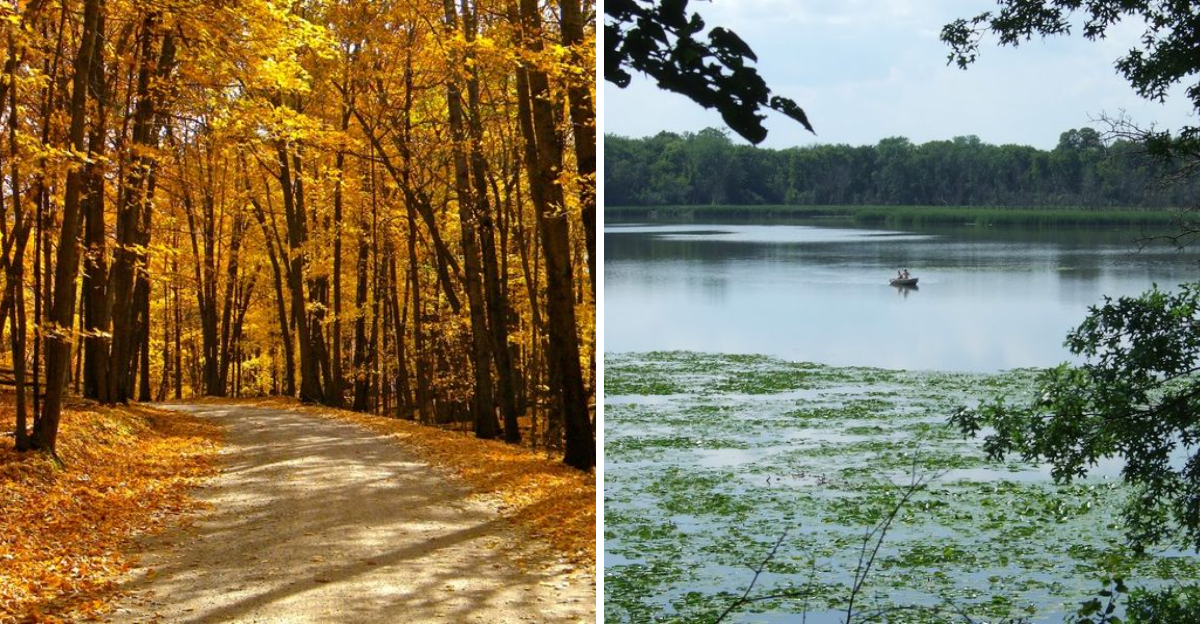
You can walk for miles and hear nothing but birdsong and the rustle of leaves overhead. That is the gift of this quiet state park, a place that feels like your own private wilderness.
The trails wind through rolling hills and dense forests, with lakes tucked away in peaceful pockets. You might pass a few other hikers, but the crowds never seem to find this hidden haven.
The campsites are secluded and rustic, offering true escape from the noise of everyday life. Paddlers can glide across calm waters, spotting turtles sunning on logs along the shore.
In the fall, the colors are stunning, painting the landscape in vibrant oranges and reds. Winter transforms the park into a snowy retreat, perfect for cross country skiing and snowshoeing.
It is the kind of place where you can truly disconnect and breathe again. Minnesota has many popular parks, but this one remains a peaceful secret worth discovering.
A Park That Stays Wonderfully Quiet Year-Round
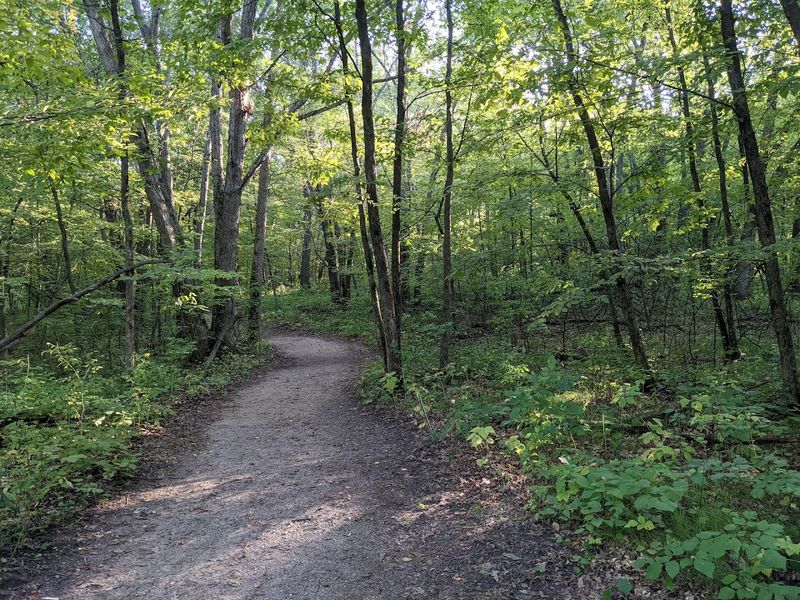
Most state parks near big cities get absolutely packed on weekends. Lake Maria somehow sidesteps that chaos almost entirely, even in peak summer months.
The park sits about 45 minutes northwest of Minneapolis, close enough for a day trip but far enough to feel genuinely removed. On a Wednesday evening, visitors reported seeing only a handful of other people on the trails.
That kind of quiet is rare this close to a major metro area.
Part of what keeps crowds away is the park’s rustic setup. There are no drive-in RV sites, no swim beach, and no playground.
What you get instead is forest, lakes, birdsong, and clean air.
That simplicity is exactly the point. People who come here tend to want a low-key outdoor experience, not a busy campground atmosphere.
The result is a park that feels genuinely peaceful on almost any day of the week. If you crave solitude outdoors, this place delivers it consistently and beautifully.
Old-Growth Forest That Feels Straight Out of a Fairy Tale
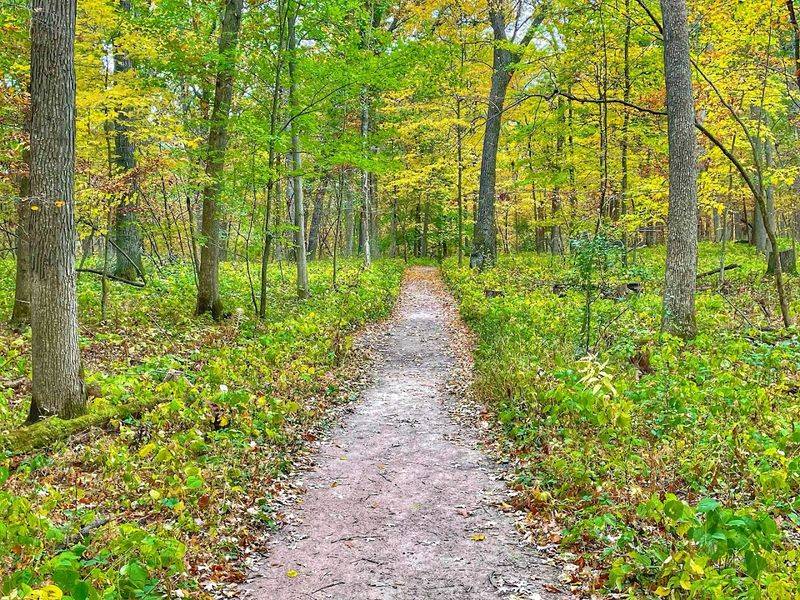
Walking into the big woods at Lake Maria feels like stepping back in time by several centuries. The trees here are enormous, their trunks wide and their canopies stretching high above the trail.
This section of forest is a remnant of the Big Woods, a vast hardwood ecosystem that once covered much of central Minnesota. Very little of it survived European settlement, which makes Lake Maria genuinely special from an ecological standpoint.
Tall oaks, maples, and basswoods crowd together, creating a shaded corridor that stays cool even on hot summer afternoons. The forest floor is carpeted with ferns, wildflowers, and in the right season, tiny purple blooms that line the path like a welcoming ceremony.
Visitors have described the feeling as magical, and honestly, that word fits. The scale of these trees puts everything in perspective.
Standing beneath a centuries-old oak with nothing but birdsong overhead is the kind of moment that stays with you long after you have driven back home.
Hiking Trails Built for Every Kind of Adventurer
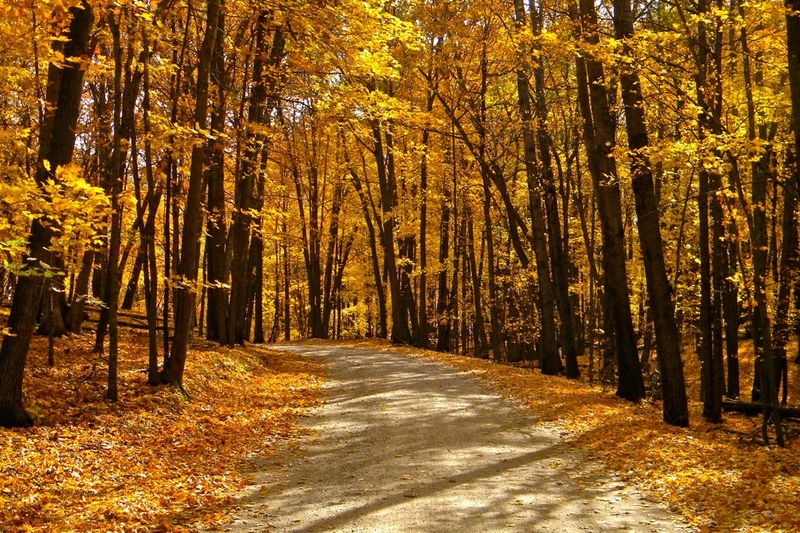
The trail system at Lake Maria is one of its strongest selling points. Routes wind through forests, skirt lake edges, and climb rolling hills that give your legs a satisfying workout.
The Hiking Club Trail is the most popular option, covering a manageable distance with some gentle elevation changes. It loops around two lakes and passes through dense forest, making it feel like a full outdoor adventure without being brutal on the knees.
Trails here are mostly sandy dirt paths, which drain reasonably well after rain. Still, waterproof boots are a smart call if the forecast has been wet recently.
Bug spray is also strongly recommended, especially on calm, humid days when the mosquitoes get ambitious.
Dogs are welcome on the trails as long as they stay on a six-foot leash. The park also has horseback riding trails for equestrian visitors, which adds another layer of variety.
No matter your fitness level, Lake Maria has a route that will feel just right for your pace and energy.
Wildlife Watching That Actually Delivers Real Surprises
Lake Maria has a reputation among birdwatchers, and one afternoon here will show you exactly why. The park hosts an impressive variety of birds that are surprisingly easy to spot.
A dedicated animal viewing overlook sits a short walk from the picnic area, positioned above a marshy pond. Visitors have spotted large swan families nesting on the far end of the lake, hooded mergansers performing elaborate courtship displays, and countless songbirds filling the air with layered sound.
A brand-new bird watching platform was recently added near the picnic area. It overlooks a marshy pond and gives you an elevated view that makes spotting waterfowl much easier.
Deer are frequently seen near the park entrance, especially in the early morning and at dusk.
One visitor had a remarkable encounter with a beaver that slowly approached to within ten yards before slapping the water and swimming away. The wildlife here is not shy.
Bring binoculars, move quietly, and you will be rewarded with moments that feel genuinely wild and unscripted.
Backcountry Camping That Reconnects You With Nature
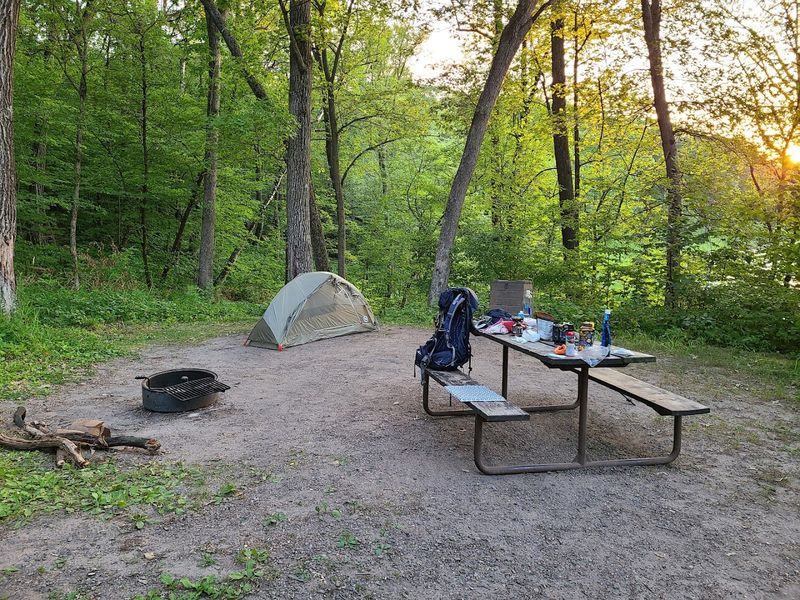
Camping at Lake Maria is not the kind of experience where you pull up next to a neighbor’s RV generator. The park is entirely walk-in, which means you carry your gear through the woods to reach your site.
That short hike filters out the casual crowd and fills the campground with people who actually want to be there. Sites are well-spaced and tucked into the trees, giving each camper a genuine sense of privacy.
Many overlook the water, which makes waking up here feel like a reward for the effort.
Most sites have access to a vault toilet shared with just one neighboring campsite. The setup is simple and intentional.
No electricity, no drive-in access, no noise from passing traffic. Just forest sounds and the occasional loon call drifting across the lake at night.
Dogs are welcome at tent sites with a leash. The overall vibe is calm, unhurried, and deeply satisfying for anyone who finds that traditional campgrounds have gotten a little too loud and crowded in recent years.
Cozy Camper Cabins for a More Sheltered Stay
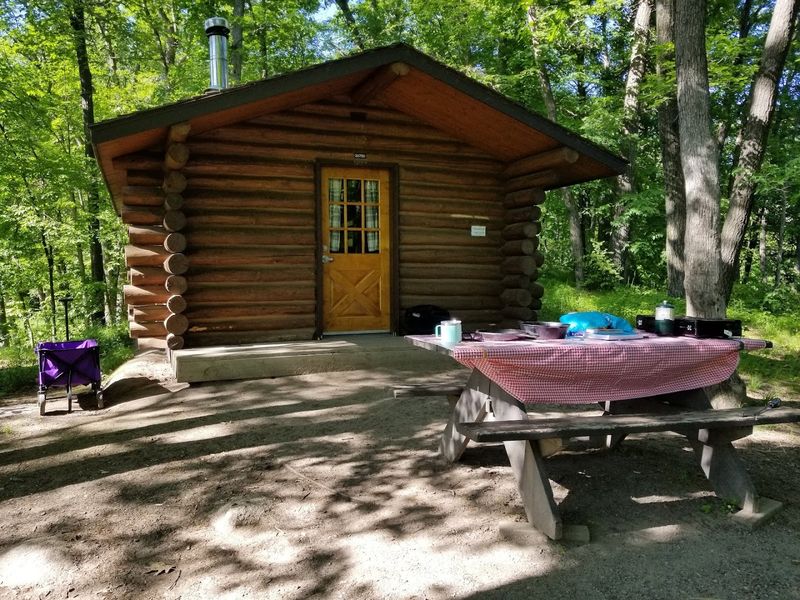
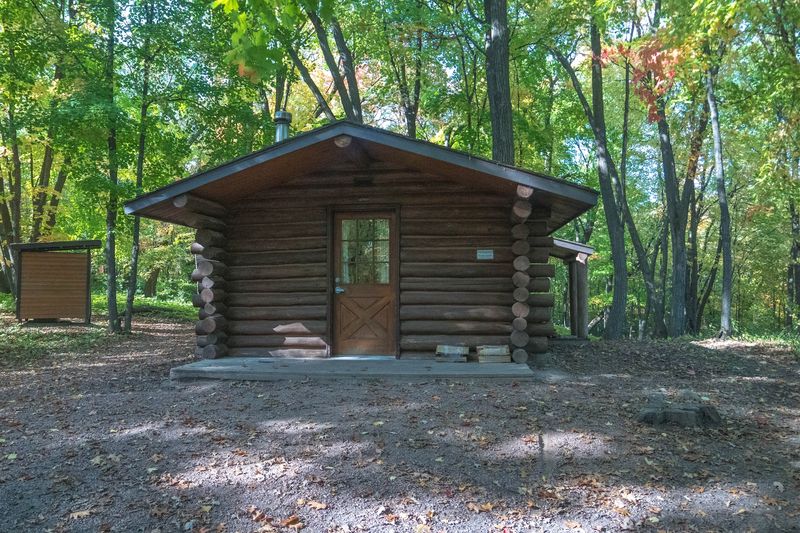
Not everyone wants to sleep in a tent, and Lake Maria has a solution that does not sacrifice the wilderness feel. The park offers camper cabins that are simple, warm, and surprisingly charming.
Each cabin comes equipped with a wood stove, and firewood is included in the rental. That detail caught at least one visitor off guard in the best possible way after they had already purchased extra wood.
The stove works well and heats the small space quickly on cool Minnesota nights.
There is no electricity in the cabins, which is clearly stated in the park information. That means headlamps and battery-powered lanterns are essential packing items.
The darkness that comes with no artificial light makes the night sky feel enormous and deeply satisfying.
Cabins are accessed by hiking in from the parking area, just like the tent sites. The surrounding forest wraps closely around each structure, making it feel genuinely secluded.
For anyone who wants a roof overhead without losing the feeling of sleeping deep in the woods, these cabins hit the mark.
Fishing and Paddling on Calm, Quiet Lakes
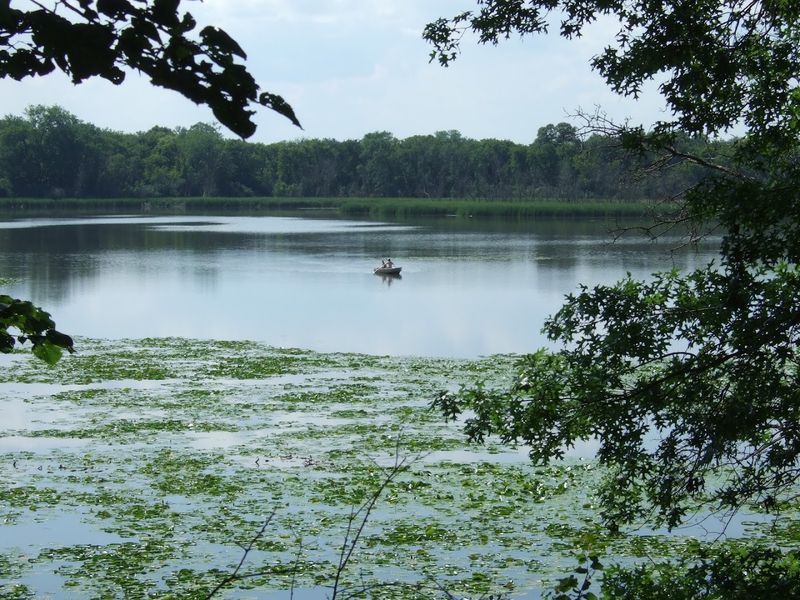
The lakes at Lake Maria are not the kind you share with a fleet of motorboats. They are calm, relatively small, and perfectly suited for quiet water activities that let you actually hear the forest around you.
A boat launch is available in the park, though only non-motorized watercraft are permitted. Kayaks and canoes fit the atmosphere here perfectly.
Gliding across the still water while herons stand motionless in the shallows is an experience that feels almost meditative.
Fishing is also a draw for visitors who enjoy casting a line in peaceful surroundings. The lakes hold a variety of fish species, and the lack of motorboat traffic means the water stays calm and undisturbed.
Early mornings are especially productive and beautiful, with mist rising off the surface and the birds just starting their daily chorus.
The park has a picnic area near the water, making it easy to combine a morning of fishing with a relaxed lakeside lunch.
Fall Colors That Turn the Park Into a Living Painting
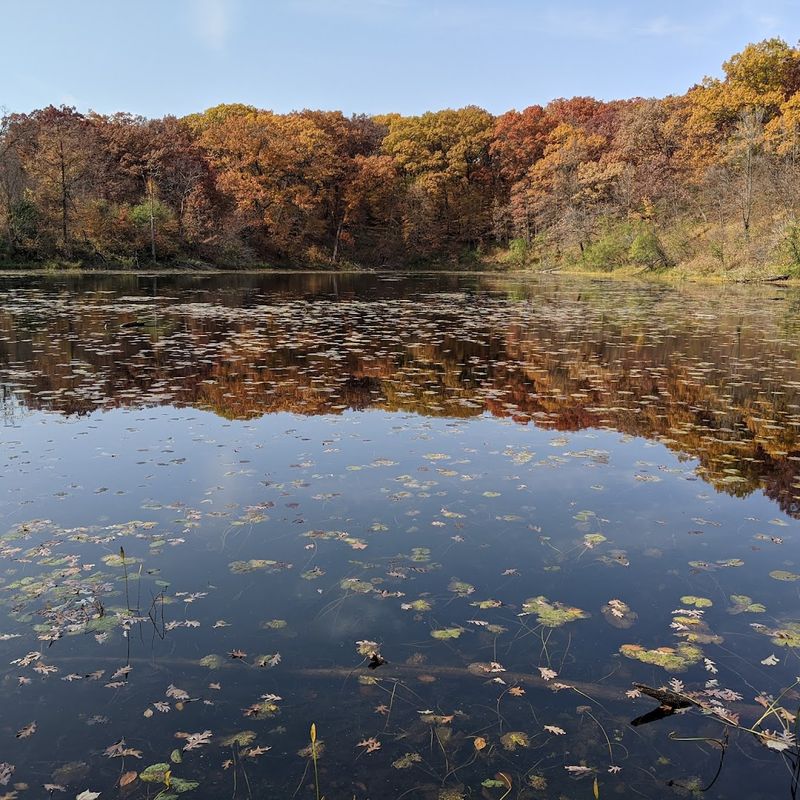
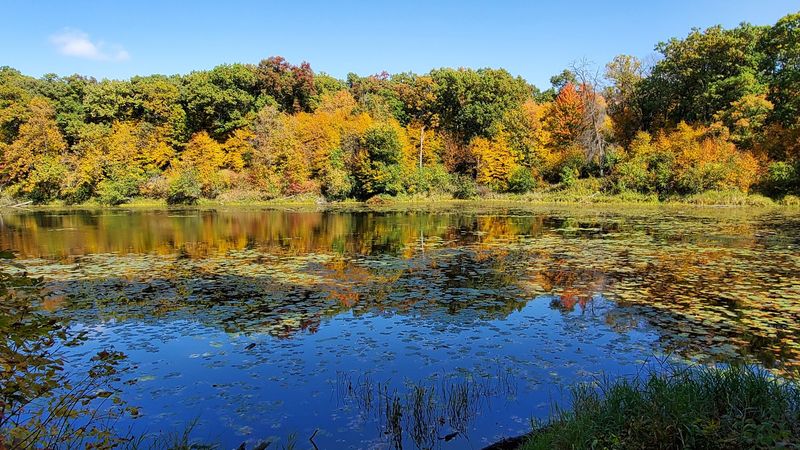
Multiple visitors have called Lake Maria gorgeous in fall, and that word choice is not accidental. The old-growth hardwood forest transforms into something almost impossibly colorful as temperatures drop each October.
Maples, oaks, and basswoods shift through every shade of orange, red, and gold simultaneously. Walking the trails during peak color feels like moving through a painting that someone forgot to tell was real.
The lakes mirror the canopy overhead, doubling the visual impact at every turn.
Peak color timing varies slightly by year, but mid-October is generally a reliable window in central Minnesota. The park stays relatively quiet even during fall color season, which is another reason to put this destination on your autumn radar.
Parking is plentiful, trails are well-maintained, and the interpretive center has restrooms that stay open and clean. Bringing a camera with a decent zoom lens will help you capture the details, like a single red maple leaf floating on the dark surface of the lake.
The Interpretive Center and Picnic Area Worth a Stop
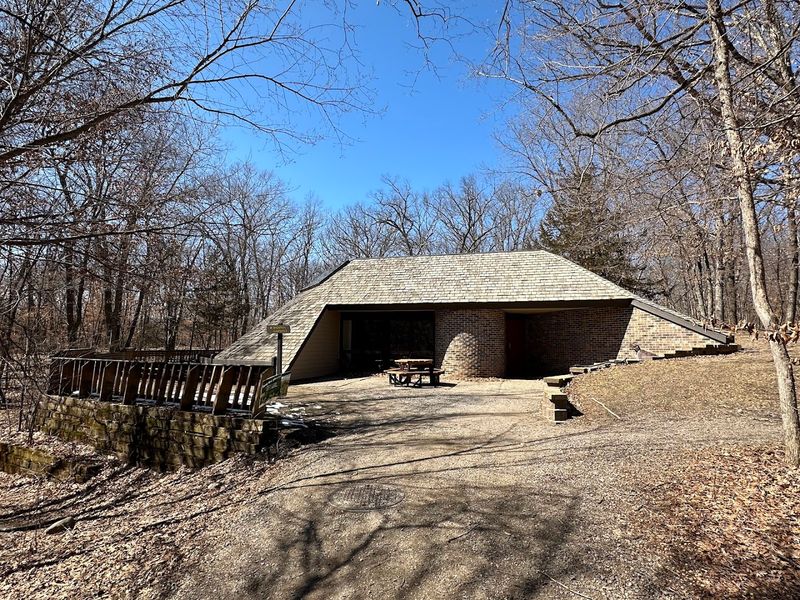
The interpretive center at Lake Maria is smaller than some visitors expect, but it punches above its weight in practical value. It has heat, electricity, flush toilets, and picnic benches inside, which makes it a genuinely useful stop on any visit.
Clean restrooms are available here, and that matters more than people admit when you have been hiking for a couple of hours. The building also serves as a good orientation point for first-time visitors trying to get their bearings before hitting the trails.
Outside, the picnic area offers a pleasant spot to eat lunch with a view of the surrounding landscape. It is positioned near the new bird watching platform, so you can scan the marshy pond while eating a sandwich without even leaving the table.
The center is worth a quick visit before or after your hike, especially if you have younger kids who appreciate having a sheltered space to regroup.
How to Plan Your Visit to Lake Maria State Park
Getting to Lake Maria is straightforward. The park is located about 45 minutes northwest of the Twin Cities, making it a realistic day trip or a weekend escape without a long drive.
A Minnesota State Parks vehicle permit is required for entry. Annual passes offer the best value if you plan to visit multiple parks throughout the year.
Waterproof hiking boots are recommended, especially after rainy periods when some trails can hold moisture. Bug spray is a must from late spring through early fall.
The mosquitoes in the shaded forest sections can be persistent, even on dry days.
Leashed dogs are welcome on trails and at tent campsites, though not inside the cabins. The park has ample parking for vehicles of all sizes, and roads within the park are well-maintained.
Arriving on a weekday almost guarantees a quieter experience, though even weekends here feel calmer than most parks this close to a major city.
Address: Lake Maria State Park, 11411 Clementa Ave NW, Monticello, MN 55362
