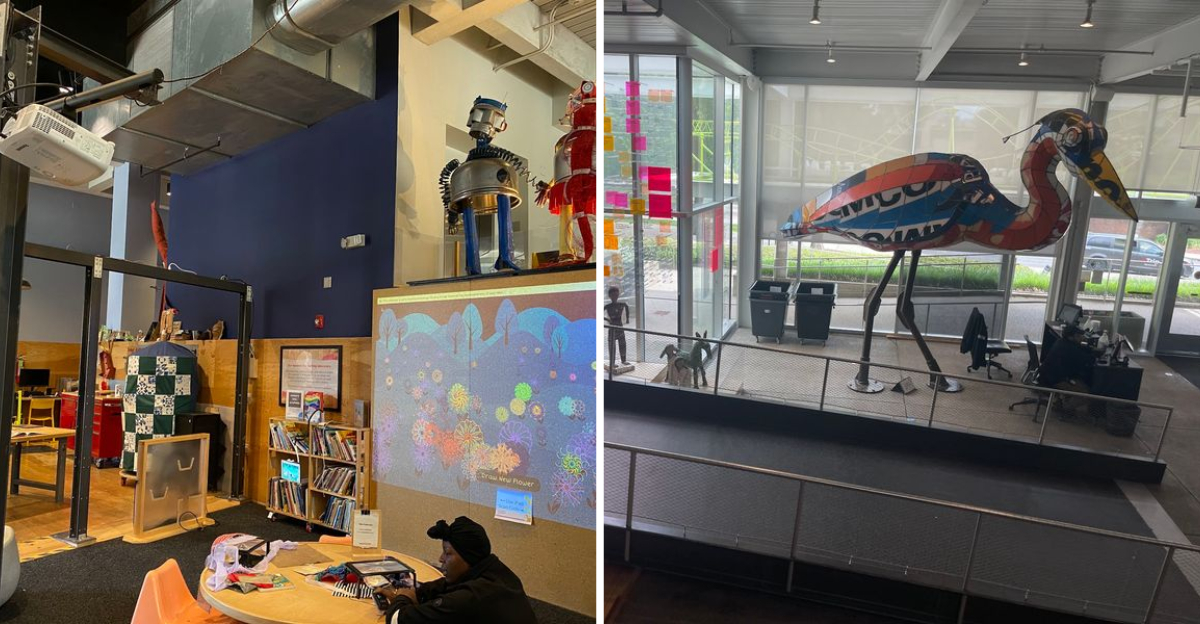
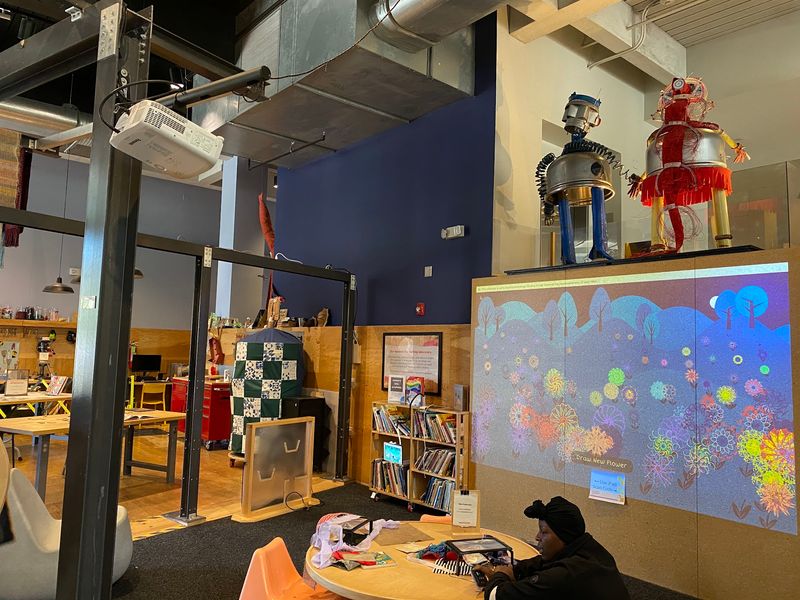
I did not expect a converted post office in Pennsylvania to hold my attention for three straight hours, but here we are. The building was voted the number one children’s museum in the country in a recent readers’ choice awards, and honestly, the moment I heard water splashing on an upper floor I understood why.
Tens of thousands of square feet of climbing, building, painting, sewing, and soaking is a lot to take in, and every permanent exhibit here was dreamed up by the museum’s own in-house design team. Two historic buildings are stitched together by a glass addition that lets light pour down the stairwells.
Kids run. Grown-ups linger.
I came for a quick look and left with damp sleeves, a sketch in my pocket, and a genuine respect for a place that treats play like serious business. The water exhibit had me laughing while trying to redirect a stream with a plastic dam.
The art studio had me sitting down to draw something I had not thought about in years. I watched a grandmother crouch next to her grandson over the same marble run, and neither of them looked bored.
Waterplay, Where Everyone Gets Wet and Nobody Minds
My first clue about this floor was the sound. A steady rushing hum drifted down the stairwell before I even reached the top level, and then came the shrieking laughter.
Waterplay is the exhibit locals mention first, and after ten minutes I stopped taking notes because my hands were wet. Water here does not just sit in a basin.
It rains, channels, spouts, spills, and pools, and kids control most of it with gates, wheels, and their own two hands.
Smocks hang near the entrance and air dryers stand along the wall, but let me pass along what I heard from three separate parents in the space of five minutes. Bring a swimsuit.
Bring a towel. Bring dry socks.
Nobody leaves this room the same level of dry they entered it, and that seems to be part of the charm. I watched a toddler in a bright yellow smock discover that blocking one channel sends water racing down another, and the look on her face was pure scientific triumph.
There is an ice table too, which turns into a slow-motion physics lesson about melting and sliding. In winter the room can feel cool, so shorter visits work better then.
What struck me most was how little instruction anyone needed. No signs telling kids what to do, no buttons to press for a canned result, just water behaving like water while small people figure out the rules themselves.
Makeshop and the Joy of Real Tools
Real hammers. Real thread.
Real wire and batteries that actually light something up.
Makeshop was the room where I lost track of time, and I do not even have a project to show for it. Wood shavings scattered near a bench, a sewing machine humming in the corner, and a table of circuit components that looked like a friendly mess all told me this place trusts kids more than most spaces do.
The philosophy is simple. Give children authentic materials, authentic tools, and authentic processes, then step back and let them figure out what happens next.
I watched a boy of maybe nine solder-free wire a small motor into a spinning contraption while his sister sewed a lumpy felt shape she declared to be a fish. Neither project looked polished.
Both looked like learning.
Staff drift through the space offering help without hovering, which is a skill in itself. If your kid has never held a saw or threaded a needle, this is a supervised place to start, and that felt genuinely valuable to me.
Woodworking, circuitry, and sewing rotate through as the featured activities, so return visits rarely repeat themselves. Older kids tend to settle in here longest, though I saw plenty of five-year-olds happily banging away at scrap wood.
My advice? Do not rush this room.
Budget at least thirty minutes, and be prepared for your child to carry something slightly wobbly and enormously precious out to the car.
The Garage, Built for Things That Bounce, Race, and Roll
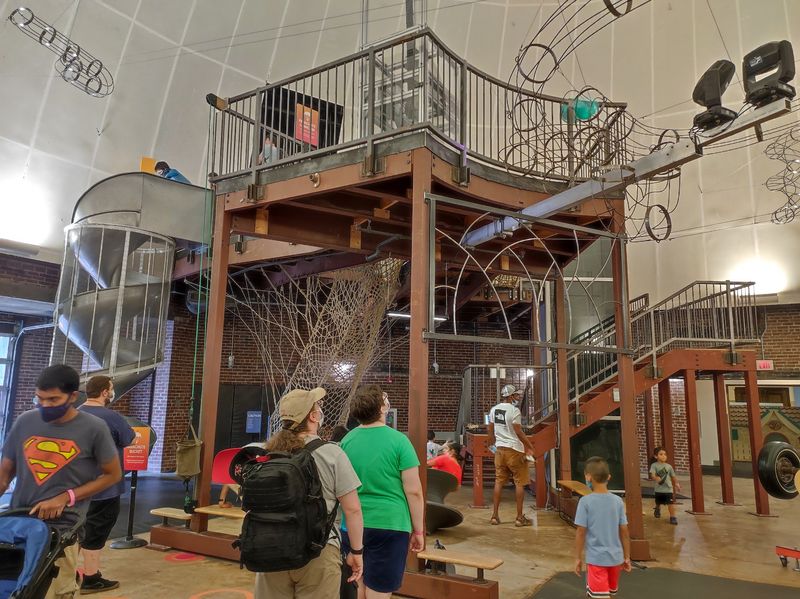
Physics gets loud in the Garage, and that is exactly the point.
Balls thunder down ramps. Wheels spin.
Something rattles overhead while a group of kids argues cheerfully about which track is faster. The whole exhibit is devoted to objects that bounce, race, and roll, plus climbing and spinning built right into the structures.
I have a soft spot for this space because it rewards experimenting rather than watching. A child can send the same ball down the same ramp fifteen times, adjusting one small thing each round, and never get bored.
Several families I overheard named the Garage their favorite floor alongside the water level, and one grandmother mentioned her grandson’s highlight was pulling against the weight of an elephant. That kind of thing sticks with a kid.
The climbing elements gave my legs a workout too, since parents inevitably follow. Sturdy shoes help.
Loose shoelaces do not.
What I appreciated was the design honesty. Nothing here pretends to be a theme park ride.
The materials look like materials, the mechanisms are visible, and kids can see cause connect to effect without a screen in between.
Younger visitors around two or three still find plenty to grab and push, though the busiest sections belong to elementary-age kids with energy to burn. Go early in your visit if your child needs to move before they can focus.
Then let them run. Seriously, just let them.
Quiet Corners, The Nursery and the Kindness Gallery
Not every part of this museum is loud, and I was grateful for that.
The Nursery is a green, hushed pocket built for infants, toddlers, and the adults carrying them. Soft colors, natural materials, low light, and a floor you can actually sit on without feeling in the way.
Colorful pegs get arranged and rearranged. Wooden trains loop around tracks.
Blocks stack and topple, and a water-painting station lets tiny hands make marks that vanish as they dry.
One mother mentioned to no one in particular that the quiet corners here made nursing her infant simple while her older kids played nearby, and that stuck with me as the sign of a well-planned space. Family bathrooms are plentiful throughout the building too, which any parent of a newly potty-trained toddler will immediately appreciate.
A short walk away sits the Kindness Gallery, which handles a bigger idea in a gentle way. Activities there center on empathy and different forms of communication, encouraging kids to notice how words, gestures, and expressions land on other people.
I liked that it never felt preachy. Children were simply doing things together, and the lesson rode along quietly underneath.
If your group includes a baby and a wild six-year-old, these two areas are your reset buttons. Ten minutes of calm can stretch a museum day by an hour, and I saw more than one family use them exactly that way before heading back into the noise.
Art Studio Days and Rotating Exhibits Worth Timing Your Trip Around
Paint under the fingernails is a souvenir, and the Art Studio hands them out generously.
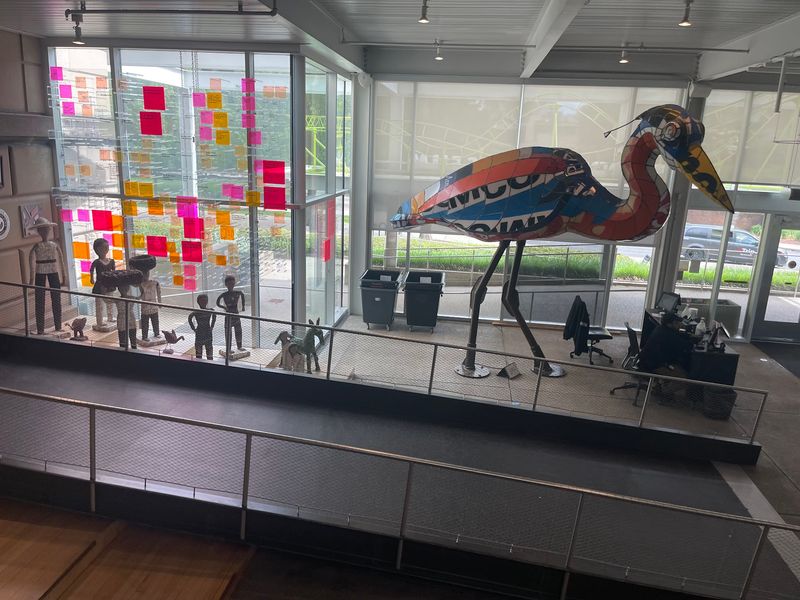
Multimedia is the word the museum uses, and in practice that means clay, paint, paper, fabric, and whatever else the resident artists have brought in that week. Kids sometimes work right alongside those artists, which turns making art into something closer to a conversation.
I spent a while just watching. One child built a lopsided sculpture with total conviction while another layered color onto paper until it warped, and nobody told either of them to stop.
Near the Art Studio, the museum’s temporary exhibits give repeat visitors a reason to keep coming back. During my visit, I Am Wild, a Charley Harper exhibit exploring six habitats drawn from his bold, geometric wildlife art, held the big gallery, and it is genuinely lovely even for adults.
A Very Eric Carle exhibit has also lived here, pulling visitors inside the pages of those familiar picture books. Past temporary shows have included a Daniel Tiger exhibit and one honoring the Tuskegee Airmen.
Check what is currently running before you drive in, because the rotating show can shape your whole day. The gift shop, small but thoughtfully stocked, tends to carry items tied to whatever is on view.
Every March 20th the museum marks Mister Rogers’ birthday, a nod to Pennsylvania’s most famous neighbor. Fred Rogers memorabilia appears in the building too, and honestly, that connection alone charmed me.
Practical Notes, MuseumLab Next Door, and Making the Day Work
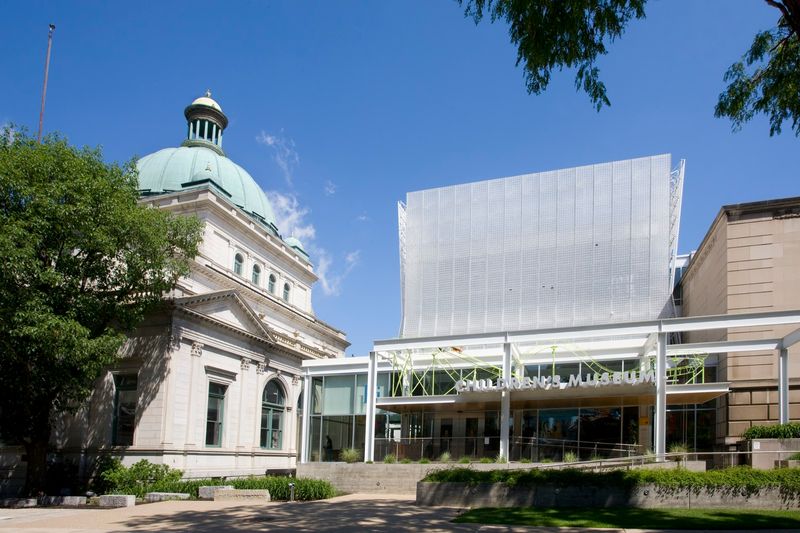
Two historic buildings and a glass bridge between them make the entrance a little confusing at first, and I mean that fondly.
The Allegheny Post Office Building and the Buhl Building were joined by a modern addition, and in 2006 the museum earned Silver LEED certification for its green design. More than 300,000 visitors pass through each year, so the place has learned how to handle a crowd.
Doors open at 10 AM daily and close at 5 PM. Buying tickets online is smart, but plan to check in at the desk for wristbands anyway, so build in a little buffer time.
Weekday mornings felt calmer than weekend afternoons, which surprised nobody. If a Steelers game is happening nearby, the parking lot fills fast with fans, so arrive early or look for other lots on the North Side.
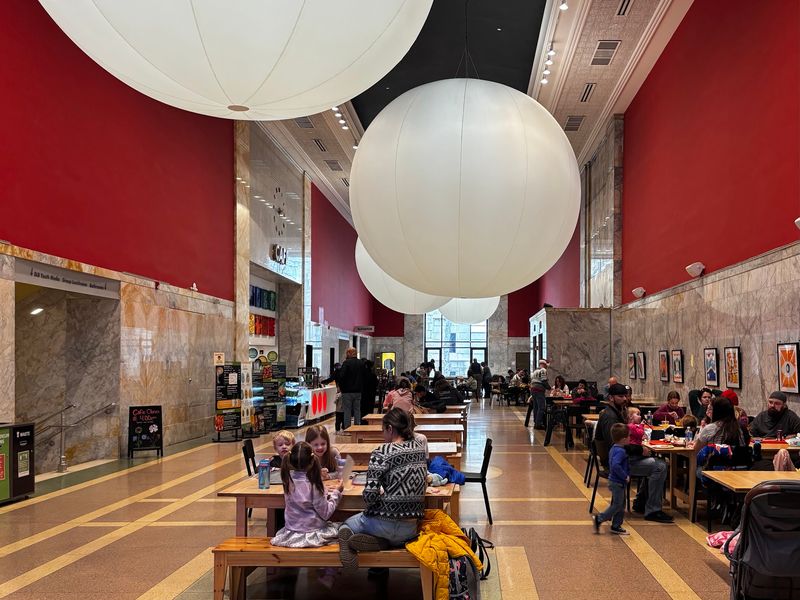
A cafe sits on the main floor with a kid-friendly menu, including vegetarian options and a handwashing sink designed for messy hands. Packing snacks is never a bad backup plan.
Right next door, MuseumLab serves youth and teens aged ten and up with art, technology, and learning experiences. If you are traveling with an older sibling who breezes through the main building, that is the place to head.
Two to three hours suits most families. I stayed longer than planned and still missed rooms, which tells you everything about why this museum earned first place in the country.
Address: 10 Children’s Way, Pittsburgh, Pennsylvania 15212
