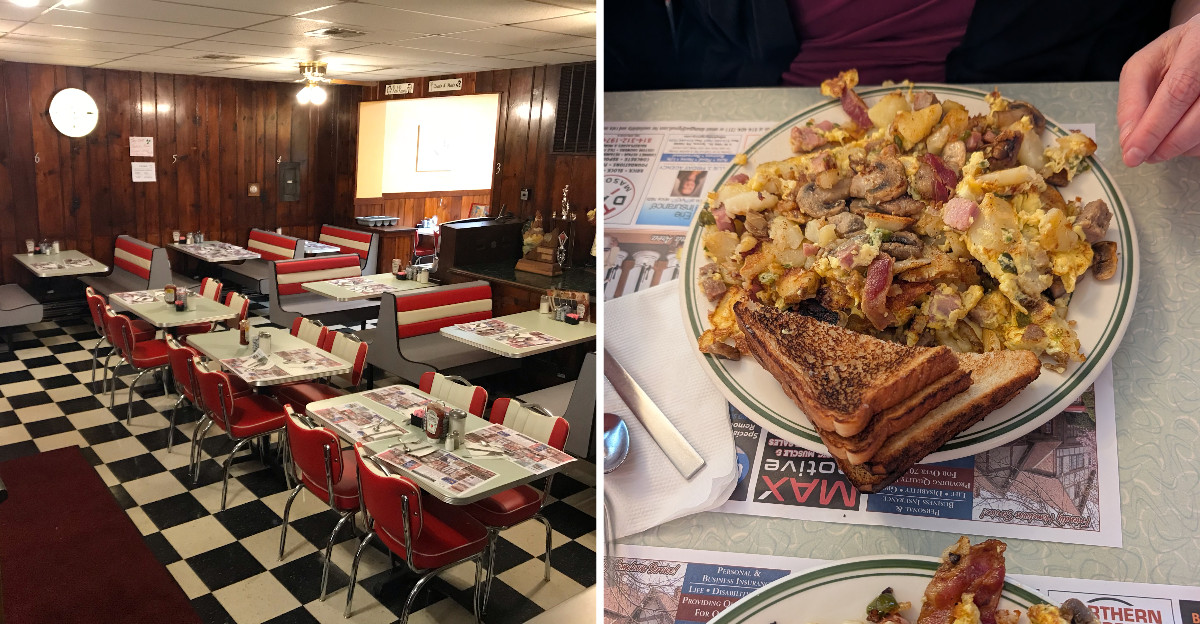
Modest at first glance, a corner building in a Pennsylvania railroad town draws a line of people that tells you everything before you even see the menu. Since the 1930s, this diner has been feeding the neighborhood with coffee that never seems to empty and cooks who move like they have done this ten thousand times.
Four generations of the same family have kept it running, and the whole place still feels like the town shows up every morning. Seats open up fast, the eggs arrive hot, and the conversation hums around you.
Walking in for breakfast and leaving with a real appreciation for what a family can build over decades is the kind of experience that sticks. Plenty of diners exist in Pennsylvania, but this one carries the weight of a railroad town’s history in every booth.
The coffee refills keep coming, and nobody rushes you out the door.
A Corner Building That Still Remembers 1956
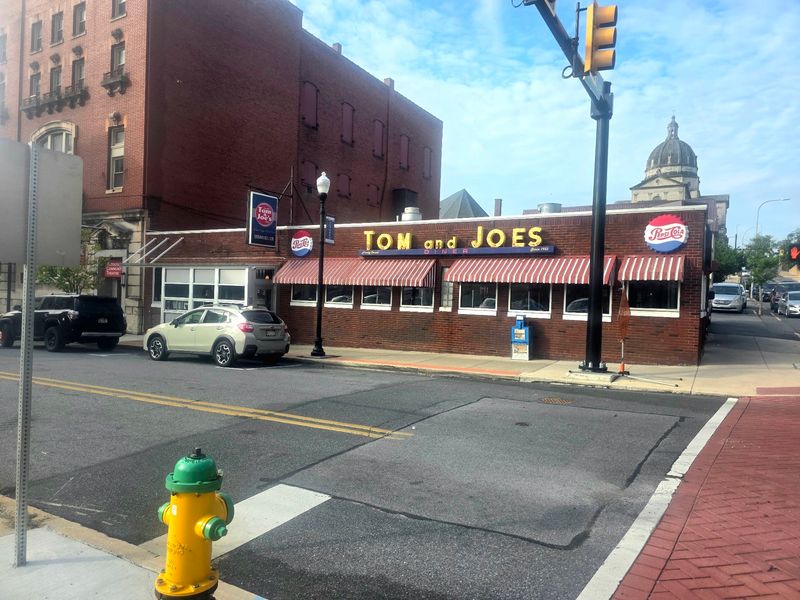
My first impression came before I even opened the door. The building sits right on the corner of 13th Avenue, brick and squat and completely unbothered by trends.
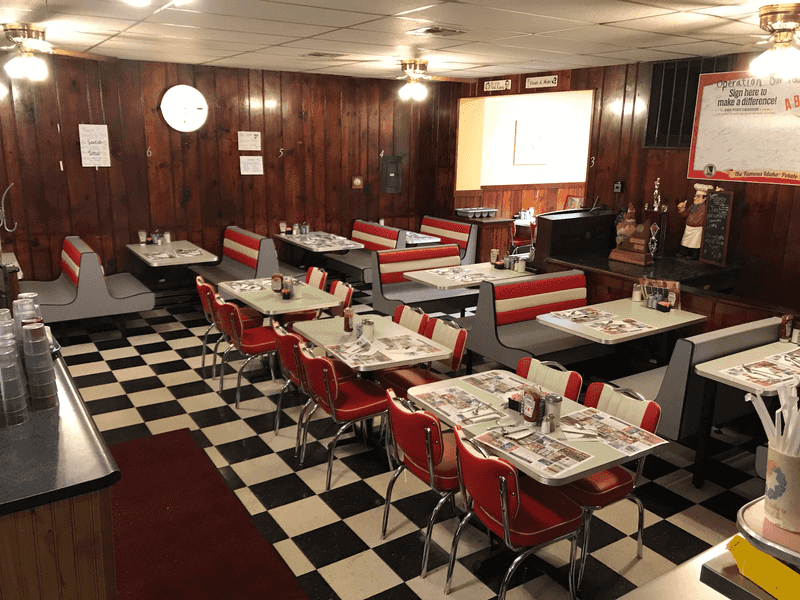
Here is a fun bit of history I loved learning about: when the place was rebuilt in 1956, the plan called for a stainless steel interior. Knotty pine went up instead, and those warm wood walls became part of the diner’s personality.
Some of the original hand-drawn engineering plans from that 1956 construction hang on the walls, which is the kind of detail most restaurants would never bother keeping.
Inside, the furniture has been updated over the years, but nobody sanded away the character. Mini jukeboxes still sit in the booths, little chrome time capsules that make you imagine decades of songs picked out by strangers.
The space is cozier than a modern restaurant, though roomier than I expected once I got past the entrance.
Parking along the street can get tight during the busy morning stretch, so I would suggest circling the block once rather than fighting for the closest spot. A short walk is a small price for a seat in a place like this.
Four Generations of the Batrus Family
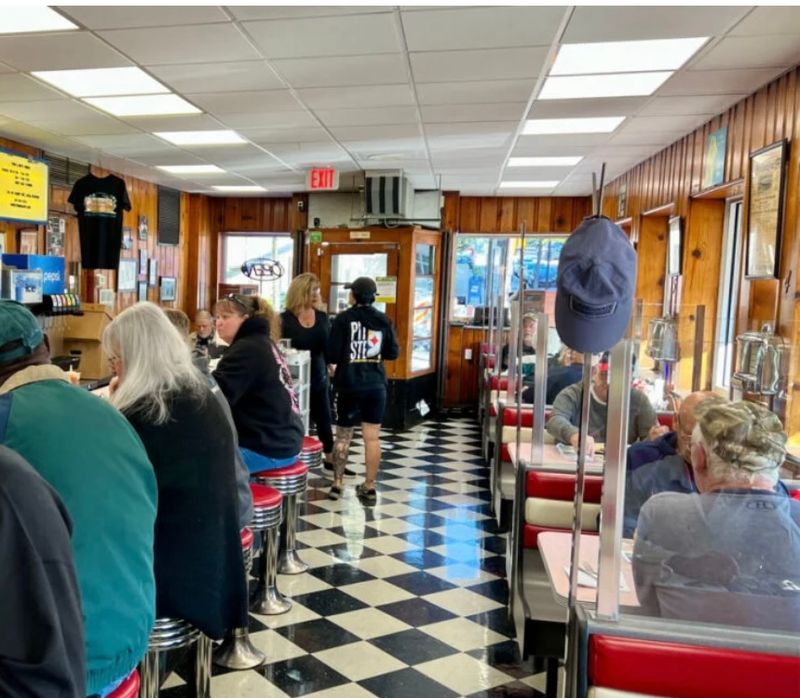
Brothers Tom and Joe Batrus opened the doors in December 1933, and the family never let go. Four generations later, the name over the door still belongs to the same bloodline.
George Batrus runs things now, carrying forward what his great-uncles started nearly a century ago. His father, known around town as “Big” George, is honored with photographs hung throughout the dining room.
I found myself scanning those pictures between bites, piecing together decades of faces and haircuts and aprons. They make the restaurant’s history feel surprisingly personal.
Instead of dates on a timeline, you see the actual people who spent their mornings behind the counter, greeted regulars by name, and kept the place moving through one generation after another.
That kind of continuity shows up in ways you cannot fake. Orders move fast, plates land in the right spots, and nobody seems flustered even when every seat is taken.
The diner has changed locations over its long life, but the current spot carries the shape and feel of the 1956 rebuild.
What struck me most is how the whole operation feels like something being cared for rather than simply run. A restaurant this old could easily coast on reputation.
Instead it feels tended, the way a family looks after something valuable that was handed to them with instructions to keep it going.
The Counter Is Where the Real Show Happens
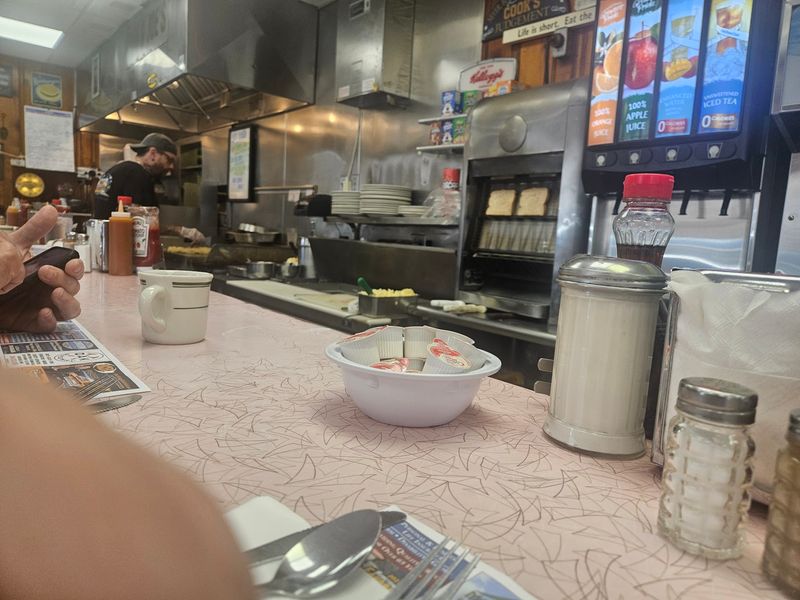
Grab a stool at the counter if you can. That is my honest advice, and it is the reason I will go back.
From that seat you get a clear view of the griddle, the toast station, and the constant motion of cooks who never seem to pause. Eggs go down, home fries get flipped, plates line up and disappear.
There is a rhythm to it that no open-concept modern kitchen has ever managed to copy.
The stools fill up quickly, especially after eight in the morning, when the room hits full stride. Regulars slide in, coffee appears without much ceremony, and conversations overlap across the whole length of the counter.
Booths are great if you are with a group, and I saw parties of six or seven handled without any drama. Solo visitors, though, belong at the counter.
Service moves fast here. You get greeted right away, seated quickly, and your order heads to the kitchen almost immediately.
If you have questions about the menu, the servers know it inside out and explain the options patiently, even during the morning rush.
Breakfast Plates Built for Railroad Appetites
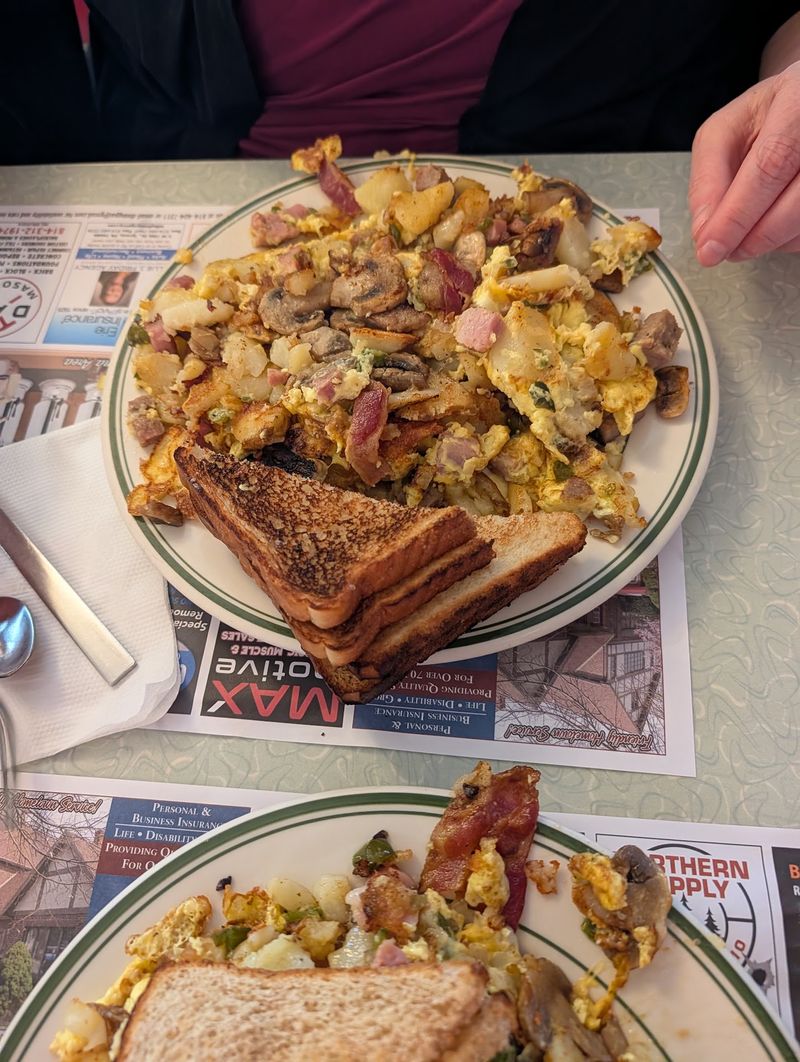
Everybody in Altoona talks about the “Mess,” and after one order I understood why. Scrambled eggs, home fries, and your pick of breakfast meat all pile together, often with onions and peppers folded in.
It arrives looking less like a dish and more like a small mountain. I ate about two-thirds of mine and considered that a victory.
It is hearty, uncomplicated breakfast food, built more around filling you up than making a carefully arranged impression on the plate.
Portions here lean generous across the board, which makes sense in a town built on hard physical work.
Classic plates fill out the rest of the breakfast menu. Eggs cooked the way you ask, crispy bacon, fluffy pancakes, thick French toast, and golden waffles all show up.
Regional favorites get their due too, including scrapple and creamed chipped beef, which is exactly the sort of thing that disappears from menus everywhere else.
Corned beef hash and chocolate chip pancakes have their own devoted fans. Home fries get mentioned constantly, and rightly so.
Nothing is fussy or overthought. Simple ingredients, cooked correctly, served hot, at prices that feel refreshingly reasonable for the amount of food landing in front of you.
Lunch Hours Bring a Different Crowd
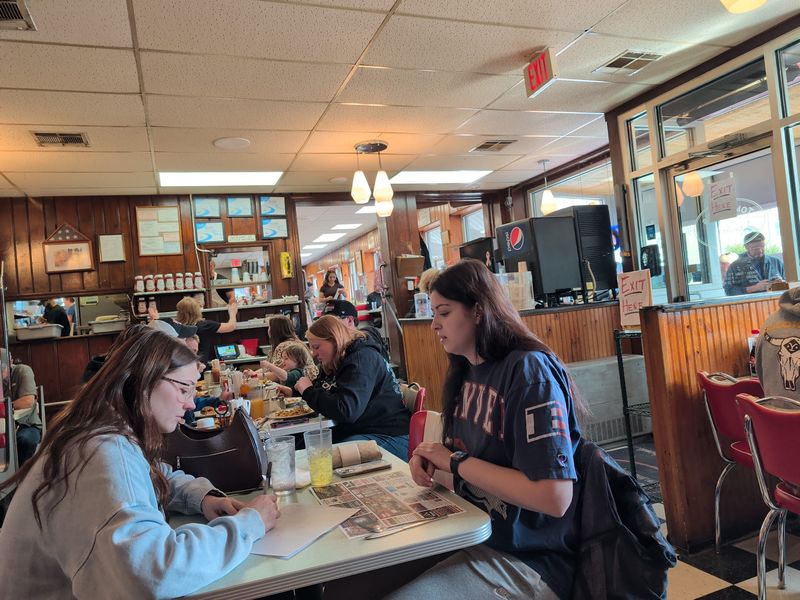
Something shifts around late morning. The breakfast rush thins, and a lunch crowd rolls in looking for something warm and filling before heading back to work.
Soups, salads, burgers, and sandwiches make up the midday side of the menu. Ham pot pie shows up as a local favorite, and pork with kraut speaks to the area’s deep German roots.
House-made pastries are worth asking about too, since they do not always last through the morning.
I appreciated that the kitchen stays focused on breakfast and lunch only. Closing in the early afternoon means the crew can pour everything into those hours rather than stretching thin across dinner service.
Doors open at seven every day. Weekdays run until two, Saturdays close at one, and Sundays wrap up at noon.
Plan accordingly, because showing up at three in the afternoon will leave you staring at a locked door.
If you want a calmer room and shorter wait, late morning on a weekday is your best window. Arrive before eight and you will likely walk straight to a seat.
Altoona’s Railroad Roots Run Through the Room
Altoona exists because of trains. The Pennsylvania Railroad built this city into a powerhouse of shops, yards, and engineering, and that history is still stitched into the streets.
Tom & Joe’s opened in the thick of that era and fed the people who kept the rails running. Nearly a century later, it is still feeding their descendants.
You feel that connection in the pace of the place, in the size of the plates, in the practical no-nonsense warmth of the whole operation.
Train fans have plenty of reasons to visit the area, from the famous Horseshoe Curve to the railroaders museum downtown. A breakfast here fits naturally into that kind of day.
When the Big Boy locomotive rolled through town recently, the diner was slammed with visitors, and the crew worked tirelessly to keep up with the crowd.
That tells you something about the role this restaurant plays. It is not a side attraction.
For a lot of people passing through railroad country, a stool at Tom & Joe’s is part of the itinerary, right alongside the tracks themselves.
National Attention Without Losing the Neighborhood Feel
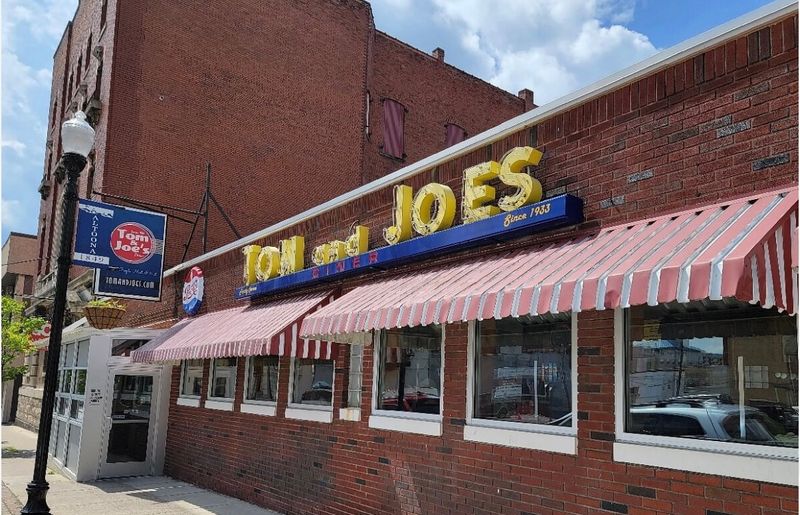
Recognition arrived without changing much of anything. Tom & Joe’s landed in the top ten of USA Today’s readers’ choice ranking for Best Roadside Diners in 2025, which brought visitors from well outside Blair County.
Despite that, the room still feels like a neighborhood spot. Locals fill the stools, servers move with easy confidence, and nobody is performing for cameras.
The diner has picked up a few modern conveniences along the way, including free Wi-Fi and online ordering for pickup or delivery.
Expect a short wait on weekend mornings. It moves faster than you would guess, because the staff turns tables efficiently without ever rushing anyone out.
Leaving with a full stomach, I kept thinking about how rare this kind of place has become. Four generations, one family, the same corner, the same knotty pine walls.
Altoona has something genuinely special here, and the people packing that counter every morning clearly know it.
Address: 1201 13th Ave, Altoona, Pennsylvania
