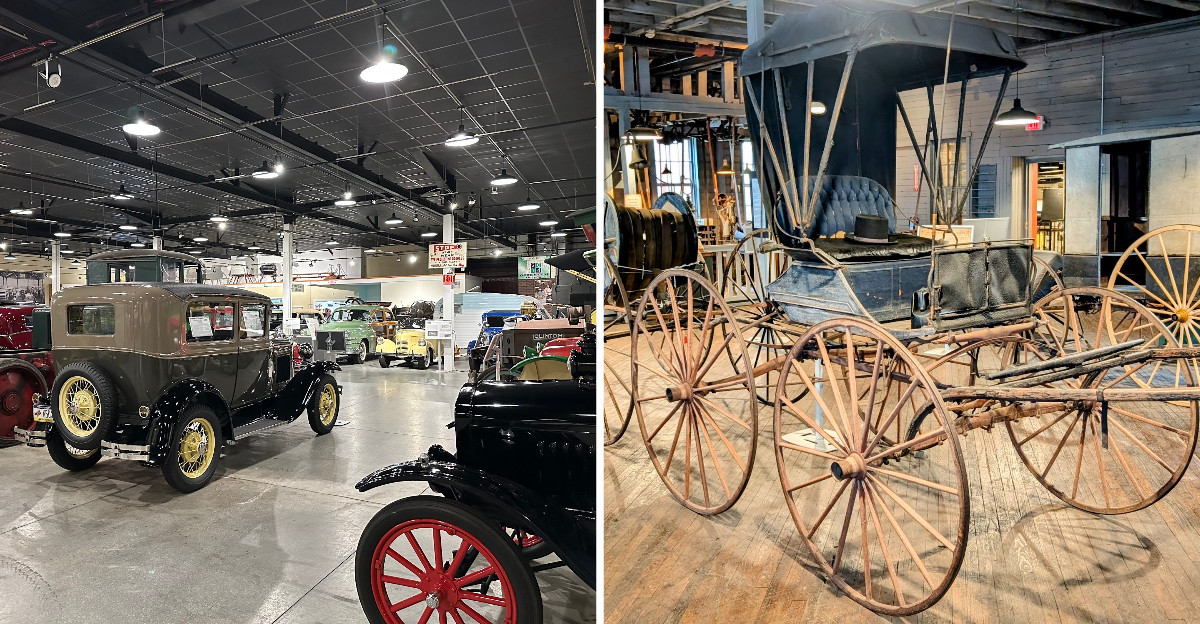
Brick factory buildings on a main street in Pennsylvania had been driven past more times than can be counted, always with the same promise to stop one day. When that day finally came, the reward was a factory floor where workers once hammered truck bodies into shape.
The vehicles that rolled out of those same doors now sit surrounded by the space where they were built. Air smells faintly of old wood and oil, and the floorboards creak in a way that feels honest rather than worn out.
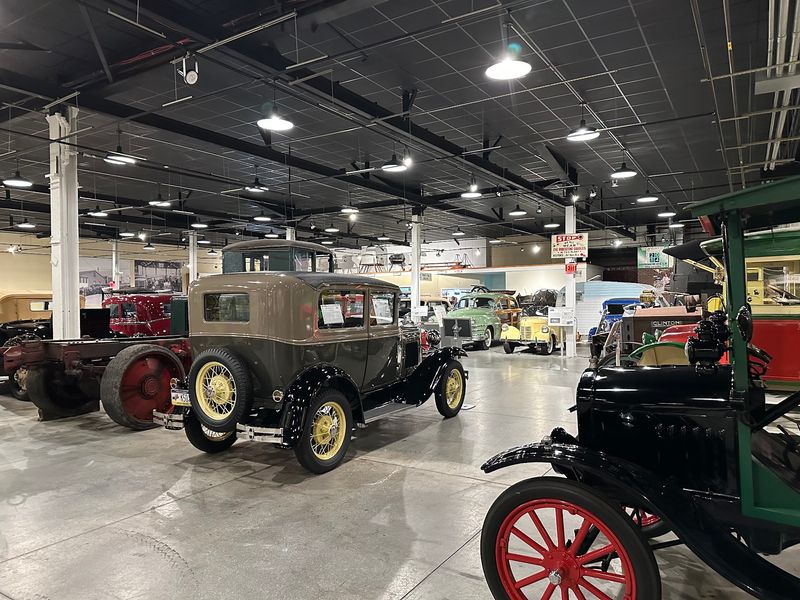
What surprised most was the range of it all, including delicate sleighs and battery-powered cars built before World War I. A quiet room of shiny cars was expected, but something closer to a time capsule of Pennsylvania industry appeared instead.
Two hours disappeared without notice, and the return trip was already being planned on the way out. Machines, tools, and half-finished projects fill the corners, and every one has a story attached.
A Factory That Never Stopped Making Things for 118 Years
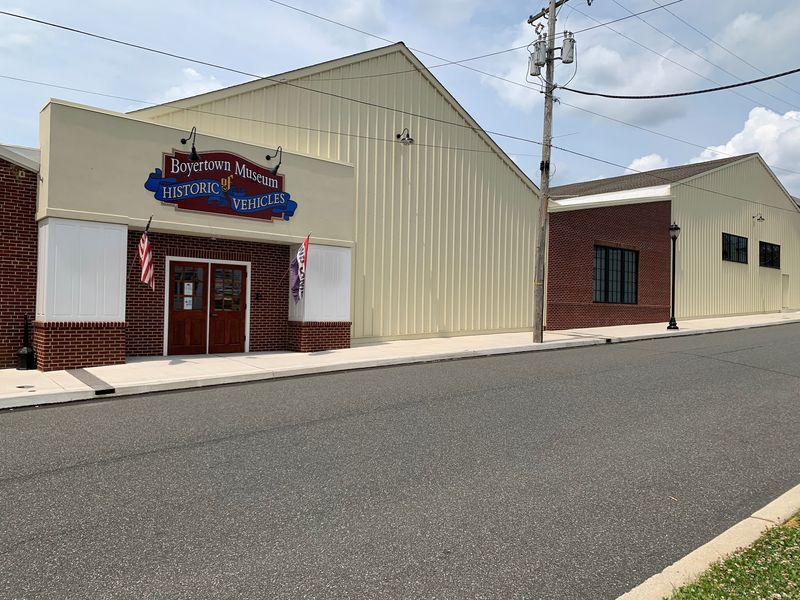
Most museums move into buildings that used to be something else, like a bank or a school. Here the building is the story.
Vehicle making started on this spot in 1872 with the Jeremiah Sweinhart Carriage Factory, turning out buggies, wagons, carriages and sleighs for local families and businesses.
The work never really stopped. By 1926 the operation was known as the Boyertown Auto Body Works, and the shift from horse power to horsepower happened right inside these walls.
Production continued until 1990, which adds up to 118 straight years of building vehicles on one property.
I kept looking up at the ceiling beams and the old window frames while walking through, because you can still read the industrial bones of the place. Nothing has been scrubbed into a sterile white box.
The main gallery sits inside the former main factory building, so the floor beneath your shoes carried assembly work for decades.
What makes it land emotionally is simple. Some of the delivery trucks parked on display were actually built in this exact building, then sold, used, retired, and eventually brought home.
That circle feels rare. Very few places let you stand where something was made and look at the finished object at the same time, in the same light.
Delivery Trucks That Came Back Home
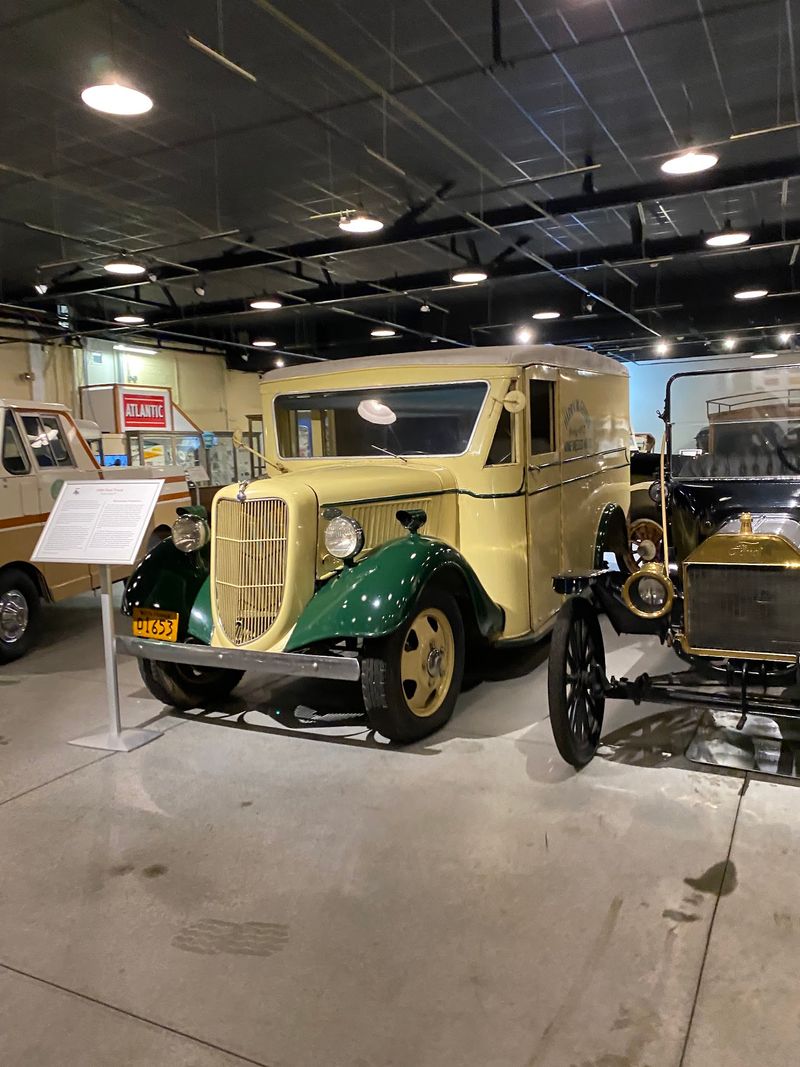
Bread trucks, milk trucks, mail trucks. The Boyertown Auto Body Works made its name on the boxy workhorses that rumbled through neighborhoods every morning, and seeing a row of them lined up is oddly moving.
These were not glamour vehicles. They were designed so a driver could stand up, grab a crate, hop out, and keep moving.
The multi-stop delivery body was the company’s specialty, and the shapes still look practical in a way modern vans do not quite match.
My favorite detail was reading the small placards and realizing certain trucks were assembled a few dozen feet from where they now sit. One review I read before visiting came from someone who owns a Boyertown stepvan and made the trip like a pilgrimage, which tells you how loyal these machines made people.
Ice cream trucks are part of the story too, including bodies built for Mr. Softee. If you grew up chasing a jingle down the street in summer, that section hits a nostalgic nerve.
During World War II the plant turned out military ambulance bodies, a serious pivot for a company known for dairy routes. Standing between a cheerful ice cream truck and a wartime ambulance gives you a quick lesson in how factories adapt when the country asks them to.
Early Electric Cars That Beat Tesla by a Century
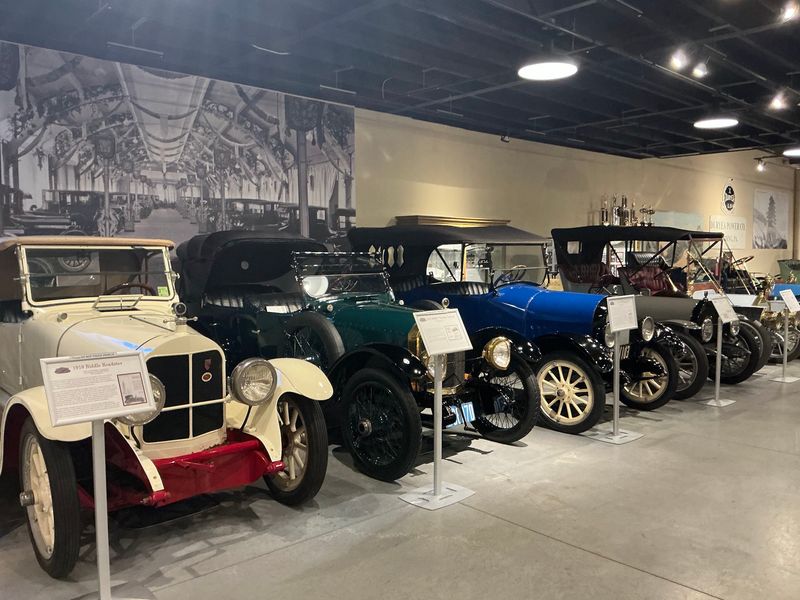
Here is the fact that stopped me cold: a large chunk of the collection is made up of electric vehicles built in the early 1900s. Not concepts.
Real cars people bought and drove.
Some of them look like fancy carriages that lost their horses, with tall skinny wheels, upholstered benches and tiller steering instead of a wheel. They were quiet, clean and easy to operate, which made them popular for city errands before gasoline engines took over the market.
Visitors mention the electric car display constantly, and I understand why. We tend to think battery cars arrived in the last twenty years, then you walk past a machine from 1910 that ran on electricity and the whole timeline rearranges itself in your head.
Pennsylvania played a bigger role in early automaking than most people realize. Dozens of manufacturers operated across the state, and the museum leans hard into that regional pride by focusing almost entirely on vehicles built here.
Bring your curiosity and take time with the signage. The explanations cover charging, range and why these cars eventually faded, and the information is written plainly enough that kids can follow along without getting bored.
The Blacksmith Forge and the Belt-Driven Machine Shop
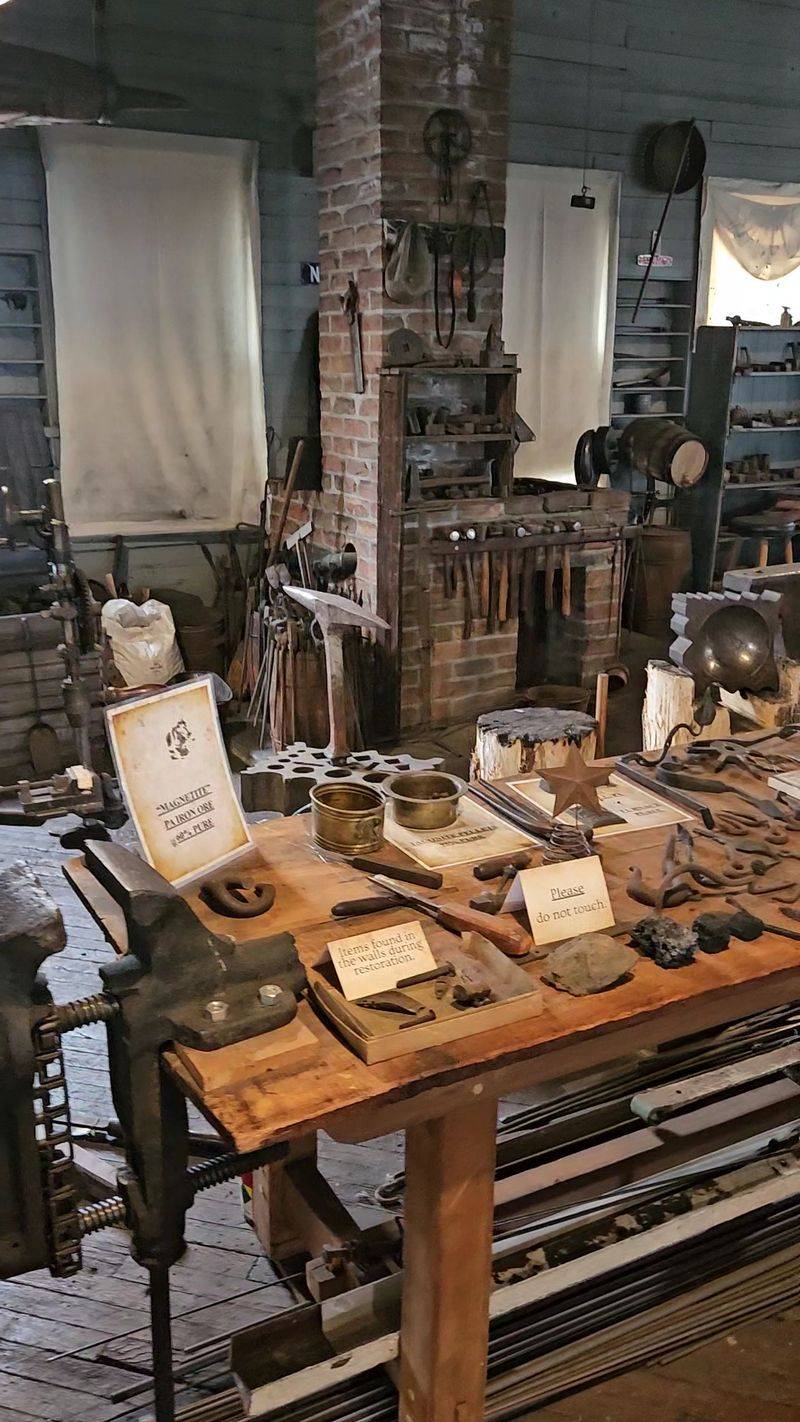
Upstairs, things get louder and dustier in the best possible way. A reconstructed blacksmith forge sits alongside an early belt-driven machine shop that came from the original Sweinhart carriage operation, and both are set up to actually work.
Leather belts run overhead, connected to shafts that once powered lathes and drills from a single engine. Before electric motors sat inside every tool, this was how a shop got things done, and seeing the layout explains it faster than any textbook diagram.
On Saturdays a blacksmith is often working in the carriage section, hammering metal and answering questions. I visited midweek and missed it, which remains my one regret.
If your schedule allows, aim for a Saturday.
The tools themselves are worth slow looking. Tongs, hammers, forms and jigs hang exactly where a worker would have reached for them, and the wear on the handles tells you these were used, not decorated.
What clicked for me was the connection between rooms. Down on the main floor you see finished vehicles, polished and posed.
Up here you see how wheels were bent, iron was shaped and bodies were framed. One space without the other would only tell half the story of what this place was.
Carriages, Wagons and Sleighs From the Horse-Drawn Days
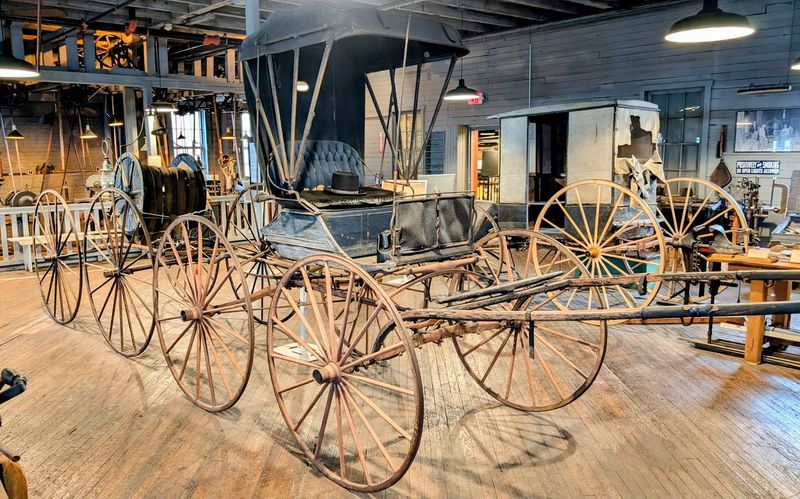
Long before anyone worried about engines, this property was all about horses. The carriage house section holds buggies, farm wagons, formal carriages and a surprising number of sleighs with curved runners and painted trim.
Sleighs get mentioned often by visitors, and once you see them together you understand the appeal. They look impossibly light, almost like furniture that decided to go outside in the snow.
I spent longer here than expected because the craftsmanship is so visible. Hand-bent wood, thin spoked wheels, pinstriping applied by someone with a steady hand and a lot of patience.
Nothing was stamped out by a machine.
Each vehicle also came with a job. Some hauled produce to market, some carried families to church, some were built for short winter trips between farms.
The variety shows how much daily life depended on what a shop like Sweinhart could produce.
There is a quiet lesson tucked in this room too. The same workers who built these carriages, or their sons, later built truck bodies for motorized chassis in the very same complex.
Skills transferred, the product changed, and the business survived a transition that wiped out plenty of competitors across the country.
Fegely’s Diner, a 1921 Gas Station and a Tiny Tourist Cabin
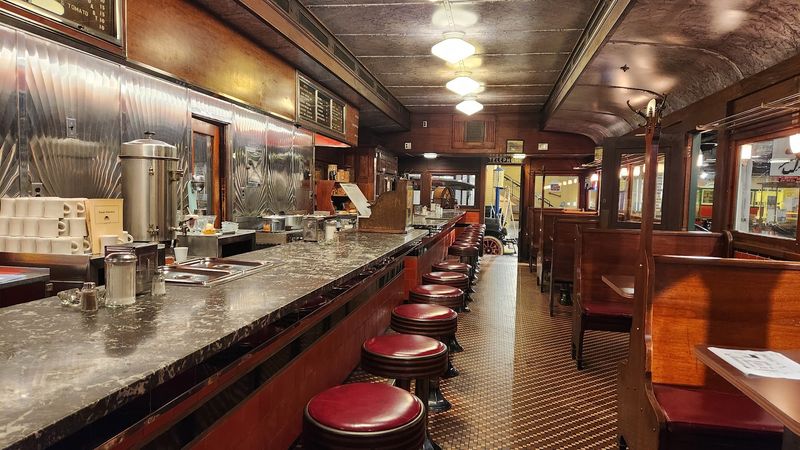
Not every exhibit here has wheels. Tucked into the gallery you will find a 1938 Fegely’s Reading Diner, restored so carefully it looks ready to open for breakfast.
Stepping up to the counter is a strange little thrill. The stools, the fixtures, the tight compact layout, all of it captures a style of roadside eating that has mostly vanished from American highways.
Nearby sits a 1921 Sunoco gas station with period pumps, plus a 1920s tourist cabin, the kind of tiny overnight rental that existed before motels lined every route. Together they recreate the world drivers actually traveled through.
I liked that the museum thought about context. A car alone is just an object.
Put it next to the diner where the driver ate, the station where they filled up and the cabin where they slept, and suddenly you are looking at a whole way of life.
Photographers will be happy here. The garage setup and storefront facades make for great pictures, and the lighting inside is even enough that you do not need anything fancy.
Where else can you find a diner, a service station and a roadside cabin all standing indoors under one factory roof? It is a genuinely odd combination, and it works.
The Volunteers Who Make the Whole Thing Click
Ask one question and you may get a fifteen minute answer, and honestly that is the best part. The docents on the floor know these vehicles the way people know their own neighborhoods, including the small details that never make it onto a placard.
Several visitors describe getting what felt like a private tour simply by showing interest. That kind of attention is hard to find, and it turns a walk-through into a conversation.
The museum itself was founded in 1965 by Paul and Erminie Hafer. Paul served as president of the Boyertown Auto Body Works, a company his father helped start, so the collection began as a personal passion rather than a business plan.
It stayed a private collection for years before moving into the former factory at Walnut and Third Streets in 2000, after renovations that followed the plant’s 1990 closing.
Families do well here. Kids get toys and keychains in the shop, there are activities like a vehicle contest with certificates, and the floor is easy to navigate without anyone getting tired of reading signs.
Plan on roughly two hours, park for free in the lot, and go on a Saturday if you want the blacksmith working.
Address: 85 S Walnut St, Boyertown, PA 19512
