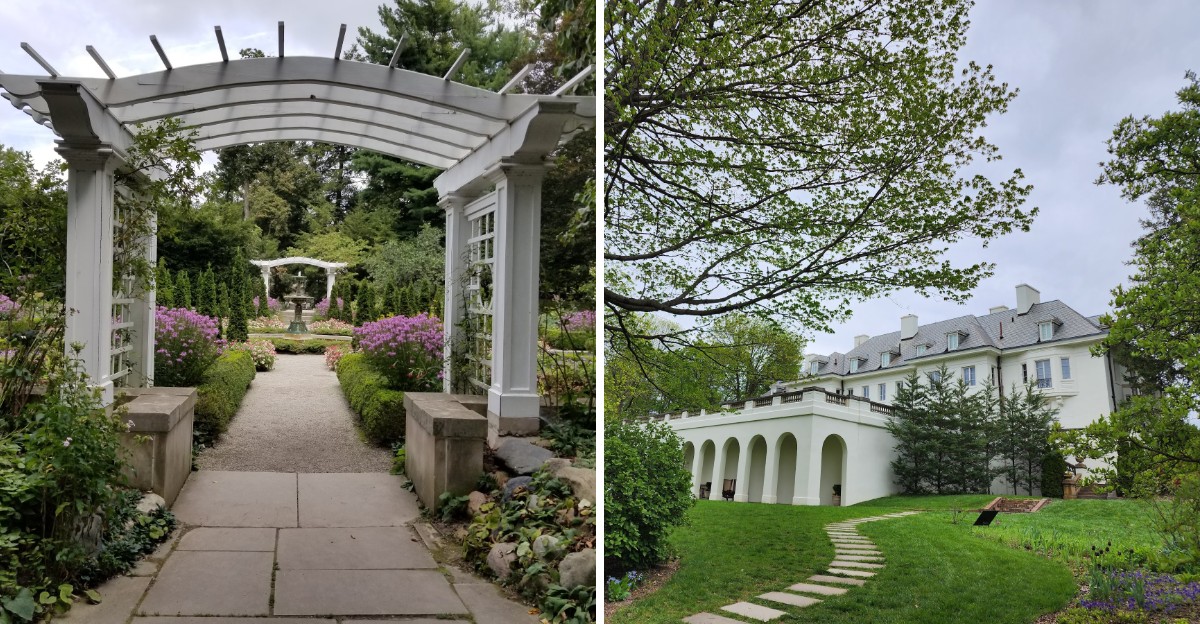
The yard is doing suspiciously sophisticated things for a yard. Paths bend exactly where they should.
Trees frame the views. Fountains appear like punctuation marks.
This Indiana estate spans 26 acres, and its landscape design shares a lineage with the tradition behind Central Park. That makes the grounds more than attractive scenery.
They were designed to shape the way visitors move through the property. The house adds the human part of the story.
Furniture remains. Books remain.
The rooms still reflect the family that occupied them in the 1930s. It is a strange combination of landscape architecture and everyday history.
One moment you are studying a grand view. The next you are wondering why somebody left that book on the shelf.
A Garden Family Tree That Reaches Manhattan
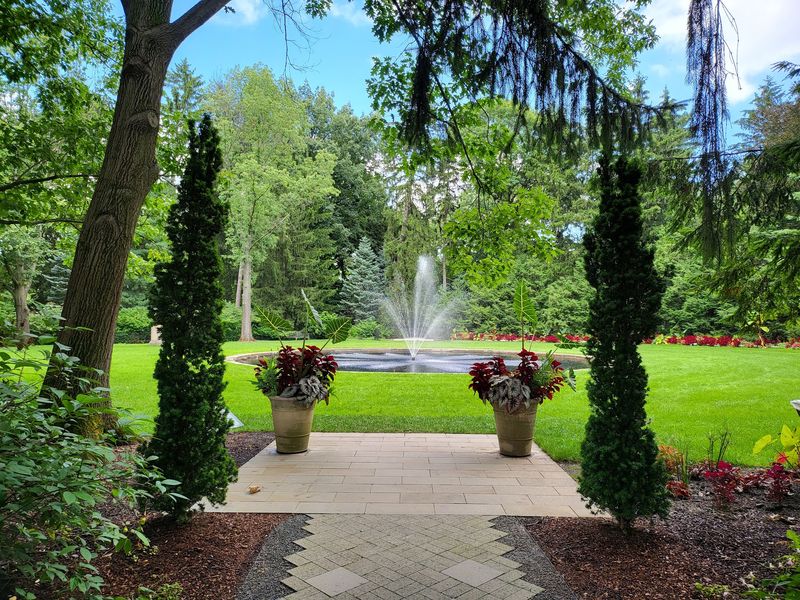
Here is the fun part most visitors miss. The gardens at Oldfields were reshaped in the 1920s by Percival Gallagher, a designer with the famous Olmsted Brothers firm.
That firm grew from the work of Frederick Law Olmsted Sr., the man who created Central Park with Calvert Vaux.
So the same design thinking that shaped a giant New York green space also shaped this Indiana estate. Between 1920 and 1925, Gallagher blended neat, formal areas with looser, natural ones across all 26 acres.
Mixing tidy and wild was an Olmsted trademark.
The story behind it is sweet, too. Hugh Landon and his second wife, Jessie, hired Gallagher after Jessie admired an Olmsted garden in Maine during her honeymoon.
Apparently a honeymoon souvenir can be an entire landscape.
Keep an eye out for that contrast while exploring. A clipped hedge might give way to a curving path under tall trees, then open onto a wide lawn.
None of it happened by accident.
History fans should spend a few minutes reading the signs around the grounds. They point out where the original plan still shows through after decades of careful restoration by Newfields.
Spotting those details turns a simple stroll into a bit of a treasure hunt.
Bring a phone loaded with a Central Park map for fun comparisons. The scale is very different, yet the same love of surprise views and gentle curves shows up in both places.
Twenty-Two Rooms of 1930s Living
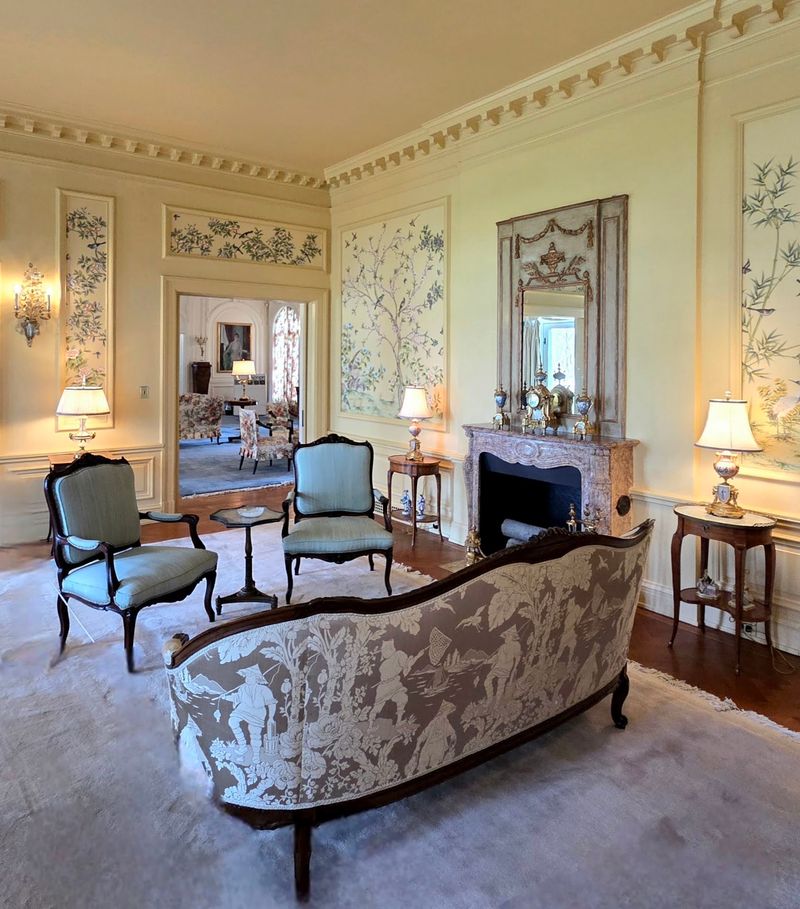
Nearly 90 percent of the furniture inside Lilly House is original. That means the chairs, lamps, and trinkets on display were actually used by the Lilly family, not borrowed from a warehouse to look old.
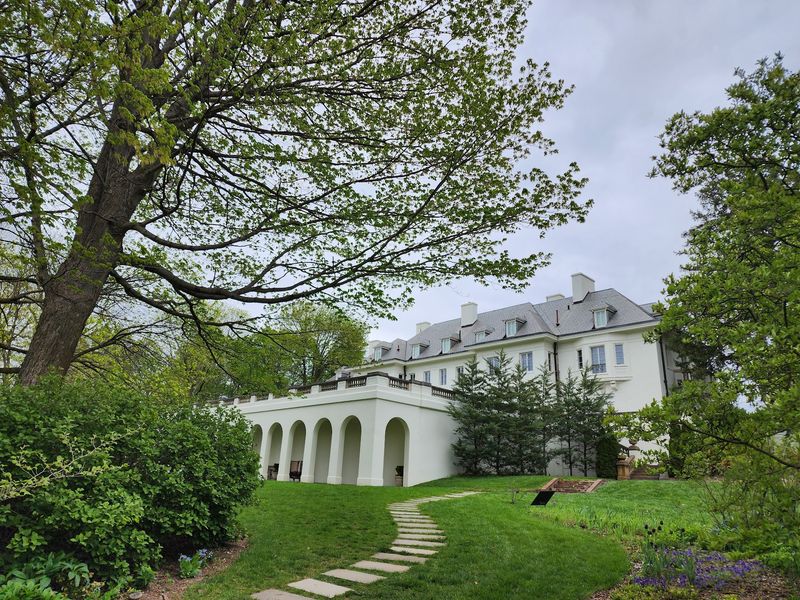
The 22-room mansion was built between 1909 and 1913 for Hugh McKennan Landon in the French Châteauesque style. Josiah K.
Lilly Jr., a well-known Indianapolis businessman and generous giver, bought the estate in the early 1930s. He then remodeled and expanded it through the 1930s and 1940s.
Today the main level shows eight furnished rooms. Visitors move through the stair hall, great hall, game room, library, drawing room, loggia, dining room, and kitchen.
Each one feels lived in, as if the family stepped out for lunch.
The vintage kitchen and pantry deserve extra time. Shiny old fixtures and storage spaces show how a big household was fed long before modern gadgets showed up.
It is oddly satisfying to look at.
Docent-led tours are offered, and self-guided visits work just as well for people who like to linger. Guides share stories about the family and quirky features of the house.
Ask questions, since the staff tends to know the little details.
On hot summer days, the cool indoor rooms make a welcome break from the sunny gardens. Plan the house tour for midday to dodge the warmest hours outside.
Gold Coins, Tiny Soldiers, and Ship Treasures Upstairs
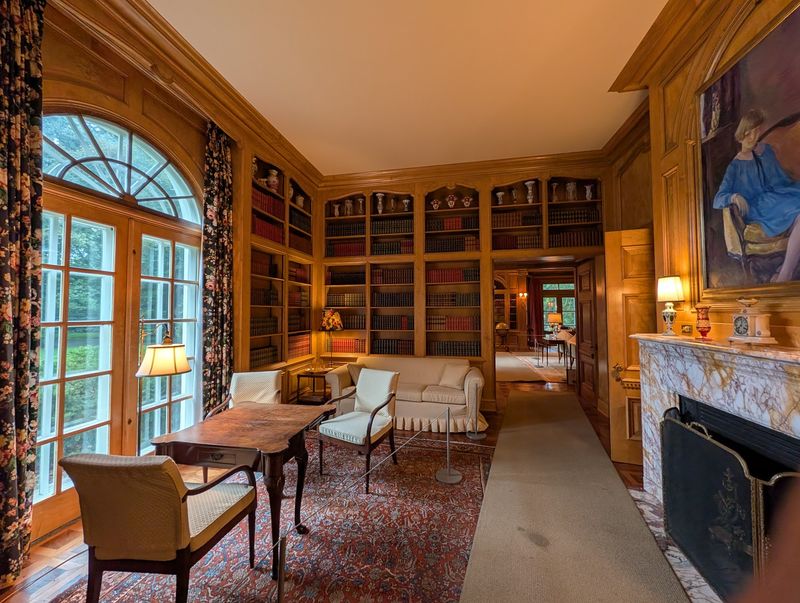
Every family has a collector, and J.K. Lilly Jr. was a serious one.
His interests ran from rare books to gold coins to military miniatures, and he clearly loved anything connected to the sea.
The upper level of the house shares a sampling of those collections. Small painted soldiers line up in neat rows, while nautical items hint at a fascination with ships and ocean adventures.
The variety is surprising.
Exhibits on this floor also explain the American Country Place era. Between about 1885 and 1939, wealthy business owners built large estates outside crowded industrial cities.
Oldfields became one of the finest examples of that movement in the Midwest.
Interactive displays help younger visitors stay curious. Kids can learn how a country estate worked and what daily life looked like in early 1900s Indianapolis.
Even adults might find themselves poking at buttons.
Hidden touches add to the charm. Some visitors have pointed out secret doors and a garage holding a vintage car, which feels straight out of a mystery novel.
Keep eyes open for clever corners.
A good plan is to tour the main floor first, then head up for context. Seeing the collections after the furnished rooms makes the person behind them feel real.
Suddenly the library makes more sense, and so does the man who filled it.
Give this floor at least half an hour. Rushing would mean missing the tiny stuff.
Down Into the Ravine Garden
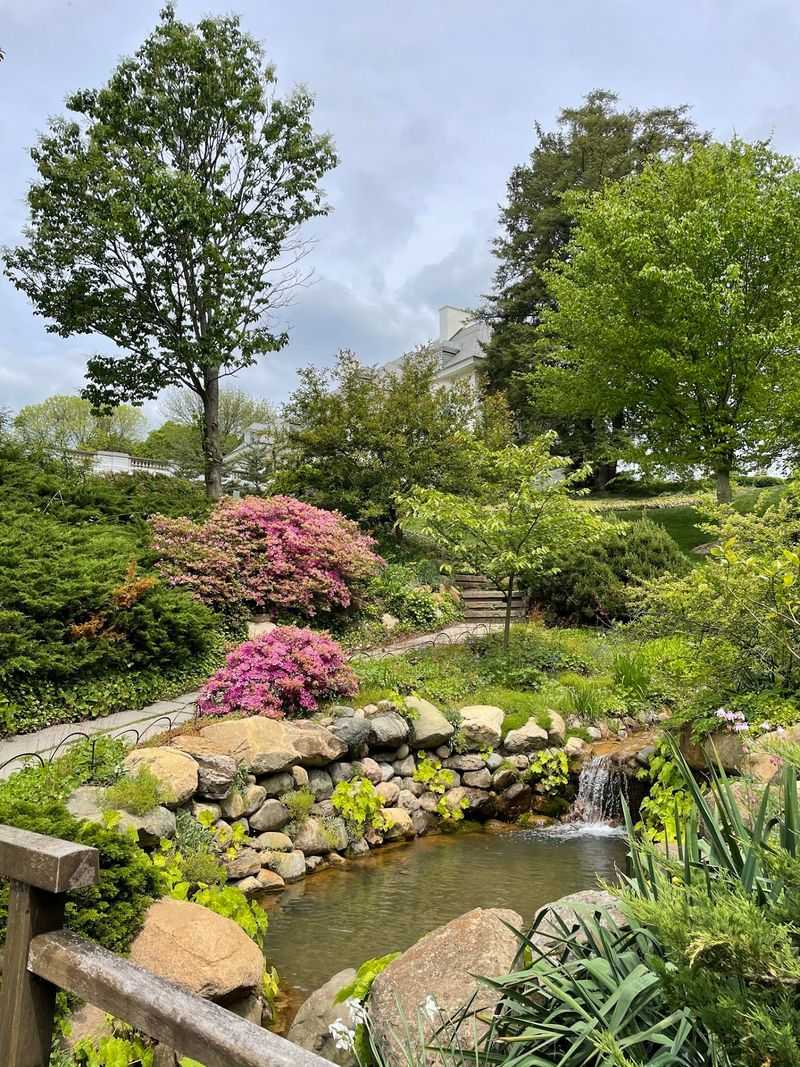
Forty feet down, the mood changes completely. The Ravine Garden, sometimes called the Rapp Family Ravine Garden, sits in a deep natural fold of land just west of the house.
Gallagher designed it as a wild garden. Flowering trees, shrubs, and perennials grow along a rock-lined stream, and water tumbles into a chain of small pools.
The sound alone is worth the walk.
A rustic bridge crosses the ravine. From there, it is easy to watch the water rush below while sunlight flickers through the leaves overhead.
Photographers tend to slow down right here.
The space was carefully replanted during restoration. Newfields worked to bring back the original character, so the plants feel natural without being messy.
That balance is harder than it looks.
For the best overview, stop first on the western terrace of the house. From that spot, the ravine and the bluffs of the White River stretch out in a sweeping view.
Then head down and see it all up close.
Shoes matter on this part of the visit. Paths dip and curve, and a few spots may be damp after rain.
Sneakers with good grip beat sandals every time.
Spring brings blooming trees and fresh green ferns. Autumn turns the ravine golden and red.
Honestly, there is no bad season down here, only different ones.
The Grand Allée Is Basically a Green Hallway
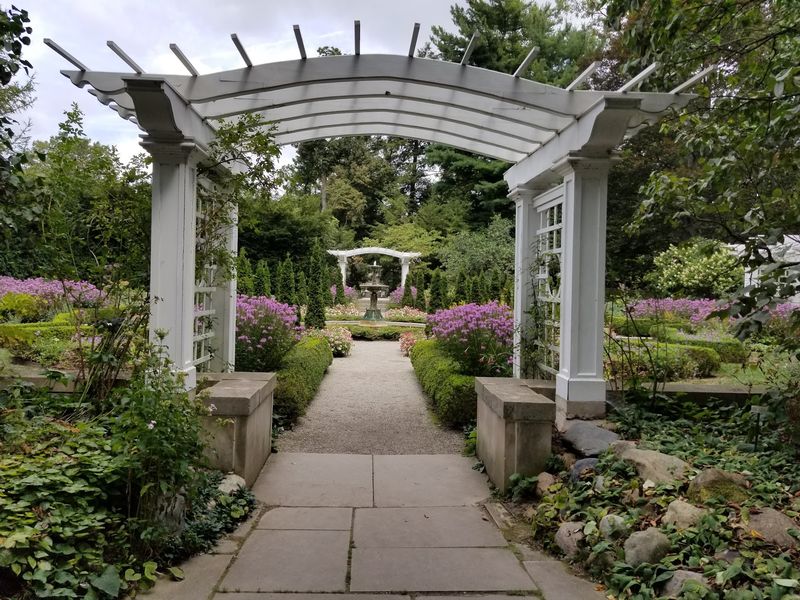
Picture a long hallway with no ceiling, just leafy branches. That is the Grand Allée, often called the backbone of Oldfields.
This formal vista stretches out in a straight line, framed by rows of trees on both sides. At the far end, a fountain pulls the eye forward like a prize at the end of a race.
Kids tend to sprint toward it.
Shade is the secret weapon here. On warm afternoons, the tree-lined paths stay cooler than open lawns, which makes them perfect for slow walks and quiet chats.
It is a great spot to rest tired legs.
Close by, the Wood Formal Garden offers a different flavor. Its symmetrical beds, circular fountain, arbor trellises, and two Hermes sculptures give a classic, almost storybook feel.
Shaded benches invite a pause.
A limestone bridge, steps, and paths connect these formal areas. Following them feels like moving through rooms in an outdoor house.
Each turn reveals another neat view.
The Four Season Garden, created by landscape architect Anne Bruce Haldeman, adds color throughout the year. Something is usually blooming, or at least looking interesting, whatever the month.
Snap photos from the house end of the allée for the full effect. The long lines of trees create a natural frame.
Midmorning light tends to make the greens glow without harsh shadows.
Orchids Packed Into a Historic Greenhouse
Right next to the mansion sits a small glass building bursting with color. The Madeline F.
Elder Greenhouse is not huge, yet it is crammed with plants, especially orchids.
Purple, white, yellow, and spotted blooms hang from every direction. Tropical leaves crowd the walkways, and the air feels warm and slightly damp.
It is a mini jungle in the middle of Indiana.
The greenhouse dates back to the estate’s earlier days, so the structure itself adds a vintage charm. Old glass panes and metal frames make a nice backdrop for photos.
Plant lovers will want extra time here.
Space gets tight when crowds arrive. Visiting earlier in the day, close to opening at 11 am, usually means more room to look around.
Weekdays can be calmer too.
Rather than feeling stiff or overly neat, the greenhouse has a relaxed, lived-in vibe. Plants spill over edges and climb where they please.
That friendly messiness is part of the fun.
Winter visits are a treat. While the gardens outside rest under gray skies, the greenhouse stays bright and green.
It is a cheerful escape on a chilly afternoon.
Bring curiosity about plant names. Small labels often identify species, making it easy to learn something new.
Who knew orchids came in so many shapes?
Holiday Lights, Newfields Art, and Easy Planning Tips
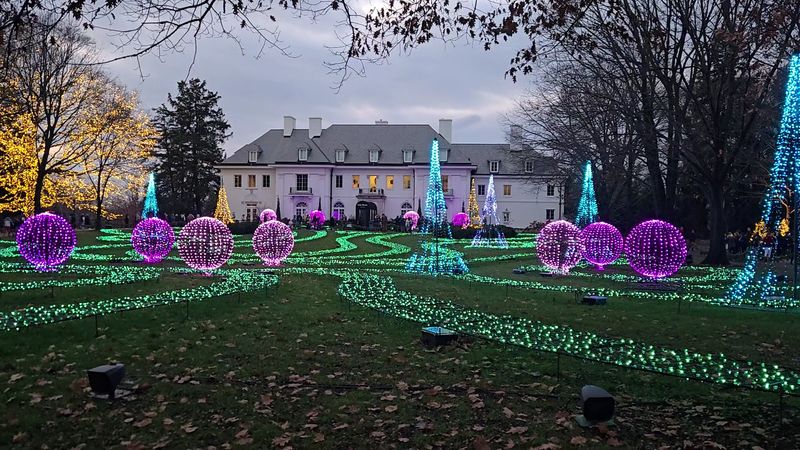
When December rolls around, the front lawn turns into a glowing show. Lights synced to music dance across the estate, and the mansion becomes part of the display.
Families bundle up and stroll with warm cocoa.
Halloween events have also used the house in clever ways. Seasonal programming changes, so checking the Newfields calendar before a trip is smart.
Each year can bring something fresh.
Oldfields sits on the larger Newfields campus at 4000 N Michigan Rd, Indianapolis, IN 46208, alongside the Indianapolis Museum of Art. A same-day Newfields ticket covers the estate.
That makes it easy to pair paintings in the morning with gardens in the afternoon.
Hours generally run from 11 am to 4 pm Tuesday through Sunday, with later Saturday hours until 8 pm. Mondays are closed.
Free parking is available, which is always a relief. Wear layers, carry water, and leave room for snacks from the food spots on campus.
A giant soft pretzel never hurts.
The estate earned a spot on the National Register of Historic Places in 2000 and became a National Historic Landmark in 2003. That honor reflects how carefully the place has been protected.
Visiting helps keep the story alive.
Give the whole campus a full day if possible. Rushing through would be a shame.
