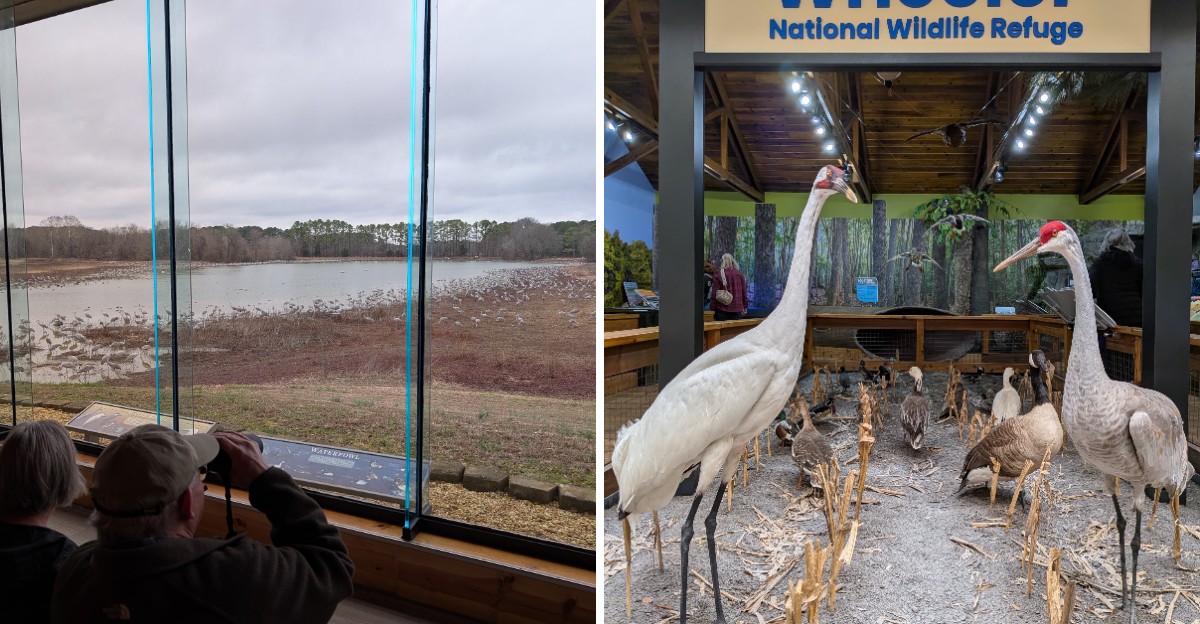
The sky gets noisy before winter is even halfway over. First comes the rattling.
Then another call answers it. Then another.
Soon the wetlands sound less like a quiet nature preserve and more like a stadium warming up before kickoff. This Alabama refuge becomes a winter headquarters for tens of thousands of cranes, with Sandhill Cranes covering fields and occasional Whooping Cranes joining the crowd.
Then the people show up too. A free three-day Festival of the Cranes turns the migration into a full weekend of birding, activities, and very serious binocular use.
The strange part is how lively the whole thing becomes. The birds arrive.
The festival follows. And suddenly January has a much better social calendar than expected.
A Sky Full of Sandhill Cranes
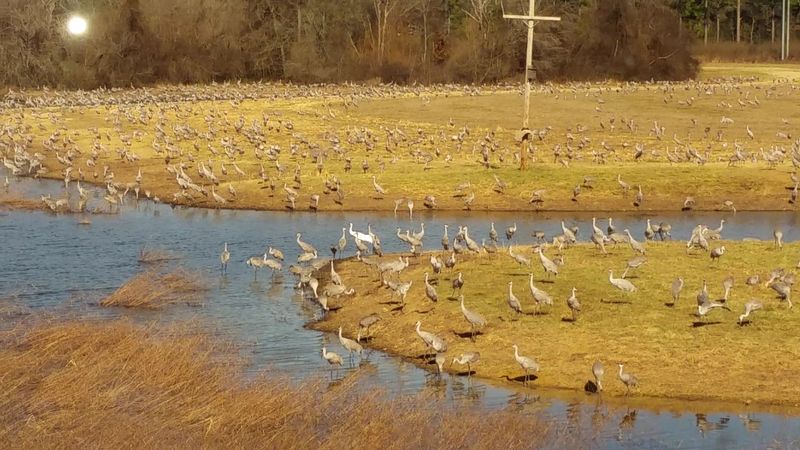
Three birds. That was the whole Sandhill Crane count at Wheeler National Wildlife Refuge back in 1995.
Today, the number has climbed to peaks between 17,000 and 32,000 in recent winters, which is a comeback story worth seeing in person.
Sandhill Cranes start showing up around mid-November and hang around until mid-February. Their numbers usually peak in late December and early January, right when the Festival of the Cranes rolls into town.
Timing could hardly be better.
These tall gray birds wear a bright red patch on their heads, almost like a tiny cap. Their calls sound like a wooden rattle mixed with a trumpet.
Once a flock lifts off together, the noise can drift across the fields for a long way, and plenty of visitors hear the birds long before spotting them.
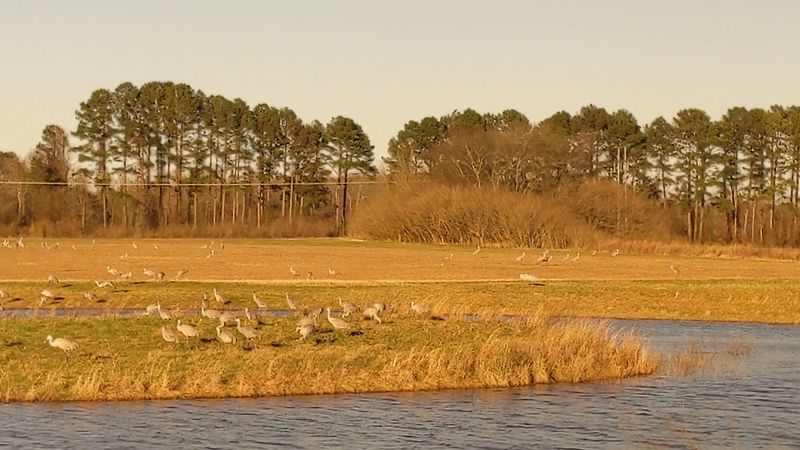
Cranes spend their nights roosting in shallow wetlands along the Tennessee River. After sunrise, they fly out to nearby farm fields to feed on corn and other grains, which give them the energy needed during chilly months.
Late in the afternoon, they head back to their roosts.
For the biggest crowds of birds, aim for the middle of the day near the Visitor Center. Bring binoculars, a camera with a zoom lens, and patience.
Cranes move on their own schedule, and that is part of the fun. Watching a field slowly fill with gray wings makes the wait feel short.
Spotting the Rare Whooping Crane
Somewhere among the gray crowd, a bright white bird might be standing tall. Finding a Whooping Crane at Wheeler feels a bit like a treasure hunt, and the prize is one of the rarest birds in North America.
Whooping Cranes are endangered, so every sighting matters. About 15 to 25 of them spend the winter at the refuge each year.
That small group makes up roughly 20 percent of the Eastern Migratory Population, which shows just how important this Alabama wetland has become for their survival.
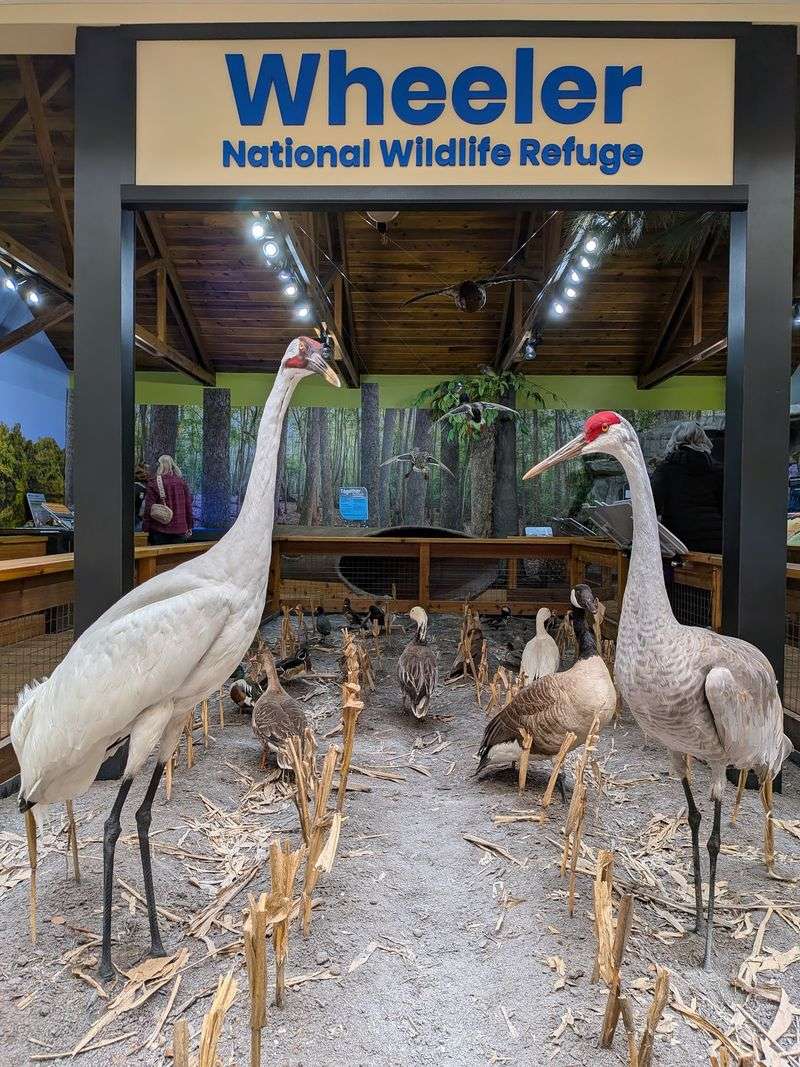
Spotting one takes a sharp eye. Look for snowy white feathers, black wingtips that show during flight, and a red patch on the face.
They stand taller than Sandhill Cranes, so they often pop out above the flock like a lighthouse in a gray sea.
Volunteers at the refuge are a big help here. They know where the white birds have been hanging out and can point them out through spotting scopes.
Asking questions is encouraged, and the answers often come with fun facts about migration routes and family groups.
Keep expectations relaxed, though. Wild birds do not promise a show, and some days the Whoopers stay far out in the fields.
Still, even a distant glimpse counts as a special moment. Seeing a bird this rare, in a place working so hard to protect it, sticks in the memory long after the trip ends.
Warm Seats at the Observation Building
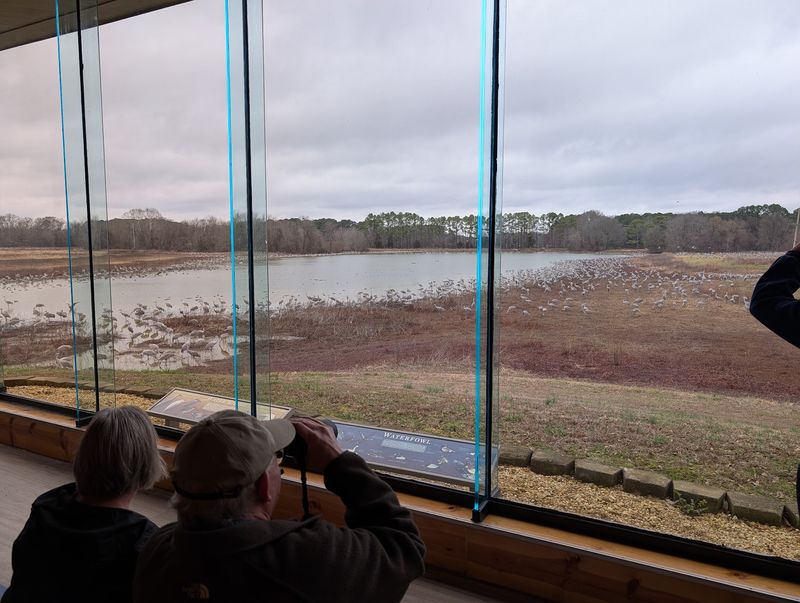
Cold toes and birdwatching usually go together, but Wheeler breaks that rule. The refuge has a heated Observation Building where guests can watch cranes through big windows without shivering through the experience.
Inside, bleachers give everyone a spot to sit, and spotting scopes bring faraway birds up close. The two-story viewing room looks right out over the water and fields where cranes gather.
Families can settle in, sip from a thermos of cocoa, and simply watch the scene change minute by minute.
It is calm in there. Even during the busy festival weekend, voices tend to stay low as people lean toward the glass.
A quiet gasp often spreads when a large flock comes in for a landing.
The Visitor Center sits at 3121 Visitors Center Road, Decatur, AL 35603, just off Highway 67 between I-65 and Highway 31. That easy location makes it a handy stop even for travelers passing through North Alabama.
Inside the center, exhibits explain the refuge and its wildlife, a short film covers its history, and a gift shop offers bird-themed goodies.
One practical tip helps a lot. Restrooms are at the Visitor Center, not at the viewing building, so plan stops before settling in.
Outdoor photo blinds and a short trail near the center also give photographers more angles. Bring layers anyway, since stepping outside for photos can still bring a crisp winter bite.
Guided Bird Walks With People Who Really Know Their Feathers
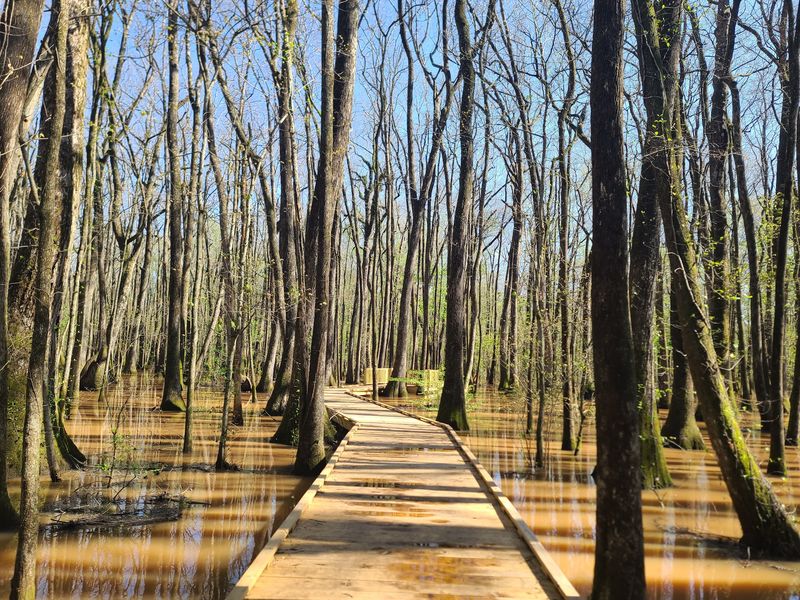
Some people can name a bird from a single chirp, and plenty of them show up at this festival. Expert-led birdwatching tours and guided walks are a major part of the weekend, and they turn a nice stroll into a real learning adventure.
The walks loop around the Visitor Center and Observation Building area. Guides point out cranes, of course, but they also help visitors notice ducks, geese, hawks, and other raptors.
Lucky groups may even catch a bald eagle soaring overhead, which never gets old.
Beginners fit right in. Nobody needs fancy gear or years of experience to join, and questions are part of the deal.
Guides happily explain why cranes dance, how they find their way south, and what makes the wetlands such a good winter home.
Wheeler covers about 35,000 acres of wetlands, forests, and cropland. That mix of habitats explains why so many different species show up.
A walk through the woods can switch to an open field view in just a few steps.
Wear comfortable shoes with good grip, since trails can be damp in winter. Pack binoculars and a small notebook for listing every bird spotted.
Kids especially love keeping score. By the end of a walk, many visitors leave with a longer bird list than expected and a new habit of looking up at the sky.
Talks, Films, and Art Inspired by Wings
Not every festival highlight happens outdoors. Downtown Decatur turns into a hub of stories and creativity during crane weekend, with talks and exhibits spread across several historic and modern venues.
Speakers include conservationists, artists, and wildlife experts who share what they know about nature and the environment. Past presenters have included “Bat Lady” Jimmy Stiles, Hilary Hankey, Jon Armbruster, and award-winning nature photographer Paul Bannick.
Topics range from bats to birds to the art of capturing wildlife on camera, so there is usually something for every curious mind.
The Princess Theatre is a treat on its own. Its Art Deco style gives off a charming old-time feel, and it often hosts festival programs and films.
Sitting under that classic architecture makes a nature talk feel extra special.
Over at the Alabama Center for the Arts, a juried art exhibit celebrates nature and cranes. Paintings, photos, and other creative pieces show how many ways artists see these tall birds.
Some pieces are bold and colorful, while others are soft and peaceful.
Photography workshops also pop up during the weekend. Anyone hoping to sharpen camera skills before heading back to the refuge should check the schedule early.
Learning a few tricks about light and timing can make a big difference. Afterward, those crane photos might look good enough for a frame.
Kid Zone Fun at the Cook Museum and Beyond
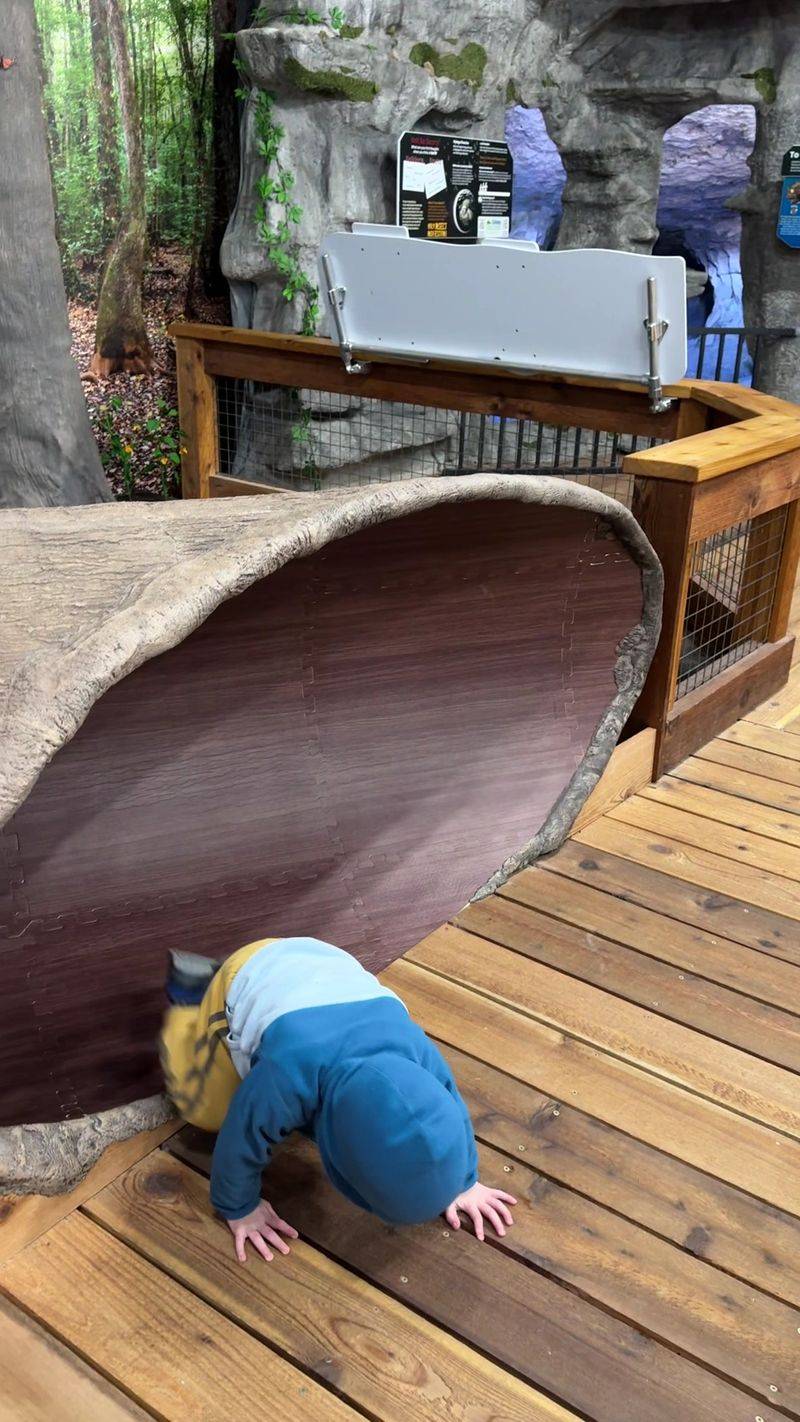
Paper crane wings, hands-on exhibits, and plenty of giggles make this festival a hit with younger travelers. The event was built for all ages, and kids get their own lineup of activities.
Children can join creative crafts, explore interactive displays, and learn about birds in ways that feel more like play than school. Many activities connect right back to the cranes seen out at the refuge.
That link helps the whole weekend click together for young minds.
The Cook Museum of Natural Science is a festival partner and a must-see spot. Shortly after opening in 2019, it was named Best New Museum in the United States by USA Today 10Best.
Inside, families can explore exhibits about wildlife, nature, and science that spark endless questions.
The Decatur Public Library also joins the fun. Libraries have a way of making learning cozy, and festival programs there often appeal to curious readers of all sizes.
It works well as a calm break between busier stops.
Back at Wheeler, the Visitor Center has kid-friendly exhibits, and one trail even features a storybook to read along the way. Bird blinds near the center let children peek at wildlife without scaring it off.
Homeschool families and school groups often treat the refuge as an outdoor classroom. Good news for parents, too.
Since the festival is free, spending a full day of exploring will not stretch a family budget.
Food Trucks, Live Music, and a River City Welcome
Crane watching builds an appetite. Luckily, the festival brings food trucks serving local flavors, so hungry visitors can refuel between bird walks and presentations.
Live music adds a happy soundtrack to the weekend. Tunes drifting through downtown give the event a friendly, small-town festival mood.
Cold air plus warm food plus a good song? Hard to beat.
Decatur goes by the nickname “The River City,” thanks to its spot on the banks of the Tennessee River. Its historic downtown is packed with 19th-century buildings that now hold boutiques, cafes, and galleries.
Strolling between festival venues becomes a mini tour of local character.
Food lovers have more to explore beyond the trucks. Big Bob Gibson’s BBQ is famous for smoked meats and its tangy Alabama white sauce.
Francesco’s Italian Restaurant serves hearty favorites, The Brick Deli offers sandwiches, and Simp McGhee’s brings Cajun-style seafood and steaks to a cozy setting.
History fans can wander the Old Decatur Historic District to admire Victorian homes and Craftsman bungalows. The Old State Bank stands as a key landmark, and the quirky Downtown Turtle Trail adds a playful scavenger hunt feel.
Point Mallard Park, a 500-acre family park, even borders the refuge. Stay an extra day if possible.
Between the cranes, the culture, and the comfort food, Decatur gives winter travelers plenty of reasons to slow down and enjoy every moment.
