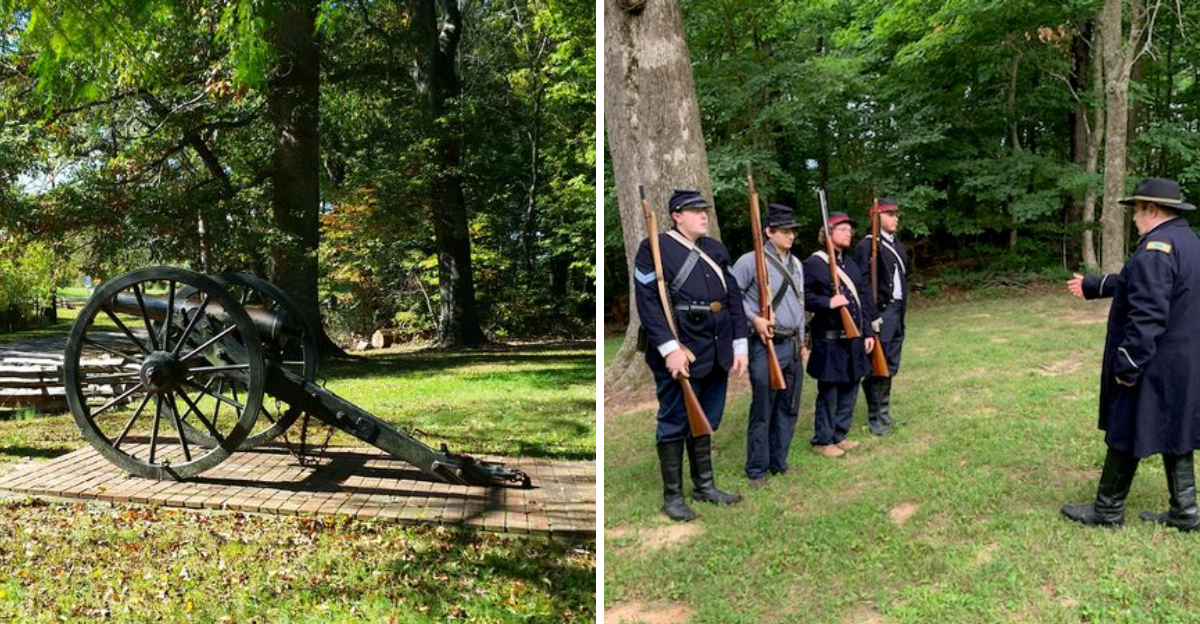
The odds were terrible. Roughly 400 local volunteers had thrown together a makeshift defensive line when a Confederate force nearly six times larger came toward them.
They did not have a good situation. They had a ridge, some logs, some dirt, and a very serious reason not to run.
What happened next became the only official Civil War battle fought in Indiana. More than a century later, the battlefield is one of those places that barely announces what happened there.
The road is quiet, the trees are thick, and the five-acre site looks more like a peaceful country stop than a place where an invading army once appeared. That contrast is hard to forget.
Indiana’s Only Official Civil War Battle Happened Right Here
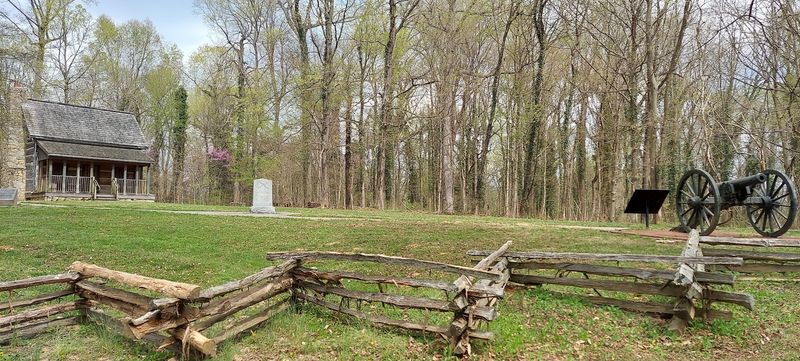
Plenty of states can point to Civil War battlefields. Indiana can point to exactly one, and it sits on a wooded ridge just south of Corydon.
On July 9, 1863, Confederate Brigadier General John Hunt Morgan pushed his cavalry division into Harrison County, heading straight for the town. Waiting for him was the Harrison County Home Guard, part of the Indiana Legion, made up of roughly 400 local volunteers.
Morgan brought around 2,400 men. The math was brutal, and everyone involved knew it.
Rather than scatter, the Home Guard built breastworks from fence rails, logs, and dirt along the ridge and dug in. They turned back two attacks before Confederate reinforcements and artillery arrived and ended the fight.
Corydon fell, and the Confederates claimed the victory. Still, the delay mattered, giving Union forces time to organize a pursuit that would chase Morgan across two states.
What makes the site land differently than a textbook page is the scale of it. These were not career soldiers but farmers, shopkeepers, and neighbors defending the road to their own front doors.
Standing among the trees where those logs were stacked puts that decision in sharper focus. History books flatten moments like this, but the ridge keeps them stubbornly three-dimensional, which is reason enough to point the car south and go look.
Old Hardwoods That Watched the Whole Thing
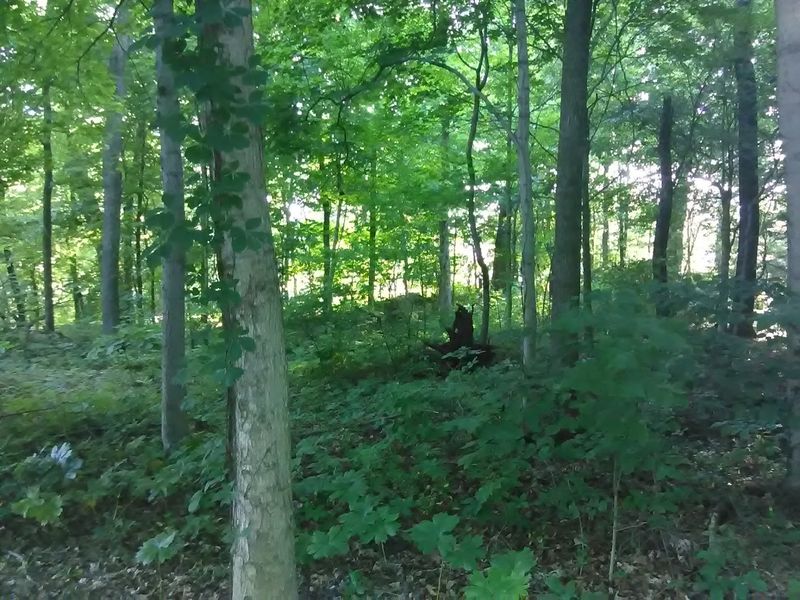
Five acres does not sound like much until the trail swallows the sound of traffic and the canopy closes in overhead. That is roughly what happens at the Battle of Corydon Memorial Park.
The wooded landscape has been preserved so carefully that it closely resembles how the ridge looked in 1863. Some of the hardwood trees rising above the path were already standing when the shooting started.
That detail changes the walk. Suddenly the trees are not scenery but witnesses.
An easy unpaved trail loops through the site, gentle enough for casual walkers and short enough that nobody needs hiking gear. Sturdy shoes help after rain, since the dirt path holds moisture in low spots.
Interpretive markers appear along the way, each one explaining a piece of the engagement. They are placed near the spots where events actually unfolded, so the story moves as visitors move.
Reading about the two repelled attacks while standing near where the breastworks ran makes the sequence click into place. Geography stops being abstract.
Mornings are especially good here, when light filters sideways through the leaves and birdsong fills the gaps. Bring water in summer, since shade helps but Indiana humidity does what it wants.
Allow forty-five minutes minimum. Most people end up lingering longer than planned, simply because the woods invite it.
A Restored Log Cabin Furnished Like It Is Still 1863
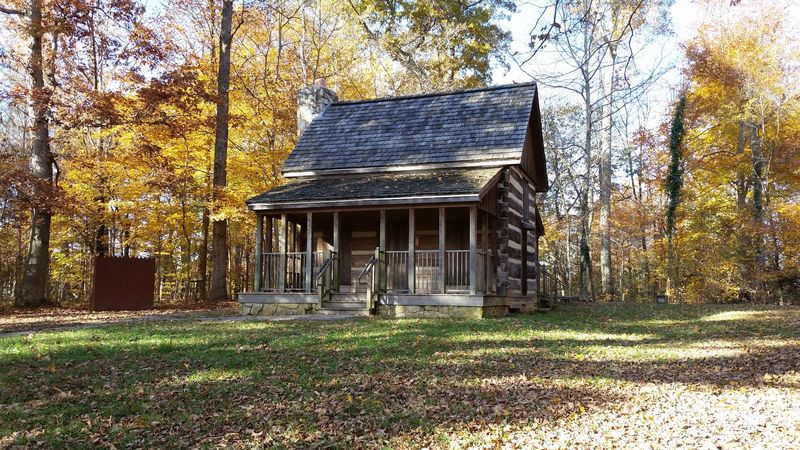
Tucked on the property sits a beautifully restored log cabin, and it does something the markers cannot. It shows how people actually lived.
Furnished with period pieces, the cabin represents the kind of housing common in Harrison County during Morgan’s Raid. Low ceilings, simple furniture, and small windows tell their own story about daily life in the 1860s.
Suddenly the battle has a household attached to it. That shift in perspective is the whole point.
The families who lived in cabins like this one worked the surrounding land, hauled water, cooked over fire, and then watched a cavalry division ride through their county. Their routines stopped cold on a summer afternoon.
Through the summer season, historical interpretive staff are often on site. Conversations with them tend to wander from battle tactics into topics like cooking, farming, clothing, and how news traveled before telephones.
Opening hours run Friday through Sunday, with times that vary across the summer season, so checking ahead saves disappointment. Arriving on a staffed day is worth planning around.
Kids often respond to the cabin more than the markers, since a room full of real objects beats a paragraph of text. Adults usually notice how small the space feels.
It rounds out the visit, turning a battlefield stop into something closer to a full portrait of a community.
The Longest Cavalry Raid of the War Ran Straight Through Town
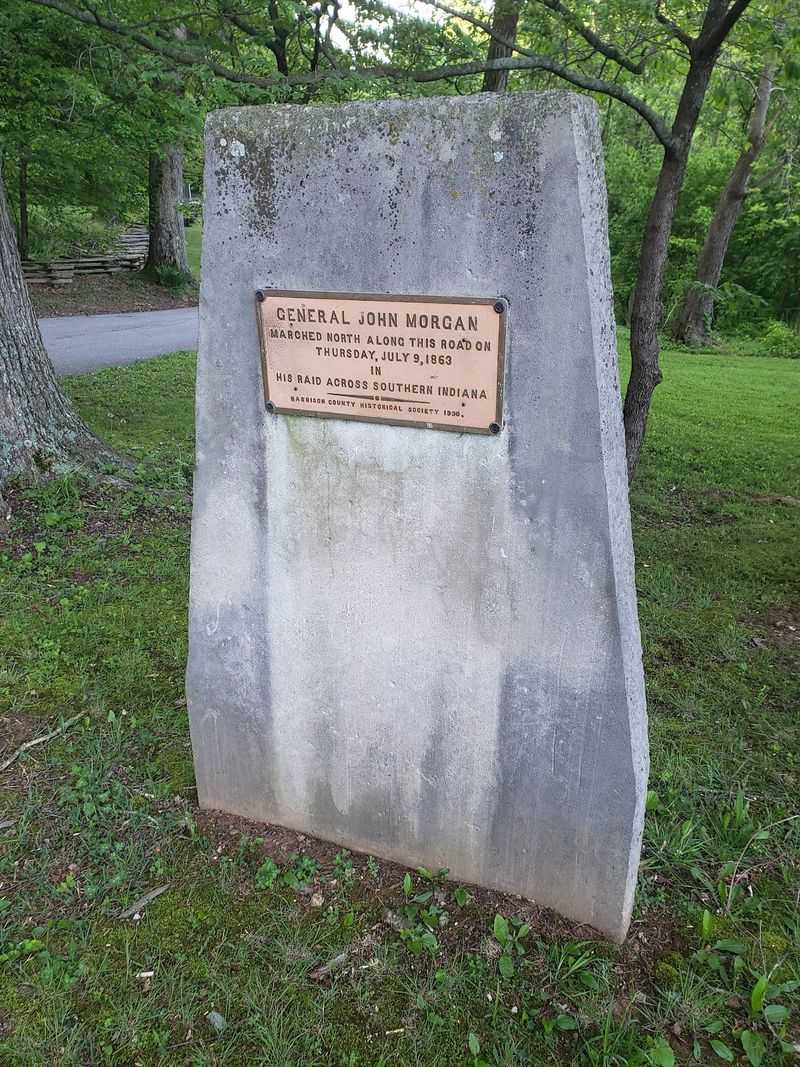
Corydon was one stop on a ride that would break records. Morgan’s Raid became the longest cavalry raid of the entire Civil War.
It began near Sparta, Tennessee, and covered more than a thousand miles before ending with Morgan’s surrender near New Lisbon, Ohio, on July 26, 1863. Corydon fell early in that arc, on July 9.
Here is the twist. Crossing the Ohio River into Indiana was not something Morgan had been ordered to do.
His superiors wanted a diversion in Kentucky. Morgan took his division north anyway, turning the operation into an unauthorized push deep into Union territory that rattled towns across two states.
The Home Guard’s stand at Corydon lasted well under an hour by most accounts, yet it slowed the column and cost Morgan time he could not get back. Union pursuers used those hours.
Seeing the park through that lens makes it feel bigger than five acres. A small ridge in Harrison County became a hinge in a thousand-mile chase.
Reading a route map before visiting helps enormously, since the geography of the raid explains why Corydon sat in the path at all. The town simply happened to be the first sizable place north of the river crossing.
Context turns a quiet site into a genuinely dramatic one.
The Cannon That Ended the Fight
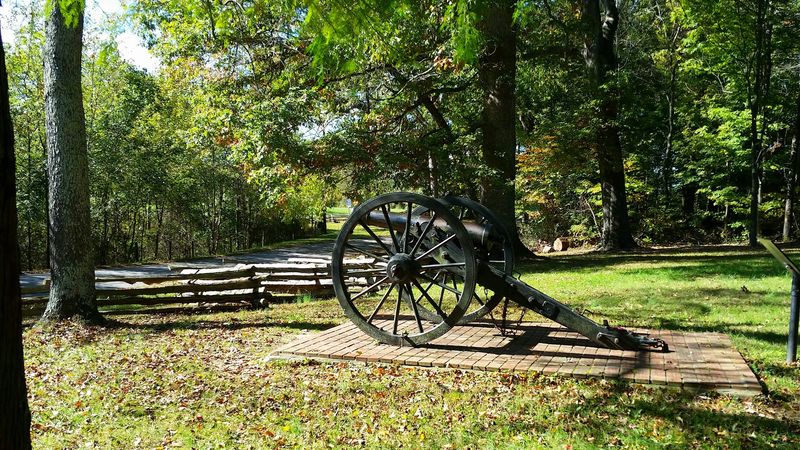
A single artillery piece sits within the park, and it explains the outcome of the battle better than any paragraph could. Once the Confederates brought guns forward, the Home Guard’s log breastworks stopped being enough.
The preserved Civil War cannon gives visitors something solid to circle and study. Metal, wheels, weight, and reach all become obvious up close.
Muskets against fence rails is one kind of fight. Artillery against fence rails is another entirely.
Standing near the cannon makes it easier to picture what that July afternoon sounded like, with smoke drifting through the trees and the ridge shaking. The valley is peaceful now, which only sharpens the contrast.
Additional plaques and markers throughout the grounds fill in the details, covering troop positions, timing, and the decisions that shaped the retreat into Corydon. Together they build a clear narrative from opening shots to surrender terms.
Photographers tend to gravitate here, since the cannon framed by hardwoods makes a striking shot in almost any light. Late afternoon works especially well.
Take a moment to simply stand still nearby. Physical objects have a way of collapsing 160 years into something immediate, and this one does it quietly.
Small artifacts, big effect. That is the character of the entire park in miniature.
When Living Historians Bring the 1860s Back to the Ridge
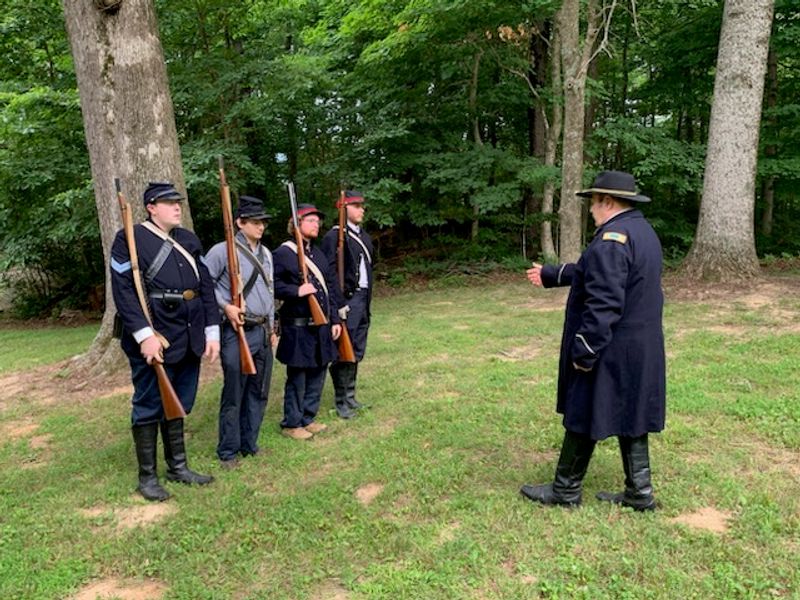
Certain weekends, the park stops being silent. Living history events and reenactments bring period-dressed historians onto the grounds, and the atmosphere shifts completely.
Demonstrations often include Civil War weaponry, drill routines, and explanations of what soldiers and civilians dealt with day to day. The crack of a musket carries through the trees in a way that no display case can imitate.
Full-scale reenactments sometimes take place at nearby Hayswood Park, where there is more open ground for maneuvers. The memorial park itself leans toward smaller, closer demonstrations.
Talking with living historians is the real draw. They tend to know odd, specific details about equipment, food, uniforms, and marching conditions, and they enjoy sharing them.
Events frequently cluster around the July anniversary of the battle, which makes early summer a smart time to plan a trip. The Harrison County Parks website posts schedules, so checking before setting out is the difference between a quiet walk and a full show.
Both versions of the visit are worthwhile, honestly. One offers reflection, the other offers noise and motion.
Families with restless kids should aim for an event day. Watching a drill demonstration beats reading markers when attention spans are short, and the history sticks better anyway.
Arrive early on event weekends, since parking on the backroad fills faster than expected.
Nationally Recognized Ground on a Sleepy Country Road
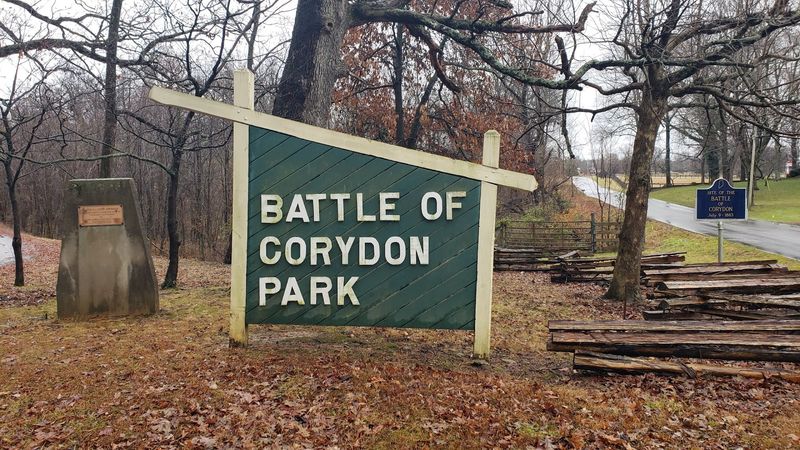
Recognition arrived for this place in a formal way. The park is listed on the National Register of Historic Places, a nod to its role in telling both Indiana’s story and the wider Civil War story.
That listing reflects real preservation work. The wooded terrain, the marker placements, and the surviving landscape features have all been maintained rather than paved over.
Corydon also holds a rare distinction. It stands as one of only two Civil War battle sites on northern soil, sharing that category with Gettysburg.
The comparison is startling given the difference in scale, yet it underlines why the ground matters. History does not measure importance by acreage.
Visitors will find the park at 100 Old Hwy 135 SW, Corydon, IN 47112, reached by a quiet road that gives no hint of what waits behind the tree line. Signage marks the entrance, and parking is straightforward.
Downtown Corydon sits close by, home to Indiana’s first state capitol building, making it easy to build a half-day of history around the visit. Combining the two adds useful context about the town Morgan captured.
People tend to leave this park thinking about ordinary citizens who chose to stand their ground. Preserved, protected, and refreshingly uncrowded, the ridge keeps that story available to anyone willing to take the backroad.
