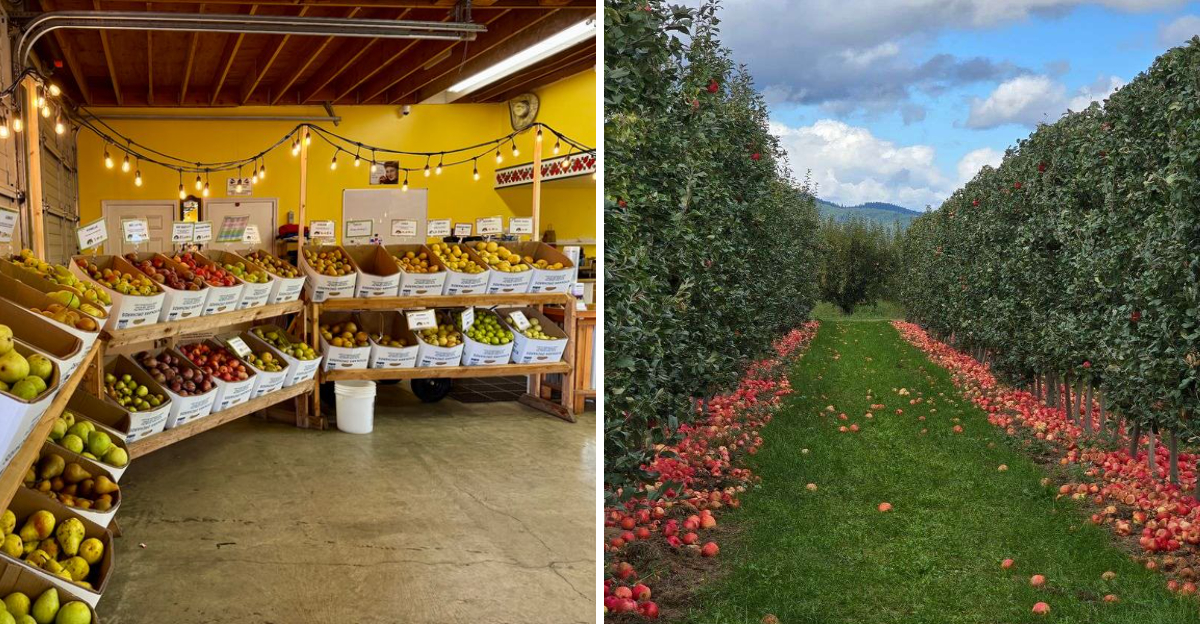
There’s a quiet kind of magic in wandering through an orchard when the branches are heavy with fruit. Right now, this Oregon orchard is full of fresh apples and pears, ready to be picked.
It’s an experience that connects you to the land and the changing seasons in a way that feels unhurried and genuine .
You can wander through the rows, the scent of ripe fruit mixing with the crisp air. There’s something deeply satisfying about finding the perfect apple or pear and picking it yourself.
And the story of the fruit goes beyond the trees – you can explore the farm store, talk with the people who know the land, and taste the season in every bite .
Come for the fruit, and let the orchard do the rest. It’s a reminder that the best things often come from the quietest places.
An Apple Lineup That Feels Almost Encyclopedic
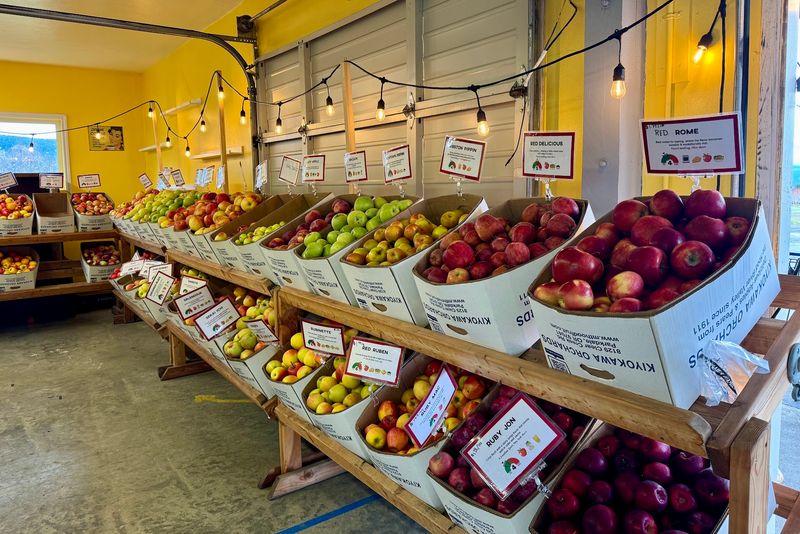
Somewhere between the twentieth and thirtieth variety, counting stops being useful. The farm grows well over a hundred kinds of apples, and the tent displays them in tidy crates with signs explaining whether each one leans sweet, tart, or somewhere in the middle.
Visitors regularly compare the layout to a museum, and honestly, that fits. Names range from familiar favorites to unusual Japanese cultivars that rarely show up in grocery stores.
Free samples sit out beside the bins, which makes decision-making both easier and much slower. Tasting first saves regret later, especially if baking is the plan and a mushy apple would ruin the whole pie.
Staff members know the differences by heart and will point toward the right crate based on whether someone wants crunch, juice, or something for applesauce.
Bring a plan or bring no plan at all. Either way, expect to walk out holding varieties you cannot pronounce, which is arguably the entire point of visiting an orchard this deep into fruit country.
Pears, Including Asian Varieties Worth the Detour
Apples get most of the attention here, but skipping the pears would be a genuine mistake. The orchard grows both European pears and Asian pears, and the difference between them is dramatic enough that trying one of each is worthwhile.
Asian pears crunch like a firm apple and drip in a way that requires a napkin, or two. European varieties soften into something closer to butter once they ripen on a kitchen counter.
Pears show up frequently in conversation among returning visitors, right behind apples in popularity. Several unusual Japanese pear cultivars grow on the property, reflecting the family’s long agricultural history in the valley.
Ripeness matters more with pears than apples, so asking staff which ones are ready today prevents disappointment at home.
Boxes and bags are available for hauling them out. A mixed haul of apples and pears makes for a fridge that stays interesting for weeks, and the pears tend to disappear first.
U-Pick Rows That Invite Wandering
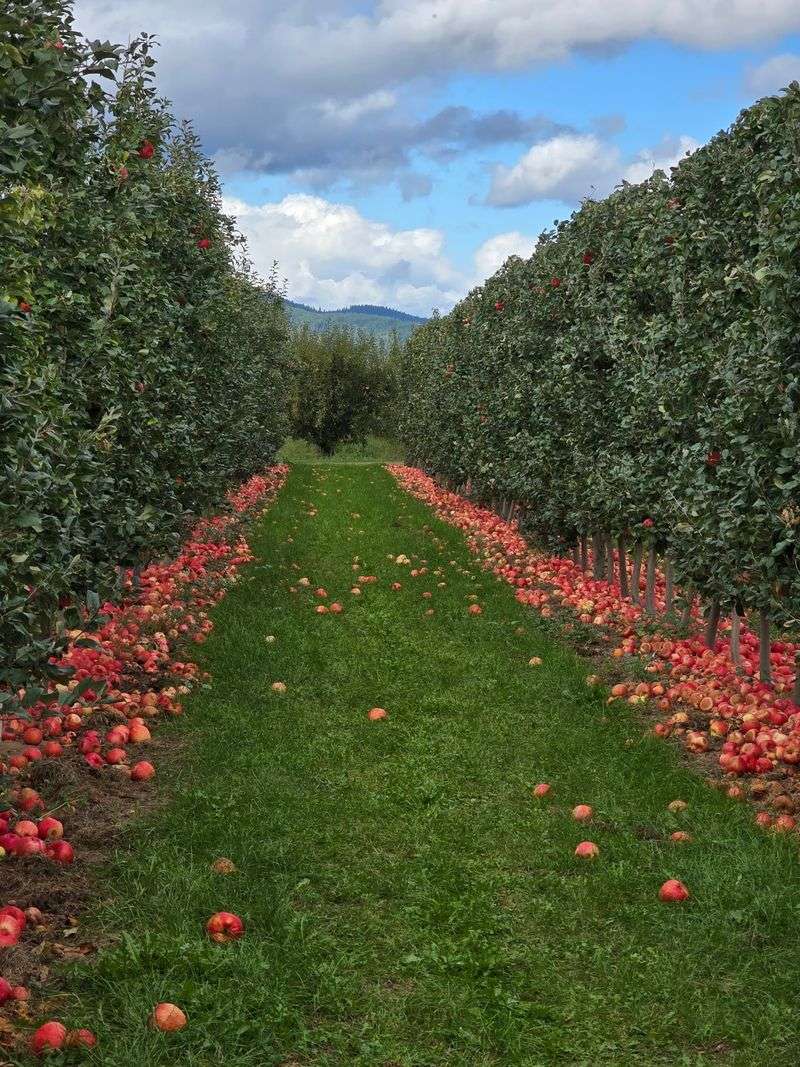
Picking your own fruit here does not feel like a gimmick, mostly because the rows are real working orchard and stretch further than expected. Maps get handed out at the stand, boxes too, and then the afternoon belongs to whoever is holding the bag.
Pricing per pound matches the pre-picked fruit at the stand, which removes the usual pressure to justify the walk.
Some sections have mats secured over the ground, making the paths steadier for anyone worried about uneven dirt or using a stroller.
Reaching up into a tree and twisting off an apple still ripe from the sun is a small, ordinary pleasure that kids seem to instantly understand. Adults figure it out about a minute later.
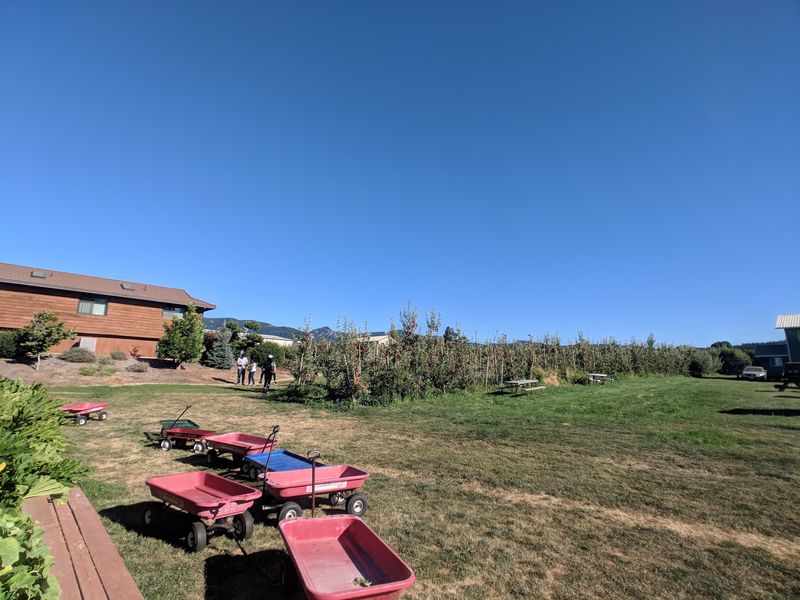
Wagons exist but can run out on busy weekends, so bringing your own is a smart move.
Plan for more time than seems necessary. The rows have a way of pulling people deeper in.
Mount Hood Looming Over Everything
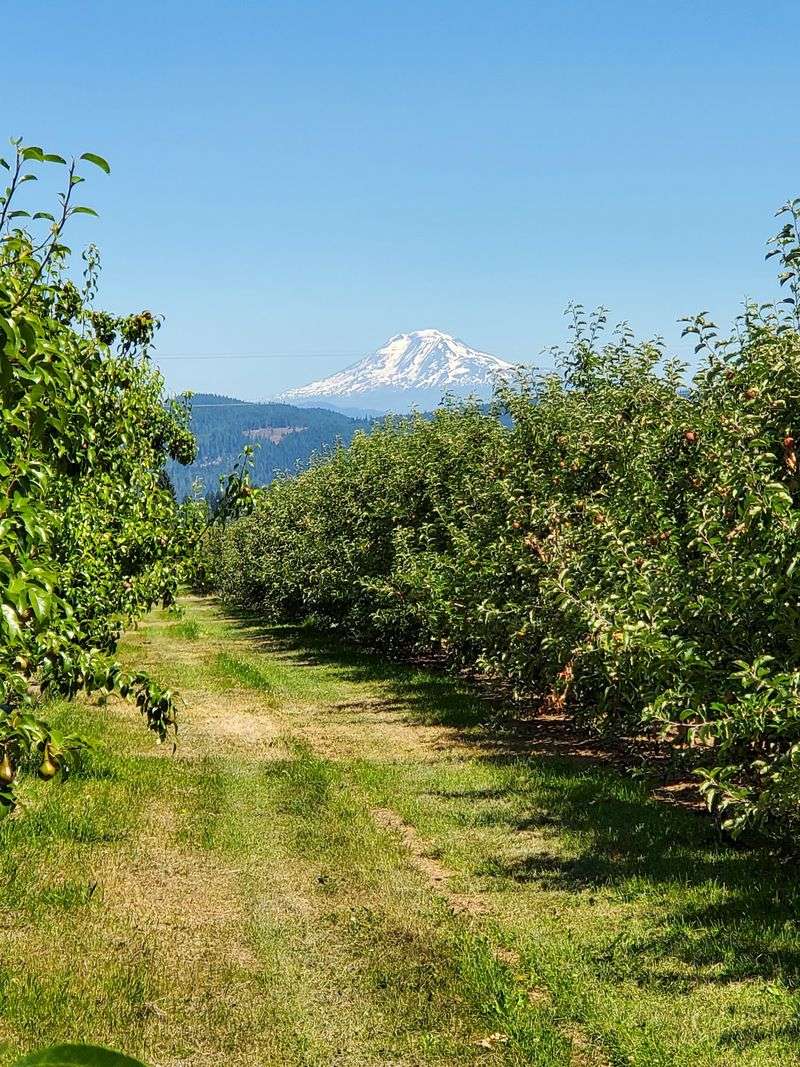
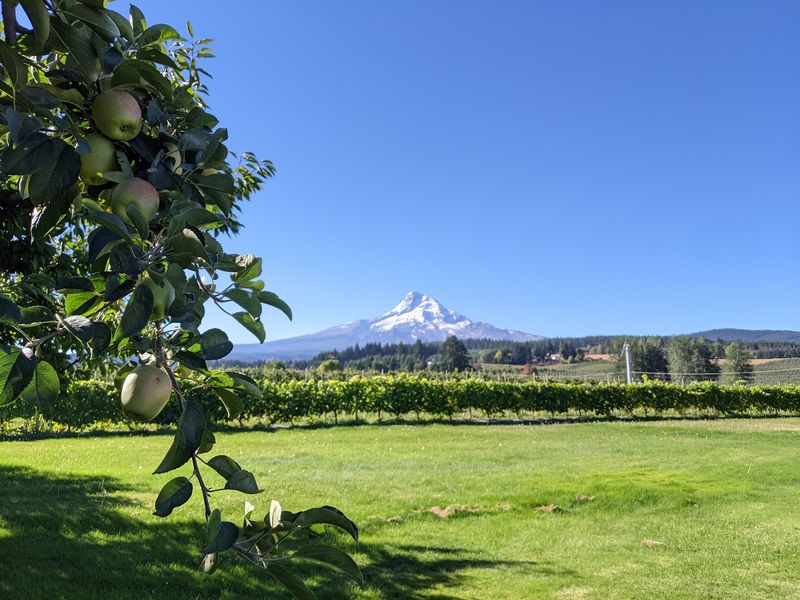
Fruit is the reason to come, but the mountain is the reason people keep taking photos instead of picking. Mount Hood sits directly north of the orchard, and on clear days the snow-covered peak fills the gap above the tree rows like a painted backdrop.
Clouds sometimes hide it entirely, which locals treat as normal weather rather than bad luck.
The orchard sits at roughly 1,700 feet on the mountain’s northern flank, part of what makes the Hood River Valley such reliable fruit country. Cool nights, warm days, volcanic soil.
Standing among the trees with that peak in view, the whole scene feels wildly disproportionate in the best way, tiny apples against an enormous mountain.
Morning light tends to be cleanest for photos, before afternoon haze settles in.
Even without a camera, it is worth stopping mid-row just to look up. The fruit will still be there in a minute.
Baked Goods That Disappear Fast
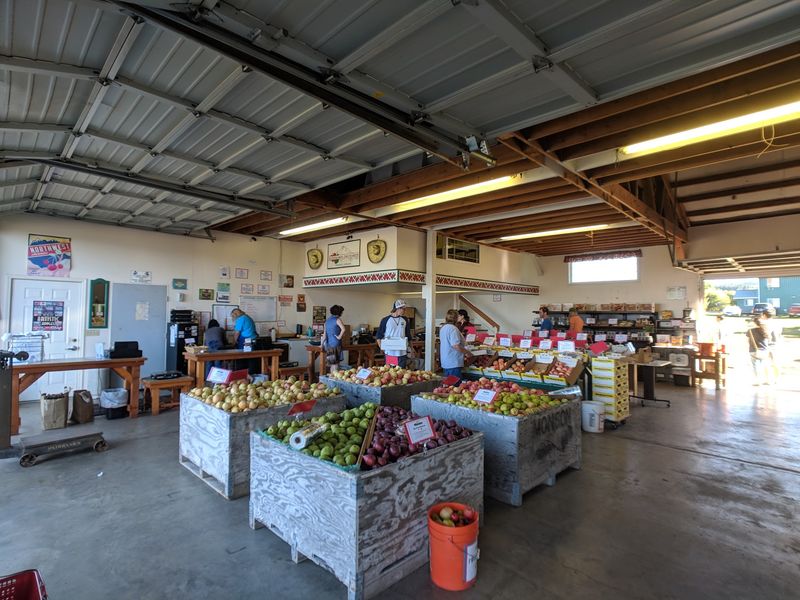
Fritters, donuts, and flaky turnovers rotate through the stand, and they do not last long once a busy weekend crowd arrives. Arriving early improves the odds considerably.
Apple fritters carry actual chunks of fruit, and the turnovers flake apart in a way that guarantees crumbs down the front of a jacket. Nobody seems to mind.
Alongside the pastries sit jams, jellies, and local honey, plus soaps and candles for anyone shopping beyond the produce aisle. The canned goods travel well and make decent gifts if the recipient has any taste at all.
Apple cider gets mentioned often by returning visitors, and pressing fruit grown a few hundred feet away tends to produce a noticeable difference.
Picnic tables sit near the stand, so eating on the spot is entirely reasonable.
My advice is simple. Grab something baked before touring the orchard, because willpower rarely survives two trips past the counter.
A Family Operation Going Back to 1911
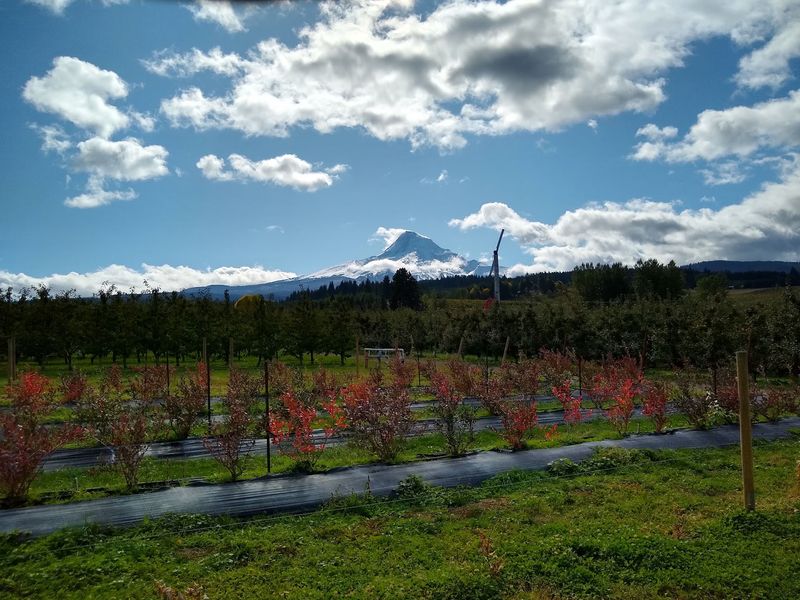
Farming this land started in 1911, which means the trees here have outlasted more than a century of changing tastes and weather. The Kiyokawa family still runs the operation, and that continuity shows up in small details rather than plaques.
Japanese apple and pear varieties growing in the rows connect directly to that heritage, offering fruit that most American orchards never bother to plant.
Hand-lettered signs, well-pruned rows, and staff who answer questions without hurrying all point to a place run by people who intend to be here next season too.
Owner responses to visitor feedback tend to be signed by the family, which says something about scale.
The property feels lived-in rather than staged, spacious and rustic and clean at the same time.
Learning a bit of that history before wandering the rows changes how the fruit tastes, or at least how it feels to carry a box of it back to the car.
Free Samples Make Choosing Easier
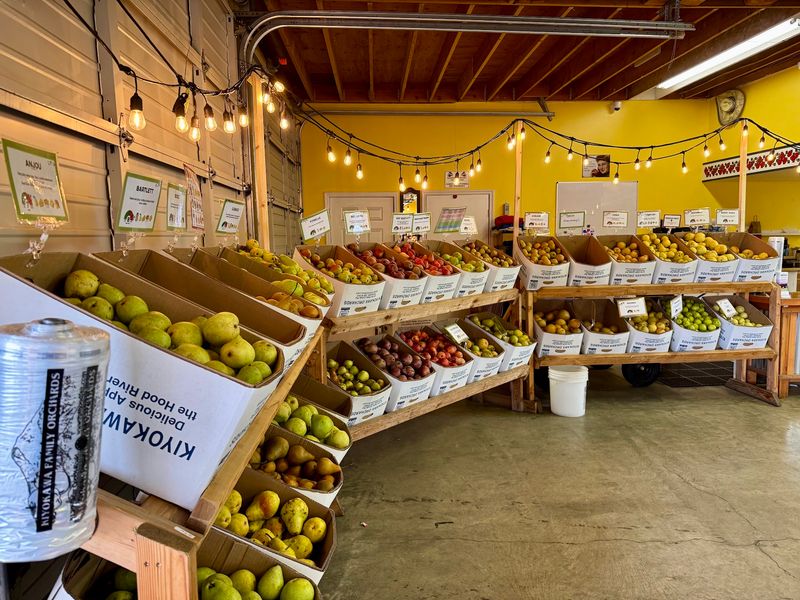
Sampling before buying turns the whole visit into a low-stakes tasting session. Sliced pieces sit out beside labeled bins, letting anyone compare a tart baking apple against something honey-sweet within about thirty seconds.
The signs describe flavor and texture in plain language, no wine-tasting vocabulary required.
Trying five or six varieties reveals how wide the range actually goes, from sharp and snappy to soft and floral. Some taste faintly like pear, others almost like berries.
Families with picky eaters benefit most from this setup, since kids can taste first and then commit. Fewer wasted apples at home.
Staff will happily suggest pairings for pies, sauce, or lunchbox snacking based on what someone liked at the table.
Take notes on your phone if the goal is repeat visits. Remembering which unusual variety won last October is surprisingly difficult once the bag is empty and the mountain is behind you.
Comfortable Ground for Kids and Grandparents Alike
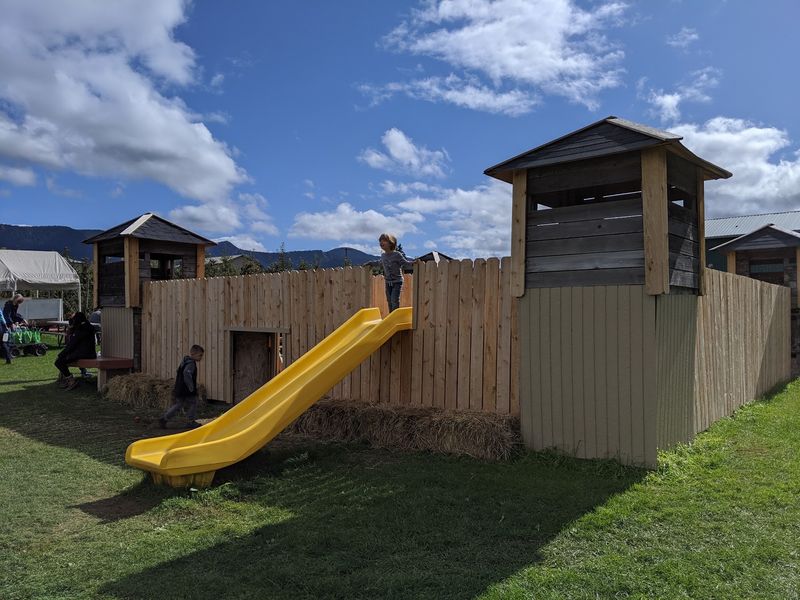
Bringing a mixed-age group here is genuinely easy, which is not something every farm can claim. A children’s play area sits near the stand, picnic tables offer a place to regroup, and restrooms include both permanent facilities and portable ones during busy stretches.
Parking spreads across a large field with accessible spots near the entrance.
Mats laid over sections of orchard ground make walking steadier for anyone using a cane, a wheelchair, or simply cautious footing.
Dogs are welcome too, which turns the outing into something the whole household can join. Leashes and courtesy still apply.
Grandparents can sit under the tent sampling apples while kids sprint down the rows, and both groups end up satisfied.
Skipping the u-pick entirely is a valid choice on rainy days, since the same fruit is available by the bag at the stand.
Flexibility like that is why families end up making this an annual tradition rather than a one-time stop.
Timing Your Trip With the Season
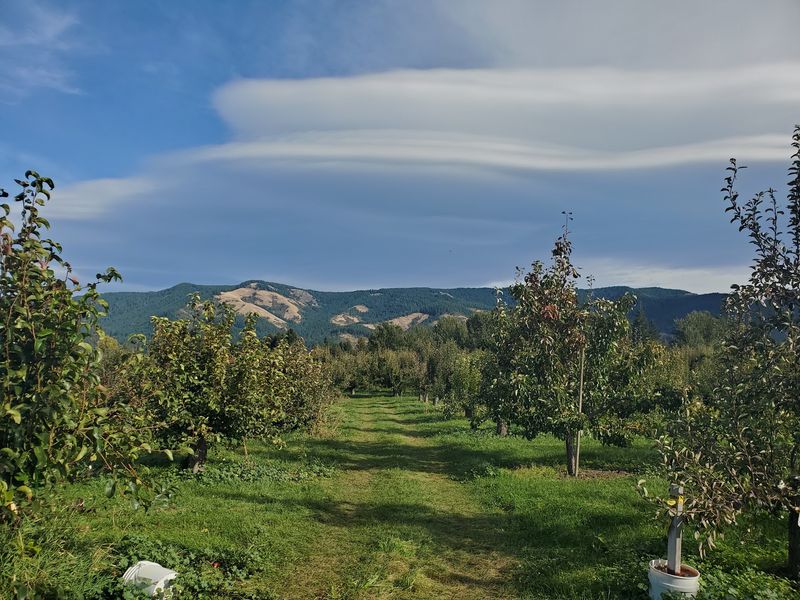
Fruit here follows the calendar rather than convenience, and that reality shapes every visit. Cherries and stone fruit lead the early summer season, peaches and plums follow, and then apples and pears take over through fall.
Pluerries, a plum and cherry cross, show up in some seasons and are worth trying purely for novelty.
Checking the website or social media before driving out saves frustration, especially early in the season when weather delays ripening. Opening day does not guarantee full bins.
Weekday visits feel calmer, with hours running from ten in the morning until four, while weekends open earlier at nine and stay open until five.
Autumn brings the widest selection and the best light across the valley.
Seasonal events with hay rides and music appear on the calendar too, so grabbing a flyer at the stand is a decent way to plan a return trip before leaving the parking lot.
A Natural Stop on the Mt. Hood Fruit Loop
Anyone driving the Mt. Hood Fruit Loop will find this orchard sitting near the top of the list of worthwhile stops. The route winds through the Hood River Valley past farms, lavender fields, and small towns, and Kiyokawa anchors the Parkdale end of it.
Getting here means turning off Highway 35 for a few miles, an easy detour by any measure.
Nearby Parkdale offers casual food options if the fritters were not enough of a meal.
The drive itself deserves credit, climbing through forest and open valley with the mountain appearing and disappearing between the trees. Fall colors make it better.
Combining this stop with other Fruit Loop farms fills a full day without ever feeling rushed.
Leave room in the trunk. Between apples, pears, cider, and jars of jam, the return drive tends to be heavier than the trip out.
Address: 5625 Hutson Dr, Mt Hood, Oregon
