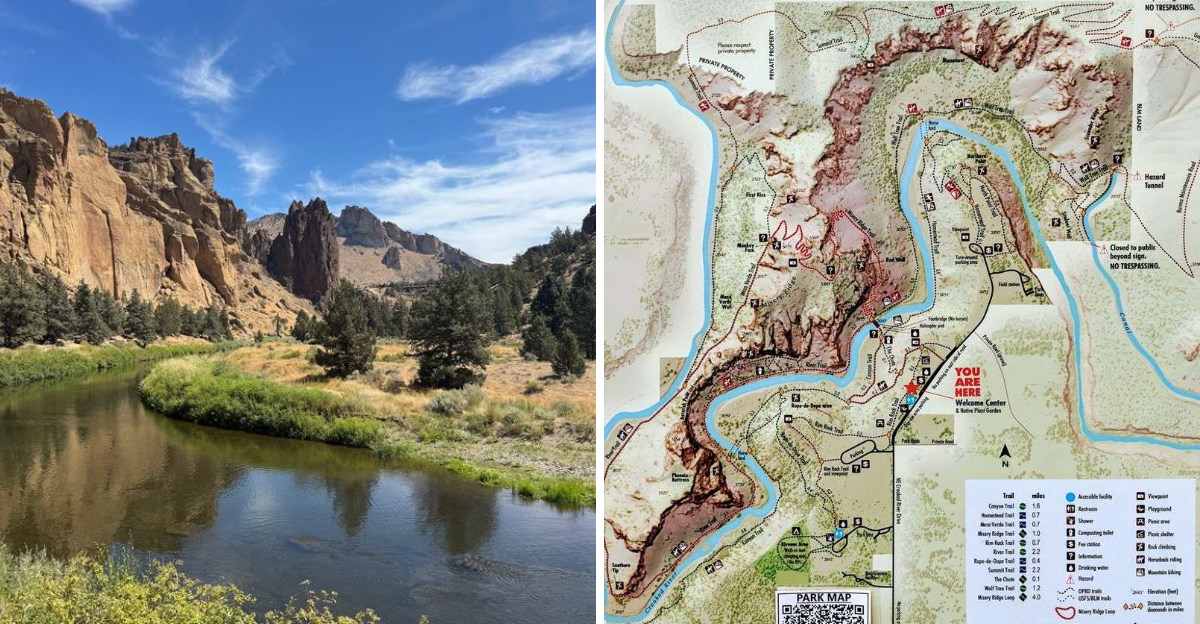
We all love a good hike, but nobody loves the feeling of being watched – especially from the rocks. At this Oregon state park, the locals have learned to keep one eye on the trail and the other on the crevices. It’s not paranoia; it’s just good sense.
The Northern Pacific rattlesnake calls this place home, and sightings are frequent enough that park officials are upfront about it. They tend to stick to rocky areas and come out in spring and fall, making them a part of the landscape hikers need to respect.
It’s not that the park is overrun, but the snakes are undeniably present.
The common advice for a safe visit is to stay on designated trails, avoid thick brush, and never place your hands or feet where you can’t see first. A cautious approach is part of the local culture here.
Once you’re aware, it’s still a stunning place to visit – just not one where you wander off the beaten path.
Rattlesnakes Are Part Of The Landscape Here
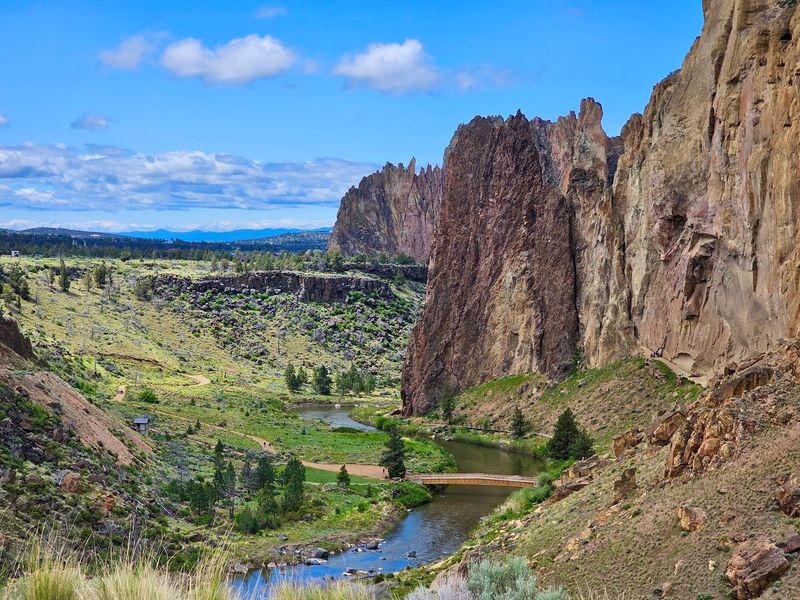
Locals do not panic about the rattlesnakes at Smith Rock, they simply plan around them. Western rattlesnakes live throughout this high desert canyon, and they love exactly what visitors love: warm rock, sunny ledges, and quiet corners near the Crooked River.
Sightings come up often in visitor accounts, especially during warmer months when the reptiles move around in the morning and late afternoon. Most encounters end with the snake sliding away, unbothered and uninterested.
The practical advice is refreshingly simple. Watch where feet land, avoid reaching blindly into cracks or under bushes, and stay on maintained trails instead of cutting across loose scree.
Trekking poles help, not only for the steep descents but because the tapping gives snakes a heads up. Boots that cover the ankle add a little peace of mind too.
Give any snake plenty of room and never try to move it, since a rattlesnake’s warning is genuinely useful information. Treat the canyon as their home, and the whole visit gets easier.
Misery Ridge Trail Earns Every Bit Of Its Name
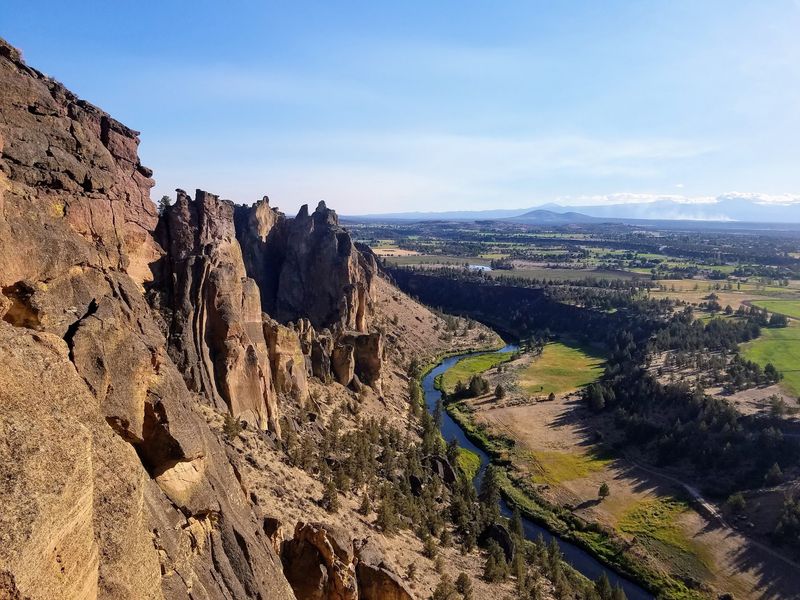
There is no gentle way to describe Misery Ridge, and that is part of the fun. The loop runs roughly three and a half to four miles, yet the elevation gain crammed into that short distance leaves plenty of hikers stopping to catch their breath on the switchbacks.
The climb is well maintained, with a steady staircase of turns that keeps revealing more of the canyon below. At the summit, views open in every direction across central Oregon, with the Cascades stacked along the horizon.
Many visitors hike it clockwise so the steepest section becomes an ascent instead of a slippery downhill scramble. Loose soil on the descent is the main complaint, which is why hiking poles show up in so many trail reports.
Good footwear matters more than fitness here. Sturdy boots with real traction turn a nervous shuffle into an enjoyable walk. Budget around three hours if the river route is added on the way back.
World Class Rock Climbing On Welded Tuff Walls
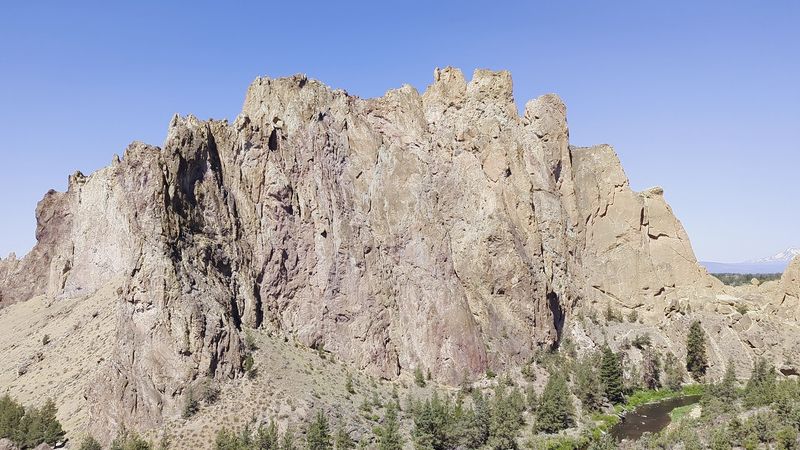
Climbers put Smith Rock on the map long before hikers arrived in numbers. More than two thousand routes thread up these welded tuff cliffs, from beginner friendly bolted lines to legendary sport climbing test pieces that draw athletes from around the world.
Even non climbers end up staring. Watching tiny figures inch up an orange wall while chalk dust drifts in the breeze is oddly hypnotic, and the trail below the main cliffs feels a bit like a natural amphitheater.
Winter visitors sometimes spot climbers working routes in freezing temperatures, headlamps flicking on as daylight fades behind the ridges. Dedication runs deep in this canyon.
Anyone new to the sport should book time with a local guide rather than improvising. The rock here can be sharp, and route knowledge matters.
Climbers also share the canyon with wildlife, so seasonal closures around nesting raptors are strictly enforced. Checking current park notices before packing gear saves a wasted trip.
The Crooked River Softens The Whole Canyon
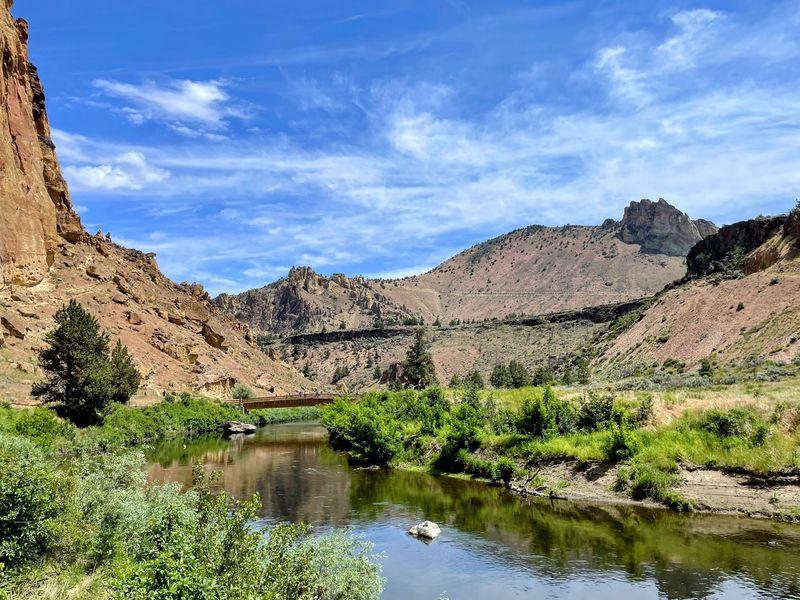
After the dust and heat of the upper trails, the riverside path feels like a completely different park. The Crooked River loops around the base of the formations, lined with willows, currants, and shady pockets where the temperature drops noticeably.
River otters turn up here often enough that patient visitors sometimes catch them playing near the banks. Birds are everywhere along the water, and the sound of the current makes the canyon feel gentler.
Families with strollers or younger kids often skip the ridge entirely and stick to the flatter river sections, which still deliver dramatic views straight up the cliffs. It is an easy win.
A small footbridge crosses the river near the main trailhead, connecting the parking areas to the network of paths below the walls.
Snake awareness still applies down here, especially where trails run close to brush and warm stones. Keeping dogs leashed and eyes forward keeps the walk relaxed rather than eventful.
Monkey Face Steals The Show
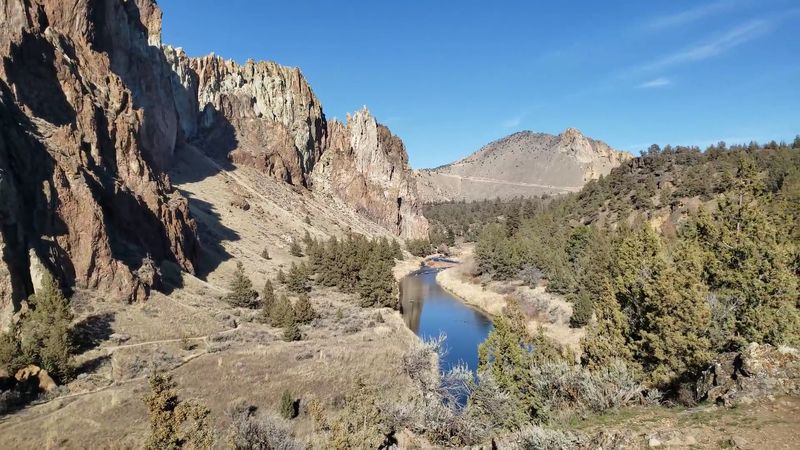
Somewhere near the top of Misery Ridge, the trail bends and suddenly a giant stone pillar appears that genuinely looks like a monkey staring across the canyon. Monkey Face is the park’s most photographed formation, and pictures never quite capture the scale.
The spire rises hundreds of feet as a free standing tower, and climbers occasionally appear on its face, which instantly makes the whole thing feel taller.
Best viewing comes from the ridge top or the backside trail that loops around toward the base. Morning light gives the rock a soft warm tone, while late afternoon deepens the shadows into something more dramatic.
Fun bit of geology: these cliffs formed from welded tuff, compacted volcanic ash from ancient eruptions, which is why the rock has that layered, almost sculpted texture.
Bring a real camera or at least clean the phone lens first. Regret over a blurry Monkey Face photo is a common Smith Rock souvenir.
Trails For Every Comfort Level, Not Just Athletes
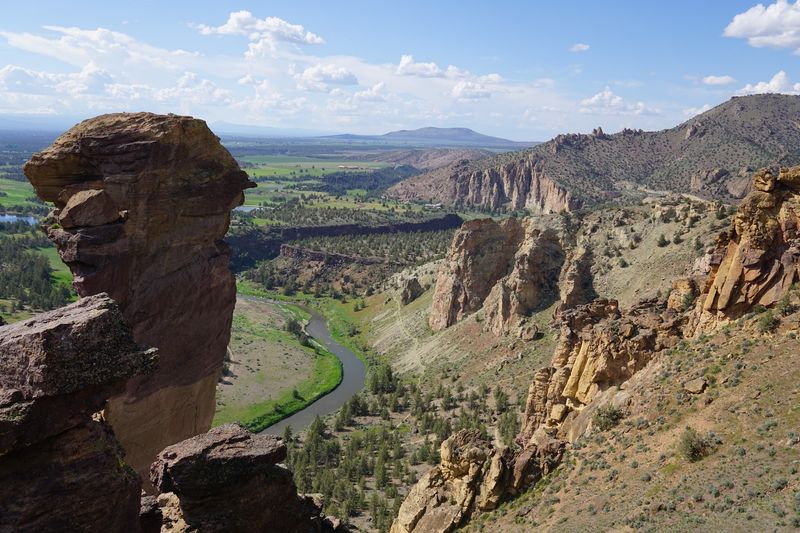
Assuming Smith Rock is only for hardcore hikers sells the place short. Over twelve miles of trails wind through the park, and several are flat, wide, and easy going.
The rim trail along the top of the canyon is a standout for anyone who wants big views without the burn. Strollers roll fine on it, benches appear at intervals, and the overlooks reveal the entire river bend below.
Down in the canyon, options multiply. Some paths hug the shade, which is a genuine relief in summer, while others run narrow along the cliff base with steady exposure to sun.
Mixing routes works well. Many visitors climb the ridge, then return along the river for a completely different mood on the way back.
Trail maps at the trailhead are worth grabbing since junctions come up quickly and some connectors are unsigned. Choosing based on shade, distance, and steepness beats picking blindly and regretting it halfway.
Golden Eagles, Otters And Nesting Season Rules
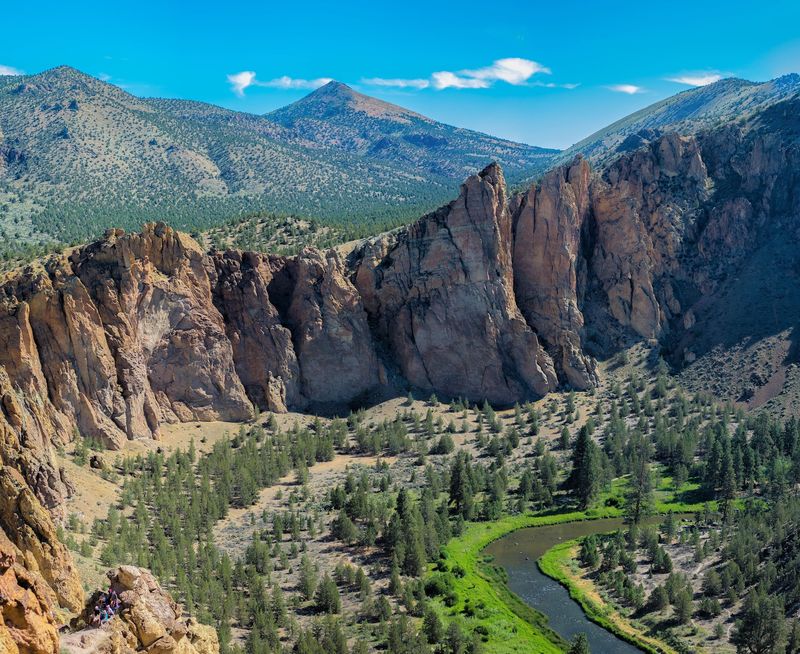
Look up long enough and something impressive usually appears. Golden eagles nest in these cliffs, and visitors also report bald eagles, falcons, and plenty of smaller desert birds working the canyon air currents.
Wildlife shapes park rules in a real way. Drone flying is closed during nesting season, generally January through July, and certain climbing routes shut down to protect raptor nests.
Down near the water, river otters make appearances that tend to surprise people who came for rocks and stayed for the animals. Squirrels, lizards, and the occasional deer round out the cast.
Binoculars pay off here more than at most state parks, especially from the higher viewpoints where nests sit at eye level across the gorge.
Feeding wildlife is a bad idea anywhere, but in a desert canyon it also draws rodents, and rodents draw snakes closer to picnic spots. Packing out every crumb helps keep the balance where it belongs.
Heat, Water And The Mistake Most Visitors Make
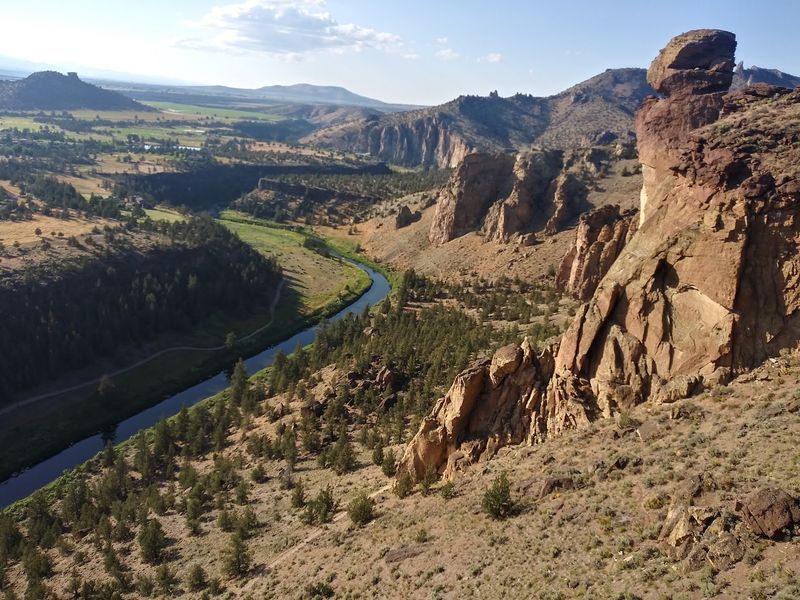
The single most repeated piece of advice from people who hike here is blunt: bring more water than seems reasonable. Large stretches of trail have zero shade, and the high desert sun bounces off pale rock with real intensity.
Heat exhaustion happens at Smith Rock, particularly on summer afternoons when hikers underestimate the ridge climb. Rangers have been known to assist struggling visitors, but prevention beats rescue every time.
Starting early solves several problems at once. Cooler air, better light for photos, easier parking, and fewer people crowding the narrow sections.
A wide brimmed hat, sunscreen, and salty snacks belong in the pack alongside the water. Electrolyte tablets are a small addition that makes a noticeable difference.
Snakes are also more active on hot days, another reason to hike during the cooler edges of the day.
Extra water stations exist near the main facilities, so topping off bottles before heading down is an easy habit worth building.
Parking, Restrooms And Practical Details Worth Knowing
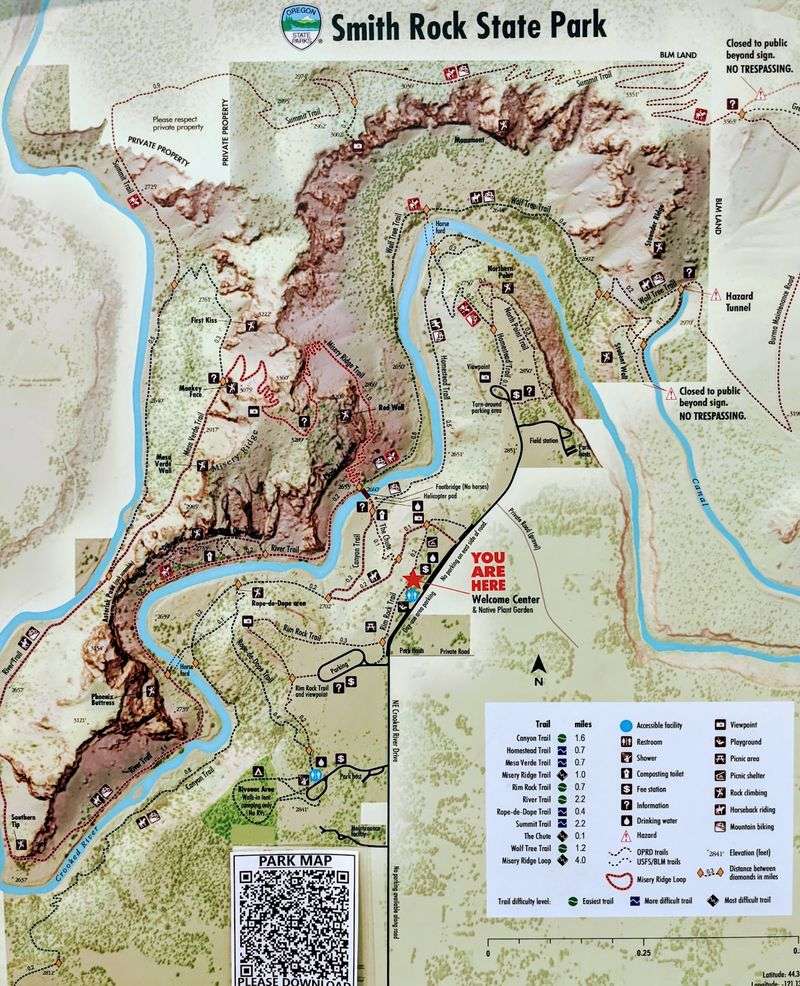
Logistics at Smith Rock are simple once known. A day use parking permit is required per vehicle, purchased at the lot, and annual Oregon State Parks permits work here too.
Parking fills fast. Weekday mornings in winter can still be busy, and by midday on a nice weekend the closest spaces disappear, pushing arrivals to overflow areas farther from the trailhead.
Restrooms sit near the main lot along with portable toilets at a few points, though facilities thin out considerably once trails drop into the canyon. Planning accordingly is wise.
A small gift shop operates near the entrance area, handy for a forgotten hat or a souvenir sticker.
The park also has walk in campsites at the Bivouac area, with showers, sinks, and shared food prep space that gives the campground a friendly, communal feel.
Cell service is decent, and there is even wifi connectivity near the developed section, which surprises first timers expecting total isolation.
When To Visit For The Best Version Of The Canyon
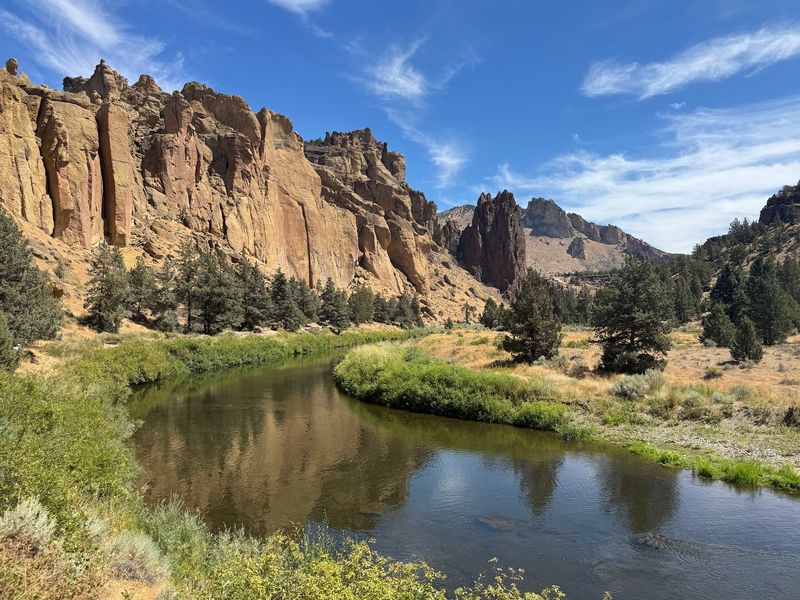
Timing changes this park more than most people expect. Spring brings wildflowers and comfortable temperatures, though it also marks the start of snake activity as the rocks warm up.
Autumn might be the sweet spot. Cooler air, softer light, and gold tones along the river make the canyon feel almost cinematic without the summer heat.
Winter has a quiet charm all its own, with crisp mornings, fewer visitors, and climbers still working the sunny faces. Ice on shaded trail sections calls for traction devices though.
Summer works fine for early risers who are off the ridge before the heat builds, and the long daylight allows a full loop plus a riverside break.
Sunrise and the last hour before sunset flatter these cliffs in a way midday light never does. Photographers plan around it, and honestly anyone would benefit.
Whatever the season, watch the ground, carry water, and let this canyon show off.
Address: Crooked River, OR 97760, United States
