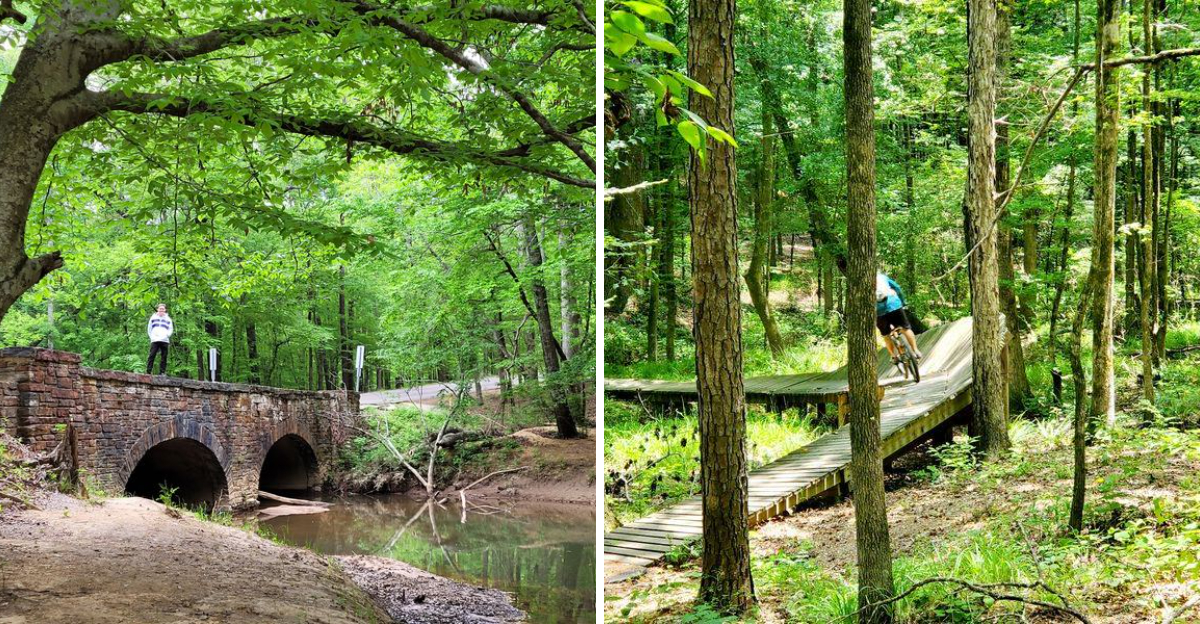
What if a peaceful forest trail suddenly led you to the weathered remains of a mill built nearly two centuries ago?
One Alabama state park hides a fascinating piece of history among its wooded trails, where old stone ruins offer a glimpse into an era when grist mills were an important part of everyday life.
The worn walls and surrounding forest create an unexpectedly atmospheric setting, making the walk feel like more than a simple nature outing. There is something especially interesting about discovering historic ruins without having to leave the trail to find them.
If you love combining outdoor exploration with a little local history, this is a trail worth seeking out.
The Old Grist Mill Ruins Hiding in Plain Sight
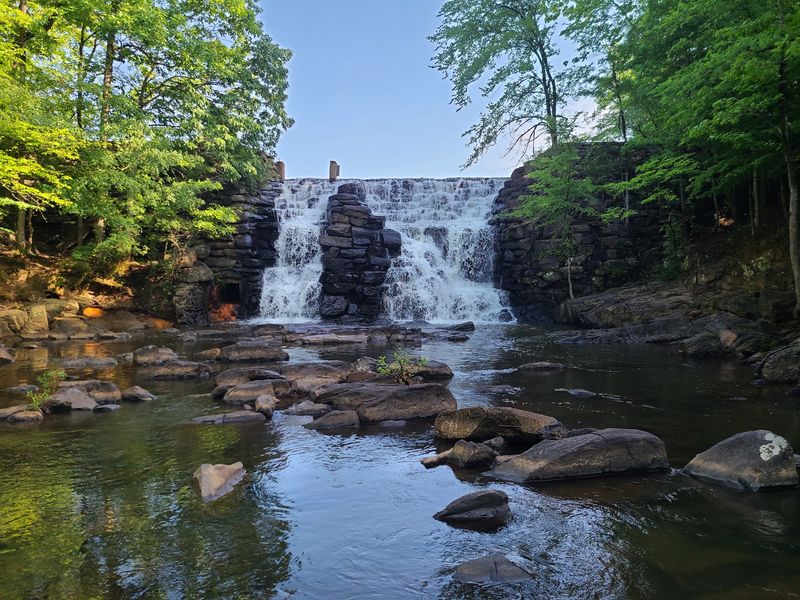
Old stone walls have a way of stopping you mid-step, and the remains of Wright’s Mill did exactly that to me. Tucked into the woods along Town Creek, the weathered blocks look almost like they grew out of the forest floor.
The mill started grinding corn and wheat sometime in the 1840s, back when this whole area was known simply as Wright’s Mill. Farmers hauled their harvests here and left with meal and flour for their families.
W.W. Wright owned and ran the operation from roughly 1873 into the early 1900s, when the mill finally went quiet and was abandoned.
The land later became a state park, but the stones stayed put.
What I love about the ruins is how understated they are. No fences, no big flashy displays, just rock and water and the sense that people worked hard right where you are standing.
Bring shoes you do not mind getting damp, since the creek runs close and the rocks can be slick after rain. Morning light filters through the canopy beautifully here, which makes it a favorite spot for photos.
Give yourself extra time to sit on a rock and listen. The water still moves the same way it did when the millstones turned, and that thought alone is worth the walk out here.
Stonework Built by the Civilian Conservation Corps
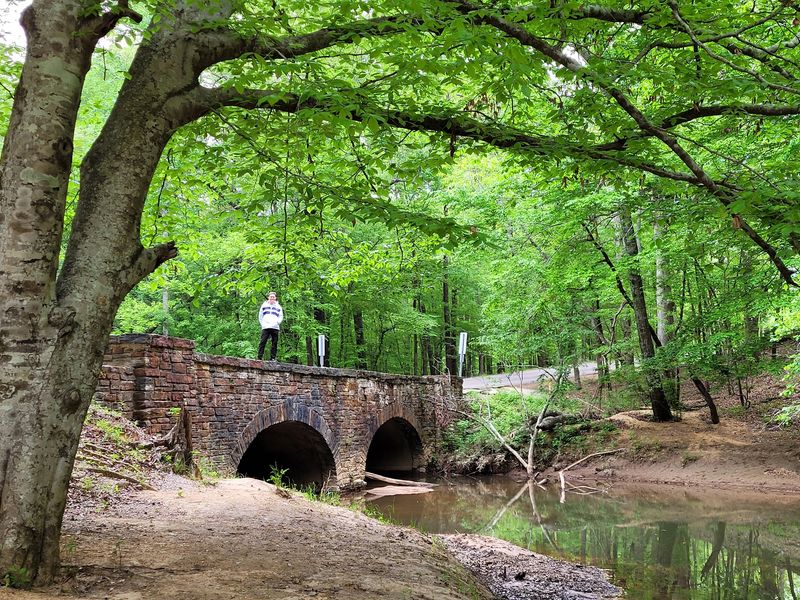
Some of the best craftsmanship in the park was never meant to be art, and yet it absolutely is. The Civilian Conservation Corps came through between 1935 and 1940, and their handprints are everywhere.
Young men working through the Great Depression cut and stacked the stone dam that holds back Chewacla Lake. They also built bridges, cabins, and small structures that still stand nearly ninety years later.
I ran my hand along one of the arched bridge walls and could see how carefully each rock was fitted. Nothing about it feels rushed or mass produced.
The park opened to the public in 1939 and quickly became a favorite spot for swimming, fishing, and family weekends. Those same traditions carry on today, which is a rare thing to be able to say.
If you enjoy architecture or just appreciate things made by hand, take the slow route past the cabins and the bridge near the main drive. Look at how the stone colors shift depending on the light and the season.
A few of the cabins have been renovated inside while keeping their original character outside. Staying in one feels like borrowing a piece of history for the night, and I would gladly do it again on a cooler weekend.
Trails That Suit Every Kind of Walker
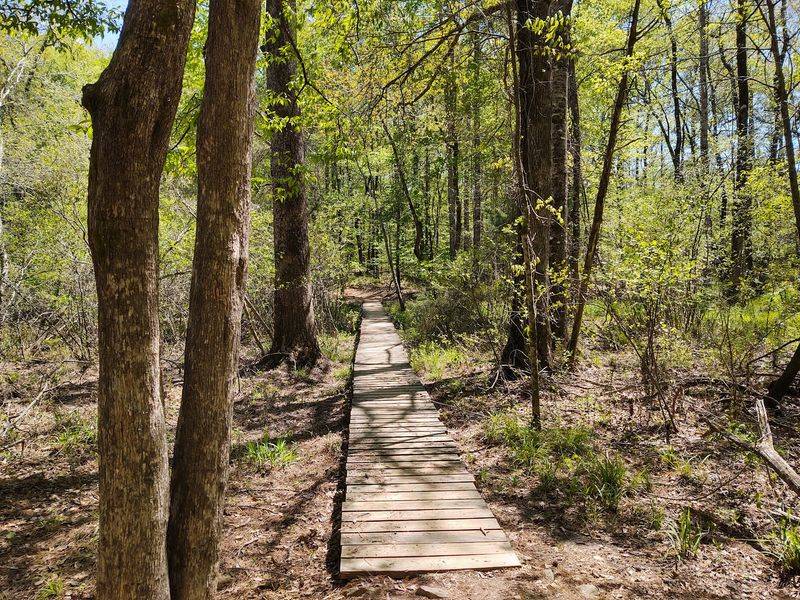
More than 25 miles of trail wind through this park, which surprised me for a place that looks small on a map. Hikers and mountain bikers share the network, and there is genuinely something here for every energy level.
Sweet Shrub Trail follows Moore’s Mill Creek upstream and stays easy the whole way, with interpretive markers to read along the route. I spotted waterfowl poking around in the shallows without even trying.
Boy Scout Trail starts near the CCC arched stone bridge and links up with Sweet Shrub, making it a good short loop option. Benches along the way invite you to sit and dip your feet in the creek.
Troop 30 Boy Scout Trail begins on the north side of the stone bridge and pushes further into the woods. Spring visits reward you with native rhododendron and mountain laurel in bloom.
Creek View Trail is the one I would pick for scenery, with lichen covered rock walls and a pass near the Gin Saw Hole, a natural waterfall at the site of a former sawmill.
Signage is decent but a few junctions get confusing, so download a map before you lose signal. Sturdy shoes help more than you would think on the rooty sections.
Chewacla Falls and the Quiet 26 Acre Lake
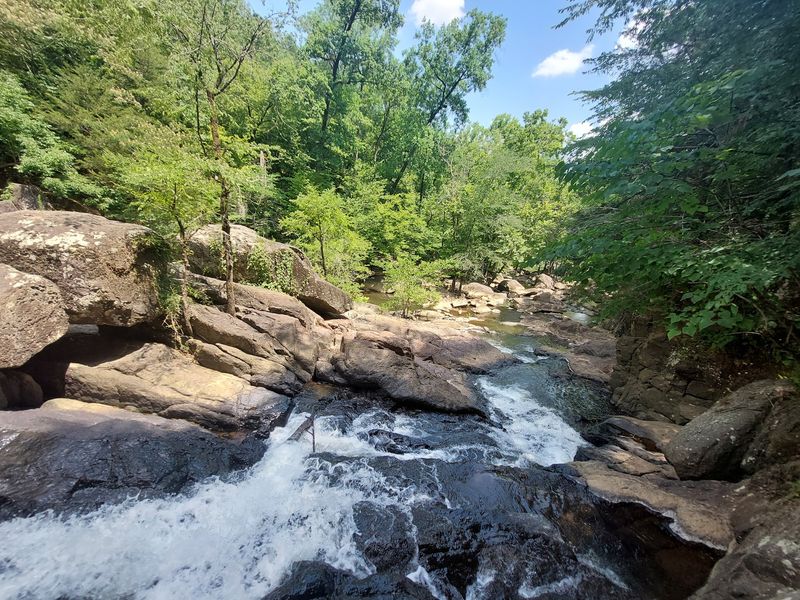
You hear the falls before you see them, which is half the fun. The sound builds slowly on the approach until water spills over broad rock ledges right in front of you.
Chewacla Falls is not a towering drop, but it spreads wide and moves fast after a good rain. Families gather on the rocks below, kids splash at the edges, and the mist keeps the air noticeably cooler.
An easy twenty minute walk gets you there from the parking area, which makes it doable even with small children in tow.
Up the hill, the 26 acre lake offers the opposite mood. Formed by that CCC built stone dam, it sits still enough to mirror the treeline on calm mornings.
Anglers cast for bream, bass, crappie, and catfish from the bank. Motorized boats are not allowed, but you can launch a canoe or kayak and paddle in peace.
The Lakeside Connector Trail circles the water with an easy grade that works for walkers and bikers alike. There is a swimming area with a diving board too, which draws a happy crowd in summer.
Between the rush of the falls and the hush of the lake, this park hands you both moods in a single afternoon.
Are You Ready To Slow Down Beyond the Trails
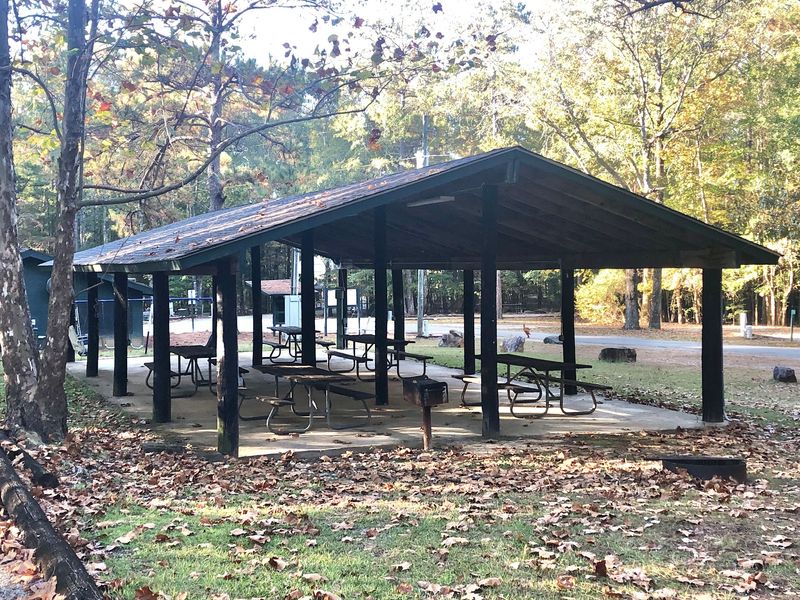
Hunger hit me around noon, and the picnic areas turned out to be one of my favorite discoveries. Tables and grills sit under big shade trees, close enough to the water that you catch a breeze.
Nothing fancy about it, and that is exactly the appeal. You eat, you listen to birds argue overhead, and you let your legs recover.
Families with younger kids will appreciate the playground near the trailhead, along with restrooms right there. It gives everyone a reason to stick around a little longer.
Birdwatchers have real reason to visit too, since the park is a stop along Alabama’s Birding Trail. Summer tanagers and wood thrushes work the woodland edges, while ospreys and bald eagles patrol above the lake.
Overnight options range from full hookup RV sites to primitive tent camping, plus those restored CCC stone cabins. Timberline Glamping safari tents add a more comfortable choice for anyone who wants nature without the setup.
Bring your own supplies since the park sits close to town but the trails do not. A cooler, bug spray, and a folding chair cover most needs.
Come early on weekends if you want a shaded table, because locals know exactly how good these spots are.
A Breath of Fresh Air Minutes From Auburn
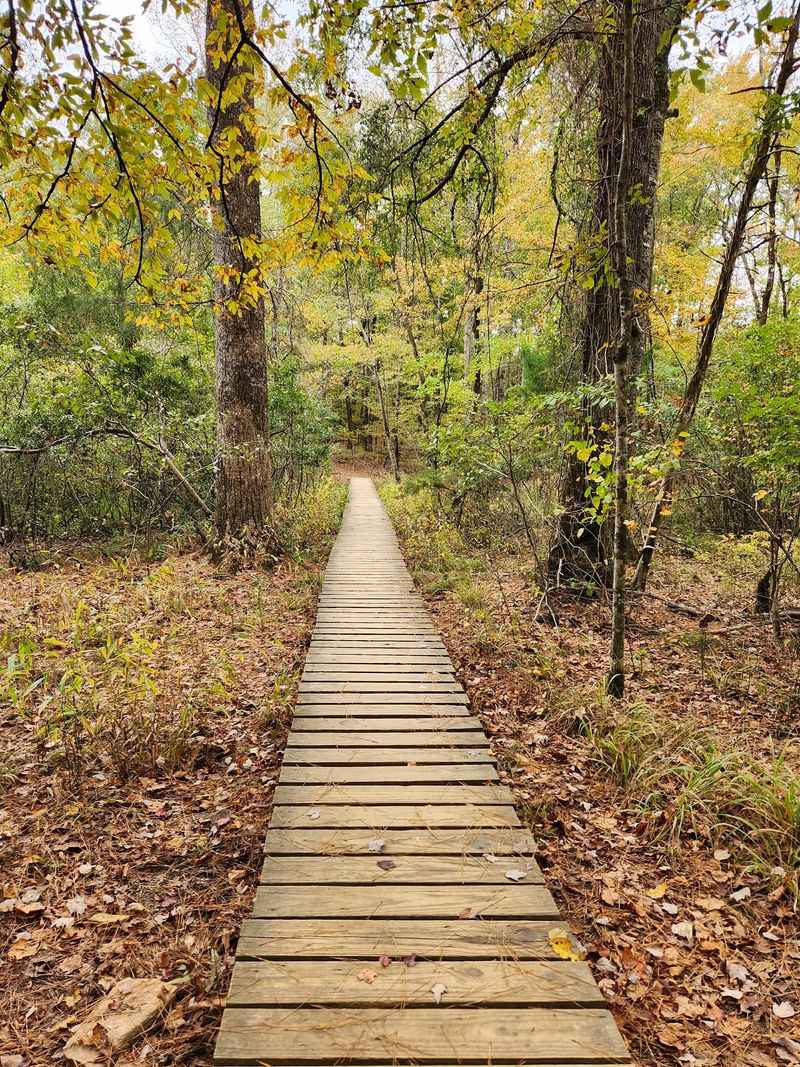
Ten minutes off the interstate and the noise of everyday life just drops away. That contrast is what keeps pulling me back to places like this.
Auburn and Opelika sit close enough for a quick coffee run, yet inside the park the loudest sounds are leaves, water, and birds working the canopy.
Autumn brings color to the hardwoods and thinner crowds on the trails. Spring floods the understory with blooming laurel.
Winter strips the trees back so you can see the shape of the ridges.
I noticed how differently time passes here. A twenty minute walk stretches into an hour because you keep stopping to look at moss, or a rock formation, or the way light hits the creek.
Phones lose signal in a few spots, which honestly feels like a gift. Bring a paper map or download one ahead if that makes you nervous.
Weekday mornings are the quietest window if solitude is what you are after. Gates open at 8 AM and the park stays open until 8 PM.
There is admission to enter, so bring a card or cash. Small price for a whole day of trees, water, and stone that has been sitting here far longer than any of us.
You Definitely Need To Put This Alabama Park On Your List
Plenty of parks give you scenery. Fewer give you scenery plus stone ruins plus handmade bridges from the 1930s, all within a few miles of trail.
Chewacla stacks those layers naturally, and that is what makes it stick in your memory long after you drive home.
Plan on at least half a day if you want the falls, the lake loop, and a look at the mill ruins. A full day lets you add a picnic and a slower second hike.
Practical notes worth knowing: parking is free once you are inside, Wi-Fi reaches parts of the campground, and the park is smoke free. Restrooms exist but vary in condition, so pack tissues just in case.
Rangers and staff I encountered were friendly and happy to point out which trails were in good shape after recent rain. Ask them, because conditions change.
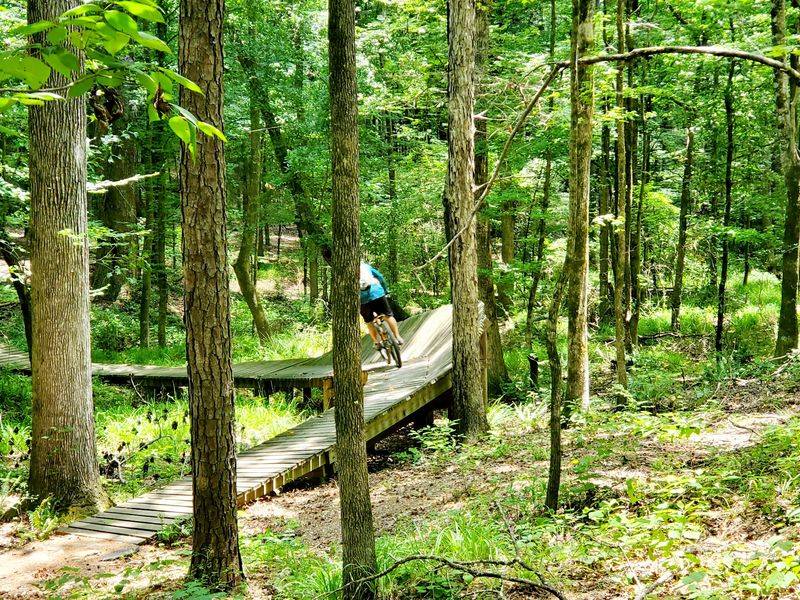
Mountain bikers will find built features and jumps for advanced riders, while beginners can stick to smoother connector routes.
Whether you show up for history, a swim, a paddle, or just an excuse to be outside, this corner of Alabama delivers more than its size suggests. Go once and you will start planning the return trip on the drive out.
Address: 124 Shell Toomer Parkway, Auburn, AL 36830
