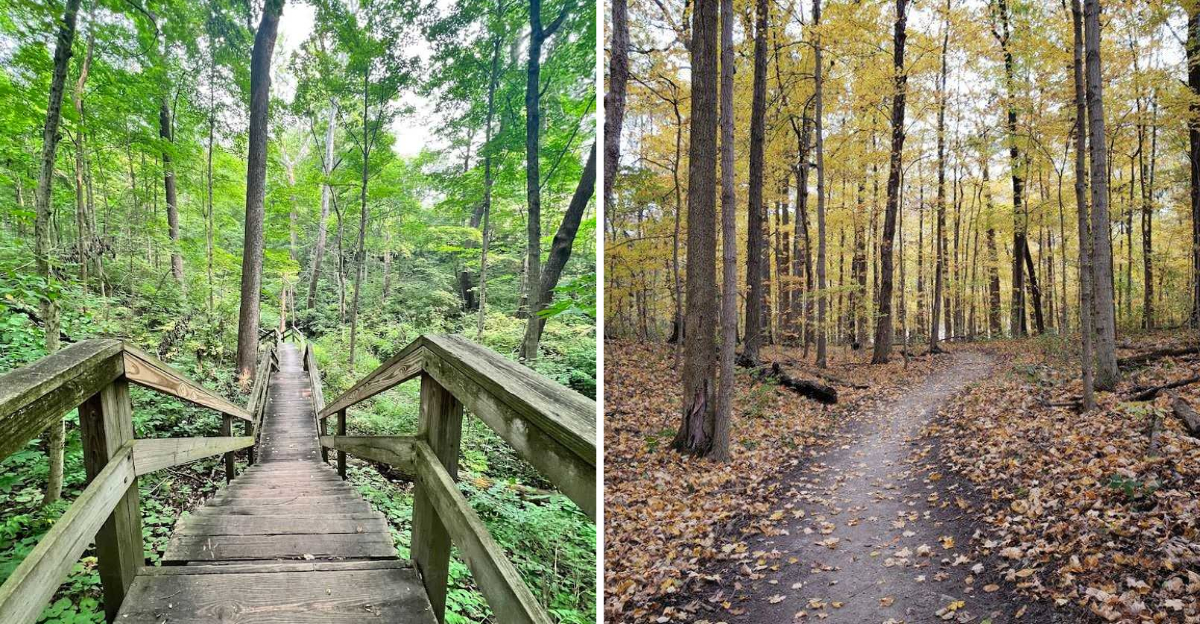
Indiana preserves remarkable prehistoric history in landscapes that appear quiet at first glance but reveal thousands of years of human achievement.
One scenic trail inside a state park leads visitors through mature woodland to the largest prehistoric earthwork enclosure in the state, constructed by the Adena culture around 160 BCE. The circular mound spans nearly a quarter mile and rises close to ten feet, reflecting extraordinary engineering long before modern tools existed.
Despite the trail covering only about one mile, it combines archaeology, natural scenery, and Indigenous history into a memorable walk that offers one of Indiana’s most significant cultural landmarks in an accessible outdoor setting.
Trail 1: The Easy One-Mile Path That Starts It All
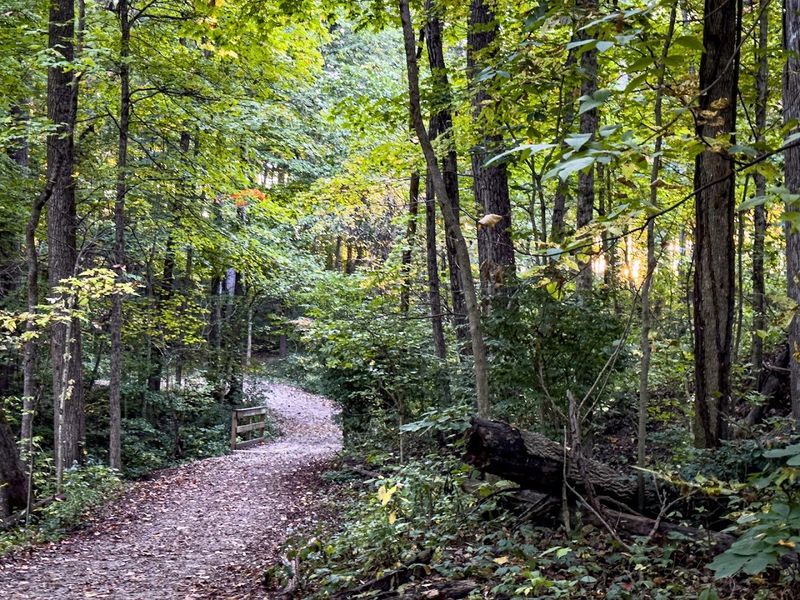
The moment you step onto Trail 1, it becomes clear this is not your average park loop. The path is rated easy, which means it is accessible to nearly everyone, from young kids to older adults who want a relaxed but meaningful outdoor experience.
The trail stretches one mile in total and winds around four prehistoric mounds, with the Great Mound serving as the undeniable centerpiece. Parts of the trail are even wheelchair accessible, which makes it one of the more inclusive options in the Indiana state park system.
What surprised me most was how well maintained everything felt. The path is flat, clearly marked, and never feels overgrown or neglected.
You are not fighting through brush or navigating steep terrain here.
Along the way, twenty common Indiana trees are labeled and identified, which adds a quiet educational layer to the walk. It is a small detail, but it makes the trail feel thoughtful rather than just functional.
Families with curious kids will especially appreciate those markers. The whole loop moves at a comfortable pace, and most people finish it in under an hour without feeling rushed.
The Great Mound: Indiana’s Largest Prehistoric Earthwork
Nothing quite prepares you for the scale of the Great Mound when you first see it in person. It sounds modest on paper, but once you are standing near its embankment, the sheer effort it must have taken to build this thing hits you all at once.
The Great Mound is a circular enclosure with a circumference of nearly a quarter mile. Its embankment rises about nine to ten feet high and measures sixty feet wide at the base.
Over 16,300 cubic yards of soil were moved to construct it, all without modern tools or machinery.
It is the largest earthwork of its kind in Indiana, and that title is well earned. The structure has a presence that photographs simply cannot capture.
You have to walk its perimeter yourself to understand the scale.
Radiocarbon dating places the construction of the embankment at approximately 160 BCE, give or take ninety years. That means this mound has been sitting in the Indiana landscape for over two millennia.
Somehow it still feels remarkably intact, which says a lot about both its original construction and the care the park puts into preserving it.
The Adena and Hopewell People Who Built This Place
Two distinct Native American cultures left their mark on this land, and understanding who they were adds a whole new dimension to the walk. The Adena people are credited with beginning construction of the Great Mound around 250 BCE, with radiocarbon evidence pointing to around 160 BCE for much of the embankment work.
The Hopewell culture later used the same site, particularly for burial practices. These were not simple or primitive groups.
Both cultures demonstrated sophisticated knowledge of astronomy, geometry, and community organization that still impresses researchers today.
What strikes me about this history is how intentional everything was. The mounds were not random piles of dirt.
They were carefully engineered structures aligned with celestial events, used for ceremony, celebration, and tracking the movements of the sun and stars.
The park does a solid job of presenting this history with respect and context. Interpretive signs along Trail 1 give you just enough background to appreciate what you are seeing without overwhelming you with dense academic language.
It is the kind of history that feels alive rather than dusty, and that energy stays with you long after you leave the trail behind.
Astronomical Alignments: When the Mounds Met the Sky
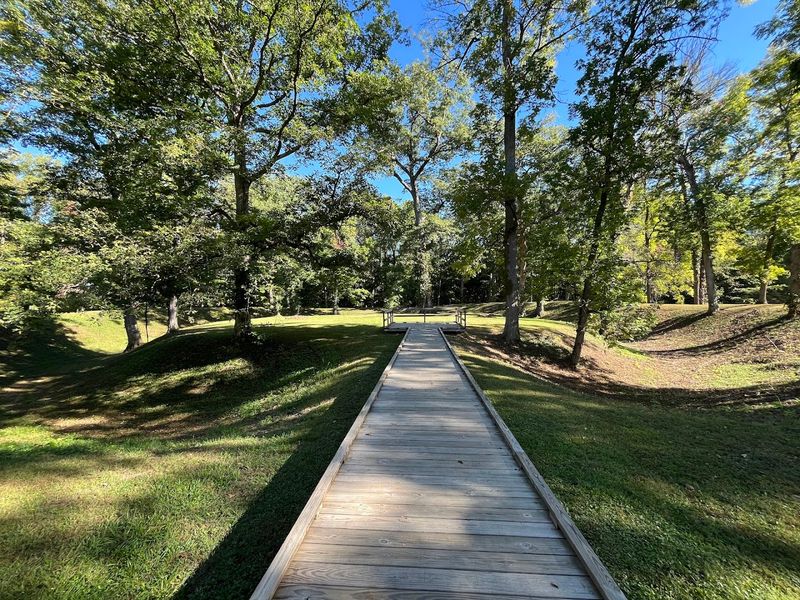
One of the most fascinating details about the Great Mound is that it was not just a ceremonial space. It was also an observatory of sorts, designed to align with specific celestial events.
The Adena and Hopewell people tracked the movements of the sun, moon, and stars with impressive precision.
The alignment of the mound’s openings corresponds with notable astronomical moments throughout the year. This level of planning tells us these cultures had a deep, systematic understanding of the sky long before telescopes or written star charts existed in North America.
I found myself looking up more than usual while walking this trail, trying to imagine what it must have looked like to gather here on a solstice night two thousand years ago. The idea of using a landscape feature to connect with the cosmos is genuinely moving when you are standing right there inside it.
Some visitors describe the Great Mound as feeling like a stage or a solar observatory, and that description is not far off. The circular design creates a natural gathering space with the sky as its ceiling.
It is a reminder that the people who built this place were curious, intelligent, and deeply connected to the world around them.
Four Mounds Along One Trail: What Else You Will See
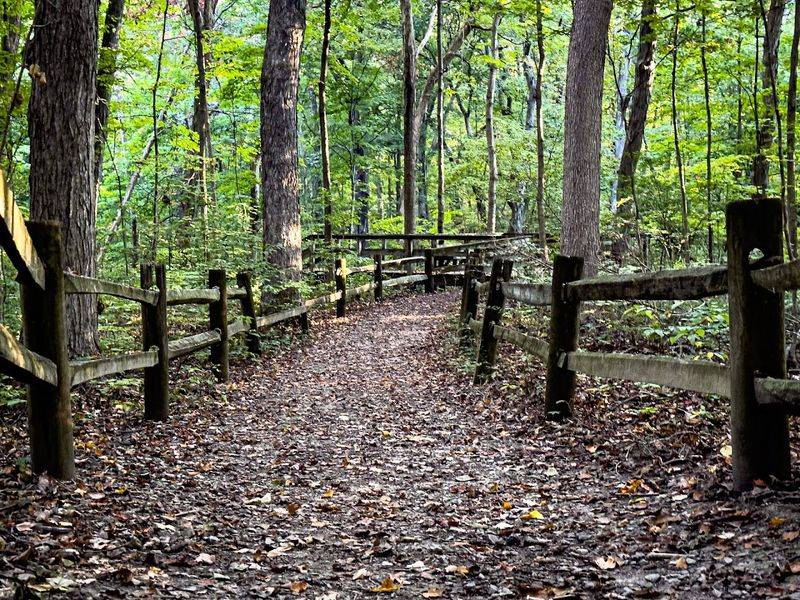
The Great Mound gets most of the attention, but Trail 1 actually passes by four prehistoric mounds in total. Some are easier to spot than others, and that scavenger hunt quality makes the walk more engaging than a typical nature trail.
A few of the smaller mounds blend naturally into the landscape, which means you have to pay attention to notice them. Interpretive signs help point out what you are looking at, but part of the fun is training your eye to recognize the subtle rises and curves in the terrain that hint at human construction.
Each mound tells a slightly different part of the story. Some were used primarily for ceremony, while others served as burial sites.
Together, they paint a picture of a community that used this land with great intention over many generations.
The variety keeps the trail interesting from start to finish. You are never just walking through empty woods waiting for something to happen.
There is always something to observe, whether it is a mound marker, a labeled tree, or a natural view through the canopy. Trail 1 rewards the kind of slow, attentive walk that most people forget to take in their daily lives.
Wildlife, Trees, and the Natural Side of the Trail
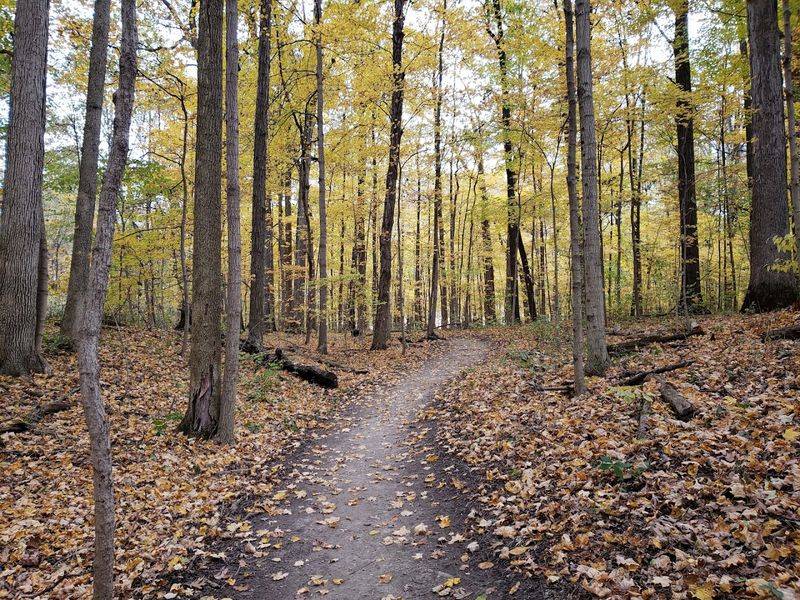
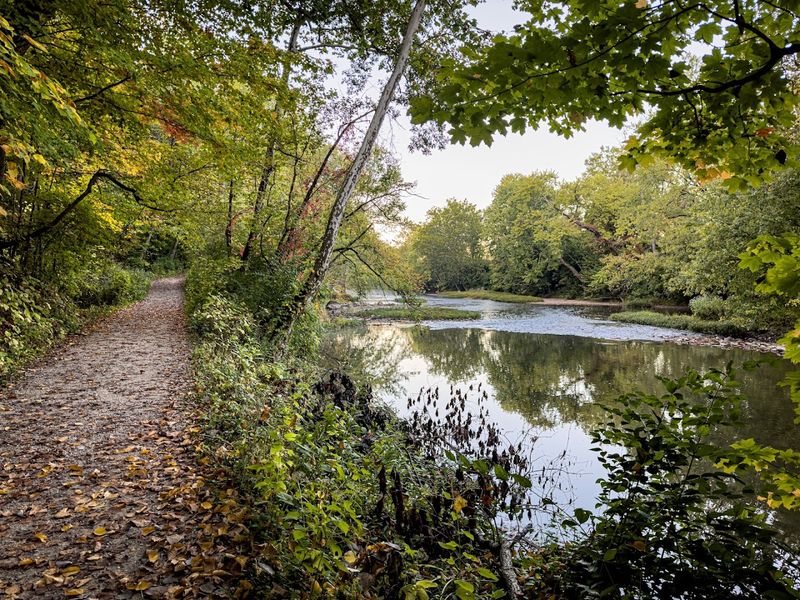
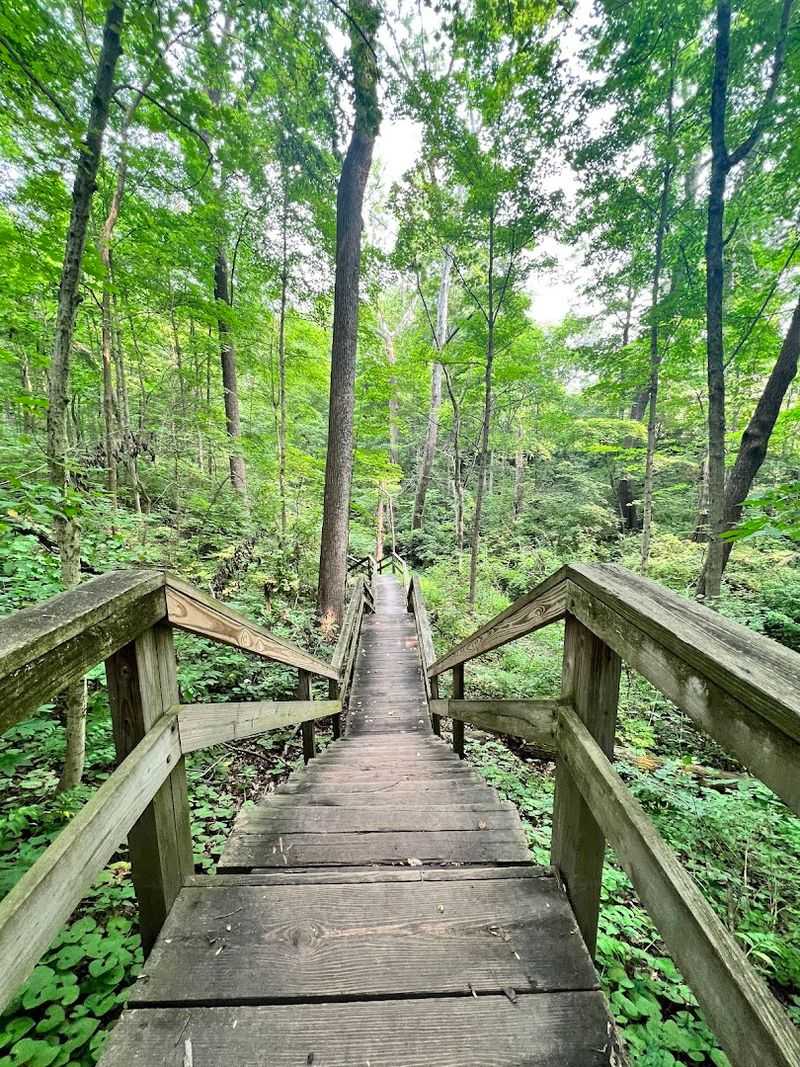
History is the main draw here, but the natural environment along Trail 1 deserves its own moment of appreciation. The trail runs through a mature forest that feels genuinely peaceful, the kind of quiet that makes city noise feel like a distant memory.
Twenty common Indiana trees are marked and identified along the route, turning the walk into a casual nature lesson. For families with kids who are still learning to connect with the outdoors, those markers are a low-pressure way to spark curiosity.
Even adults who think they know their trees often find a few surprises.
Wildlife sightings are not uncommon either. The broader park is known for birds, including the striking pileated woodpecker, and the forested sections of Trail 1 offer good habitat for deer, squirrels, and various songbirds.
Bringing a pair of binoculars is never a bad idea.
The forest canopy provides shade for most of the trail, which makes summer visits far more comfortable than you might expect. Spring brings wildflowers and fresh green growth that frames the mounds beautifully.
Fall is spectacular, with the color of the leaves adding a warm, golden backdrop to the ancient earthworks. Every season offers something worth seeing.
Planning Your Visit to Mounds State Park on Trail 1
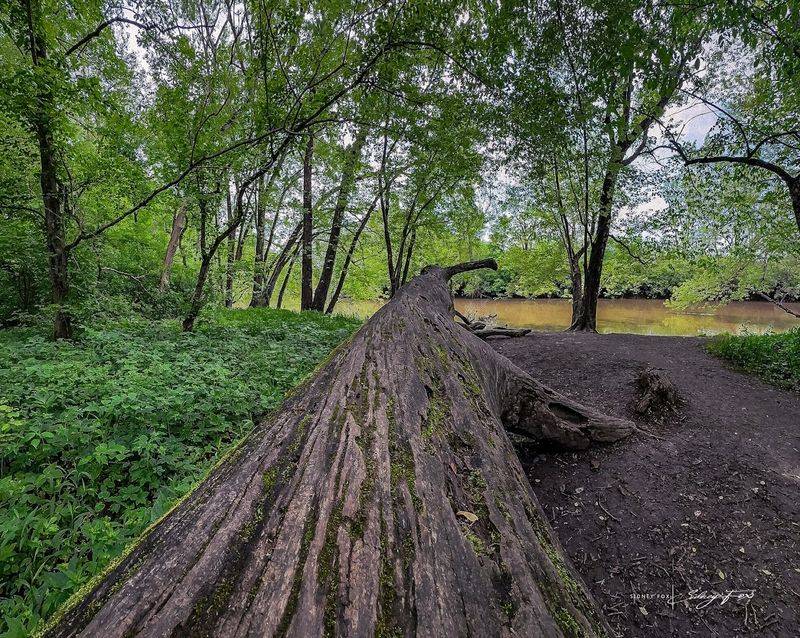
Getting to Mounds State Park is straightforward. The park is located just outside Anderson, Indiana, and is easy to reach from Indianapolis in under an hour.
It is the kind of day trip that feels far more rewarding than the short drive would suggest.
The park opens at 7 AM every day of the week and stays open until 11 PM, giving you plenty of flexibility whether you want an early morning walk or a late afternoon visit. Trail 1 is short enough that you can complete it and still have time to explore the nature center or grab a picnic lunch before heading home.
The nature center is worth a stop before or after the hike. It provides helpful context about the history of the mounds and the cultures that built them, which makes the trail experience richer.
Guided walks are occasionally offered, and those who have attended them consistently say the depth of history shared is surprising.
Comfortable walking shoes are all you really need for Trail 1. The path is flat and well maintained, so no special gear is required.
Come with curiosity, take your time, and let the place speak for itself. It has been doing that for over two thousand years.
Address: 4306 Mounds Rd, Anderson, IN 46017
