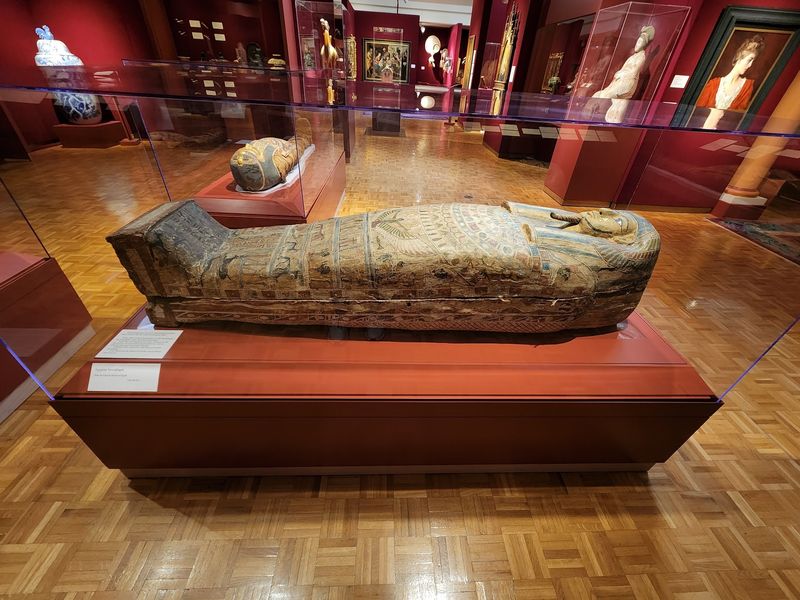
Some Oklahoma road trips end with a photo of a water tower, and some end with you standing eye-level with a 2,300-year-old Egyptian woman. I went in expecting a quiet little art gallery with a few landscape paintings and left wondering how a collection this wild ended up tucked onto a college campus in the middle of the state.
There are mummies here, plus shrunken heads, African masks, Greek pottery, and a monk’s lifetime of collecting stacked into a handful of rooms. Best part?
Plenty of visitors walk in and pay nothing at all.
A Campus Museum Hiding World Treasures
Shawnee sits about 40 minutes east of Oklahoma City on I-40, close enough that you can leave after breakfast and still be home for supper. On the west side of town, at 1900 W MacArthur Street, a modest building holds one of the most surprising collections in the state.
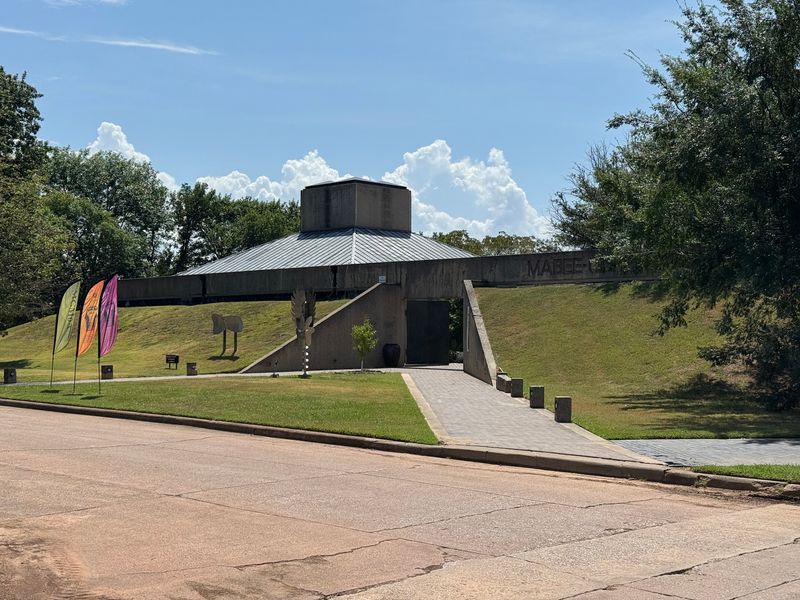
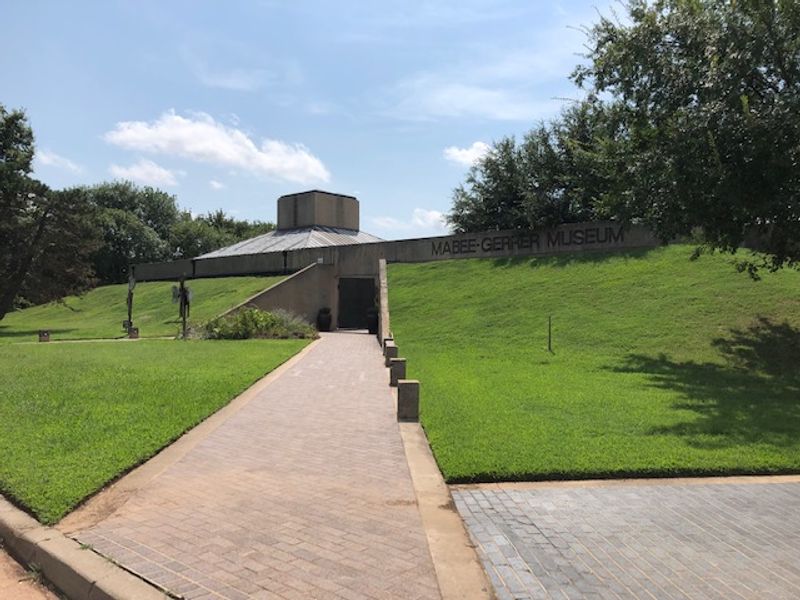
The Mabee-Gerrer Museum of Art occupies ground on what used to be St. Gregory’s University, now the Oklahoma Baptist University Green Campus. Nothing about the drive up prepares you for what is inside.
Founded in 1919, it ranks among the oldest museums in Oklahoma, and it has never really outgrown its unassuming shell. Roughly 3,500 works span more than 8,000 years of human creativity, from ancient Egypt to contemporary canvases.
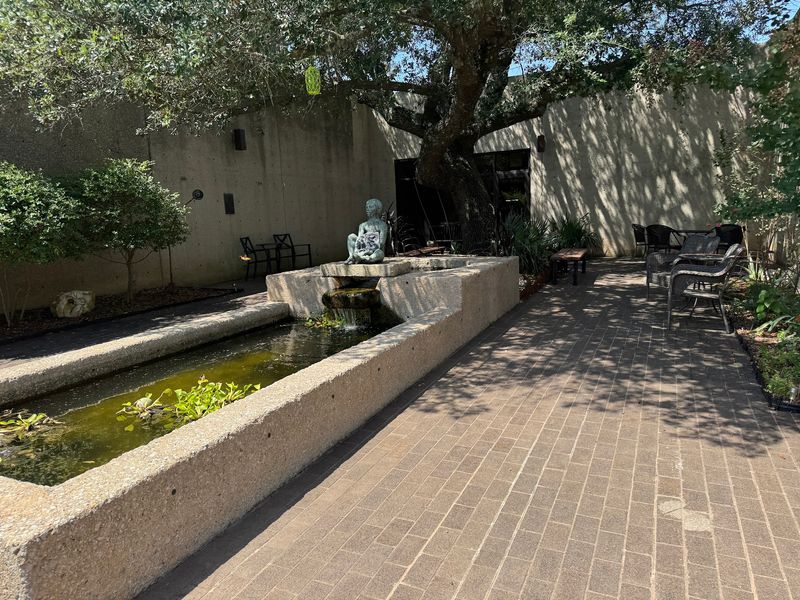
Visitors regularly mention feeling caught off guard, saying they expected a small-town gallery and instead found objects they assumed lived only in big-city institutions. The courtyard out front is quiet and shaded, a nice place to sit before or after.
Consider it proof that Oklahoma keeps a few remarkable things in unexpected corners, and that the best ones rarely advertise themselves loudly.
The Traveling Monk Who Started It All
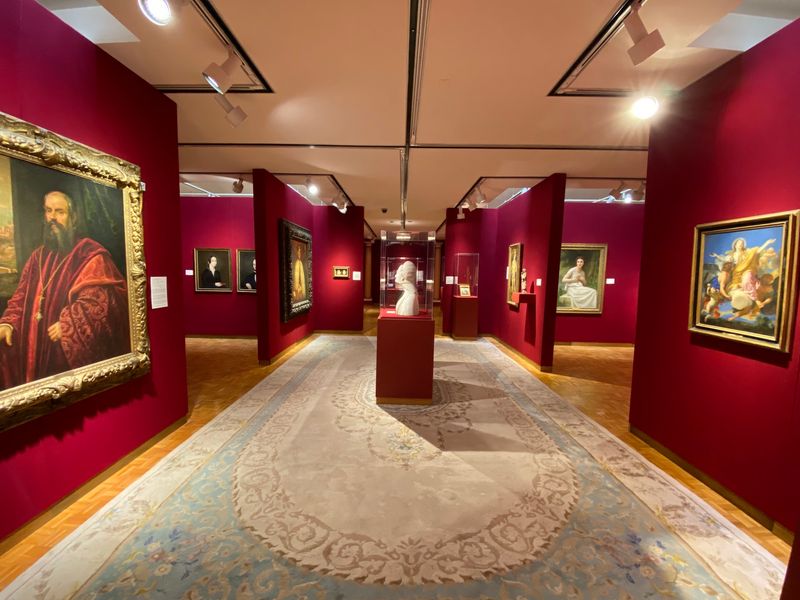
Father Gregory Gerrer had the collecting instincts of a magpie and the travel schedule of a diplomat. A Benedictine monk and a genuinely skilled painter, he spent years crossing Europe, Africa, and South America, gathering art and artifacts as he went.
His reasoning was simple and a little bit stubborn. Oklahomans, he believed, deserved to see the world without having to leave it, so he hauled the world back here piece by piece.
Gerrer’s own paintings hang in the museum too, and visitors often single them out as a highlight they did not see coming. He painted a portrait of Pope Pius X, which tells you something about the doors his talent opened.
What makes the story stick is the scale of the ambition against the size of the town. A monk in central Oklahoma decided his neighbors should have a museum, and then he simply built one.
Staff have mentioned that only a small fraction of Gerrer’s full collection can be displayed at once because of building size. The rest waits its turn in storage, rotating out seasonally.
Tutu and the Only Egyptian Mummies in the State
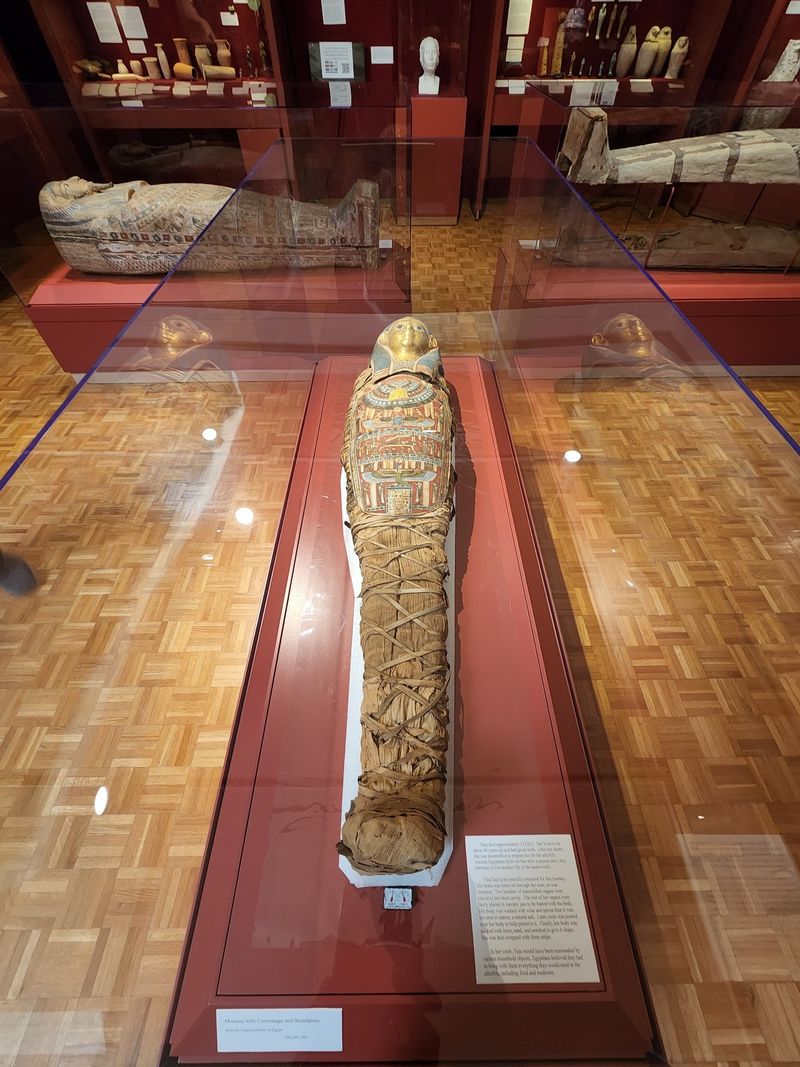
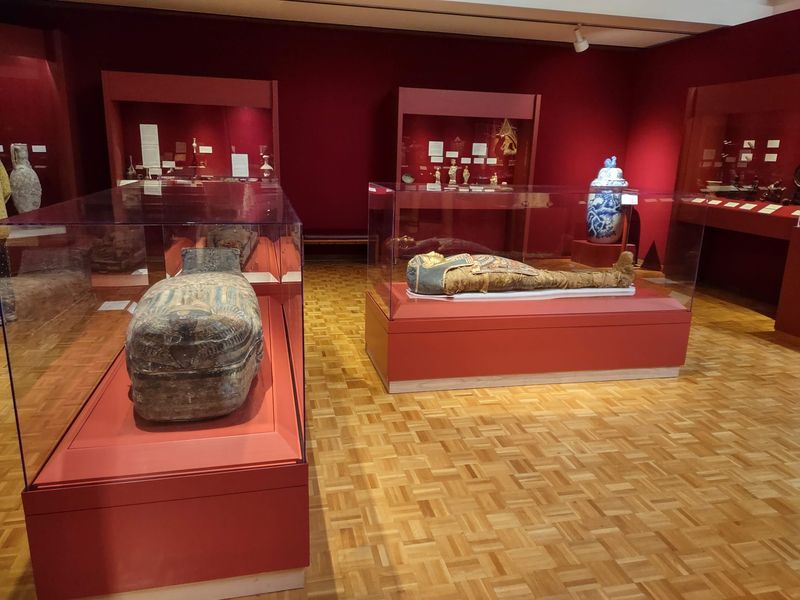
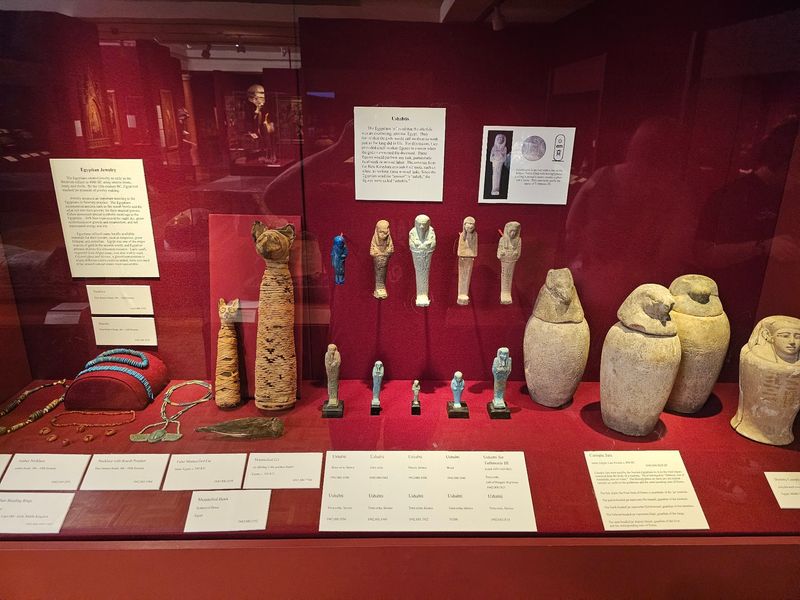
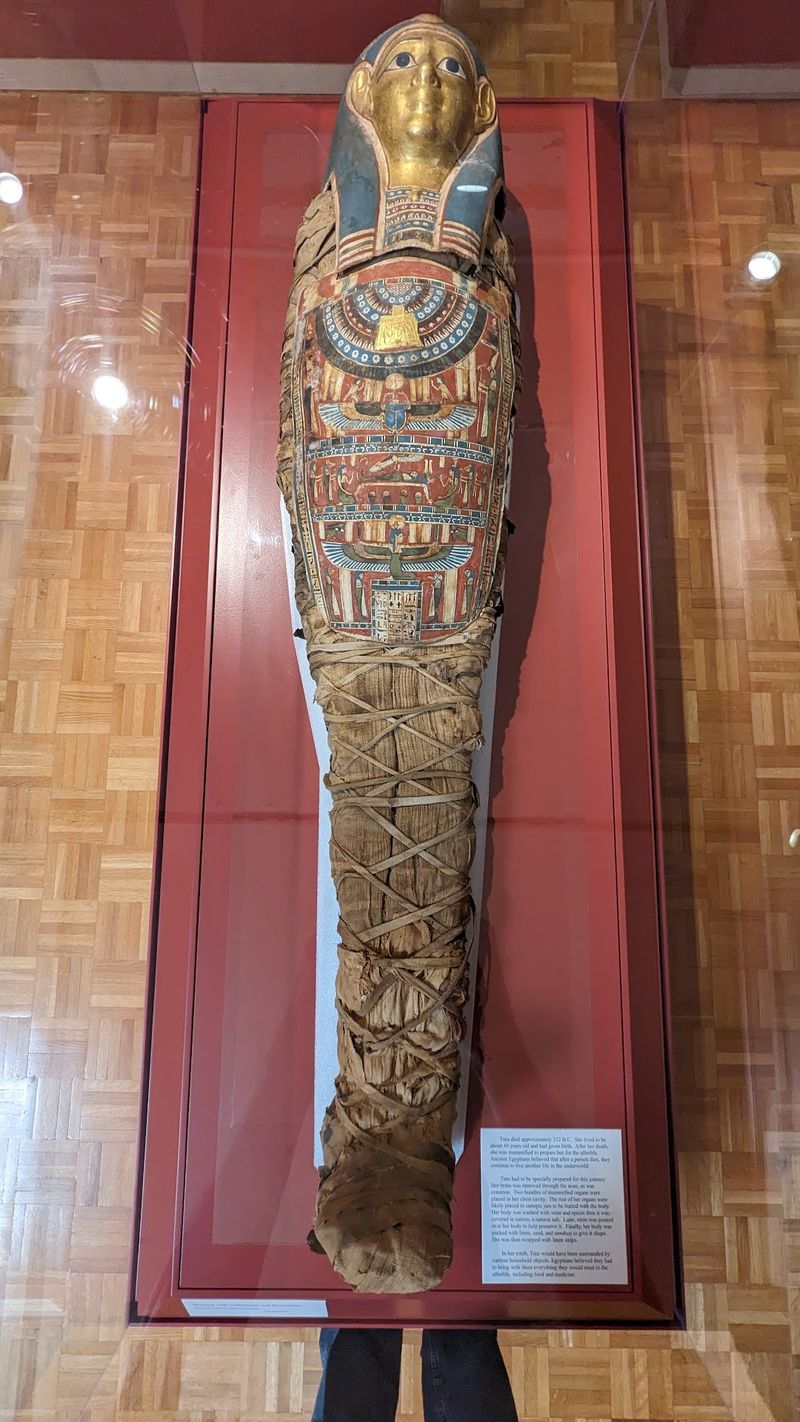
Ask anyone who has been here what they remember, and the answer arrives fast: the mummies. These are the only ancient Egyptian mummies on display anywhere in Oklahoma, which alone justifies the drive.
The best known is a woman named Tutu, whose remains date to roughly 332 BCE. A Roman-era mummy shares the gallery, and so does a mummified cat, which tends to stop families in their tracks.
Modern CT scanning has been used to study these ancient residents without disturbing them, revealing details about how they were prepared and preserved thousands of years ago. The museum shares that research with visitors, turning a display case into an actual science lesson.
Mummies came up in visitor comments more than any other topic here, by a wide margin. One longtime Oklahoman admitted to living in the state for over a decade before learning these were sitting an hour away.
Kids react in two ways, roughly split down the middle. Some press their faces to the glass and ask a hundred questions, others decide they would rather look at the pottery.
Shrunken Heads and the Curiosities Beside Them
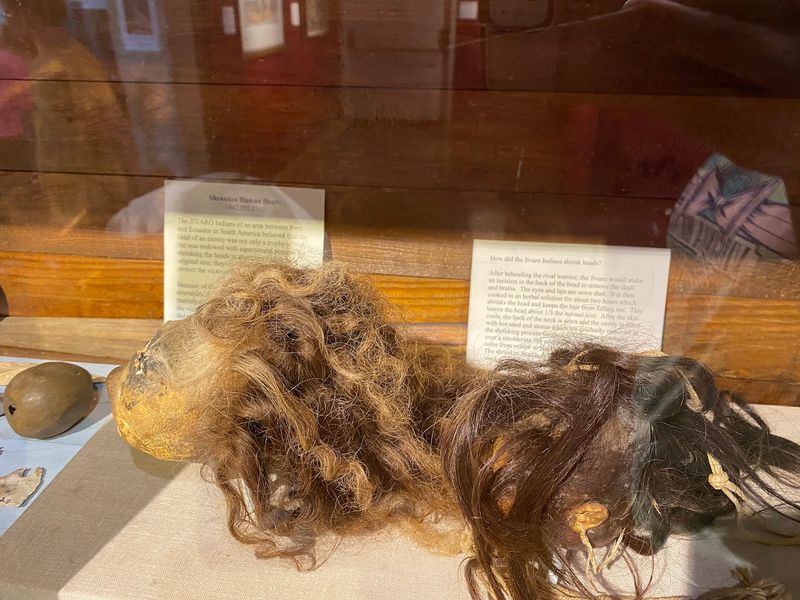
Few things make a visitor stop mid-sentence like realizing the small dark objects in the case are shrunken heads. Yes, in Shawnee.
Yes, real ones.
Rather than presenting them as a sideshow, the museum explains the cultural practice behind them, including how the process was traditionally carried out and what it meant to the peoples who did it. Context does a lot of work in this room.
Guests who came only for the mummies frequently say the shrunken heads became the story they told at home. Placed nearby are objects equally hard to categorize: a long-nosed sawshark bone, Chinese smoking pipes, coins, and religious relics including a skullcap once worn by Pope Pius X.
Dogon masks from Mali and other African carvings share space with indigenous clothing and tools. Walking the room feels a bit like flipping through someone’s very well-traveled scrapbook.
It is eclectic in the truest sense, and that scattershot quality is exactly why repeat visitors keep coming. You notice something new every single time, because there is simply too much to absorb in one pass.
Eight Thousand Years Under One Modest Roof
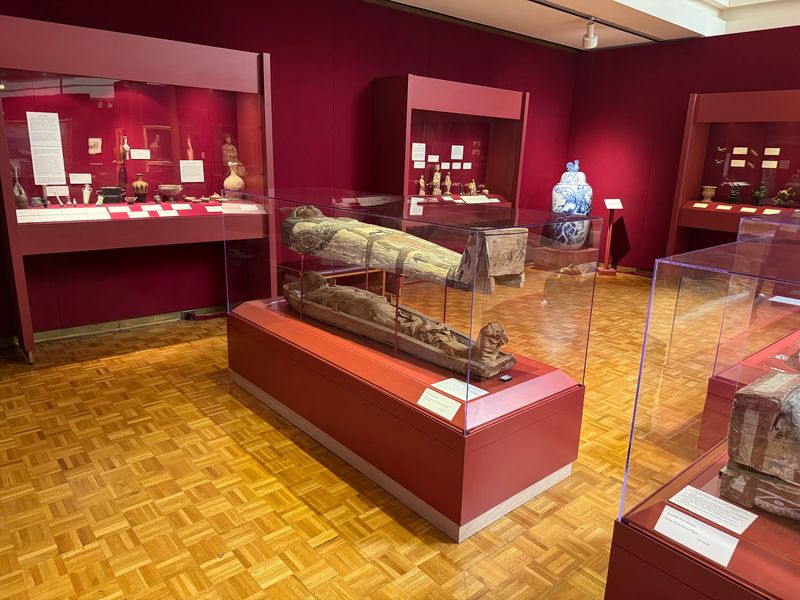
Timeline whiplash is part of the experience here. You can stand beside Greco-Roman pottery, turn around, and face a Chinese terracotta figure, then walk ten steps into medieval European religious art.
The collection covers more than 8,000 years, with roughly 3,500 works logged in total. Native American pieces, African cultural objects, Renaissance paintings, sculpture, and contemporary mixed media all get wall space.
Because the building is compact, curators rotate exhibits seasonally, which means a spring visit and a fall visit rarely look alike. One special showing, a Madonna and Child collection, has appeared around Valentine’s weekend in past years and left a strong impression on guests who caught it.
Art shows and small concerts occasionally fill the space too, giving the place a community pulse beyond its display cases.
Nobody would call it a sprawling institution. Visitors describe it plainly as small, then immediately follow that up by praising the quality packed inside.
For a state where road-trippers often settle for roadside oddities, having genuine world-class objects this close to home feels like a fair trade for an hour in the car.
Scavenger Hunts, Clay Scarabs, and Treasure Chests
Handing a kid a scavenger hunt sheet changes everything about a museum visit. Families here say their children stayed engaged the whole way through, hunting clues from case to case and finishing with a treasure chest they open using a special key.
That little payoff at the end has become something of a tradition for repeat families. Parents report their 7 and 9 year olds cared about the art itself once the hunt got them looking closely.
School and club groups get even more. One art club field trip included learning about the Egyptian mummies, shaping clay scarab beetles, and studying two paintings to practice reading visual clues.
Staff have hosted mummy-themed event days as well, with guides described as knowledgeable and genuinely happy to talk.
Grandparents traveling with grandkids will find the scale works in their favor. The whole museum can be covered without anyone wearing out, and there is a bench-lined courtyard outside for a breather.
Not every child loves the mummy room, so plan for a quick detour if yours falls into that camp.
Quiet Rooms, Stained Glass, and a Peaceful Courtyard
Something about the acoustics in here slows people down. Guests consistently describe the galleries as quiet and calm, the kind of place where you hear your own footsteps and start whispering without meaning to.
Stained glass windows catch afternoon light and throw color across the interior, and more than one visitor has called the building itself worth admiring. The front courtyard gets singled out too, a shaded pocket of stillness that works beautifully on a mild Oklahoma afternoon.
Cleanliness comes up often in visitor comments, as does the friendliness of the staff and volunteers at the desk. They answer questions, point out what is new in the rotation, and do not hover.
Given how hot and windy Oklahoma summers get, an air-conditioned building full of ancient objects makes a smart afternoon plan. Winter works just as well, since nothing here depends on the weather.
Couples, solo travelers, and retirees all seem to settle in comfortably. One visitor mentioned needing well over an hour to properly study the displays and running out of time before closing, so give yourself room.
What It Costs and How Often It Costs Nothing
Ten dollars gets an adult through the door, and five covers seniors and military. That is the standard rate, and honestly it would still be a bargain at double.
Plenty of people pay nothing at all. Youth 17 and under enter free, students with a valid ID enter free, and the museum participates in the Museums for All program, which offers free or reduced admission to SNAP cardholders.
On top of that, the museum has run stretches of completely free admission, including full summers. Free entry shows up often enough in visitor comments that many people assume it is simply the standard.
Prices and promotions can shift, so a quick call to 405-878-5300 or a look at mgmoa.org before loading the car is worth the two minutes.
The gift shop deserves a mention too. Shoppers say they found genuinely unusual souvenirs, from small Egyptian cat figurines to browsable oddities, without spending much.
For a family of four, this can easily be a full morning of entertainment for less than the cost of lunch.
Hours, Parking, and Getting There From OKC or Tulsa
Timing matters more than usual here, because the doors are not open every day. Tuesday through Saturday runs 10 a.m. to 5 p.m., with Sunday and Monday closed according to current listings, and holiday exceptions can change things.
Some sources list limited Sunday afternoon hours, so calling ahead at 405-878-5300 removes any guesswork before you commit to the drive.
From Oklahoma City, it is a straight shot east on I-40, generally around 40 to 45 minutes depending on traffic. Tulsa travelers should budget closer to an hour and forty-five minutes, which still lands comfortably inside a day-trip window.
Parking sits right on the Oklahoma Baptist University Green Campus, the former St. Gregory’s grounds, and it is free and uncomplicated. No parallel parking, no meters, no circling the block.
Give yourself at least ninety minutes inside if you want to read the labels rather than skim them.
Shawnee itself has enough small-town eating options to build a full day around, so pair the museum with an early lunch and make the round trip worth every mile.
Worth the Tank of Gas, and Then Some
Expectations get demolished here in the best possible way. People arrive thinking they will spend twenty minutes glancing at paintings and leave three hours later having met an Egyptian woman from 332 BCE.
Guests rate it exceptionally highly, with a 4.8 star average across more than 350 visitor reviews, and the recurring theme is surprise. Small museum, enormous contents.
What makes it easy to recommend is how little it asks of you. Modest admission at most, free for a lot of people, an uncomplicated drive, and a rotating lineup that rewards coming back.
Families with curious kids will get the most mileage thanks to the scavenger hunts and hands-on programming. History buffs, art lovers, and anyone who likes an honest oddity will do just fine too.
Bring a little patience for reading labels, because the context is half the fun. The shrunken head explanation alone is worth slowing down for.
Father Gerrer wanted Oklahomans to see the world without leaving home. A century later, his plan is still working beautifully in a quiet building off MacArthur Street.
